
量子位

Search documents
清华AI数学家系统攻克均匀化理论难题!人机协同完成17页严谨证明
量子位· 2025-11-04 08:22
Core Insights - The article discusses the transformation of AI from a "mathematical problem-solving tool" to a "research collaboration partner," exemplified by Tsinghua University's AI mathematician system (AIM) successfully solving a complex mathematical proof [1][2][3] Group 1: AI's Role in Mathematical Research - The research demonstrates the feasibility of AI as a collaborative partner in tackling complex mathematical problems, marking a significant shift in how mathematical discoveries can be approached [2][3] - The study addresses the limitations of current AI systems in mathematics, which often excel in standardized tasks but struggle with real-world research needs [4][5] - The AIM system's collaboration with human researchers led to a comprehensive 17-page mathematical proof, showcasing the potential of human-AI synergy in advanced mathematical research [8][29] Group 2: Methodological Framework - The research outlines five effective human-AI interaction modes that serve as operational guidelines for AI-assisted mathematical research [13][30] - These modes include Direct Prompting, Theory-Coordinated Application, Interactive Iterative Refinement, Applicability Boundary and Exclusive Domain, and Auxiliary Optimization, each designed to enhance the collaborative process [14][17][19][21][22] - The systematic approach to human-AI collaboration not only improves the efficiency of mathematical proofs but also provides a reusable framework for future research [30] Group 3: Future Directions - The study emphasizes the need for further development of human-AI interaction models to enhance mathematical research capabilities and explore their applicability across different mathematical fields [32][34] - Future research will focus on optimizing the AIM system's architecture to improve its reasoning capabilities and overall performance in mathematical theory research [36]


我MiniMax,用实习生处理数据,照样屠榜开源大模型
量子位· 2025-11-04 05:06
Core Viewpoint - The article discusses the development and unique features of the MiniMax M2 model, highlighting its performance, data processing techniques, and the rationale behind its design choices, particularly the shift from Linear Attention to Full Attention. Group 1: Model Performance - M2 demonstrated strong performance by winning first place in the AI-Trader simulation competition, earning nearly 3,000 yuan from a starting capital of 100,000 yuan over 20 days [2] - The choice of Full Attention over Linear Attention is presented as a strategic decision aimed at ensuring stability and reliability for commercial deployment [12][53] Group 2: Attention Mechanism - The article emphasizes the debate surrounding the choice of attention mechanisms, with M2's team opting for Full Attention after testing various alternatives, including Efficient Attention, which showed performance degradation with longer context lengths [12][15] - The team argues that the perceived advantages of Efficient Attention are misleading, particularly in complex tasks where it fails to perform as well as Full Attention [18][22] Group 3: Data Processing Techniques - M2's data processing approach is highlighted as mature, allowing even inexperienced interns to achieve expected results, indicating a well-structured data handling process [27] - The team focuses on enhancing the model's generalization capabilities by diversifying data formats and ensuring high-quality data through a rigorous cleaning process [35][38] Group 4: Task Execution and Adaptability - The concept of "Interleaved Thinking" is introduced, allowing the model to dynamically adjust its planning based on real-time execution feedback, improving its adaptability in task execution [46][48] - The training data is designed to simulate real-world scenarios, covering various uncertainties to enhance the model's performance in practical applications [51][52] Group 5: Engineering Philosophy - MiniMax's decision to use Full Attention reflects a pragmatic engineering philosophy prioritizing real-world applicability and stability over merely optimizing for computational efficiency [53][56] - The company aims to create a model that is not just technically advanced but also practical and understandable for developers, emphasizing a systematic approach to problem-solving [57][58]

量子位2025年度榜单冲刺申报中!企业/产品/人物榜正在征集
量子位· 2025-11-04 05:06
Core Points - The article announces the launch of the "2025 Artificial Intelligence Annual Awards" to recognize outstanding contributions in the AI industry [1] - The awards will focus on three main categories: companies, products, and individuals, with five specific awards to be given [3][4] Company Awards - The "2025 AI Leading Company" award will recognize companies with comprehensive strength in the Chinese AI sector [4] - Eligibility criteria include being registered in China or primarily serving the Chinese market, and being a leader in AI or its applications [5] Product Awards - The "2025 AI Outstanding Product" award will highlight AI products that have achieved significant technological innovation and market impact [12] - Products must be market-ready, have received user feedback, and demonstrate substantial advancements in the past year [14] Solution Awards - The "2025 AI Outstanding Solution" award will focus on AI applications across various industries, recognizing solutions that drive innovation and industry transformation [13] - Solutions must have been implemented in real business scenarios and show significant market validation [15] Startup Awards - The "2025 AI Potential Startup" award will spotlight innovative AI startups with high investment value and growth potential [8] - Startups must have a viable business model, market recognition, and significant achievements in technology or product innovation over the past year [11] Individual Awards - The "2025 AI Focus Person" award will honor influential figures in the Chinese AI field, including both industry leaders and emerging stars [16] - Candidates must demonstrate significant contributions to AI technology or commercialization and have a strong industry reputation [21] Registration and Event Details - Registration for the awards is open until November 17, 2025, with results to be announced at the MEET2026 Smart Future Conference [19] - The conference aims to gather leaders from technology, industry, and academia to discuss transformative trends in AI [23][24]

聚焦手机AI“超级入口”,中兴Nebula小模型让手机秒变“小秘”?
量子位· 2025-11-04 05:06
Core Insights - The article highlights the emergence of mobile GUI Agents as a competitive focus in the industry, driven by advancements in AI technology and the potential to reshape traffic distribution, creating a market opportunity worth hundreds of billions [1][61]. - Companies like Meituan, ZTE, ByteDance, and others are actively developing and deploying these technologies, with ZTE's Nebula-GUI model achieving significant recognition in benchmark tests [1][2][61]. Group 1: Market Opportunity and Competition - The introduction of GUI Agents is seen as a new frontier in mobile services, with the potential to create a market worth hundreds of billions [1]. - Major players such as Apple, Huawei, and Meituan are investing in this space, indicating a strong competitive landscape [1]. - ZTE's Nebula-GUI model has been recognized for its performance, achieving a score of 84.38 in benchmark tests, particularly excelling in complex tasks like automated ordering and ticket booking [2][3]. Group 2: Technological Advancements - ZTE has developed an end-to-end data preparation system to address challenges in data acquisition for training GUI Agents, significantly improving data quality and efficiency [8][10]. - The Nebula-GUI model has been integrated into over 30 mainstream apps, achieving an average accuracy of over 90% in common scenarios [3]. - The model's capabilities include features like "one-sentence ordering" and "one-sentence photo-taking," enhancing user experience by transforming smartphones into personal assistants [3][61]. Group 3: Data Preparation and Quality - ZTE's automated data pipeline and integrated data annotation tools have improved data annotation efficiency by three times, addressing the scarcity of high-quality Chinese GUI data [12][14]. - The company has created a large-scale Chinese GUI dataset, integrating millions of English GUI samples to enhance the model's training [26][27]. - The automated data preparation system has allowed for a significant increase in the scale and quality of training data, which is crucial for the performance of GUI Agents [8][20]. Group 4: Model Training and Performance - ZTE's approach includes a dual-layer reinforcement learning paradigm that enhances the model's decision-making capabilities and adaptability in dynamic environments [43][55]. - The model has shown an average accuracy exceeding 95% in single-step operations, with some simple commands achieving 99% accuracy [31]. - The introduction of self-reflection and error-correction capabilities has transformed the model from a passive executor to an active task manager, improving its robustness in real-world applications [36][61].


量子位「MEET2026智能未来大会」已启动!年度AI榜单 & 趋势报告正在征集中
量子位· 2025-11-04 03:32
Core Viewpoint - The article emphasizes the transformative impact of artificial intelligence (AI) on various industries and society, marking the beginning of a new era where AI becomes an integral part of infrastructure and daily life [1][7]. Group 1: AI Integration and Evolution - Intelligent technology has deeply penetrated production and daily life, evolving from mere tools to intelligent partners that understand human needs [2]. - AI is no longer confined to specific fields but transcends industry, discipline, and scenario boundaries, creating new ecosystems and opportunities [3]. - Emerging technologies such as multimodal, AR/VR, and spatial computing are blurring the lines between the digital and physical worlds [4]. Group 2: MEET2026 Conference Overview - The MEET2026 Intelligent Future Conference will focus on the theme "Coexistence without Boundaries, Intelligence to Inspire the Future," inviting leaders from technology, industry, and academia to witness industry transformation [5][7]. - This year marks the seventh edition of the MEET Intelligent Future Conference, which attracts influential technology business leaders and thousands of participants, both in-person and online [9][12]. - The conference aims to explore cutting-edge topics in AI, including AI infrastructure, intelligent terminals, smart driving, low-altitude economy, and energy [13]. Group 3: AI Annual Awards and Trends - The "Artificial Intelligence Annual List" initiated by Quantum Bit has become one of the most influential lists in the AI industry, recognizing those who lead change and push boundaries [16]. - The awards will evaluate companies, products, and individuals across three dimensions, with results announced at the MEET2026 conference [17][18]. - The "2025 Annual AI Top Ten Trends Report" will also be released at the conference, highlighting significant AI trends and their potential impact [23][24].

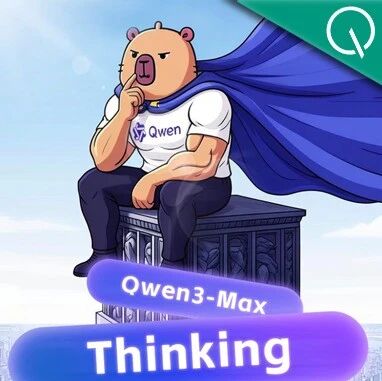
Qwen拿半成品刷下AIME'25满分,给别人留点面子吧……
量子位· 2025-11-04 03:32
Core Insights - Qwen3 has achieved a remarkable performance in mathematical reasoning tests, scoring full marks in AIME 25 and HMMT 25, showcasing its advanced capabilities in problem-solving [1][3][6]. Performance Comparison - The previous best scores in AIME 25 were held by the GPT-5 series, with GPT-5 Codex (high) at 98.7% accuracy and GPT-5 (high) at 94.3%. In contrast, Qwen3 scored 91% [6]. Model Features - Qwen3-Max-Thinking is currently available for free testing in Qwen Chat, with an API launched on Alibaba Cloud. The official team has committed to ongoing training and updates for the model [9][10]. Testing and Results - Initial tests included programming tasks, such as simulating a bouncing ball within a rotating hexagon, which Qwen3-Max-Thinking executed successfully [12][15]. - The model also tackled complex mathematical problems, providing correct answers after a brief thinking period [16]. User Experience - Users reported that Qwen3-Max-Thinking took considerable time to process certain tasks, sometimes reflecting on the problem in both Chinese and English [25]. - The model demonstrated the ability to create a 3D solar system using Three.js, although initial attempts were incomplete until prompted for improvements [20][22]. Future Developments - The development team acknowledges the need for further refinement and enhancement of the model's capabilities, indicating that the work is ongoing [27].
微软机房大量英伟达GPU开始吃灰……
量子位· 2025-11-04 03:32
Core Viewpoint - Microsoft is facing an unprecedented issue with a surplus of GPUs that are idly stored due to a lack of power and space, rather than a shortage of chip supply [1][3][4]. Group 1: Power and Infrastructure Challenges - The primary challenge is not the surplus of computing power but the insufficient power supply and the inability to quickly build data centers close to power sources [2][4]. - Microsoft has a significant number of Nvidia AI chips that are currently unused due to power shortages and a lack of ready-to-use data centers, referred to as "warm shells" [3][6]. - The overall demand for electricity has surged in the past five years, driven by the rapid expansion of AI and cloud computing, outpacing utility companies' capacity to meet this demand [15][16]. Group 2: Industry Response and Future Outlook - Data center developers are increasingly opting for "behind-the-meter" power solutions to bypass public utilities and address energy shortages [17]. - Despite efforts to increase power supply, the construction pace of data centers and cooling systems is lagging behind actual demand [18][20]. - There are concerns that if AI demand slows down, the investments in power plants and storage projects may become underutilized [22]. Group 3: Strategic Shifts in Chip Production - Microsoft has decided not to hoard single-generation GPUs due to the risk of depreciation if the chips cannot be powered in time [30][32]. - The industry is shifting focus from peak performance to energy efficiency, as companies now prioritize the most energy-efficient chips due to power constraints [39]. - The CEO of Microsoft has called for an increase in annual power generation capacity by 100 gigawatts, viewing it as a strategic asset for AI [28]. Group 4: Investment and Market Dynamics - Microsoft has received approval to export Nvidia chips to the UAE for building data centers necessary for AI model training, indicating a shift of AI infrastructure to energy-rich emerging markets [41][43]. - The company plans to invest $8 billion over the next four years in the Gulf region for data centers, cloud computing, and AI projects, highlighting the region's financial and energy advantages [42][43].



全新创作平台SkyReels来了!一张画布+一个对话框包办AI视频创作全流程
量子位· 2025-11-04 01:56
Core Insights - The article introduces SkyReels, a new multi-modal creative tool developed by Kunlun Wanwei, which simplifies the process of creating AI-generated videos and images by integrating various functionalities into a single platform [1][4][45]. Group 1: Features of SkyReels - SkyReels allows users to create content without switching between multiple tools, enabling a seamless workflow for generating images, videos, and audio [4][5][45]. - The platform includes numerous popular models such as Sora2, Veo3.1, and NanoBanana, providing users with a wide range of creative options [7][9]. - Users can create dynamic content by simply dragging images into the video function area, eliminating the need for separate editing tools [11][15]. Group 2: Creative Capabilities - SkyReels can generate music and corresponding videos based on user prompts, showcasing its ability to understand and create content that matches specific themes [15][16]. - The platform features a "Super Agent" that assists users in brainstorming and scriptwriting, enhancing the creative process [21][22]. - Expert Agents are available for specialized tasks, providing tailored solutions for various creative needs, such as advertising and visual design [24][26]. Group 3: User Experience - The integration of over 150 templates allows users to efficiently create high-quality content without extensive prior knowledge [32]. - SkyReels supports advanced features like video extension and style transfer, enabling users to enhance their videos with different artistic styles while maintaining original actions [36][40]. - The platform aims to shift the focus from technical execution to creative storytelling, allowing users to concentrate on their ideas rather than the mechanics of content creation [46][47].

llya证词太狗血了!奥特曼坏,Mira茶,OpenAI差点跟Anthropic合并
量子位· 2025-11-03 09:16
Core Viewpoint - The article discusses the ongoing tensions and conflicts within OpenAI, particularly focusing on Sam Altman's decision to not hold equity in the company and the implications of this choice on governance and control [2][21][40]. Group 1: OpenAI's Structure and Altman's Role - Sam Altman has maintained a 0% equity stake in OpenAI despite being the CEO, a decision he claims is based on his wealth and passion for technology [9][12][40]. - The restructuring of OpenAI has led to speculation about Altman's motivations, with some suggesting that his lack of equity allows him to maintain control over the company's direction without being tied to its financial performance [22][41]. - OpenAI's mission emphasizes safety and human benefit, which sometimes conflicts with commercial interests, leading to governance challenges [23][27]. Group 2: Internal Conflicts and Governance Issues - Recent testimonies reveal that internal conflicts, including Altman's alleged manipulative behavior, contributed to tensions within the company [31][32][34]. - The article highlights a significant incident where Altman was nearly ousted from his position, but employee support led to his reinstatement [38]. - The governance structure of OpenAI, which includes both non-profit and for-profit elements, has created friction regarding decision-making and operational execution [27][40]. Group 3: Financial Performance and Future Prospects - OpenAI's revenue has surpassed $13 billion annually and is projected to reach $100 billion by 2027, indicating rapid growth [40]. - The company is preparing for an IPO with a valuation of $1 trillion, which would mark one of the largest IPOs in history [42][43]. - Altman's role as CEO of a potentially trillion-dollar company may be more appealing than personal financial gain through equity [43].

B站整了个搞笑诺贝尔评选,也太难绷了
量子位· 2025-11-03 06:31
Core Viewpoint - The article discusses the humorous yet scientifically significant awards presented at the "Super Science Gala" hosted by Bilibili, highlighting various innovative research achievements across multiple fields [4][5]. Group 1: Mathematics - A study on the universal quantification characteristics of musical melodies reveals that composers, from Bach to Jay Chou, unconsciously pursue a balance between smoothness and maximum entropy in their compositions, adhering to a hidden power law [10][14]. Group 2: Physics - Research awarded in the physics category focuses on bubbles that remain unbroken for 23 minutes and 36 seconds, demonstrating exceptional stability through ultrasonic standing wave fields, which could have applications in biomedical fields and nanomaterial manufacturing [16][18]. Group 3: Robotics - The robotics award goes to a magnetic fluid robot resembling the character "Venom," which can navigate through blood vessels, showing potential for cancer treatment [20][22]. Group 4: Medicine - A study indicates that "laughter training" can effectively alleviate symptoms of dry eye syndrome, proving to be as effective as a 0.1% sodium hyaluronate treatment, while also improving tear film break-up time [25][28]. Group 5: Chemistry - A breakthrough inspired by the pitcher plant leads to the development of a super-smooth toilet surface that prevents clogging, utilizing a special plastic and hydrophobic sand particles [30][33]. Group 6: Artificial Intelligence - An AI system designed for the game "Werewolf" demonstrates strategic capabilities, achieving high win rates against human players by employing various tactics based on its role in the game [34][36]. Group 7: Biology - Research on gene manipulation shows that overexpressing the AalNix3&4 gene can convert female mosquitoes into fertile males, providing a foundational approach for mosquito population control [38][40]. Group 8: Quantum Technology - The University of Science and Technology of China successfully raised 105 "Schrödinger's cats," marking a significant advancement in quantum computing with a prototype that achieves international leading performance in coherence time and fidelity [43][47].

