量子位

Search documents
AI漫画“拍立得”上线:1句话1张照片,生成剧情完整连载
量子位· 2025-11-03 04:30
Core Viewpoint - The article discusses the launch of a new feature called "Magic Comic" in the Wenxin app, which allows users to create AI-generated comics easily and quickly using just a sentence or a photo, transforming ideas into shareable content in about two minutes [86]. Group 1: Functionality Overview - Users can generate multi-page comics by uploading a reference photo and inputting a text description, with the process taking approximately two minutes [23]. - The feature supports custom character creation, allowing users to upload up to two photos and freely set character names [24]. - Users can choose from various artistic styles, including Ghibli, anime, traditional Chinese ink, and more, to customize their comic's appearance [26]. Group 2: User Experience - The "Magic Comic" feature autonomously handles character generation, story construction, and final comic creation, resulting in a coherent and engaging narrative [28]. - Users can extend their stories with options for automatic or manual continuation, allowing for seamless narrative development [59]. - The app also enables users to modify existing stories, providing flexibility in creative expression [72]. Group 3: Market Positioning - The introduction of "Magic Comic" represents a significant step for Wenxin as a comprehensive AI assistant, enhancing user interaction and creativity [86]. - The app aims to lower the barriers for comic creation, making it accessible to everyone regardless of artistic skill, thus promoting widespread engagement with AI technology [84]. - The Wenxin app has undergone a rebranding from Wenxiao Yan to Wenxin, reflecting its expanded capabilities and focus on user-friendly AI tools [85].


大模型如何准确读懂图表?微软亚研院教它“看、动手、推理”
量子位· 2025-11-03 03:12
Core Insights - The article discusses the advancements of PixelCraft, a system developed by Microsoft Research Asia in collaboration with Tsinghua University and Hong Kong University of Science and Technology, aimed at improving the understanding of structured images through high-fidelity image processing and nonlinear multi-agent reasoning [2][31]. Group 1: Challenges in Structured Image Understanding - Traditional models struggle with structured images like charts and scientific drawings due to the need for pixel-level detail and symbolic abstraction, which is not adequately addressed by existing methods [3][4]. - The limitations of linear "chain-of-thought" processes hinder the necessary backtracking and branching exploration required for complex tasks [2][5]. Group 2: PixelCraft's Approach - PixelCraft addresses these challenges by focusing on two main aspects: ensuring accurate perception ("seeing clearly") and enabling flexible reasoning ("thinking flexibly") [5]. - The system comprises several components, including a dispatcher, planner, reasoner, visual and planning critics, and a set of visual tool agents, which work together to enhance structured image understanding [7][31]. Group 3: High-Fidelity Image Processing - The system utilizes a finely-tuned grounding model to accurately map textual references to pixel-level coordinates, facilitating a semi-automated tool generation process for image editing [10][13]. - A three-stage workflow is established, focusing on tool selection, collaborative discussion and backtracking, and self-review and re-planning, which allows for selective memory usage and reduces the burden of long contexts [7][18]. Group 4: Performance Improvements - PixelCraft demonstrates significant performance improvements across various benchmarks, such as CharXiv, ChartQAPro, and EvoChart, showing consistent gains across different models [23][32]. - The system's ability to reduce error propagation through high-fidelity localization and a closed-loop tool approach is highlighted, leading to enhanced accuracy and robustness in reasoning for structured images [18][33]. Group 5: Experimental Results - The article presents comparative performance data, indicating that PixelCraft outperforms traditional methods like VisualCoT in structured image tasks, emphasizing the importance of selective memory and discussion-based backtracking [27][28]. - Specific tools for chart analysis, such as subplot cropping and auxiliary line annotation, are identified as essential for effective reasoning in structured image contexts [29][30].


黄仁勋投了家复刻马斯克声音的AI公司
量子位· 2025-11-03 03:12
Core Viewpoint - Cartesia, an AI voice company, has gained attention with its new voice model Sonic-3 and a recent $100 million Series B funding round, with notable investors including NVIDIA [3][4][13]. Group 1: Company Overview - Cartesia was founded by Karan Goel, a talented individual from Stanford AI Lab, who has previously excelled in the field of state space models (SSM) [5][6][28]. - The company has a strong academic foundation, with its core team primarily composed of members from Stanford AI Lab [7][11]. Group 2: Product Development - Cartesia's Sonic-3 model represents a significant upgrade, focusing on generating more human-like speech, capturing emotional nuances, and improving response speed [14][15][17]. - The model operates on a state space model (SSM) architecture, which allows for faster and more natural responses compared to traditional Transformer-based models [15][16]. Group 3: Funding and Growth - The company has rapidly progressed since its inception, securing seed funding in its second year and subsequently launching its first product, Sonic, which generated high-quality, natural-sounding speech [11][12]. - Following a $64 million Series A funding round earlier this year, Cartesia has now completed a $100 million Series B funding round, demonstrating its effective strategy of technology development alongside fundraising [12][13].

量子位2025年度榜单冲刺申报中!企业/产品/人物榜正在征集
量子位· 2025-11-03 03:12
Core Points - The article announces the launch of the "2025 Artificial Intelligence Annual Awards" to recognize outstanding contributions in the AI industry [1] - The awards will cover three main categories: companies, products, and individuals, with five specific awards to be given [1][3] - The event aims to celebrate and encourage professionals in the AI field, highlighting the importance of innovation and leadership [1] Group 1: Company Awards - The "2025 AI Annual Leading Company" award will recognize the most comprehensive AI companies in China [4] - Criteria for participation include being registered in China or primarily serving the Chinese market, and having a leading position in AI or related industries [5] - The awards will also include categories for "Potential Startup Company" and "Outstanding Solutions" [4] Group 2: Product Awards - The "2025 AI Annual Outstanding Product" award will focus on AI products that have made significant technological innovations and market impacts [12] - Products must be market-ready, have received user feedback, and demonstrate substantial advancements in the past year [14] - The "2025 AI Annual Outstanding Solution" award will evaluate AI solutions based on their innovation, implementation, and industry influence [13] Group 3: Individual Awards - The "2025 AI Annual Focus Person" award will honor notable individuals in the AI sector who have made significant contributions [16] - Candidates must be recognized for their impact in AI technology or commercialization within the past year [21] - The evaluation will consider the individual's company influence, technical and business capabilities, and overall industry recognition [21] Group 4: Event Details - The registration for the awards is open until November 17, 2025, with results to be announced at the MEET2026 Smart Future Conference [19] - The conference will gather leaders from technology, industry, and academia to discuss transformative changes in the AI sector [23] - The event aims to attract thousands of participants and millions of online viewers, establishing itself as a key annual event in the AI industry [24]

美团新独立APP,点不了菜只能点AI
量子位· 2025-11-03 03:12
Core Viewpoint - Meituan is leveraging its expertise in delivery services to develop advanced AI models, with the latest being LongCat-Flash-Omni, which supports multimodal capabilities and achieves state-of-the-art performance in open-source benchmarks [2][8]. Group 1: Model Performance and Features - LongCat-Flash-Omni has surpassed other models like Qwen3-Omni and Gemini-2.5-Flash in comprehensive multimodal benchmarks, achieving open-source state-of-the-art status [2]. - The model maintains high performance across individual modalities such as text, image, audio, and video, demonstrating robust capabilities without sacrificing intelligence [3]. - With a total of 560 billion parameters and only 27 billion active parameters, the model utilizes a "large total parameters, small active" MoE architecture, ensuring high inference efficiency while retaining extensive knowledge [4]. Group 2: User Experience and Accessibility - LongCat-Flash-Omni is the first open-source model capable of real-time multimodal interaction, enhancing user experience significantly [8]. - The model is available for free on Meituan's LongCat APP and web platform, supporting various input methods including text, voice, and image uploads [9][10]. - Users have reported a smooth interaction experience, with quick response times and effective handling of complex multimodal tasks [25][26]. Group 3: Development Strategy - Meituan's iterative model development strategy focuses on speed, specialization, and comprehensive capabilities, aiming to create an AI that can understand and interact with complex real-world scenarios [29][31]. - The company has a clear path for expanding its AI capabilities, moving from basic chatbots to advanced multimodal models, thereby laying the groundwork for a "world model" that deeply understands reality [47][62]. - Meituan's investments in embodied intelligence and robotics are part of a broader strategy to connect the digital and physical worlds, enhancing service efficiency and user experience [42][56]. Group 4: Challenges and Innovations - The development of multimodal models presents challenges such as high integration difficulty, real-time interaction performance, and training efficiency [33][36]. - LongCat-Flash-Omni addresses these challenges through innovative architectural designs, including a unified end-to-end architecture and progressive training methods that enhance multimodal capabilities [38][39]. - The model's design allows for low-latency real-time interactions, setting it apart from existing models that struggle with responsiveness [36][39].

奥特曼纳德拉同台回应一切:合作细节、OpenAI未来路线曝光
量子位· 2025-11-02 07:00
Group 1 - OpenAI's revenue is projected to reach $13 billion by 2025, while it has committed to a $1.4 trillion investment in computing power, raising questions about the feasibility of such a commitment given its current revenue [4][24][25] - Microsoft has invested approximately $13 to $14 billion in OpenAI since 2019, acquiring about 27% equity, which has been diluted over time due to new funding rounds [4][5][6] - The partnership between Microsoft and OpenAI is described as one of the greatest collaborations in tech history, with both parties acknowledging the unexpected success and growth achieved [5][8] Group 2 - OpenAI's non-profit organization structure is now one of the largest globally, holding $130 billion in stock, which will be used to ensure AGI benefits all of humanity [12][7] - The initial investment by Microsoft was not expected to yield such high returns, but the partnership has proven to be highly beneficial for both parties [4][5][6] - OpenAI plans to allocate $25 billion from its assets to healthcare and AI safety, emphasizing the importance of these sectors for societal benefit [12][14][16] Group 3 - OpenAI has secured a seven-year exclusivity agreement with Microsoft for its GPT models, preventing distribution on other major cloud platforms until AGI is verified [18][19] - OpenAI will continue to pay a revenue share to Microsoft, which is expected to be significant given the projected growth in OpenAI's revenue [20][21] - The verification of AGI is a critical milestone that will impact the exclusivity and revenue-sharing agreements between OpenAI and Microsoft [20][21] Group 4 - OpenAI's growth is attributed to its ability to execute business plans effectively, with Microsoft noting that it has not seen a commercial plan from OpenAI that has not been exceeded [28][27] - The demand for computing power is expected to grow significantly, with discussions around the relationship between cost and demand for AI capabilities [29][30] - Microsoft emphasizes the importance of balancing supply and demand in its cloud services, particularly in light of the rapid growth in AI applications [63][66] Group 5 - OpenAI's future plans include the development of consumer-grade devices capable of running advanced AI models locally, which could revolutionize user interaction with technology [36][37] - The potential for AI to contribute to scientific discoveries is highlighted, with expectations for significant advancements by 2026 [45][46] - The integration of AI into everyday applications is anticipated to enhance user experience and productivity, moving towards a more intuitive interaction model [47][72]

向黄仁勋汇报的英伟达36人
量子位· 2025-11-02 04:23
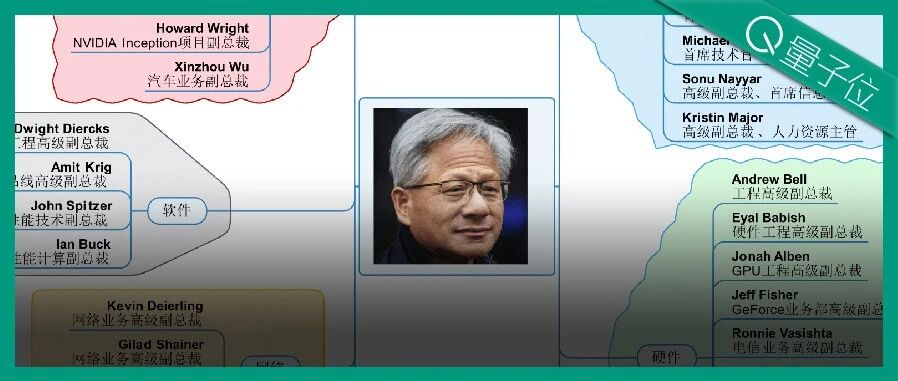
Core Viewpoint - The article discusses the organizational structure and key personnel reporting directly to CEO Jensen Huang at Nvidia, highlighting the strategic importance of hardware and AI in the company's future growth. Group 1: Organizational Structure - Nvidia's CEO Jensen Huang has 36 direct reports, divided into seven functional areas: strategy, hardware, software, AI, public relations, networking, and an executive assistant [1][3] - Among these, nine are focused on hardware-related businesses, indicating that hardware remains a cornerstone of Nvidia's operations [6][7] - The presence of three public relations executives under Huang's direct supervision is notable, especially when compared to other tech leaders like Elon Musk, who has none [12][13] Group 2: Strategic Focus - AI and emerging technologies are becoming a second pillar in Huang's business strategy, alongside hardware [8][10] - Huang's approach emphasizes the need for a systematic external communication mechanism to manage complex industry relationships, including those with Wall Street, developers, and government entities [15][17] Group 3: Key Personnel - Key figures under Huang include Jonah Alben, Dwight Diercks, and Bill Dally, all of whom have long tenures at Nvidia and play critical roles in GPU architecture, software development, and research [21][32][42] - New addition Wu Xinzhao, responsible for Nvidia's automotive business, brings significant experience from Qualcomm and XPeng Motors, indicating a strategic push into the automotive sector [56][59][71] Group 4: Management Philosophy - Huang's management style is characterized by a flat organizational structure, which he believes enhances information flow and decision-making speed [79][81] - Despite a preference for a flat structure, the rapid growth of Nvidia's workforce has led to a reduction in the number of direct reports, suggesting a potential shift towards a more vertical management approach [96][114] Group 5: Company Performance - Nvidia's financial performance has seen significant growth, with net profits soaring to approximately $29.5 billion in the 2024 fiscal year, a nearly 600% increase year-over-year [98] - The company's workforce expanded from 29,600 to 36,000 employees within a year, marking a 21.62% increase, which reflects the challenges of maintaining a flat structure amidst rapid growth [100][102]

「上下文工程」 已经30岁了,而你可能刚知道它
量子位· 2025-11-02 04:23
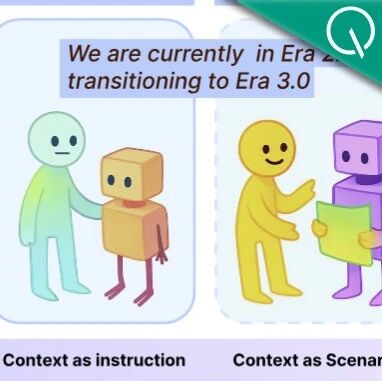
Core Insights - The article discusses the evolution of Context Engineering, emphasizing its significance in bridging the cognitive gap between humans and machines [3][12][21] - It highlights the transition from Era 1.0, characterized by limited machine understanding, to Era 2.0, where machines can comprehend natural language and context [22][40] - The future of Context Engineering is envisioned as a collaborative relationship between humans and AI, where machines not only understand but also anticipate human needs [92][98] Summary by Sections Context Engineering Overview - Context Engineering is defined as a process of entropy reduction aimed at bridging the cognitive gap between humans and machines [21] - The concept has evolved over 30 years, with significant milestones marking its development [12][24] Historical Context - The origins of Context Engineering can be traced back to the 1990s, with foundational work by researchers like Bill Schilit and Anind Dey [8][39] - The first era (1990s-2020) was marked by machines operating as state machines, requiring explicit commands from users [27][31] Era 1.0: Sensor Era - In this era, machines struggled to understand human intent, leading to cumbersome interactions requiring multiple steps to perform simple tasks [30][31] - The introduction of sensors aimed to enhance machine awareness of user context, but limitations remained in machine understanding [32][34] Era 2.0: Intelligent Assistant Era - The release of GPT-3 in 2020 marked a significant shift, enabling machines to process natural language and engage in more intuitive interactions [41][43] - Key advancements included multi-modal perception, allowing machines to interpret images, voice, and documents [45][46] - The ability of machines to handle high-entropy inputs and provide proactive assistance represented a major leap forward [49][51] Future Directions: Era 3.0 and Beyond - Predictions for Era 3.0 suggest a seamless integration of context collection, management, and usage, leading to more fluid human-AI collaboration [68][81] - The potential for AI to surpass human capabilities in certain tasks raises questions about the future of Context Engineering and its implications for human identity [92][94] Actionable Insights - The article emphasizes the need for a systematic framework for Context Engineering, focusing on collection, management, and usage of context [61] - It calls for researchers and developers to explore the ethical implications and practical applications of advanced context management systems [101][102]
Cursor“自研”模型套壳国产开源?网友:毕竟好用又便宜
量子位· 2025-11-02 04:23
Core Viewpoint - The article discusses the rapid advancement of Chinese open-source AI models, highlighting that they have caught up with leading AI products from the U.S. [2] Group 1: New AI Models - AI programming applications Cursor and Windsurf have recently released new models, with Cursor promoting its "first coding model" and Windsurf claiming to set a new speed benchmark [3][8] - Cursor's Composer-1 model is designed for low-latency coding tasks, completing most tasks within 30 seconds [9] - Windsurf's SWE-1.5 model, developed in collaboration with Cerebras, boasts a speed of 950 tokens per second, significantly outperforming competitors [11] Group 2: Open-Source Model Influence - There are indications that both Cursor and Windsurf's new models are based on Zhiyuan's GLM, although official confirmations are lacking [6][14] - The discovery that Cursor's model can generate Chinese text has led to discussions about the implications of using Chinese open-source models [4][15] - The article notes that Chinese open-source models dominate various performance rankings, with Qwen3 being one of the most downloaded models on HuggingFace [21] Group 3: Market Dynamics - The article suggests that for many startups, leveraging existing open-source models is a more rational choice than investing hundreds of millions in training new models from scratch [29][30] - The growing strength and affordability of Chinese open-source models position them as central players in the AI landscape [30][31]

量子位2025年度榜单冲刺申报中!企业/产品/人物榜正在征集
量子位· 2025-11-02 04:23
Group 1 - The article announces the launch of the "2025 Artificial Intelligence Annual Awards" to recognize outstanding contributions in the AI industry [1][19] - The awards will be categorized into three main dimensions: companies, products, and individuals, with five specific award types [1][3] - The event aims to celebrate and encourage professionals in the AI field, highlighting the importance of innovation and collaboration [1][23] Group 2 - The "2025 AI Annual Leading Enterprises" award will focus on identifying the most comprehensive and capable companies in the Chinese AI sector [4] - Criteria for participation include being registered in China or primarily serving the Chinese market, and having a leading position in AI-related industries [5][10] - The evaluation standards will assess business capabilities, technical abilities, capital strength, and overall comprehensive capabilities [10] Group 3 - The "2025 AI Annual Potential Startup" award will spotlight innovative AI startups with significant investment value and growth potential [8] - Eligible companies must have a viable business model, market recognition, and notable achievements in technology or product innovation within the past year [11] - Evaluation criteria will include business potential, technological innovation, capital capabilities, and overall company strength [11] Group 4 - The "2025 AI Annual Outstanding Product" award will recognize AI products that demonstrate significant technological innovation and market impact [12] - Products must be market-ready, have received user feedback, and show substantial advancements in technology or application within the last year [14] - Evaluation will focus on product and technical strength, market performance, and overall brand influence [14] Group 5 - The "2025 AI Annual Outstanding Solution" award will highlight exemplary AI applications across various industries [13] - Solutions must have been implemented in real business scenarios, validated by customers, and show significant advancements in technology or business models [15] - Evaluation criteria will include innovation, market performance, and overall service capabilities [15] Group 6 - The "2025 AI Annual Focus Person" award will identify notable individuals in the Chinese AI sector who have made significant contributions [16] - Candidates must be influential figures in AI, with a proven track record of achievements and recognition in the industry [21] - Evaluation will consider the individual's company background, personal capabilities, and overall influence in the field [21] Group 7 - The registration for the awards is open until November 17, 2025, with results to be announced at the MEET2026 Smart Future Conference [19][20] - The MEET2026 conference will gather leaders from technology, industry, and academia to discuss transformative changes in the AI sector [23][24] - The event aims to attract thousands of participants and millions of online viewers, establishing itself as a key annual event in the smart technology industry [24]