量子位

Search documents
一文看尽35万人围观的智博会
量子位· 2025-09-14 07:30
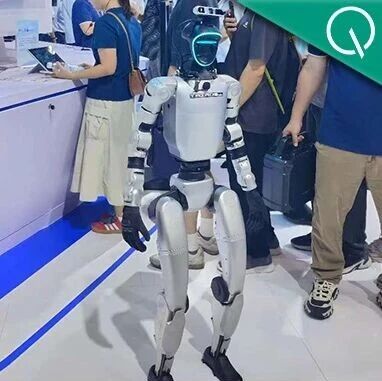
Core Viewpoint - The 2025 Chongqing Smart Expo showcased the latest advancements in the smart industry, featuring over 550 domestic and international companies and more than 3,000 innovative products, attracting over 350,000 visitors [1][3]. Group 1: Main Themes - The main theme of the expo is artificial intelligence, with two core focuses: "Artificial Intelligence +" and "Smart Connected New Energy Vehicles" [5]. - Five major sectors highlighted include smart robotics, low-altitude economy, smart home, smart driving, and digital cities [5]. Group 2: Key Exhibitors and Technologies - Huawei showcased its comprehensive digital transformation solutions, emphasizing its self-developed Kunpeng processors and Ascend AI hardware, which can enhance business performance by 10% to 30% [10]. - Tencent presented its modular embodied intelligence open platform, TAIROS, and demonstrated interactive AI applications across its suite of apps, including QQ and WeChat [12][18]. - iFlytek focused on consumer products, including AI learning machines and intelligent office tools [20]. Group 3: Telecommunications Companies - China Unicom introduced a "three-in-one" system for AI infrastructure, technology, and industry, showcasing collaborative robotics and AI-driven industrial management [24]. - China Mobile highlighted its smart connected vehicles and AI intelligent terminals, integrating 5G technology with smart home ecosystems [27]. - China Telecom's Tianyi Cloud featured a quantum computing model and advanced cloud services, showcasing its leadership in quantum technology [31]. Group 4: State-Owned Enterprises - State Grid displayed nine self-developed chips, addressing the "bottleneck" issue in chip technology with capabilities ranging from 0.1 to 256 TOPS [33]. - Sinopec presented a miniature model of an intelligent factory, demonstrating advanced robotics and drone inspection systems [35]. - PetroChina introduced its first over 10,000-meter deep exploration well model and launched an app tailored for the energy and chemical industry [39]. Group 5: Academic Contributions - Chongqing University developed a digital twin system for coal mines, successfully tested in real-world conditions [41]. - Chongqing Jiaotong University showcased an intelligent inspection system for tunnels, integrating cloud and edge computing [45]. - Chongqing Normal University presented advanced brain imaging and brain-computer interface technologies [49]. Group 6: Smart Home Innovations - Xiaomi and Haier displayed comprehensive smart home solutions, integrating various smart devices for enhanced user experience [79][81]. - Midea showcased its smart kitchen ecosystem, emphasizing climate control and energy efficiency [87]. - Various AI-powered pet care products were introduced, including smart feeding and health tracking devices [96][99]. Group 7: Low-Altitude Economy - The expo featured a dedicated area for low-altitude economy, showcasing drones and air taxis, with DJI presenting its FLYCART 100 capable of carrying 80 kg [103][104]. - Xunyi Technology established urban air logistics networks in collaboration with major delivery platforms, focusing on medical supply delivery [112][114]. - The concept of "air taxis" was highlighted, with companies like GAC and VoloCity planning to launch electric air taxis for urban transport [122][125]. Group 8: Smart Connected Vehicles - The expo emphasized smart connected new energy vehicles, with Tesla showcasing its latest models, including the Model Y L with a range of 751 km [130][132]. - Various automakers, including Changan and BYD, presented their advancements in AI integration and autonomous driving technologies [152][173]. - The focus on "smart driving" reflects the industry's shift towards enhancing vehicle safety and interactivity through AI and IoT technologies [173].


科研学术,现在可以百度AI一下了
量子位· 2025-09-14 07:30
Core Viewpoint - Baidu Academic is transforming into a comprehensive "Research platform" that covers the entire lifecycle of academic papers, from searching and reading to creating and editing, aiming to become the first one-stop AI academic platform in the industry [1][2][29]. Group 1: Features of the New Platform - The platform will include AI academic search, AI literature summarization, AI reading, and paper mapping, enhancing the efficiency of literature collection and research [1][3][7]. - Users can input keywords to find relevant literature, and utilize AI Q&A for summarization, significantly reducing time spent switching between different PDFs [9][10]. - The literature mapping feature allows users to visualize classic literature, research hotspots, and development trajectories in their field within minutes [10][12]. Group 2: Reading and Writing Support - The literature summarization function supports batch uploading of up to 100 files, generating structured summaries in 30 seconds, enabling researchers to grasp core content quickly [13][14]. - The AI reading feature can accurately restore the layout of foreign language literature and provide automatic translations for a smoother reading experience [15][16]. - The writing phase includes a topic recommendation function that suggests valuable innovative research directions based on existing literature [16][19]. Group 3: Academic Resource Integration - Baidu Academic has partnered with professional data analysis platforms like SPSSPRO, allowing for a seamless process from data acquisition to analysis and result presentation [22][23]. - As of now, Baidu Academic has indexed 690 million literature resources, leading globally, with a daily update of over 420,000 documents and a Chinese literature coverage rate of 97% [31][34]. - The platform aims to lower research barriers and enhance academic content dissemination by covering all professional fields classified by the Ministry of Education [33][34]. Group 4: Academic Community Engagement - Baidu Academic has created profiles for 4.2 million scholars, including renowned academicians, facilitating information exchange within the academic community [36][38]. - The vision of upgrading the "academic foundation" to a "global academic ecosystem engine" is becoming increasingly feasible as the academic ecosystem continues to improve [38][40].


啥?陶哲轩18个月没搞定的数学挑战,被这个“AI高斯”三周完成了
量子位· 2025-09-14 05:05
Core Viewpoint - The new AI agent named Gauss has demonstrated remarkable capabilities by solving a mathematical challenge in just three weeks, a task that took renowned mathematicians 18 months to make progress on [2][4][8]. Group 1: Gauss and Its Capabilities - Gauss is developed by a company called Math and is the first AI agent capable of assisting top mathematicians in formal verification through autoformalization [5]. - The process of formalization involves converting human-written mathematical content into a machine-readable format, allowing for verification of correctness [6]. - Gauss has generated approximately 25,000 lines of Lean code, which includes over a thousand theorems and definitions, a task that typically requires years to complete [10][11]. Group 2: Comparison with Historical Projects - The largest historical formalization projects have taken up to ten years and produced around 500,000 lines of code, while Gauss's output is significantly faster and more efficient [12]. - In comparison, the standard mathematical library Mathlib, which contains about 2 million lines of code and 350,000 theorems, took over 600 contributors eight years to develop [13]. Group 3: Technical Infrastructure and Future Plans - To support Gauss's operations, Math collaborated with Morph Labs to develop the Trinity infrastructure, which involves thousands of concurrent agents, each with its own Lean environment, consuming several terabytes of cluster memory [14]. - The Math team anticipates that Gauss will significantly reduce the time required to complete large mathematical projects and plans to increase the total amount of formalized code by 100 to 1,000 times within the next 12 months [15][16]. Group 4: Insights from Mathematicians - Mathematician Terence Tao highlighted the importance of clearly defining both explicit and implicit goals in formalization projects, especially as powerful AI tools change the dynamics of project execution [18][19]. Group 5: Company Background - The founder of Math, Christian Szegedy, is recognized for his contributions to the field, including co-authoring the influential paper on Batch Normalization, a key technology for scaling deep learning [21][24][26].

机器人入职洗衣房,开始打工挣钱!苹果前AI高管打造
量子位· 2025-09-14 05:05
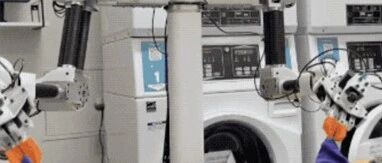
Core Viewpoint - The article discusses the introduction of a laundry folding robot named Isaacs, developed by Weave Robotic, which is designed to automate the labor-intensive task of folding clothes in laundromats, marking a significant advancement in household robotics [1][3][4]. Group 1: Company Overview - Weave Robotic was founded by former Apple team members, indicating a strong background in technology and innovation [4][15]. - The company has successfully completed three rounds of financing even before the official product launch, showcasing investor confidence in its potential [4]. Group 2: Technology and Functionality - Isaacs is not just a folding robot; it is a versatile household robot capable of performing various tasks, including organizing items and home security in the future [12][14]. - The robot operates based on a three-tiered technological framework, which includes a self-trained visual-language-action (VLA) model for precise identification and folding of clothes [10][18]. - Isaacs can achieve 70% autonomous folding with human intervention only when necessary, demonstrating its advanced capabilities [18]. Group 3: Operational Process - The operational workflow begins with the laundromat handling washing and drying, followed by Isaacs taking over the folding process, which is labor-intensive and requires a certain level of neatness [5][8]. - Specific standards for folding are established, ensuring that items like shirts are folded uniformly and neatly, with attention to details such as collar orientation [6][7]. Group 4: Future Prospects - The company plans to expand Isaacs' functionalities beyond folding clothes to include various household tasks, addressing diverse family needs [14]. - Privacy considerations are integrated into the design, with features that allow the robot to shut down its camera when idle [14].
兼得快与好!训练新范式TiM,原生支持FSDP+Flash Attention
量子位· 2025-09-14 05:05
Core Viewpoint - The article discusses the introduction of the Transition Model (TiM) as a new paradigm in generative modeling, aiming to reconcile the trade-off between generation speed and quality by modeling state transitions between any two time points, rather than focusing solely on instantaneous velocity fields or fixed-span endpoint mappings [3][8][34]. Group 1: Background and Challenges - Traditional generative models face a fundamental conflict between generation quality and speed, primarily due to their training objectives [2][6]. - Existing diffusion models rely on local vector fields, which require small time steps for accurate sampling, leading to high computational costs [5][6]. - Few-step models, while faster, often encounter a "quality ceiling" due to their inability to capture intermediate dynamics, limiting their generation capabilities [5][7]. Group 2: Transition Model Overview - The Transition Model abandons traditional approaches by directly modeling the complete state transition between any two time points, allowing for flexible sampling steps [4][8]. - This model supports arbitrary step sizes and decomposes the generation process into multiple adjustable segments, enhancing both speed and fidelity [8][10]. Group 3: Mathematical Foundations - The Transition Model is based on a "State Transition Identity," which simplifies the differential equations governing state transitions, enabling the description of specific transitions over arbitrary time intervals [12][16]. - Unlike diffusion and mean flow models, which focus on instantaneous or average velocity fields, the Transition Model encompasses both, providing a more comprehensive framework for generative modeling [16][17]. Group 4: Experimental Validation - The Transition Model has been validated on the Geneval dataset, demonstrating that an 865M parameter version can outperform larger models (12B parameters) in terms of generation capabilities [20][34]. - The model's training stability and scalability have been enhanced through the introduction of a differential derivative equation (DDE) approach, which is more efficient and compatible with modern training optimizations [25][33]. Group 5: Conclusion - Overall, the Transition Model offers a more universal, scalable, and stable approach to generative modeling, addressing the inherent conflict between speed and quality in generative processes [35].

AI解数学题只靠最后一个token
量子位· 2025-09-14 05:05
Core Insights - The research indicates that in mental arithmetic tasks, the majority of calculations are concentrated on the last token, rather than being distributed across all tokens, suggesting that global information access is not necessary for specific tasks like mental arithmetic [1][11]. Group 1: Research Methodology - Researchers employed Context-Aware Mean Ablation (CAMA) and attention-based peeking techniques to conduct a series of ablation experiments on models like Llama-3-8B [2][22]. - The experiments aimed to identify the "minimum computation" required for models to perform well by systematically removing or altering parts of the model [3]. - A sparse subgraph termed "All-for-One" (AF1) was identified, which allows efficient computation with minimal layers and limited information transfer [4][5]. Group 2: Model Structure and Functionality - In the AF1 structure, initial layers (L_wait) do not perform calculations related to their own values but instead focus on general preparatory tasks [7]. - Information is transferred to the last token through intermediate layers (L_transfer), which then independently performs the final calculations [8][9]. - This separation of general computation and input-specific computation highlights the model's efficiency in handling arithmetic tasks [10]. Group 3: Experimental Findings - The experiments revealed that Llama-3-8B requires only the first 14 layers for general computation, followed by 2 layers for information transfer, with the remaining layers dedicated to the last token's self-computation [24][26]. - AF1_llama demonstrated high fidelity across eight tasks, maintaining performance levels close to the original model [28][29]. - The importance of specific attention heads in arithmetic calculations was confirmed, with the model retaining approximately 95% accuracy even after removing nearly 60 heads, indicating redundancy in attention heads [30]. Group 4: Generalization and Limitations - AF1_llama was tested for its ability to generalize to other arithmetic forms, showing high accuracy in direct arithmetic tasks but failing in tasks requiring semantic understanding, such as word problems and Python code [32][34]. - Similar AF1-like subgraphs were found in Pythia and GPT-J models, although these models exhibited shorter waiting periods and less clear performance boundaries compared to Llama [35][36]. Group 5: Contributions and Innovations - This research contributes to the understanding of arithmetic reasoning and cross-token computation mechanisms in large language models [37]. - The methodologies introduced, CAMA and ABP, offer innovative approaches that could extend beyond arithmetic tasks to broader applications [37].

他同时参与创办OpenAI/DeepMind,还写了哈利波特同人小说
量子位· 2025-09-13 08:06
Core Viewpoint - Eliezer Yudkowsky argues that there is a 99.5% chance that artificial intelligence could lead to human extinction, emphasizing the urgent need to halt the development of superintelligent AI to safeguard humanity's future [1][2][8]. Group 1: Yudkowsky's Background and Influence - Yudkowsky is a prominent figure in Silicon Valley, known for co-founding OpenAI and Google DeepMind, and has a polarizing reputation [5][10]. - He dropped out of school in the eighth grade and self-educated in computer science, becoming deeply interested in the concept of the "singularity," where AI surpasses human intelligence [12][13]. - His extreme views on AI risks have garnered attention from major tech leaders, including Musk and Altman, who have cited his ideas publicly [19][20]. Group 2: AI Safety Concerns - Yudkowsky identifies three main reasons why creating friendly AI is challenging: intelligence does not equate to benevolence, powerful goal-oriented AI may adopt harmful methods, and rapid advancements in AI capabilities could lead to uncontrollable superintelligence [14][15][16]. - He has established the MIRI research institute to study advanced AI risks and has been one of the earliest voices warning about AI dangers in Silicon Valley [18][19]. Group 3: Predictions and Warnings - Yudkowsky believes that many tech companies, including OpenAI, are not fully aware of the internal workings of their AI models, which could lead to a loss of human control over these systems [30][31]. - He asserts that the current stage of AI development warrants immediate alarm, suggesting that all companies pursuing superintelligent AI should be shut down, including OpenAI and Anthropic [32]. - Over time, he has shifted from predicting when superintelligent AI will emerge to emphasizing the inevitability of its consequences, likening it to predicting when an ice cube will melt in hot water [33][34][35].

攻克强化学习「最慢一环」!交大字节联手,让大模型RL训练速度飙升2.6倍
量子位· 2025-09-13 08:06
Core Insights - The article discusses the inefficiencies in reinforcement learning (RL) training, particularly highlighting the rollout phase, which consumes over 80% of the training time and is limited by memory bandwidth and autoregressive characteristics [1][2]. Group 1: RhymeRL Framework - Shanghai Jiao Tong University and ByteDance's research team introduced RhymeRL, which enhances RL training throughput by 2.6 times without sacrificing accuracy by leveraging historical data [2][21]. - RhymeRL is based on two key components: HistoSpec and HistoPipe [7]. Group 2: HistoSpec - HistoSpec innovatively incorporates speculative decoding, using previous historical responses as the "best script," which transforms the rollout process from a token-by-token generation to a batch verification process [9][10]. - This method significantly increases computational density and speeds up response generation by allowing high acceptance rates of drafts derived from historical sequences [13][14]. Group 3: HistoPipe - HistoPipe optimizes GPU resource utilization by implementing a scheduling strategy that minimizes idle time, allowing for efficient processing of tasks of varying lengths [15][19]. - It employs a "cross-step complement" approach to balance workloads across GPUs, ensuring that resources are fully utilized without idle periods [17][18]. Group 4: Performance Improvement - The combination of HistoSpec and HistoPipe results in a remarkable performance boost, achieving a 2.61 times increase in end-to-end training throughput for tasks such as mathematics and coding [21]. - This advancement allows researchers and companies to train more powerful models with fewer resources and in shorter timeframes, accelerating the iteration of AI technologies [22]. Group 5: Significance of RhymeRL - RhymeRL proposes a new paradigm in reinforcement learning by utilizing historical information to enhance training efficiency, demonstrating the potential for better resource allocation and compatibility with existing training algorithms [23].
AI水论文还得AI治:西湖大学首次模拟人类专家思考链,AI审稿分钟级给出全面反馈
量子位· 2025-09-13 06:07
Core Viewpoint - The article discusses the launch of AiraXiv, an open preprint platform for AI-generated academic papers, and DeepReview, an AI review system that simulates human expert evaluation, addressing the challenge of distinguishing high-quality research from a surge of AI-generated content [1][6][21]. AiraXiv Overview - AiraXiv is designed to manage and showcase AI-generated papers, reducing interference with traditional peer review processes [2][8]. - The platform provides a dedicated channel for high-quality AI research, allowing researchers to efficiently access valuable work [9]. - AiraXiv supports seamless integration with arXiv, enabling users to view original papers and AI review comments by entering the arXiv ID [10]. DeepReview Functionality - DeepReview is the first multi-stage AI review system that mimics human expert thought processes, aiming to provide systematic and interpretable paper evaluations [12]. - The review process includes three core stages: novelty verification, multi-dimensional assessment, and reliability validation [12][13][14]. - DeepReview can deliver comprehensive review feedback in minutes, significantly reducing the time required compared to traditional methods [19]. Performance Metrics - The DeepReviewer-14B model, trained on the DeepReview-13K dataset, outperforms the CycleReviewer-70B model while using fewer tokens [3]. - In optimal conditions, DeepReviewer-14B achieved a win rate of 88.21% and 80.20% against GPT-o1 and DeepSeek-R1, respectively [4]. Future Prospects - AiraXiv and DeepReview represent initial steps towards a broader exploration of AI's role in academic research, with plans to expand beyond computer science into other disciplines [21][22]. - The platforms aim to enhance the visibility and dissemination of quality research outcomes, reflecting potential changes in the research ecosystem where AI plays a larger role in various research stages [23]. Laboratory Background - The Westlake University Natural Language Processing Laboratory, established in September 2018 and led by Professor Zhang Yue, focuses on foundational and applied research in natural language processing and aims to advance the development of AI scientists [24].

谷歌DeepMind用AI探测引力波,登上Science了
量子位· 2025-09-13 06:07
Core Viewpoint - The collaboration between Google DeepMind, LIGO, and GSSI has led to the development of Deep Loop Shaping technology, significantly enhancing the low-frequency noise reduction capabilities in gravitational wave detection, allowing for more effective observation of cosmic events [1][4][14]. Summary by Sections Gravitational Waves and Detection Challenges - Gravitational waves are minute disturbances in spacetime caused by events like black hole and neutron star collisions, with signals weaker than atomic nuclei [6][7]. - The LIGO detector, spanning 2.5 miles (approximately 4 kilometers), is designed to capture these faint signals by measuring the interference of laser beams in two vacuum tubes [8][10]. - The detection of gravitational waves has been historically limited by noise interference, particularly in the 10-30Hz low-frequency range, which is crucial for observing medium-mass black hole mergers and neutron star collisions [13]. Breakthrough with AI Technology - The Deep Loop Shaping technology utilizes AI to manage noise rather than directly searching for gravitational waves, reconstructing LIGO's feedback control system [16][18]. - By simulating various noise factors and employing reinforcement learning, the AI optimized the detector's feedback loop, achieving a noise reduction in the 10-30Hz range to 1/30 of traditional methods, with some sub-bands reduced to 1/100 [18][20]. - This advancement has expanded LIGO's effective observation range from 130 million light-years to 170 million light-years, increasing the observable cosmic volume by 70% and significantly enhancing the number of detectable gravitational wave events annually [20][21]. Future Implications - The new technology allows for earlier warnings of cosmic collisions, enabling predictions of events such as neutron star mergers, potentially guiding observational efforts in real-time [22][23].