量子位

Search documents
每周7亿人都在如何用ChatGPT?OpenAI最全报告来了
量子位· 2025-09-16 00:52
Core Insights - The report titled "How People Use ChatGPT" was published by OpenAI in collaboration with Harvard economist David Deming, detailing the usage of ChatGPT from November 2022 to July 2025 [1][4] - As of July this year, ChatGPT has over 700 million weekly active users, sending a total of 18 billion messages weekly [5] User Engagement - The research analyzed 1.5 million large-scale dialogues to understand how people utilize ChatGPT, employing automated classifiers while ensuring privacy [6] - ChatGPT is primarily used for daily tasks, with three-quarters of conversations focusing on practical guidance, information search, and writing [11][12] - The main usage types include: - Practical guidance (28.8%): Personalized fitness plans, creative brainstorming, skill teaching - Information search (24.4%): Information on people/events, recipes, product inquiries - Writing (23.9%): Email/document generation, text editing, translation, summarization [18] User Demographics - The gender gap among ChatGPT users has significantly narrowed, with typical female names surpassing typical male names in user engagement this year [23][24] - Users aged 18-25 contribute 46% of the total message volume, with older users showing a higher proportion of work-related messages [26] - ChatGPT is experiencing rapid growth in low to middle-income countries, with usage growth in the lowest income countries being over four times that of the highest income countries as of May [27][28] Conclusion - Overall, ChatGPT is increasingly being adopted across diverse demographics, serving primarily as a consultant for practical guidance, information retrieval, and writing tasks [20][29]


GPT-5编程专用版发布!独立连续编程7小时,简单任务提速10倍,VS Code就能用
量子位· 2025-09-16 00:52
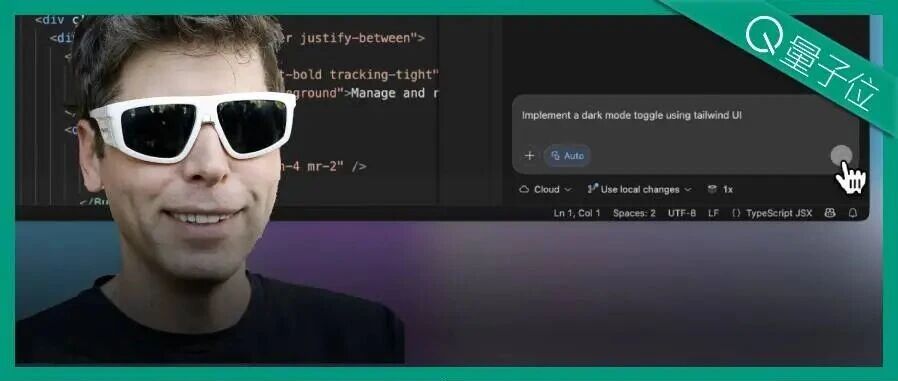
Core Viewpoint - OpenAI has launched the GPT-5-Codex model, which significantly enhances programming capabilities, allowing for independent continuous programming for up to 7 hours, and introduces a new "dynamic thinking" ability that adjusts computational resources in real-time during task execution [1][4][5]. Group 1: Model Enhancements - The new GPT-5-Codex model is specifically trained for complex engineering tasks, including building complete projects from scratch, adding features, testing, debugging, and executing large-scale refactoring [8]. - In testing, GPT-5-Codex demonstrated a nearly 20% improvement in success rates for code refactoring tasks compared to the original GPT-5 [9]. - For simple tasks, GPT-5-Codex reduced output token count by 93.7%, resulting in a 10-fold speed increase in response time [11]. Group 2: Dynamic Thinking Capability - GPT-5-Codex can spend double the time reasoning, editing, and testing code for complex tasks, leading to a 102.2% increase in output token volume [12]. - The model's dynamic thinking capability allows it to adjust its computational approach during task execution, enhancing its problem-solving efficiency [4]. Group 3: Code Review and Quality Improvement - GPT-5-Codex underwent specialized training for code review, reducing the error comment rate from 13.7% to 4.4% and increasing the proportion of high-impact comments from 39.4% to 52.4% [15]. - The model can understand the true intent of pull requests (PRs) and traverse entire codebases to validate behavior through testing [15][17]. Group 4: Ecosystem and Tool Integration - OpenAI has restructured the entire Codex product ecosystem, introducing features like image input support, allowing users to input screenshots and design drafts for implementation [18]. - The updated Codex CLI now tracks progress with to-do lists and integrates tools like web search and MCP for enhanced task management [19]. - New IDE extensions bring Codex directly into editors like VS Code and Cursor, enabling seamless cloud and local task management [23]. Group 5: Market Positioning - The timing of this upgrade coincides with a decline in user subscriptions for Claude Code due to quality issues, positioning OpenAI to capture market share in AI programming [25][26].
2025Q3 AI 100产品榜单报名开启|AI 100
量子位· 2025-09-15 09:25
Core Insights - The article discusses the evolving landscape of AI products in China, highlighting intensified competition and a shift back to product fundamentals, where user engagement and value delivery are paramount [4][5][6] - The upcoming "AI 100" list aims to identify leading and innovative AI products, providing a comprehensive view of the current market and future potential [8][9] Group 1: AI Product Landscape - By the second half of 2025, the competition among domestic AI products has become more intense, with a focus on genuine user engagement and sustained consumption [4] - Established products are solidifying their dominance in large markets, while highly specialized startups are seizing opportunities to capture user attention [5] - New AI-native product designs are emerging, exploring new market opportunities through innovations like multi-agent systems and multi-modal interactions [5][6] Group 2: AI 100 Overview - The "AI 100" initiative includes two main lists: "Flagship 100," which focuses on well-validated, leading products, and "Innovation 100," which targets high-growth potential and innovative solutions [8] - The evaluation process for the "AI 100" combines quantitative metrics such as user scale and engagement with qualitative assessments of long-term potential, including technology and market analysis [9] Group 3: Recruitment and Participation - The nomination process for the 2025 Q3 "AI 100" lists is open until October 10, inviting entrepreneurs, investors, and AI enthusiasts to participate [11] - The initiative aims to create a data-driven and user-validated map of AI product evolution [11]

DeepMind哈萨比斯最新认知都在这里了
量子位· 2025-09-15 05:57
Core Insights - The discussion emphasizes the potential of achieving Artificial General Intelligence (AGI) within the next decade, which could usher in a new scientific renaissance and significant advancements across various fields such as energy and health [2][7][51] - Current AI systems, while advanced, lack true creativity and the ability to generate new hypotheses, which are essential characteristics of AGI [5][34] Group 1: AGI Development - Demis Hassabis predicts that AGI could be realized around 2030, but current AI systems are not yet at a "PhD-level intelligence" due to their limited capabilities in various domains [4][35] - The construction of AGI requires a comprehensive understanding of the physical world, not just abstract concepts like language or mathematics [6][22] - Hassabis believes that the arrival of AGI will lead to a "scientific golden age," providing immense benefits to humanity [7][51] Group 2: DeepMind's Role - DeepMind is viewed as a central engine within Alphabet, integrating various AI teams to develop models like Gemini, which are now embedded in Google's ecosystem [15] - The team at DeepMind consists of approximately 5,000 members, primarily engineers and researchers, focusing on advancing AI technologies [16] Group 3: Innovations in AI Models - The Genie 3 model represents a breakthrough in creating interactive virtual environments based on textual descriptions, showcasing the ability to generate realistic physical interactions [17][20] - The development of mixed models, which combine learning components with established solutions, is seen as crucial for advancing AGI [45][47] Group 4: Future of Robotics - Hassabis envisions a future where robots can understand and interact with the physical world through language commands, enhancing their utility in everyday tasks [23][25] - The design of humanoid robots is considered beneficial for navigating human environments, while specialized robots will still have their unique applications [26][27] Group 5: AI in Drug Development - DeepMind is working on transforming drug development processes, aiming to reduce the timeline from years to weeks or days, leveraging breakthroughs like AlphaFold [41][43] - Collaborations with pharmaceutical companies are underway to advance research in areas such as cancer and immunology [44] Group 6: Energy Efficiency and AI - The conversation highlights the importance of energy efficiency in AI systems, with advancements in model architecture and hardware optimization potentially mitigating energy demands [49][50] - Hassabis believes that the contributions of AI to energy efficiency and climate change will outweigh its energy consumption in the long run [50] Group 7: Creative Tools and User Experience - The future of creative tools like Nano Banana is characterized by their ability to allow users to interact intuitively, enabling rapid iterations and creative processes [38][39] - These tools are designed to democratize creativity, making advanced capabilities accessible to a broader audience while enhancing the productivity of professional creators [39][40]


马斯克的最快AI模型来了
量子位· 2025-09-15 05:57
henry 发自 凹非寺 量子位 | 公众号 QbitAI 最强不敢说,但最快实锤了! 刚刚,xAI发布 Grok 4 Fast ,生成速度高达每秒 75 个 token,比标准版快 10 倍! 从下面的动图中,我们可以直观地看出差距—— solve the trapping rain water leetcode problem using python,just give me the answer 当左边的Grok 4还在说"让我想一下的时候",Grok 4 Fast已经在说:"下一个问题是什么了。" 天下AI,真就唯快不破? 接下来,我们一起看看Grok 4 Fast的实测表现。 网友实测 从网友的测试来看,Grok 4 Fast的确速度惊人。 例如,在网友的测试中,Grok 4 Fast用不到 2秒 就解决了一道经典的LeetCode题: 不仅Python,让Grok 4 Fast用C语言写链表,同样8秒搞定: 除了编程题,像"量子计算机什么时候取代传统计算机"这样的问答,Grok 4 Fast也能瞬间给出答案。 write a linked list in the C programming la ...

只要科学任务能打分,AI就能实现SOTA结果 | 谷歌最新论文
量子位· 2025-09-15 05:57
Core Viewpoint - The article discusses a new AI system developed by Google that assists scientists in creating expert-level empirical software, achieving state-of-the-art (SOTA) results across various scientific fields [10][12][30]. Group 1: AI System Development - The AI system utilizes a combination of Large Language Models (LLMs) and tree search algorithms to systematically improve software quality metrics [10][17]. - It addresses the slow and labor-intensive process of developing empirical software, which often takes years to complete [14][15]. - The system can automatically create empirical software for quantifiable tasks, significantly enhancing the efficiency of scientific research [17][24]. Group 2: Performance and Achievements - In bioinformatics, the system discovered 40 novel methods for single-cell data analysis, outperforming top human-developed methods on public leaderboards [25][30]. - In epidemiology, it generated 14 models that surpassed the CDC ensemble and all other individual models for forecasting COVID-19 hospitalizations [10][30]. - The system also produced state-of-the-art software for geospatial analysis, neural activity prediction in zebrafish, time series forecasting, and numerical solutions of integrals [10][30]. Group 3: Methodology and Innovation - The AI system enhances code mutation capabilities by injecting research ideas from highly cited papers, textbooks, and search engine results [21][24]. - It generates numerous candidate software solutions and employs tree search algorithms to filter and optimize these candidates [17][24]. - The integration of complex research ideas allows the system to explore a vast solution space, leading to the discovery of high-quality solutions [24][30]. Group 4: Community Response and Implications - The article notes that the introduction of AI in scientific research has sparked discussions about the appropriateness of delegating research authority to AI [32]. - There are concerns regarding the reliability of AI-generated results and the need for human oversight in the verification process [32][40].

谷歌靠Nano Banana超越ChatGPT!登顶苹果App Store第一,玩疯了玩疯了
量子位· 2025-09-15 05:57
Core Viewpoint - Google's Gemini has surpassed ChatGPT in app rankings, driven by the popularity of the image generation tool Nano Banana, which has significantly increased user engagement and application downloads [1][81]. Group 1: Gemini's Rise - Gemini has achieved top rankings not only in the US but also in countries like India, Canada, and Morocco, indicating its global appeal [3]. - The application gained 23 million new users in less than a month, with Nano Banana being utilized to edit over 500 million images [5][4]. - DeepMind's CEO has praised Nano Banana as the best among similar products, highlighting its effectiveness [6]. Group 2: Competitive Landscape - The competition between Google and OpenAI dates back to the founding of OpenAI, with Musk's intention to counter Google's dominance in AI [82]. - Google has faced challenges in the past, including criticism of its Bard AI and other tools that fell short of user expectations [84][85]. - The introduction of the Gemini series has allowed Google to address its technological shortcomings and integrate AI into core applications like Search, Chrome, and YouTube, reaching billions of users [86]. Group 3: Market Impact - The ascent of Gemini in the App Store signifies a pivotal moment in the AI application landscape, marking a shift in user acceptance and market dynamics [90]. - The success of AI applications in the App Store is seen as a benchmark for their influence and the evolving competitive landscape [90]. - Musk's recent accusations against Apple regarding app ranking manipulation highlight the competitive tensions in the AI space, with Gemini's rise being viewed as a potential counter to perceived market control [91][92].

腾讯混元升级AI绘画微调范式,在整个扩散轨迹上优化,人工评估分数提升300%
量子位· 2025-09-15 03:59
Core Viewpoint - The article discusses advancements in AI image generation, specifically focusing on the introduction of two key methods, Direct-Align and Semantic Relative Preference Optimization (SRPO), which significantly enhance the quality and aesthetic appeal of generated images [5][14]. Group 1: Current Challenges in Diffusion Models - Existing diffusion models face two main issues: limited optimization steps leading to "reward hacking," and the need for offline adjustments to the reward model for achieving good aesthetic results [4][8]. - The optimization process is constrained to the last few steps of the diffusion process due to high gradient computation costs [8]. Group 2: Direct-Align Method - Direct-Align method allows for the recovery of original images from any time step by pre-injecting noise, thus avoiding the limitations of optimizing only in later steps [5][10]. - This method enables the model to recover clear images from high noise states, addressing the gradient explosion problem during early time step backpropagation [11]. - Experiments show that even at just 5% denoising progress, Direct-Align can recover a rough structure of the image [11][19]. Group 3: Semantic Relative Preference Optimization (SRPO) - SRPO redefines rewards as text-conditioned signals, allowing for online adjustments without additional data by using positive and negative prompt words [14][16]. - The method enhances the model's ability to generate images with improved realism and aesthetic quality, achieving approximately 3.7 times and 3.1 times improvements, respectively [16]. - SRPO allows for flexible style adjustments, such as brightness and cartoon style conversion, based on the frequency of control words in the training set [16]. Group 4: Experimental Results - Comprehensive experiments on the FLUX.1-dev model demonstrate that SRPO outperforms other methods like ReFL, DRaFT, and DanceGRPO across multiple evaluation metrics [17]. - In human evaluations, the excellent rate for realism increased from 8.2% to 38.9% and for aesthetic quality from 9.8% to 40.5% after SRPO training [17][18]. - Notably, a mere 10 minutes of SRPO training allowed FLUX.1-dev to surpass the latest open-source version FLUX.1.Krea on the HPDv2 benchmark [19].


全新开源模型复现o3视觉推理,无需大量训练即可实现深度思考
量子位· 2025-09-15 03:59
Core Viewpoint - The article discusses the development of Mini-o3, an advanced visual language model (VLM) that enables multi-round visual reasoning, significantly improving upon previous models by allowing for deep reasoning across dozens of steps [1][2][15]. Group 1: Model Development - Mini-o3 is developed by a collaboration between ByteDance and the University of Hong Kong, designed to perform long-cycle visual search without extensive training resources [13]. - The model can extend its reasoning capabilities from a training limit of 6 rounds to dozens during testing, showcasing its advanced multi-modal reasoning abilities [2][15]. Group 2: Key Design Features - Mini-o3 incorporates three critical design elements: the VisualProbe dataset for exploratory reasoning, an iterative data collection process for diverse reasoning strategies, and a super-round masking strategy to balance training efficiency with testing scalability [17][19][34]. - The VisualProbe dataset consists of thousands of visual search challenges specifically designed for deep reasoning tasks, enhancing the model's training [17][38]. Group 3: Training Phases - The training of Mini-o3 occurs in two phases: a cold-start supervised fine-tuning (SFT) phase to activate multi-round tool usage, and a reinforcement learning (RL) phase to optimize interaction rounds [19][25]. - The cold-start SFT phase utilizes a small number of manually constructed samples to generate diverse reasoning trajectories, resulting in approximately 6000 cold-start reasoning paths [24][46]. Group 4: Performance Evaluation - Mini-o3 outperforms existing models in visual search tasks, achieving the best performance across various benchmarks, including VisualProbe, V*Bench, and HR-Bench [43][44]. - The model's performance is attributed to its ability to maintain complex and deep reasoning trajectories, with significant improvements noted in challenging tasks [44][48]. Group 5: Experimental Insights - Experiments indicate that removing RL data leads to a performance drop of about 8.6 points on VisualProbe-Hard, highlighting the importance of challenging RL samples for encouraging complex reasoning [45]. - The super-round masking technique effectively enhances RL performance, particularly in multi-round interaction scenarios, by stabilizing the training process and enabling extended reasoning during testing [48]. Group 6: Conclusion and Future Directions - The technical framework of Mini-o3 provides practical guidance for the development of multi-round interactive multi-modal models and their applications in reinforcement learning [52]. - The research team has made all related code open-source, promoting further exploration and development in this field [53].

昔日王者TensorFlow,已死
量子位· 2025-09-15 00:30
Core Viewpoint - The article discusses the decline of TensorFlow as an open-source framework, contrasting it with the rapid rise of PyTorch and other emerging projects in the AI open-source ecosystem [3][8][54]. Group 1: Decline of TensorFlow - TensorFlow's community activity peaked but has since declined to its lowest point, even lower than its inception [3][10]. - Ant Financial's open-source technology committee vice-chairman Wang Xu announced TensorFlow's removal from the latest open-source landscape map, indicating its diminishing relevance [6][8]. - The decline of TensorFlow reflects a broader trend in the AI open-source landscape, where project lifecycles are now measured in days rather than years [10][53]. Group 2: Open-Source Project Dynamics - The latest open-source landscape map (version 2.0) shows a significant turnover, with 39 new projects added and 60 existing projects removed, indicating a rapid evolution in the ecosystem [17][18]. - Projects that fail to maintain community engagement or lag in iteration speed are at risk of being excluded from the landscape [19][20][21]. - The competitive nature of the AI open-source ecosystem emphasizes the need for continuous innovation and effective community management to sustain project viability [24]. Group 3: New Paradigms in Open Source - The definition and operational model of open source are evolving, with some high-activity projects not adhering to traditional open-source licenses [26][30]. - The operational attributes of open source are becoming more pronounced, with platforms like GitHub serving as critical channels for product release and community engagement [31]. - New AI open-source projects are increasingly adopting customized licensing terms to balance community benefits with commercial interests, indicating a shift towards a more pragmatic approach to open source [32][33]. Group 4: Competitive Landscape - The focus of competition in the AI ecosystem has shifted from broad functionality to performance optimization, particularly in model serving and inference efficiency [35][44]. - The decline in activity for agent frameworks suggests a transition from exploratory phases to more practical, performance-driven applications [41][42]. - The emergence of high-performance inference engines highlights the importance of optimizing model serving to reduce operational costs and enhance application viability [43][44]. Group 5: Global Contribution Dynamics - The global AI open-source landscape is characterized by a "dual center" model, with the U.S. and China as the primary contributors, each excelling in different technological domains [46][49]. - U.S. developers lead in infrastructure contributions, while Chinese developers show strong growth in application innovation, driven by local market demands [51][52]. - The evolving contribution dynamics reflect a shift towards application-driven innovation, with real-world needs shaping the development of AI tools and solutions [50].