机器之心

Search documents
Anthropic被作家告了,违规下载700万本书,15亿美元和解了
机器之心· 2025-09-06 06:00
Core Viewpoint - Anthropic has agreed to pay at least $1.5 billion to settle a collective lawsuit from authors who accused the company of copyright infringement by using their works to train its AI chatbot, Claude. This settlement is seen as a landmark agreement in U.S. copyright history and may signal a turning point in legal disputes between AI companies and creative professionals [2][3]. Summary by Sections Settlement Details - The settlement amount of $1.5 billion involves approximately 500,000 books, resulting in an estimated compensation of $3,000 per work. Anthropic will also destroy all original files and copies downloaded [2][3]. Background of the Lawsuit - Anthropic was found to have downloaded over 7 million e-books from piracy sites, which were knowingly pirated. Initially, the compensation was estimated at $750 per work, but this increased to $3,000 after removing duplicates and non-copyrighted works [3][4]. Legal Arguments - Anthropic argued that using copyrighted works for AI training could be considered "fair use" under U.S. copyright law due to its transformative nature. However, this defense was undermined by the fact that the works used were pirated [4][5]. Industry Implications - The settlement sends a strong message to the AI industry about the consequences of using pirated works for training. The CEO of the Authors Guild views it as a positive outcome for authors and publishers, while some believe it reflects a victory for tech companies [5][6]. Financial Context - Although $1.5 billion seems substantial, it is relatively minor compared to Anthropic's recent $13 billion funding round and a valuation of $183 billion, with annual revenue exceeding $5 billion [6][7]. Broader Industry Trends - Anthropic's settlement aligns with a trend in the tech industry where companies prioritize business growth and later pay fines that are small relative to their scale. Other AI companies, such as Apple and Warner Bros., are also facing similar lawsuits for copyright infringement [7][9]. Ongoing Legal Uncertainties - The settlement does not clarify whether AI training constitutes fair use, leaving key legal questions unresolved for future cases. This ambiguity may be perceived as a victory for generative AI companies [11][16]. Future Considerations - The case sets a precedent indicating that using text to train AI models may not constitute copyright infringement. This could influence how other major players like OpenAI and Google approach similar legal challenges in the future [17][18].


00后以1.1亿美金「掀桌」,硅谷AI将书写影视新传奇 终结制片旧时代
机器之心· 2025-09-06 03:14
Core Viewpoint - The article highlights the transformation of Cybever into Utopai Studios, a pioneering AI-native film studio, led by Cecilia Shen, which has achieved significant revenue and industry recognition in a short time [5][9]. Group 1: Company Overview - Utopai Studios was founded by Cecilia Shen and Jie Yang in 2022, initially known for generating high-precision 3D virtual environments using AI technology [11]. - The company has transitioned from selling tools to creating content, positioning itself as a leader in the integration of AI in the film industry [5][28]. Group 2: Technological Advancements - Utopai Studios employs a procedural content generation (PCG) approach, which focuses on quality control and industrial compatibility, allowing for the automatic generation of thousands of high-precision 3D assets [13][14]. - The AI model developed by Utopai understands spatial rules and can generate content that reflects real-world logic, enhancing the aesthetic and functional quality of the generated environments [17][20]. - The company has created a Previz-to-Video pipeline that streamlines the video production process, significantly reducing time and costs associated with traditional filmmaking [24]. Group 3: Strategic Projects - Utopai Studios is launching two major projects: "Cortés," a historical epic, and "Project Space," a sci-fi series, both of which leverage the studio's advanced AI capabilities to simplify production processes [25][28]. - The projects are backed by a team of industry veterans, indicating a strong foundation for success in the competitive film landscape [25]. Group 4: Industry Context - The article discusses the broader context of Hollywood's desire for reform, suggesting that Utopai Studios is well-positioned to meet the industry's evolving needs through innovative AI solutions [29]. - The rise of AI-generated content is expected to lead to a significant shift in the film industry, with an emphasis on quality storytelling over traditional large-scale productions [30][31]. Group 5: Competitive Advantages - Key competitive advantages for companies in this space include proprietary data, integrated workflows optimized for AI, domain-specific models, and a blend of technical expertise with creative intuition [32][34][35]. - The potential for AI to restore historical narratives and enhance storytelling is highlighted as a significant opportunity for future content creation [36].

任意骨骼系统的模型都能驱动?AnimaX提出基于世界模型的3D动画生成新范式
机器之心· 2025-09-06 03:14
Core Viewpoint - The article discusses the development of AnimaX, an efficient feedforward 3D animation generation framework that supports arbitrary skeletal topologies while combining the diversity of video priors with the controllability of skeletal animation [2][8]. Group 1: Limitations of Traditional Methods - Traditional 3D animation relies on skeletal binding and keyframe design, which, while providing high quality and control, requires significant human labor and time [11]. - Existing methods based on motion capture diffusion models or autoregressive models are limited to fixed skeletal topologies and primarily focus on humanoid actions, making them difficult to generalize to a wider range of character types [3][11]. - Video generation models can produce diverse dynamic sequences but often depend on high degrees of freedom in 3D deformation field optimization, leading to high computational costs and unstable results [3][11]. Group 2: AnimaX Framework - AnimaX integrates motion priors from video diffusion models with low-degree control of skeletal animation, innovatively representing 3D actions as multi-view, multi-frame 2D pose maps [5][12]. - The framework employs a video-pose joint diffusion model that can simultaneously generate RGB videos and corresponding pose sequences, achieving effective spatiotemporal alignment through shared positional encoding and modality-specific embeddings [5][12][14]. - AnimaX is capable of generating natural and coherent animation videos for various categories of 3D meshes, including humanoid characters, animals, and mechanical structures, completing the animation sequence generation in minutes while maintaining action diversity and realism [9][10]. Group 3: Performance and Comparisons - AnimaX has been quantitatively and qualitatively compared with several leading open-source models, demonstrating superior results across multiple metrics, particularly in appearance quality [18][21]. - In user preference tests, AnimaX achieved the highest preference rates across all evaluated aspects, including action-text matching, shape consistency, and overall motion quality [24]. - The model's design allows for robust transfer of motion priors from video diffusion models to skeletal-driven 3D animation synthesis, showcasing its advantages over existing methods [21][24]. Group 4: Future Prospects - The AnimaX research team suggests that the method can be extended beyond skeletal animation to scene-level dynamic modeling, potentially advancing broader 4D content generation [30]. - Future developments may involve integrating long-sequence video generation to enhance the continuity and detail fidelity of long-range animations, supporting more complex and richer 3D animation generation [30].

OpenAI罕见发论文:我们找到了AI幻觉的罪魁祸首
机器之心· 2025-09-06 03:14
Core Viewpoint - The article discusses the phenomenon of "hallucination" in AI language models, where models confidently generate incorrect information, posing a significant challenge to trust in AI systems [2][3]. Group 1: Definition and Examples of Hallucination - Hallucination is defined as the situation where a model confidently generates false answers [5][6]. - OpenAI provides examples where different chatbots confidently gave incorrect answers regarding the title of a doctoral thesis and the birth date of an individual [6][7]. Group 2: Causes of Hallucination - The persistence of hallucination is partly due to current evaluation methods that incentivize guessing rather than acknowledging uncertainty [9][10]. - Models are encouraged to guess answers to questions instead of admitting they do not know, leading to higher error rates [10][12]. Group 3: Evaluation Metrics and Their Impact - OpenAI highlights that existing scoring methods prioritize accuracy, which can lead to models guessing rather than expressing uncertainty [18][21]. - The article presents a comparison of evaluation metrics between different models, showing that while one model had a higher accuracy rate, it also had a significantly higher error rate [14]. Group 4: Recommendations for Improvement - OpenAI suggests that evaluation methods should penalize confident errors more than uncertain responses and reward appropriate expressions of uncertainty [20][21]. - The article emphasizes the need for a redesign of evaluation metrics to discourage guessing and promote humility in model responses [36]. Group 5: Misconceptions About Hallucination - The article addresses several misconceptions, such as the belief that hallucination can be eliminated by achieving 100% accuracy, which is deemed impossible due to the nature of some real-world questions [30]. - It also clarifies that hallucination is not an inevitable flaw and that smaller models can better recognize their limitations compared to larger models [33]. Group 6: Future Directions - OpenAI aims to further reduce the rate of hallucination in its models and is reorganizing its research team to focus on improving AI interactions [37].

不止会动嘴,还会「思考」!字节跳动发布OmniHuman-1.5,让虚拟人拥有逻辑灵魂
机器之心· 2025-09-05 07:12
Core Viewpoint - The article discusses the launch of OmniHuman-1.5 by ByteDance, a new virtual human generation framework that enhances the capabilities of virtual humans to think and express emotions, moving beyond simple imitation to more complex interactions [2][39]. Group 1: Technological Advancements - OmniHuman-1.5 introduces a dual-system framework that incorporates Daniel Kahneman's "dual-system theory," allowing virtual humans to engage in thoughtful reasoning and emotional expression [4][13]. - The model demonstrates logical reasoning abilities, enabling it to understand instructions and execute complex actions in a coherent sequence [6][7]. - It can manage long videos and multi-character interactions, showcasing diverse expressions and movements, thus eliminating monotony [8]. Group 2: Framework Components - The framework consists of two main components: System 1, which handles reactive rendering, and System 2, which is responsible for thoughtful planning [14][18]. - System 2 utilizes a multi-modal large language model (MLLM) to generate a coherent action plan based on input from various modalities [17]. - System 1 employs a specially designed multi-modal diffusion model (MMDiT) to synthesize the final video by integrating high-level planning with low-level audio signals [18][27]. Group 3: Innovations and Solutions - The introduction of the "pseudo last frame" concept allows the model to maintain identity consistency while enabling diverse actions, balancing between fixed identity and dynamic range [25][20]. - The "two-stage warm-up" training strategy helps mitigate modal conflicts by ensuring that each branch of the model retains its strengths during training [28][34]. - The model's architecture has been validated through ablation studies, demonstrating the effectiveness of both the reasoning and execution components in enhancing output quality [35][36]. Group 4: Performance Metrics - OmniHuman-1.5 outperforms previous models across various metrics, showcasing significant improvements in logical coherence and semantic consistency [36][37]. - The model's ability to think and express emotions has been quantitatively validated, indicating a leap from mere reactive behavior to more sophisticated interactions [37][39].

被网友逼着改名的谷歌Nano Banana,正在抢99%时尚博主的饭碗
机器之心· 2025-09-05 07:12
Core Viewpoint - Google has renamed its AI model from Gemini 2.5 Flash Image back to Nano Banana, responding to user feedback about the original name being unmemorable and cumbersome [2]. Group 1: AI Model Features and Applications - Nano Banana offers various functionalities, with the most popular being the generation of OOTD (Outfit of the Day) images, which simplifies the process for fashion bloggers and enthusiasts [6][17]. - The model can accurately replicate clothing details, such as asymmetrical cuts and specific colors, although it may have minor bugs in some outputs [21][22]. - Users can enhance the output quality by providing multiple reference images and detailed prompts, leading to better results in generating OOTD images [24][26]. Group 2: Workflow Improvements - The traditional process of gathering celebrity outfit information is labor-intensive, requiring the identification of clothing items from various images and timely publication to maintain relevance [15][16]. - With Nano Banana, the workflow is streamlined, allowing users to quickly generate outfit checklists and visual designs, although the current version may still require multiple steps for accurate brand identification [25][30][41]. Group 3: Future Potential and User Engagement - The AI tool has the potential to revolutionize the fashion industry by enabling designers to experiment with ideas more rapidly and allowing everyday users to explore different styles easily [58]. - Users are encouraged to share their experiences and creative uses of Nano Banana, fostering community engagement and innovation [59].


Nano Banana爆火之后,一个神秘的「胡萝卜」代码模型又上线了
机器之心· 2025-09-05 04:31
Core Viewpoint - The article discusses the trend of naming AI models after fruits and vegetables, highlighting how creative names can enhance the visibility and appeal of these models, with examples from OpenAI, Google, and other companies [2][4][6]. Group 1: Naming Trends - OpenAI initiated a trend by naming its model "Strawberry," which sparked widespread discussion among users [2]. - Following this, other companies like Recraft and Google adopted similar naming conventions, with models like "red_panda" and "Nano Banana" gaining popularity [4]. - The latest addition to this trend is a model named "Carrot," which is noted for its strong coding capabilities [5][6]. Group 2: Model Capabilities - The "Carrot" model, developed by Anycoder, showcases impressive programming abilities, such as creating games where carrots act as projectiles [10]. - Other notable models mentioned include DeepSeek V3, Gemini 2.5 Pro, Grok-4, and GPT-5, indicating a competitive landscape in AI model development [8]. - The article highlights user-generated content that demonstrates the capabilities of these models, such as generating animations and interactive applications [14][18]. Group 3: Speculations and Community Engagement - The community is actively speculating about the origins of the "Carrot" model, with guesses ranging from Google to Alibaba's Qwen3 series [19][21]. - The article encourages readers to engage in discussions about the identity of the "Carrot" model, reflecting a vibrant community interest in AI developments [22].

沉寂一个月,openPangu性能飙升8%!华为1B开源模型来了
机器之心· 2025-09-05 04:31
Core Viewpoint - Huawei's Pangu Embedded-1B model represents a significant advancement in edge AI, enabling powerful AI capabilities on resource-constrained devices, thus paving the way for intelligent upgrades in various industries [1][5]. Group 1: Model Performance and Efficiency - The openPangu Embedded-1B model, with 1 billion parameters, achieves a new state-of-the-art (SOTA) record in performance and efficiency, demonstrating that smaller models can deliver substantial capabilities [2][3]. - The model's overall average score reached 63.90, surpassing similar models and matching larger models like Qwen3-1.7B, showcasing its parameter efficiency [3][4]. - In mathematical reasoning, the model scored 82.76% on the GSM8K benchmark and 81.83% on the MATH dataset, significantly outperforming its peers [3][4]. Group 2: Technical Innovations - The model employs a soft-hardware collaborative design, optimizing its architecture to align with the characteristics of Ascend hardware, ensuring efficient resource utilization [9][10]. - A two-stage curriculum learning approach is utilized to enhance the model's reasoning capabilities, simulating a human-like learning process [15][16]. - The introduction of offline On-Policy knowledge distillation allows for a more flexible and effective training process, improving the model's accuracy and generalization [18][19]. Group 3: Reinforcement Learning and Future Directions - The model incorporates a multi-source reward reinforcement learning mechanism, enhancing its performance through targeted feedback based on task complexity [22][25]. - Future developments aim to integrate fast and slow thinking processes within a single model, allowing for adaptive responses based on problem difficulty, thus improving both speed and accuracy [29][30].

多模态大模型持续学习系列研究,综述+Benchmark+方法+Codebase一网打尽!
机器之心· 2025-09-05 04:31
Core Viewpoint - The article emphasizes the importance of continual learning in generative AI and multimodal large models, addressing the challenges posed by dynamic environments and the "catastrophic forgetting" phenomenon when learning new tasks [5][11][43]. Summary by Sections Research Motivation - The rapid development of generative AI models, particularly large models, has enabled modern intelligent systems to understand and generate complex content, achieving near-human performance in some areas. However, these models face the challenge of "catastrophic forgetting," where learning new tasks significantly degrades performance on previously learned tasks. Various methods have been proposed to enhance the adaptability and scalability of generative AI in practical applications [5][11]. Research Content - The article systematically reviews continual learning methods for generative AI, covering large language models (LLMs), multimodal large language models (MLLMs), visual-language action models (VLA), and diffusion models. The focus is on training objectives, application scenarios, and technical methods, including architecture expansion, regularization, and replay strategies to balance new task learning with the retention of old task performance. Evaluation metrics and future directions are also discussed [8][10][11]. Multimodal Large Model Continual Learning: Benchmark and Methods - The article identifies two key challenges in continual learning for multimodal large models: the overlap of existing evaluation benchmarks with pre-training data, leading to distorted results, and the difficulty in balancing new task learning with old task forgetting. A new UCIT evaluation benchmark is proposed, along with a hierarchical decoupled learning strategy to address catastrophic forgetting in continual instruction tuning [13][18]. Research Methods - The article introduces the HiDe-LLaVA model, which employs a hierarchical processing mechanism to adaptively select tasks and retain shared knowledge across tasks. Experimental results indicate that this method effectively mitigates catastrophic forgetting while balancing model performance and computational efficiency [13][14]. Future Directions - The article outlines the development of the MCITlib, an open-source multimodal continual instruction tuning library and benchmark, which integrates mainstream algorithms and high-quality benchmarks to provide a standardized evaluation platform for researchers. Future updates will expand the library to include more models, tasks, and evaluation dimensions [41][42]. Conclusion and Outlook - The ability to enable continual learning in generative AI, represented by multimodal large models, is a significant step towards achieving generalized artificial intelligence. The article aims to provide comprehensive support for researchers and developers in this field through systematic reviews, benchmarks, cutting-edge methods, and open-source tools [44].
刚刚,李飞飞主讲的斯坦福经典CV课「2025 CS231n」免费可看了
机器之心· 2025-09-04 09:33
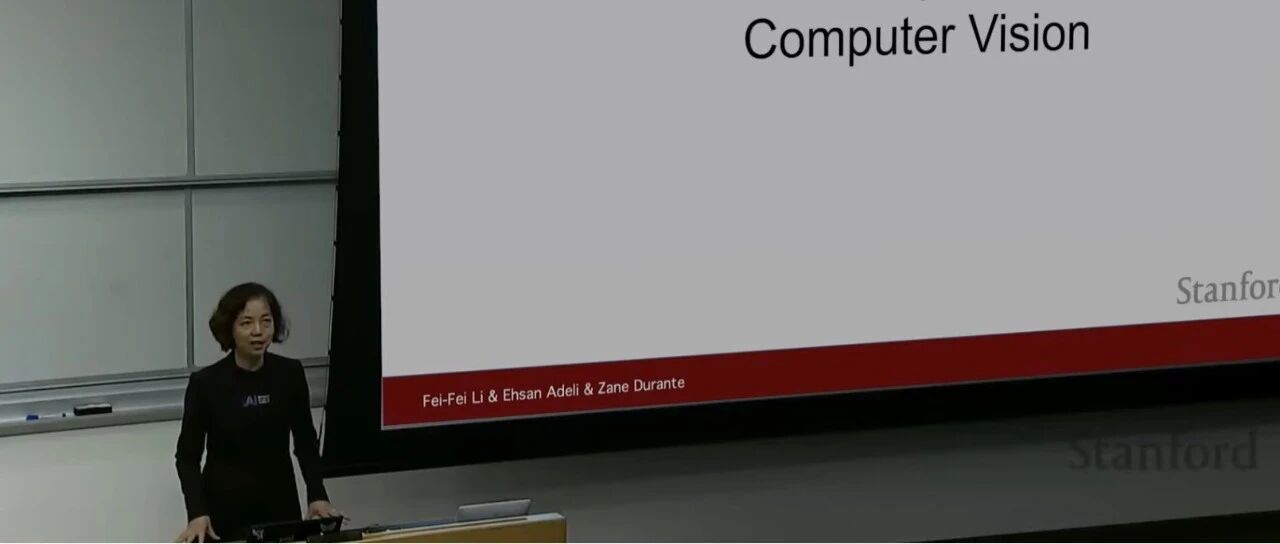
Core Viewpoint - Stanford University's classic course "CS231n: Deep Learning for Computer Vision" is officially launched for Spring 2025, focusing on deep learning architectures and visual recognition tasks such as image classification, localization, and detection [1][2]. Course Overview - The course spans 10 weeks, teaching students how to implement and train neural networks while gaining insights into cutting-edge research in computer vision [3]. - At the end of the course, students will have the opportunity to train and apply neural networks with millions of parameters on real-world visual problems of their choice [4]. - Through multiple practical assignments and projects, students will acquire the necessary toolset for deep learning tasks and engineering techniques commonly used in training and fine-tuning deep neural networks [5]. Instructors - The course features four main instructors: - Fei-Fei Li: A renowned scholar and Stanford professor, known for creating the ImageNet project, which significantly advanced deep learning in computer vision [6]. - Ehsan Adeli: An assistant professor at Stanford, focusing on computer vision, computational neuroscience, and medical image analysis [6]. - Justin Johnson: An assistant professor at the University of Michigan, with research interests in computer vision and machine learning [6]. - Zane Durante: A third-year PhD student at Stanford, researching multimodal visual understanding and AI applications in healthcare [7]. Course Content - The curriculum includes topics such as: - Image classification using linear classifiers - Regularization and optimization techniques - Neural networks and backpropagation - Convolutional Neural Networks (CNNs) for image classification - Recurrent Neural Networks (RNNs) - Attention mechanisms and Transformers - Object recognition, image segmentation, and visualization - Video understanding - Large-scale distributed training - Self-supervised learning - Generative models - 3D vision - Visual and language integration - Human-centered AI [16]. Additional Resources - All 18 course videos are available for free on YouTube, with the first and last lectures delivered by Fei-Fei Li [12].