机器之心

Search documents
AI不再「炫技」,淘宝要让技术解决用户每一个具体问题
机器之心· 2025-10-28 04:31
Core Viewpoint - The article discusses the transformative impact of generative AI on productivity and the evolution of e-commerce, particularly focusing on Alibaba's Taobao and its advancements in AI technology [2][6][11]. Group 1: AI Technology Evolution - The evolution of AI technology has accelerated, leading to the emergence of various models and applications, with a focus on multi-modal capabilities [3][11]. - Taobao has integrated AI deeply into its operations, upgrading its AIGX technology system to cover all necessary e-commerce scenarios [3][11]. - The introduction of generative AI is expected to bring a generational leap in productivity, with multi-modal intelligence becoming a core technology [11][12]. Group 2: Taobao's AI Innovations - Taobao launched RecGPT, a recommendation model with 100 billion parameters, enhancing the user experience by providing personalized recommendations [14][21]. - The generative recommendation algorithm can create new content based on user preferences, moving beyond traditional recommendation systems [16][20]. - The AI-driven video generation model, Taobao Star, automates the creation of promotional videos, significantly reducing content production costs for merchants [25][27]. Group 3: Open Source and Industry Impact - Taobao has open-sourced its reinforcement learning framework ROLL, aimed at improving user experience and enhancing model training efficiency [38][39]. - The company is gradually releasing its validated capabilities to the external market, fostering industry growth towards a "superintelligent" era [39][40]. - The rapid advancements in AI processing complexity and reduction in error rates suggest that narrow AGI could be achieved within 5-10 years [40].



3B Image Captioning小钢炮重磅来袭,性能比肩Qwen2.5-VL-72B
机器之心· 2025-10-28 04:31
Core Insights - The article introduces a new technology in Dense Image Captioning called CapRL (Captioning Reinforcement Learning), which successfully applies reinforcement learning methods to image captioning tasks, redefining the reward system based on practicality [2][6][10] - The CapRL-3B model achieves captioning performance comparable to Qwen2.5-VL-72B, marking a significant advancement in the field of image captioning and providing important insights for applying GRPO strategies to open tasks [2][12] Summary by Sections Introduction to CapRL - CapRL is a novel approach that addresses the challenge of designing rewards for subjective image description tasks by defining objective verifiable rewards based on practicality [6][10] - The model has been trained to generate high-quality captions that improve upon previous methods, avoiding issues like reward hacking [8][10] Limitations of Existing Methods - Most current image captioning models rely on supervised fine-tuning (SFT), which has limitations such as high costs and lack of generalization due to dependence on large, manually annotated datasets [7][8] - The subjective nature of image descriptions complicates the design of reliable reward functions, leading to potential issues in model training [7][8] CapRL Framework - The CapRL framework employs a two-stage decoupled training process where a language model answers visual questions based on generated captions, using the accuracy of these answers as an objective reward signal [10][13] - This innovative approach significantly enhances the quality of generated captions, improving accuracy and detail coverage while reducing hallucinations [10][11] Experimental Results - The CapRL-3B model was evaluated on the CapRL-5M dataset, showing significant performance improvements across 12 benchmark tests compared to previous models like ShareGPT4V and DenseFusion [12][14] - In direct assessments of caption quality, CapRL-3B's performance is comparable to that of larger models, demonstrating an average improvement of 8.4% over baseline models [12][15] Conclusion and Future Work - The CapRL framework has been open-sourced, with ongoing iterations to enhance its capabilities, inviting further use and exploration by the community [12][19]

AlphaGo之父找到创造强化学习算法新方法:让AI自己设计
机器之心· 2025-10-28 04:31
Core Insights - The article discusses a significant advancement in reinforcement learning (RL) where Google's DeepMind team has demonstrated that machines can autonomously discover state-of-the-art RL algorithms, outperforming human-designed rules [1][5]. Methodology - The research employs meta-learning based on the experiences of numerous agents in complex environments to discover RL rules [4][7]. - The team utilized two types of optimization: agent optimization and meta-optimization, allowing the agent to update its parameters to minimize the distance between its predictions and the targets set by a meta-network [7][19][22]. Experimental Results - The discovered RL rule, named DiscoRL, was evaluated using the Atari benchmark, achieving a normalized score of 13.86, surpassing all existing RL methods [26][29]. - Disco57, a variant of DiscoRL, demonstrated superior performance on previously unseen benchmarks, including ProcGen, indicating its strong generalization capabilities [33][34]. Generalization and Robustness - Disco57 showed robustness across various agent-specific settings and environments, achieving competitive results without using domain-specific knowledge [36][35]. - The research highlights the importance of diverse and complex environments for the discovery process, leading to stronger and more generalizable rules [39][40]. Efficiency and Scalability - The discovery process was efficient, requiring significantly fewer experiments compared to traditional methods, thus saving time and resources [40]. - The performance of the discovered rules improved with the number and diversity of environments used for discovery, indicating a scalable approach [40]. Qualitative and Information Analysis - Qualitative analysis revealed that the discovered predictions could identify significant events before they occurred, enhancing the learning process [45]. - Information analysis indicated that the discovered predictions contained unique information about upcoming rewards and strategies, which were not captured by traditional methods [46]. Emergence of Bootstrapping Mechanism - Evidence of a bootstrapping mechanism was found, where future predictions influenced current targets, demonstrating the interconnectedness of the learning process [47]. - The performance of the discovered rules was significantly impacted by the use of these predictions for strategy updates, emphasizing their importance in the learning framework [47]. Conclusion - This research marks a pivotal step towards machine-designed RL algorithms that can compete with or exceed the performance of human-designed algorithms in challenging environments [48].


刚刚,Thinking Machines Lab博客提出在策略蒸馏,Qwen被cue 38次
机器之心· 2025-10-28 00:41
Core Viewpoint - Thinking Machines Lab (TML) has introduced a new training method called on-policy distillation, which combines reinforcement learning (RL) error correlation with supervised fine-tuning (SFT) reward density, achieving superior performance at a lower cost compared to other methods [1][2][27]. Group 1: Methodology and Advantages - On-policy distillation allows small models to exhibit strong domain performance and continuous learning capabilities [1][2]. - The training process is divided into three stages: pre-training for general capabilities, mid-training for domain knowledge, and post-training for guiding target behaviors [6][7]. - On-policy training samples trajectories from the student model itself, providing direct feedback to avoid errors, while off-policy training relies on external sources [8][9][12]. Group 2: Comparison with Other Methods - On-policy distillation combines the advantages of on-policy training's reliability and the dense reward signals from SFT, making it a cost-effective alternative to traditional RL methods [28][92]. - In experiments, on-policy distillation achieved a score of 74.4% on the AIME'24 benchmark with significantly lower computational costs compared to RL, which required 17,920 GPU hours for a score of 67.6% [47][46]. Group 3: Applications and Future Directions - The method has been successfully applied to train models for mathematical reasoning and to develop assistant models with domain knowledge and instruction-following capabilities [26][27]. - TML aims to continue exploring new applications of on-policy distillation, improving teacher supervision methods, and enhancing data efficiency and continuous learning [92][93].
大模型在具身推理上「翻车」了?4496 道题全面揭示短板
机器之心· 2025-10-28 00:41
Core Insights - The article focuses on the evaluation of multimodal large language models (MLLMs) in embodied intelligence tasks, providing detailed failure analysis and proposing an agent algorithm for improvement [25]. Group 1: Embodied Intelligence and MLLMs - Embodied intelligence is a concept where an agent can complete a closed-loop of perception, understanding, and decision-making in an environment, relying on various skills [2]. - Many excellent works have deployed MLLMs in different applications of embodied intelligence, but evaluations have mainly focused on subfields like pointing and spatial reasoning [2][4]. Group 2: BEAR Benchmark - The BEAR benchmark was proposed by Northeastern University in collaboration with other institutions to systematically evaluate MLLMs across various sub-capabilities, providing detailed error analysis and algorithm enhancements [4]. - BEAR includes 4,469 image-video-text VQA tasks and covers six major categories, including five foundational categories and a sixth long-range reasoning category, breaking down tasks into 14 different skills [8][9]. Group 3: Evaluation Results - The evaluation measured 20 different MLLMs, revealing that the best-performing model, GPT-5, only achieved a 52% success rate on the BEAR benchmark [11]. - Closed-source models generally performed better than open-source models, although some open-source models like the InternVL series showed strong potential, outperforming models like GPT-4o and Claude [11]. Group 4: Error Analysis - A fine-grained error analysis of GPT-4o revealed interesting findings, indicating that the model's visual capabilities are a major bottleneck across multiple categories, particularly in language grounding and trajectory understanding [19]. - The analysis showed that 88% of errors in long-range reasoning were attributed to lower-level perception and spatial reasoning issues [19]. Group 5: BEAR-Agent Development - The authors developed BEAR-Agent, a multimodal agent designed to enhance visual reasoning capabilities by providing tools and drawing auxiliary lines, significantly improving performance on the BEAR benchmark [17]. - The performance of both the best open-source model (InternVL3-14B) and the closed-source model (GPT-5) improved significantly with the integration of BEAR-Agent [17]. Group 6: Simulation Testing - Further experiments in a desktop manipulation environment demonstrated that BEAR-Agent improved the performance of MOKA by 20.17%, indicating its potential for embodied agents [21].

世界模型==VQA?机器人不用想象画面,预测语义就够了
机器之心· 2025-10-28 00:41
Core Insights - The article discusses the necessity of precise future predictions in world models for AI, questioning whether detailed visual representations are essential for decision-making [1][6] - It introduces the concept of the Semantic World Model (SWM), which focuses on predicting semantic information about future outcomes rather than generating visual frames [9][18] Summary by Sections World Models and Their Limitations - World models enable AI to learn the dynamics of the world and predict future events based on current states [6] - Traditional models often generate realistic images but may miss critical semantic details necessary for decision-making [7][8] Semantic World Model (SWM) - SWM redefines world modeling as a visual question-answering (VQA) problem, focusing on task-relevant interactions rather than raw visual data [8][9] - SWM utilizes a visual language model (VLM) to answer questions about future actions and their semantic effects [9][11] Training and Data Generation - SWM can be trained on low-quality sequence data, including both expert and non-expert data, making it versatile [15] - A dataset called SAQA (State-Action-Question-Answer) is generated to train the model effectively [22] Experimental Results - SWM demonstrated high accuracy in answering future outcome questions and showed generalization capabilities in new scenarios [17] - In multi-task simulations, SWM significantly improved performance compared to baseline models, achieving success rates of 81.6% in LangTable and 76% in OGBench [30][34] Generalization and Robustness - SWM retains the generalization capabilities of the underlying VLM, showing improvements in performance even with new object combinations and background changes [39][41] - The model's attention mechanisms focus on task-relevant information, indicating its ability to generalize across different scenarios [41]

上交、清华、微软、上海AI Lab等联合发布数据分析智能体综述,LLM化身数据分析师,让数据自己「说话」
机器之心· 2025-10-27 10:40
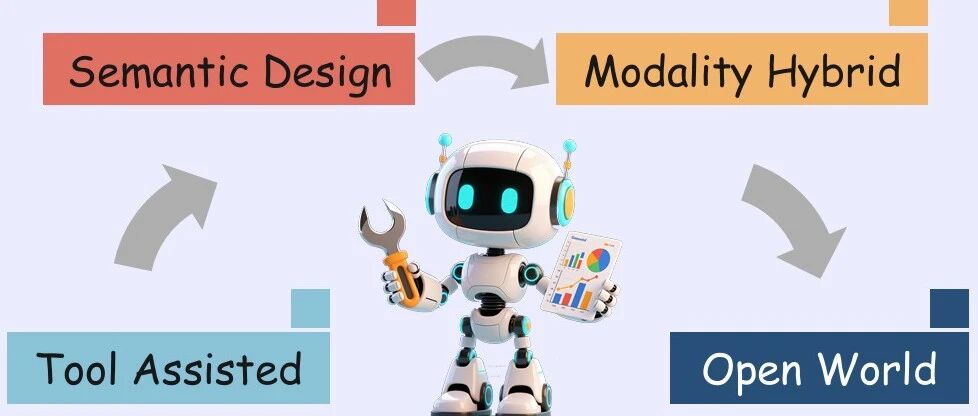
Core Insights - The article discusses the evolution of data analysis through the integration of large language models (LLMs) and agents, moving from traditional rule-based systems to intelligent systems that understand data semantics [2][4][11] - It emphasizes the need for a General Data Analyst Agent paradigm that can handle various data types and tasks, enhancing the capabilities of data analysis [4][11] Group 1: Evolution of Data Analysis - Traditional data analysis methods rely on manual processes such as SQL coding and Python scripting, which are high in coupling and low in scalability [2] - The emergence of LLMs and agents allows for a shift from rule execution to semantic understanding, enabling machines to interpret the underlying logic and relationships in data [2][10] - The research identifies four core evolution directions for LLM/Agent technology in data analysis, aiming to transform data analysis from a rule-based system to an intelligent agent system [7][11] Group 2: Key Technical Directions - The article outlines five major directions in data analysis technology: semantic understanding, autonomous pipelines, automated workflows, tool collaboration, and open-world orientation [4][10] - It highlights the transition from closed tools to collaborative models that can interact with external APIs and knowledge bases for complex tasks [10] - The focus is on enabling dynamic generation of workflows, allowing agents to automatically construct analysis processes, enhancing efficiency and flexibility [10] Group 3: Data Types and Analysis Techniques - The article categorizes data into structured, semi-structured, unstructured, and heterogeneous data, detailing specific tasks and technologies for each type [9][12] - For structured data, it discusses advancements in relational data analysis and graph data analysis, emphasizing the shift from code-level to semantic-level understanding [9][12] - Semi-structured data analysis includes tasks like markup language understanding and semi-structured table comprehension, transitioning from template-driven approaches to LLM-based methods [12] - Unstructured data analysis covers document understanding, chart interpretation, and video/3D model analysis, integrating various technologies for comprehensive understanding [12] Group 4: Future Challenges - The article identifies future challenges in scalability, evaluation systems, and practical implementation of general data analysis agents [4][11] - It stresses the importance of robustness and adaptability to open-domain scenarios as critical factors for the success of these intelligent agents [11]
小说一键转有声剧!豆包语音团队提出「AI多人有声剧」方案,沉浸感拉满了
机器之心· 2025-10-27 10:40
Core Viewpoint - The article discusses the advancements in AI-generated audio dramas, specifically highlighting the "AI Multi-Character Audio Drama" automation solution developed by Doubao Voice, which significantly reduces production costs and time while achieving high-quality audio outputs [3][5][13]. Group 1: AI Multi-Character Audio Drama Solution - The "AI Multi-Character Audio Drama" solution automates the entire process from novel text to high-quality audio drama, utilizing the upgraded multi-character Seed-TTS-2.0 model, which supports multi-role, expressive TTS performances [3][5]. - This solution allows for a drastic reduction in production costs and timelines, as traditional audio drama production typically takes several months and involves multiple manual steps [5][12]. - The automation includes features such as intelligent sound effects, music, and mixing, which enhance the overall listening experience and make it comparable to professional human-produced audio dramas [3][8]. Group 2: Technical Innovations - The solution boasts over 98% accuracy in character voice matching and dialogue attribution, thanks to its advanced text and voice integration capabilities [8][10]. - Key innovations include chapter-level context awareness, historical long audio modeling, and multi-turn reasoning, which improve the understanding of characters and emotions, resulting in a more immersive listening experience [10][12]. - The system also features automated predictions for voice effects, action sounds, environmental sounds, and music, ensuring a cohesive and engaging audio experience that aligns with the narrative [12][13].

新型「验证码」诞生?这张图让 ChatGPT、Claude、Gemini 都翻了车
机器之心· 2025-10-27 08:44
Core Insights - The article discusses a new optical illusion that has gained popularity online, showcasing the differences in perception between humans and AI models [1][2][4] - The optical illusion involves a grid pattern that reveals a heart shape when viewed from a distance or with squinted eyes, highlighting the limitations of AI in recognizing such visual cues [2][4] Group 1: Optical Illusion and AI Testing - The optical illusion is based on a grid pattern, similar to the Hermann Grid illusion, where the human visual system perceives shapes that do not exist due to lateral inhibition in the retina [4] - Various AI models, including GPT-5 Pro, GPT-5, and Claude Opus4.1, were tested on this illusion, with none successfully identifying the heart shape initially [6][7] - Some users found that providing specific prompts or viewing the entire image helped AI models recognize the hidden shape, indicating that context and guidance can improve AI performance [19][24] Group 2: User Engagement and Reactions - The post featuring the optical illusion garnered nearly 500,000 views and sparked numerous responses from users testing different AI models [6] - Users reported mixed results, with some AI models failing to identify the heart shape and others providing incorrect answers, such as identifying a panda instead [7][18] - The article notes skepticism regarding the validity of using optical illusions as a benchmark for AI capabilities, suggesting that this is more of a playful test rather than a rigorous evaluation [24]

首个地球科学智能体Earth-Agent来了,解锁地球观测数据分析新范式
机器之心· 2025-10-27 08:44
Core Insights - The article discusses the development of Earth-Agent, a multi-modal large language model (LLM) designed to enhance Earth science research by automating complex analytical tasks and mimicking expert capabilities [3][10]. Group 1: Earth-Agent Overview - Earth-Agent aims to function as an "AI scientist" capable of understanding research intentions and autonomously planning analysis workflows [3]. - The model can process raw spectral data, remote sensing images, and Earth product data, performing tasks from data preprocessing to spatiotemporal analysis [3][10]. Group 2: Framework and Methodology - The Earth-Agent framework consists of two key components: encapsulation of domain knowledge into standardized, executable functions and the use of LLM for intelligent planning and scheduling [10]. - A total of 104 specialized tools have been integrated into the tool library, allowing the agent to dynamically select the most appropriate tools for various tasks [10]. Group 3: Benchmarking and Evaluation - Earth-Bench, a dataset used for evaluating Earth-Agent, includes 248 expert-annotated tasks across 13,729 images, emphasizing the agent's ability to execute complete Earth science analysis workflows [12][13]. - The evaluation process includes both step-by-step reasoning and end-to-end assessments, focusing on the reasoning process as well as the final results [17]. Group 4: Performance Comparison - Earth-Agent outperforms traditional agent architectures and MLLM methods in various tasks, demonstrating superior capabilities in Earth observation tasks [22]. - In comparative experiments, Earth-Agent achieved an average accuracy of 55.83% across different modalities, significantly higher than other models [22]. Group 5: Future Directions - The article suggests that Earth-Agent represents a new learning paradigm, externalizing capabilities into a structured tool library rather than encoding all knowledge within the model [26]. - Future developments may include expanding the tool library, addressing issues like "tool hallucination," and integrating visual capabilities to enhance tool perception [26].