机器人圈

Search documents
远程驾驶初创公司Vay获Grab战略投资,总额有望达4.1亿美元
机器人圈· 2025-11-11 09:57
Core Viewpoint - The autonomous driving industry is gaining momentum, providing more financing opportunities for startups, exemplified by Vay's upcoming investment from Grab of up to $60 million [1][4]. Group 1: Investment and Business Expansion - Vay, a Berlin-based startup focused on remote-controlled car rentals, is set to receive an investment from Grab, pending regulatory approval, expected to be completed by the end of the year [1]. - Following the initial investment, Grab may invest an additional $350 million based on agreed mileage targets within a year [1][4]. - Vay plans to leverage Grab's investment to expand its operations in the U.S. market, having already launched services in Las Vegas in January 2024 [1][4]. Group 2: Market Competition and Strategy - The remote driving sector in the U.S. is becoming increasingly competitive, with companies like Waymo announcing new autonomous taxi services in multiple cities [4]. - Grab's investment in Vay is part of its strategic initiative to support the development of remote driving technology, despite Grab not having a direct presence in the U.S. market [4]. - Vay positions its remote driving rental service as a complement to autonomous taxi services, targeting consumers who prefer not to own a car [4]. Group 3: Cost Efficiency and User Experience - Vay's service allows users to utilize vehicles without ownership, requiring only a driver's license, and alleviating parking concerns [4]. - The operational model and lightweight hardware system enable Vay to offer services at approximately half the cost of traditional ride-hailing services [4]. Group 4: Future Vision and Collaborations - Vay aims to create a "global remote driving platform," expanding beyond electric vehicle rentals into commercial and enterprise services [6]. - The company has partnered with Kodiak Robotics for autonomous truck services and has previously raised $131.8 million from various investors [6]. - Grab's collaboration with Vay is also focused on data accumulation and AI training, which could accelerate advancements in autonomous driving technology [5].


要闻速递|“第七届现代制造集成技术学术会议”顺利召开
机器人圈· 2025-11-10 11:30
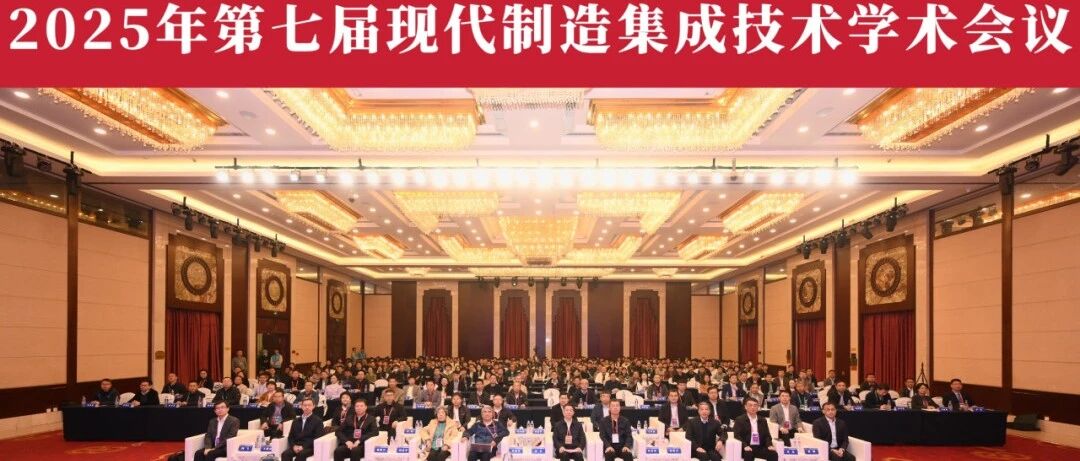
Core Insights - The conference focused on the theme of "Intelligent Transformation of Manufacturing Driven by a New Generation of Artificial Intelligence," gathering over 400 experts and scholars from top universities and research institutions across China to discuss advancements in the field of advanced manufacturing [1][36]. Group 1: Conference Overview - The 7th Modern Manufacturing Integration Technology Academic Conference was held from November 7 to November 9, 2023, in Zhengzhou, Henan, organized by the National Key R&D Program and other institutions [1]. - The conference included a main forum and six sub-forums, addressing key topics such as new generation artificial intelligence and digital transformation [1]. Group 2: Keynote Speakers and Presentations - Notable speakers included Wang Jianmin, Dean of Tsinghua University Software Institute, and Jiang Hong, Party Secretary of China Weapon Industry Group [3]. - Presentations covered various topics, such as the development path of manufacturing informationization and the challenges of industrial big models [8][10][12]. Group 3: Thematic Forums and Discussions - The conference featured six thematic forums focusing on AI-driven product design, manufacturing process optimization, and industrial digital twins, fostering in-depth discussions among experts [34]. - The discussions highlighted the vibrant research activity and practical experience in the intersection of artificial intelligence and manufacturing [34]. Group 4: Future Directions and Consensus - The conference reached several key agreements, including the deep integration of industrial big models with domain knowledge, the engineering application of digital twins, and the independent innovation of domestic industrial software [36]. - The successful hosting of the conference is expected to positively impact the innovation and application of modern manufacturing integration technology in China [37].
2025宝山·智能机器人产业大会暨嘉年华启动在即
机器人圈· 2025-11-10 11:30
Core Viewpoint - The article discusses the upcoming "2025 Baoshan Intelligent Robot Industry Conference and Carnival," which aims to explore the future development directions of the intelligent robot industry and how to build a collaborative ecosystem across the entire industry chain [1][3]. Event Overview - The conference will take place from November 21 to 22, 2025, in the Zhihui Bay Science and Technology Park, organized by various governmental and academic institutions [3]. - It is described as an annual celebration of the intelligent robot industry, bringing together key players from academia, industry, and investment sectors to create a new blueprint for development in the AI era [3]. Collaborative Efforts - Baoshan District is committed to creating a comprehensive support system for the robot industry through deep collaboration among government, industry, academia, application scenarios, and finance [4]. - The event will unveil a three-year action plan for robotics and a series of service platforms aimed at providing one-stop solutions for technology breakthroughs, application scenarios, and capital connections [4]. Forum Structure - The event will feature a main forum and three thematic forums covering top-level design, embodied intelligence technology, core components, and talent ecology, providing a comprehensive insight into the industry [6]. - Notable speakers include academicians and leaders from prominent robotics companies, who will discuss breakthroughs and development paths in intelligent robotics [6]. Project Roadshow - A project roadshow will focus on early-stage projects with cutting-edge technology and high growth potential, facilitating connections for technology cooperation, application scenarios, and industry funds [8]. - This initiative aims to promote the transition of innovative results from laboratories to the market, injecting vitality into the industry ecosystem [8]. Exhibition Highlights - The event will showcase top products from the intelligent robot industry, including humanoid robots, legged robots, wheeled robots, and various core components [10]. - Featured products include the Kepler K2 "Bumblebee" and Magic Atom's robot "Family Portrait," highlighting the technological strength of the industry [10]. Interactive Experience - The conference will offer immersive interactive experiences, allowing attendees to engage with various robot projects, enhancing the connection between technology and the future [12]. - This platform is designed for industry professionals, developers, and investors to establish deep connections and explore collaboration opportunities [12].
倒计时13天!「人形机器人机遇与挑战青年科技沙龙」最新议程来了!(立刻报名享免费参会名额)
机器人圈· 2025-11-07 03:51
Core Viewpoint - The "Humanoid Robot Opportunities and Challenges Youth Technology Salon" focuses on the significant opportunities and challenges in the humanoid robotics field, emphasizing the transition from laboratory to industrialization and the integration of AI technologies to enhance interaction and task understanding capabilities [3][7]. Event Overview - The event is organized by the Beijing Science and Technology Association and the Zhongguancun Rongzhi Special Robot Industry Alliance, with support from the "Robot Technology and Applications" magazine [4]. - The salon will feature expert reports, dialogues, and roundtable discussions, inviting scholars from prestigious universities such as Tsinghua University and Beijing Institute of Technology, thereby influencing the entire humanoid robot industry chain [3][7]. Key Challenges - Humanoid robots face critical challenges, including achieving stable and reliable motion control in complex environments, overcoming cost barriers for scalability, and establishing effective ethical and safety frameworks [3][7]. Agenda Highlights - The event will take place on November 19, 2025, from 9:00 AM to 12:10 PM at the Zhongguancun National Independent Innovation Demonstration Zone Conference Center [5][11]. - The agenda includes presentations on the opportunities and challenges of humanoid robots, discussions on the development history of humanoid robots, and a roundtable forum featuring various experts in the field [11][12].

图片直播|第七届现代制造集成技术学术会议精彩图集抢先看
机器人圈· 2025-11-07 03:51
Group 1 - The 7th Modern Manufacturing Integration Technology Academic Conference will be held from November 7 to November 9 in Zhengzhou, focusing on the intelligent transformation of manufacturing driven by the new generation of artificial intelligence [1] - The conference is organized by the editorial department of "Computer Integrated Manufacturing Systems" and hosted by Zhengzhou University of Light Industry, attracting participation from numerous universities, research institutions, and enterprises in the advanced manufacturing field [1] - The event features a main forum and six specialized forums, covering core areas such as industrial intelligence and digital twin technologies, providing insights into cutting-edge trends [1] Group 2 - Real-time image live streaming has been launched, allowing those unable to attend in person to experience the conference atmosphere and access expert shares and highlights from the venue [1]

参会指南|第七届现代制造集成技术学术会议,最新最全参会攻略
机器人圈· 2025-11-06 09:38
Core Points - The article provides detailed information regarding the 7th Modern Manufacturing Integration Technology Academic Conference, including the schedule, registration process, and venue details [1][2][21]. Group 1: Conference Details - The conference will take place from November 7 to November 9, 2025, at the Zhongzhou Huayue Hotel in Zhengzhou, Henan [1]. - Registration will be conducted on-site for those who have not completed their payment, allowing for card or QR code payments [1]. - The conference features multiple thematic forums focusing on AI-driven product design, manufacturing process optimization, and production operation management [2]. Group 2: Schedule Overview - The registration for representatives is scheduled for November 7 from 14:00 to 20:00 [2]. - The main conference forum will occur on November 8 from 08:20 to 18:00, with various thematic forums running concurrently [2]. - On November 9, additional thematic forums will be held, including topics on equipment fault diagnosis and industrial software [2]. Group 3: Meals and Accommodations - Meals will be provided for attendees, with specific dining arrangements outlined for breakfast, lunch, and dinner during the conference [3]. - Attendees staying at the Fengleyuan Hotel must check in at the Zhongzhou Huayue Hotel to receive their conference credentials [2]. Group 4: Transportation Information - Detailed transportation options from Zhengzhou Xinzheng International Airport, Zhengzhou Station, and Zhengzhou East Station to the conference venue are provided, including metro, taxi, and bus routes [5][10][13]. - The article emphasizes the convenience of using public transport and provides estimated travel times for each option [6][11][14]. Group 5: Registration Fees - The registration fees are categorized as follows: 1500 RMB for students, 2800 RMB for general attendees, and 3800 RMB for corporate representatives [23]. - Payment methods include bank transfer and QR code scanning, with specific bank details provided for registration [26].

2025移动复合机器人发展大会议程公布
机器人圈· 2025-11-05 12:45
Core Viewpoint - The article highlights the rapid development of the "robot+" industry in China, driven by advancements in mobile and composite robot technologies, transitioning from demonstration to large-scale application, while facing common challenges that hinder industrial collaboration and scalability [1]. Group 1: Industry Development - Since the "14th Five-Year Plan," intelligent technology has significantly penetrated various sectors, promoting the rapid growth of the "robot+" industry in China [1]. - Mobile and composite robot technologies have achieved breakthroughs and are being demonstrated in industrial, service, and special scenarios [1]. - The industry is at a critical turning point, moving from "demonstration wonders" to "capacity cornerstones" [1]. Group 2: Challenges - The industry faces several common challenges, including fragmented technology routes, non-unified interfaces, difficulties in scene implementation, balancing cost and efficiency, and a lack of standards [1]. - These challenges severely restrict the large-scale application and collaborative development of the industry [1]. Group 3: Conference Overview - The "2025 Mobile Composite Robot Development Conference" will focus on the theme "Breaking Boundaries and Coexisting: Connecting the Last Mile of Large-Scale Application of Mobile Composite Robots" [1]. - The conference aims to address common industry challenges such as platform technology, modular functionality, system intelligence, consistency in scale, reliability in mass production, and usability [1]. - It will feature top experts, leading enterprises, and core user units to discuss opportunities and challenges in industrial development and showcase representative application cases [1].



会议手册发布!CIMS大会盛会将启!日程/嘉宾/参会/食宿信息全攻略
机器人圈· 2025-11-05 12:45
Core Viewpoint - The 7th Modern Manufacturing Integration Technology Academic Conference will be held from November 7 to November 9, 2025, in Zhengzhou, focusing on the intelligent transformation of manufacturing driven by the new generation of artificial intelligence [4][8]. Conference Overview - The conference is a high-level academic event in the field of advanced manufacturing technology, supported by the Ministry of Science and Technology and organized by the editorial department of "Computer Integrated Manufacturing Systems" [7]. - The conference has been held annually since its inception in 2010, with previous editions focusing on topics such as intelligent manufacturing, cloud manufacturing, and industrial internet [7]. Conference Theme - The theme of this year's conference is "Intelligent Transformation of Manufacturing Driven by New Generation Artificial Intelligence," aiming to promote deep integration of technological and industrial innovation [8]. Objectives - The conference aims to enhance independent innovation capabilities in the manufacturing sector, improve the stability and competitiveness of industrial and supply chains, and support high-quality development through technological innovation [8]. Schedule Overview - The conference will feature various forums and discussions on topics such as AI-driven product design, manufacturing process optimization, and intelligent operation management [15][26][31]. - Specific sessions will include keynote speeches, thematic forums, and opportunities for networking and collaboration among industry experts [15][18]. Notable Participants - The conference will gather leading experts and scholars from various institutions, including prominent figures such as academicians and industry leaders, to share their insights and research findings [38][39][40]. Venue and Logistics - The event will take place at the Zhongzhou Huayue Hotel in Zhengzhou, with detailed arrangements for meals and accommodations provided for attendees [10][15]. Contact Information - For any inquiries, participants can reach out to the conference organizing committee through the provided contact details [11].
日程官宣|CIMS大会重磅打造「1场主论坛+6场专题论坛」,共探制造业数智化核心议题
机器人圈· 2025-11-04 12:54
Core Points - The 7th Modern Manufacturing Integration Technology Academic Conference will be held from November 7 to November 9 in Zhengzhou, focusing on the intelligent transformation of manufacturing driven by the new generation of artificial intelligence [3][4] - The conference will feature a luxurious agenda including one main forum and six specialized forums covering key areas such as industrial intelligence, industrial interconnection, industrial software, and digital twins [3][4] Conference Agenda - The conference will include various sessions led by prominent experts, with topics ranging from industrial big models to intelligent robotics and digital transformation in manufacturing [7][9] - Specific sessions include discussions on industrial software integration systems, advanced technologies for nuclear facility decommissioning, and AI applications in industrial software [7][9][10] Registration and Fees - Registration fees are set at 1500 RMB for students, 2800 RMB for general participants, and 3800 RMB for corporate representatives [25] - The registration deadline is November 6 at 12:00, and participants are required to send a confirmation receipt to the editorial office after payment [29][28]

通知 | 关于组织参加2025世界智能制造博览会的通知
机器人圈· 2025-11-03 13:00
Overview - The 2025 World Intelligent Manufacturing Expo will be held from November 27 to 29, 2025, at the Nanjing International Expo Center, aiming to help Chinese enterprises grasp global industry trends and connect with cutting-edge technologies and quality resources [1][2]. Expo Highlights - The expo is designed to be a high-end, international, and professional platform, gathering leading global intelligent manufacturing companies to showcase advanced technologies and solutions [2]. - It will attract representatives from over 20 countries, with government officials attending to provide the latest policy guidance through industry white papers [2]. - More than 30 experts and academicians will present keynote speeches on cutting-edge research and technology, aiding enterprises in technological upgrades [2]. - Over 50 Fortune 500 companies and industry leaders will participate, showcasing new products and applications, facilitating supply-demand matching and collaboration [2]. Exhibition Areas - The exhibition will cover over 65,000 square meters, divided into several halls focusing on different aspects of intelligent manufacturing [5]. - Key areas include: - **Intelligent Robot Hall**: Featuring collaborative and embodied intelligent robots [6][7][8]. - **Smart Factory Hall**: Showcasing advanced manufacturing processes and exemplary smart factories [9][10][11]. - **Industrial Software and Solutions Hall**: Highlighting industrial AI, edge computing, and digital supply chains [12][13][15]. - **Industrial Mother Machine Hall**: Displaying high-performance CNC machines and additive manufacturing technologies [16][17][18]. - **Intelligent Detection Equipment Hall**: Featuring general and specialized intelligent detection solutions for various industries [19][20]. Interactive and Special Exhibits - The expo will include interactive areas such as robot competitions and smart driving experience zones, enhancing visitor engagement [21][22]. - A special exhibition will celebrate the achievements of intelligent manufacturing over the past decade, showcasing significant breakthroughs across various industries [23]. Concurrent Activities - The expo will host a major theme conference, signing events, and numerous specialized summits, focusing on the latest advancements in intelligent manufacturing [25]. - Activities will include product launches, supply-demand matching, and financial sessions, aimed at enhancing the platform's effectiveness for exhibitors [25]. Registration Information - Interested companies in the robotics and core components sectors are encouraged to register by November 14, 2025 [26].