具身智能之心

Search documents
NVIDIA最新|Isaac Gym 继任者来啦!解决传统仿真在效率、保真度上的痛点(GPU 加速)
具身智能之心· 2025-11-12 00:03
Core Viewpoint - Isaac Lab is a next-generation robot simulation framework that addresses the inefficiencies and limitations of traditional simulation tools by providing a GPU-native simulation platform that integrates high-fidelity physics engines, photo-realistic rendering, and modular architecture, enabling large-scale multi-modal robot learning [2][3][49]. Group 1: Need for a New Simulation Framework - Traditional robot development faces three core issues: difficulty in obtaining real-world data, high risks in extreme situation testing, and low efficiency in algorithm iteration [3]. - Isaac Lab aims to solve these problems through GPU acceleration, standardized data formats, and a modular architecture, achieving efficient simulation, flexible expansion, and seamless migration [3]. Group 2: Core Architecture and Key Technologies - The core advantage of Isaac Lab comes from integrating underlying technologies and modularizing upper-level functionalities, using USD for scene description, PhysX as the physics engine, and RTX for rendering [4]. - The framework covers a complete toolchain from asset modeling to perception simulation, control execution, and data generation [4]. Group 3: Key Underlying Technologies - USD Scene Description: Utilizes OpenUSD to break data silos and solve flexibility and compatibility issues of traditional formats [5]. - PhysX Physics Simulation: Based on NVIDIA PhysX 5 engine, it provides various types of physical simulations with GPU acceleration [7]. - RTX Rendering: Offers high-fidelity visual perception output, supporting structured scene modeling and cross-domain compatibility [9][10]. Group 4: Modular Toolchain - Asset and Actuator: Supports diverse asset types, providing a unified operation interface for batch generation and attribute randomization [16]. - Sensor Simulation: Covers physical-based, rendering-based, and geometric-based sensors to meet different perception needs [18]. - Control and Planning: Includes various controllers and planning tools, supporting low-level action control to high-level task planning [24]. Group 5: Performance Advantages - Isaac Lab excels in large-scale parallel simulation and visual perception training, with key metrics indicating significant improvements in training stability and throughput [38]. - Single GPU can support thousands of parallel environments, achieving FPS over 1.6 million for complex tasks [38]. - Multi-GPU scaling shows near-linear growth in throughput, with an 8 GPU cluster supporting 16,384 parallel environments [38]. Group 6: Typical Application Scenarios - Isaac Lab has been validated in various robot research fields, including locomotion for quadrupedal robots, full-body control for humanoid robots, and industrial operations involving complex assembly tasks [41][44][46]. - It supports diverse applications such as medical robot training, basic model training, and the integration of new GPU-accelerated physics engines [51][52].


从零把pi0部署到你的机械臂上吧!
具身智能之心· 2025-11-12 00:03
Core Viewpoint - The article introduces the Imeta-Y1, a lightweight and cost-effective robotic arm designed for beginners and researchers in the field of embodied intelligence, emphasizing its accessibility and ease of use for algorithm validation and project development [3][4][6]. Product Features - The Imeta-Y1 robotic arm is designed with a compact structure and modular interfaces, making it suitable for embedded AI and robotics learning platforms [7]. - It offers a full-process open-source toolchain and code examples, facilitating seamless transitions from data collection to model deployment [4][17]. - The arm supports dual-language interfaces (Python/C++) and is compatible with ROS1/ROS2, allowing users to quickly get started regardless of their programming background [4][18]. Technical Specifications - The robotic arm has a weight of 4.2 kg, a rated load of 3 kg, and 6 degrees of freedom, with a working radius of 612.5 mm and a repeat positioning accuracy of ±0.1 mm [9][19]. - It operates on a 24V power supply and communicates via CAN, with a control method that includes trajectory tracking, teaching, and API [9][19]. - The arm's joint movement range and maximum speeds are specified, ensuring precise control for various applications [9][19]. Development and Support - The company provides a comprehensive open-source SDK, including drivers, API interfaces, sample code, and documentation, supporting rapid application development [26]. - Users can validate algorithm logic in simulation environments like Gazebo before deploying to physical devices, significantly reducing development risks and debugging costs [22][29]. - The company offers timely after-sales support, with a 24-hour response guarantee, and bulk purchase discounts for educational and project development purposes [19][44]. Testing and Reliability - The robotic arm undergoes rigorous hardware testing, including accuracy calibration, durability, load performance, and stability verification, ensuring reliability and safety in various application scenarios [35][39][42].

美团 “全能突破”:RoboTron-Mani +RoboData实现通用机器人操作
具身智能之心· 2025-11-12 00:03
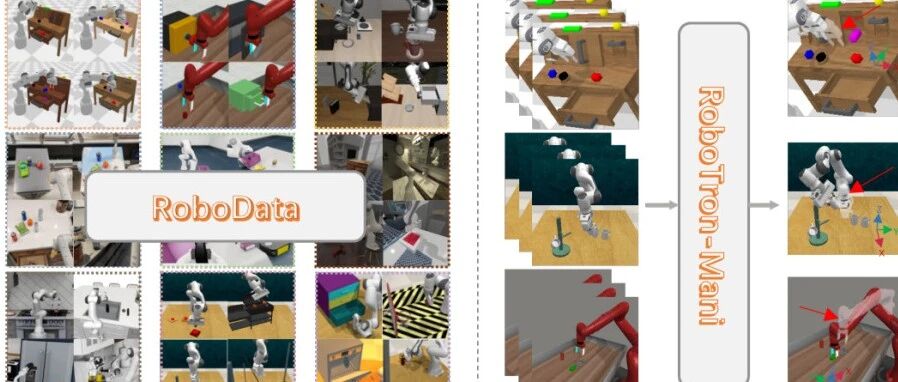
Core Insights - The article discusses the challenges in robot operation, particularly the dual bottleneck of lacking 3D perception and inefficient data utilization, which hinder the development of versatile robotic systems [2][3][21] - The introduction of RoboTron-Mani, a model that enhances 3D perception and multi-modal fusion, along with the RoboData dataset, aims to overcome these challenges and achieve universal operation across different robots and scenarios [1][3][21] Group 1: Challenges in Current Robot Operation Models - Existing solutions are either limited to 2D visual understanding or rely on single datasets, making them ineffective in diverse physical environments [2][3] - Traditional multi-modal models focus on 2D image understanding, lacking 3D spatial awareness, which results in low accuracy in physical interactions [2] - Single dataset training leads to weak generalization, requiring retraining for different robots or scenarios, which is costly and time-consuming [2][3] Group 2: RoboTron-Mani and RoboData Overview - RoboTron-Mani is designed to provide a comprehensive solution by integrating 3D perception and multi-modal fusion, supported by a unified dataset [3][21] - The model architecture includes a visual encoder, 3D perception adapter, feature fusion decoder, and multi-modal decoder, enabling it to process various input types and produce accurate outputs [7][9][10] - RoboData consolidates multiple public datasets, addressing key issues such as modality completion and spatial alignment, which are critical for effective 3D perception training [11][12][15][16] Group 3: Experimental Results and Performance - RoboTron-Mani has demonstrated superior performance, surpassing expert models in various datasets, achieving a success rate of 91.7% on the LIBERO dataset and 93.8% on the CALVIN dataset [17][18] - The model shows an average improvement of 14.8%-19.6% in success rates compared to existing general models across multiple datasets [18] - Ablation studies confirm the importance of key components, such as the 3D perception adapter, which significantly enhances spatial understanding and task completion rates [19][22] Group 4: Future Directions - The article suggests potential future enhancements, including the integration of additional modalities like touch and force feedback, optimization of model efficiency, and expansion of real-world data to reduce the gap between simulation and real-world applications [21][23]


美团 “全能突破”:RoboTron-Mani +RoboData实现通用机器人操作
具身智能之心· 2025-11-11 03:48
Core Insights - The article discusses the development of RoboTron-Mani, a universal robotic operation strategy that overcomes the limitations of existing models by integrating 3D perception and multi-modal fusion, enabling cross-platform and cross-scenario operations [1][3][21]. Group 1: Challenges in Robotic Operations - Current robotic operation solutions face a "dual bottleneck": either lacking 3D perception capabilities or suffering from data set issues that hinder cross-platform training [2][3]. - Traditional multi-modal models focus on 2D image understanding, which limits their ability to interact accurately with the physical world [2][3]. - Single data set training leads to weak generalization, requiring retraining for different robots or scenarios, which increases data collection costs [2][3]. Group 2: RoboTron-Mani and RoboData - RoboTron-Mani is designed to address the challenges of 3D perception and data modality issues, achieving full-link optimization from data to model [3][21]. - The architecture of RoboTron-Mani includes a visual encoder, 3D perception adapter, feature fusion decoder, and multi-modal decoder, allowing it to process various input types and produce multi-modal outputs [5][7][9][10]. - RoboData integrates nine mainstream public datasets, containing 70,000 task sequences and 7 million samples, addressing key pain points of traditional datasets by completing missing modalities and aligning spatial and action representations [11][12][15][16]. Group 3: Experimental Results and Performance - RoboTron-Mani has demonstrated superior performance across multiple datasets, achieving a success rate of 91.7% on the LIBERO dataset, surpassing the best expert model [18][21]. - The model shows an average improvement of 14.8%-19.6% in success rates compared to the general model RoboFlamingo across four simulated datasets [18][21]. - Ablation studies confirm the necessity of key components, with the absence of the 3D perception adapter significantly reducing success rates [19][22]. Group 4: Future Directions - Future enhancements may include the integration of additional modalities such as touch and force feedback to improve adaptability in complex scenarios [23]. - There is potential for optimizing model efficiency, as the current 4 billion parameter model requires 50 hours of training [23]. - Expanding real-world data integration will help reduce the domain transfer gap from simulation to real-world applications [23].
招募VLA+RL方向的合伙人!
具身智能之心· 2025-11-11 03:48
Core Viewpoint - The company is seeking to recruit a lecturer for an online course focused on VLA (Variational Learning Algorithms) and RL (Reinforcement Learning) to enhance understanding in these areas [1]. Group 1 - The company aims to develop an online course in the VLA and RL domain, responding to community interest [1]. - The ideal candidate for the lecturer position should have a PhD or be a doctoral student in the VLA and RL research area, with experience in top conferences [2]. - The company is recognized as the first full-stack technology communication community in China, focusing on embodied intelligence, and has gathered many individuals interested in VLA and RL [3]. Group 2 - The company offers compensation above the industry average and provides access to extensive industry resources for the lecturer position [4]. - For more detailed information, interested individuals are encouraged to contact via WeChat [5].
仅需300美元!先进VLA模型与低成本硬件相结合
具身智能之心· 2025-11-11 00:02
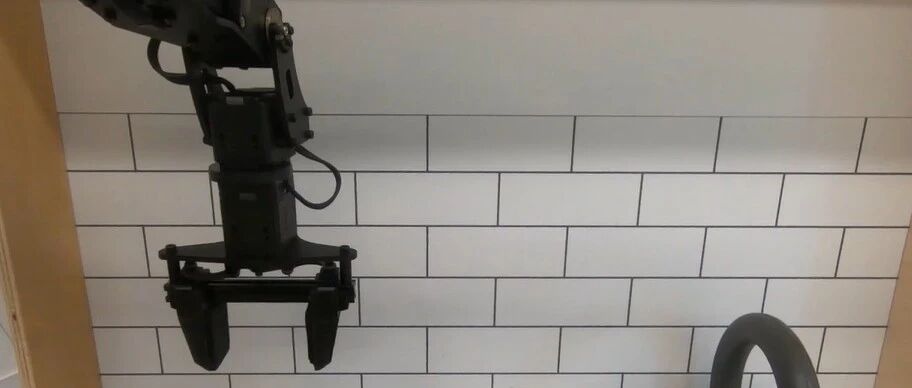
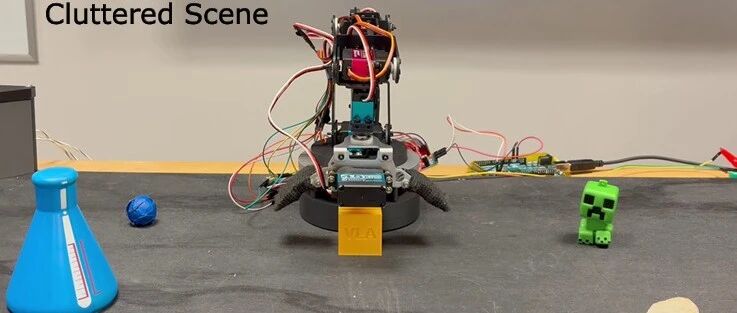
点击下方 卡片 ,关注" 具身智能 之心 "公众号 作者丨 Samarth Chopra等 编辑丨具身智能之心 本文只做学术分享,如有侵权,联系删文 >> 点击进入→ 具身智能之心 技术交流群 更多干货,欢迎加入国内首个具身智能全栈学习社区 : 具身智能之心知识星球 (戳我) , 这里包含所有你想要的。 低成本视觉-语言-动作(VLA)系统,匹兹堡大学研究团队通过300美元级6DOF机械臂搭配自适应视野集成器,解决传统VLA硬件昂贵、泛化性差的痛点,在真 实场景中实现超越现有方法的性能,推动机器人基础模型的普及。 背景与核心挑战 关键创新 低成本6DOF机械臂设计 核心参数:成本约311.98美元,6个自由度,有效负载0.2kg,工作半径382mm,最大速度0.7m/s,重复定位精度≤10mm(table1、figure3)。 VLA模型优势在于直接从图像和自然语言指令映射到机器人动作,跳过手工设计的感知/规划模块,但在陌生光照、新物体、视觉干扰下易失效,泛化能力不 足。 硬件层面,现有顶尖机械臂成本达数千至数万美元,即便"低成本"产品也常超1000美元,且依赖专用软件框架,普通用户和研究者难以获取。 训练与 ...
AAAI 2026结果公布,刷出88887高分!2.3万投稿录用率仅17.6%
具身智能之心· 2025-11-11 00:02
Core Insights - The AAAI 2026 conference received a record-high submission of 23,680 papers, with an acceptance rate of only 17.6%, indicating a significant increase in competition compared to previous years [3][4][45]. Submission Statistics - AAAI 2026 had 23,680 submissions, a substantial rise from 12,957 in 2025 [3][45]. - A total of 4,167 papers were accepted, which is a decrease from 3,032 accepted papers in 2025, reflecting a lower acceptance rate [4][45]. Research Highlights - Researchers from various institutions showcased their successful submissions, with notable works including: - "CogniTrust," which combines verifiable supervision with a three-tier memory model to enhance AI model reliability [12][14]. - Papers focusing on privacy protection in large models, multi-modal safety, and robust communication in autonomous driving [18][20]. - "ReconVLA," which achieved a high score of 88,887, proposing a new approach to visual representation learning [24][25]. Competitive Landscape - The competition for AAAI 2026 was described as exceptionally fierce, with some reviewers noting that only highly innovative papers were accepted [43][46]. - The overall trend indicates that papers scoring around 5 or higher had a chance of acceptance, but many authors faced rejections despite high scores [51][52]. Reviewer Experiences - Some reviewers reported unusual experiences during the review process, including significant score adjustments and perceived biases in evaluations [48][56][62].

具身智能公司无界动力完成3亿元首轮融资,红杉中国、线性资本领投,高瓴创投、地平线等跟投
具身智能之心· 2025-11-11 00:02
Core Viewpoint - The article discusses the successful completion of a 300 million yuan angel financing round by Anyverse Technology, highlighting its focus on developing a "general brain" for robots and operational intelligence, aiming to transform embodied intelligence into a widely deployable and continuously evolving infrastructure [2]. Financing and Company Overview - Anyverse Technology completed its first round of financing, raising 300 million yuan, led by Sequoia China and Linear Capital, with participation from several top-tier investment firms, bringing the total financing to over 500 million yuan [2]. - Founded in 2025 in Beijing, Anyverse Technology aims to overcome key bottlenecks in hand-eye-brain coordination and provide high-reliability embodied intelligence solutions to global clients [2]. Leadership and Team - The founder and CEO, Zhang Yufeng, has extensive experience in technology development and large-scale commercialization, having previously worked at Sony and ARM, and led significant advancements in intelligent driving software at Horizon Robotics [5]. - The core team includes co-founder and CTO Xu Wenda, a PhD from Carnegie Mellon University with a strong background in autonomous driving technology, and other top scientists with significant contributions in multimodal models and reinforcement learning [6]. Industry Challenges and Strategies - The embodied intelligence industry is at a critical turning point, transitioning from laboratory demonstrations to real-world applications, with a consensus that achieving complete generalization will take over a decade [6]. - Anyverse Technology plans to address challenges through multidimensional technological innovations and systematic engineering capabilities, focusing on algorithm architecture innovation and model iteration [7]. Data Acquisition and Model Development - The company is pursuing a data strategy that combines simulation and real-world data collection to enhance model success rates and generalization capabilities, utilizing real machine operations and human demonstrations [7][8]. - A closed-loop evolution system is being established to drive the development of general foundational models and specialized expert models, ensuring high commercial task success rates [8]. Product Development and Application - Anyverse Technology is creating a reliable and commercially viable hardware and software product ecosystem, integrating continuously evolving embodied models with precision execution mechanisms [9]. - The first-generation robot platform has made significant breakthroughs in industrial manufacturing and commercial services, with plans for further exploration in collaboration with international partners [9]. Investor Insights - Investors emphasize the importance of bridging the gap from technology to product and from product to large-scale delivery, highlighting the team's capabilities in both technological innovation and engineering execution [10]. - The financing will accelerate the dual-path approach of foundational model development and expert model application, aiming to create immediate value for clients while advancing the long-term evolution of the general operational brain [10].
VLA+RL正在不断拉升着具身操作的上限!
具身智能之心· 2025-11-11 00:02
Core Insights - The article discusses the integration of Reinforcement Learning (RL) with Visual Language Models (VLA), highlighting how RL enhances the capabilities of VLA by bridging the gap between pre-training and real-world tasks [1][4]. Group 1: Technical Developments - RL training models directly optimize the "complete task" goal, allowing models to handle unexpected situations not present in training data, thus improving robustness [1]. - The reward mechanism enables VLA to learn smoother trajectories and align more closely with the physical world [1]. - A recommended open-source repository for VLA+RL methods is provided, facilitating entry-level research [2]. Group 2: Evaluation Results - Evaluation results on various LIBERO task groups show significant performance metrics for different models, with the π0.5 model achieving an average accuracy of 96.9% across tasks [5]. - The Flow-SDE π0 model demonstrated a 38.5% improvement in average accuracy when combined with RL [5]. Group 3: Community and Resources - The community offers continuous live sharing sessions, including roundtable forums and discussions on various topics within the embodied intelligence industry [7]. - A comprehensive technical roadmap is available for beginners, outlining essential technologies and learning paths [9]. - The community has established job referral mechanisms with several companies in the embodied intelligence sector, providing valuable networking opportunities [13]. Group 4: Educational Materials - The community has compiled over 40 open-source projects and nearly 60 datasets related to embodied intelligence, along with mainstream simulation platforms and various technical learning routes [15]. - Specific learning routes for different aspects of embodied intelligence, such as reinforcement learning and multi-modal large models, are detailed to assist learners at various levels [16][42]. Group 5: Industry Insights - The community includes members from renowned universities and leading companies in the field, fostering a rich environment for academic and industrial exchange [14]. - Regular updates on academic progress and industrial applications in embodied intelligence are shared, keeping members informed about the latest developments [21][23].
VLA方向,想再带几个同学冲一下具身的A会......
具身智能之心· 2025-11-10 10:00
Group 1 - The article highlights the urgency for students to prepare for upcoming conferences after CVPR, indicating a competitive academic environment in the field of embodied intelligence [2] - The organization is recruiting three students for guidance in the VLA (Vision-Language Alignment) direction, emphasizing the importance of quality in mentorship [2] - Key research areas for the VLA direction include VLA models, lightweight models, VLA combined with tactile feedback, VLA with world models, and VLA with reinforcement learning [2]