具身智能之心

Search documents
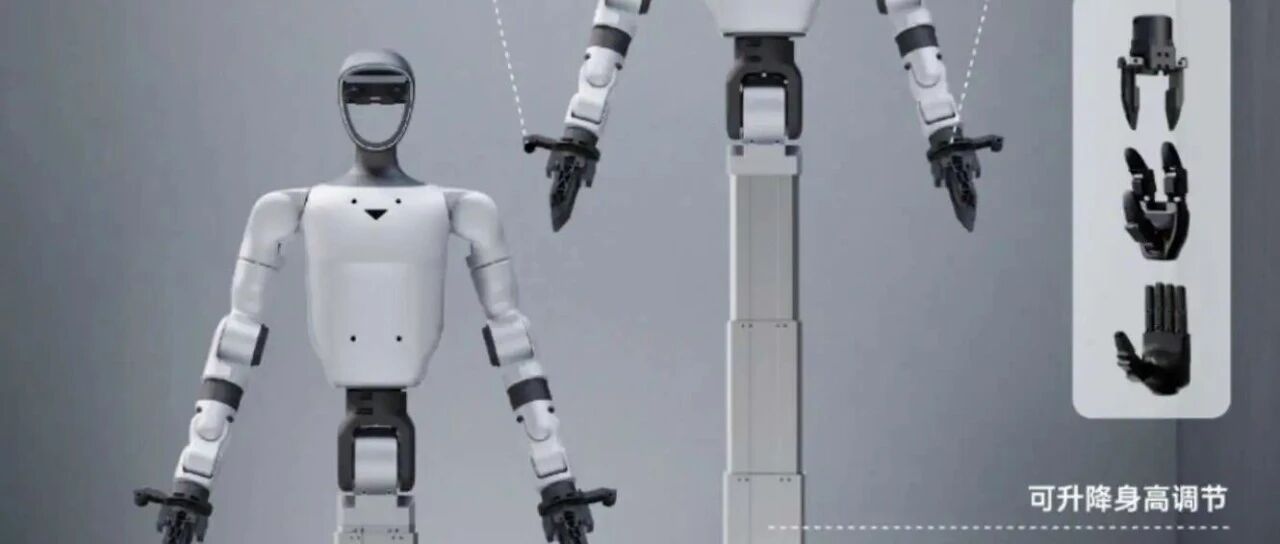
首款移动操作机器人!宇树正式发布G1-D
具身智能之心· 2025-11-13 13:04
Core Viewpoint - Yushu Technology has launched its first wheeled humanoid robot G1-D, marking a significant step from technology demonstration to practical application in various scenarios [2]. Group 1: Product Features - The G1-D robot combines the efficiency of wheeled movement with the flexibility of humanoid design [2]. - It includes a complete data collection training solution, enhancing its usability in real-world applications [2]. - The robot features a high-definition dual-camera system, interchangeable end effectors, and a single-degree-of-freedom gripper [4]. - The height of the robot can be adjusted between approximately 1260mm to 1680mm, and it can be equipped with a mobile chassis that allows for a maximum speed of 1.5m/s [4].

头部的具身公司,正在投资其它公司了......
具身智能之心· 2025-11-13 05:46
Core Insights - The article discusses the growing trend of companies in the embodied intelligence sector investing in various startups to secure core technologies and enhance their competitive edge in the market [2][3]. Investment Activities - Zhiyuan Robotics has been actively preparing for its IPO while simultaneously investing in over 30 companies across the supply chain, from upstream key technologies to downstream market applications [2]. - Galaxy General has shown interest in a new company, Lanyue Power, which focuses on industrial logistics robotics [4]. - Xinghai Map has recently invested in Jianzhixinchuang (Beijing) Robotics Technology Co., Ltd., which provides a one-stop service for "data + deployment" [5]. - Zhujidi Power has invested in Shanghai Wujizhi Technology, which specializes in the production and research of high-performance motors and dexterous hands [6]. - Songyan Power has invested in Silicon-based Wisdom (Beijing) Robotics Co., Ltd., which is engaged in the development of companion and elderly care robots [7].

谁在带队小鹏机器人:IRON背后的四位关键人物
具身智能之心· 2025-11-13 02:05
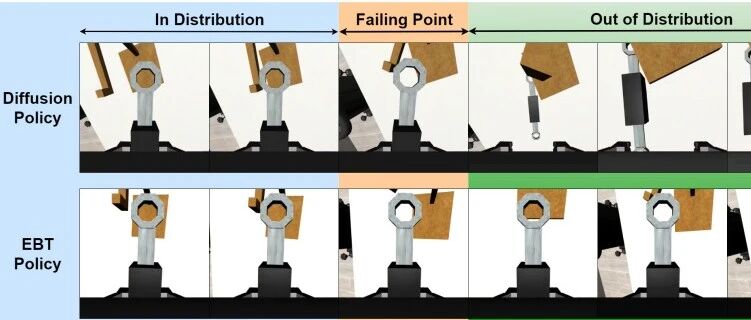
Core Viewpoint - The article discusses the development and significance of Xiaopeng Motors' humanoid robot "IRON," highlighting the key figures behind its success and the strategic direction of the company in the field of embodied intelligence. Group 1: Key Figures in Xiaopeng Robotics - Mi Liangchuan is identified as the core leader of Xiaopeng Robotics, responsible for overseeing the technical direction and product implementation of the humanoid robot project [6][20]. - Mi's background includes significant experience in autonomous driving and AI, having joined Xiaopeng in 2021 and rapidly advancing to leadership roles [15][18]. - Other notable team members include Chen Jie, an expert in reinforcement learning, and Ge Yixiao, the founding director of the intelligent mimicry department, both of whom bring substantial academic and industry experience to the team [44][51]. Group 2: Development of the IRON Robot - The design of IRON is inspired by human anatomy, particularly its spine and muscle structure, which contributes to its advanced movement capabilities [10][12]. - The robot's development faced challenges, including a significant internal debate on whether to pursue humanoid robotics, which was ultimately resolved in favor of this direction due to the rise of AI technologies [85][88]. - The team has grown from a peak of 300 members to over 200, indicating a recovery and renewed focus on humanoid robotics after initial setbacks [98]. Group 3: Strategic Direction of Xiaopeng Motors - Xiaopeng Motors aims to establish humanoid robots as a third growth curve alongside smart cars and flying vehicles, reflecting a strategic pivot towards embodied intelligence [99]. - The company has accumulated significant financial resources, with nearly 50 billion RMB available for research and development, facilitating its ambitious projects in robotics [46]. - The article draws parallels between Xiaopeng Motors and Tesla, suggesting that Xiaopeng is positioning itself similarly in the robotics market as it did in the automotive sector [101][110].

如果Policy模型也能动态思考推理,是否能让机器人在真实世界中表现得更好?
具身智能之心· 2025-11-13 02:05
Core Insights - The article introduces EBT-Policy (Energy-Based Transformer Policy), a new strategy architecture based on Energy-Based Models (EBM), which enhances robot performance in real-world scenarios by enabling dynamic reasoning and understanding of uncertainty [2][6]. Group 1: EBT-Policy Overview - EBT-Policy significantly improves training and inference efficiency, showcasing a unique "zero-shot retry" capability [4]. - The model learns an energy value to assess the compatibility between input variables, optimizing the energy landscape during language modeling tasks [5]. - EBT-Policy outperforms traditional Diffusion Policy in both simulated and real-world tasks, reducing computational requirements by up to 50 times [6][18]. Group 2: Key Features and Advantages - The model minimizes energy through multiple forward passes during inference, adjusting computational resources based on problem difficulty [8]. - EBT-Policy's emergent retry behavior allows it to recover from errors by dynamically redirecting itself towards lower energy states [10]. - Compared to Diffusion Policy, EBT-Policy requires only 2 steps for inference, while Diffusion Policy typically requires around 100 steps [11]. Group 3: Performance Metrics - In real-world tasks, EBT-Policy demonstrated superior performance, achieving scores of 86, 75, and 92 in tasks like "Fold Towel," "Collect Pan," and "Pick And Place," respectively, compared to Diffusion Policy's lower scores [17]. - The convergence speed during training improved by approximately 66%, and the model's inference process is significantly more efficient [18]. Group 4: Future Outlook - The research team plans to continue optimizing hyperparameters and model scale, expecting further performance enhancements as more experimental data is collected [22].
传统导航与视觉语言/目标导航有什么区别?
具身智能之心· 2025-11-13 02:05
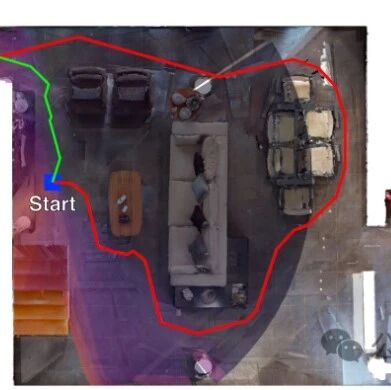
Core Insights - Goal-Oriented Navigation empowers robots to autonomously complete navigation tasks based on goal descriptions, marking a significant shift from traditional visual language navigation [2] - The technology has been successfully implemented in various verticals, enhancing service efficiency in delivery, healthcare, and hospitality sectors [4] - The evolution of goal-driven navigation can be categorized into three generations, each showcasing advancements in methodologies and technologies [6][8][10] Group 1: Technology Overview - Goal-Oriented Navigation is a key aspect of embodied navigation, relying on language understanding, environmental perception, and path planning [2] - The transition from explicit instruction-based navigation to autonomous decision-making involves semantic parsing, environmental modeling, and dynamic decision-making [2] - The technology has been integrated into delivery robots, service robots in healthcare and hospitality, and humanoid robots for various applications [4] Group 2: Technical Evolution - The first generation focuses on end-to-end methods using reinforcement and imitation learning, achieving breakthroughs in Point Navigation and image navigation tasks [6] - The second generation employs modular methods that explicitly construct semantic maps, enhancing performance in zero-shot object navigation tasks [8] - The third generation integrates large language models (LLMs) and visual language models (VLMs) to improve exploration strategies and open-vocabulary target matching [10] Group 3: Challenges and Learning Opportunities - The complexity of embodied navigation requires knowledge across multiple domains, making it challenging for newcomers to enter the field [11] - A new course has been developed to address these challenges, providing a structured learning path and practical applications [11][12] - The course aims to build a comprehensive understanding of goal-oriented navigation, covering theoretical foundations and practical implementations [12][13]
ICCV 2025 Highlight | 大规模具身仿真平台UnrealZoo
具身智能之心· 2025-11-13 02:05
Core Insights - The article introduces UnrealZoo, a high-fidelity virtual environment platform designed to enhance research in embodied AI by providing over 100 diverse and realistic 3D scenes [5][12][72] - UnrealZoo aims to address the limitations of existing simulators by offering a flexible and rich training environment that supports various tasks and enhances the adaptability of AI agents in complex, dynamic settings [7][8][72] Summary by Sections Introduction to UnrealZoo - UnrealZoo is developed using Unreal Engine and includes over 100 high-quality, realistic scenes, ranging from indoor settings to large-scale industrial environments [5][12] - The platform features 66 customizable embodied entities, including humans, animals, and vehicles, allowing for diverse interactions and training scenarios [5][12] Purpose and Necessity - The rapid development of embodied AI necessitates a platform that can simulate diverse and high-fidelity environments to improve the adaptability and generalization of AI agents [7][8] - Existing simulators often limit the scope of AI training to specific tasks, hindering the development of agents capable of functioning in unpredictable real-world scenarios [7][8] Features of UnrealZoo - UnrealZoo provides a comprehensive set of tools, including an optimized Python API and enhanced communication protocols, to facilitate data collection, environment customization, and multi-agent interactions [5][48] - The platform supports various tasks such as visual navigation and active target tracking, demonstrating the importance of diverse training environments for improving model generalization [5][72] Experimental Results - Experiments conducted using UnrealZoo highlight the significant impact of environment diversity on the performance and robustness of AI agents, particularly in complex navigation and social interaction tasks [72] - Results indicate that while reinforcement learning methods show promise, there remains a substantial gap between AI agents and human performance in navigating intricate environments [72] Future Directions - The ongoing development of UnrealZoo will focus on expanding the variety of scenes, entities, and interaction tasks to further enhance the capabilities of embodied AI in real-world applications [72]

首款人形机器人,摔了个“狗啃泥”
具身智能之心· 2025-11-12 09:30
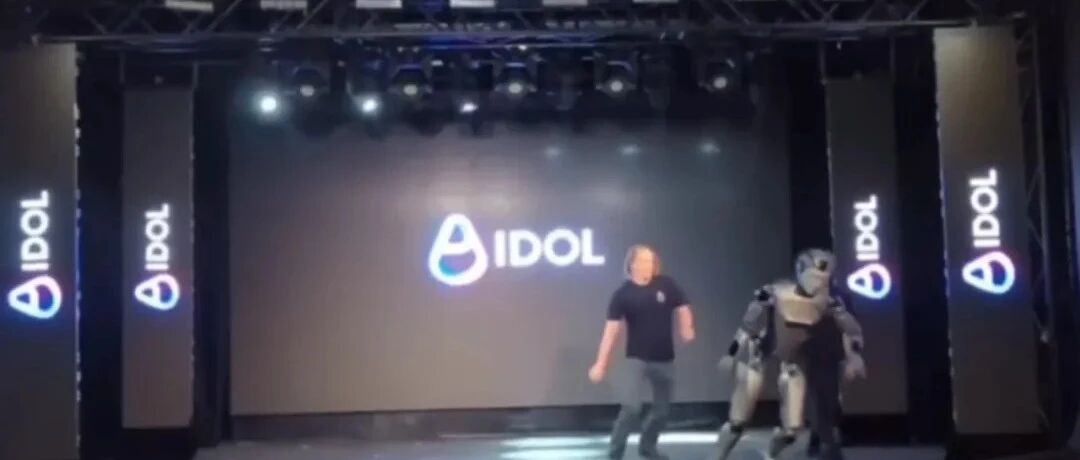
Core Viewpoint - The article discusses the unveiling of Russia's first domestically produced humanoid robot named "Aidol," highlighting its advanced features and the challenges faced during its presentation [2]. Group 1: Product Features - "Aidol" is built primarily with Russian-made components and represents an advanced example of humanoid robotics [2]. - The robot is capable of dialogue, emotion recognition, and can operate offline, with all voice processing conducted independently on the device [2]. Group 2: Event Highlights - During the launch event, a humorous incident occurred where the robot lost balance and fell, which was followed by a small black cloth being placed over it, marking an amusing end to the presentation [3]. Group 3: Industry Comparison - The article notes that domestic manufacturers in other regions are significantly ahead in the field of humanoid robotics, progressing from motion control to more human-like features, thus approaching the definition of embodied intelligence [6].
轻量级VLA模型Evo-1:仅凭0.77b参数取得SOTA,解决低成本训练与实时部署
具身智能之心· 2025-11-12 04:00
Core Insights - The article discusses the Evo-1 model, a lightweight Vision-Language-Action (VLA) model that integrates perception, language, and control capabilities, aiming to reduce computational costs and improve deployment efficiency without relying on large-scale robot data pre-training [3][5][6]. Industry Pain Points - Existing VLA models face several limitations, including high computational costs due to large parameter sizes, which can reach billions, leading to significant GPU memory consumption and low control frequencies [4]. - The reliance on extensive robot datasets for training is both labor-intensive and costly, further complicating the deployment of these models in real-time interactive tasks [4]. Evo-1 Methodology and Performance - Evo-1 employs a unified visual-language backbone and a two-stage training paradigm to enhance multimodal perception and understanding while maintaining a compact model size of only 0.77 billion parameters [5][6]. - The model achieved state-of-the-art results in benchmark tests, surpassing previous models by 12.4% and 6.9% on MetaWorld and RoboTwin datasets, respectively, and achieving a 94.8% success rate on the LIBERO test [6][18]. - In real-world evaluations, Evo-1 demonstrated a success rate of 78%, outperforming other baseline models while maintaining low memory usage of 2.3 GB and a high inference frequency of 16.4 Hz [22][20]. Model Architecture - Evo-1 utilizes the InternVL3-1B model as its backbone, which is pre-trained in a native multimodal paradigm, allowing for efficient feature fusion and cross-modal alignment [10]. - The model incorporates a cross-modulation diffusion transformer to predict continuous control actions from the multimodal embeddings generated by the backbone [11]. - An integrated module aligns the fused visual-language representations with the robot's proprioceptive information, ensuring seamless integration of multimodal features for subsequent control tasks [12]. Training Process - The two-stage training process begins with aligning the action expert while freezing the visual-language backbone, followed by a global fine-tuning phase to optimize the entire architecture [13][14]. - This approach preserves the semantic integrity of the visual-language model while adapting to diverse action generation needs, effectively enhancing the model's generalization capabilities [14]. Ablation Studies - Various integration strategies between the visual-language model and the action expert were evaluated, demonstrating the effectiveness of the proposed design in maintaining performance [24]. - The two-stage training paradigm was compared with a single-stage baseline, showing that the former retains semantic attention patterns better, leading to improved focus on relevant task areas [25].
VLA方向,招募几个辅导的同学~
具身智能之心· 2025-11-12 04:00
Group 1 - The company is recruiting 3 students for VLA direction paper guidance, ensuring quality with limited spots [1] - The main research directions include VLA models, lightweight solutions, VLA combined with tactile feedback, VLA with world models, and VLA with reinforcement learning [1] Group 2 - The company has already submitted several papers for conferences, hoping for positive outcomes [1] - Students interested in guidance can contact the assistant via WeChat with a specific note [2]
港中文(深圳)冀晓强教授实验室全奖招收博士/博士后
具身智能之心· 2025-11-12 00:03
Core Viewpoint - The article emphasizes the importance of interdisciplinary research in embodied intelligence, highlighting opportunities for doctoral and postdoctoral candidates in deep learning and artificial intelligence, with a focus on high-level research platforms and international collaboration [2][10]. Research Content - Research directions include deep learning and artificial intelligence theories and algorithms [2]. - Candidates are expected to have a strong understanding and interest in core research areas, with the ability to conduct independent theoretical innovation and experimental validation [8]. Candidate Requirements - Candidates should possess relevant degrees in computer science, data science, automation, applied mathematics, or artificial intelligence from reputable institutions [8]. - Experience in publishing research in top international journals or conferences is preferred, showcasing strong research potential [9]. Skills and Qualifications - Familiarity with multimodal large models such as CLIP, BLIP, and LLaVA is essential [3]. - Proficiency in classic models like VAE, Transformer, and BERT, along with strong algorithm design and programming skills, particularly in high-performance languages like C++ or Rust, is advantageous [4][5]. - Understanding of large language model architectures and practical experience in unsupervised pre-training, SFT, and RLHF is a plus [6]. Professor's Profile - Professor Ji Xiaoqiang, with a PhD from Columbia University, leads a research lab focused on intelligent control systems and has published over 50 papers in top-tier journals and conferences [10]. - The lab aims to integrate control theory, artificial intelligence, robotics, high-performance computing, and big data for foundational and original research in intelligent systems [11]. Benefits and Compensation - Postdoctoral candidates may receive a pre-tax living allowance of 210,000 CNY per year, with additional university and mentor-specific compensation [12]. - Doctoral students can receive full or half scholarships covering tuition and living stipends, with top candidates eligible for a principal's scholarship [13]. - Research master's students have opportunities to transition to PhD programs and may receive additional living stipends [14]. Application Materials - Applicants must submit a complete CV in both Chinese and English, along with any published papers and materials demonstrating their research capabilities [15].