具身智能之心

Search documents
具身真实场景的机器人数据集汇总
具身智能之心· 2025-08-22 16:03
Core Insights - The article focuses on the development and sharing of datasets related to embodied intelligence and robotics, highlighting various projects and their significance in advancing robotic manipulation and learning capabilities [3][4][5][10]. Group 1: Datasets and Projects - BRMData is introduced as a dataset aimed at empowering embodied manipulation for household tasks, with a project link provided for further exploration [4]. - AgiBot World Colosseo is presented as a large-scale manipulation platform designed for scalable and intelligent embodied systems, with a project link included [4]. - RoboMIND serves as a benchmark for multi-embodiment intelligence normative data for robot manipulation, with a project link for access [4]. - OpenX-Embodiment focuses on robotic learning datasets and RT-X models, with a project link available [4]. - DROID is highlighted as a large-scale in-the-wild robot manipulation dataset, with a project link provided [5]. - RH20T is described as a comprehensive robotic dataset for learning diverse skills in one-shot, with a project link included [5]. - BridgeDataV2 is mentioned as a dataset for robot learning at scale, with a project link for further details [5]. - RT-2 emphasizes vision-language foundation models as effective robot imitators, with a project link available [5]. - RT-1 is introduced as a robotics transformer for real-world control at scale, with a project link provided [6]. - Bridge Data aims to boost the generalization of robotic skills with cross-domain datasets, with a project link included [7]. - BC-Z focuses on zero-shot task generalization with robotic imitation learning, with a project link available [7]. Group 2: Community and Collaboration - The article promotes the "Embodied Intelligence Heart" knowledge community as the first developer community in China focused on embodied intelligence, emphasizing its role as a professional exchange platform [10]. - The community covers various topics including datasets, simulation platforms, large models, reinforcement learning, and robotic manipulation, with a summary of over 30 learning paths and 60 datasets available [10]. - The community encourages collaboration among nearly 200 companies and institutions, fostering academic and industrial exchanges [10][13].

ICCV 2025 | 打造通用工具智能体的基石:北大提出ToolVQA数据集
具身智能之心· 2025-08-22 16:03
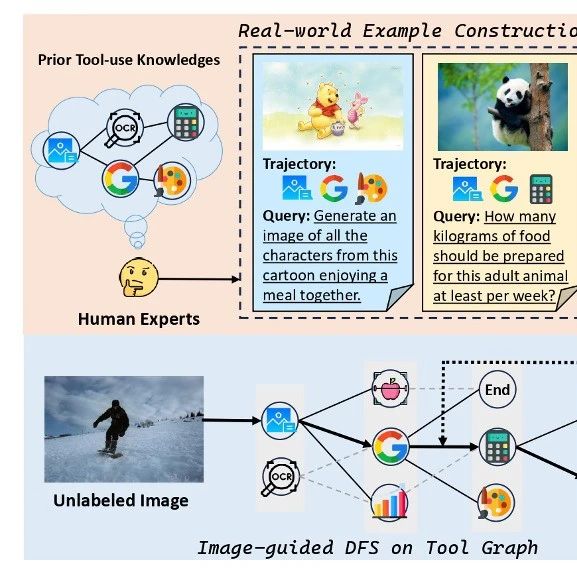
Core Viewpoint - The article introduces ToolVQA, a large-scale multimodal dataset designed to enhance the tool usage capabilities of foundational models in multi-step reasoning visual question answering (VQA) tasks, addressing the significant performance gap in real-world applications [2][3][7]. Summary by Sections Dataset Overview - ToolVQA contains 23,655 samples, featuring real image scenes and implicit multi-step reasoning tasks, closely aligned with actual user interaction needs [3][22]. - The dataset includes 10 types of multimodal tools and 7 task domains, with an average of 2.78 reasoning steps per sample [3][22]. Data Generation Process - The dataset is generated using a novel data construction process called ToolEngine, which employs depth-first search (DFS) and dynamic context example matching to simulate human-like tool usage reasoning chains [3][15][18]. - ToolEngine allows for fully automated generation of high-quality VQA instances from a single image input, significantly reducing data costs and enabling scalability [15][18]. Key Features of ToolVQA - The dataset features complex visual scenes with real-world context and challenging queries requiring implicit multi-step reasoning [13][15]. - Each question necessitates the model to autonomously plan the order of tool calls through multiple interactions, rather than being explicitly prompted [15][20]. - ToolVQA encompasses a rich variety of tools, supporting tasks from text extraction to image understanding and numerical calculations [15][22]. Model Performance - Fine-tuning on ToolVQA significantly enhances model performance, with the 7B model outperforming the closed-source GPT-3.5-turbo on multiple evaluation metrics [3][24]. - The fine-tuned model also demonstrates strong generalization capabilities on out-of-distribution datasets, surpassing GPT-3.5-turbo in various benchmarks [24][25]. Error Analysis - Despite improvements, the analysis of 100 failure cases reveals key bottlenecks in parameter prediction and answer integration, indicating that early errors can lead to cumulative failures in multi-step reasoning tasks [27][28]. - The findings highlight the need for enhanced robustness in models when dealing with dynamic feedback and intermediate information integration [28]. Conclusion - ToolVQA establishes a new benchmark for multi-step tool reasoning tasks, providing a structured framework for training and evaluating models' reasoning and tool understanding capabilities [31].
又帮到了一位同学拿到了VLA算法岗......
具身智能之心· 2025-08-22 16:03
Core Insights - The article emphasizes the importance of joining the "Embodied Intelligence Heart Knowledge Planet," a comprehensive community for learning and sharing knowledge in the field of embodied intelligence, which is rapidly growing in popularity and demand [1][16][85]. Community Features - The community offers a variety of resources including video content, written materials, learning pathways, Q&A sessions, and job exchange opportunities, aiming to create a robust platform for both beginners and advanced learners in embodied intelligence [1][2][17]. - It has established a job referral mechanism with multiple leading companies in the embodied intelligence sector, facilitating direct connections between job seekers and employers [10][17]. Learning Resources - The community has compiled over 30 technical pathways, covering various aspects of embodied intelligence, such as data collection, algorithm deployment, and simulation [2][16]. - It provides access to nearly 40 open-source projects and 60 datasets related to embodied intelligence, significantly reducing the time needed for research and development [16][30][36]. Networking and Collaboration - The community hosts roundtable discussions and live broadcasts to share insights on the latest developments in the embodied intelligence industry, fostering collaboration among members [4][76]. - Members can freely ask questions and receive guidance on career choices and research directions, enhancing the collaborative learning environment [78]. Industry Insights - The community includes members from renowned universities and leading companies in the field, ensuring a diverse range of expertise and perspectives [16][20][21]. - It provides summaries of industry reports and research papers, keeping members informed about the latest trends and applications in embodied intelligence [23][26].

小模型也能超越GPT-4o!邱锡鹏团队WAP框架打造「世界感知」智能体
具身智能之心· 2025-08-22 00:04
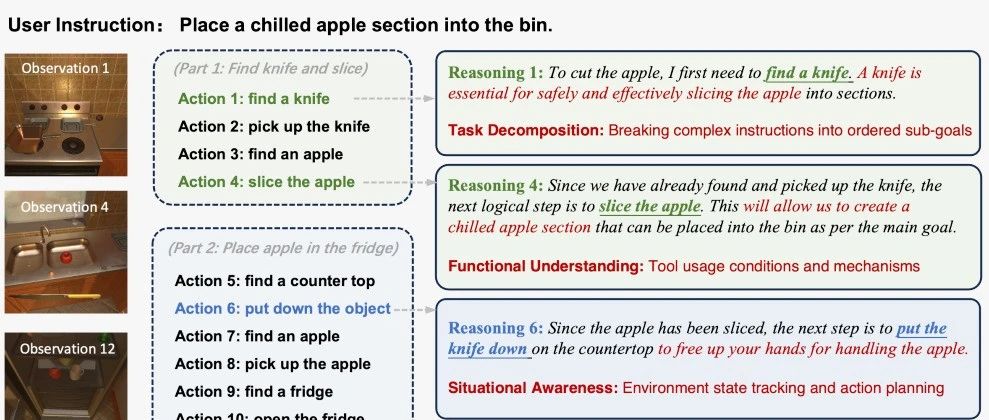
Core Insights - The article discusses the potential of large-scale vision-language models (LVLM) in embodied planning tasks, highlighting the challenges they face in unfamiliar environments and complex multi-step goals [2][6] - A new framework called World-aware Planning (WAP) is introduced, which enhances LVLMs by integrating four cognitive abilities: visual appearance modeling, spatial reasoning, functional abstraction, and syntax grounding [2][6] - The enhanced model, Qwen2.5-VL, achieved a 60.7% absolute task success rate improvement in the EB-ALFRED benchmark, particularly excelling in common-sense reasoning (+60.0%) and long-term planning (+70.0%) [2][6] Summary by Sections Introduction - The article emphasizes the breakthroughs in multimodal models but notes the significant challenges they still face in embodied planning tasks [6] Framework Innovation - The WAP framework is presented as a novel approach that integrates four key cognitive abilities to improve the understanding of the physical world by AI [7] Performance Metrics - The open-source model Qwen2.5-VL significantly outperformed proprietary systems like GPT-4o and Claude-3.5-Sonnet, showcasing a substantial leap in performance [2][6][7] Future Implications - The advancements in embodied planning through the WAP framework open new possibilities for AI applications in real-world scenarios [6][7]
3个月!搞透VLA/VLA+触觉/VLA+RL/具身世界模型等方向!
具身智能之心· 2025-08-22 00:04
Core Viewpoint - The exploration of Artificial General Intelligence (AGI) is increasingly focusing on embodied intelligence, which emphasizes the interaction and adaptation of intelligent agents within physical environments, enabling them to perceive, understand tasks, execute actions, and learn from feedback [1]. Industry Analysis - In the past two years, numerous star teams in the field of embodied intelligence have emerged, establishing valuable companies such as Xinghaitu, Galaxy General, and Zhujidongli, which are advancing the technology of embodied intelligence [3]. - Major domestic companies like Huawei, JD, Tencent, Ant Group, and Xiaomi are actively investing and collaborating to build a robust ecosystem for embodied intelligence, while international firms like Tesla and investment institutions are supporting companies like Wayve and Apptronik in the development of autonomous driving and warehouse robots [5]. Technological Evolution - The development of embodied intelligence has progressed through several stages: - The first stage focused on grasp pose detection, which struggled with complex tasks due to a lack of context modeling [6]. - The second stage involved behavior cloning, allowing robots to learn from expert demonstrations but revealing weaknesses in generalization and performance in multi-target scenarios [6]. - The third stage introduced Diffusion Policy methods, enhancing stability and generalization by modeling action sequences, followed by the Vision-Language-Action (VLA) model phase, which integrates visual perception, language understanding, and action generation [7][8]. - The fourth stage, starting in 2025, aims to integrate VLA models with reinforcement learning, world models, and tactile sensing to overcome current limitations [8]. Product and Market Development - The evolution of embodied intelligence technologies has led to the emergence of various products, including humanoid robots, robotic arms, and quadrupedal robots, serving industries such as manufacturing, home services, dining, and medical rehabilitation [9]. - The demand for engineering and system capabilities is increasing as the industry shifts from research to deployment, necessitating higher engineering skills for training and simulating strategies on platforms like Mujoco, IsaacGym, and Pybullet [23]. Educational Initiatives - A comprehensive curriculum has been developed to cover the entire technology route of embodied "brain + cerebellum," including practical applications and real-world projects, aimed at both beginners and advanced learners [10][20].
Cocos系统:让你的VLA模型实现了更快的收敛速度和更高的成功率
具身智能之心· 2025-08-22 00:04
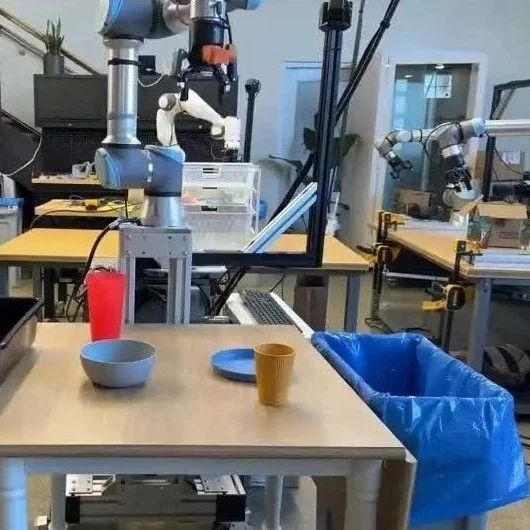
Core Viewpoint - The article discusses the advancements in embodied intelligence, particularly focusing on diffusion strategies and the introduction of a new method called Cocos, which addresses the issue of loss collapse in training diffusion policies, leading to improved training efficiency and performance [3][11][25]. Summary by Sections Introduction - Embodied intelligence is a cutting-edge field in AI research, emphasizing the need for robots to understand and execute complex tasks effectively. Diffusion policies have emerged as a mainstream paradigm for constructing visual-language-action (VLA) models, although training efficiency remains a challenge [3]. Loss Collapse and Cocos - The article identifies loss collapse as a significant challenge in training diffusion strategies, where the neural network struggles to distinguish between generation conditions, leading to degraded training objectives. Cocos modifies the source distribution to depend on generation conditions, effectively addressing this issue [6][9][25]. Flow Matching Method - Flow matching is a core method in diffusion models, transforming a simple source distribution into a complex target distribution through optimization. The article outlines the optimization objectives for conditional distribution flow matching, which is crucial for VLA models [5][6]. Experimental Results - The article presents quantitative experimental results demonstrating that Cocos significantly enhances training efficiency and strategy performance across various benchmarks, including LIBERO and MetaWorld, as well as real-world robotic tasks [14][16][19][24]. Case Studies - Case studies illustrate the practical applications of Cocos in simulation tasks, highlighting its effectiveness in improving the robot's ability to distinguish between different camera perspectives and successfully complete tasks [18][21]. Source Distribution Design - The article discusses experiments on source distribution design, comparing different standard deviations and training methods. It concludes that a standard deviation of 0.2 is optimal, and using VAE for training the source distribution yields comparable results [22][24]. Conclusion - Cocos provides a general improvement for diffusion strategy training by effectively solving the loss collapse problem, thereby laying a foundation for future research and applications in embodied intelligence [25].
比H20还要强大!英伟达最新B30A芯片曝光
具身智能之心· 2025-08-21 00:03
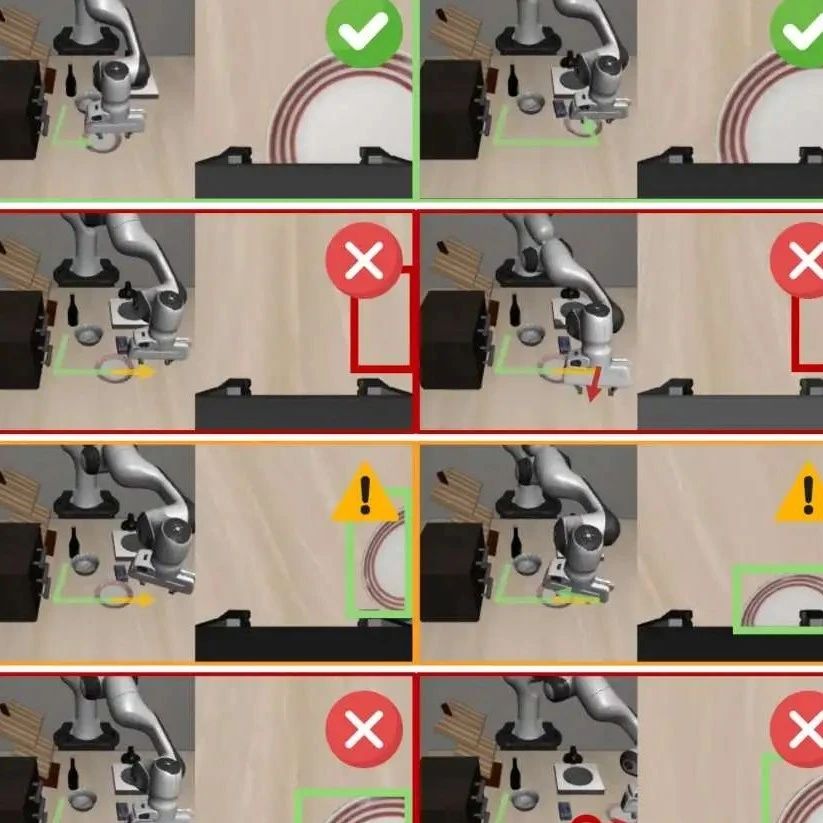
Core Viewpoint - Nvidia is developing a new AI chip, codenamed B30A, which is expected to outperform the H20 model and is based on the latest Blackwell architecture [2][3][4]. Group 1: Chip Development - The B30A chip will utilize a single-chip design, integrating all major components onto one silicon piece [8]. - It is reported that the original computing power of the B30A may be only half that of Nvidia's flagship B300 GPU, which uses a dual-chip configuration [6]. - The production speed of chips based on this architecture is expected to be 7 to 30 times faster than previous models [10]. Group 2: Market Expectations - Nvidia's stock price has increased by over 30% this year, reaching a historic market cap of $4 trillion [13]. - Analysts have raised Nvidia's stock price target, with one notable increase from $200 to $240, reflecting high expectations for revenue and earnings per share due to surging AI computing demand [14][15]. - The consensus estimate for Nvidia's Q2 revenue is $45.8 billion, with earnings per share projected at $1 [15]. Group 3: Additional Chip Developments - Besides the B30A, Nvidia is also working on a more affordable AI chip named RTX6000D, which is based on the Blackwell architecture but is designed for AI inference tasks [18][19]. - The RTX6000D will feature traditional GDDR memory with a memory bandwidth of 1398 GB per second and is set for small batch delivery to customers in September [20].


Humanoid Occupancy:首个多模态人形机器人感知系统!解决运动学干扰和遮挡问题
具身智能之心· 2025-08-21 00:03
Core Viewpoint - The article discusses the rapid development of humanoid robot technology, emphasizing the introduction of a generalized multimodal occupancy perception system called Humanoid Occupancy, which enhances environmental understanding for humanoid robots [2][3][6]. Group 1: Humanoid Robot Technology - Humanoid robots are considered the most complex form of robots, embodying aspirations for advanced robotics and artificial intelligence [6]. - The technology is at a critical breakthrough stage, with ongoing iterations in motion control and autonomous perception [6]. Group 2: Humanoid Occupancy System - The Humanoid Occupancy system integrates hardware, software components, data collection devices, and a specialized labeling process to provide comprehensive environmental understanding [3]. - It utilizes advanced multimodal fusion technology to generate grid-based occupancy outputs that encode spatial occupancy states and semantic labels [3]. - The system addresses unique challenges such as kinematic interference and occlusion, establishing effective sensor layout strategies [3]. Group 3: Research and Development - A panoramic occupancy dataset specifically designed for humanoid robots has been developed, providing valuable benchmarks and resources for future research [3]. - The network architecture combines multimodal features and temporal information to ensure robust perception capabilities [3]. Group 4: Live Broadcast and Expert Insights - A live broadcast is scheduled to discuss humanoid robot motion control, multimodal perception systems, autonomous movement, and operational data [6][8]. - The session will feature insights from Zhang Qiang, the academic committee director at the Beijing Humanoid Robot Innovation Center [8].
X-SAM:统一图像分割多模态大模型,20+个数据集上均SoTA
具身智能之心· 2025-08-21 00:03
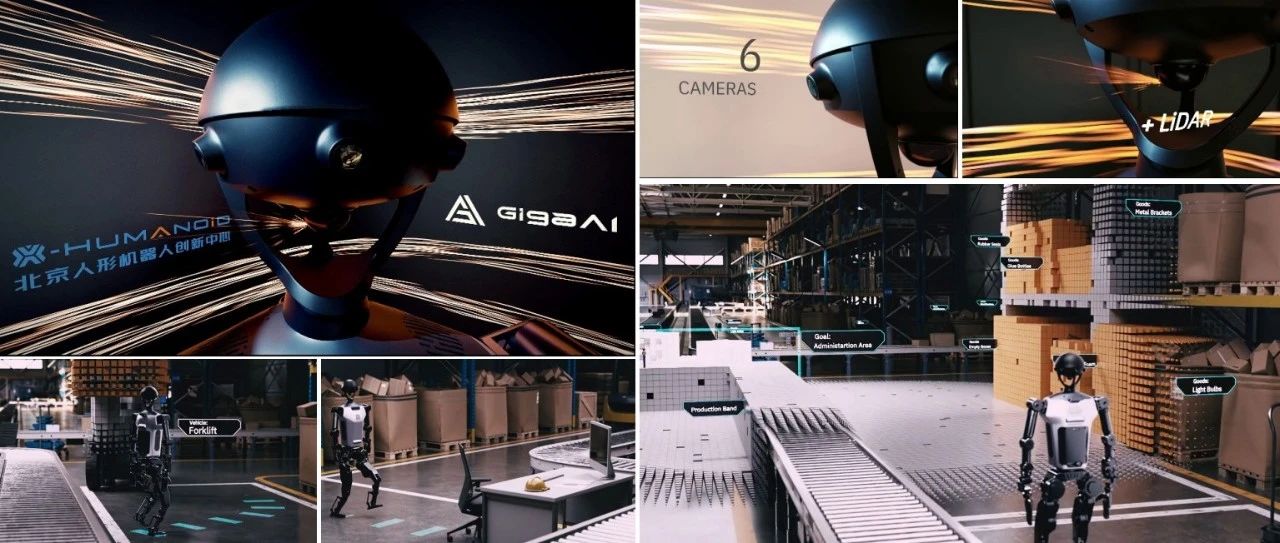
Core Insights - The article discusses the development of X-SAM, a unified multimodal large language model for image segmentation, which enhances the capabilities of existing models by allowing for pixel-level understanding and interaction through visual prompts [3][24]. Background and Motivation - Segment Anything Model (SAM) has limitations due to its reliance on single input modes for visual prompts, which restricts its applicability in diverse image segmentation tasks [3]. - Multimodal large language models (MLLMs) excel in tasks like image description and visual question answering but cannot directly handle pixel-level visual tasks, hindering the development of generalized models [3]. Method Design - X-SAM introduces a universal input format and unified output representation, supporting various forms of visual prompts such as points, scribbles, bounding boxes, and masks [6][7]. - The architecture includes dual encoders and projectors to enhance image understanding, a segmentation connector for fine-grained multi-scale features, and a unified segmentation decoder that replaces the original SAM decoder [10][11][12]. Training Strategy - X-SAM employs a three-stage progressive training strategy to optimize performance across diverse image segmentation tasks, including segmentor fine-tuning, alignment pre-training, and mixed fine-tuning [13][19]. - The training process incorporates a dataset balancing resampling strategy to improve performance on underrepresented datasets [15]. Experimental Results - X-SAM has been evaluated on over 20 segmentation datasets, achieving state-of-the-art performance across seven different image segmentation tasks [16]. - Specific performance metrics indicate that X-SAM outperforms existing models in various segmentation tasks, demonstrating its effectiveness in general segmentation, reference segmentation, and interactive segmentation [17][18]. Summary and Outlook - X-SAM represents a significant advancement in the field of image segmentation, transitioning from "segment anything" to "any segmentation" through innovative task design and architecture [24]. - Future research directions include expanding capabilities to video segmentation and integrating temporal information for enhanced video understanding [25].

港大&清华最新!仅通过少量演示,实现动态物体操作的强泛化能力!
具身智能之心· 2025-08-21 00:03
Group 1 - The article discusses the challenges of dynamic object manipulation in industrial manufacturing and proposes a solution through a new system called GEM (Generalizable Entropy-based Manipulation) that achieves high generalization with minimal demonstration data [3][6]. - GEM combines target-centered geometric perception and mixed action control to effectively reduce data requirements while maintaining high success rates in dynamic environments [6][15]. - The system has been validated in real-world scenarios, achieving a success rate of over 97% in over 10,000 operations without the need for on-site demonstrations [6][44]. Group 2 - Dynamic object manipulation requires higher precision and real-time responsiveness compared to static object manipulation, making it a complex task [8]. - Existing methods face limitations such as the need for extensive demonstration data and poor scalability due to high costs associated with data collection in dynamic environments [11][13]. - The proposed entropy-based framework quantifies the optimization process in imitation learning, aiming to minimize the data needed for effective generalization [13][15]. Group 3 - The GEM system is designed to lower observation entropy and action conditional entropy, which are critical for reducing data requirements [15][16]. - The system utilizes a hardware platform with adjustable-speed conveyor belts and RGB-D cameras to track and manipulate objects effectively [20][21]. - Key components of GEM include a memory encoder that enhances performance by integrating historical data and a mixed action control mechanism that simplifies dynamic challenges [29][39]. Group 4 - Experimental results show that GEM outperforms seven mainstream methods in both simulated and real-world scenarios, with an average success rate of 85% [30][31]. - The system demonstrates robust performance across various moving speeds and object geometries, maintaining high success rates even with unseen objects [38][39]. - In practical applications, GEM has been successfully deployed in a cafeteria setting, handling challenges such as food residue and fast-moving items with a success rate of 97.2% [42][44].