具身智能之心

Search documents
加州大学最新!做什么?教VLA模型拒绝不可能的任务
具身智能之心· 2025-08-26 00:03
Core Viewpoint - The article discusses the development and performance of the VLA model, focusing on its ability to handle false premise instructions in robotic tasks through the proposed IVA framework, which enhances the model's robustness in interpreting and responding to user commands [4][10]. Group 1: Problem Statement and Solution - The VLA model excels in various robotic tasks by relying on multimodal inputs, but it struggles with false premise instructions, which involve commands that reference non-existent objects or conditions [6][10]. - The IVA framework is introduced to address this issue, enabling the model to detect unexecutable commands, clarify or correct them through language, and associate reasonable alternatives with perception and action [4][10]. Group 2: Research Gaps and Contributions - Current research primarily focuses on the success rate of executing correct commands, neglecting the handling of ambiguous or unexecutable instructions [6][10]. - The core contributions of this work include the introduction of the IVA framework, the construction of a large-scale dataset for training, and validation of the model's performance across eight robotic tasks, demonstrating significant improvements in detecting false premises and executing valid commands [10][25]. Group 3: Experimental Results - The IVA framework achieved a false premise detection accuracy of 97.56% and a 50.78% increase in successful responses under false premise scenarios compared to baseline models [5][25]. - In various tasks, IVA outperformed the LLARVA model in overall success rates and false premise detection rates, with only minor reductions in success rates for real premise commands [25][28]. Group 4: Limitations and Future Directions - The dataset used for training is limited to a simulated environment, which may not fully represent real-world human-robot interactions, and the distribution of false premises may not align with actual occurrences [26][27]. - The IVA framework currently lacks the ability to handle complex, multi-turn clarifications and may struggle with longer, more ambiguous user commands in real-world scenarios [27][28].

真实场景也能批量造「险」!VLM+扩散模型打造极限测试
具身智能之心· 2025-08-26 00:03
Core Viewpoint - The article discusses the development of SafeMVDrive, a framework designed to generate high-fidelity, multi-view safety-critical driving videos for testing autonomous driving systems in extreme scenarios, addressing the challenges of real-world data collection and simulation limitations [7][11][30]. Group 1: Safety Testing Challenges - Current autonomous driving systems struggle to avoid accidents in high-risk scenarios such as night construction sites and sudden obstacles, indicating a need for improved reliability in these situations [2][3]. - Extreme scenarios are infrequent in real-world conditions, making data collection difficult, while existing simulators lack the realism required for effective testing [5][6]. Group 2: SafeMVDrive Framework - SafeMVDrive combines a Visual Language Model (VLM) for vehicle selection with a two-stage trajectory generation process to create high-fidelity safety-critical videos for testing [7][10]. - The framework addresses two main challenges: accurately selecting safety-critical vehicles and ensuring the generalization of multi-view video generation models [9][10]. Group 3: Innovations in Vehicle Selection and Trajectory Generation - The VLM-based vehicle selector utilizes visual information to identify potentially dangerous vehicles, improving upon traditional heuristic methods [19][31]. - The two-stage trajectory generation process first simulates collision trajectories and then transforms them into avoidance trajectories, maintaining the critical safety features while ensuring realistic video generation [20][22][23]. Group 4: Video Generation and Evaluation - SafeMVDrive employs a multi-view video generation module to convert avoidance trajectories into high-fidelity videos, ensuring both safety-criticality and visual realism [25][26]. - The framework significantly enhances the coverage and diversity of safety-critical scenarios compared to existing methods, demonstrating superior performance in generating challenging test data [28][30]. Group 5: Performance Metrics - SafeMVDrive shows improved metrics in sample-level and scene-level collision rates, indicating its effectiveness in generating realistic and challenging driving scenarios [29][30]. - The VLM vehicle selector achieves a balance of precision and recall, ensuring that the selected vehicles align with real traffic logic, which is crucial for effective simulation [32].
加州大学最新!做什么?教VLA模型拒绝不可能的任务
具身智能之心· 2025-08-25 06:00
Core Viewpoint - The article discusses the development and performance of the VLA model in handling robotic tasks, particularly focusing on its ability to detect and respond to false premise instructions through the proposed IVA framework, which enhances the model's robustness in real-world applications [4][10]. Group 1: Problem Identification and Solution - The VLA model excels in various robotic tasks by relying on multimodal inputs, but it struggles with false premise instructions, which involve commands that reference non-existent objects or conditions [6][10]. - The IVA framework is introduced to address this issue, enabling the model to detect unexecutable commands, clarify or correct them through language, and associate reasonable alternatives with perception and action [4][10]. Group 2: Research Gaps and Contributions - Current research primarily focuses on successful execution rates of correct commands, neglecting the handling of ambiguous or unexecutable instructions [6][10]. - The core contributions of this work include the introduction of the IVA framework, the construction of a large-scale dataset for training, and validation of the model's performance across eight robotic tasks, demonstrating significant improvements in detecting false premises and executing valid commands [10][25]. Group 3: Experimental Results - The IVA framework achieved a false premise detection accuracy of 97.56% and a 50.78% increase in successful responses under false premise scenarios compared to baseline models [5][25]. - In various tasks, IVA outperformed the LLARVA model in overall success rates and false premise detection rates, with only minor reductions in success rates for real premise commands [25][28]. Group 4: Limitations and Future Directions - The dataset used for training is limited to a simulated environment, which may not fully represent real-world human-robot interactions, and the distribution of false premises may not align with actual occurrences [26][27]. - The IVA framework currently lacks the ability to handle complex, multi-turn clarifications and may struggle with longer, more ambiguous human instructions [26][27].
VLA/强化学习/VLN方向1v1论文辅导~
具身智能之心· 2025-08-25 06:00
Group 1 - The article announces the availability of 1v1 paper guidance in the field of embodied intelligence, specifically focusing on three areas: vla, reinforcement learning, and sim2real [1] - The guidance is primarily aimed at participants of major conferences such as CVPR, ICCV, ECCV, ICLR, CoRL, ICML, and ICRA [1] - The instructors are actively engaged in the academic field of embodiment and have innovative ideas [1] Group 2 - Interested individuals are encouraged to add a specific WeChat contact for inquiries or to scan a QR code for consultation regarding the paper guidance [2]
Kitchen-R :高层任务规划与低层控制联合评估的移动操作机器人基准
具身智能之心· 2025-08-25 00:04
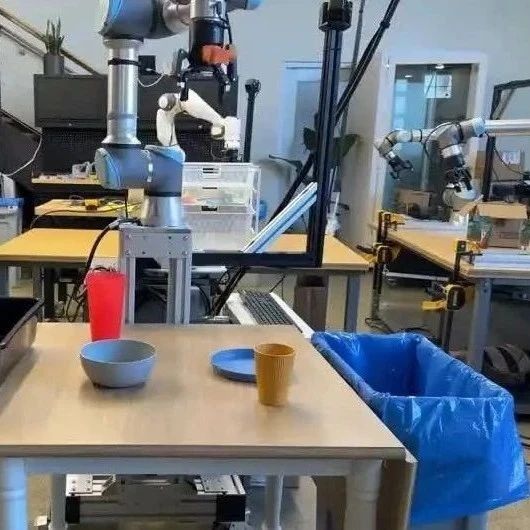
Core Viewpoint - The article introduces the Kitchen-R benchmark, a unified evaluation framework for task planning and low-level control in embodied AI, addressing the existing fragmentation in current benchmarks [4][6][8]. Group 1: Importance of Benchmarks - Benchmarks are crucial in various fields such as natural language processing and computer vision for assessing model progress [7]. - In robotics, simulator-based benchmarks like Behavior-1K are common, providing model evaluation and training capabilities [7]. Group 2: Issues with Existing Benchmarks - Current benchmarks for high-level language instruction and low-level robot control are fragmented, leading to incomplete assessments of integrated systems [8][9]. - High-level benchmarks often assume perfect execution of atomic tasks, while low-level benchmarks rely on simple single-step instructions [9]. Group 3: Kitchen-R Benchmark Features - Kitchen-R fills a critical gap in embodied AI research by providing a comprehensive testing platform that closely simulates real-world scenarios [6][8]. - It includes a digital twin kitchen environment and over 500 language instructions, supporting mobile ALOHA robots [9][10]. - The benchmark supports three evaluation modes: independent evaluation of planning modules, independent evaluation of control strategies, and critical full system integration evaluation [9][10]. Group 4: Evaluation Metrics - Kitchen-R is designed with offline independent evaluation and online joint evaluation metrics to ensure comprehensive system performance measurement [16][20]. - Key metrics include Exact Match (EM) for task planning accuracy and Mean Squared Error (MSE) for trajectory prediction accuracy [20][21]. Group 5: Baseline Methods - Kitchen-R provides two baseline methods: a VLM-driven task planning baseline and a Diffusion Policy low-level control baseline [43][49]. - The VLM planning baseline enhances planning accuracy through contextual examples and constrained generation [47][48]. - The Diffusion Policy baseline integrates visual features and robot states to predict future actions [49][52]. Group 6: Future Directions - Kitchen-R can expand to include more complex scenarios, such as multi-robot collaboration and dynamic environments, promoting the application of language-guided mobile manipulation robots in real-world settings [54].

一文尽览!2025年多篇VLA与RL融合的突破方向
具身智能之心· 2025-08-25 00:04
Core Viewpoint - The article discusses a significant revolution in the field of robotic embodied intelligence, focusing on the integration of Vision-Language-Action (VLA) models with Reinforcement Learning (RL) to address core challenges in real-world robotic decision-making and task execution [2][57]. Group 1: GRAPE - The GRAPE framework enhances the generalization of robot policies through preference alignment, addressing the limitations of VLA models in task adaptability and generalization [4][5]. - GRAPE improves the success rate of in-domain tasks by 51.79% and out-of-domain tasks by 58.20%, while also reducing collision rates by 37.44% under safety objectives [7][8]. Group 2: VLA-RL - The VLA-RL framework utilizes trajectory-level RL expressions to model operation trajectories and fine-tune reward models to tackle sparse rewards, enhancing task performance and demonstrating signs of reasoning expansion [10][12]. - In evaluations across 40 challenging robotic tasks, VLA-RL significantly outperformed existing models, indicating its potential for scalable applications [14]. Group 3: ReWiND - The ReWiND framework allows for the adaptation of robot policies to unseen tasks using a pre-trained language-based reward function, improving generalization and sample efficiency without the need for new demonstrations [17][18]. - ReWiND shows a 2.4 times improvement in reward generalization and a 5 times increase in performance for pre-trained dual-arm strategies in real-world scenarios [20]. Group 4: ConRFT - The ConRFT method employs a two-phase reinforcement fine-tuning approach to stabilize the supervision of VLA models, significantly increasing the success rate of practical tasks to 96.3% with a 144% improvement over previous methods [23][28]. - The model requires only 45 to 90 minutes of online fine-tuning to achieve these results, demonstrating its efficiency [28]. Group 5: RLDG - The RLDG method enhances the performance of generalist robot policies by generating high-quality training data through reinforcement learning, addressing the limitations of human demonstration data [32][33]. - In practical experiments, RLDG achieved a 40% increase in success rates for precise operation tasks, showcasing its effectiveness in improving generalization capabilities [38]. Group 6: TGRPO - The TGRPO method integrates trajectory-level group relative policy optimization to enhance the robustness and efficiency of VLA model fine-tuning in new environments [39][43]. - TGRPO consistently outperformed various baseline methods across ten operational tasks, validating its effectiveness in improving VLA model adaptability [43]. Group 7: iRe-VLAd - The iRe-VLAd framework optimizes VLA models through iterative reinforcement and supervised learning, addressing the instability and computational burden of direct online RL applications [44][48]. - This approach has been validated in multiple simulated and real-world scenarios, proving its capability to enhance performance in interactive settings [50]. Group 8: RIPT-VLA - The RIPT-VLA method introduces interactive post-training for VLA models, utilizing sparse binary success rewards to improve adaptability in low-data environments [51][54]. - This framework has shown significant improvements in compatibility, efficiency, and generalization, achieving a 97% success rate with minimal supervision [56]. Conclusion - The eight studies collectively represent a pivotal advancement in robotic intelligence, focusing on overcoming industry challenges such as task generalization, adaptability to dynamic environments, and multimodal information integration, with practical applications in home automation, industrial assembly, and robotic manipulation [57].
3个月!完成你的具身大脑+小脑算法学习
具身智能之心· 2025-08-25 00:04
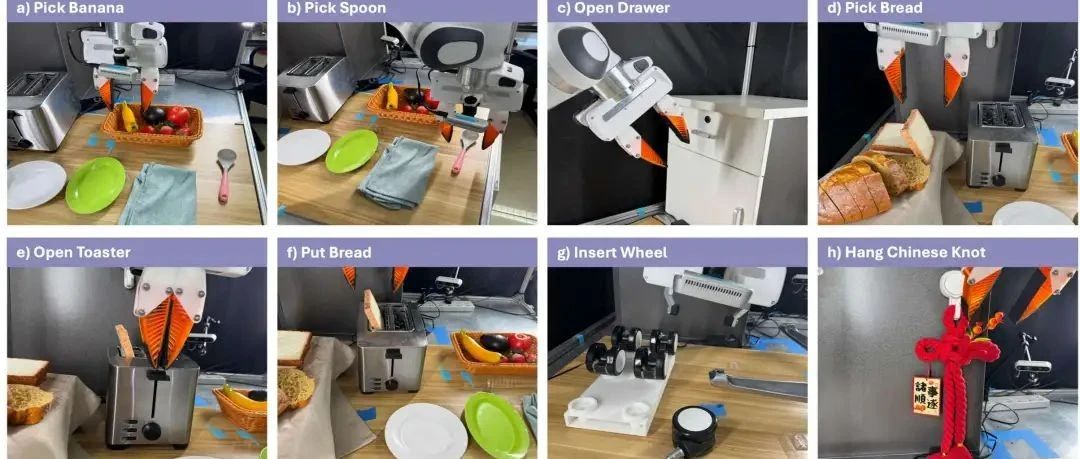
Core Viewpoint - The exploration of Artificial General Intelligence (AGI) is increasingly focusing on embodied intelligence, which emphasizes the interaction and adaptation of intelligent agents within physical environments, enabling them to perceive, understand tasks, execute actions, and learn from feedback [1][6]. Industry Analysis - In the past two years, numerous star teams in the field of embodied intelligence have emerged, leading to the establishment of valuable companies such as Xinghaitu, Galaxy General, and Zhujidongli, which are advancing the technology of embodied intelligence [3]. - Major domestic companies like Huawei, JD.com, Tencent, Ant Group, and Xiaomi are actively investing and collaborating to build a comprehensive ecosystem for embodied intelligence, while international firms like Tesla and various U.S. investment institutions are focusing on foundational models and humanoid robot prototypes [5]. Technological Evolution - The development of embodied intelligence has progressed through several stages: - The first stage focused on grasp pose detection, which lacked the ability to model task context and action sequences [6]. - The second stage involved behavior cloning, allowing robots to learn from expert demonstrations but revealing weaknesses in generalization and performance in multi-target scenarios [6]. - The third stage introduced Diffusion Policy methods, enhancing stability and generalization by modeling action trajectories [7]. - The fourth stage, starting in 2025, explores the integration of VLA models with reinforcement learning and tactile sensing, aiming to overcome current limitations and improve robots' planning and decision-making capabilities [8]. Product and Market Development - The evolution of embodied intelligence technologies has led to the emergence of various products, including humanoid robots, robotic arms, and quadrupedal robots, serving industries such as manufacturing, home services, dining, and healthcare [9]. - The demand for engineering and system capabilities is increasing as the industry shifts from research to deployment, necessitating higher engineering skills for effective implementation [12].
浙大具身智能VLN+VLA统一框架:ODYSSEY
具身智能之心· 2025-08-25 00:04
Core Insights - The article presents the ODYSSEY framework, which integrates hierarchical task planning with terrain-adaptive full-body control, successfully achieving transfer from simulation to reality and demonstrating strong generalization capabilities in diverse environments and long-term tasks [4][38]. Group 1: Research Background - The framework addresses the limitations of existing research in mobile manipulation, particularly in dynamic and unstructured environments, by proposing a unified mobile operation framework for quadruped robots to execute long-term tasks [5]. - A hierarchical visual-language planner is introduced, capable of decomposing long-term instructions based on self-centered perception into executable actions, bridging the gap between self-centered perception and language-based tasks [4][5]. Group 2: Methodology - The framework includes a full-body control strategy defined as a single network that maps comprehensive observation vectors to target actions, incorporating various sensory inputs [9]. - A two-stage training method is employed: the first stage focuses on training movement under static loads, while the second stage controls all joints and expands the reward function to include end-effector tracking [11]. Group 3: Performance Evaluation - The framework was evaluated through a series of long-term mobile operation tasks, covering diverse indoor and outdoor scenarios, with a total of 246 indoor and 58 outdoor variations [18][20]. - Experimental results indicate that the method achieved significant overall improvements across all datasets, demonstrating superior fine manipulation capabilities compared to the baseline model PerAct, especially in unseen data scenarios [17][29]. Group 4: Real-World Application - The ODYSSEY framework was tested in real-world tasks, such as "navigate to grasp" and "grasp and place," using various objects, showcasing its potential for long-term mobile exploration and operation tasks [36][37]. - Despite achieving over 40% overall success rates in all tasks, challenges remain in robust perception and high-precision control for seamless real-world deployment [37][38].

具身智能之心人形机器人交流群成立啦~
具身智能之心· 2025-08-24 13:22
Group 1 - The article introduces a new community for humanoid robot enthusiasts, focusing on areas such as humanoid control, VLA models, data collection, and hardware [1] - The community aims to connect professionals and students working in related fields to foster collaboration and knowledge sharing [1] Group 2 - Interested individuals are encouraged to add a designated assistant on WeChat with specific instructions for joining the group [2] - The requirement for a nickname and specific keywords for group entry emphasizes the community's organized approach to membership [2]

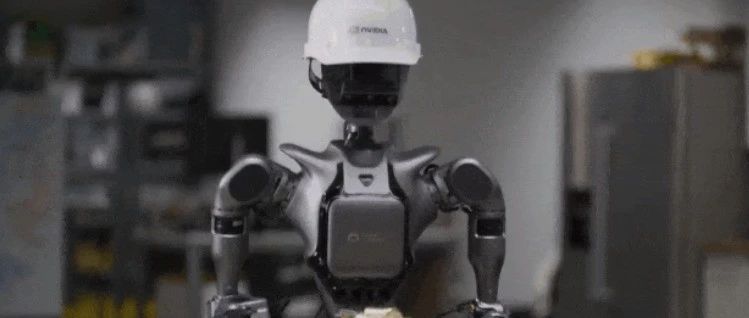
就在明天!英伟达具身机器人“新大脑”即将揭晓
具身智能之心· 2025-08-24 12:36
Core Viewpoint - Nvidia is positioning itself at the forefront of the emerging Physical AI market, which is expected to unlock trillion-dollar opportunities in the robotics industry, as highlighted by recent developments and announcements from the company [6][7]. Group 1: Nvidia's Announcements and Developments - Nvidia's CEO Jensen Huang teased a significant event scheduled for August 25, 2025, hinting at a new development in robotics [2]. - The company recently released a video previewing a new physical AI application and a robot vision reasoning model called Cosmos Reason, which allows robots to reason and act in the real world [4][6]. - An example provided by Nvidia shows a robotic arm successfully inferring the next action in a scenario involving a toaster and bread, demonstrating the practical application of their reasoning model [5]. Group 2: The Future of Physical AI - Huang has stated that the next wave of AI will be Physical AI, which involves using motion skills to understand and interact with the real world [6]. - Physical AI is encapsulated in autonomous machines like robots and self-driving cars, enabling them to perceive, understand, and execute complex tasks in real-world environments [6]. Group 3: Market Potential and Industry Trends - At the 2025 World Robot Conference, Nvidia's VP Rev Lebaredian mentioned that Physical AI could drive a trillion-dollar market, with significant advancements occurring across various sectors [7]. - Major companies, both domestically and internationally, such as Huawei, ByteDance, BYD, Xiaomi, and Tesla, are intensifying their focus on embodied intelligence, indicating a robust growth trajectory for the robotics industry [7]. - The emergence of companies like DeepSeek is fostering the development of general-purpose robotic models, leading to a competitive landscape in the humanoid robot sector, which is expected to see commercial viability soon [7].