
Cosmos世界模型

Search documents
推理效率革新与Agent共振,打开万亿市场空间
GF SECURITIES· 2026-03-18 07:34
Investment Rating - The industry investment rating is "Buy" with a previous rating of "Buy" as well [2]. Core Insights - The AI inference market is projected to reach a potential market size of $1 trillion by 2027, driven by the shift from training performance breakthroughs to optimizing inference efficiency [13][19]. - The demand for inference computing power is expected to grow structurally, with Deloitte predicting that the global inference workload will increase from approximately one-third of AI computing power in 2023 to about two-thirds by 2026, and potentially exceeding 80% in the long term [13][15]. - NVIDIA is transitioning from being a "shovel seller" in AI to an "AI factory," emphasizing the importance of integrated AI systems and infrastructure [19][30]. - The introduction of the NemoClaw platform aims to create a secure and controllable environment for AI agents, marking a shift towards "Agentic AI as a Service" [30][39]. - The physical AI sector is advancing with the release of the Cosmos world model and the Isaac simulation framework, which are expected to accelerate the deployment of robotics and autonomous driving technologies [41][46]. Summary by Sections Section 1: GTC Narrative Changes - AI inference chips are opening a potential market space of $1 trillion by 2027, with a focus on reducing inference costs and optimizing efficiency [13][19]. - The shift in AI narrative emphasizes the importance of inference capabilities over mere training performance [19][30]. Section 2: AI Applications - The introduction of NemoClaw enhances the OpenClaw ecosystem, providing a secure environment for AI agents [30][39]. - The physical AI domain is being bolstered by the Cosmos model, which integrates data generation and simulation for robotics [41][46]. Section 3: Investment Recommendations - The narrative in the AI industry is shifting from training-driven to inference-driven, with a focus on the cost-effectiveness and stability advantages of integrated AI solutions [47][48]. - The rise of Agent as a Service is expected to replace traditional enterprise SaaS products, indicating a collaborative evolution rather than a complete disruption of existing software [47][48].

GTC2026智元携手英伟达,共建物理AI标准生态加速全球部署
Yang Zi Wan Bao Wang· 2026-03-17 13:31
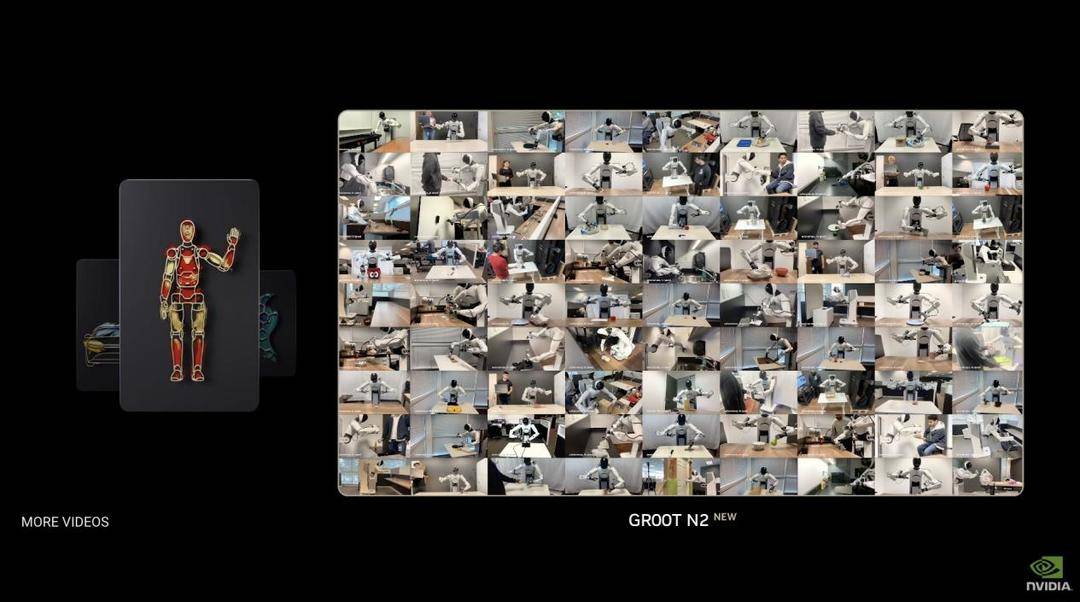
Core Insights - The GTC2026 conference highlighted NVIDIA's collaboration with global robotics leaders, including Zhiyuan Robotics, to advance the deployment of physical AI across various sectors such as manufacturing, logistics, transportation, healthcare, and infrastructure [1][3]. Group 1: Collaboration and Technology Development - NVIDIA's CEO Jensen Huang emphasized the deep partnership with Zhiyuan Robotics, showcasing their achievements in commercializing robotics for real-world applications and establishing a standardized closed-loop from R&D to deployment [3][6]. - The collaboration focuses on hardware platforms, edge-cloud computing, pre-training of the GR00T embodiment model, and industrial-scale production, aiming to define industry standards for physical AI [3][5]. Group 2: Product and Model Innovations - The introduction of the next-generation GR00T N2 embodiment model and the demonstration of the Spirit G1 as a hardware platform for model training were key highlights of Huang's presentation [3][5]. - Zhiyuan Robotics is working on joint hardware adaptations to support billion-parameter VLA models and world models for precise operations in electronic manufacturing, automotive assembly, and logistics [5]. Group 3: Standardization and Global Impact - Zhiyuan Robotics was recognized as a leading partner in global physical AI, establishing a value closed-loop with standardized capabilities across hardware, software, and deployment [6]. - The company aims to transform Chinese practical scenarios into internationally recognized standards, facilitating China's transition from technology follower to standard setter in the field of physical AI [6].

英伟达GTC重磅:Hyperion 10绑定比亚迪等四车企,物理AI驱动优步自动驾驶“加速跑”
Zhi Tong Cai Jing· 2026-03-17 01:58
Group 1 - Nvidia's CEO Jensen Huang announced a strategic alliance with Uber to build the world's largest autonomous driving network, set to begin commercial operations in Los Angeles and the San Francisco Bay Area in the first half of 2027 [1] - The network aims to deploy over 100,000 L4 autonomous vehicles equipped with Nvidia's advanced AI technology by 2028 across 28 major cities on four continents [1] - Nvidia's DRIVE Hyperion platform has been integrated with major automotive manufacturers, including BYD, Geely, Nissan, Hyundai, Kia, and Isuzu, to develop next-generation L4 vehicles [1] Group 2 - Nvidia is deepening its collaboration with Hyundai and Kia to enhance their competitive edge in autonomous driving technology, aiming to transition from L2+ to L4 level autonomous taxi services [2] - The company is also expanding its partnerships with global robotics manufacturers to advance breakthroughs in physical AI, collaborating with over ten leading firms in the industry [2] - Nvidia launched the new generation of the Cosmos world model, integrating the Isaac simulation framework and Isaac GR00T N technology module to accelerate the transition to intelligent robotics [2] Group 3 - Companies such as AGIBOT, Humanoid, LG Electronics, NEURA Robotics, and Noble Machines are adopting Nvidia's Isaac GR00T N model to move humanoid robots from the lab to large-scale production, accelerating their commercialization [3]


英伟达GTC重磅:Hyperion 10绑定比亚迪等四车企,物理AI驱动优步(UBER.US)自动驾驶“加速跑”
Zhi Tong Cai Jing· 2026-03-17 01:57
Group 1: Autonomous Driving Partnership - NVIDIA and Uber have formed a strategic alliance to create the world's largest autonomous driving network, with commercial operations set to begin in mid-2027 in Los Angeles and the San Francisco Bay Area [1] - The network aims to deploy over 100,000 L4 autonomous vehicles on the Uber platform by 2028, expanding to 28 major cities across four continents [1] - NVIDIA's CEO emphasized that the autonomous vehicle revolution is underway, marking it as the first trillion-dollar robotics industry [1] Group 2: Technology Integration and Collaborations - NVIDIA's DRIVE Hyperion10 platform has been integrated with major automotive manufacturers, including BYD, Geely, Nissan, Hyundai, Kia, and Isuzu, to develop next-generation L4 vehicles [1] - Hyundai's executive highlighted that expanding collaboration with NVIDIA is crucial for achieving safe and reliable autonomous driving, enhancing their competitive edge from L2+ to L4 autonomous taxi services [2] - NVIDIA is also deepening partnerships with global robotics manufacturers to advance physical AI technology, collaborating with over ten leading companies in the robotics sector [2] Group 3: Industry Applications - Companies such as AGIBOT, Humanoid, LG Electronics, NEURA Robotics, and Noble Machines are adopting NVIDIA's Isaac GR00T N model to transition humanoid robots from the lab to mass production, accelerating commercialization [3]
行业周报:英伟达开源Alpamayo,禾赛加入“朋友圈”-20260111
KAIYUAN SECURITIES· 2026-01-11 10:44
Investment Rating - The industry investment rating is "Overweight" [1] Core Insights - The report highlights significant advancements in the automotive and autonomous driving sectors, particularly with NVIDIA's release of the Alpamayo model and its strategic shift towards becoming a full-stack autonomous driving ecosystem leader [5][18] - The semiconductor industry is witnessing consolidation, with Huahong Semiconductor planning to acquire a majority stake in Huali Micro, which is expected to enhance long-term capacity and technology collaboration [6][24] Automotive & Autonomous Driving - NVIDIA has introduced the Alpamayo model, a reasoning-capable end-to-end autonomous driving AI, which utilizes the Cosmos world model for training and simulation, addressing the scarcity of real-world data [14][21] - The company is implementing a global deployment plan with Mercedes-Benz as a key partner, aiming to create an inclusive open business ecosystem [21] - Hesai Technology plans to double its production capacity for lidar sensors from 2 million units in 2025 to 4 million units in 2026, with a new factory in Bangkok expected to start production in early 2027 [21][22] Electronics - Huahong Semiconductor's acquisition of a 97.4988% stake in Huali Micro for a total consideration of 8.27 billion yuan is aimed at expanding production capacity, adding 38,000 wafers per month in 65/55nm and 40nm processes [6][26] - The acquisition is part of a broader strategy to enhance technology and production capabilities in the semiconductor sector [24][27] Weekly Data Update - The Hang Seng Technology Index and the Hang Seng Index experienced slight declines of 0.9% and 0.4% respectively, while the electronics index rose by 4.0% [6][28] - The report notes a significant increase in net buying through the Hong Kong Stock Connect, amounting to 29.32 billion yuan, indicating strong investor interest [28][37] Investment Recommendations - In the automotive and autonomous driving sector, companies such as Pony.ai, Horizon Robotics, and XPeng Motors are recommended as beneficiaries of the advancements in AI and autonomous driving technologies [7][36] - For the electronics sector, the report suggests focusing on companies like Samsung, SK Hynix, and Micron, which are expected to benefit from rising NAND and DRAM prices [7][39]
潮声丨人工智能有时比人还“蠢”,AI版图缺的这块拼图是什么
Sou Hu Cai Jing· 2025-12-03 00:35
Core Insights - The current era of artificial intelligence, dominated by large language models and image classifiers, has reached its limits, and AI with spatial intelligence is seen as the next frontier to break through this bottleneck [2][11][24] Group 1: AI Limitations - AI is categorized into two types: speaking intelligence and doing intelligence, with the former being strong in text output but often failing in practical tasks [6][11] - Examples of AI failures include generating unrealistic images and videos, highlighting the lack of common sense and physical understanding in current models [7][10] Group 2: Spatial Intelligence - Spatial intelligence, a concept originating from educational psychology, involves the perception, understanding, and manipulation of spatial information, which is crucial for human development and creativity [12][15] - Current AI systems lack deep, common-sense understanding of the physical world, which directly affects the quality of their outputs [11][17] Group 3: World Models - The concept of world models, inspired by human cognitive abilities, is emerging as a key area of focus for AI development, aiming to enable machines to understand and interact with the physical world [19][23] - Recent advancements in world models include new products and technologies from companies like NVIDIA and Google DeepMind, indicating a growing interest and investment in this area [22][23] Group 4: Future Challenges - Building AI that can operate like humans presents significant challenges, including the complexity and uncertainty of the real world, limitations in existing data, and the inherent constraints of physical laws [23][24]

阿里云栖大会聚焦(4):Omniverse+Cosmos驱动的PhysicalAI数据飞轮
Haitong Securities International· 2025-09-26 06:00
Investment Rating - The report does not explicitly state an investment rating for the industry or specific companies involved in the Physical AI sector [4]. Core Insights - The collaboration between NVIDIA and Alibaba Cloud outlines a three-in-one implementation roadmap for Physical AI, integrating cloud-based training, virtual simulation, and edge deployment, which is expected to enhance automation across various industries [1][13]. - The effectiveness of the Cosmos/simulation technology relies heavily on multi-level calibration and robust data lineage management to minimize Sim2Real gaps, which are critical for achieving real-world success [2][14]. - A disciplined pilot cadence is recommended to avoid the "great demo, hard deployment" trap, emphasizing a structured four-gate process for engineering rollout [3][15]. - Optimizing inference economics and clarifying the roles of cloud and edge computing are essential for scaling applications in the Physical AI sector [3][16]. - Governance, organization, and supply chain resilience are identified as foundational elements for the successful implementation of Physical AI technologies [3][17]. Summary by Sections Event Overview - On September 25, 2025, NVIDIA and Alibaba Cloud presented a roadmap for Physical AI at the Apsara Conference, focusing on the integration of cloud training, virtual simulation, and edge deployment [1][13]. Technical Implementation - The proposed framework utilizes the Omniverse simulation platform and Cosmos world model, aiming to reduce reliance on real-world data and facilitate automation in manufacturing and logistics [1][13]. - A three-layer calibration mechanism is essential for ensuring data accuracy and effectiveness in simulation technologies [2][14]. Engineering and Deployment - A structured approach to deployment is recommended, involving a four-gate process to manage risks effectively [3][15]. - Key performance indicators (KPIs) should be established at various levels to monitor progress and ensure alignment between simulation and real-world applications [2][15]. Economic and Organizational Considerations - The report emphasizes the importance of optimizing costs and defining clear roles for cloud and edge computing to enhance operational efficiency [3][16]. - Building a resilient supply chain and governance framework is crucial for the long-term success of Physical AI technologies [3][17].
速递| Runway跨界机器人领域,获超5亿美元融资,AI世界模型成模拟现实训练新引擎
Z Potentials· 2025-09-02 03:58
Core Insights - Runway has shifted its focus from solely creative industries to exploring opportunities in the robotics sector, receiving over $500 million in funding and achieving a valuation of $3 billion [3][4] - The company is known for its AI models that generate videos and images, with recent releases including the Gen-4 video generation model and the Runway Aleph video editing model [3][4] - Runway's technology is being utilized by robotics and autonomous vehicle companies for training simulations, which are more cost-effective and scalable compared to real-world training [4][5] Funding and Valuation - Runway has raised more than $500 million from investors such as Nvidia, Google, and General Atlantic, leading to a valuation of $3 billion [3] Technology and Applications - The company’s world models are designed to create realistic simulations, which are now attracting interest from robotics and autonomous vehicle sectors [3][4] - Runway's models allow for detailed testing of specific variables and scenarios without altering other factors in the environment, making it easier to simulate different operational outcomes [5] Future Directions - Runway does not plan to develop a completely separate product line for robotics and autonomous vehicles but will refine existing models to better serve these industries [5][6] - The core philosophy of the company revolves around the concept of simulation, which can be applied across various markets and industries as the capabilities of generative models improve [6]

计算机行业点评报告:英伟达(NVDA.O):Blackwell引领AI发展,据中心驱动营收再创新高
Huaxin Securities· 2025-08-29 08:28
Investment Rating - The report maintains a "Recommended" investment rating for the industry [9]. Core Insights - The report highlights that NVIDIA continues to experience rapid revenue and profit growth, driven by its leadership in AI infrastructure and diverse business segments [9]. - The data center business is a significant contributor, accounting for nearly 90% of total revenue, with a total revenue of $46.7 billion, representing a 56% year-over-year increase [4][9]. - The report emphasizes NVIDIA's strategic collaborations and product innovations, particularly in AI and gaming sectors, which are expected to enhance its market position [9]. Revenue and Profit Performance - Total revenue for the second quarter reached $46.7 billion, with a year-over-year growth of 56% and a quarter-over-quarter growth of 6% [4]. - Data center revenue was $41.1 billion, while gaming revenue was $4.3 billion, showing a year-over-year increase of 49% [4]. - The GAAP gross margin was 72.4%, with a net profit of $26.4 billion, reflecting a 59% year-over-year increase [4][9]. Customer and Ecosystem Expansion - NVIDIA has expanded its customer base, deploying its RTX PRO 6000 Blackwell Server Edition with major companies like Disney and TSMC [4][6]. - The company is also enhancing its strategic partnerships in Europe to build AI cloud infrastructure aimed at industrial manufacturing [4][6]. Product and Technology Matrix - The Blackwell architecture has led to the launch of new products, including the GeForce RTX 5060, which achieved record shipping speeds [7]. - NVIDIA's DLSS 4 technology is now available in over 175 games and applications, indicating broad market penetration [7]. AI Empowerment - AI is identified as a core driver of NVIDIA's strategy, with significant advancements in training and inference capabilities [8]. - The company has collaborated with OpenAI to support the gpt-oss model, showcasing its commitment to AI innovation [8].
人形机器人行业周报:周观点:人形机器人产业端催化不断,持续关注人形机器人板块-20250819
Shanghai Securities· 2025-08-19 09:06
Investment Rating - The industry investment rating is "Overweight (Maintain)" [1] Core Insights - The report highlights a significant increase in the humanoid robot industry, driven by advancements in technology and increased commercial applications. Major companies such as Huawei, ByteDance, BYD, Xiaomi, and others are intensifying their investments in embodied intelligence, indicating a robust growth trajectory for the sector [7] Industry Summary - The mechanical equipment industry is experiencing a surge in interest, with numerous new entrants and significant projects being announced. For instance, the first domestically developed rope-driven robot was showcased at the 2025 World Robot Conference, and a major project collaboration was established between Zhiyuan Robotics and Fulian Precision [4][5] - The report notes that the humanoid robot industry is entering a phase of "hundred flowers blooming," with a clear trend towards industrial applications. The commercialization of humanoid robots is expected to accelerate, with a focus on benefiting domestic component manufacturers [7] Company Developments - Epson launched a new series of robots tailored for Chinese users, while Zhiyuan Robotics completed a stake acquisition in Yushu Intelligent [5] - Lingdong Robotics introduced the world's first AI embodied humanoid desktop robot, and Daimeng Robotics secured significant angel funding to advance its technology [5] - The report also mentions that major companies like NVIDIA are showcasing new AI-integrated technologies, further pushing the boundaries of robotics [5] Policy Developments - The Beijing Economic and Technological Development Zone announced measures to support the innovation and development of embodied intelligent robots, aiming to establish a production capacity of tens of thousands of units by the end of 2027 [6]