具身智能之心

Search documents
cVLA:面向高效相机空间VLA模型的关键位姿预测方法
具身智能之心· 2025-07-06 11:54
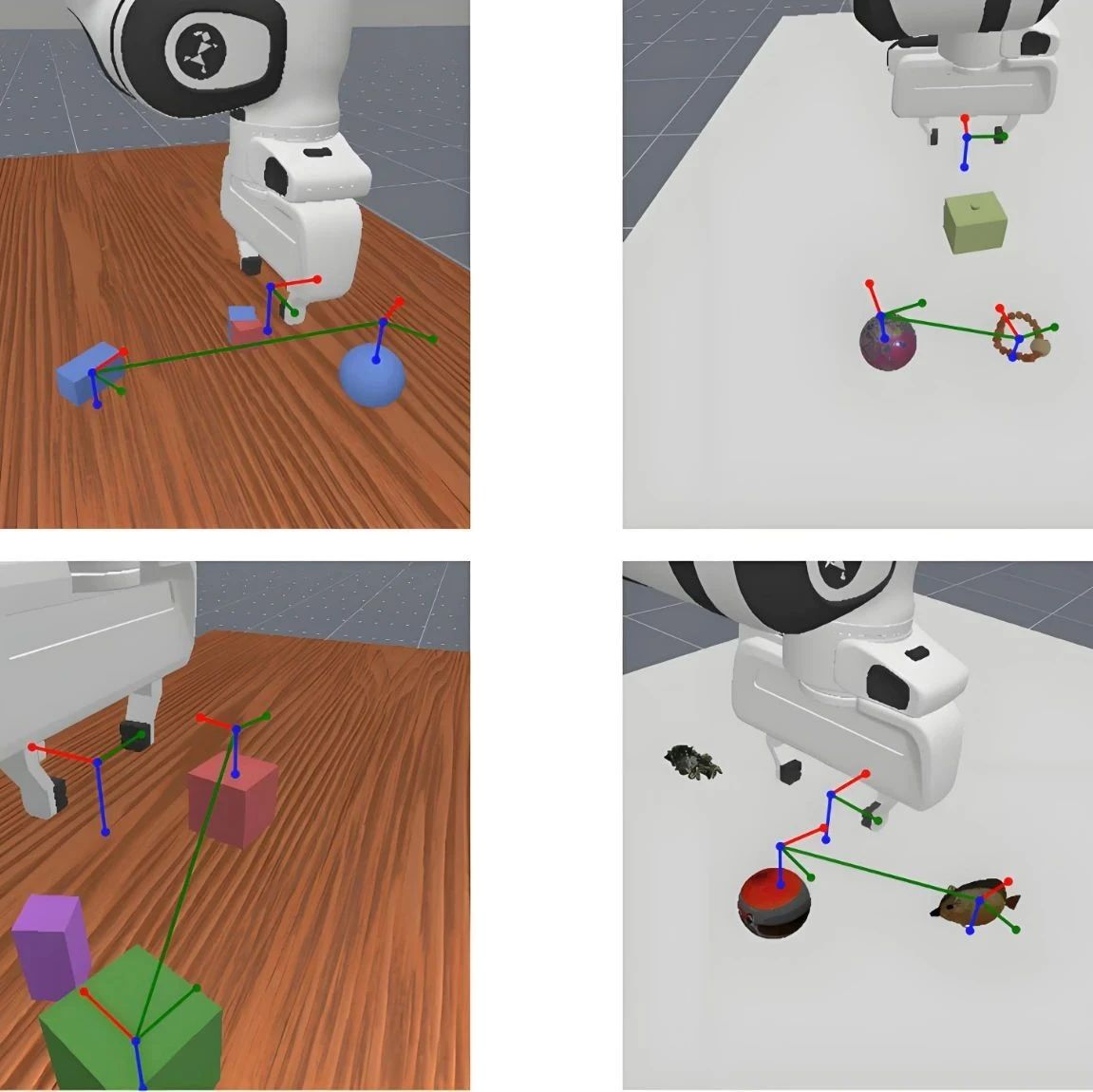
Core Insights - The article discusses a new approach to Visual-Language-Action (VLA) models that leverages visual language models (VLMs) for efficient robot trajectory prediction, addressing high training costs and data limitations associated with traditional VLA systems [2][3]. Group 1: Introduction and Background - VLA models integrate visual, language, and interaction data to enable fine-grained perception and action generation, but face challenges such as high computational costs, data scarcity, and evaluation benchmarks [3]. - The proposed method utilizes controllable synthetic datasets for training lightweight VLA systems, which can be applied across various domains, particularly in robotics [3]. Group 2: Technical Methodology - The foundational model is based on the pre-trained VLM PaliGemma2, which predicts key poses of the robot's end effector from real-time images, robot states, and task descriptions [6]. - The system employs a single-step prediction approach to enhance training efficiency, focusing on predicting two key trajectory poses rather than full trajectories [6][8]. - The method extends to few-shot imitation learning, allowing the model to infer tasks from demonstration image-trajectory pairs without requiring fine-tuning on new scene images [8]. Group 3: Data Generation and Evaluation - The training dataset is generated using the ManiSkill simulator, which creates diverse environments and tasks, enhancing the model's ability to generalize to real-world scenarios [9][10]. - Real-world evaluation is conducted using the DROID dataset, which includes various scenes and actions, allowing for a comprehensive assessment of the model's performance [11]. Group 4: Experimental Results - Experiments demonstrate that incorporating depth information significantly improves simulation success rates and reduces failure cases [12]. - The model's performance is evaluated across different datasets, with success rates reported at 70% for the easy version and 28% for the hard version of the CLEVR dataset [16][17]. - The article highlights the importance of camera and scene randomization in achieving robustness in real-world applications [16]. Group 5: Inference Strategies - The article discusses the impact of input image cropping on performance, indicating that precise target localization is crucial for successful robot operations [18]. - Various decoding strategies are evaluated, with the proposed beam-search-NMS method outperforming traditional approaches in terms of accuracy and diversity of predicted trajectories [20][23].

从坐标混乱到时空对齐!诺亚和复旦联合提出4D-VLA,提升机器人预训练效率和稳健性
具身智能之心· 2025-07-06 11:54
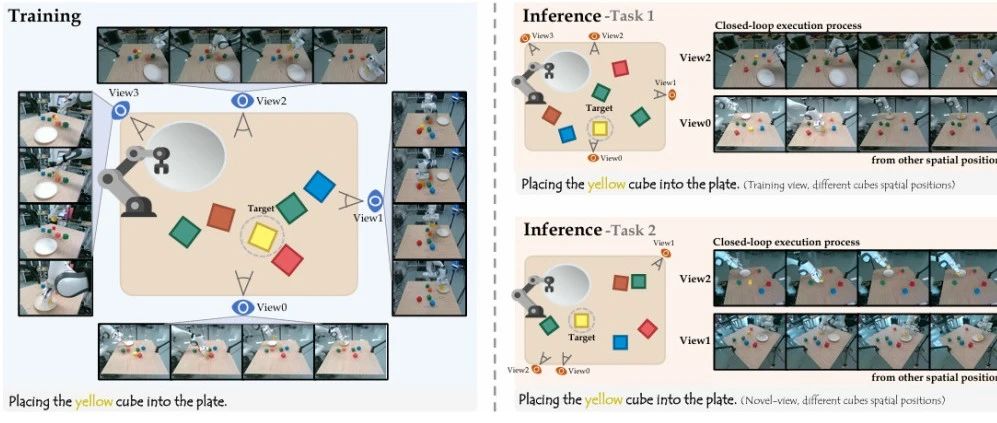
Core Insights - The article introduces 4D-VLA, a new pretraining method that integrates 3D spatial and historical frame data to enhance model performance in complex scenarios, addressing the limitations of traditional single-frame RGB and text inputs [4][10][18]. Group 1: Limitations of Existing Paradigms - Current mainstream methods like OpenVLA rely solely on single-frame RGB images and text instructions, leading to chaotic target distributions and slow model convergence due to high variance [7][8]. - The lack of complete input information results in significant challenges, such as coordinate system chaos and state chaos, which severely degrade pretraining efficiency [5][9]. Group 2: Proposed Solutions - 4D-VLA utilizes depth maps and camera extrinsics to project each pixel into world coordinates, embedding 3D positional encoding to align visual tokens with robot coordinates, thus reducing ambiguity in coordinate systems [10][18]. - The method includes a controlled experiment to quantify the impact of coordinate chaos on VLA models, demonstrating that the introduction of 3D information significantly improves model robustness and convergence speed [11][17]. Group 3: Experimental Setup and Results - The DROID dataset, comprising 76,000 human demonstration trajectories across various tasks, serves as the foundation for pretraining, while the LIBERO simulation suite is used for downstream evaluation [29][30]. - 4D-VLA outperforms existing methods in various tasks, achieving an average success rate of 88.6% across different evaluation settings, showcasing its superior capability in spatial awareness and generalization [33][39]. Group 4: Real-World Evaluation - In real-world tests, 4D-VLA demonstrated enhanced precision and robustness in tasks involving spatial generalization, robustness to distractors, precise placement, and structured instruction execution [44][49]. - The model maintained high success rates even under unseen camera angles, indicating its ability to adapt to new environments and conditions effectively [57][58].
具身什么时候可以交卷?哪些产品会率先落地?
具身智能之心· 2025-07-05 10:31
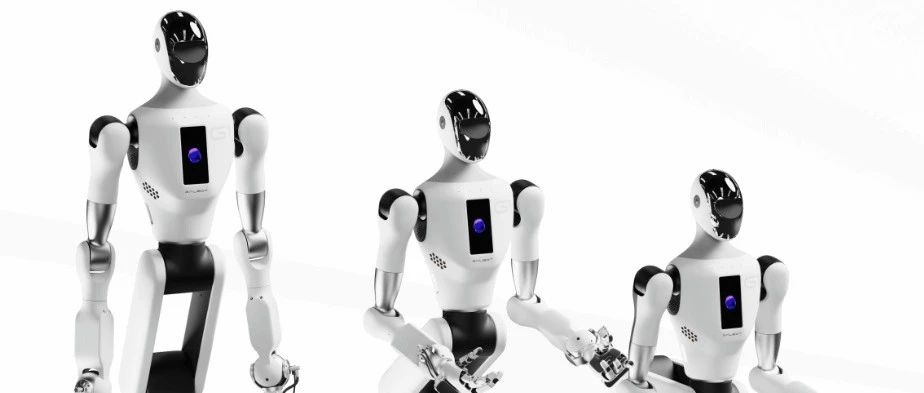
Core Viewpoint - The industry of embodied intelligence is evolving, with a focus on humanoid robots and their practical deployment challenges, particularly in terms of stability and maintenance costs [1][2]. Group 1: Humanoid Robots and Deployment - Humanoid robots are expected to be a major focus in 2025, but their deployment is hindered by stability issues, which could lead to high repair costs and unclear liability [1]. - In contrast, mobile operations combined with robotic arms, such as the G1 from Galaxy General, show better application prospects in service sectors like home and supermarkets [1]. Group 2: Data and Model Training - A large-scale dataset is essential for pre-training foundational models, with data collection efficiency and quality being critical for scalability [4]. - The sim2real approach addresses challenges related to data scarcity and cost, but ensuring performance in real-world scenarios remains a significant concern [4]. Group 3: Community and Resources - The "Embodied Intelligence Heart Knowledge Planet" community offers a platform for technical exchange among nearly 200 companies and research institutions in the field [5][12]. - The community provides resources for newcomers, including technical stacks, project proposals, and job opportunities in the embodied intelligence sector [9][11]. Group 4: Learning and Development - The community has compiled various learning paths and resources for both beginners and advanced researchers, covering topics such as reinforcement learning, multi-modal models, and robotic navigation [13][37]. - Members can access a wealth of information, including open-source projects, datasets, and industry reports, to facilitate their research and development efforts [20][31][27].
秋招快要开启了!哪里可以找到具身相关的面经和题目啊?
具身智能之心· 2025-07-05 09:42
Core Viewpoint - The article introduces AutoRobo Knowledge Planet, a job-seeking community focused on autonomous driving and embodied intelligence, aimed at helping job seekers quickly match with suitable positions and prepare for interviews [1][3]. Group 1: Community Overview - AutoRobo Knowledge Planet is a platform for job seekers in the fields of autonomous driving, embodied intelligence, and robotics, currently hosting nearly 1,000 members from various companies such as Horizon Robotics, Li Auto, Huawei, and Xiaomi [3]. - The community includes both experienced professionals and students preparing for upcoming job fairs in 2024 and 2025, covering a wide range of topics related to autonomous driving and embodied intelligence [3]. Group 2: Content and Resources - The platform provides a wealth of resources, including interview questions, interview experiences, industry reports, salary negotiation tips, and services for resume optimization and internal referrals [3][5]. - AutoRobo has compiled a comprehensive list of 100 interview questions related to autonomous driving and embodied intelligence, covering various technical aspects and practical skills [9][10][13]. Group 3: Industry Reports - The community offers access to numerous industry reports that help members understand the current state, development trends, and market opportunities within the autonomous driving and embodied intelligence sectors [16][17]. - Reports include topics such as the World Robotics Report, investment trends in embodied intelligence, and the development of humanoid robots, providing insights into the industry's landscape [17]. Group 4: Interview Experiences - The platform shares both successful and unsuccessful interview experiences across various roles, from campus recruitment to internships, helping members learn from past experiences [19][20]. - It includes detailed accounts of interview processes for positions in companies like Didi, NVIDIA, and Meituan, offering valuable insights into the expectations and challenges faced during interviews [20]. Group 5: Salary Negotiation and Professional Development - AutoRobo provides guidance on salary negotiation techniques and common HR questions, equipping members with the skills needed to navigate job offers effectively [22][25]. - The community also shares foundational resources, including recommended reading materials related to robotics, autonomous driving, and AI, to support members' professional growth [23].
大模型这个坑,还有哪些可以发论文的点?
具身智能之心· 2025-07-05 02:25
Core Insights - The article emphasizes the rapid development of large language models (LLMs) and multimodal models, focusing on enhancing model efficiency, expanding knowledge capabilities, and improving reasoning performance as key research areas in artificial intelligence [1][2]. Course Objectives - The course aims to systematically explore cutting-edge optimization methods for large models, addressing challenges in parameter-efficient computation, dynamic knowledge expansion, and complex reasoning [1][2]. Enrollment Details - The course will accept 6 to 8 participants per session [3]. Target Audience - The course is designed for master's and doctoral students in the field of large models, individuals seeking to enhance their resumes for graduate studies abroad, and professionals in artificial intelligence looking to deepen their understanding of algorithm theory and research skills [4]. Course Outcomes - Participants will gain insights into classic and cutting-edge papers, coding implementations, and methods for writing and submitting research papers, thereby developing a clearer understanding of the subject matter [3][4]. Enrollment Requirements - Basic requirements include familiarity with deep learning/machine learning, basic knowledge of large model algorithms, proficiency in Python, and experience with PyTorch [5]. Course Structure - The course spans 12 weeks of online group research, followed by 2 weeks of paper guidance, and includes a maintenance period of 10 weeks for paper development [10]. Learning Requirements - Participants are expected to engage actively in discussions, complete assignments on time, and maintain academic integrity throughout the course [12]. Course Outline - The curriculum covers various topics, including model pruning, quantization, dynamic knowledge expansion, and advanced reasoning paradigms, with a focus on practical applications and coding [16][18].
图像目标导航的核心究竟是什么?
具身智能之心· 2025-07-04 12:07
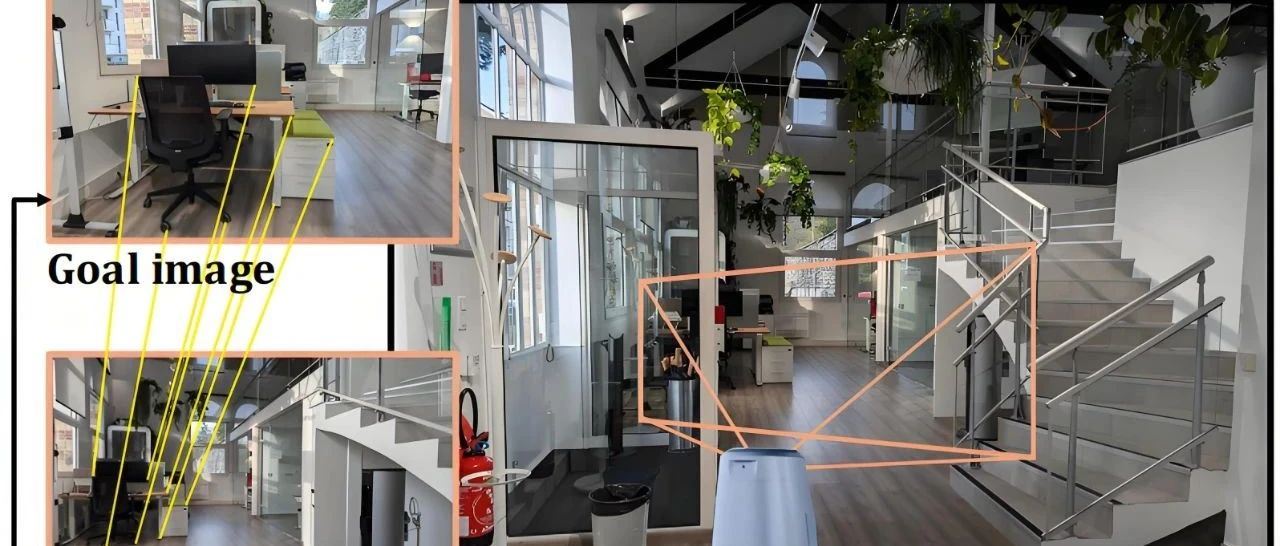
Research Background and Core Issues - Image goal navigation requires two key capabilities: core navigation skills and direction information calculation based on visual observation and target image comparison [2] - The research focuses on whether this task can be efficiently solved through end-to-end training of complete agents using reinforcement learning (RL) [2] Core Research Content and Methods - The study explores various architectural designs and their impact on task performance, emphasizing implicit correspondence computation between images [3][4] - Key architectures discussed include Late Fusion, ChannelCat, SpaceToDepth + ChannelCat, and Cross-attention [4] Main Findings - Early patch-level fusion methods (like ChannelCat and Cross-attention) are more critical than late fusion methods (Late Fusion) for supporting implicit correspondence computation [8] - The performance of different architectures varies significantly under different simulator settings, particularly the "Sliding" setting [8][10] Performance Metrics - The success rate (SR) and success path length (SPL) metrics are used to evaluate the performance of various models [7] - For example, when Sliding=True, ChannelCat (ResNet9) achieved an SR of 83.6%, while Late Fusion only reached 13.8% [8] Transferability of Abilities - Some learned capabilities can transfer to more realistic environments, especially when including the weights of the perception module [10] - Training with Sliding=True and then fine-tuning in a Sliding=False environment improved SR from 31.7% to 38.5% [10] Relationship Between Navigation and Relative Pose Estimation - A correlation exists between navigation performance and relative pose estimation accuracy, indicating the importance of direction information extraction in image goal navigation [12] Conclusion - Architectural designs that support early local fusion (like Cross-attention and ChannelCat) are crucial for implicit correspondence computation [15] - The simulator's Sliding setting significantly affects performance, but transferring perception module weights can help retain some capabilities in real-world scenarios [15] - Navigation performance is related to relative pose estimation ability, confirming the core role of direction information extraction in image goal navigation [15]
ArtGS:3DGS实现关节目标精准操控,仿真/实物双验证性能SOTA!
具身智能之心· 2025-07-04 09:48
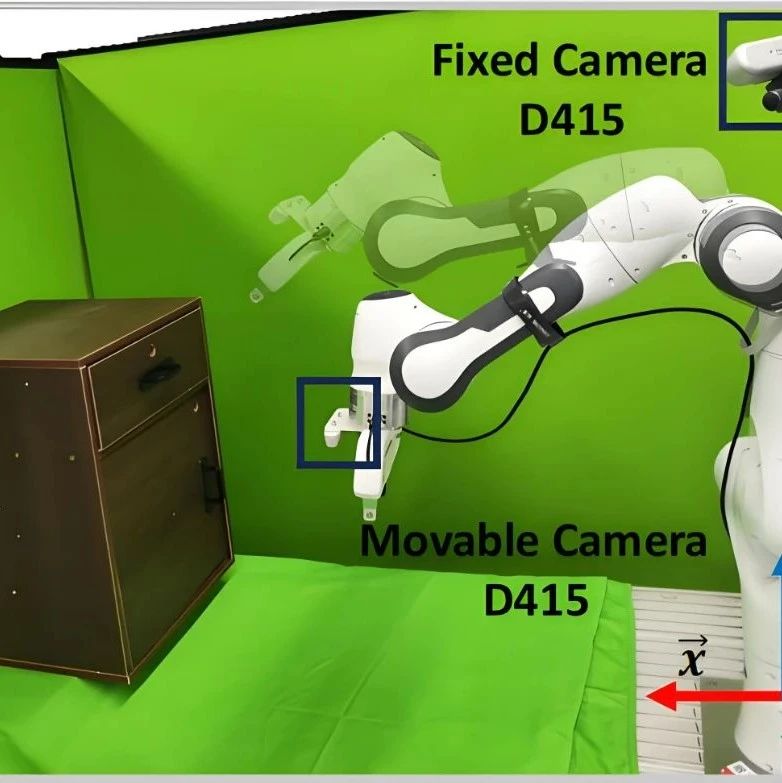
Group 1 - The core challenge in robotics is joint target manipulation, which involves complex kinematic constraints and limited physical reasoning capabilities of existing methods [3][4] - The proposed ArtGS framework integrates 3D Gaussian Splatting (3DGS) with visual-physical modeling to enhance understanding and interaction with joint targets, ensuring physically consistent motion constraints [3][4][20] - ArtGS consists of three key modules: static Gaussian reconstruction, VLM-based skeletal inference, and dynamic 3D Gaussian joint modeling [4] Group 2 - Static 3D Gaussian reconstruction utilizes 3D Gaussian splatting to create high-fidelity 3D scenes from multi-view RGB-D images, representing the scene as a collection of 3D Gaussian spheres [5] - VLM-based skeletal inference employs a fine-tuned visual-language model (VLM) to estimate joint parameters, generating target views to assist in visual question answering [6][8] - Dynamic 3D Gaussian joint modeling implements impedance control for interaction with the environment, optimizing joint parameters through differential rendering [10] Group 3 - Experimental validation shows that ArtGS significantly outperforms baseline methods in joint parameter estimation, with lower angular error (AE) and origin error (OE) [12] - In simulation, ArtGS achieves a manipulation success rate ranging from 62.4% to 90.3%, which is substantially higher than other methods like TD3 and Where2Act [14] - Real-world experiments demonstrate a perfect success rate of 10/10 for drawer operations and 9/10 for cabinet operations, indicating the effectiveness of the optimized version of ArtGS [14][17] Group 4 - Ablation studies reveal that even with initial axis estimation errors exceeding 20°, ArtGS can still enhance operation success rates through 3DGS optimization [19] - ArtGS exhibits cross-embodiment adaptability, accurately reconstructing various robotic arms, particularly excelling in gripper rendering details [19][20] - The core contribution of ArtGS lies in transforming 3DGS into a visual-physical model for joint targets, ensuring spatiotemporal consistency in differentiable operation trajectories [20] Group 5 - Future directions for ArtGS include expanding capabilities to handle more complex scenarios and improving modeling and manipulation of multi-joint, high-dynamic targets [21]
传统导航和具身目标导航到底有啥区别?
具身智能之心· 2025-07-04 09:48
Core Viewpoint - The article discusses the evolution of robot navigation technology from traditional mapping and localization to large model-based navigation, which includes visual language navigation (VLN) and goal navigation. VLN focuses on following instructions, while goal navigation emphasizes understanding the environment to find paths independently [1][4]. Group 1: Visual Language Navigation (VLN) - VLN is fundamentally a task of following instructions, which involves understanding language commands, perceiving the environment, and planning movement strategies. The VLN robot system consists of a visual language encoder, environmental history representation, and action strategy modules [2]. - The key challenge in VLN is how to effectively compress information from visual and language inputs, with current trends favoring the use of large-scale pre-trained visual language models and LLMs for instruction breakdown and task segmentation [2][3]. - The learning of the strategy network has shifted from extracting patterns from labeled datasets to distilling effective planning information from LLMs, which has become a recent research focus [3]. Group 2: Goal Navigation - Goal navigation extends VLN by requiring agents to autonomously explore and plan paths in unfamiliar 3D environments based solely on target descriptions, such as coordinates or images [4]. - Unlike traditional VLN that relies on explicit instructions, goal-driven navigation systems must transition from "understanding commands to finding paths" by autonomously parsing semantics, modeling environments, and making dynamic decisions [6]. Group 3: Commercial Applications and Demand - Goal-driven navigation technology has been industrialized in various verticals, such as terminal delivery, where it combines with social navigation algorithms to handle dynamic environments and human interactions. Examples include Meituan's delivery robots and Starship Technologies' campus delivery robots [8]. - In sectors like healthcare, hospitality, and food service, companies like 嘉楠科技, 云迹科技, and Aethon have deployed service robots for autonomous delivery, enhancing service response efficiency [8]. - The development of humanoid robots has led to an increased focus on the adaptability of navigation technology, with companies like Unitree and Tesla showcasing advanced navigation capabilities [9]. Group 4: Knowledge and Learning Challenges - Both VLN and goal navigation require knowledge across multiple domains, including natural language processing, computer vision, reinforcement learning, and graph neural networks, making it a challenging learning path for newcomers [10].
港大强化学习驱动连续环境具身导航方法:VLN-R1
具身智能之心· 2025-07-04 09:48
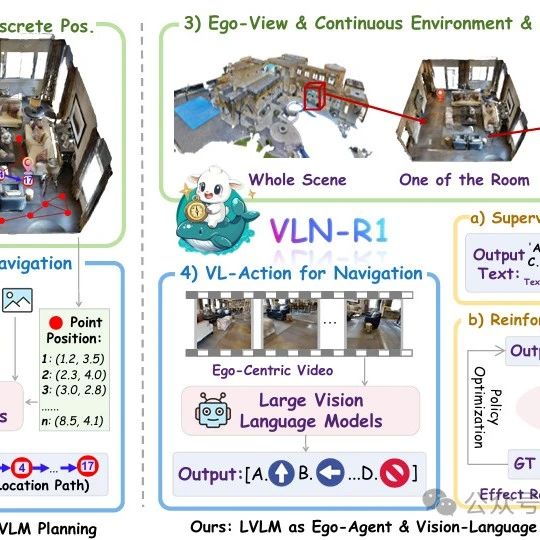
Core Viewpoint - The article presents the VLN-R1 framework, which utilizes large vision-language models (LVLM) for continuous navigation in real-world environments, addressing limitations of previous discrete navigation methods [5][15]. Research Background - The VLN-R1 framework processes first-person video streams to generate continuous navigation actions, enhancing the realism of navigation tasks [5]. - The VLN-Ego dataset is constructed using the Habitat simulator, providing rich visual and language information for training LVLMs [5][6]. - The importance of visual-language navigation (VLN) is emphasized as a core challenge in embodied AI, requiring real-time decision-making based on natural language instructions [5]. Methodology - The VLN-Ego dataset includes natural language navigation instructions, historical frames, and future action sequences, designed to balance local details and overall context [6]. - The training method consists of two phases: supervised fine-tuning (SFT) to align action predictions with expert demonstrations, followed by reinforcement fine-tuning (RFT) to optimize model performance [7][9]. Experimental Results - In the R2R task, VLN-R1 achieved a success rate (SR) of 30.2% with the 7B model, significantly outperforming traditional models without depth maps or navigation maps [11]. - The model demonstrated strong cross-domain adaptability, outperforming fully supervised models in the RxR task with only 10K samples used for RFT [12]. - The design of predicting future actions was found to be crucial for performance, with the best results obtained by predicting six future actions [14]. Conclusion and Future Work - VLN-R1 integrates LVLM and reinforcement learning fine-tuning, achieving state-of-the-art performance in simulated environments and showing potential for small models to match larger ones [15]. - Future research will focus on validating the model's generalization capabilities in real-world settings and exploring applications in other embodied AI tasks [15].
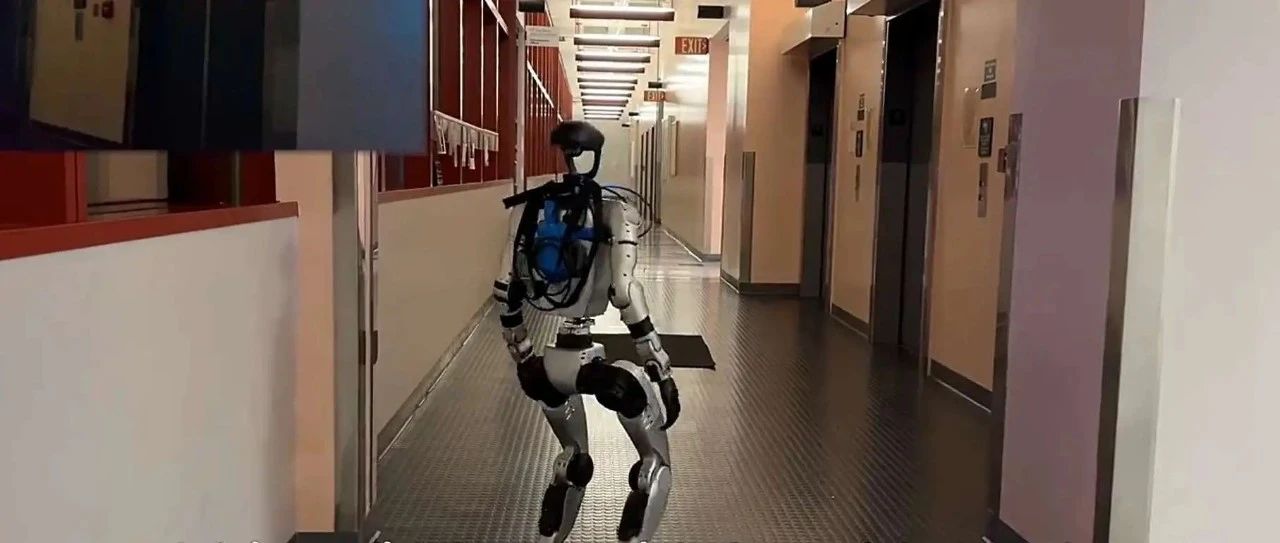
最新综述:从物理模拟器和世界模型中学习具身智能
具身智能之心· 2025-07-04 09:48
Core Insights - The article focuses on the advancements in embodied intelligence within robotics, emphasizing the integration of physical simulators and world models as crucial for developing robust embodied AI systems [4][6]. - It highlights the importance of a unified grading system for intelligent robots, which categorizes their capabilities from basic mechanical execution to advanced social intelligence [6][67]. Group 1: Embodied Intelligence and Robotics - Embodied intelligence is defined as the ability of robots to interact with the physical world, enabling perception, action, and cognition through physical feedback [6]. - The integration of physical simulators provides a controlled environment for training and evaluating robotic agents, while world models enhance the robots' internal representation of their environment for better prediction and decision-making [4][6]. - The article maintains a resource repository of the latest literature and open-source projects to support the development of embodied AI systems [4]. Group 2: Grading System for Intelligent Robots - The proposed grading model includes five progressive levels (IR-L0 to IR-L4), assessing autonomy, task handling, and social interaction capabilities [6][67]. - Each level reflects the robot's ability to perform tasks, from complete reliance on human control (IR-L0) to fully autonomous social intelligence (IR-L4) [6][67]. - The grading system aims to provide a unified framework for evaluating and guiding the development of intelligent robots [6][67]. Group 3: Physical Simulators and World Models - Physical simulators like Isaac Sim utilize GPU acceleration for high-fidelity simulations, addressing data collection costs and safety issues [67]. - World models, such as diffusion models, enable internal representation for predictive planning, bridging the gap between simulation and real-world deployment [67]. - The article discusses the complementary roles of simulators and world models in enhancing robotic capabilities and operational safety [67]. Group 4: Future Directions and Challenges - The future of embodied intelligence involves developing structured world models that integrate machine learning and AI to improve adaptability and generalization [68]. - Key challenges include high-dimensional perception, causal reasoning, and real-time processing, which need to be addressed for effective deployment in complex environments [68]. - The article suggests that advancements in 3D structured modeling and multimodal integration will be critical for the next generation of intelligent agents [68].