具身智能之心

Search documents
为什么人形机器人不容易落地?移动操作更受欢迎?
具身智能之心· 2025-07-08 09:31
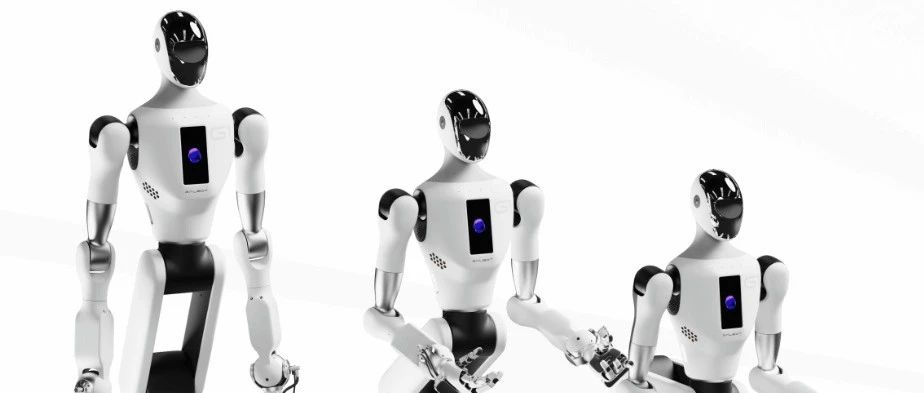
Core Viewpoint - The industry of embodied intelligence is evolving, with a focus on humanoid robots and their deployment challenges, particularly in terms of stability and maintenance costs [1][2]. Group 1: Humanoid Robots and Deployment - Humanoid robots are expected to be the most popular in 2025, but their deployment is hindered by stability issues, which could lead to high repair costs and unclear liability [1]. - Compared to humanoid robots, mobile operations combined with robotic arms are more likely to achieve practical applications, as demonstrated by products like Galaxy General's G1 in service and retail environments [1]. Group 2: Data and Model Training - A large-scale dataset is essential for pre-training foundational models, with the efficiency and quality of data collection being critical for scaling applications [4]. - The sim2real approach addresses challenges related to data scarcity and cost, but ensuring performance in real-world scenarios remains a significant focus area [4]. Group 3: Community and Resources - The "Embodied Intelligence Heart Knowledge Planet" community offers a platform for technical exchange among nearly 200 companies and research institutions in the field [5][12]. - The community provides resources for newcomers, including technical stacks, project proposals, and job opportunities, fostering a comprehensive ecosystem for embodied intelligence [9][11][16]. Group 4: Educational and Research Support - The community has compiled a wealth of resources, including open-source projects, datasets, and learning pathways across various aspects of embodied intelligence [18][31][33]. - Members can access a variety of educational materials, including research papers and technical documentation, to support their learning and development in the field [20][23][25].

重磅分享!VR-Robo:real2sim2real助力真实场景下的机器人导航和运动控制
具身智能之心· 2025-07-08 09:31
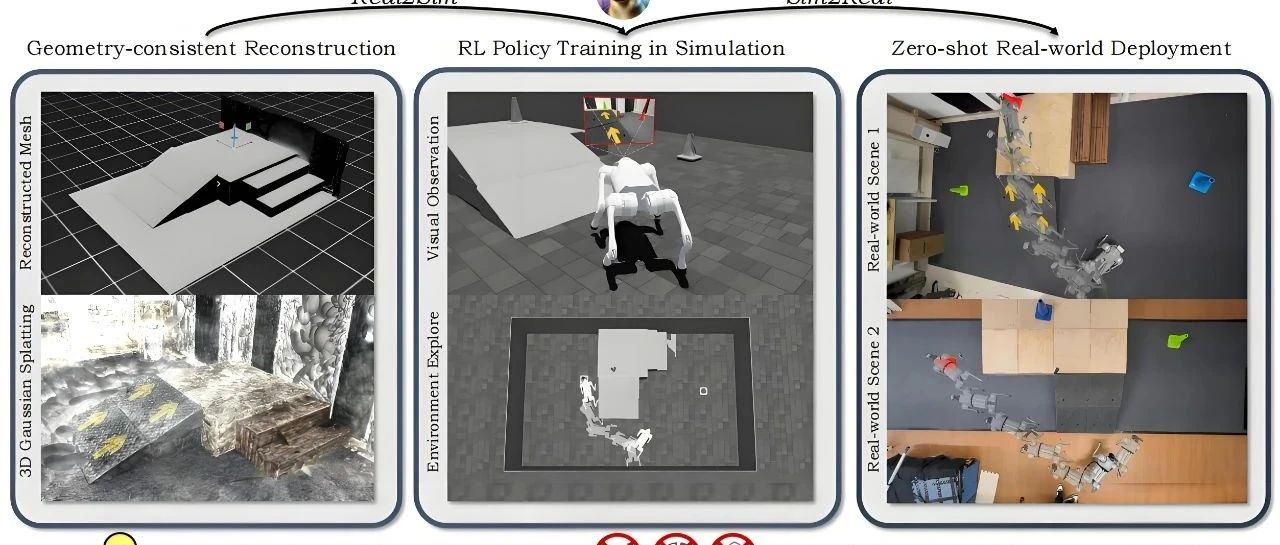
Core Viewpoint - The article discusses the limitations of foot robots in real-world applications due to the gap between simulation and reality, particularly in high-level tasks requiring RGB perception. It introduces a "Real-Sim-Real" framework that enhances visual navigation and motion control through a digital twin simulation environment [2]. Group 1 - The movement control of foot robots benefits from the combination of reinforcement learning and physical simulation, but is hindered by the lack of realistic visual rendering [2]. - The proposed "Real-Sim-Real" framework utilizes multi-view images for 3D Gaussian splatting (3DGS) scene reconstruction, creating a simulation environment that combines photo-realism with physical interaction characteristics [2]. - Experiments in the simulator demonstrate that the method supports the transfer of reinforcement learning strategies from simulation to reality using pure RGB input, facilitating rapid adaptation and efficient exploration in new environments [2]. Group 2 - The framework shows potential applications in home and factory settings, indicating its relevance for practical deployment in various environments [2]. - The paper titled "VR-Robo: A Real-to-Sim-to-Real Framework for Visual Robot Navigation and Locomotion" is linked for further reading [3]. - Additional project details can be found on the provided project link [3].
星动纪元再获5亿融资!团队大牛伯克利和清华交叉信息研究院背景
具身智能之心· 2025-07-08 00:14
星动纪元再获5亿融资!团队大牛伯克利和清华交叉信息研究背景 2025年7月7日,"清华系"人形机器人创企创企【北京星动纪元科技有限公司】(以下简称"星动纪 元")完成5亿元A轮融资,本轮融资由鼎晖资本和海尔资本联合领投,厚雪资本、华映资本、襄禾资 本、丰立智能等财务机构及产业资本跟投,老股东清流资本、清控基金等机构继续追加投资。 本轮融资将用于人形机器人软硬技术的研发与量产落地,推动"模型-本体-场景数据"闭环飞轮高速运 转。 公司介绍 北京星动纪元科技有限公司成立于2023年8月,由清华大学交叉信息研究院孵化,也是唯一一家清华 大学占股的人形机器人企业。创始人陈建宇是清华大学博士生导师、助理教授。公司最初由图灵奖 得主、中科院院士、清华大学交叉信息研究院院长姚期智院士团队和上海期智研究院孵化;星动纪 元不少技术都是由清华大学交叉信息学院的技术成果转化而来。 陈建宇:清华大学交叉信息研究院助理教授、博士生导师;清华大学本科、UC Berkeley博士、师从 美国工程院院士、机电控制专家、MPC算法理论奠基人Masayoshi Tomizuka教授,同时也是清华大学 特聘研究员、由姚期智亲自招募,拥有10+年机 ...

亚马逊100万机器人上岗!即将超越人类员工?机器人军团接管工作
具身智能之心· 2025-07-07 09:20
Core Viewpoint - Amazon has deployed its one millionth robot in its warehouses, marking a significant milestone in automation and efficiency improvements in logistics operations [3][4][14]. Group 1: Automation and Efficiency - The introduction of robots has increased logistics efficiency by 25%, with 75% of delivery tasks now involving robots [7][48]. - The new robot model, Vulcan, enhances operational efficiency by 10% and can handle 75% of Amazon's inventory [11][18]. - Amazon's warehouses are increasingly automated, with robots taking on complex tasks such as sorting and packing, which were previously labor-intensive [51][52]. Group 2: Workforce Transformation - Amazon has trained over 700,000 employees for higher-paying roles that involve managing robotic systems, indicating a shift from manual labor to more skilled positions [22][26]. - The average number of employees per warehouse has decreased to 670, the lowest in 16 years, while the number of packages handled per employee has surged from 175 to 3,870 since 2015 [36][37]. - CEO Andy Jassy acknowledges that while some jobs will be automated, new opportunities will arise in high-tech fields, emphasizing the need for employees to adapt and learn [59][67]. Group 3: Future of Robotics and AI - Amazon is testing humanoid robots and has plans for next-generation logistics centers that will feature ten times the current number of robots [53][44]. - The integration of AI in warehouse operations is expected to further optimize inventory management and enhance robot efficiency [42][10]. - Jassy views generative AI as a transformative technology that will reshape the workforce, creating new roles while reducing the need for certain positions [70][66].


ICCV2025 | DexVLG:大规模灵巧视觉-语言-抓取模型
具身智能之心· 2025-07-07 09:20
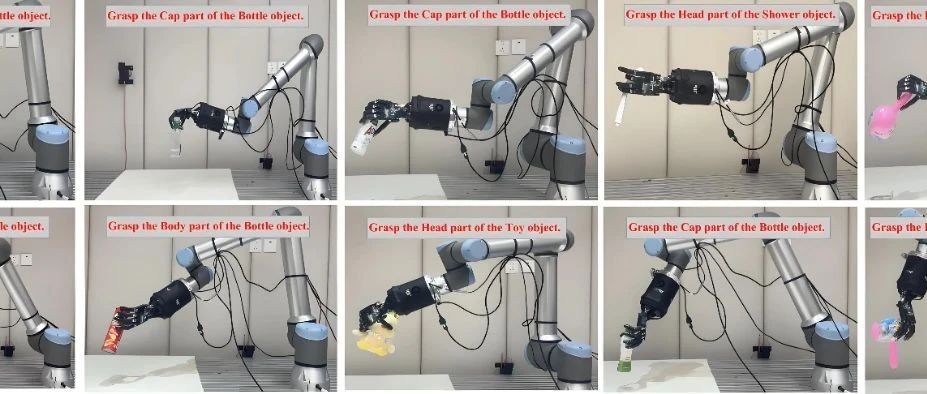
Core Insights - The article discusses the development of DexVLG, a large-scale vision-language-grasp model designed to enable robots to perform dexterous grasping tasks based on language instructions and single-view RGBD inputs [4][8]. Group 1: Motivation and Background - The rise of large models has led to advancements in visual-language-action systems, allowing robots to handle increasingly complex tasks. However, research has primarily focused on simple end-effector control due to challenges in data collection for dexterous manipulation [4][5]. - DexVLG utilizes a dataset called DexGraspNet 3.0, which contains 1.7 billion dexterous grasp poses mapped to 174,000 simulated target objects, providing a substantial foundation for training [4][6]. Group 2: Dataset Overview - DexGraspNet 3.0 is the largest dataset for dexterous grasping, featuring 1.7 billion poses validated in a physics-based simulator, IsaacGym, and includes semantic titles and part-level annotations [10][11]. - The dataset was constructed using advanced techniques for part perception and semantic understanding, leveraging models like SAMesh and GPT-4o for part segmentation and title generation [6][12]. Group 3: Model Development - DexVLG is developed to generate dexterous grasp poses based on language instructions and single-view point clouds, utilizing billions of parameters and fine-tuning on the large dataset [8][25]. - The model employs a point cloud encoder and a language foundation model, integrating features from both to predict grasp poses effectively [26][28]. Group 4: Performance Evaluation - DexVLG demonstrated superior performance in various benchmarks, achieving over 76% success rate in simulated environments and outperforming baseline models in grasp quality and alignment with language instructions [8][30][32]. - The model's ability to generalize to unseen objects and semantic parts was a key focus, with metrics defined to assess grasp quality and instruction alignment [30][32].
MuJoCo具身智能实战:从零基础到强化学习与Sim2Real
具身智能之心· 2025-07-07 09:20
Core Viewpoint - The article discusses the unprecedented advancements in AI, particularly in embodied intelligence, which is transforming the relationship between humans and machines. Major tech companies are competing in this revolutionary field, which has the potential to significantly impact various industries such as manufacturing, healthcare, and space exploration [1][2]. Group 1: Embodied Intelligence - Embodied intelligence is characterized by machines that can understand language commands, navigate complex environments, and make intelligent decisions in real-time [1]. - Leading companies like Tesla, Boston Dynamics, OpenAI, and Google are actively developing technologies in this area, emphasizing the need for AI systems to possess both a "brain" and a "body" [1][2]. Group 2: Technical Challenges - Achieving true embodied intelligence presents significant technical challenges, including the need for advanced algorithms and a deep understanding of physical simulation, robot control, and perception fusion [2][4]. - MuJoCo (Multi-Joint dynamics with Contact) is highlighted as a key technology in overcoming these challenges, serving as a high-fidelity training environment for robot learning [4][6]. Group 3: MuJoCo's Role - MuJoCo is not just a physics simulation engine; it acts as a crucial bridge between the virtual and real worlds, enabling researchers to conduct millions of trials in a simulated environment without risking expensive hardware [4][6]. - The advantages of MuJoCo include simulation speeds hundreds of times faster than real-time, the ability to test extreme scenarios safely, and effective transfer of learned strategies to real-world applications [6][8]. Group 4: Educational Opportunities - A comprehensive MuJoCo development course has been created, focusing on practical applications and theoretical foundations, covering topics from physics simulation to deep reinforcement learning [9][10]. - The course is structured into six modules, each with specific learning objectives and practical projects, ensuring a solid grasp of embodied intelligence technologies [11][13]. Group 5: Project-Based Learning - The course includes six progressively challenging projects, such as building a robotic arm control system and implementing vision-guided grasping, which are designed to reinforce theoretical concepts through hands-on experience [15][17][19]. - Each project is tailored to address specific technical points while aligning with overall learning goals, providing a comprehensive understanding of embodied intelligence [12][28]. Group 6: Career Development - Completing the course equips participants with a complete skill set in embodied intelligence, enhancing their technical, engineering, and innovative capabilities, which are crucial for career advancement in this field [29][31]. - Potential career paths include roles as robot algorithm engineers, AI research engineers, or product managers, with competitive salaries ranging from 300,000 to 1,500,000 CNY depending on the position and company [33].

代码+视频!国内首个足式机器人算法与实战(双足/四足/人形等)
具身智能之心· 2025-07-07 09:20
Core Viewpoint - The article emphasizes the significance of gait control in embodied robots, which is crucial for their mobility in complex environments, making them essential for applications in rescue, space exploration, and extreme conditions [1][2][4]. Summary by Sections Gait Control and Its Importance - Gait control is a critical challenge for both bipedal and quadrupedal robots, enabling them to navigate complex terrains and perform tasks that wheeled or tracked robots cannot [1]. - The ability to adapt to various environments, such as rubble after earthquakes or uneven surfaces in polar research, highlights the necessity of footed robots [1]. Flexibility and Learning in Robotics - Human-like flexibility in movement is a significant goal, with research indicating that humans can perform nearly 10,000 different gait actions [2]. - The challenge lies in enabling robots to learn and autonomously evolve their movements, which has seen slow progress over decades but is accelerating with advancements in deep learning [2]. Market Potential and Industry Trends - Footed robots are viewed as a milestone in robotics, capable of handling complex terrains and diverse applications in inspection, security, rescue, and industrial automation [4]. - There is a growing demand for talent in this field, with companies willing to invest heavily in skilled professionals [4]. Educational Initiatives - The industry has launched the first comprehensive course on embodied footed algorithms, aimed at addressing the learning curve for newcomers and optimizing their progression in the field [4][5]. - The course covers a full technology stack from quadrupedal to bipedal robots, integrating real-world applications and simulation environments [5][6]. Course Content Overview - The curriculum includes foundational knowledge of quadrupedal robots, advanced bipedal techniques, and safety mechanisms for real-world applications [5][12]. - Practical training involves simulations to enhance robustness and adaptability in various scenarios, including obstacle navigation and dynamic control [6][12]. Target Audience - The course is designed for AI robotics practitioners, students in robotics or reinforcement learning, career changers from traditional fields, and enthusiasts interested in cutting-edge technology [27][28]. - Participants are expected to have a basic understanding of programming and mathematics, with recommendations for GPU resources for practical applications [27][28].
具身智能论文速递 | VLA、3DGS、扩散模型等、RoboBrain~
具身智能之心· 2025-07-06 11:58
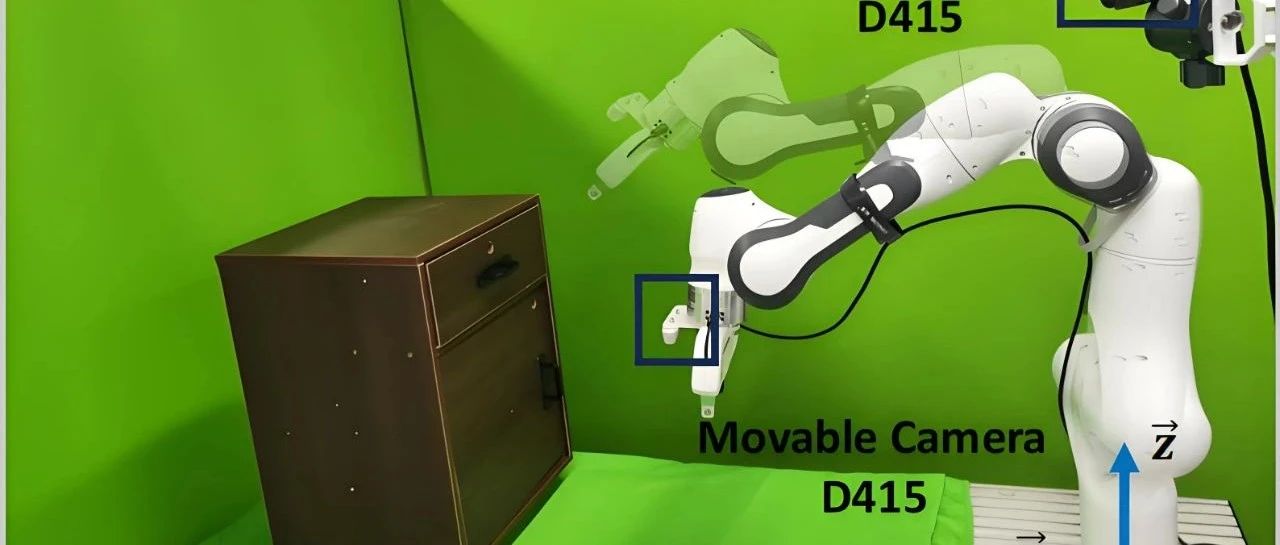
点击下方 卡片 ,关注" 具身智能 之心 "公众号 ArtGS 上海交通大学联合上海AI Lab、新加坡国立大学、普林斯顿大学等团队IROS 2025中稿工作,本文提出ArtGS框架,通 过动态可微3D高斯溅射与视觉-物理闭环优化,显著提升关节目标建模与操作精度: 主要贡献: 算法框架: 1. 关节参数估计误差降低:在7类100个关节目标上,关节轴平均误差(AE)降至 4.27°~7.03°(比最优基线降低约 5°),关节原点误差(OE)降至 3.26~5.84 cm。 2. 操作成功率突破:在洗碗机、冰箱等任务中,成功率高达 62.4%~90.3%(比最优基线GAMMA提升最高33.5%)。 论文标题:ArtGS: 3D Gaussian Splatting for Interactive Visual-Physical Modeling and Manipulation of Articulated Objects 论文链接:https://arxiv.org/pdf/2507.02600 1. 提出 ArtGS 框架,通过整合静态 3D 高斯溅射(3DGS)重建与微调的视觉 - 语言模型(VLM),将物 ...
全球AI失业大逃杀:25年已裁94000人!微软高管:被裁可用AI管理情绪
具身智能之心· 2025-07-06 11:54
Core Viewpoint - The article highlights the alarming trend of mass layoffs in the tech industry, driven primarily by the integration of AI technologies, which is leading to significant job losses and a restructuring of workforce dynamics [3][50]. Group 1: Layoffs and AI Impact - Microsoft recently announced a new round of layoffs, cutting 9,000 jobs, contributing to a total of 94,000 tech workers laid off in the U.S. in 2025 alone [5][6]. - The layoffs are not merely cost-cutting measures; they reflect a strategic shift towards AI, with companies reallocating resources to AI projects and infrastructure [6][50]. - The layoffs are occurring despite strong financial performance, as evidenced by Microsoft's Q1 2025 revenue of $70.1 billion, a 13% year-over-year increase [58]. Group 2: Specific Job Losses - Certain job roles are at higher risk of being eliminated due to AI advancements, including software engineers, HR positions, customer service roles, content creation, data analysis, and middle management [52][54][56][57]. - In recent layoffs, 40% of the affected employees at Microsoft were developers, indicating a significant impact on software engineering roles [53]. Group 3: Corporate Responses and Reactions - A controversial suggestion from a Microsoft Xbox executive advised laid-off employees to use AI tools for emotional support and career planning, which sparked backlash from the public [10][11][18]. - The article also shares the story of a former Microsoft employee who experienced multiple layoffs, illustrating the uncertainty and instability faced by workers in the tech industry [30][36].


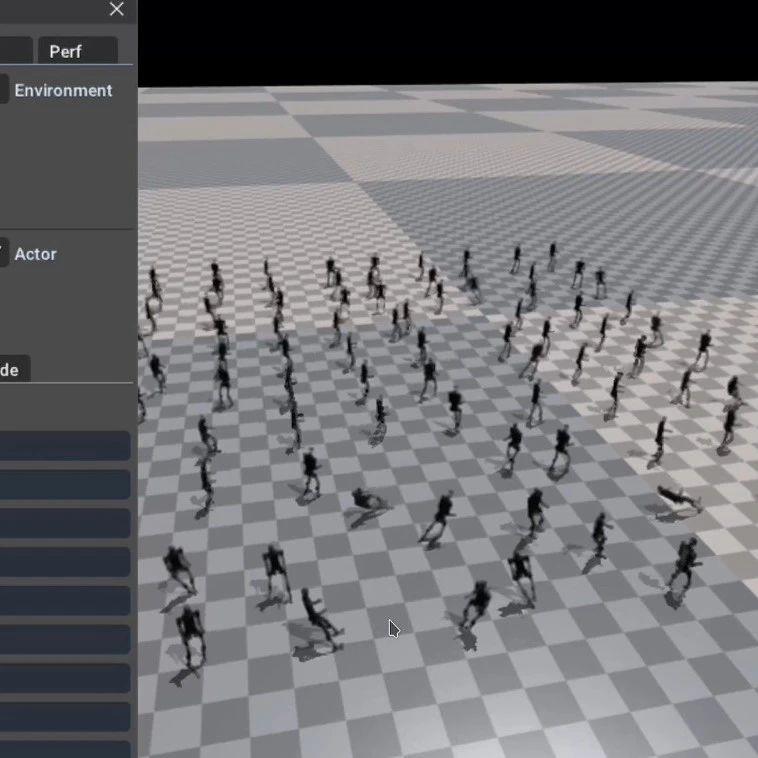
怎么在仿真里面让人形机器人、四足机械狗跑起来?
具身智能之心· 2025-07-06 11:54
Core Viewpoint - The article emphasizes the significance of gait control in embodied robots, which is crucial for their mobility and functionality in complex environments, such as disaster rescue and extreme exploration scenarios [1][2][4]. Group 1: Importance of Gait Control - Gait control is a major challenge for both bipedal and quadrupedal robots, essential for navigating complex terrains and performing tasks that wheeled or tracked robots cannot accomplish [1][4]. - The ability of robots to adapt to various environments, such as rubble after earthquakes or rugged landscapes in space exploration, highlights the need for advanced gait control mechanisms [1][4]. Group 2: Industry Trends and Opportunities - The industry is witnessing a growing interest in quadrupedal robots, which are seen as a milestone in robotics due to their ability to navigate complex terrains and perform tasks in various applications like inspection, security, and rescue [4]. - There is a significant demand for talent in the field of quadrupedal robotics, with companies willing to invest heavily in skilled professionals [4]. Group 3: Educational Initiatives - The article introduces a comprehensive course aimed at teaching the full stack of algorithms for quadrupedal and bipedal robots, addressing the challenges faced by newcomers in the field [4][5]. - The course covers essential topics such as kinematics, dynamics, multi-sensor fusion, and reinforcement learning, providing practical applications and simulations [6][11]. Group 4: Course Structure and Content - The curriculum includes foundational knowledge of quadrupedal robots, advanced bipedal techniques, and practical applications in various scenarios [5][11]. - Key components of the course involve real-world applications, safety mechanisms, and project-based learning to enhance practical skills in robotics [11][27].