自动驾驶之心

Search documents
VLM岗位面试,被摁在地上摩擦。。。
自动驾驶之心· 2025-07-12 12:00
Core Viewpoint - The article discusses the advancements and applications of large models in autonomous driving, particularly focusing on the integration of multi-modal large models in the industry and their potential for future development [2][4][17]. Group 1: Interview Insights - The interview process for a position at Li Auto involved extensive discussions on large models, including their foundational concepts and practical applications in autonomous driving [2][4]. - The interviewer emphasized the importance of private dataset construction and data collection methods, highlighting that data remains the core of business models [4][6]. Group 2: Course Overview - A course on multi-modal large models is introduced, covering topics from general multi-modal models to fine-tuning techniques, ultimately focusing on end-to-end autonomous driving applications [5][9][11]. - The course structure includes chapters on the introduction to multi-modal large models, foundational modules, general models, fine-tuning techniques, and specific applications in autonomous driving [9][11][17]. Group 3: Technical Focus - The article outlines the technical aspects of multi-modal large models, including architecture, training paradigms, and the significance of fine-tuning techniques such as Adapter and LoRA [11][15]. - It highlights the application of these models in autonomous driving, referencing algorithms like DriveVLM, which is pivotal for Li Auto's end-to-end driving solutions [17][19]. Group 4: Career Development - The course also addresses career opportunities in the field, discussing potential employers, job directions, and the skills required for success in the industry [19][26]. - It emphasizes the importance of having a solid foundation in deep learning and model deployment, along with practical coding skills [27].

资料汇总 | VLM-世界模型-端到端
自动驾驶之心· 2025-07-12 12:00
Core Insights - The article discusses the advancements and applications of visual language models (VLMs) and large language models (LLMs) in the field of autonomous driving and intelligent transportation systems [1][2]. Summary by Sections Overview of Visual Language Models - Visual language models are becoming increasingly important in the context of autonomous driving, enabling better understanding and interaction between visual data and language [4][10]. Recent Research and Developments - Several recent papers presented at conferences like CVPR and NeurIPS focus on improving the performance of VLMs through various techniques such as behavior alignment, efficient pre-training, and enhancing compositionality [5][7][10]. Applications in Autonomous Driving - The integration of LLMs and VLMs is expected to enhance various tasks in autonomous driving, including object detection, scene understanding, and planning [10][13]. World Models in Autonomous Driving - World models are being developed to improve the representation and prediction of driving scenarios, with innovations like DrivingGPT and DriveDreamer enhancing scene understanding and video generation capabilities [10][13]. Knowledge Distillation and Transfer Learning - Techniques such as knowledge distillation and transfer learning are being explored to optimize the performance of vision-language models in multi-task settings [8][9]. Community and Collaboration - A growing community of researchers and companies is focusing on the development of autonomous driving technologies, with numerous resources and collaborative platforms available for knowledge sharing and innovation [17][19].
研一刚入学导师让我搭各种AI Agent框架,应该往什么方向努力?
自动驾驶之心· 2025-07-12 12:00
Core Viewpoint - The article discusses the current state and future directions of LLM (Large Language Model) Agents, emphasizing the need for multi-modal integration and the challenges faced in various application areas, particularly in gaming and simulation [1][14]. Group 1: Types of LLM Agents - The first type is referred to as game-theoretic or MALLM agents, primarily derived from MARL (Multi-Agent Reinforcement Learning) methods, focusing on matrix games and environments like Overcooked [2]. - The second type is game-oriented agents, which can be further divided into text-based environments and traditional games like chess and poker, highlighting the importance of understanding game mechanics [4][5]. - The third type involves embodied intelligence, particularly in robotics, which requires more substantial real-world applications rather than pure simulations [5]. Group 2: Challenges in Development - Key challenges include the creation of effective simulators, ensuring personalized and intelligent responses from models, and managing interactions among potentially millions of agents [8]. - The lack of front-end rendering in some projects is noted as a disadvantage, as compelling demos are crucial for attracting attention and investment [9]. - The article emphasizes that the most commercially viable agents are those used in customer service and retrieval-augmented generation (RAG) applications, which are currently in high demand [9]. Group 3: Specific Applications - Minecraft is highlighted as a competitive area with three main approaches: pure reinforcement learning, pure LLM, and a combination of both, with a caution against entering this saturated market without significant confidence [11][12][13]. - The article concludes that the initial opportunities in the agent field have largely been exhausted, and future endeavors must be strategically planned to leverage existing strengths and commercial support [14].

地平线、滴滴出行2026届校园招聘正式开启!
自动驾驶之心· 2025-07-12 06:51
Core Viewpoint - The self-driving industry is experiencing a surge in recruitment for the 2026 graduate cohort, with numerous companies like Horizon Robotics, Didi, and Yuanrong Qixing opening positions, indicating a robust demand for roles related to perception, control, end-to-end systems, and large models [1][2]. Group 1: Recruitment Trends - Many companies are increasing positions related to embodied intelligence, reflecting a trend of integration between self-driving technology and embodied concepts [1]. - Positions available include hardware development engineers, perception post-processing engineers, middleware software engineers, planning control algorithm engineers, and more, with multiple openings across various cities [2]. - The recruitment process is expected to ramp up with technical and HR interviews scheduled for late July and early August [1]. Group 2: Community and Resources - The AutoRobo Knowledge Circle serves as a community for job seekers in the fields of self-driving, embodied intelligence, and robotics, with nearly 1,000 members from various companies [6]. - The community provides resources such as interview questions, industry reports, salary negotiation tips, and resume optimization services [6][7]. - Members can access a wealth of information including successful and unsuccessful interview experiences, which can help refine their job application strategies [18][19]. Group 3: Job Opportunities - The 2026 internship positions include roles such as C++ development intern and PyTorch framework development intern, indicating a focus on software development skills [8]. - The community shares job openings in algorithms, development, and product roles, ensuring members are informed about the latest opportunities [7]. Group 4: Industry Insights - The community also compiles industry reports to help members understand the current state and future prospects of the self-driving and embodied intelligence sectors [16]. - Topics covered in the reports include market opportunities, technological trends, and the development of humanoid robots [16].
都在抢端到端的人才,却忽略了最基本的能力。。。
自动驾驶之心· 2025-07-12 06:36
Core Viewpoint - The article emphasizes the importance of high-quality 4D data automatic annotation in the development of autonomous driving systems, highlighting that model algorithms are crucial for initial development but not sufficient for advanced capabilities [3][4]. Group 1: Industry Trends - A new player in the autonomous driving sector has rapidly advanced its intelligent driving capabilities, surpassing competitors like Xiaopeng within six months, leading to a talent war for engineers in the industry [2]. - The industry consensus indicates that the future of intelligent driving relies on vast amounts of automatically annotated data, marking a shift towards high-quality 4D data annotation as a critical component for mass production [3][4]. Group 2: Challenges in Data Annotation - The main challenges in 4D automatic annotation include high requirements for spatiotemporal consistency, complex multi-modal data fusion, difficulties in generalizing dynamic scenes, and the contradiction between annotation efficiency and cost [8][9]. - The automation of dynamic object annotation involves several steps, including offline 3D detection, tracking, post-processing optimization, and sensor occlusion optimization [5][6]. Group 3: Educational Initiatives - The article introduces a course aimed at addressing the challenges of entering the field of 4D automatic annotation, covering the entire process and core algorithms, and providing practical exercises [9][24]. - The course is designed for various audiences, including researchers, students, and professionals looking to transition into the data closure field, requiring a foundational understanding of deep learning and autonomous driving perception algorithms [25].
4000人的自动驾驶黄埔军校,死磕技术分享与求职交流~
自动驾驶之心· 2025-07-12 05:41
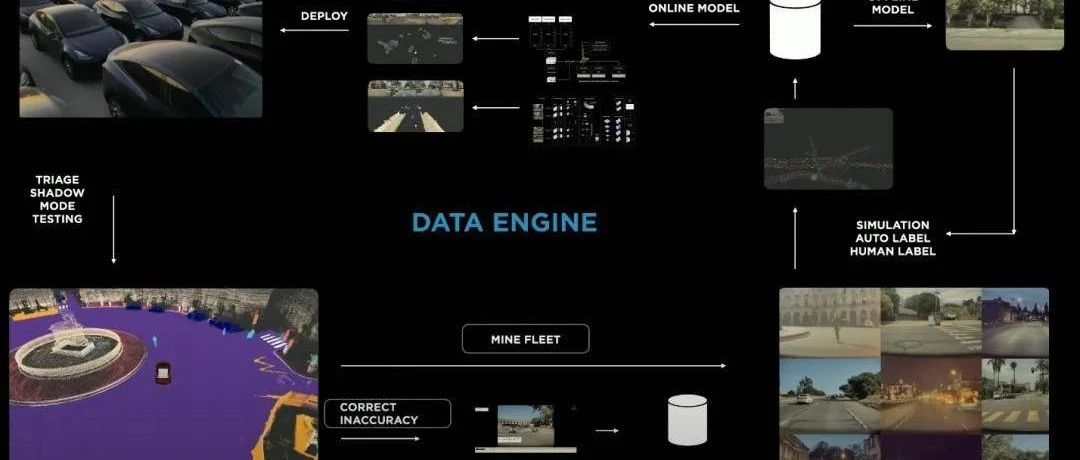
Core Insights - The autonomous driving industry is experiencing significant changes, with many professionals transitioning to related fields like embodied intelligence, while others remain committed to the sector due to strong funding and high salaries for new graduates [2][6] - The article emphasizes the importance of networking and community engagement for knowledge acquisition and job preparation in the autonomous driving field [3][4] Group 1: Industry Trends - The autonomous driving sector continues to attract substantial investment, with companies willing to offer competitive salaries to attract talent [2] - The technology iteration cycle in autonomous driving is becoming shorter, indicating rapid advancements and a focus on cutting-edge technologies such as visual large language models (VLM) and end-to-end systems [8][12] Group 2: Community and Learning Resources - The "Autonomous Driving Heart Knowledge Planet" is highlighted as a leading community for professionals and students in the autonomous driving field, offering resources such as video courses, technical discussions, and job opportunities [4][14] - The community provides a structured learning path covering various aspects of autonomous driving technology, including perception, planning, and machine learning [19][21] Group 3: Technical Focus Areas - Key technical areas identified for 2025 include VLM, end-to-end systems, and world models, which are crucial for the future evolution of autonomous driving technology [8][43] - The community emphasizes the integration of advanced algorithms and models, such as diffusion models and 3D generative simulations, to enhance autonomous driving capabilities [15][22]
之心急聘!25年业务合伙人招聘,量大管饱~
自动驾驶之心· 2025-07-12 05:41
Group 1 - The article announces the recruitment of 10 partners for the autonomous driving sector, focusing on course development, research guidance, and hardware development [2][5] - The main areas of expertise sought include large models, multimodal models, diffusion models, SLAM, 3D object detection, and closed-loop simulation [3] - Candidates from QS200 universities with a master's degree or higher are preferred, especially those with significant conference contributions [4] Group 2 - The benefits for partners include resource sharing for job seeking, PhD recommendations, and overseas study opportunities, along with substantial cash incentives [5] - There are opportunities for collaboration on entrepreneurial projects [5] - Interested parties are encouraged to contact via WeChat for further inquiries [6]

从科研到落地,从端到端到VLA!一个近4000人的智驾社区,大家在这里报团取暖~
自动驾驶之心· 2025-07-11 11:23
Core Viewpoint - The article emphasizes the establishment of a comprehensive community for autonomous driving, aiming to gather industry professionals and facilitate rapid responses to challenges, with a target of building a community of 10,000 members within three years [2]. Group 1: Community Development - The community aims to integrate academic research, product development, and recruitment, creating a closed-loop system for education and technical discussions [2][5]. - It has already attracted notable figures from the industry, including talents from Huawei and leading researchers in autonomous driving [2]. - The community will provide resources such as video courses, hardware, and practical coding experiences related to autonomous driving [2][3]. Group 2: Learning Resources - A structured learning roadmap is available, covering essential topics for newcomers, including how to ask questions and access weekly Q&A sessions [3][4]. - The community offers a variety of courses on foundational topics like deep learning, computer vision, and advanced algorithms in autonomous driving [4][21]. - Members can access exclusive content, including over 5,000 resources and discounts on paid courses [19][21]. Group 3: Industry Engagement - The community collaborates with numerous companies in the autonomous driving sector, providing direct recruitment channels and job postings [5][6]. - It aims to connect students and professionals with industry leaders, enhancing networking opportunities and knowledge sharing [5][6]. - The community is positioned as a hub for both academic and industrial advancements in autonomous driving technology [12][14]. Group 4: Technological Focus - The article highlights the rapid evolution of technology in autonomous driving, with a focus on end-to-end systems and the integration of large models [7][24]. - Key areas of interest include visual language models, world models, and closed-loop simulations, which are critical for the future of autonomous driving [7][24]. - The community plans to host live sessions with experts from top conferences to discuss practical applications and research advancements [23][24].
每秒20万级点云成图,70米测量距离!这个3D扫描重建真的爱了!
自动驾驶之心· 2025-07-11 11:23
Core Viewpoint - GeoScan S1 is presented as a highly cost-effective handheld 3D laser scanner, designed for various operational fields with features such as lightweight design, one-button operation, and centimeter-level precision in real-time 3D scene reconstruction [1][4]. Group 1: Product Features - The GeoScan S1 can generate point clouds at a rate of 200,000 points per second, with a maximum measurement distance of 70 meters and 360° coverage, supporting large scenes over 200,000 square meters [1][23]. - It integrates multiple sensors, including RTK, 3D laser radar, and dual wide-angle cameras, allowing for high-precision mapping and real-time data processing [7][28]. - The device operates on a handheld Ubuntu system and features a built-in power supply for various sensors, enhancing its usability [2][3]. Group 2: Performance and Efficiency - The scanner is designed for ease of use, with a simple one-button start for scanning tasks and immediate usability of the exported results without complex deployment [3][4]. - It boasts high efficiency and accuracy in mapping, with relative accuracy better than 3 cm and absolute accuracy better than 5 cm [16][21]. - The device supports real-time modeling and detailed restoration through multi-sensor fusion and microsecond-level data synchronization [21][28]. Group 3: Market Position and Pricing - GeoScan S1 is marketed as the most affordable option in the industry, with a starting price of 19,800 yuan for the basic version, and various configurations available for different needs [4][51]. - The product has been validated through numerous projects and collaborations with academic institutions, ensuring its reliability and effectiveness in practical applications [4][32]. Group 4: Application Scenarios - The scanner is suitable for a wide range of environments, including office buildings, parking lots, industrial parks, tunnels, forests, and mining sites, demonstrating its versatility in 3D scene mapping [32][40]. - It can be integrated with various platforms such as drones, unmanned vehicles, and robots, facilitating unmanned operations [38][40]. Group 5: Technical Specifications - The GeoScan S1 features a compact design with dimensions of 14.2 cm x 9.5 cm x 45 cm and weighs 1.3 kg without the battery [16]. - It has a battery capacity of 88.8 Wh, providing approximately 3 to 4 hours of operational time [16]. - The device supports various data export formats, including PCD, LAS, and PLV, ensuring compatibility with different software [16].

生成式 AI 的发展方向,应当是 Chat 还是 Agent?
自动驾驶之心· 2025-07-11 11:23
Core Viewpoint - The article discusses the evolution and differentiation between Chat and Agent in the context of artificial intelligence, emphasizing the shift from mere conversational capabilities to actionable intelligence that can perform tasks autonomously [1][2][3]. Group 1: Chat vs. Agent - Chat refers to systems focused on information processing and language communication, exemplified by ChatGPT, which provides coherent responses but does not execute tasks [1]. - Agent represents a more advanced form of AI that can think, make decisions, and perform specific tasks, thus emphasizing action over mere conversation [2][3]. Group 2: Evolution of AI Applications - The development of smart speakers, starting from basic functionalities to becoming central hubs in smart home ecosystems, illustrates the potential for AI to expand its capabilities and influence daily life [4][5]. - The transition from simple AI assistants to AI digital employees that can both converse and execute tasks marks a significant evolution in AI technology [5][6]. Group 3: AI Agent Development Paradigm - The emergence of AI Agents signifies a profound change in software development, where traditional programming paradigms are challenged by the need for AI to learn and adapt autonomously [7]. - AI Agents are structured around four key modules: Memory, Tools, Planning, and Action, which facilitate their operational capabilities [7]. Group 4: Learning Paths for AI Agents - Current learning paths for AI Agents are primarily divided into two routes: one based on OpenAI technology and the other on open-source technology, encouraging developers to explore both avenues [9]. - The rapid development of AI Agents post the explosion of large models has led to a surge in various projects and applications [9]. Group 5: Notable AI Agent Projects - AutoGPT allows users to break down goals into tasks and execute them through various methods, showcasing the practical application of AI Agents [12]. - JARVIS is a model selection agent that decomposes user requests into subtasks and utilizes expert models to execute them, demonstrating multi-modal task execution capabilities [13][15]. - MetaGPT mimics traditional software company structures, assigning roles to agents for collaborative task execution, thus enhancing the development process [16]. Group 6: Community and Learning Resources - A community of nearly 4,000 members and over 300 companies in the autonomous driving sector provides a platform for knowledge sharing and collaboration on various AI technologies [19]. - The article highlights numerous learning paths and resources available for individuals interested in autonomous driving technologies and AI applications [21].