自动驾驶之心

Search documents
从BEV到端到端,谈谈自动驾驶数据闭环的核心~
自动驾驶之心· 2025-07-14 10:36
Core Viewpoint - The article emphasizes the importance of high-quality data sets for autonomous driving, highlighting the need for efficient and low-cost methods to obtain these data sets through advanced 4D labeling techniques [1][2]. Group 1: Importance of 4D Labeling - The demand for automated 4D labeling is increasing due to the growing complexity of autonomous driving scenarios, which require precise tracking of dynamic and static elements [1][3]. - Automated labeling algorithms are crucial for generating high-precision ground truth data, which can optimize results using full temporal data without being limited by vehicle computing power [1][2]. Group 2: Challenges in Automated Labeling - Key challenges in 4D automated labeling include maintaining high spatial-temporal consistency, complex multi-modal data fusion, and ensuring model generalization across various driving conditions [2][3]. - The industry faces significant pain points such as sensor calibration, occlusion handling, and the need for high-quality automated labeling results [2][3]. Group 3: Course Offerings - The article introduces a course titled "Automated Driving 4D Labeling Employment Class," which aims to address the challenges of entering the field and optimizing advanced learning [2][4]. - The course covers the entire process of 4D automated labeling, including dynamic and static object labeling, occupancy labeling, and end-to-end labeling methodologies [2][4]. Group 4: Course Structure - The course is structured into several chapters, each focusing on different aspects of 4D automated labeling, such as dynamic object detection, SLAM reconstruction, and static element labeling [3][4][5]. - Practical exercises are included in each chapter to enhance understanding and application of the concepts taught [4][5]. Group 5: Target Audience - The course is designed for individuals interested in deepening their knowledge in the autonomous driving data loop, including researchers, students, and professionals looking to transition into this field [18][19].

还在纠结是否入门大模型?别人已经发了第一篇顶会!
自动驾驶之心· 2025-07-14 06:20
Core Viewpoint - The article discusses the evolving landscape of large models in autonomous driving, highlighting the focus on lightweight solutions, hardware adaptation, knowledge distillation, and advanced reasoning paradigms like CoT and VLA+ reinforcement learning as key areas for future development [1][2]. Group 1: Course Introduction - The course aims to explore cutting-edge optimization methods for large models, focusing on parameter-efficient computation, dynamic knowledge expansion, and complex reasoning [2]. - It addresses the core challenges in model optimization, including pruning, quantization, retrieval-augmented generation (RAG), and advanced reasoning paradigms [3]. Group 2: Problems Addressed by the Course - The course provides a systematic understanding of large model knowledge, helping students build a coherent theoretical framework [3]. - It assists students in combining theoretical knowledge with practical coding skills, enabling them to replicate research papers and develop new models [3]. - The course offers guidance on writing and submitting academic papers, addressing common challenges faced by students [3]. Group 3: Enrollment Information - The course limits enrollment to 6-8 students per session [4]. - It targets individuals with a background in deep learning or machine learning, familiarity with Python, and a passion for research [6]. Group 4: Course Outcomes - Participants will gain insights into classic and cutting-edge papers in the field, enhancing their understanding of key algorithms and principles [9]. - The course includes a structured approach to writing and revising academic papers, culminating in the production of a draft [9]. Group 5: Course Structure - The course spans 12 weeks of online group research followed by 2 weeks of paper guidance and a 10-week maintenance period [9]. - It covers various topics, including model pruning, quantization, and advanced reasoning techniques, with a focus on practical applications [19].

推荐几个PNC和端到端岗位(待遇丰厚)
自动驾驶之心· 2025-07-14 06:20
Group 1 - The article discusses job opportunities in the autonomous driving sector, specifically for positions related to end-to-end and traditional control algorithms at a leading self-driving supplier [1] - Positions mentioned include Autonomous Driving Control Algorithm Engineer/PNC Expert with a salary range of 40k-100k/month and End-to-End/VLA Engineer with a salary range of 30k-80k/month [2][4] - The article highlights the responsibilities and requirements for various roles, emphasizing the need for advanced degrees and proficiency in programming languages such as C++ and Python, as well as familiarity with control algorithms and machine learning techniques [5][10] Group 2 - The article mentions a community called AutoRobo Knowledge Planet, which serves as a platform for job seekers in autonomous driving and embodied intelligence, currently hosting nearly 1000 members from various companies [11] - It outlines the internal resources available to members, including interview questions, industry reports, salary negotiation tips, and job referrals [13][14] - The community also provides insights into the autonomous driving industry, including trends, market opportunities, and research reports on embodied intelligence [23][24]
地平线、滴滴出行2026届校园招聘正式开启!
自动驾驶之心· 2025-07-13 13:18
Core Viewpoint - The article highlights the ongoing recruitment activities in the autonomous driving sector, indicating a strong demand for various technical roles, particularly in perception, control, and algorithm development, as companies prepare for the upcoming hiring season in late July and early August [2]. Recruitment Opportunities - Numerous companies, including Horizon Robotics, Didi, and Yuanrong Qixing, are opening recruitment for the 2026 class, with a variety of positions available in hardware, software, and algorithm development [3][4]. - Specific roles mentioned include hardware development engineers, perception engineers, middleware software engineers, planning control algorithm engineers, and safety algorithm engineers, with multiple openings across major cities like Beijing, Shanghai, and Guangzhou [3][4]. Community and Resources - The AutoRobo Knowledge Circle serves as a community for job seekers in the fields of autonomous driving and embodied intelligence, providing resources such as interview questions, experience sharing, industry reports, and resume optimization services [8][9]. - The community has nearly 1,000 members, including professionals from leading companies in the industry, facilitating networking and knowledge exchange [8]. Interview Preparation - The article emphasizes the importance of thorough preparation for interviews, suggesting candidates highlight their strengths in resumes and practice extensively before interviews to avoid missed opportunities [2]. - A collection of 100 interview questions related to autonomous driving and embodied intelligence is available within the community, aiding candidates in their preparation [12][13]. Industry Insights - The article mentions various industry reports available within the community, covering topics such as the development trends and market opportunities in the embodied intelligence sector, as well as specific reports on humanoid robots and their production [18]. - Insights into successful and unsuccessful interview experiences are shared, providing valuable lessons for candidates navigating the job market [20].
面试了很多端到端候选人,发现还是有很多人搞不清楚。。。
自动驾驶之心· 2025-07-13 13:18
Core Viewpoint - End-to-End Autonomous Driving is a key algorithm for intelligent driving mass production, with significant salary potential for related positions, and it has evolved into various technical branches since the introduction of UniAD [2] Group 1: Overview of End-to-End Autonomous Driving - End-to-End Autonomous Driving can be categorized into one-stage and two-stage approaches, with the core advantage being direct modeling from sensor input to vehicle planning/control, avoiding error accumulation seen in modular methods [2] - The emergence of BEV perception has bridged gaps between modular methods, leading to a significant technological leap [2] - The academic and industrial focus on End-to-End technology has raised questions about whether UniAD is the ultimate solution, indicating ongoing developments in various algorithms [2] Group 2: Challenges in Learning - The rapid development of End-to-End technology has made previous solutions inadequate, necessitating knowledge in multimodal large models, BEV perception, reinforcement learning, visual transformers, and diffusion models [4] - Beginners often struggle with the fragmented nature of knowledge and the overwhelming number of papers, leading to challenges in extracting frameworks and understanding industry trends [4] Group 3: Course Features - The newly developed course on End-to-End and VLA Autonomous Driving aims to address learning challenges by providing a structured approach to mastering core technologies [5] - The course emphasizes Just-in-Time Learning, helping students quickly grasp key concepts and expand their knowledge in specific areas [5] - It aims to build a framework for research capabilities, enabling students to categorize papers and extract innovative points [6] Group 4: Course Outline - The course includes chapters on the introduction to End-to-End algorithms, background knowledge, two-stage End-to-End methods, one-stage End-to-End methods, and practical applications [11][12][13] - Key topics include the evolution of End-to-End methods, the significance of BEV perception, and the latest advancements in VLA [9][14] Group 5: Target Audience and Expected Outcomes - The course is designed for individuals aiming to enter the autonomous driving industry, providing a comprehensive understanding of End-to-End technologies [19] - Upon completion, participants are expected to achieve a level equivalent to one year of experience as an End-to-End Autonomous Driving algorithm engineer, mastering various methodologies and key technologies [22]

三星最新MoSE:专为自驾Corner Case设计的MoE,直接SOTA!
自动驾驶之心· 2025-07-13 13:18
Core Insights - The article discusses the MoSE (Skill-by-Skill Mixture-of-Expert) framework, which enhances the reasoning capabilities of small-scale visual language models (VLMs) in autonomous driving tasks by simulating human learning processes [2][10][46]. Group 1: MoSE Framework Overview - MoSE is inspired by human drivers' learning processes, allowing for skill-based, step-by-step learning in driving tasks [2][10]. - The framework employs a skill-centric routing mechanism that enables the model to identify and learn specific driving skills required for various scenarios [12][14]. - MoSE achieves state-of-the-art performance in extreme driving scenarios while significantly reducing the number of activated parameters by at least 62.5% compared to existing methods [10][35]. Group 2: Technical Implementation - The model integrates a hierarchical skill dataset and pre-trains routers to encourage step-by-step reasoning, aligning with human-like multi-step planning [2][8]. - MoSE utilizes a sparse mixture of experts (MoE) configuration, where only a portion of the model's parameters are activated during inference, enhancing computational efficiency [7][21]. - The framework has been tested on the CODA dataset, which focuses on multi-modal extreme driving situations, demonstrating superior performance compared to larger models [26][32]. Group 3: Experimental Results - In experiments, MoSE outperformed several state-of-the-art models with over 80 billion parameters while using less than 30 billion parameters [35]. - The results indicate that MoSE maintains robust performance even with a limited amount of training data, confirming its efficiency in utilizing available resources [42][44]. - The model's performance improves steadily with increased data size, showcasing its scalability and adaptability to various datasets and tasks [40][46]. Group 4: Future Directions - The article suggests that further research is needed to explore MoSE's applicability in trajectory estimation tasks and its integration with closed-loop evaluations in simulation environments [48]. - The potential for MoSE to be adapted for diverse downstream tasks and pre-trained models is highlighted, indicating a promising direction for future developments in autonomous driving technology [48].
为什么行业如此痴迷于强化学习?
自动驾驶之心· 2025-07-13 13:18
Core Viewpoint - The article discusses a significant research paper that explores the effectiveness of reinforcement learning (RL) compared to supervised fine-tuning (SFT) in training AI models, particularly focusing on the concept of generalization and transferability of knowledge across different tasks [1][5][14]. Group 1: Training Methods - There are two primary methods for training AI models: imitation (SFT) and exploration (RL) [2][3]. - Imitation learning involves training models to replicate data, while exploration allows models to discover solutions independently, assuming they have a non-random chance of solving problems [3][6]. Group 2: Generalization and Transferability - The core of the research is the concept of generalization, where SFT may hinder the ability to adapt known knowledge to unknown domains, while RL promotes better transferability [5][7]. - A Transferability Index (TI) was introduced to measure the ability to transfer skills across tasks, revealing that RL-trained models showed positive transfer in various reasoning tasks, while SFT models often exhibited negative transfer in non-reasoning tasks [7][8]. Group 3: Experimental Findings - The study conducted rigorous experiments comparing RL and SFT models, finding that RL models improved performance in unrelated fields, while SFT models declined in non-mathematical areas despite performing well in mathematical tasks [10][14]. - The results indicated that RL models maintained a more stable internal knowledge structure, allowing them to adapt better to new domains without losing foundational knowledge [10][14]. Group 4: Implications for AI Development - The findings suggest that while imitation learning has been a preferred method, reinforcement learning offers a promising approach for developing intelligent systems capable of generalizing knowledge across various fields [14][15]. - The research emphasizes that true intelligence in AI involves the ability to apply learned concepts to new situations, akin to human learning processes [14][15].
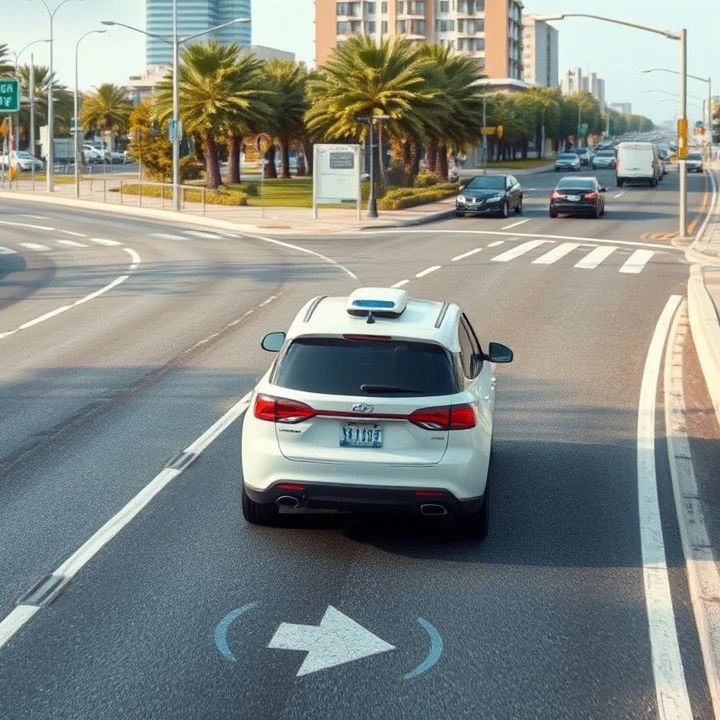
自动驾驶论文速递 | 多模态大模型、运动规划、场景理解等~
自动驾驶之心· 2025-07-13 08:10
点击下方 卡片 ,关注" 自动驾驶之心 "公众号 戳我-> 领取 自动驾驶近15个 方向 学习 路线 MCAM:面向自车层面驾驶视频理解的多模态因果分析模型 重庆大学&国防科技大ICCV25中稿的工作,本文提出 MCAM 模型,通过 DSDAG 因果图建模自车状态动 态演化,在BDD-X数据集上将驾驶行为描述任务BLEU-4提升至 35.7%,推理任务BLEU-4提升至 9.1%,显 著优于DriveGPT4等基线模型。 主要贡献: 算法框架: 实验结果: 论文标题:MCAM: Multimodal Causal Analysis Model for Ego-Vehicle-Level Driving Video Understanding 论文链接:https://arxiv.org/abs/2507.06072 代码:https://github.com/SixCorePeach/MCAM 1. 提出驾驶状态有向无环图(DSDAG),用于建模动态驾驶交互和状态转换,为因果分析模块(CAM) 提供结构化理论基础。 2. 提出多模态因果分析模型(MCAM),这是首个针对 ego-vehicle 级驾驶视频理解 ...
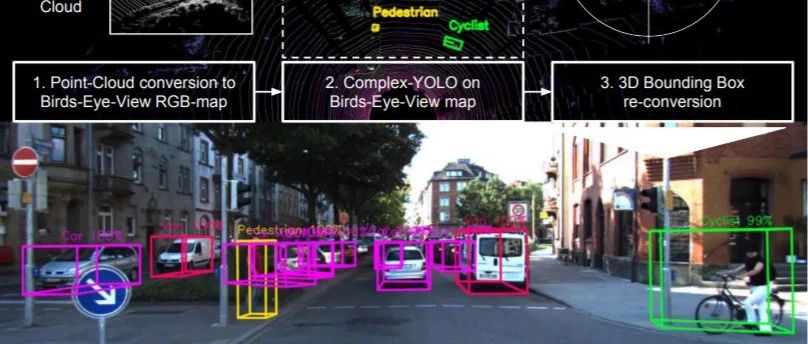
4000人的自动驾驶黄埔军校,死磕技术分享与求职交流~
自动驾驶之心· 2025-07-12 14:43
Core Viewpoint - The smart driving industry is experiencing significant growth, with companies willing to invest heavily in research and talent acquisition, indicating a robust job market and opportunities for new entrants [2][3]. Group 1: Industry Trends - The smart driving sector continues to attract substantial funding for research and development, with companies offering competitive salaries to attract talent [2]. - There is a noticeable trend of shorter technology iteration cycles in the autonomous driving field, with a focus on advanced technologies such as visual large language models (VLA) and end-to-end systems [7][11]. Group 2: Community and Learning Resources - The "Autonomous Driving Heart Knowledge Planet" aims to create a comprehensive community for knowledge sharing, focusing on academic and engineering challenges in the autonomous driving industry [3][11]. - The community has established a structured learning path covering various aspects of autonomous driving technology, including perception, planning, and control [13][15]. Group 3: Educational Offerings - The community offers a range of educational resources, including video courses, hardware tutorials, and live sessions with industry experts, aimed at both newcomers and experienced professionals [3][15]. - There are dedicated modules for job preparation, including resume sharing and interview experiences, to help members navigate the job market effectively [5][12]. Group 4: Technical Focus Areas - Key technical areas of focus include visual language models, world models, and end-to-end autonomous driving systems, with ongoing discussions about their integration and application in real-world scenarios [11][36]. - The community emphasizes the importance of understanding the latest advancements in algorithms and models, such as diffusion models and generative techniques, for future developments in autonomous driving [16][36].
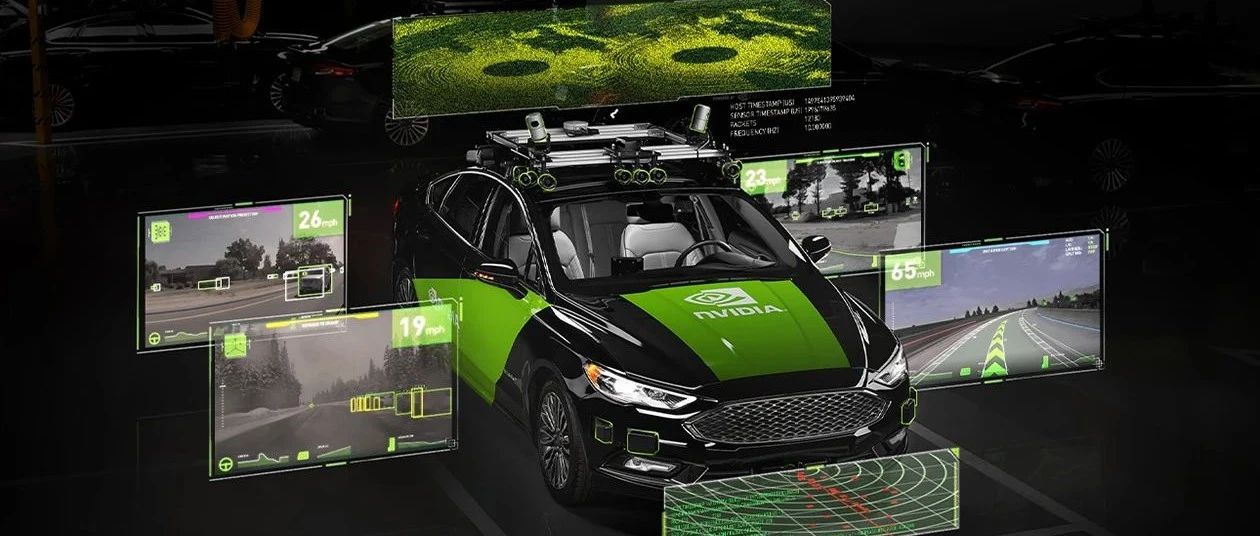
某智驾公司一言难尽的融资。。。
自动驾驶之心· 2025-07-12 12:00
Core Viewpoint - The article discusses a unique financing strategy employed by an autonomous driving company in collaboration with a leading automotive manufacturer, highlighting the challenges and competitive landscape of the autonomous driving industry. Group 1: Financing Strategy - An autonomous driving company has been struggling to secure funding due to its high valuation compared to its limited production projects, which are close to those of top autonomous driving firms [3][4]. - The company approached a leading automotive manufacturer for investment, which agreed to invest under the condition that the funds would be reinvested into a struggling subsidiary parts company of the manufacturer [4]. - This financing maneuver allows the automotive manufacturer to present the investment as external funding, enhancing its public relations while providing necessary capital to its subsidiary [4]. Group 2: Industry Competition - The autonomous driving market is highly competitive, with companies that excel in algorithms and production capabilities successfully securing projects and funding, while those lacking in these areas struggle to obtain both [5]. - The article emphasizes that for the autonomous driving company, focusing on improving algorithm performance and production delivery is more crucial than engaging in complex investment maneuvers with major clients [5].