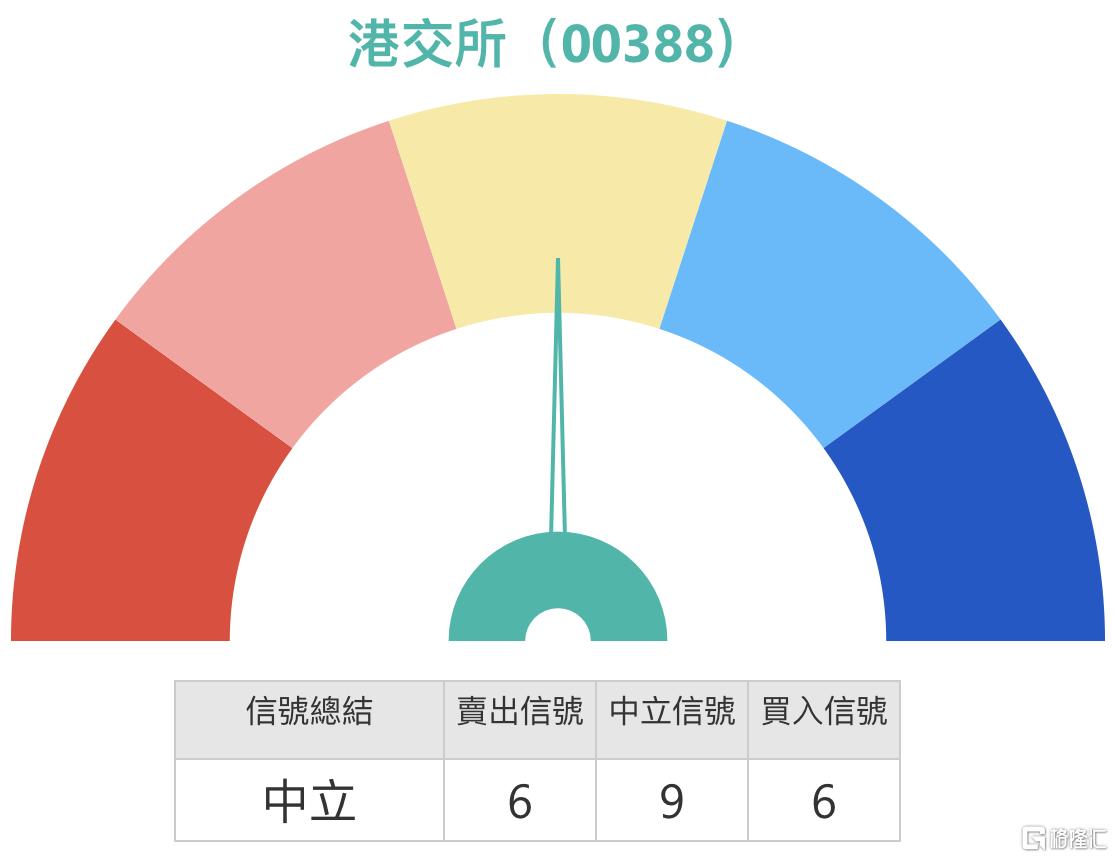
HKEX(00388)

Search documents
智通港股通资金流向统计(T+2)|12月29日
智通财经网· 2025-12-28 23:34
Core Insights - Tencent Holdings (00700), Alibaba-W (09988), and Hong Kong Exchanges (00388) ranked as the top three in net inflow of southbound funds, with net inflows of 1.115 billion, 1.055 billion, and 309 million respectively [1] - China Mobile (00941), Luoyang Molybdenum (03993), and CICC (03908) had the highest net outflows, with net outflows of -1.053 billion, -184 million, and -181 million respectively [1] - In terms of net inflow ratio, China Telecom Services (00552), Yihua Tong (02402), and Sunshine Insurance (06963) led the market with ratios of 167.31%, 126.18%, and 118.17% respectively [1] Net Inflow Rankings - Tencent Holdings (00700) had a net inflow of 1.115 billion, representing a 13.09% increase, closing at 614.500 (+0.08%) [2] - Alibaba-W (09988) saw a net inflow of 1.055 billion, with a 12.23% increase, closing at 146.400 (+0.76%) [2] - Hong Kong Exchanges (00388) recorded a net inflow of 309 million, with a 24.77% increase, closing at 407.000 (0.00%) [2] Net Outflow Rankings - China Mobile (00941) experienced a net outflow of -1.053 billion, with a -54.21% decrease, closing at 83.700 (-0.24%) [2] - Luoyang Molybdenum (03993) had a net outflow of -184 million, down -29.82%, closing at 19.100 (+1.76%) [2] - CICC (03908) faced a net outflow of -181 million, with a -30.22% decrease, closing at 20.540 (+0.98%) [2] Net Inflow Ratio Rankings - China Telecom Services (00552) led with a net inflow ratio of 167.31%, with a net inflow of 26.5926 million, closing at 4.520 (-0.88%) [3] - Yihua Tong (02402) followed with a net inflow ratio of 126.18%, with a net inflow of 26.5481 million, closing at 23.980 (+0.33%) [3] - Sunshine Insurance (06963) had a net inflow ratio of 118.17%, with a net inflow of 31.5558 million, closing at 3.940 (-0.51%) [3] Net Outflow Ratio Rankings - Ark Health (06086) had the highest net outflow ratio of -478.67%, with a net outflow of -3.4612 million, closing at 2.570 (-0.39%) [3] - Crystal International (02232) followed with a net outflow ratio of -132.72%, with a net outflow of -13.3532 million, closing at 6.900 (-0.14%) [3] - Tong Ren Tang Chinese Medicine (03613) recorded a net outflow ratio of -110.40%, with a net outflow of -4.9769 million, closing at 8.520 (+0.12%) [3]



102家企业扎堆港股上市!新经济唱主角,港交所改革藏着哪些密码
Sou Hu Cai Jing· 2025-12-28 09:18
Core Insights - The Hong Kong IPO market has seen a significant surge in 2025, with 102 companies listed and net fundraising reaching HKD 238.2 billion, more than doubling compared to the same period last year, with expectations to hit USD 36 billion for the year [1][21] Group 1: Market Performance - The average daily trading volume in the Hong Kong stock market increased to HKD 240.2 billion in the first half of the year, showing a notable rise from the previous year [7] - 75% of new stocks have either increased in price or remained stable, with 16 stocks seeing cumulative gains exceeding 100% and 27 companies experiencing subscription multiples in the thousands [7] Group 2: Sector Contributions - Key sectors driving fundraising include industrial engineering, gold and precious metals, automotive, pharmaceutical biotechnology, and software services, collectively raising over HKD 130 billion [3] - Retail and consumer IPOs have surged, becoming the most numerous this year, indicating a shift towards new consumption enterprises [3] Group 3: IPO Dynamics - 27 companies opted for privatization and delisting, while 4 voluntarily withdrew their listing applications, and 30 companies had their listing status canceled by the exchange, indicating a rapid market turnover [5] - The top ten IPOs raised a total of HKD 154.7 billion, accounting for more than half of the total annual fundraising, with major mainland companies like CATL and Zijin Mining each raising over HKD 10 billion [9] Group 4: Regulatory Changes - The Hong Kong Stock Exchange has implemented several reforms to attract companies, including the introduction of a special listing mechanism for technology companies and lowering the market cap threshold for special technology listings [11] - The exchange has also optimized the listing approval process, resulting in significant fundraising increases for biotech companies [11] Group 5: Investor Sentiment - There has been a noticeable shift in investor behavior, with more funds directed towards IPO subscriptions rather than traditional savings or insurance products, contributing to the market's vibrancy [13] - Concerns have arisen regarding the backlog of 319 listing applications and the quality of materials submitted by intermediaries, prompting regulatory scrutiny [15] Group 6: Future Outlook - Predictions indicate that the A+H share model will continue to thrive, with the return of Chinese concept stocks and special technology companies being significant contributors [19] - Potential challenges include a wave of lock-up expirations for newly listed companies, which may lead to large shareholder sell-offs, although the overall impact may be mitigated by improving macroeconomic conditions [19][22]

(年终特稿)金锣声连响 香港为排名跃升写下进击注脚
Zhong Guo Xin Wen Wang· 2025-12-27 04:41
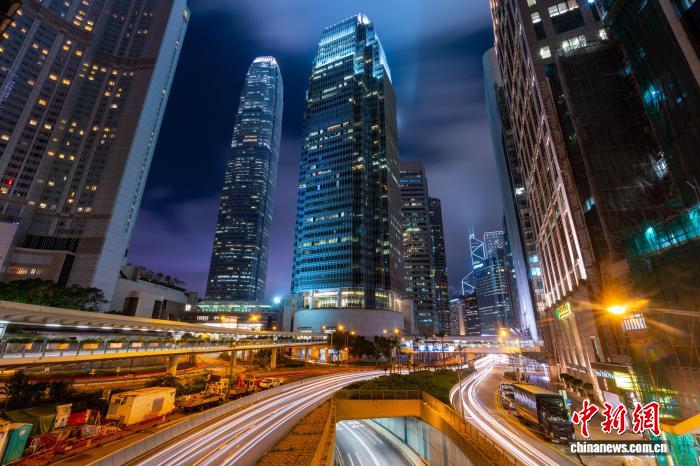
Group 1: IPO Activity in Hong Kong - Hong Kong Stock Exchange saw over 110 companies listed in 2025, marking a significant increase in IPO activity [1] - The total IPO fundraising in Hong Kong returned to the top globally, highlighted by the largest IPO in the pharmaceutical sector in nearly five years [1] Group 2: Talent Attraction and Ecosystem - Hong Kong ranked fourth globally and first in Asia in the 2025 World Talent Ranking, with notable strengths in management salaries and educational effectiveness [2] - The "High Talent Pass" program has improved the ease of entry for skilled professionals, contributing to a more robust talent ecosystem [2] Group 3: Innovation and Technology Growth - Hong Kong ranked fourth in the 2025 World Digital Competitiveness Ranking, with top scores in "technical framework" and "adaptive attitude" [5] - The "Shenzhen-Hong Kong-Guangzhou" cluster topped the global innovation index, showcasing effective regional collaboration [5] Group 4: Financial Services and Wealth Management - Hong Kong maintained its position as the third global financial center and first in Asia, with a rising score in the Global Financial Centers Index [6] - The number of ultra-high-net-worth individuals in Hong Kong surged by 22.9% in the first half of 2025, indicating its growing appeal as a wealth management hub [6]
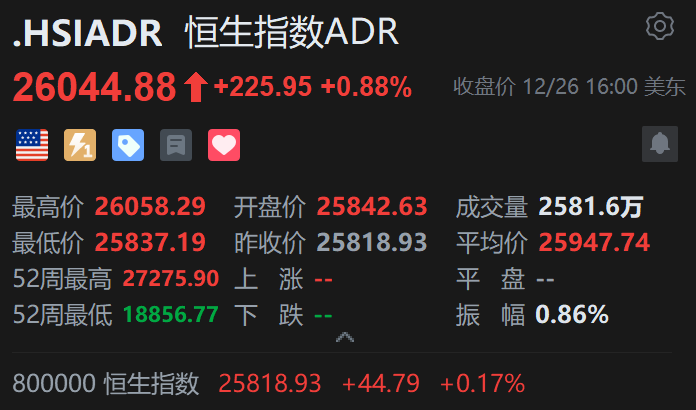
智通ADR统计 | 12月27日




智通财经网· 2025-12-26 23:56
Group 1 - Major blue-chip stocks showed mixed performance, with HSBC Holdings closing at HKD 124.291, up 0.40% from the previous close; Tencent Holdings closed at HKD 606.769, up 0.63% [1] Group 2 - Tencent Holdings reported a latest price of HKD 603.000, with an increase of HKD 1.000, representing a rise of 0.17% [2] - Ctrip Group saw a decrease of HKD 4.500, down 0.79%, closing at HKD 563.500 [2] - Meituan-W remained unchanged at HKD 103.200, with no price change [2] - BYD Company Limited increased by HKD 0.500, up 0.54%, closing at HKD 93.600 [2]
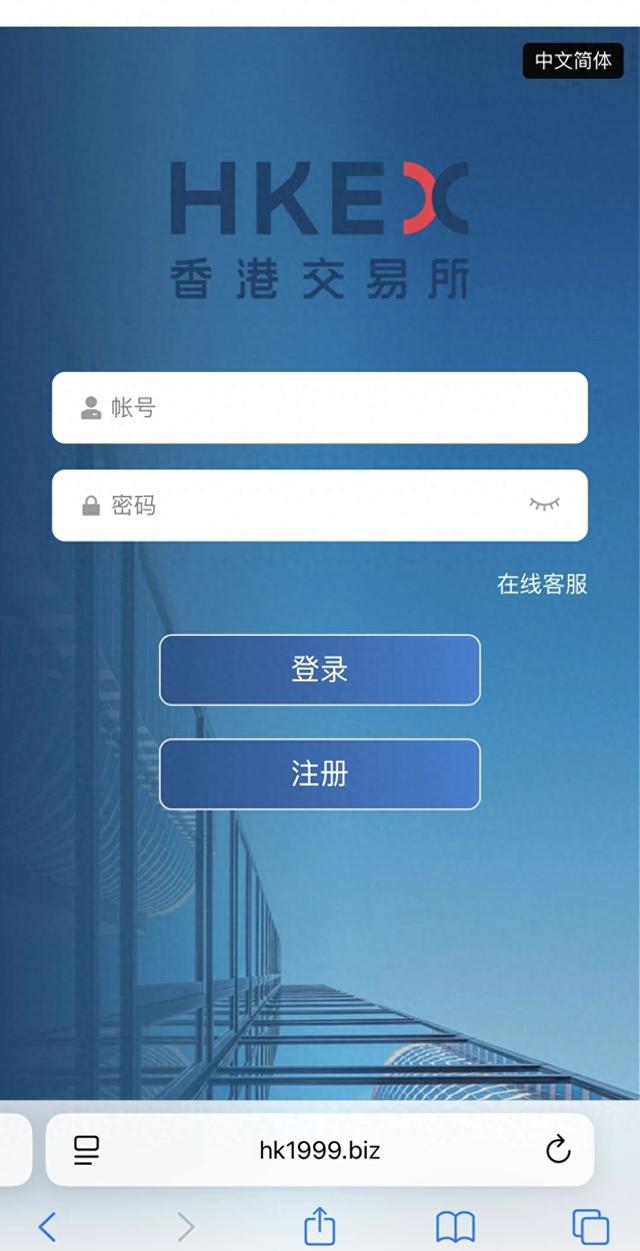
警惕假冒港交所骗局!网页精心伪装,诱骗充值后无法提现
Xin Lang Cai Jing· 2025-12-26 04:55
Group 1 - A recent scam involving a fake "Hong Kong Stock Exchange" website has been reported, where users were tricked into binding their bank cards and making deposits [1][4] - The scammer's website initially allowed users to withdraw small amounts, but later required payment of a tax to continue withdrawals, leading to suspicion and subsequent reporting to the police [1] - The Hong Kong Stock Exchange has issued warnings about impersonation scams and provided contact information for reporting suspicious activities [4] Group 2 - The fake website reported by users is currently inaccessible, but the Hong Kong Stock Exchange has identified over 400 suspicious websites, some of which remain active [6] - One notable fake site, "Hong Kong Stablecoin Exchange (HSEX)," closely resembles legitimate trading platforms and offers cryptocurrency trading features [6] - The Hong Kong Securities and Futures Commission has listed "Hong Kong Stablecoin Exchange" as a suspicious virtual asset trading platform, indicating it is involved in unlicensed activities and fraud [8]
快讯 | 香港交易所2025年回顾:融资额全球第一,科创企业扎堆上市,2026改革再提速
Sou Hu Cai Jing· 2025-12-25 01:56
Core Insights - In 2025, Hong Kong's new stock market financing ranked first globally, with a significant increase in financing compared to the previous year, and the average daily trading volume reached a historical high [1] Group 1: Market Performance - The average daily trading amount in the cash market for the first 11 months of 2025 reached HKD 230.7 billion, a 43% increase compared to the same period last year [1] - As of December 19, 106 companies were listed on the Hong Kong Stock Exchange, with a total financing amount of HKD 274.6 billion, including 4 companies that made it to the global top ten new stocks of 2025 [1] - Companies listed on the Hong Kong Stock Exchange raised USD 66 billion through refinancing, demonstrating the vitality and depth of the Hong Kong capital market [1] Group 2: Sector Trends - Since the implementation of Chapters 18A and 18C of the Listing Rules, 88 biotech and specialized technology companies have been listed on the Hong Kong Stock Exchange, reflecting strong investor interest in frontier sectors [1] Group 3: Future Initiatives - Future initiatives include simplifying the number of shares per lot to 8 options, implementing a paperless securities market, and other major reform measures to ensure the continued vitality and competitiveness of the Hong Kong capital market [1] - The CEO of Hong Kong Exchanges and Clearing, Charles Li, stated that 2025 is a year of global investors returning to the Hong Kong market, with increasing market liquidity and a continuous stream of listings [1] - The Hong Kong Stock Exchange aims to expand its product ecosystem, offering a diverse range of market products, including equities, ETFs, derivatives, fixed income, currency products, and other risk management tools to meet various investor needs [1]
智通港股通持股解析|12月25日
智通财经网· 2025-12-25 00:34
Core Insights - The top three companies by stockholding ratio in the Hong Kong Stock Connect are China Telecom (71.99%), Gree Power Environmental (70.09%), and Da Zhong Public Utilities (68.82%) [1] - Tencent Holdings, Xiaomi Group-W, and Alibaba-W have seen the largest increases in stockholding amounts over the last five trading days, with increases of +1.201 billion, +1.001 billion, and +892 million respectively [1] - The companies with the largest decreases in stockholding amounts over the last five trading days include China Mobile (-2.320 billion), Yingfu Fund (-1.467 billion), and China Petroleum & Chemical Corporation (-364 million) [2] Stockholding Ratio Rankings - China Telecom (00728) holds 9.990 billion shares, representing 71.99% [1] - Gree Power Environmental (01330) holds 0.283 billion shares, representing 70.09% [1] - Da Zhong Public Utilities (01635) holds 0.367 billion shares, representing 68.82% [1] - Other notable companies in the top rankings include Kai Sheng New Energy (67.96%) and Tianjin Chuangye Environmental Protection (67.10%) [1] Recent Increases in Stockholding - Tencent Holdings (00700) saw an increase of +1.201 billion, with a change of +1.9922 million shares [1] - Xiaomi Group-W (01810) increased by +1.001 billion, with a change of +25.5161 million shares [1] - Alibaba-W (09988) increased by +892 million, with a change of +6.1091 million shares [1] - Other companies with significant increases include Hong Kong Exchanges (6.48 billion) and Changfei Optical Fiber (6.09 billion) [1] Recent Decreases in Stockholding - China Mobile (00941) experienced a decrease of -2.320 billion, with a change of -28.0154 million shares [2] - Yingfu Fund (02800) decreased by -1.467 billion, with a change of -56.4370 million shares [2] - China Petroleum & Chemical Corporation (00857) decreased by -364 million, with a change of -44.7216 million shares [2] - Other companies with notable decreases include China Pacific Insurance (-350 million) and Innovent Biologics (-293 million) [2]


智通港股通资金流向统计(T+2)|12月25日
智通财经网· 2025-12-24 23:35
Core Insights - Tencent Holdings (00700), Alibaba-W (09988), and Hong Kong Exchanges (00388) led the market in net inflows, with amounts of 1.115 billion, 1.055 billion, and 309 million respectively [1] - China Mobile (00941), Luoyang Molybdenum (03993), and CICC (03908) experienced the highest net outflows, with amounts of -1.053 billion, -184 million, and -181 million respectively [1] - In terms of net inflow ratios, China Telecom Services (00552), Yihua Tong (02402), and Sunshine Insurance (06963) topped the list with ratios of 167.31%, 126.18%, and 118.17% respectively [1] Net Inflow Rankings - Tencent Holdings (00700) had a net inflow of 1.115 billion, representing a 13.09% increase, closing at 614.500 [2] - Alibaba-W (09988) saw a net inflow of 1.055 billion, with a 12.23% increase, closing at 146.400 [2] - Hong Kong Exchanges (00388) recorded a net inflow of 309 million, with a 24.77% increase, closing at 407.000 [2] Net Outflow Rankings - China Mobile (00941) faced a net outflow of -1.053 billion, a decrease of -54.21%, closing at 83.700 [2] - Luoyang Molybdenum (03993) had a net outflow of -184 million, down by -29.82%, closing at 19.100 [2] - CICC (03908) experienced a net outflow of -181 million, a decrease of -30.22%, closing at 20.540 [2] Net Inflow Ratio Rankings - China Telecom Services (00552) achieved a net inflow ratio of 167.31%, with a net inflow of 26.5926 million, closing at 4.520 [3] - Yihua Tong (02402) had a net inflow ratio of 126.18%, with a net inflow of 26.5481 million, closing at 23.980 [3] - Sunshine Insurance (06963) recorded a net inflow ratio of 118.17%, with a net inflow of 31.5558 million, closing at 3.940 [3]

智通ADR统计 | 12月25日
智通财经网· 2025-12-24 22:22
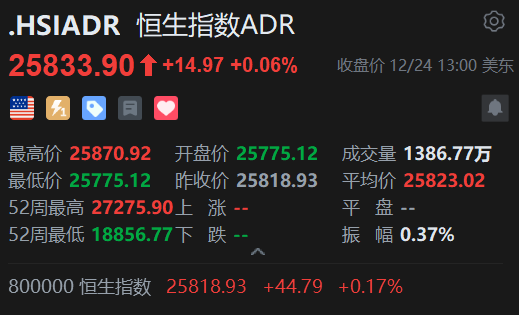
Market Overview - The Hang Seng Index (HSI) closed at 25,833.90, up by 14.97 points or 0.06% [1] - The index reached a high of 25,870.92 and a low of 25,775.12 during the trading session, with a trading volume of 13.8677 million [1] - The 52-week high for the index is 27,275.90, while the 52-week low is 18,856.77, indicating a fluctuation of 0.37% [1] Major Blue-Chip Stocks Performance - HSBC Holdings closed at 123.759 HKD, down 0.03% from the Hong Kong close [2] - Tencent Holdings closed at 602.001 HKD, down 0.17% from the Hong Kong close [2] - Alibaba Group (W) saw a decrease of 1.200 HKD, closing at 146.000 HKD, a drop of 0.82% [3] - China Construction Bank decreased by 0.050 HKD, closing at 7.560 HKD, a decline of 0.66% [3] - Xiaomi Group (W) increased slightly by 0.020 HKD, closing at 39.220 HKD, a rise of 0.05% [3] ADR Performance - Tencent's ADR closed at 602.001, down by 0.999 HKD or 0.17% compared to its Hong Kong stock price [3] - Alibaba's ADR closed at 145.796, down by 0.204 HKD or 0.14% compared to its Hong Kong stock price [3] - HSBC's ADR closed at 123.759, down by 0.041 HKD or 0.03% compared to its Hong Kong stock price [3] - AIA Group's ADR closed at 83.298, up by 0.048 HKD or 0.06% compared to its Hong Kong stock price [3]

港交所短線蓄勢,輪證市場洞察多空博弈
Ge Long Hui· 2025-12-24 21:11
Core Viewpoint - Hong Kong Exchanges and Clearing Limited (HKEX) is experiencing active trading with a stock price of HKD 412, reflecting a 1.8% increase, indicating a close relationship between its price movements and overall market liquidity and external risk sentiment [1] Technical Analysis - The stock price is currently in a state of indecision, oscillating around short-term moving averages, with the 10-day moving average at HKD 402.7, and the 30-day and 60-day moving averages at HKD 410.72 and HKD 421.80 respectively [2] - Key support is identified at HKD 400, with a further support level at HKD 391 if this is breached. Resistance is noted at HKD 416, with potential to challenge HKD 424 if surpassed [2] Derivative Strategies - In a market with mixed views, warrants and bull/bear certificates provide investors with options to position themselves without significant capital outlay. For instance, on December 17, HKEX shares rose by 2.16%, with related leveraged products showing varying price elasticity [5] - Bull certificates, such as those from Societe Generale and HSBC, exhibited significant price increases of 36% and 38% respectively, while warrants showed more moderate gains of 12% and 9% [5] Product Characteristics - Warrants are influenced by intrinsic value, time value, and implied volatility, with risks primarily associated with time decay. Conversely, bull/bear certificates have a "knockout price" mechanism, making their price movements more linear and potentially more efficient in tracking short-term trends [7] - The choice of issuer is crucial, as it affects product quality and reliability. Issuers are responsible for product creation and cash settlement guarantees, with stronger financial backing indicating higher reliability [18][19] Market Sentiment and Strategy - For investors anticipating a market rebound, higher strike price call options are recommended, while those expecting a downturn may consider put options or bear certificates. Specific products with favorable leverage ratios are highlighted for both bullish and bearish strategies [8][19]