
CHINA MOBILE(00941)

Search documents
戴盟机器人获中国移动亿元级投资,触觉赛道再迎产业巨头入局
Nan Fang Du Shi Bao· 2025-12-02 06:24
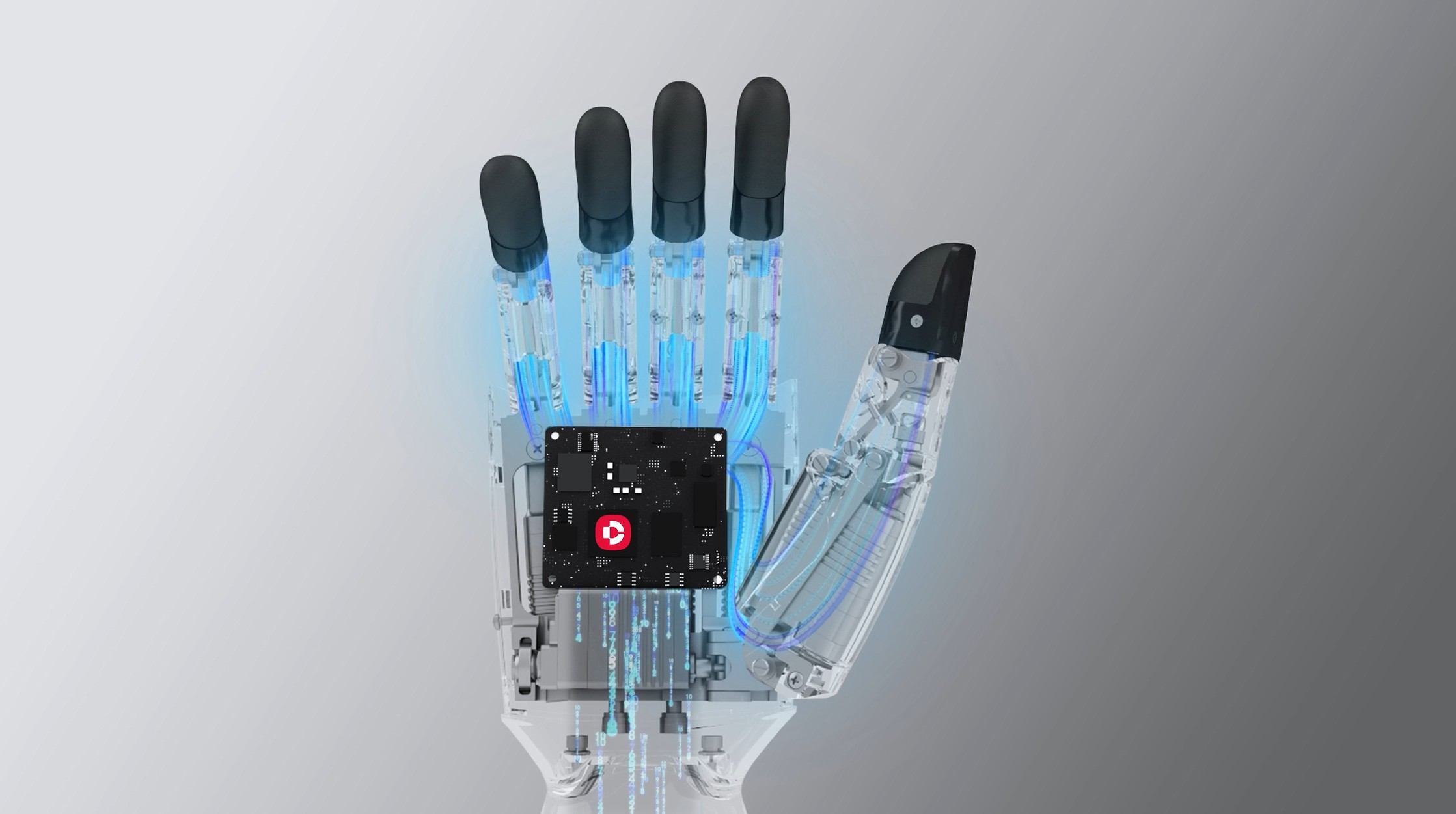
具身智能核心零部件赛道的资本热度仍在持续攀升。12月2日,南都湾财社记者从戴盟(深圳)机器人 科技有限公司(以下简称"戴盟机器人")获悉,公司近日已完成新一轮亿元级战略融资,投资方为中国 移动链长基金。 技术壁垒直接转化为市场优势。记者了解到,自2025年4月发布旗舰产品以来,戴盟机器人的视触觉传 感器出货量已位居同类产品全球第一,并成功打入智能制造、智慧物流及实验室自动化等高壁垒场景。 仅半年后的11月,公司便推出了新一代产品矩阵,进一步提升了产品的泛化适应能力。 放眼全球,具身智能行业正处于从"能动"向"能干活"进化的关键拐点。行业普遍共识是,没有高精度的 触觉感知,机器人就无法真正理解物理环境并完成精细任务。随着特斯拉Optimus等标杆产品的快速迭 代,能够赋予机器人"手感"的触觉传感器市场需求呈现井喷之势。戴盟机器人此轮融资的完成,不仅补 充了扩大产能所需的"弹药",更通过引入运营商资源,为下一步构建基于触觉数据的VTLA大模型、抢 占具身智能数据高地奠定了基础。 值得注意的是,这是戴盟机器人继今年8月获得招商局创投领投后,在短短3个月内完成的第二笔亿元级 融资。截至目前,公司已累计完成四轮融资,投 ...


中国千兆及以上宽带接入用户达2.38亿户 占总用户数超1/3
Sou Hu Cai Jing· 2025-12-02 05:35
Core Insights - The China Academy of Information and Communications Technology reported the economic operation of the telecommunications industry for the first ten months of 2025, highlighting significant growth in broadband access and user numbers [1] Group 1: Broadband Access Growth - As of the end of October, the total number of internet broadband access ports in China reached 1.243 billion, representing a net increase of 40.89 million compared to the end of the previous year [1] - The total number of fixed internet broadband access users among the three major telecom operators (China Mobile, China Unicom, and China Telecom) reached 697 million, with a net increase of 27.01 million users since the end of last year [1] Group 2: High-Speed Internet Adoption - The number of fixed internet broadband access users with speeds of 100 Mbps and above reached 663 million, accounting for 95.1% of the total user base [1] - Users with access speeds of 1000 Mbps and above reached 238 million, marking a net increase of 31.13 million users, which is a historical high [2] - The proportion of users with gigabit access (1000 Mbps and above) expanded to 34.1%, an increase of 3.3 percentage points compared to the end of the previous year [2]



2025年1-9月中国移动通信基站设备产量为375.8万射频模块 累计增长10.9%
Chan Ye Xin Xi Wang· 2025-12-02 03:18
Core Viewpoint - The report highlights significant growth in China's mobile communication base station equipment production, indicating a robust market trend in the telecommunications industry from 2025 to 2031 [1]. Industry Summary - In September 2025, the production of mobile communication base station equipment reached 559,000 RF modules, representing a year-on-year increase of 76.9% [1]. - From January to September 2025, the cumulative production of mobile communication base station equipment totaled 3.758 million RF modules, showing a cumulative growth of 10.9% [1]. Company Summary - Listed companies in the telecommunications sector include ZTE Corporation (000063), Datang Telecom (600198), Xinke Mobile (688387), FiberHome Technologies (600498), Shenglu Communication (002446), *ST Rihai (002313), and Chaoxun Communication (603322) [1]. - The report is published by Zhiyan Consulting, a leading industry consulting firm in China, specializing in in-depth industry research and providing comprehensive consulting services for investment decisions [1].



平安证券(香港)港股晨报-20251202
Ping An Securities Hongkong· 2025-12-02 02:33
Market Overview - The Hong Kong stock market experienced fluctuations, with the Hang Seng Index closing at 23,831 points, down 145 points or 0.61% [1] - The US stock market saw declines across major indices, with the Dow Jones falling by 427.09 points or 0.90% [2] - Southbound funds maintained a net inflow of 121.9 billion HKD in November, indicating continued interest in Hong Kong stocks [3] Sector Performance - The materials sector, particularly non-ferrous metals, led the gains in the Hong Kong market, with notable increases in stock prices for companies like Sunny Optical Technology, which rose by 6.2%, and Zijin Mining, which increased by 5.3% [1][5] - In the US market, technology stocks faced profit-taking pressure, particularly in AI-related stocks, contributing to the overall market decline [2] Investment Opportunities - The report emphasizes the importance of technological self-reliance as a core theme for future performance in the Hong Kong market, suggesting that leading companies in AI, semiconductors, and industrial software may present long-term growth opportunities [3] - Specific recommendations include focusing on sectors with lower valuations and higher dividends, as well as companies benefiting from anticipated Federal Reserve interest rate cuts [3] Company Highlights - XPeng Motors reported a 19% year-on-year increase in vehicle deliveries for November, totaling 36,728 units, and a cumulative delivery of 391,937 units for the year, reflecting a 156% increase [9] - Alibaba, ZTE, and Meituan were among the top net purchases by southbound funds, indicating strong investor interest in these companies [9] Stock Performance - The Hang Seng Index and its sub-indices showed varied performance over the past month, with the Hang Seng Technology Index up by 0.8% [16] - Notable stock performances include Tencent Holdings, which saw a 1.3% increase, and Alibaba, which rose by 2.2% [16]




港科大系具身机器人公司获中国移动战略投资,单品出货量全球第一|硬氪首发
3 6 Ke· 2025-12-02 01:31
Core Insights - The company "Daimeng Robotics" has recently completed a strategic round of financing, marking its second round of funding within three months, with a total financing amount reaching hundreds of millions [1] - The company focuses on embodied intelligence technology innovation, specializing in tactile perception and dexterous manipulation [1][2] Financing Information - Financing Round: Strategic round, marking the fourth round of financing for Daimeng, with a cumulative amount reaching several hundred million, setting a record in the tactile sensing field for angel round financing [1] - Financing Scale: Hundreds of millions [1] - Investors: China Mobile Chain Long Fund [1] - Use of Funds: The financing will accelerate the company's layout in cutting-edge technology breakthroughs, new product development and mass production, VTLA model construction, team expansion, and global market exploration [1] Company Background - Establishment: Officially operational since August 2023 [1] - Location: Shenzhen, Guangdong Province [1] - Team Background: Founded by Professor Wang Yu and Dr. Duan Jianghua from the Hong Kong University of Science and Technology, with core team members from top global universities and research institutions [1] Technological Highlights - The company aims to overcome industry bottlenecks such as low precision, single-dimensionality, and insufficient durability in robotic tactile perception [2] - Developed the world's first multi-dimensional high-resolution tactile sensor DM-Tac, featuring 40,000 sensing units per square centimeter, significantly surpassing human tactile capabilities [2] Market Potential - The global tactile sensor market is projected to reach $15.33 billion in 2024 and grow to $35.59 billion by 2031, with a compound annual growth rate (CAGR) of 12.8% [4] - The market for visual tactile sensors is expected to reach 18 billion when humanoid robot production reaches 1 million units [4] Product Matrix - Daimeng Robotics has established a complete product system covering "perception-operation-learning," including high-resolution tactile sensors, tactile end-effectors, remote operation data collection systems, and humanoid robots [5] - The company has released a flagship series of visual tactile sensors, achieving the highest shipment volume globally among similar products [8] Strategic Partnerships - China Mobile Chain Long Fund, initiated by China Mobile, aligns its investment strategy with national strategic guidance and development plans [9] - Daimeng Robotics is expected to deepen strategic collaboration with China Mobile, particularly in data collection, leveraging advanced VTLA models to maximize data value and enhance robotic intelligence [9]
中国移动有限公司关于国有股份划转的进展公告
Shang Hai Zheng Quan Bao· 2025-12-01 19:34
Core Viewpoint - China Mobile Limited announced the transfer of approximately 41,981,348 A-shares (about 0.19% of the total shares as of September 30, 2025) from its actual controller, China Mobile Communications Group Co., Ltd., to China National Petroleum Corporation. The transfer has received approval from the State-owned Assets Supervision and Administration Commission of the State Council [1][2]. Group 1 - The share transfer will not significantly impact the normal production and operation activities of the company [2]. - There will be no change in the controlling shareholder or actual controller of the company as a result of this transfer [2]. - The company will closely monitor the progress of the share transfer and fulfill its information disclosure obligations in accordance with relevant laws and regulations [2].
【财闻联播】空客,暴跌超10%!万科第一大股东,法定代表人变更
券商中国· 2025-12-01 13:01
Macro Dynamics - Chinese citizens can travel to Russia visa-free for tourism and business purposes until September 14, 2026, with a maximum stay of 30 days [2] Housing Policy - Changzhou, Jiangsu Province, announced a new housing assistance policy to support low-income workers in purchasing new and existing homes, with a subsidy of 15% of the purchase price, capped at 200,000 yuan for new homes and 180,000 yuan for existing homes [3][4] Financial Institutions - Hongta Securities announced a share buyback of 13.64 million shares, utilizing a total of 120 million yuan, with a buyback price range of 8.45 to 9.07 yuan per share [6] Market Data - On December 1, A-shares saw collective gains, with the Shanghai Composite Index rising by 0.65% and the Shenzhen Component Index increasing by 1.25%, with a total market turnover of approximately 1.87 trillion yuan [8] - The Hang Seng Index in Hong Kong rose by 0.67%, with notable gains in gold stocks [9] Company Dynamics - Airbus China reported that all A320 series aircraft in the Chinese fleet have completed necessary upgrades and are operating normally after addressing software issues [10] - NIO delivered 36,275 vehicles in November, marking a year-on-year increase of 76.3%, with total deliveries reaching 949,457 vehicles as of November 30, 2025 [17] - Vanke's largest shareholder, Shenzhen Metro Group, underwent a change in legal representative, with Huang Liping taking over from Xin Jie [12] - CATL announced a salary adjustment for employees, increasing base salaries by 150 yuan, effective January 1, 2026 [13] - China Mobile announced the transfer of 41.98 million A-shares to China National Petroleum Corporation, which will not significantly impact operations [14] - Dongfang Zhenxuan underwent a change in legal representation, with Yu Minhong taking over from Sun Dongxu [15] - Wahaha Group is facing a product liability lawsuit set to be heard on December 8 [16]




中国移动网络全面覆盖贺兰山国家级自然保护区
Xin Hua Cai Jing· 2025-12-01 11:24
该工程凸显政企协同的示范效应。阿拉善分公司联合贺兰山管理局、通管局、电业局、铁塔公司等部门 先后开展6次实地勘察,最终确定8处基站选址,既避开核心生态保护区,又实现对管护站、巡护路线及 重点防火区域的全覆盖。 编辑:赵鼎 作为我国北方重要的生态安全屏障,贺兰山地形复杂、气候严酷。区域内峰峦叠嶂间沟壑纵横,冬季极 端气温达零下30℃,常年伴随强风与紫外线辐射。在此建设基站面临三大挑战:一是大型设备需经小型 越野车多次转运,单程耗时超6小时;二是光缆铺设需绕行生态敏感区,沿陡峭山脊与河谷迂回布设; 三是设备需耐受极端温差与强风考验。建设团队创新采用模块化组装方案,在零度以下环境中完成设备 安装调试。 近日,随着最后一座基站调试完成,中国移动内蒙古公司阿拉善分公司(以下简称"阿拉善分公司")承 建的2025年电信普遍服务工程取得重大进展——贺兰山国家级自然保护区8座4/5G通信基站全部投入运 营。这些矗立在海拔3500米山巅的"信息烽火台",彻底解决了8个管护站长期面临的通信盲区问题,为 西北生态屏障的智慧化管护搭建起高速信息通道。 如今,贺兰山管护已迈入"空天地一体化"智能监测新时代,这些闪耀在群山之巅的通信基站 ...
中国移动(00941.HK):国有股份划转事项已获国资委批准
Ge Long Hui· 2025-12-01 11:17
本次划转不会对公司正常生产经营活动构成重大影响,不会导致公司的控股股东或实际控制人发生变 更。公司将密切关注本次划转事宜的进展情况,并按照相关法律法规的规定及时履行信息披露义务,敬 请广大投资者理性投资,注意投资风险。 2025年12月1日,公司接到实际控制人中国移动集团的通知,本次划转事项已取得国务院国有资产监督 管理委员会的批准,后续将按照有关法律法规办理股份过户登记手续。 格隆汇12月1日丨中国移动(00941.HK)公告,中国移动有限公司(以下简称"公司"或"本公司")于2025年11 月3日接到公司实际控制人中国移动通信集团有限公司(以下简称"中国移动集团")的通知,中国移动集 团拟将其持有的本公司41,981,348股A股股份(约占公司截至2025年9月30日已发行总股数的0.19%)划转给 中国石油天然气集团有限公司。 ...
中国移动(00941) - 海外监管公告国有股份划转的进展
2025-12-01 11:07
香港交易及結算所有限公司及香港聯合交易所有限公司對本公告之內容概不 負 責,對 其 準 確 性 或 完 整 性 亦 不 發 表 任 何 聲 明,並 明 確 表 示 概 不 就 因 本 公 告 全 部或任何部分內容而產生或因倚賴該等內容而引致之任何損失承擔任何責任。 CHINA MOBILE LIMITED 中國移動有限公司 (根據公司條例在香港註冊成立之有限公司) 股份代號:941(港幣櫃台)及 80941(人民幣櫃台) 於 本 公 告 之 日,本 公 司 董 事 會 由 楊 杰 先 生、何 飈 先 生、王 利 民 先 生 和 李 榮 華 先 生 擔 任 執 行 董 事;由 姚 建 華 先 生、楊 强 博 士、李 嘉 士 先 生 和 梁 高 美 懿 女 士 擔 任 獨 立 非 執 行 董 事。 股票代码:600941 股票简称:中国移动 公告编号:2025-030 海外監管公告 國有股份劃轉的進展 本公告乃中國移動有限公司(「本公司」)根 據《香 港 聯 合 交 易 所 有 限 公 司 證 券 上 市 規 則》第13.10B條 而 作 出。 茲提述本公司在上海證券交易所網站刊登的《中 國 移 動 有 限 公 ...