SMIC(00981)

Search documents
中芯国际A股、H股齐涨,H股涨超5%,A股涨超3%
Mei Ri Jing Ji Xin Wen· 2025-12-22 03:17
(文章来源:每日经济新闻) 每经AI快讯,12月22日,中芯国际A股、H股齐涨,H股涨超5%,A股涨超3%。 ...


国产芯片望迎“DeepSeek时刻”?上游产业链异动上行,半导体设备ETF(561980)早盘涨逾3%!
Ge Long Hui A P P· 2025-12-22 03:03
Group 1 - The semiconductor industry is experiencing a significant rally, with major stocks in the chip supply chain seeing substantial gains, particularly in the storage and upstream equipment sectors [1] - The semiconductor equipment ETF (561980) rose nearly 3.8% at one point, closing with a gain of 3.19% and a trading volume of 200 million yuan [1] - Key stocks such as Kema Technology hit the daily limit, while Shanghai Xinyang surged over 15%, and several other stocks increased by more than 7% [1] Group 2 - Bloomberg reported that China's chip technology is advancing rapidly, potentially leading to a "DeepSeek moment" by 2026 or 2027, which could disrupt Nvidia and its supply chain [1] - Domestic chip manufacturers are accelerating their IPOs to secure funding essential for achieving technological self-reliance and competing globally in AI [1] - The semiconductor equipment ETF (561980) tracks the CSI semiconductor index, with over 90% of its components coming from the equipment, materials, and integrated circuit design sectors [2] Group 3 - AI demand is driving global storage and advanced process capacity expansion, with expectations for accelerated domestic expansion in 2026-2027 [2] - Domestic equipment manufacturers are seeing a positive trend in orders, and companies with strong market positions in storage equipment are likely to benefit [2] - The storage sector is experiencing price increases, and major companies expect positive performance trends in Q4, indicating structural opportunities despite limited output next year [2]




芯片股早盘走强 国家大基金三期布局IC载板领域
Zhi Tong Cai Jing· 2025-12-22 02:31
Group 1 - Chip stocks showed strength in early trading, with notable increases: SMIC (00981) up 4.23% to HKD 67.75, InnoCare (02577) up 3.31% to HKD 73.45, Hua Hong Semiconductor (01347) up 3.25% to HKD 69.95, and ASMPT (00522) up 2.82% to HKD 76.45 [1] - Recent changes in the ownership structure of Anji Liwei have attracted attention, with the original shareholder, Anji Electronics, officially exiting, while new shareholders including the National Integrated Circuit Industry Investment Fund (Phase III) and local investment groups have joined [1] - The entry of the National Fund Phase III is seen as a recognition of the company's technological capabilities in the field of packaging substrates, which are critical for connecting chips to PCBs, characterized by high technical barriers and low domestic production rates [1] Group 2 - The National Fund Phase III, established as a national capital platform for the semiconductor industry, focuses on advanced manufacturing, high-end chip design, critical materials/equipment, and third-generation semiconductors, emphasizing "strengthening the chain and supplementing the chain" and "industry chain collaboration" [1] - The investment from the National Fund and local state-owned assets in Anji Liwei is expected to accelerate the company's high-end substrate production capacity and technological iteration, addressing domestic gaps in the market [1]


港股异动 | 芯片股早盘走强 国家大基金三期布局IC载板领域
智通财经网· 2025-12-22 02:16
Group 1 - Chip stocks showed strength in early trading, with notable gains from companies such as SMIC (up 4.23% to HKD 67.75), Innoscience (up 3.31% to HKD 73.45), Hua Hong Semiconductor (up 3.25% to HKD 69.95), and ASMPT (up 2.82% to HKD 76.45) [1] - The recent industrial change at Anji Li Meiwai has attracted attention, as the original shareholder, Anji Electronics Industry Co., Ltd., has officially exited, while new shareholders including the National Integrated Circuit Industry Investment Fund (Phase III) and Guangzhou Industrial Investment Holding Group have joined [1] - The entry of the National Fund Phase III is seen as a recognition of the company's technological strength in the field of packaging substrates, which are critical carriers connecting chips to PCBs, characterized by high technical barriers and low domestic production rates [1] Group 2 - The National Fund Phase III is a national capital platform established for the semiconductor industry, following the first and second phases in 2014 and 2019, respectively, focusing on advanced manufacturing, high-end chip design, critical materials/equipment, and third-generation semiconductors [1] - The collaboration between the National Fund Phase III and local state-owned assets in investing in Anji Li Meiwai is expected to accelerate the construction of high-end substrate production capacity and technological iteration, filling domestic gaps in this area [1]
港股芯片股涨幅居前,英诺赛科(02577.HK)、中芯国际(00981.HK)双双涨超4%,华虹半导体(01347.HK)、地平线机器人(09660.H...
Jin Rong Jie· 2025-12-22 02:01
Group 1 - Hong Kong chip stocks saw significant gains, with InnoCare Pharma (02577.HK) and SMIC (00981.HK) both rising over 4% [1] - Other stocks that followed the upward trend include Hua Hong Semiconductor (01347.HK), Horizon Robotics (09660.HK), Jingmen Semiconductor (02878.HK), and ZTE Corporation (00763.HK) [1]
科创板半导体并购迈向“质变”新阶段 头部企业产业链整合不断加速
Zheng Quan Shi Bao Wang· 2025-12-22 01:03
Core Viewpoint - The semiconductor industry in China is experiencing a wave of mergers and acquisitions (M&A) driven by policy incentives and the need for industrial upgrades, with leading companies focusing on "supply chain enhancement and value synergy" [1] Group 1: M&A Trends and Strategies - Leading semiconductor companies on the Sci-Tech Innovation Board are engaging in M&A to consolidate resources and enhance competitiveness, reflecting a shift from "quantity accumulation" to "quality leap" in the industry [1][2] - The semiconductor sector has seen 125 companies on the Sci-Tech Innovation Board, accounting for over 60% of A-share counterparts, indicating a strong presence across various segments including design, manufacturing, and testing [2] - Major players like SMIC and Hua Hong Semiconductor are pursuing strategic acquisitions to enhance their market share and technological capabilities, such as SMIC's move to gain full control of its subsidiary [2][3] Group 2: Sector-Specific M&A Activities - In the equipment segment, companies are using M&A to overcome technical barriers and transition towards platform development, as seen with the acquisition of Zhongsil Technology by Zhongwei [3] - The design, IP, and EDA sectors are witnessing urgent M&A needs, with domestic firms focusing on acquiring scarce resources to compete against established foreign leaders [3] - Notable transactions include Jingfeng Mingyuan's acquisition of a leading wireless charging firm to strengthen its market position and capabilities [3] Group 3: Market Dynamics and Transaction Rationality - The recent termination of some semiconductor M&A deals is viewed as a natural outcome of a rational market rather than a cooling of industry consolidation [4] - Since the implementation of the "Eight Articles" policy, over 150 M&A transactions have been disclosed, with more than 70% successfully completed, indicating a robust M&A environment [4] - The semiconductor industry is characterized by complex shareholder structures and high valuations, leading to increased negotiation challenges and a higher likelihood of deal terminations [4][5] Group 4: Institutional Innovation and Future Outlook - The rational prosperity of the semiconductor M&A market is supported by institutional innovations that enhance transaction flexibility and inclusivity [6] - The adoption of innovative payment mechanisms, such as convertible bonds and differentiated pricing, has facilitated strategic investments while safeguarding long-term interests [6] - Future M&A activities are expected to focus on optimizing resource allocation and fostering technological integration, marking a shift from mere scale expansion to creating substantial value [6]


国盛证券:险资加速入市,还有哪些低位优质建筑标的可以配置?
Zhi Tong Cai Jing· 2025-12-21 05:49
Group 1 - The current policy is driving insurance capital to increase allocation in the stock market, with a significant acceleration observed in 2023, particularly in Q3 [1][2] - Insurance capital is favoring high ROE, high dividend yield, and undervalued stocks in the construction sector, with major holdings in China Power Construction, China State Construction, and Sichuan Road and Bridge [1][2] - Sichuan Road and Bridge has recently received a stake increase from Zhongyin Life, indicating a trend of insurance capital focusing on high-quality construction stocks [2] Group 2 - It is estimated that insurance capital will allocate 286 billion yuan to the construction sector by 2026, representing 3.5% of the free float market value [3] - The projected allocation for the construction sector from insurance capital is expected to be 508 billion yuan in 2025 and 794 billion yuan in 2026, with incremental increases of 271 billion yuan and 286 billion yuan respectively [3] - The construction sector is expected to attract long-term capital due to the presence of stable performance, high dividends, and low valuations among key A-share companies [4] Group 3 - The global demand for computing power is expected to grow significantly, driven by AI development, leading to a new growth cycle for cleanroom engineering [5] - Major semiconductor companies are increasing their capital expenditures, with TSMC projecting a doubling of its AI business by 2025 and a compound annual growth rate of approximately 40% over the next five years [5] - The cleanroom investment in the semiconductor industry is projected to reach approximately 168 billion yuan globally and 50.4 billion yuan in China by 2025, representing about 15% of the total industry capital expenditure [5]





【窩輪透視】中芯國際技術買入信號顯現,高性價比窩輪佈局指南
Ge Long Hui· 2025-12-20 16:47
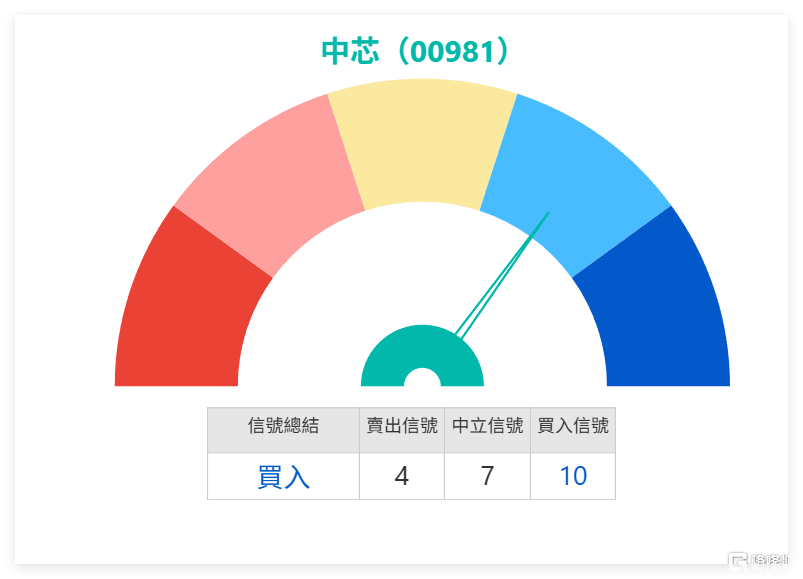
Group 1: Semiconductor Sector Overview - The semiconductor sector is facing pressure due to concerns over industry demand, leading to mixed performances among stocks [2][7] - Semiconductor stocks, including SMIC, are showing signs of short-term weakness, with technical indicators suggesting a potential bottoming out [1][2] Group 2: SMIC Stock Performance - SMIC's stock closed at HKD 64.7, with a slight decline of 0.08% and a trading volume of HKD 2.551 billion [1] - Technical indicators for SMIC show it is below short-term (MA10: HKD 67.16), medium-term (MA30: HKD 69.87), and long-term (MA60: HKD 73.85) moving averages, indicating a weak short-term trend [1] - Despite the decline, there are signs of a potential rebound, with a composite signal indicating "buy" and an RSI of 39, nearing oversold territory [1][2] Group 3: Other Semiconductor Stocks - Hua Hong Semiconductor closed at HKD 67.25, down 1.39%, also below moving average resistance, with neutral technical signals [1] - Shanghai Fudan saw an increase of 7.03% to HKD 45.06, but its RSI reached 58, indicating potential profit-taking pressure [1] - Other tech stocks like Sunny Optical and ZTE also showed weak technical patterns, with sell signals present [1] Group 4: Options and Leverage Products - Various structured products related to SMIC have shown high elasticity, with notable gains in warrants over a short period [2][5] - Selected high-value warrants include UBS call warrants with a strike price of HKD 73.85 and a leverage of 5.8, suitable for conservative investors [5] - HSBC put warrants with a strike price of HKD 62.81 and a leverage of 3.3 are recommended for those anticipating short-term pullbacks [5][6]
恒恒生医疗强势爆发,科技、互联网、大消费等紧随其后
Ge Long Hui· 2025-12-19 20:58
Group 1 - The Hang Seng Index showed a recovery, rising by 0.65% at midday, with healthcare stocks leading the gains [1] - The healthcare sector surged by 2.67%, with WuXi Biologics increasing by 6.48% and 3SBio rising by 3.7% [3] - The technology sector also performed well, with a midday increase of 1.67%, driven by Meituan's 2.27% rise and other major players like SMIC, NetEase, Tencent, and Baidu all seeing gains above 1% [3] Group 2 - Banking stocks remained relatively weak, with a slight increase of 0.26% at midday, as major banks like Bank of China, Agricultural Bank of China, and China Merchants Bank saw minor gains, while Standard Chartered and Bank of China (Hong Kong) experienced slight declines [3]