
SMIC(00981)

Search documents
中芯国际(00981) - 海外监管公告-《2025年度内部控制评价报告》《2025年度内部控制审计...
2026-03-26 12:01
香港交易及結算所有限公司及香港聯合交易所有限公司對本公告的內容概不負責,對其準確性或完整 性亦不發表任何聲明,並明確表示,概不對因本公告全部或任何部份內容而產生或因倚賴該等內容而 引致的任何損失承擔任何責任。 SEMICONDUCTOR MANUFACTURING INTERNATIONAL CORPORATION 中 芯 國 際 集 成 電 路 製 造 有 限 公 司 * (於開曼群島註冊成立之有限公司) (股份代號:00981) 海外監管公告 本公告乃中芯國際集成電路製造有限公司(Semiconductor Manufacturing International Corporation,「本公司」)根據香港聯合交易所有限公司證券上市規則第13.10B條作出。 茲載列本公司於上海證券交易所網站刊發的《2025年度內部控制評價報告》《2025年度內部 控制審計報告》,僅供參閱。 承董事會命 中芯國際集成電路製造有限公司 公司秘書 / 董事會秘書 郭光莉 中國上海,2026 年 3 月 26 日 於本公告日期,本公司董事分別為: 執行董事 劉訓峰 非執行董事 魯國慶 陳山枝 楊魯閩 黃登山 獨立非執行董事 范仁 ...
中芯国际(00981) - 海外监管公告-《2025年年度报告》《2025年度审计报告》
2026-03-26 12:01
香港交易及結算所有限公司及香港聯合交易所有限公司對本公告的內容概不負責,對其準確性或完整 性亦不發表任何聲明,並明確表示,概不對因本公告全部或任何部份內容而產生或因倚賴該等內容而 引致的任何損失承擔任何責任。 SEMICONDUCTOR MANUFACTURING INTERNATIONAL CORPORATION 中 芯 國 際 集 成 電 路 製 造 有 限 公 司 * (於開曼群島註冊成立之有限公司) (股份代號:00981) 海外監管公告 本公告乃中芯國際集成電路製造有限公司(Semiconductor Manufacturing International Corporation,「本公司」)根據香港聯合交易所有限公司證券上市規則第13.10B條作出。 茲載列本公司於上海證券交易所網站刊發的《2025年年度報告》《2025年度審計報告》,僅 供參閱。 承董事會命 中芯國際集成電路製造有限公司 公司秘書 / 董事會秘書 郭光莉 中國上海,2026 年 3 月 26 日 於本公告日期,本公司董事分別為: 執行董事 劉訓峰 非執行董事 魯國慶 陳山枝 楊魯閩 黃登山 獨立非執行董事 范仁達 劉明 吳漢明 ...
中芯国际(00981) - 2025年度环境、社会及管治(ESG)报告
2026-03-26 12:00
目錄 | 「芯」火相傳, | | | --- | --- | | 永續發展 | | | 公司簡介 | 04 | | 董事長致辭 | 05 | | 亮點績效 | 06 | | 榮譽成就 | 0 7 | | 發展歷程 | 08 | | 董事會聲明 | 09 | | 固「芯」之基, | | | --- | --- | | 穩健前行 | | | 治理築基 責任先行 | 1 1 | | 戰略引領 永續新程 | 13 | | 誠信立業 合規護航 | 21 | | 育「芯」之綠, | | | --- | --- | | 和諧共生 | | | 氣候行動 零碳未來 | 29 | | 生態保護 萬物共榮 | 4 1 | 100 101 104 115 116 117 118 關於本報告 ESG 績效摘要 指標索引 未來展望 風險提示 報告評價及建議 評級報告 附录 研發突破 銳意求新 品質卓越 客戶為先 供應管理 協同發展 53 59 65 創「芯」之能, 質領未來 | 聚「芯」之才, | | | --- | --- | | 眾行致遠 | | | 廣納賢才 價值共創 | 69 | | 權益守護 人本關懷 | 76 | | 匯「芯 ...
中芯国际(00981) - 2025 - 年度业绩
2026-03-26 10:43
Financial Performance - In 2025, the company achieved a sales revenue of $9.327 billion, representing a year-on-year growth of 16.2%[23] - Total revenue for 2025 reached $9,326.8 million, a 16.2% increase from $8,029.9 million in 2024[40] - Net profit attributable to shareholders for 2025 was $685.1 million, reflecting a 39.0% increase compared to $492.7 million in 2024[40] - EBITDA for 2025 was $5,256.4 million, representing a 20.0% increase from $4,379.7 million in 2024[40] - The total revenue for the fourth quarter of 2025 reached $2,488,710, with a year-over-year increase of 12.5% compared to the fourth quarter of 2024[47] - Operating profit surged to $1.11 billion in 2025, up 134.5% from $473.9 million in 2024[55] - Net profit for the year was $988.9 million, a 35.4% increase compared to $730.0 million in 2024[55] - The company achieved a revenue of $9,326.8 million in the reporting period, representing a year-on-year increase of 16.2%[68] - The wafer foundry business revenue was $8,796.4 million, reflecting a year-on-year growth of 17.5%[68] Production and Capacity - The monthly production capacity exceeded 1 million 8-inch equivalent wafers, with a capacity utilization rate increasing to 93.5%, up by 8 percentage points year-on-year[23] - The company shipped 9.70 million wafers in 2025, a significant increase from 8.02 million in 2024[55] - The company produced 10,126,337 wafers in 2025, a 19.7% increase, while sales volume reached 9,696,824 wafers, a 20.9% increase[127] Research and Development - Research and development investment reached $774 million, accounting for 8.3% of sales revenue[24] - The company has invested a total of $773,634,000 in R&D for the year 2025, representing a 1.1% increase from $765,279,000 in 2024[79] - Research and development expenses accounted for 8.3% of revenue in 2025, a decrease of 1.2 percentage points from 9.5% in 2024[43] - The company has a total of 2,436 R&D personnel, with 500 holding doctoral degrees and 1,336 holding master's degrees[82] - The company is actively developing new technology platforms, including a 28nm ultra-low leakage platform and a 65nm RF SOI process platform, with significant advancements expected in 2025[80] Strategic Initiatives - The company is actively pursuing the acquisition of minority stakes in North China Semiconductor and capital expansion in South China Semiconductor, laying a solid foundation for future development[23] - The establishment of an advanced packaging research institute aims to enhance industry collaboration and support high-quality development[24] - The company plans to focus on ten key tasks in 2026, including enhancing safety, project management, and technology development[25] - The strategic focus for 2026 includes expanding global operations and overcoming competitive constraints[25] Market and Industry Trends - The semiconductor industry is entering a new growth cycle driven by diverse applications such as artificial intelligence and autonomous driving[24] - The global semiconductor industry is projected to continue growing, driven by demand in generative AI, data centers, and autonomous driving, with significant contributions from computing and storage chips[63] - The semiconductor industry is experiencing a trend towards localization, with countries actively expanding domestic wafer foundry capacities to mitigate geopolitical impacts[157] Financial Position and Assets - The total assets of the company as of December 31, 2025, were $52,271.3 million, a 6.3% increase from $49,161.2 million in 2024[40] - The total assets attributable to the company's owners increased to $21,439,670 in 2025, up from $20,613,809 in 2024, marking a growth of approximately 4%[46] - Cash and cash equivalents decreased to $5.87 billion in 2025 from $6.36 billion in 2024, reflecting investment activities[55] - The total interest-bearing debt as of December 31, 2025, is $12,596.2 million, consisting of secured bank loans of $6,662.2 million and unsecured bank loans of $5,925.7 million[134] Risk Management - The company faces risks related to high customer concentration, which could impact operational efficiency and profitability if major customers encounter significant issues[92] - Supply chain risks are highlighted, particularly concerning the availability and pricing of critical materials and components, which could adversely affect production and operations[93] - The company is exposed to financial risks, including potential fluctuations in sales revenue, gross margins, and profits due to macroeconomic cycles and industry conditions[94] - The company has implemented measures to manage currency and interest rate risks, but remains vulnerable to fluctuations in these areas due to external economic factors[97] Corporate Governance - The financial statements have been audited by Ernst & Young[179] - The company has adopted a corporate governance policy since January 25, 2005, and has complied with all applicable code provisions[180] - The company has established specialized committees including the Audit Committee, Remuneration Committee, Nomination Committee, and Strategy Committee to assist the board[180] - The company emphasizes the importance of timely information release to shareholders, including annual and interim reports[191] Shareholder Communication - The company has established various communication channels to maintain effective communication with shareholders and investors, including quarterly financial performance announcements and public conference calls[191] - Shareholders holding 10% or more of the company's shares have the right to request the board to convene an extraordinary general meeting[188] - The company will disclose the results of voting at the annual general meeting according to the Hong Kong Listing Rules and the Sci-Tech Innovation Board Listing Rules[192]
泡泡玛特、快手、中芯国际、华虹半导体,集体大跌
Di Yi Cai Jing Zi Xun· 2026-03-26 08:49
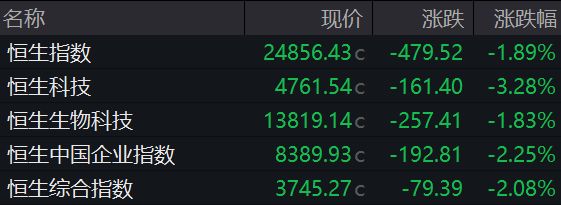
Group 1: Precious Metals Sector Performance - The precious metals sector experienced a widespread decline, with Zijin Mining International and China Silver Group dropping over 7%, Shandong Gold falling over 6%, and several other companies like Zefeng Gold and Datang Gold decreasing by more than 5% [1][2] - Specific declines include Zijin Mining International at -7.57% to 168.500c, China Silver Group at -7.29% to 0.445c, and Shandong Gold at -6.55% to 30.240c [2] Group 2: Technology Sector Performance - The technology sector also saw significant declines, with Kuaishou dropping over 14%, Huahong Semiconductor down over 6%, and Alibaba falling over 4% [1][3] - Notable stock movements include Kuaishou at -14.04% to 45.600c, Alibaba at -4.58% to 123.000c, and Meituan at -3.67% to 86.700c [4] Group 3: Market Index Performance - On March 26, the Hong Kong Hang Seng Index fell by 1.89%, closing below the 25,000-point mark, while the Hang Seng Tech Index dropped by 3.28% [3]

央企改革ETF华夏(512950)开盘跌0.20%,重仓股海康威视跌0.16%,招商银行跌0.28%
Xin Lang Cai Jing· 2026-03-26 01:32
Group 1 - The central enterprise reform ETF Huaxia (512950) opened at a decline of 0.20%, priced at 1.500 yuan [1][2] - Major stocks in the ETF include Hikvision, which fell by 0.16%, China Merchants Bank down by 0.28%, and SMIC down by 0.44%. Conversely, Guodian NARI rose by 0.62% [1] - The ETF's performance benchmark is the CSI Central Enterprise Structural Adjustment Index return, managed by Huaxia Fund Management Co., Ltd. The fund manager is Rong Ying [2] Group 2 - Since its establishment on October 19, 2018, the ETF has achieved a return of 54.84%, while the return over the past month has been -4.37% [2] - A MACD golden cross signal has formed, indicating potential upward momentum for certain stocks [3]


央企ETF银华(159959)开盘涨0.06%,重仓股海康威视跌0.16%,招商银行跌0.28%
Xin Lang Cai Jing· 2026-03-26 01:32
Group 1 - The central enterprise ETF Yinhua (159959) opened with a slight increase of 0.06%, priced at 1.620 yuan [1][2] - Major holdings in the ETF include Hikvision, which fell by 0.16%, China Merchants Bank down by 0.28%, and SMIC down by 0.44%. Conversely, Guodian NARI rose by 0.62% [1][2] - The ETF's performance benchmark is the CSI Central Enterprise Structural Adjustment Index return, managed by Yinhua Fund Management Co., Ltd. The fund manager is Zhou Dapeng [1][2] Group 2 - Since its establishment on October 22, 2018, the ETF has achieved a return of 61.96%, while its return over the past month has been -4.32% [1][2]
AI boom accelerates China's chip industry growth as demand strains supply chain
Yahoo Finance· 2026-03-25 12:20
Industry Growth - China's chip industry is experiencing strong growth momentum driven by a global demand for AI infrastructure, leading to increased capital spending and capacity expansion among chipmakers [1][2] - The growth in the industry is occurring faster than expected in 2026, according to industry executives [2] Manufacturing Capacity - China's manufacturing capacity for chips produced on mature 22nm to 40nm process nodes is projected to reach 42% of global output by 2028, an increase from 37% in 2026 [3] Complexity of Chips - The rise of artificial intelligence is reshaping the semiconductor sector, increasing the complexity of chips and the requirements for testing, packaging, and high-speed interconnects [4] - AI has significantly raised computing power requirements, which in turn has elevated the standards for semiconductor testing [4] Supply Chain Dynamics - The AI boom is straining the global semiconductor supply chain, particularly in raw materials and high-end components, as manufacturers struggle to meet rising demand [6] - China's robust manufacturing industry positions it favorably to respond to these supply chain challenges [6] Capacity Expansion - There is optimism regarding the memory chip cycle, with expectations of large-scale capacity expansion, as indicated by companies like Suzhou Origins Materials Technology [7] - Suzhou Origins Materials Technology plans to begin construction of a new production base to supply materials to leading Chinese chipmakers [7] Optical Interconnects - China is a major global supplier of optical interconnects, which are critical for linking chips inside data centers, and there is a significant order backlog for related high-precision equipment [5]
芯片涨价潮,来势汹汹
半导体芯闻· 2026-03-23 10:24
Core Viewpoint - The global semiconductor industry is experiencing a significant price increase driven by supply-demand imbalances and rising costs, with major companies like Texas Instruments, Infineon, NXP, and others leading the charge [1][5]. Group 1: Price Increases by Major Companies - Texas Instruments (TI) announced a price increase of 15%-85% across all product lines, with the highest increases in industrial control and automotive electronics, reflecting tight capacity and rising costs [2][3]. - Infineon is raising prices for power switches and related chips by 5%-15%, driven by surging demand from AI data centers and increased manufacturing costs [3][4]. - NXP has also announced price adjustments due to significant increases in costs across the supply chain, although specific product categories and price ranges were not disclosed [4][5]. Group 2: Broader Industry Trends - Other companies such as ON Semiconductor, Analog Devices, and Vishay are also implementing price increases, indicating a widespread trend across the semiconductor industry [5][6]. - The price adjustments are largely attributed to rising costs of raw materials, energy, and logistics, which have become unsustainable for manufacturers [10][11]. - The semiconductor industry is witnessing a shift from a price war to a value war, as companies seek to maintain profitability amid rising costs [9][21]. Group 3: Supply Chain Dynamics - The semiconductor supply chain is under pressure due to rising costs of key materials, particularly precious metals, which are critical for chip production [10][11]. - The demand for semiconductors is surging in sectors such as AI, electric vehicles, and industrial automation, exacerbating supply shortages and enabling manufacturers to raise prices [12][13]. - The collective price increases from semiconductor manufacturers are expected to have a cascading effect throughout the supply chain, impacting downstream industries [20][21]. Group 4: Foundry Price Increases - Foundries are also raising their prices, with major players like TSMC and Samsung adjusting their pricing strategies due to increased operational costs and capacity constraints [15][16]. - The price hikes in wafer fabrication are further tightening the profit margins for chip designers, reinforcing the necessity for price adjustments across the board [15][19]. - The shift in focus from mature to advanced process nodes by leading foundries is contributing to a structural shortage in 8-inch wafer capacity, which is critical for many semiconductor applications [18][19].




资本市场周报(2026年第1期):美以伊冲突持续,全球资本市场表现如何?-20260323
Yin He Zheng Quan· 2026-03-23 07:41
Core Insights - The ongoing conflict in the Middle East, particularly the U.S.-Israel-Iran tensions, has led to increased risks in global energy supply and market volatility, resulting in a dual logic of "risk aversion" and "stagflation trading" in capital markets [5][7] - Brent crude oil prices surged to $108.65 per barrel, an increase of 8.15% from the previous week and 53.37% since the onset of the conflict [5][7] - Major global stock indices have faced downward pressure, with the U.S. dollar strengthening and gold prices declining by 10.49% [8] Global Capital Market Overview A-shares and Hong Kong Market Review - The Shanghai Composite Index closed at 3957.05, down 3.38% for the week, while the Hang Seng Index fell by 0.74% to 25277.32 [15][21] - The Shenzhen Component Index decreased by 2.90%, closing at 13866.20 [15] Overseas Market Review - The Dow Jones Industrial Average fell by 2.11% to 45577.47, while the S&P 500 and Nasdaq Composite dropped by 1.90% and 2.07%, respectively [23] - European indices such as the DAX and CAC40 saw declines of 4.55% and 3.11% [24] Global Bond Market Dynamics - The yield on the 10-year U.S. Treasury bond rose to 4.39%, reflecting market concerns over inflation driven by rising oil prices and geopolitical tensions [27] Major Currency Exchange Rates - The U.S. dollar strengthened against the Japanese yen, closing at 159.25, while the dollar to Chinese yuan exchange rate was 6.89 [29] Major Commodity Prices - Brent crude oil prices increased significantly, while gold prices fell to $4491.67 per ounce, down 10.49% from the previous week [30] Important Policy Developments - The People's Bank of China emphasized the need for high-level financial market openness, aiming to enhance investment convenience and cross-border regulatory cooperation [31] - The China Securities Regulatory Commission is working on improving the stability of the capital market, focusing on long-term capital inflows and enhancing the quality of listed companies [32] - A new liquidity support mechanism for non-bank financial institutions is being explored to prevent systemic financial risks [33] - Hong Kong's regulatory body has tightened controls on investment banking practices, limiting the number of active projects for sponsors to enhance project quality [37] - South Korea announced a ban on the spin-off of subsidiaries by listed companies to protect shareholder interests and improve market valuation [38]





