SMIC(00981)

Search documents
谁在制造存储芯片荒?
芯世相· 2026-03-04 04:14
Core Viewpoint - The storage chip market is experiencing a significant price surge, driven by supply constraints and strategic decisions by major manufacturers, leading to a complex interplay of demand and supply dynamics [6][12][37]. Group 1: Market Dynamics - Since mid-last year, storage chip prices have skyrocketed, with some models increasing over tenfold [6]. - Major manufacturers like Samsung, Micron, and SK Hynix are exercising caution in their shipments, primarily supplying large clients and leaving smaller customers struggling to obtain chips [6][11]. - The price increase is causing downstream effects, with PC manufacturers raising prices by 500 to 1500 yuan for laptops and adjusting storage configurations to mitigate cost pressures [6][7]. Group 2: Price Trends - The price of DDR4 16Gb (2GX8) 3200 storage chips rose from $6.2 in June 2025 to nearly $77 by February 2026, illustrating the dramatic price escalation [9][10]. - The price structure in the storage industry consists of three tiers: chip prices, module/product prices, and end product prices, with the latter often not reflecting the same increases as chip prices due to manufacturers' strategies [9][22]. Group 3: Manufacturer Strategies - Major manufacturers are prioritizing high-margin products like HBM and DDR5 over traditional storage chips, leading to a structural reduction in the supply of general-purpose storage [13][18]. - The current market behavior of manufacturers is characterized by price increases, production cuts, and a focus on high-end customers, which is seen as a calculated supply restructuring rather than a reaction to immediate demand [12][13]. Group 4: Supply Chain Issues - The supply chain is experiencing a "rationing" effect, where manufacturers are limiting availability to create a perception of scarcity, further driving up prices [20][21]. - The market is currently facing a significant imbalance, with low inventory levels exacerbating the situation; for instance, DRAM inventory is at only 1.5 months, compared to a normal level of 2-2.5 months [34][36]. Group 5: Future Outlook - Predictions indicate that the price surge in storage chips will continue into the first half of 2026, with potential increases of 80-90% expected [37]. - The structural changes in the market, driven by AI demand and the prioritization of high-end products, suggest that the current high prices may persist until at least the end of 2026, with a potential turning point for HBM prices not expected until early 2028 [37].



限时免费报名启动!FINE2026 先进半导体大会丨金刚石+碳化硅+氮化镓+氮化镓+氮化铝
DT新材料· 2026-03-03 16:29
Core Viewpoint - The 2026 Advanced Semiconductor Industry Conference aims to lead global innovation in new materials, focusing on key technologies and industry trends in the post-Moore era, driven by emerging industries such as AI, electric vehicles, and aerospace [2][21]. Event Overview - The event will take place from June 10 to June 12, 2026, at the Shanghai New International Expo Center, covering an exhibition area of 50,000 square meters and expecting over 100,000 attendees [5][21]. - The conference will feature over 300 strategic and cutting-edge technology reports, showcasing innovations in AI, data centers, intelligent robotics, and more [21][23]. Key Themes and Forums - The conference will focus on third and fourth-generation semiconductors, advanced packaging, and system-level collaborative innovation [2][21]. - Major forums include: - Diamond Frontier Applications Forum - Ultra-Precision Processing Forum - Third and Fourth Generation Semiconductor Crystal Growth Forum [6][7][24]. Participating Organizations - The event is organized by DT New Materials and supported by various associations and institutions, including the Chinese Academy of Sciences and several industry alliances [4][21]. - Notable invited companies include Intel, NVIDIA, Huawei, and TSMC, among others from semiconductor, consumer electronics, and data center sectors [10][11]. Registration and Pricing - Registration fees are set at ¥3000 for enterprises and universities, with early bird prices available [12][14]. - Students can register for ¥1500, with additional discounts for group registrations [12][14]. Additional Information - The event will also include specialized forums on topics such as AI chip thermal management, power device thermal management, and advanced battery technologies [8][24]. - The conference aims to create a comprehensive platform for collaboration and procurement in the new materials sector [21][23].


构建自主可控的集成电路产业体系
半导体行业观察· 2026-03-03 15:30
Core Viewpoint - The article emphasizes the evolution of the integrated circuit industry in China from the "Sixth Five-Year Plan" to the "Fourteenth Five-Year Plan," highlighting its development, current status, and global competitive landscape, while identifying challenges and proposing strategies for the "Fifteenth Five-Year Plan" [1]. Group 1: Economic Long Wave Cycle - The world economy exhibits a 50-year long wave cycle, known as the Kondratiev cycle, with the fifth cycle driven by the information industry, particularly the integrated circuit sector [3][4]. - China's GDP has shown a steady increase since the late 20th century, with projections indicating that by 2035, China's GDP could reach approximately $33.8 trillion, potentially rivaling that of the United States [5][6][7]. Group 2: Integrated Circuit Industry Development - The integrated circuit industry in China has evolved significantly since the 1950s, with key milestones including the establishment of major companies like SMIC and the rapid growth of the industry post-2001 [19][20]. - The sales revenue of China's integrated circuit industry has increased dramatically, with projections for the "Fifteenth Five-Year Plan" indicating an average annual sales revenue of 104 billion yuan [20][22]. Group 3: Current Status and Challenges - The integrated circuit industry in China has achieved 100% self-sufficiency in critical areas related to national security, with significant advancements in electronic design automation (EDA) and chip design [28][30]. - Despite progress, the industry faces challenges such as fragmentation, lack of collaboration between upstream and downstream enterprises, and the need for improved data statistics and industry standards [50][51][52]. Group 4: Key Segments of the Integrated Circuit Industry - The EDA market is dominated by three major foreign companies, while domestic firms like Beijing Huada Jiutian Technology Co., Ltd. have made significant strides, ranking sixth globally [28][29]. - In chip design, domestic companies are increasingly competitive, with firms like HiSilicon and Unisoc leading in smartphone processor design [30][32]. - The manufacturing segment is represented by SMIC, which has achieved a global market share of 33% for chips with a process node of 28 nm or larger, ranking third globally [33]. - The packaging and testing segment is led by companies like Jiangsu Changjiang Electronics Technology Co., Ltd., which ranks third globally in revenue [34]. - The semiconductor equipment sector is witnessing a trend towards localization, with companies like North Huachuang Technology Group Co., Ltd. ranking sixth globally [35][36]. Group 5: Investment and Future Outlook - The National Integrated Circuit Industry Investment Fund has played a crucial role in supporting the industry's development, with significant capital allocations planned for the future [44][47]. - The article stresses the importance of addressing the challenges of small and fragmented enterprises, enhancing collaboration, and improving data accuracy to foster a more robust integrated circuit industry in China [50][52].


中芯国际(688981) - 港股公告:证券变动月报表
2026-03-03 12:00
股份發行人及根據《上市規則》第十九B章上市的香港預託證券發行人的證券變動月報表 截至月份: 2026年2月28日 狀態: 新提交 致:香港交易及結算所有限公司 公司名稱: 中芯國際集成電路製造有限公司 呈交日期: 2026年3月3日 I. 法定/註冊股本變動 | 1. 股份分類 | 普通股 | 股份類別 | 不適用 | | | 於香港聯交所上市 (註1) | | 是 | | | --- | --- | --- | --- | --- | --- | --- | --- | --- | --- | | 證券代號 (如上市) | 00981 | 說明 | 無 | | | | | | | | | | 法定/註冊股份數目 | | | 面值 | | | 法定/註冊股本 | | | 上月底結存 | | | 10,000,000,000 | USD | | 0.004 | USD | | 40,000,000 | | 增加 / 減少 (-) | | | 0 | | | | USD | | | | 本月底結存 | | | 10,000,000,000 | USD | | 0.004 | USD | | 40,000,000 ...
中芯国际(688981) - 港股公告:翌日披露报表
2026-03-03 11:45
FF305 翌日披露報表 (股份發行人 ── 已發行股份或庫存股份變動、股份購回及/或在場内出售庫存股份) 表格類別: 股票 狀態: 新提交 公司名稱: 中芯國際集成電路製造有限公司 呈交日期: 2026年3月3日 如上市發行人的已發行股份或庫存股份出現變動而須根據《香港聯合交易所有限公司(「香港聯交所」)證券上市規則》(「《主板上市規則》」)第13.25A條 / 《香港聯合交易所有限公司GEM證券 上市規則》(「《GEM上市規則》」)第17.27A條作出披露,必須填妥第一章節 。 | 第一章節 | | | | | | | | | --- | --- | --- | --- | --- | --- | --- | --- | | 1. 股份分類 | 普通股 | 股份類別 | 不適用 | | 於香港聯交所上市 | 是 | | | 證券代號 (如上市) | 00981 | 說明 | 港股 | | | | | | A. 已發行股份或庫存股份變動 | | | | | | | | | | | | 已發行股份(不包括庫存股份)變動 | | 庫存股份變動 | | | | 事件 | | 已發行股份(不包括庫存股份)數 目 | ...
中芯国际(00981) - 翌日披露报表
2026-03-03 10:50
FF305 翌日披露報表 (股份發行人 ── 已發行股份或庫存股份變動、股份購回及/或在場内出售庫存股份) 表格類別: 股票 狀態: 新提交 公司名稱: 中芯國際集成電路製造有限公司 呈交日期: 2026年3月3日 如上市發行人的已發行股份或庫存股份出現變動而須根據《香港聯合交易所有限公司(「香港聯交所」)證券上市規則》(「《主板上市規則》」)第13.25A條 / 《香港聯合交易所有限公司GEM證券 上市規則》(「《GEM上市規則》」)第17.27A條作出披露,必須填妥第一章節 。 | 第一章節 | | | | | | | | | --- | --- | --- | --- | --- | --- | --- | --- | | 1. 股份分類 | 普通股 | 股份類別 | 不適用 | | 於香港聯交所上市 | 是 | | | 證券代號 (如上市) | 00981 | 說明 | 港股 | | | | | | A. 已發行股份或庫存股份變動 | | | | | | | | | | | | 已發行股份(不包括庫存股份)變動 | | 庫存股份變動 | | | | 事件 | | 已發行股份(不包括庫存股份)數 目 | ...
中芯国际(00981) - 截至2026年2月28日之股份发行人的证券变动月报表
2026-03-03 10:43
股份發行人及根據《上市規則》第十九B章上市的香港預託證券發行人的證券變動月報表 截至月份: 2026年2月28日 狀態: 新提交 本月底法定/註冊股本總額: USD 42,000,000 FF301 致:香港交易及結算所有限公司 公司名稱: 中芯國際集成電路製造有限公司 呈交日期: 2026年3月3日 I. 法定/註冊股本變動 | 1. 股份分類 | 普通股 | 股份類別 | 不適用 | | | 於香港聯交所上市 (註1) | | 是 | | | --- | --- | --- | --- | --- | --- | --- | --- | --- | --- | | 證券代號 (如上市) | 00981 | 說明 | 無 | | | | | | | | | | 法定/註冊股份數目 | | | 面值 | | | 法定/註冊股本 | | | 上月底結存 | | | 10,000,000,000 | USD | | 0.004 | USD | | 40,000,000 | | 增加 / 減少 (-) | | | 0 | | | | USD | | | | 本月底結存 | | | 10,000,000,000 | ...
禁止购买中国芯片?美国协会:明确反对
半导体芯闻· 2026-03-03 09:53
Group 1 - The article discusses the proposed rule by the U.S. Federal Acquisition Regulation (FAR) Council to amend the Federal Acquisition Regulation to implement a semiconductor procurement ban related to specific Chinese companies [1] - The proposed regulation aims to restrict government agencies from acquiring semiconductor parts, products, or services traceable to certain Chinese firms, including those produced by companies like Zhongxin International and Changxin Storage [1] - The Semiconductor Industry Association (SIA) expressed opposition to the "Chip Security Act," emphasizing the need for a balanced approach to export controls and cautioning against untested and potentially impractical regulations [2] Group 2 - The SIA warns that hasty legislation imposing complex and costly security features could undermine global trust in U.S. semiconductor technology and hinder the export of American AI technology, ultimately weakening the country's global leadership and competitiveness [2] - The SIA is committed to collaborating with government agencies and stakeholders to prevent illegal transfers and misuse of semiconductor products, indicating readiness to work with Congress on effective risk mitigation strategies [2]
美国禁止官方购买中国芯片,SIA发声!
国芯网· 2026-03-03 04:53
Core Viewpoint - The article discusses the tightening of U.S. procurement rules regarding semiconductor products from specific Chinese companies, indicating a significant shift in policy that could impact the global semiconductor industry [2][4]. Group 1: U.S. Procurement Rule Changes - The U.S. Federal Acquisition Regulation (FAR) Council proposed amendments to the FAR to implement a procurement ban on semiconductors from certain Chinese companies as per the National Defense Authorization Act for FY 2023 [2][4]. - The proposed rule prohibits federal agencies from acquiring semiconductor parts, products, or services traceable to specific Chinese enterprises, with stricter limitations on "critical systems" that extend to products designed or produced using these chips [4]. Group 2: Industry Response - The Semiconductor Industry Association (SIA) expressed opposition to the "Chip Security Act," emphasizing the need for careful consideration of new regulations that could harm the global trust in U.S. semiconductor technology and hinder AI technology exports [4]. - SIA's CEO John Neuffer highlighted concerns that rushed legislation could impose complex and costly security features that are untested, potentially undermining U.S. competitiveness in the semiconductor sector [4].
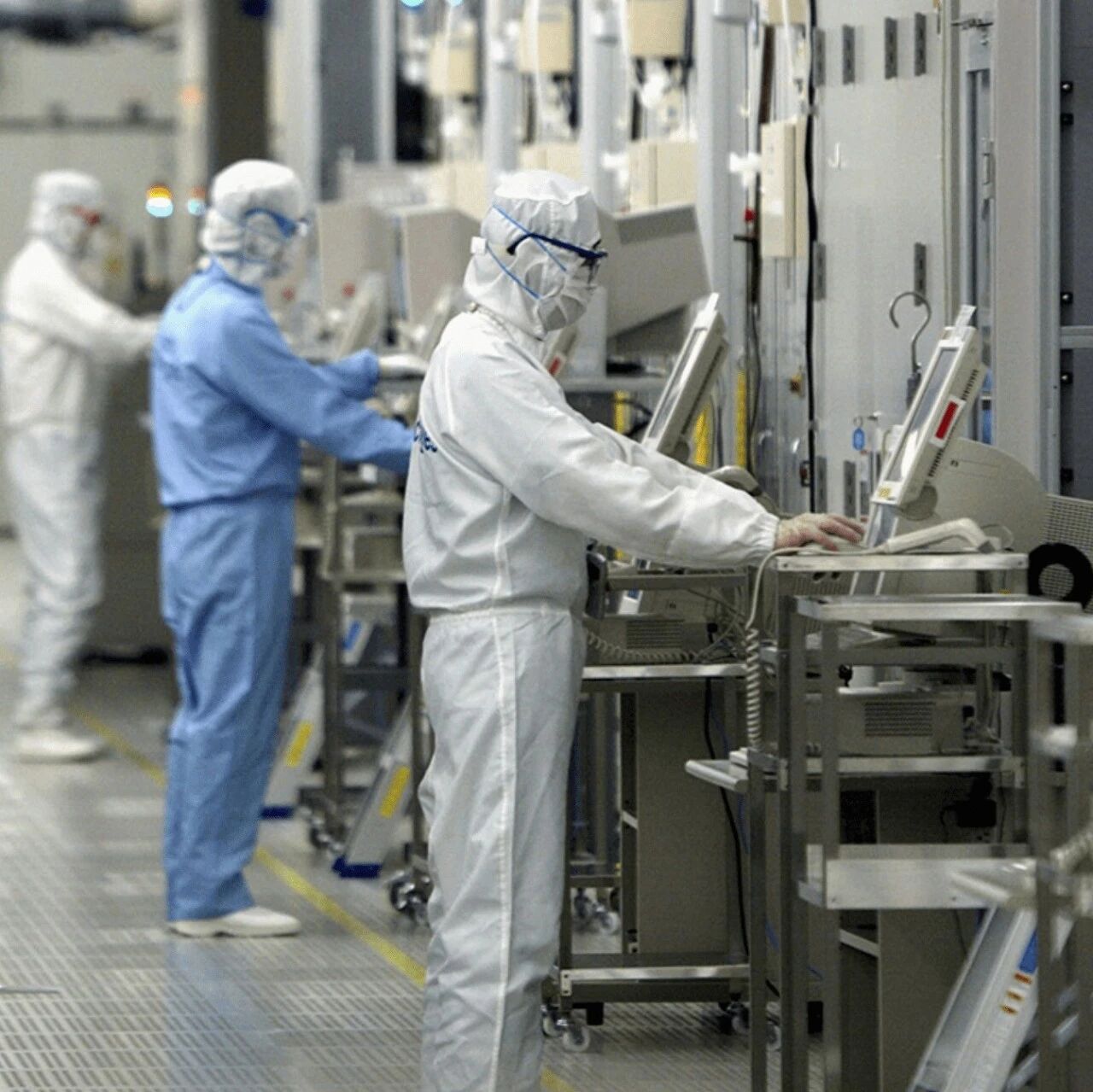
国内四家晶圆厂,进入TOP 10
半导体芯闻· 2026-03-02 10:50
Core Insights - The global dedicated foundry market is projected to reach 1,148.5 billion RMB in 2025, marking a 25.46% increase from 2024, and is the first time it surpasses the 1 trillion RMB threshold [4]. Group 1: Market Overview - The top 10 dedicated foundries are expected to generate a total revenue of 1,105.6 billion RMB in 2025, reflecting a 26.12% growth compared to 2024, with a slight increase in market share by 0.52 percentage points [5]. - The overall revenue for dedicated foundries in 2025 is estimated at 1,148.5 billion RMB, with the top 10 accounting for 96.27% of the market share [5]. Group 2: Company Rankings and Performance - TSMC remains the leader in the dedicated foundry market, with a projected revenue of 852.8 billion RMB in 2025, up 31.69% from 2024, and an increased market share of 74.25% [5][6]. - SMIC ranks second with a revenue of 680 billion RMB, showing a growth of 19.51% and a market share of 6.22% [5][6]. - The third position is held by UMC, with a revenue of 521 billion RMB, reflecting a modest growth of 2.27% [5]. Group 3: Regional Insights - Among the top 10 dedicated foundries, four are based in mainland China, accounting for a combined market share of 10.44%, which is a decrease of 0.44 percentage points from 2024 [6]. - Taiwan's foundries hold a dominant market share of 80.68%, increasing by 2.15 percentage points from the previous year [6]. - The U.S. foundry GlobalFoundries has a market share of 4.21%, down 1.04 percentage points, while Israel's Tower has a market share of 0.95%, decreasing by 0.18 percentage points [6]. Group 4: Growth Drivers - TSMC's revenue growth is attributed to its advanced process technology and the Foundry 2.0 model, which integrates wafer manufacturing, advanced packaging, and testing, enhancing customer loyalty and competitive advantage [7]. - The net profit margin for TSMC is projected to reach 45% in 2025, indicating strong profitability [7]. - The years 2026 and 2027 are expected to be peak years for global foundry capacity expansion, with several companies, including SMIC and TSMC, planning to increase their production capacity [7].