
GRCB(01551)

Search documents
广州农商银行(01551) - 董事名单与其角色和职能
2026-02-03 11:27
Guangzhou Rural Commercial Bank Co., Ltd.* 廣州農村商業銀行股份有限公司 * (於中華人民共和國註冊成立的股份有限公司) (股份代號:1551) 董事名單與其角色和職能 廣州農村商業銀行股份有限公司*董事會(「董事會」)成員載列如下。 執行董事: 董事會設有五個委員會,下表提供各董事擔任有關委員會成員的資料。 蔡建先生 鄧曉雲女士 譚波先生 非執行董事: 倪開先生 王曉斌先生 左梁先生 張研先生 幸秋玉女士 胡戈游先生 馮耀良先生 獨立非執行董事: 廖文義先生 杜金岷先生 張華先生 馬學銘先生 1 | 董事委員會 | | 提名與薪酬 | 戰略與投資 | 關聯交易與 | 消費者權益 | | --- | --- | --- | --- | --- | --- | | | 審計委員會 | 委員會 | 委員會 | 風險管理 | 保護委員會 | | 董事 | | | (三農委員會) | 委員會 | | | 蔡建先生 | | | C | | | | 鄧曉雲女士 | | | M | | C | | 倪開先生 | | | | | M | | 左梁先生 | | | M | | | | ...
广州农商银行(01551):郑国坚辞任独立非执行董事
智通财经网· 2026-02-03 11:25
Core Viewpoint - Guangzhou Rural Commercial Bank announced the resignation of independent non-executive director Mr. Zheng Guojian due to the need to allocate more time to personal matters [1] Group 1 - Mr. Zheng resigned from his positions as independent non-executive director, chairman and member of the audit committee, member of the nomination and remuneration committee, and member of the related party transaction and risk management committee [1] - The resignation was approved by the bank's board of directors on February 3, 2026, and became effective on the same day [1]
广州农商银行(01551) - 独立非执行董事辞任
2026-02-03 11:21
香港交易及結算所有限公司及香港聯合交易所有限公司對本公告的內容概不負責,對其準確性 或完整性亦不發表任何聲明,並明確表示,概不對因本公告全部或任何部份內容而產生或因倚 賴該等內容而引致的任何損失承擔任何責任。 Guangzhou Rural Commercial Bank Co., Ltd.* 廣州農村商業銀行股份有限公司 * (於中華人民共和國註冊成立的股份有限公司) (股份代號:1551) 獨立非執行董事辭任 廣州農村商業銀行股份有限公司*(「本行」)董事會(「董事會」)謹此宣佈,本行獨 立非執行董事鄭國堅先生(「鄭先生」),因需要投入更多時間處理其他個人事務, 向本行董事會遞交辭任聲明,辭去第四屆董事會獨立非執行董事、審計委員會主 任委員及委員、提名與薪酬委員會委員、關聯交易與風險管理委員會委員職務。 根據本行公司章程規定,鄭先生辭任事宜已於2026年2月3日經本行董事會審議通 過,同日生效。 鄭先生確認其與本行董事會並無意見分歧,且並無任何有關其辭任之事宜須本行 股東及債權人垂注。本行董事會對鄭先生在任職期間對本行作出的貢獻表示衷心 感謝。 根據香港聯合交易所有限公司證券上市規則(「上市規則」)第3. ...
再现13.08%反对票!村镇银行合并潮股东分歧显现 多家上市银行收购议案遭显著反对
Mei Ri Jing Ji Xin Wen· 2026-01-23 14:18
Group 1 - The core viewpoint of the articles highlights the increasing shareholder dissent during the merger and acquisition processes of rural banks, indicating a trend towards more market-driven governance mechanisms in the banking sector [1][2][3] - The recent merger of Suzhou Rural Commercial Bank with Zhangjiagang Yurun Rural Bank was approved with a 13.08% dissenting vote, reflecting growing concerns among shareholders regarding the governance and decision-making processes in banking [1][2] - Similar patterns were observed in previous cases, such as Guiyang Bank and Guangzhou Rural Commercial Bank, where significant dissenting votes were recorded, suggesting a broader trend of shareholder activism in the banking sector [1][4] Group 2 - Financial data of Zhangjiagang Yurun Rural Bank shows total assets of 537 million yuan and a net profit of 20.33 million yuan, with a low non-performing loan ratio of 0.73% and a high provision coverage ratio of 930.51% [2] - The dissent among shareholders is attributed to concerns over the rationality of merger pricing and the diverse interests of different shareholder groups, particularly between management's focus on long-term growth and minority shareholders' emphasis on short-term returns [3][5] - The integration of rural banks involves complex valuation and risk management issues, with capital adequacy, cultural integration, and strategic alignment being critical factors for successful mergers [7][8]

敛财超1800万元,广州农商行原行长腐败问题曝光
Xin Lang Cai Jing· 2026-01-19 09:56
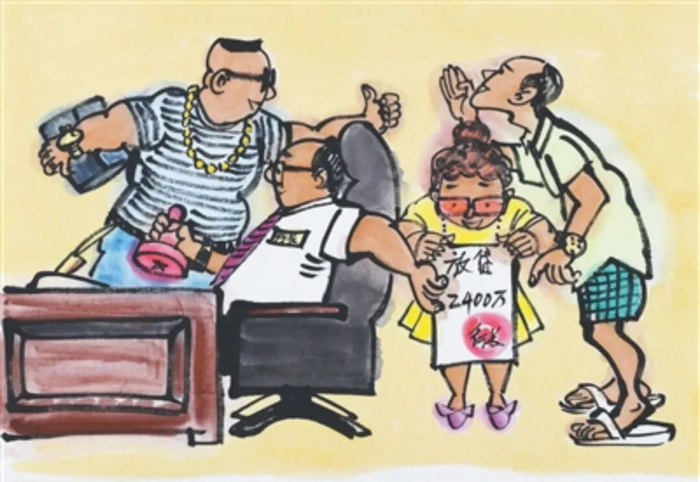
Core Viewpoint - The investigation reveals significant corruption involving Yi Xuefei, the former president of Guangzhou Rural Commercial Bank, who utilized loan schemes to disguise illegal financial activities and personal gain [1][5]. Group 1: Corruption Mechanism - Yi Xuefei, who held various positions at Guangzhou Rural Commercial Bank since 2006, engaged in corrupt practices by facilitating loans for businesses in exchange for kickbacks disguised as interest payments [1][2]. - He orchestrated a scheme where loans totaling 24 million yuan were funneled through intermediaries, ultimately benefiting his family [2][3]. - The loans were often secured against assets held by associates, allowing Yi to maintain a façade of legitimacy while profiting from the transactions [2][3]. Group 2: Loan Characteristics - The investigation identified unusual patterns in borrowing behavior, such as businesses opting for high-interest personal loans instead of lower-rate bank loans, indicating potential coercion or collusion [4]. - Some borrowers paid interest exceeding the principal amount, while others voluntarily increased interest rates, suggesting a manipulation of loan terms to benefit Yi [4][5]. Group 3: Investigative Findings - The investigation focused on the authenticity of borrowing needs and the correlation between lending and Yi's authority, revealing that loan approvals often coincided with Yi's personal financial dealings with borrowers [4][5]. - Yi Xuefei admitted to receiving over 18 million yuan in interest from these illicit loans since 2005, confirming the extent of his corrupt activities [5].
1800多万元利息暗藏多少猫腻(不断提高反腐败穿透力)
Ren Min Ri Bao· 2026-01-19 07:49
Core Viewpoint - The investigation into former Guangzhou Rural Commercial Bank president Yi Xuefei revealed a sophisticated corruption scheme involving loan approvals and personal financial gain, leading to significant changes in the bank's operational transparency and efficiency for clients [1][2][3]. Group 1: Corruption Scheme Details - Yi Xuefei, who held various positions at Guangzhou Rural Commercial Bank since 2006, engaged in corrupt practices by facilitating loans for clients in exchange for personal financial benefits [2][3]. - The scheme involved using intermediaries to obscure the flow of funds, with Yi leveraging his connections to approve loans while receiving kickbacks disguised as interest payments [3][5]. - From 2017, Yi coordinated the approval of 24 million yuan in loans, which were funneled through multiple transactions into his wife's bank account, serving as a "reserve fund" for further illicit activities [3][5]. Group 2: Investigation and Findings - The investigation, initiated by anonymous reports, led to a comprehensive review of Yi's financial activities, revealing over 180 million yuan in interest collected through his corrupt practices since 2005 [6][7]. - The investigation highlighted unusual borrowing patterns, such as clients opting for high-interest personal loans despite having access to lower-rate bank loans, indicating a direct correlation between Yi's loan approvals and personal financial transactions [6][7]. - The findings prompted the Guangzhou Municipal Commission for Discipline Inspection to implement reforms within the bank and enhance regulatory measures to prevent similar corruption in the future [7].


《人民日报》:广州市纪委监委揭开层层表象,深挖广州农商银行原行长隐性腐败问题
2 1 Shi Ji Jing Ji Bao Dao· 2026-01-19 04:09
Core Viewpoint - The investigation into former Guangzhou Rural Commercial Bank president Yi Xuefei revealed a complex corruption scheme involving loan approvals and personal financial gain, leading to significant reforms in the bank's operations and oversight mechanisms [1][8]. Group 1: Corruption Case Details - Yi Xuefei, who held various positions at the bank since 2006, was found to have engaged in corrupt practices by facilitating loans for businesses in exchange for personal financial benefits [1][4]. - The investigation was triggered by an anonymous tip-off regarding Yi's suspicious relationships with loan clients, leading to a comprehensive review of his activities [1][6]. - Yi utilized a network of associates to disguise his corrupt activities, including using his brother-in-law to manage investments and loans, ultimately siphoning off funds into personal accounts [4][5]. Group 2: Financial Transactions and Patterns - From 2017, Yi facilitated loans totaling 24 million yuan for a client, with the funds ultimately transferred to his wife's bank account, indicating a systematic approach to financial misconduct [4][5]. - Yi's method involved offering high-interest loans to clients, often exceeding standard bank rates, which raised questions about the legitimacy of their financial needs [7]. - Over the years, Yi reportedly collected over 18 million yuan in interest from these illicit transactions, highlighting the scale of his corrupt practices [7]. Group 3: Institutional Reforms and Future Measures - Following the investigation, the Guangzhou Municipal Commission for Discipline Inspection initiated reforms within the bank to enhance transparency and accountability in loan approvals [8][10]. - The commission is also focusing on broader issues of leadership misconduct in lending practices, aiming to establish a monitoring mechanism for unusual financial transactions involving public officials [8][10]. - The case underscores the need for innovative oversight methods to combat new forms of corruption that blend into market activities, necessitating a multi-faceted approach to regulatory enforcement [10].
深挖隐性腐败,1800多万元利息暗藏多少猫腻
Xin Lang Cai Jing· 2026-01-19 00:39
Core Insights - The article discusses the investigation into former president of Guangzhou Rural Commercial Bank, Yi Xuefei, revealing a hidden corruption scheme involving loan approvals and interest collection [1][2][5] Group 1: Corruption Investigation - The investigation was initiated after an anonymous tip-off regarding Yi Xuefei's suspicious economic interactions with multiple client enterprises [1][2] - Yi Xuefei held various positions at the bank since 2006, and he utilized a method of collecting interest disguised as legitimate business transactions to avoid detection [2][3] Group 2: Loan Scheme Details - Yi Xuefei orchestrated a scheme where he used intermediaries to facilitate loans, allowing him to collect funds without direct involvement [3][4] - From 2017, a client named Zhang Haibo received a total of 24 million yuan in loans, which were funneled into Yi's wife's bank account after being transferred through multiple channels [3][4] Group 3: Interest Collection - Yi Xuefei arranged for clients to pay him interest on loans at rates significantly higher than standard bank rates, with one client agreeing to a 15% annual interest rate [4][5] - Between 2017 and 2019, he received a total of 4.8 million yuan in interest payments from one client alone [4][5] Group 4: Broader Implications - The investigation revealed that Yi Xuefei's actions were part of a larger pattern of corruption, prompting the Guangzhou Municipal Commission for Discipline Inspection to implement reforms and enhance regulatory measures [5][6] - The commission aims to address common issues of corruption and improve oversight mechanisms within financial institutions [6]
1800多万元利息暗藏多少猫腻?人民日报披露一起银行腐败案
Ren Min Ri Bao· 2026-01-19 00:26
Core Viewpoint - The investigation into former Guangzhou Rural Commercial Bank president Yi Xuefei reveals a sophisticated corruption scheme involving loan approvals and interest collection, leading to over 18 million yuan in illicit gains [5][12][13]. Group 1: Corruption Scheme - Yi Xuefei, who held various positions at Guangzhou Rural Commercial Bank since 2006, engaged in corrupt practices by facilitating loans for businesses in exchange for personal financial benefits [2][8]. - The scheme involved using intermediaries to obscure the flow of funds, with Yi leveraging his connections to approve loans while disguising his actions as legitimate business transactions [3][9]. Group 2: Loan Approval Process - From 2017, Yi facilitated loans totaling 24 million yuan for a client, Zhang Haibo, which were ultimately funneled into Yi's wife's bank account [10][11]. - Yi's manipulation of the loan approval process included pressuring bank staff to expedite approvals under the guise of supporting businesses, while simultaneously soliciting high-interest loans from those same businesses [4][10]. Group 3: Financial Analysis and Findings - Investigators identified three anomalies in the borrowing patterns: businesses opting for high-interest loans despite having access to lower rates, borrowers failing to repay principal amounts while paying excessive interest, and borrowers voluntarily increasing interest rates [12]. - The investigation revealed that Yi collected over 18 million yuan in interest from 2005 onwards, with evidence linking loan approvals to his personal financial dealings [5][12]. Group 4: Regulatory Response - Following the investigation, the Guangzhou Municipal Commission for Discipline Inspection initiated measures to enhance oversight and prevent similar corruption, including the establishment of a monitoring mechanism for unusual financial transactions involving public officials [13][14]. - The case underscores the need for innovative supervisory methods to combat new forms of corruption while reinforcing existing regulatory frameworks [13].
广东省广州市纪委监委揭开层层表象 深挖广州农商银行原行长隐性腐败问题 1800多万元利息暗藏多少猫腻(不断提高反腐败穿透力)
Ren Min Ri Bao· 2026-01-18 22:00
Core Viewpoint - The investigation into former Guangzhou Rural Commercial Bank president Yi Xuefei revealed a sophisticated corruption scheme involving loan approvals and personal financial gain, leading to significant reforms in the bank's operations and oversight mechanisms [1][2][4]. Group 1: Corruption Scheme Details - Yi Xuefei, who held various positions at the bank since 2006, engaged in corrupt practices by facilitating loans for businesses in exchange for personal financial benefits [2][3]. - The scheme involved using intermediaries to obscure the flow of funds, with Yi Xuefei coordinating loans that ultimately funneled money into his wife's bank account [3][4]. - From 2005 onwards, Yi Xuefei reportedly collected over 18 million yuan in interest from these illicit loans, indicating a long-standing pattern of corruption [6]. Group 2: Investigation and Findings - The investigation, initiated by an anonymous tip, led to a comprehensive review of Yi Xuefei's financial activities, including the analysis of over 200 accounts and 1.6 million transactions [4][5]. - Key findings highlighted the discrepancies in loan requests, such as businesses opting for high-interest personal loans instead of lower-rate bank loans, suggesting collusion [6]. - The investigation also revealed that the timing of loan approvals often coincided with Yi Xuefei's personal financial transactions with the borrowers, indicating a direct link between his authority and the corrupt practices [6]. Group 3: Institutional Reforms - Following the investigation, the Guangzhou Municipal Commission for Discipline Inspection initiated reforms within the bank to enhance transparency and accountability in loan approvals [7]. - The commission emphasized the need for a proactive approach to combat new forms of corruption, advocating for the use of technology and data analysis to monitor financial transactions [7]. - A special focus was placed on establishing a warning mechanism for unusual large fund flows involving public officials to prevent future misconduct [7].