PSBC(01658)

Search documents
银行板块持续走强 厦门银行涨超5%
Zheng Quan Shi Bao Wang· 2025-11-04 02:32
Core Viewpoint - The banking sector is experiencing a strong upward trend, with several banks showing significant stock price increases [1] Group 1: Stock Performance - Xiamen Bank has seen its stock price rise by over 5% [1] - Other banks including CITIC Bank, Chongqing Bank, Shanghai Bank, Industrial Bank, China Merchants Bank, Postal Savings Bank, Agricultural Bank, Industrial and Commercial Bank, and Jiangyin Bank have all increased by over 2% [1]




邮储银行涨2.08%,成交额4.31亿元,主力资金净流入3859.88万元
Xin Lang Cai Jing· 2025-11-04 02:17
Group 1 - Postal Savings Bank of China (PSBC) shares increased by 2.08% on November 4, reaching 5.90 CNY per share, with a trading volume of 431 million CNY and a market capitalization of 708.56 billion CNY [1] - Year-to-date, PSBC's stock price has risen by 8.90%, with a 2.80% decline over the last five trading days, a 1.20% increase over the last 20 days, and a 2.43% increase over the last 60 days [1] - As of September 30, 2025, PSBC reported a net profit of 76.56 billion CNY, reflecting a year-on-year growth of 0.98% [3] Group 2 - PSBC's main business segments include personal banking (65.15% of revenue), corporate banking (22.71%), and funding operations (12.10%) [2] - The bank has distributed a total of 137.80 billion CNY in dividends since its A-share listing, with 77.40 billion CNY distributed over the last three years [4] - As of September 30, 2025, the number of PSBC shareholders decreased by 13.09% to 142,600, while the average circulating shares per person increased by 15.29% to 478,570 shares [3]

券商三季度末持股市值逾660亿元 重仓布局高端制造与科技赛道
Shang Hai Zheng Quan Bao· 2025-11-03 18:16
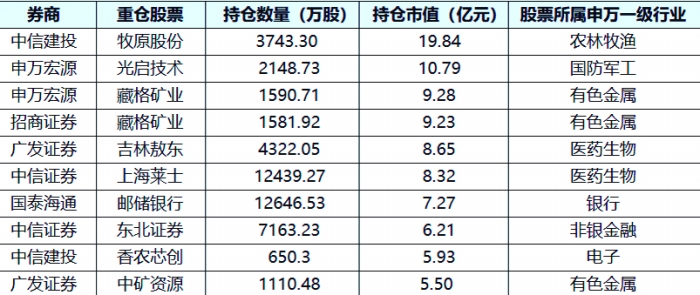
Core Insights - The report highlights that 44 brokerage firms have invested in 351 stocks, with a total holding value exceeding 66 billion yuan as of the end of Q3 [2][3] - High-end manufacturing and technology sectors are identified as popular investment directions for brokerages, reflecting a shift towards structural opportunities in the equity market [2][3] Brokerage Holdings Overview - The top 10 stocks held by brokerages by market value include Muyuan Foods, Guangqi Technology, and Cangge Mining, with holdings exceeding 1 billion yuan for several stocks [3][4] - The distribution of holdings indicates a strong focus on sectors such as machinery, pharmaceuticals, electronics, and basic chemicals, with the highest number of stocks in machinery equipment (35 stocks) and pharmaceuticals (28 stocks) [3][4] Trading Activity - Brokerages have entered 186 new stocks, with notable new positions including Postal Savings Bank and China Foreign Transport, each exceeding 30 million shares [4] - A total of 69 stocks saw increased holdings, particularly in the basic chemicals and transportation sectors, while 61 stocks were reduced, indicating a selective approach to portfolio management [5][4] Self-Operated Business Performance - Self-operated business remains the largest revenue contributor for brokerages, with a reported income of 186.857 billion yuan in the first three quarters, marking a 43.83% year-on-year increase [6][7] - Major brokerages like CITIC Securities and Guotai Junan reported significant growth in self-operated income, driven by a recovering equity market and strategic asset allocation [6][7] Market Trends and Analysis - Analysts note that the active trading environment and increased margin financing have positively impacted brokerage performance, with a significant rise in average daily trading volume [7] - The shift towards equity assets and the reduction in bond investments reflect a broader trend of rebalancing within the brokerage sector [7]



贴心服务零距离,养老金融护航“夕阳红”
Xin Lang Cai Jing· 2025-11-03 08:57
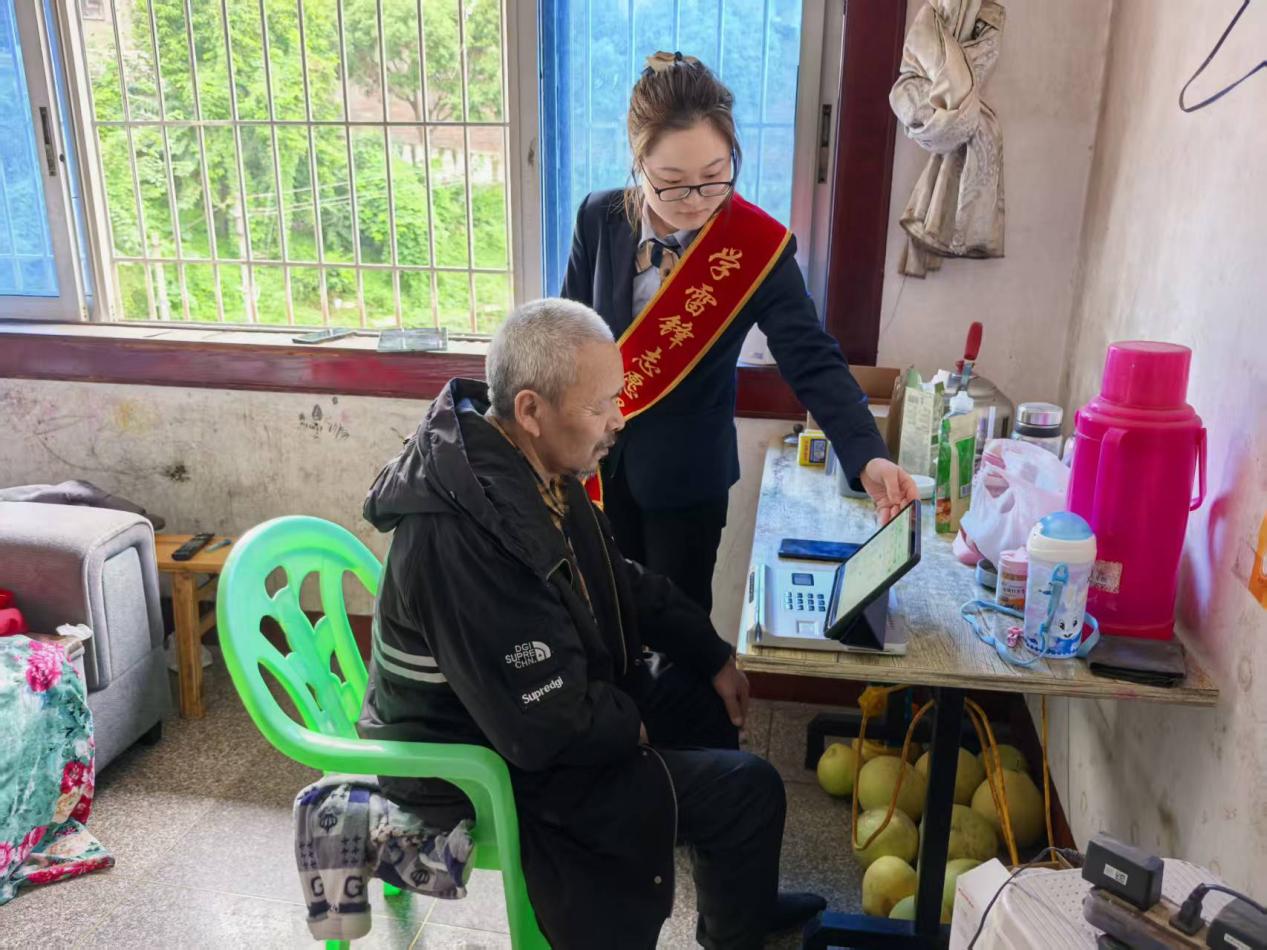
Core Points - The article highlights the challenges faced by elderly individuals in accessing banking services due to the digital divide, emphasizing the importance of warm and accessible service from financial institutions [1] - Postal Savings Bank's initiative to provide door-to-door services for elderly customers demonstrates its commitment to "elderly finance" and deep service for this demographic [4] Group 1 - The elderly customer faced a critical situation when her husband's bank card was locked, and they were unable to visit the bank due to health issues [1] - Postal Savings Bank staff quickly initiated a "green channel" and home service process to assist the elderly couple, showcasing their responsive customer service [2] - The successful completion of the password reset at the customer's home alleviated the couple's distress, highlighting the effectiveness of the bank's personalized service [2] Group 2 - The bank's home service not only resolved immediate banking needs but also illustrated a broader commitment to serving the elderly population with care and respect [4] - Staff provided thorough assistance during the home visit, ensuring that the elderly customer understood each step of the process, which reflects the bank's dedication to customer-centric service [4] - The ongoing focus on the financial service needs of the elderly will lead to continuous improvements in home service processes, reinforcing the bank's mission to deliver warmth and convenience to this demographic [4]
“温情”与“守护”同频共振|邮储银行成都分行延伸服务触角,把金融温度送到百姓心坎
Xin Lang Cai Jing· 2025-11-03 08:57
Group 1 - Postal Savings Bank of China (PSBC) emphasizes customer-centric services, as demonstrated by their response to a bedridden customer in Chengdu who needed urgent assistance with activating his social security card [1][3] - The bank has established a "special group customer ledger" to ensure that customer requests are addressed promptly, highlighting their commitment to continuous service [1] - PSBC is actively engaging with the community by providing financial education, particularly targeting vulnerable groups such as the elderly, to help them recognize and avoid financial scams [2][3] Group 2 - The bank's initiatives include on-site financial knowledge sessions in local communities, making financial education accessible and relatable to residents [2] - PSBC aims to enhance its service delivery by moving service points closer to customers and deepening financial knowledge dissemination [3] - The bank's approach is to provide timely, warm, and in-depth financial services to safeguard customers' financial well-being [3]
邮储银行成都市分行绿色金融助力:为农业转型注入“活水”
Xin Lang Cai Jing· 2025-11-03 08:57
Core Insights - The collaboration between Postal Savings Bank of China Chengdu Branch and a provincial agricultural enterprise marks a significant step in agricultural transformation financing, providing a specialized loan of 12 million yuan to support the green and intelligent transformation of traditional agriculture [1][4]. Group 1: Agricultural Transformation Challenges - A leading mushroom cultivation company in Chengdu, with an annual output exceeding 15,000 tons, faces challenges due to outdated high-energy consumption facilities and rising production costs, necessitating a low-carbon transformation [2]. - The company struggles with financing pressures due to a lack of effective collateral, long technology investment cycles, and slow capital recovery, which has stalled its transformation efforts [2]. Group 2: Postal Savings Bank's Role - Postal Savings Bank of China Chengdu Branch, under the guidance of the People's Bank of China Sichuan Branch, conducted thorough research on the company's operational status and financing needs, tailoring a financial support plan for its transformation [3]. - The bank collaborated with a third-party environmental research center to conduct comprehensive carbon accounting, revealing high carbon emissions per unit of output due to inefficient traditional temperature control systems [3]. - A low-carbon transformation plan was developed, focusing on upgrading temperature control systems, mechanizing production lines, and utilizing waste resources, with a mechanism linking carbon intensity to loan interest rates to incentivize emissions reduction [3]. Group 3: Green Finance Outcomes - The 12 million yuan loan significantly alleviates the company's immediate financial pressures, facilitating the implementation of key transformation projects that will reduce energy consumption and carbon emissions while enhancing market competitiveness [4]. - This collaboration represents a solid step for Postal Savings Bank in the agricultural transformation finance pilot area, providing a replicable and innovative solution for the green and intelligent transformation of traditional agriculture [4]. - On a macro level, the partnership aligns with national "dual carbon" strategies and rural revitalization policies, contributing to the modernization of agriculture in Sichuan and serving as a model for other traditional agricultural entities [4]. Group 4: Future Directions - The collaboration exemplifies Postal Savings Bank's commitment to green finance, with plans to deepen the "finance + technology + industry" collaborative model to provide comprehensive financial services to more traditional agricultural entities [5]. - The bank aims to continue contributing to national "dual carbon" goals and rural revitalization strategies with innovative financial solutions [5].
邮储银行(601658)2025年三季报点评:对公业务表现亮眼 非息收入延续高增
Xin Lang Cai Jing· 2025-11-03 08:32
Core Insights - The company reported stable performance with a slight increase in revenue and net profit for the first nine months of 2025, supported by rapid growth in non-interest income and reduced liability costs [1][2]. Financial Performance - For the period of January to September 2025, the company's operating revenue reached 265.08 billion yuan, a year-on-year increase of 1.82%, while net profit attributable to shareholders was 76.56 billion yuan, up 0.98% [1]. - The annualized ROE was 10.67%, a decrease of 1.12 percentage points compared to the previous year [1]. - In Q3 alone, revenue and net profit grew approximately 2.48% and 1.23% year-on-year, respectively [1]. Interest Income and Loan Growth - The net interest income for the first nine months of 2025 was 210.51 billion yuan, down 2.07% year-on-year, with a net interest margin of 1.68%, reflecting a decline of 19 basis points from last year [2]. - The average interest rate on interest-bearing liabilities fell to 1.22%, down 25 basis points year-on-year [2]. - Total loans increased by 8.33% compared to the beginning of the year, with corporate loans growing by 17.91% and retail loans by 1.90% [2]. Non-Interest Income and Asset Quality - Non-interest income reached 54.58 billion yuan, a year-on-year increase of 20.20%, driven by growth in investment banking and wealth management [3]. - The company’s non-performing loan ratio was 0.94%, up 0.04 percentage points from the end of the previous year, while the coverage ratio was 240.21%, down 45.94 percentage points [3]. Investment Outlook - The company is well-positioned with a solid retail customer base and a unique "self-operated + agency" model, focusing on inclusive finance and rural revitalization [4]. - The company maintains a stable dividend payout ratio of 30% for the mid-2025 period, with projected BVPS of 8.53 yuan, 8.99 yuan, and 9.56 yuan for 2025-2027 [4].
【Fintech 周报】世界黄金协会:市场尚未饱和;保险业前三季罚金超3亿禁业86人
Sou Hu Cai Jing· 2025-11-03 08:15
Regulatory Dynamics - Five banks were fined a total of over 200 million yuan for various violations, with China Bank fined 97.9 million yuan for issues in governance and loan management [1] - The Central Bank's Zhejiang branch imposed fines exceeding 16 million yuan on six banks, affecting 25 responsible individuals, with penalties ranging from 7,500 to 100,000 yuan [1] Insurance Industry - The total fines in the insurance industry exceeded 300 million yuan in the first three quarters of 2025, marking a year-on-year increase of 9.64%, with 86 individuals banned from the industry [2] - In Q3 2025, the insurance sector saw 632 penalties totaling 134 million yuan, with a significant rise in the number of penalties and institutions involved compared to the previous year [2] Industry Dynamics - The six major state-owned banks reported their Q3 results, with Industrial and Commercial Bank of China achieving a revenue of 610.97 billion yuan, a year-on-year increase of 1.98% [2] - Agricultural Bank of China reported a revenue of 550.77 billion yuan, up 1.87%, while Bank of China and China Construction Bank also showed modest growth in revenue and net profit [2] Corporate Developments - China Pacific Insurance reported a net profit of 45.7 billion yuan in the first three quarters of 2025, reflecting a year-on-year growth of 19.3% [9] - The appointment of Zhao Guid as vice president of Industrial and Commercial Bank of China was announced, highlighting his extensive experience in digital transformation and financial technology [6] - Yibin Bank announced a change in leadership, appointing Guo Hua as the new president after the resignation of Jiang Lin [7] - China Life and New China Life reported significant net profit growth rates of 91.5% and 88.2% respectively in Q3 2025, driven by substantial investment income [5]




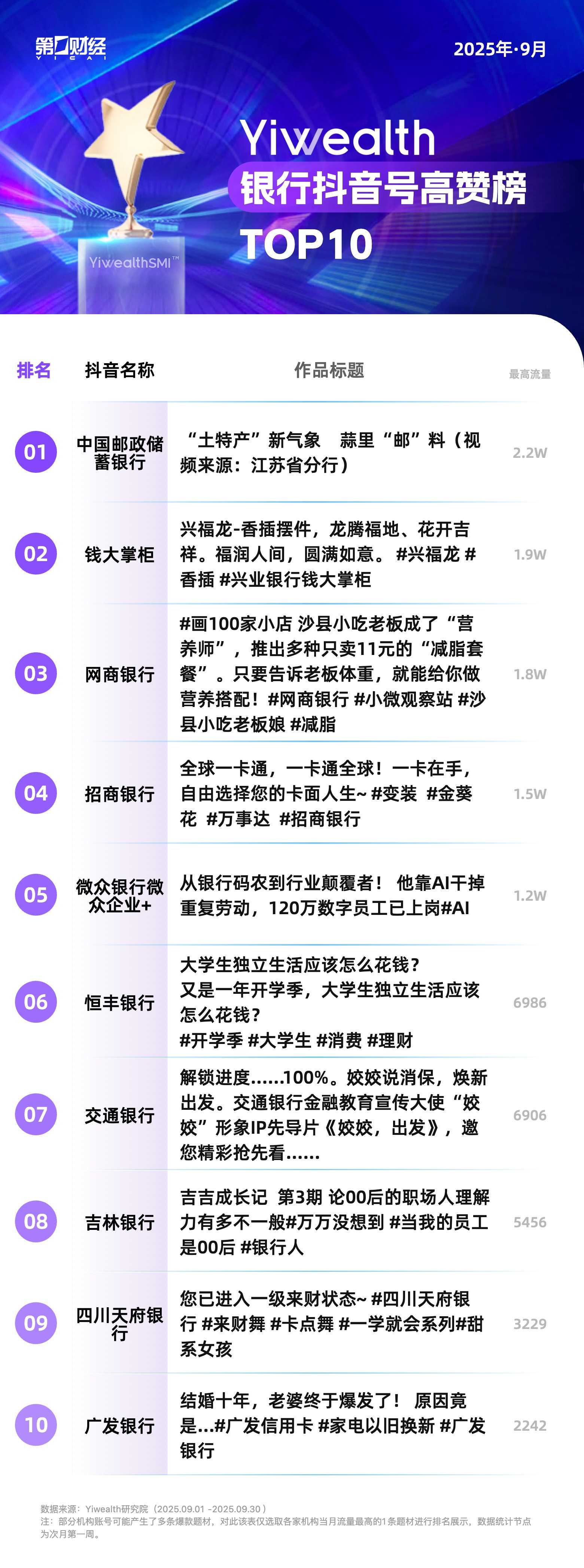
YiwealthSMI|银行抖音高赞作品百花齐放,视频号多个AI相关作品上榜!
Di Yi Cai Jing· 2025-11-03 07:04
Core Insights - The September 2025 Bank Social Media Index (SMI) highlights a significant rise in the rankings of several banks, with Industrial Bank's Douyin account "Qian Da Zhang Gui" achieving a remarkable jump to the second position due to its effective content strategy [1] - New entrants to the top rankings include Postal Savings Bank, Citic Bank, and Huishang Bank, indicating a shift in social media engagement within the banking sector [1] Group 1: Performance Highlights - Industrial Bank's Douyin account "Qian Da Zhang Gui" rose from outside the top rankings to second place, showcasing its balanced operation across various platforms including video accounts and public accounts [1] - Postal Savings Bank's content titled "New Atmosphere of Local Specialties" received 22,000 likes, emphasizing the bank's role in supporting local agriculture through comprehensive financial services [1] - The "100 Small Shops" series by MyBank highlighted a small business owner's innovative approach to offering affordable meal options, resonating well with users and contributing to the bank's social media presence [1] Group 2: Content Themes - The top content on Douyin this month featured diverse themes such as product promotion, brand awareness, financial education, and community support, reflecting a broad engagement strategy [1][2] - MyBank's focus on AI in finance was evident in its content, which showcased the practical applications of AI technology in credit services, aligning with current industry trends [2] - NewNet Bank's engagement with young audiences during the back-to-school season aimed to establish emotional connections and foster brand loyalty among future customers [2] Group 3: Social Media Engagement - The top-performing content on WeChat included discussions around personal consumption loan policies, indicating a growing interest in financial literacy among consumers [2] - Various banks utilized the back-to-school theme to create relevant content, such as Hengfeng Bank's practical financial advice for college students, which ranked sixth in user engagement [1][2]
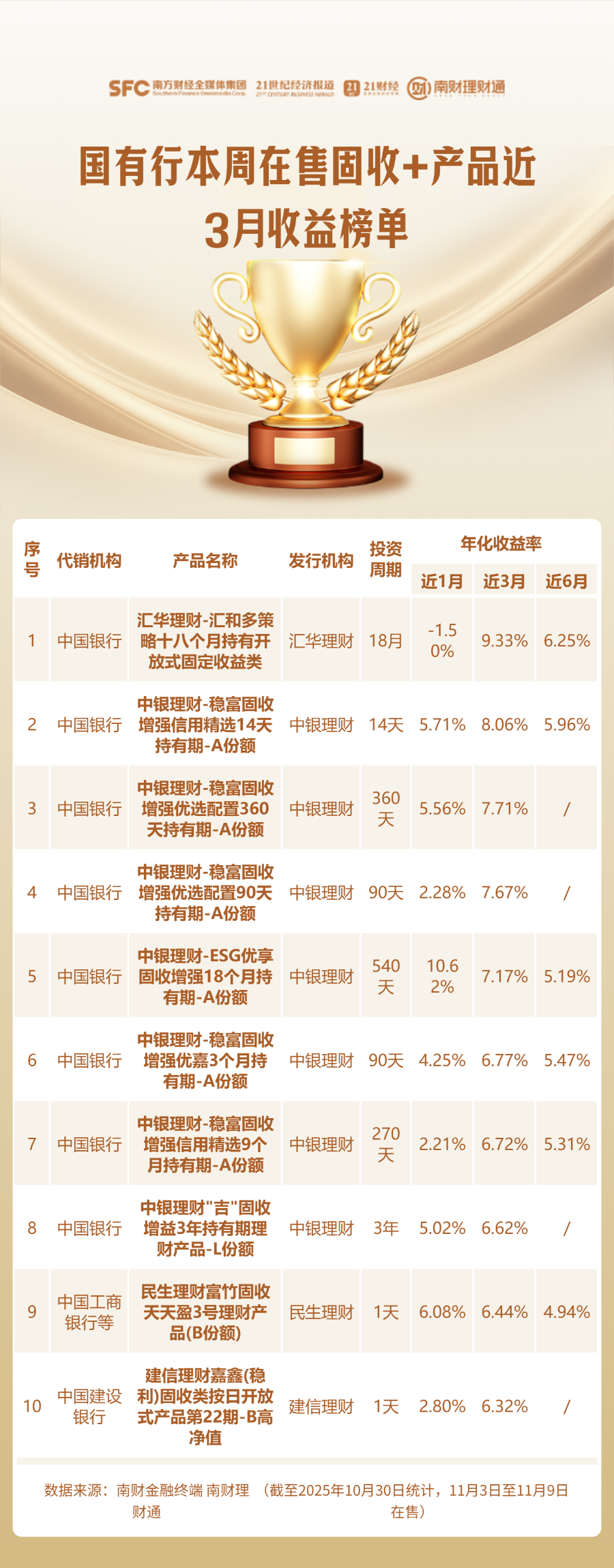
本周有逾十只近3月年化超10%固收+理财可申购
2 1 Shi Ji Jing Ji Bao Dao· 2025-11-03 03:07
Core Viewpoint - The article emphasizes the importance of selecting suitable wealth management products, particularly "fixed income+" products, from various banks, highlighting the performance of these products over different time frames to aid investors in making informed decisions [1][2]. Summary by Category Product Performance - The article presents a performance ranking of wealth management products based on their annualized returns over the past month, three months, and six months, with a focus on the three-month annualized yield for recent market fluctuations [1]. - Notable products include: - "幸福99添益(稳健 严选FOF)" from 杭银理财 with a three-month yield of 13.32% [7]. - "贵竹固收揭强未在" from 中国民生银行 with a three-month yield of 11.5% [8]. - "宁享固定收益类甄选日开理财1号" from 微众银行 with a three-month yield of 7.90% [14]. Distribution Channels - The article lists 28 distribution institutions, including major banks such as 工商银行, 中国银行, and 招商银行, which are involved in selling these wealth management products [1]. - It highlights the variability in product availability due to factors like sales limits and differing product displays across banks, advising investors to refer to the actual offerings on bank apps [1]. Data Source - The performance data is sourced from 南财金融终端, with statistics as of October 30, 2025, and the ranking is based on products available for sale from November 3 to November 9, 2025 [1][14].