
种植贷

Search documents
一号文件里的金融!
Jin Rong Shi Bao· 2026-02-03 13:45
Core Viewpoint - The central government has released a guiding document aimed at modernizing agriculture and rural areas, emphasizing the importance of financial support in driving rural development and proposing innovative financing mechanisms for rural revitalization [1][11]. Financial Support and Policy Stability - The document emphasizes the need for stable financial support and resource allocation as part of the rural revitalization strategy, integrating regular assistance into the overall plan [2]. - It highlights the importance of maintaining consistent fiscal input and financial backing to ensure the effectiveness of rural revitalization efforts [2]. Agricultural Insurance and Risk Management - The document calls for enhanced support for agricultural insurance, particularly for staple crops like rice, wheat, corn, and soybeans, to improve the efficiency of claims processing [4][9]. - It stresses the necessity of a comprehensive agricultural insurance system to mitigate risks from natural disasters and market fluctuations, thereby protecting farmers' incomes [9]. Financing Mechanisms and Investment - The document proposes the establishment of a multi-layered financing system to address the challenges of funding agricultural projects, including the use of special bonds and long-term treasury bonds for major agricultural initiatives [8]. - It encourages financial institutions to increase lending to the agricultural sector, particularly through policies that support small farmers and agricultural innovation [6][8]. Utilization of Rural Assets - The document addresses the issue of underutilized rural assets, proposing policies to facilitate the circulation and collateralization of rural resources, thereby transforming dormant assets into usable capital [8]. - Examples of innovative financing solutions, such as livestock collateral loans and land management models, are highlighted as effective ways to activate rural resources [8]. Role of Financial Services in Rural Development - The document emphasizes the need for tailored financial services that consider local conditions to foster a sustainable cycle of rural industry development [10]. - It advocates for financial institutions to focus on the entire agricultural value chain and to provide credit support that aligns with the specific needs of different regions [10]. Overall Importance of Agricultural Modernization - The continuous focus on agricultural and rural issues in the guiding document underscores the strategic significance of agricultural modernization within the broader context of national development [11]. - The document anticipates that the synergy between financial support and resource activation will accelerate the pace of agricultural modernization, contributing to the establishment of a strong agricultural nation [11].
巨野农商银行:深耕客群营销 助推地方产业兴旺
Qi Lu Wan Bao· 2026-01-26 08:10
Core Viewpoint - The company, Juyi Rural Commercial Bank, integrates its development with the regional economy, focusing on deep customer marketing and precise financial services to empower the real economy and promote high-quality development through a symbiotic relationship between finance and industry [1] Group 1: Customer Service Strategy - The bank emphasizes "service down to the grassroots and deep customer cultivation" as its foundation, shifting from a broad approach to a targeted one through a "grid-based" marketing service system [2] - Customer managers conduct in-depth visits and surveys to understand the financing needs, production cycles, and operational characteristics of core customer groups, establishing dynamic credit profiles [2] - This approach not only narrows the gap between banks and enterprises but also extends financial services to the "capillaries" of economic and social development, laying a solid foundation for precise policy implementation [2] Group 2: Empowering Specialty Industries - The bank focuses on local agricultural resources and industry layout, supporting food security and specialty planting through innovative financial products like "planting loans" and "agricultural machinery loans" [3] - Specific financial solutions are provided for the garlic industry, covering the entire supply chain from planting to cold storage and sales, transforming small-scale garlic production into a significant industry [3] - The bank also supports emerging sectors such as rural tourism and ecological farming by customizing credit products to enhance economic advantages from ecological resources [3] Group 3: Product and Service Innovation - To meet the diverse and personalized financial needs of industry customers, the bank continuously innovates its products and services, developing flexible options like accounts receivable pledges [4] - The bank promotes an online credit platform to enhance financing convenience, allowing data to do the heavy lifting while minimizing customer effort [4] - Interest rate discounts are offered to key sectors such as agriculture and small enterprises, effectively lowering financing costs and benefiting both businesses and farmers [4]
金融活水绘就乡村振兴新图景
Xin Hua Wang· 2026-01-13 10:35
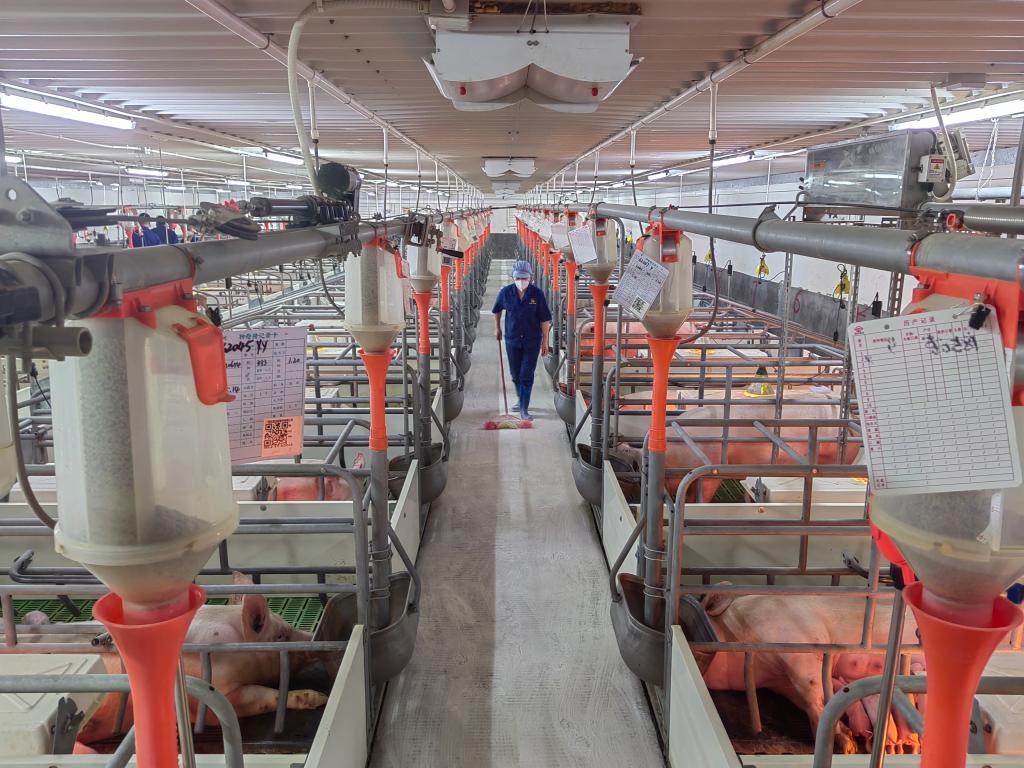
Group 1 - Financial support is crucial for rural revitalization, with increased policy backing to mobilize rural resources and meet diverse financing needs of agricultural entities [1][3] - The introduction of innovative financing models, such as live pig collateral, has enabled companies like Guangxi Xiongui Breeding Co., Ltd. to secure significant funding, exemplified by a recent CCB loan of 14 million yuan [1][3] - The expansion of collateral options for agricultural assets is addressing the challenge of "having assets but unable to mortgage," thereby enhancing financial services for rural enterprises [3][4] Group 2 - Customized financial products are being developed by various financial institutions to cater to the unique characteristics of rural resources, improving service levels in the agricultural sector [4][5] - The combination of capital, special bonds, and bank loans has been utilized to support large-scale agricultural projects, such as the 390 million yuan loan for irrigation infrastructure in Jiangxi [5][6] - Policies are being implemented to encourage financial institutions to provide diversified financing solutions for both commercial and public agricultural projects, enhancing overall financial service levels in rural areas [5][7] Group 3 - Innovative development models are being explored to transform resources into assets, capital, and ultimately funds, promoting sustainable financial resource allocation to rural areas [6][7] - Collaborative efforts in various regions, such as the "land trusteeship + guaranteed dividends" model in Shandong, are effectively revitalizing underutilized agricultural land [7] - The use of policy tools like risk compensation and loan subsidies is aimed at increasing the efficiency of financial resource allocation to rural revitalization efforts [7]

央行2026年适度宽松货币政策对不同类型银行的影响与应对
Jin Rong Jie· 2026-01-08 13:01
Core Viewpoint - The People's Bank of China (PBOC) will implement a moderately accommodative monetary policy in 2026, focusing on promoting high-quality economic development and reasonable price recovery, while maintaining ample liquidity and relatively loose financing conditions [1][2]. Monetary Policy Predictions - The PBOC is expected to lower the reserve requirement ratio (RRR) 1-2 times in 2026, releasing long-term liquidity of 1-2 trillion yuan, and reduce interest rates by 10-25 basis points, with a higher probability of lowering the 5-year Loan Prime Rate (LPR) [2]. - The target for social financing costs is to maintain them at historically low levels, with the average interest rate for new corporate loans around 3% [2]. - Social financing and M2 growth rates are expected to align with economic growth (around 5%) and price level targets (around 2%), with an average asset growth rate of about 8% across industries [2]. Impacts on Different Types of Banks Large State-owned Commercial Banks - Expected to increase new loans by approximately 15 trillion yuan, with a focus on key sectors [3]. - Net interest margin is projected to be around 1.4%, as the decline in funding costs is expected to exceed the decline in asset yields [3]. - Anticipated growth in bond underwriting income and wealth management scale by over 10% due to strong comprehensive financial service capabilities [3]. - Non-performing loan (NPL) ratio is expected to drop below 1.2% [3]. Joint-stock Banks - Anticipated growth in technology and green finance loans by around 20% due to high marketization and product innovation capabilities [4]. - Net interest margin is expected to decline to below 1.5% [4]. - Digital transformation is expected to accelerate, with online credit approval rates reaching 80% [4]. - New customer acquisition is expected to increase significantly, with innovative products like "computing power loans" being introduced [4]. Urban Commercial Banks - Expected loan growth in local key industries and small businesses by around 20% [5]. - Net interest margin is projected to be between 1.4% and 1.5% [5]. - Anticipated growth in inclusive finance loans by around 15% [6]. - Digital service capabilities are expected to improve, with online channel coverage reaching 90% [6]. Rural Small Banks - Expected growth in agricultural and small business loans by around 15% [7]. - Anticipated reduction in funding costs, with the reserve requirement ratio dropping to around 4.5% [7]. - Policy support for inclusive finance is expected to increase by 30% [7]. - NPL ratio is projected to decrease to around 2.5% [7]. Challenges Faced by Different Types of Banks Large State-owned Banks - Facing pressure from narrowing net interest margins due to competitive pricing from large clients [8]. - Digital transformation efforts may be hindered by organizational complexity [8]. - High risk concentration in real estate and local government debts [8]. Joint-stock Banks - Expected further narrowing of net interest margins due to high funding costs [9]. - Capital replenishment pressure is significant, with an estimated need for 800 billion yuan [9]. - Risk control capabilities will be tested due to the high-risk nature of technology finance [9]. Urban Commercial Banks - Anticipated decline in net interest margins, with some nearing 1% [10]. - Increased liquidity risk due to high reliance on central bank funding [10]. - Digital transformation may lag behind due to insufficient investment [10]. Rural Small Banks - Weak risk control capabilities may lead to higher NPL ratios [11]. - Expected decline in net interest margins, with some nearing 1% [11]. - Digital transformation challenges due to small scale and lack of professional talent [11]. Differentiated Response Strategies - Large state-owned banks should focus on comprehensive financial services and enhance their role as policy transmission hubs [13]. - Joint-stock banks should strengthen their competitive advantages in technology and green finance [14]. - Urban commercial banks should deepen their local market presence and enhance digital services [15]. - Rural banks should focus on serving rural revitalization and enhance their financial service capabilities [16]. Summary and Outlook - The PBOC's accommodative monetary policy presents opportunities for total expansion, structural optimization, and profit enhancement for the banking sector, while also posing challenges such as narrowing net interest margins and risk management [17]. - Different types of banks should adopt differentiated strategies based on their strengths and characteristics to navigate the evolving landscape [18].
让“梨城”名片更闪亮
Jin Rong Shi Bao· 2025-11-14 02:07
Core Viewpoint - The financial support from Postal Savings Bank of China (邮储银行) has significantly boosted the production and distribution of Kuerle fragrant pears in Xinjiang, enhancing the local agricultural economy and improving farmers' income through innovative loan products and services [1][2][3] Group 1: Financial Support and Loan Products - Postal Savings Bank of China's Xinjiang branch has launched a series of credit products, including "Planting Loan," "Acquisition Loan," and "Storage Loan," to support the fragrant pear industry [2] - The bank has issued over 200 million yuan in loans to the fragrant pear industry, facilitating the movement of pears from farms to consumers [1][2] - The bank's "Express Loan" provided 3.5 million yuan to a cold storage company within three days, addressing urgent funding needs for pear acquisition [1] Group 2: Agricultural Production and Economic Impact - Kuerle fragrant pear's planting area has reached 412,000 acres, with an expected production of over 300,000 tons this year [2] - Farmers like Heng Zhen, who cultivate 200 acres of fragrant pears, anticipate earnings exceeding 1 million yuan due to high yield and quality [2] - The brand value of Kuerle fragrant pears has ranked first in China for six consecutive years, indicating strong market recognition and demand [2] Group 3: Industry Transformation and Future Outlook - The Kuerle city is transforming its pear industry towards standardized planting, brand marketing, and deep processing, supported by a model of "government support + financial backing + enterprise leadership" [3] - The bank is committed to enhancing its services in deep processing and cold chain logistics, aiming to further strengthen the local economy and support rural revitalization [3] - The integration of financial services with agricultural training and market analysis is expected to improve the overall quality and efficiency of the pear industry [3]

“香梨贷”泽被“梨城”保丰收
Zhong Guo Jin Rong Xin Xi Wang· 2025-10-30 06:52
Core Insights - The article highlights the successful harvest of 412,000 acres of fragrant pears in Korla City, Xinjiang, and the role of Postal Savings Bank in providing financial support to the pear industry [1][2] - The bank has issued over 200 million yuan in loans to support the transportation of 300,000 tons of pears from farms to consumers [1] Group 1: Financial Support and Impact - Postal Savings Bank's "Golden Pear Enrichment" initiative has led to the issuance of over 200 million yuan in loans for the fragrant pear industry this year [1] - The bank's "Express Loan" provided 3.5 million yuan to a cold storage facility, enabling quick access to funds for purchasing pears [1] - The bank has developed a series of financial products tailored to the pear industry, including "Planting Loans," "Acquisition Loans," and "Storage Loans," benefiting over 500 production and operation entities [1] Group 2: Industry Transformation and Support - Korla City is transforming its pear industry through a model of "government support + financial backing + enterprise promotion," focusing on standardized planting, brand sales, and deep processing [2] - The bank addresses challenges in financing for the pear industry, providing not only financial solutions but also training in planting techniques and market analysis to enhance industry quality and efficiency [2]

吉林通化 “金融药方”破解养老难题
Jin Rong Shi Bao· 2025-09-02 05:34
Core Insights - The article highlights the innovative financial services and products being developed in Tonghua City to address the challenges of the aging population and insufficient pension supply [1][2][3][4] Group 1: Financial Innovations - The People's Bank of China in Tonghua has supported the elderly care industry by innovating credit products and optimizing financial services, resulting in a loan balance of 183 million yuan for the elderly care industry, with a year-on-year growth of 73.97% as of June 2025 [1] - The establishment of specialized credit mechanisms such as "Elderly Care Loan" and "Health Care Pass" has been initiated to support the integration of medicine and elderly care, focusing on new business models like traditional Chinese medicine health care and smart elderly care [2] - The "Elderly Care Institution Construction Loan" allows for a loan amount up to 80% of the annual fee income from existing beds, with a maximum loan term of 10 years, addressing the long-term funding needs of elderly care facilities [3] Group 2: Community Engagement and Support - Financial institutions in Tonghua have implemented 37 types of facilities to assist the elderly, including large-print materials and anti-fraud education, enhancing the accessibility of financial services for seniors [4] - The local banks have actively engaged with the community, conducting over 130 outreach events and distributing more than 23,000 informational brochures to educate seniors on financial matters [4] - The People's Bank of China in Tonghua plans to promote more pension financial products and inclusive elderly care financial management to benefit a larger segment of the elderly population [4]

数字信用引来“金融管家”
Jin Rong Shi Bao· 2025-08-26 02:34
Core Viewpoint - The article highlights the innovative credit system established by the People's Bank of China in Sanmenxia, which simplifies the loan application process for farmers and enhances access to financing through a dynamic credit evaluation system [1][2][4]. Group 1: Credit System Innovation - The Sanmenxia branch of the People's Bank of China has developed a dual platform for inclusive finance and rural revitalization, incorporating over 4,000 new agricultural operators into a database to address information asymmetry in agricultural financing [1][2]. - A new credit evaluation module has been implemented, managing over 7,000 agricultural entities and cleaning up more than 2,000 abnormal entities, thereby breaking down data barriers between departments [2][3]. - The platform integrates various agricultural credit information from multiple departments, using AI algorithms to create accurate profiles of farmers and agricultural operators, achieving near-complete coverage of agricultural entities [3]. Group 2: Financial Products and Services - The bank has introduced specialized credit products such as "Rural Revitalization Guarantee Loan," "Mushroom Loan," and "Planting Loan," which leverage both the credit status of farmers and a guarantee mechanism to mitigate credit risks [4]. - A new service mechanism combining online intelligent matching and offline precise connections has been established, significantly reducing the average loan approval time for new agricultural operators [4]. - The comprehensive launch of the rural revitalization financial service platform is creating a "smart finance" landscape in Sanmenxia, where data-driven processes reduce the need for farmers to travel for financial services [4].
河南农商银行:锚定建设农业强省 贡献农商坚实力量
Zhong Guo Jin Rong Xin Xi Wang· 2025-08-18 10:09
Core Viewpoint - The strategic cooperation agreement between Henan Rural Commercial Bank and the Henan Provincial Department of Agriculture and Rural Affairs aims to inject strong financial momentum into the development of agriculture, rural areas, and farmers by providing 400 billion yuan in agricultural loans over the next three years, focusing on food security, rural prosperity industries, and new agricultural productivity [1][2][3]. Group 1: Financial Support for Food Security - Henan Rural Commercial Bank has created various financial products such as "High Standard Farmland Loan," "Planting Loan," and "Storage Loan" to provide comprehensive financial services for the agricultural supply chain, with a total of 58.7 billion yuan in loans for grain production and processing [2]. - The cooperation agreement emphasizes the importance of "storing grain in the ground and technology," offering a package of financial services for high-standard farmland construction and providing intellectual property pledge financing for seed industry enterprises [2]. Group 2: Support for Rural Prosperity Industries - The bank has developed a tailored action plan to support rural prosperity industries, focusing on local characteristics and specific needs, resulting in over 100 specialized financial products such as "Garlic Loan" and "Spicy Noodle Loan," with 44.133 billion yuan in loans issued to county-level prosperity industries [3]. - The bank serves approximately 208,600 agricultural industry chain clients, demonstrating its commitment to localized financial solutions [3]. Group 3: Inclusive Financial Services - Henan Rural Commercial Bank aims to enhance financial service accessibility through a "党建+网格+大数据" model, achieving a credit coverage rate of 73.41% for county farmers and a usage rate of 14.34% [4]. - The bank has issued 47.3 billion yuan in small loans to impoverished populations, reinforcing its commitment to poverty alleviation and rural revitalization [4]. Group 4: Empowering Agricultural Technology - The bank has established a dedicated credit quota for the technology sector, offering loans totaling 8.385 billion yuan to 942 agricultural technology enterprises, supporting long-term and low-cost financing [5]. - It is also focusing on supply chain financial products for agricultural machinery manufacturing, facilitating financial services for the entire industry chain [5]. Group 5: Integration of Financial Services in Rural Governance - The bank actively participates in grid governance by collaborating with community organizations, providing professional financial consulting, and promoting a trustworthy credit environment through credit village and credit household evaluations [6][7]. - Initiatives such as "Financial Knowledge Going to the Countryside" aim to educate the public on financial safety, enhancing community engagement and cultural life [7].
协同发力解小微融资之渴金融机构多举措落实支持小微企业融资协调工作机制
Zheng Quan Ri Bao· 2025-08-09 14:42
Core Viewpoint - The implementation of the financing coordination mechanism for small and micro enterprises has shown significant results, with banks providing substantial credit support to these businesses, addressing their long-standing financing difficulties [1][2]. Group 1: Implementation and Results - As of June 2025, over 90 million small and micro enterprises have been visited under the mechanism, with banks granting new credit of 23.6 trillion yuan and issuing new loans of 17.8 trillion yuan, of which 32.8% are credit loans [1]. - The mechanism aims to facilitate direct and efficient access to bank credit for small and micro enterprises, with a focus on appropriate interest rates [1][2]. - Financial institutions have established specialized teams and innovative products to support the mechanism's implementation, ensuring that credit reaches the grassroots level quickly and conveniently [1][2]. Group 2: Financial Institutions' Initiatives - Financial institutions are actively engaging in the mechanism by forming specialized teams to address the financing needs of small and micro enterprises, ensuring timely and precise connections [2][3]. - Various banks have developed tailored financial products, such as "Inclusive Micro Fast Loans" with a favorable interest rate of 3.3%, and have implemented measures to streamline loan approval processes [4][5]. - The Zhejiang Pinghu Rural Commercial Bank has initiated a "Thousand Enterprises and Ten Thousand Households" outreach program to understand the operational challenges faced by small enterprises and to collect financing needs [3][4]. Group 3: Future Directions and Recommendations - The effectiveness of the mechanism relies on collaboration among government, banks, and enterprises, with a focus on clear objectives and coordinated efforts [6]. - Recommendations include enhancing data sharing across departments, improving the credit system, and increasing financial support policies to lower the cost of inclusive finance [6][7]. - Financial institutions are encouraged to innovate credit products, improve service quality, and enhance information sharing to better meet the financing needs of small and micro enterprises [7].