
INTEL(04335)

Search documents
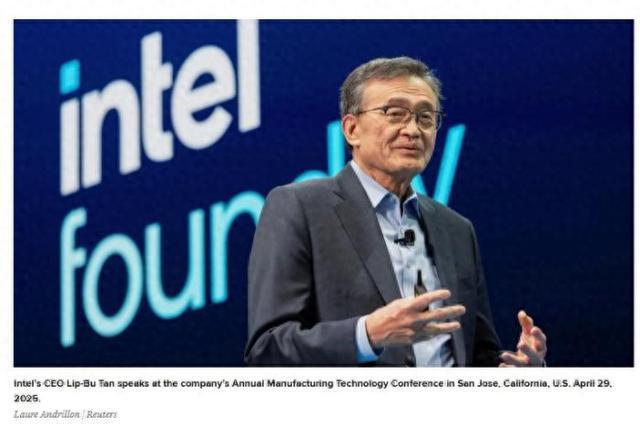
英特尔称特朗普持股将给公司带来风险
Xin Lang Cai Jing· 2025-08-26 07:57
Group 1 - The core point of the article is that Intel has warned that the agreement with the Trump administration to acquire 9.9% of its shares may have negative effects on investors, employees, and other stakeholders [1] - Intel stated that the agreement could lead to the U.S. Department of Commerce acquiring up to 433.3 million shares, which would dilute the equity of existing shareholders [1] - The potential impact of Trump's shareholding may affect Intel's sales in overseas markets, as 76% of Intel's revenue came from outside the U.S. in the last fiscal year [2]


特朗普称美政府收英特尔股份不丢人
Xin Lang Cai Jing· 2025-08-26 07:02
当地时间8月25日,美国总统特朗普在白宫回答记者提问时称,美国芯片制造商英特尔公司将大约10% 的股份给美国政府"对公司来说是好事",而自己"一下子就为美国赚了上百亿美元",如果以后再有这样 的机会,他"还会这么做"。特朗普称,虽然有些人说"这么做可耻","但这不丢人,这叫生意"。 (CCTV国际时讯) ...
零元购”英特尔(INTC.US)10%股权 特朗普欲打造美版“主权财富基金
Zhi Tong Cai Jing· 2025-08-26 06:50
Group 1 - The U.S. government holding a 10% stake in Intel may serve as a starting point for establishing a U.S. sovereign wealth fund, with expectations for similar transactions in the chip and other industries in the future [1] - The 10% stake in Intel is considered a unique case due to the significant funding provided by the CHIPS Act, which allows the government to acquire equity without interfering in Intel's operational decisions [1][2] - Trump claims that the stake is valued at approximately $11 billion, emphasizing that all profits will benefit the U.S. and create more jobs [2] Group 2 - The government’s acquisition of Intel shares is framed as a way to ensure taxpayer returns on investments, contrasting with past instances where federal funding did not yield returns for taxpayers [2] - The economic advisor highlighted that the government is not involved in selecting market winners and losers, referencing past government interventions during the 2008 financial crisis [2] - The overarching goal is to maximize the value of taxpayer funds through strategic investments like the one in Intel [3]
“零元购”英特尔(INTC.US)10%股权 特朗普欲打造美版“主权财富基金”
智通财经网· 2025-08-26 06:40
Group 1 - The U.S. government holding a 10% stake in Intel may serve as a starting point for establishing a U.S. sovereign wealth fund, with expectations for similar transactions in the semiconductor and other industries in the future [1] - The acquisition of Intel shares is part of a broader strategy under the CHIPS Act, which aims to inject significant funding into the company while allowing the government to gain equity without interfering in its operational decisions [1][2] - The transaction is framed as a way to ensure taxpayer returns on government funding, contrasting with past instances where federal funding did not yield benefits for taxpayers [2] Group 2 - Trump claims that the stake in Intel, valued at approximately $11 billion, was acquired at zero cost to the government, with all profits intended for the U.S. [2] - The government’s involvement in acquiring equity is not unprecedented, as it previously took majority stakes in Fannie Mae and Freddie Mac during the 2008 financial crisis [2] - The emphasis is placed on maximizing the value of taxpayer funds through strategic investments rather than selecting market winners and losers [3]
英特尔发出警告,特朗普:我想要更多这样的交易
Guan Cha Zhe Wang· 2025-08-26 03:25
Core Viewpoint - The U.S. government's recent investment in Intel marks a significant shift in the relationship between the government and private enterprises, potentially leading to various risks for the economy and corporate governance [1][5]. Group 1: Government Investment in Intel - President Trump announced an investment of $8.9 billion in Intel, acquiring 9.9% of the company's shares, making the U.S. government a major shareholder [1]. - The investment includes $5.7 billion in subsidies from the Biden administration's CHIPS and Science Act and an additional $3.2 billion in government funding [1]. - Intel warned that government ownership could dilute the rights of other shareholders and negatively impact its international business [6]. Group 2: Economic Implications - The investment strategy reflects a departure from traditional conservative views against government intervention in the market, indicating a new industrial policy approach [5]. - Critics argue that this "opportunistic extortion" could harm long-term economic interests and lead to significant risks for companies involved [1][5]. - The government’s involvement may compel companies to make business decisions based on political considerations rather than market needs [6]. Group 3: Industry Reactions - Competitors of Intel are wary of becoming targets for similar government interventions, as the Trump administration has paused certain funding under the CHIPS Act to encourage more domestic investment [7]. - Companies are now contemplating how much control and ownership they are willing to cede to the government in exchange for support [7]. - The situation has created uncertainty in the semiconductor industry, with companies observing how the government will implement its plans [7].
美国政府入股英特尔,DeepSeek新一代AI模型专项适配国产芯片 | 投研报告
Zhong Guo Neng Yuan Wang· 2025-08-26 02:46
Market Overview - The overseas AI chip index decreased by 2.23% this week due to President Trump's announcement of upcoming semiconductor tariff policies, leading to varying declines in overseas chip stocks, with AMD down 5.5%, Marvell down 4.2%, and Broadcom down 4.0% [2] - The domestic AI chip index increased by 18.9%, benefiting from the official release of DeepSeek-V3.1, which is compatible with the next generation of domestic chip architecture [2] - The Nvidia mapping index rose by 1.0%, with Zhaolong Interconnect up 13.5% and Changxin Bochuang up 10.7%, while Megmeet, Shenghong Technology, and Jianghai Co. fell by over 4% [2] - The server ODM index fell by 5.3%, with Wiwynn, Wistron, and Gigabyte down 13.0%, 5.8%, and 4.9% respectively, while Quanta rose by 15.2% [2] - The storage chip index increased by 9.6%, with Zhaoyi Innovation, Hengshuo Co., and Purang Co. rising by 22.8%, 16.7%, and 16.5% respectively [2] - The power semiconductor index rose by 5.7%, while the A-share fruit chain index increased by 5.4% and the Hong Kong fruit chain index rose by 0.3% [2] Industry Data - The combined revenue of Taiwan's four major foundries is expected to reach $35.15 billion in Q3 2025, a 7.1% increase quarter-on-quarter, but may decline to $32.1 billion in Q4 2025, an 8.7% decrease [3] - In the first half of 2025, the domestic XR consumer market saw total sales of 261,000 units, a 9% increase quarter-on-quarter but a 21% decrease year-on-year, with VR device sales at a three-year low of 75,000 units and AR device sales up 35% year-on-year [3] - Global smart glasses shipments surged by 110% year-on-year in the first half of 2025, with Meta holding a market share of 73% [3] Major Events - President Trump announced that the U.S. government will invest a total of $11 billion through the CHIPS and Science Act and the Secure Space Plan to acquire a 9.9% stake in Intel, becoming its largest shareholder [4] - Chinese AI company DeepSeek released the new DeepSeek-V3.1 model, specifically designed for the next generation of domestic chips [4][5] - Vivo launched its first mixed reality headset, the Vision Exploration Edition [5]
英特尔取得针对PCIE进行SRIS模式选择的系统方法和装置专利
Jin Rong Jie· 2025-08-26 02:41
金融界2025年8月26日消息,国家知识产权局信息显示,英特尔公司取得一项名为"针对PCIE进行SRIS 模式选择的系统、方法和装置"的专利,授权公告号CN109634899B,申请日期为2018年09月。 本文源自:金融界 作者:情报员 ...
英特尔警告:美国特朗普政府10%持股对股东及国际销售存在风险!英特尔76%的营收来自美国境外
Ge Long Hui· 2025-08-26 01:40
Core Viewpoint - Intel warns of potential negative reactions from investors, employees, and other stakeholders if the Trump administration acquires a 10% stake in the company, highlighting international sales as a core concern due to 76% of its revenue coming from outside the U.S. in the previous fiscal year [2][3]. Group 1: Financial Impact - For the fiscal year 2024, Intel's revenue is projected to be $53.1 billion, a decrease of 2% from the previous year [2]. - Intel has received $2.2 billion from the CHIPS Act and has an additional $5.7 billion pending, along with $3.2 billion from a separate federal project, totaling $11.1 billion in funding [3]. Group 2: Political and Regulatory Concerns - The company expresses concerns that the changing political landscape in Washington could challenge the transaction or lead to its failure, posing risks to current and future shareholders [3]. - The agreement requires the U.S. government to align its voting with Intel's board, which could dilute shareholder voting rights and limit future beneficial transactions [4]. Group 3: Leadership Changes - Intel's fiscal year 2024 is marked by instability, including the departure of CEO Pat Gelsinger in December after a significant decline in stock price during his tenure, with Lip-Bu Tan set to take over in March 2025 [6].
不想成为第二个英特尔?传台积电考虑退回《芯片法案》补贴
3 6 Ke· 2025-08-26 01:31
Group 1 - TSMC is considering returning subsidies from the CHIPS Act to avoid issues similar to those faced by Intel regarding equity disputes [1][2] - The initial agreement with the U.S. Department of Commerce included $6.6 billion in direct grants and $5.5 billion in loans, which is now under reevaluation due to the implications of Intel's equity issues [1][3] - The U.S. Treasury's recent "debt-to-equity" operation with Intel, where it purchased 433 million shares at $20.47 each, has caused significant disruption in the global semiconductor industry [2][3] Group 2 - TSMC's Arizona factory construction has exceeded $10 billion in investment but is 18 months behind schedule, with critical equipment delivery times extended to 24-36 months [2] - The local supply chain in the U.S. is only meeting 15% of TSMC's raw material needs, forcing the company to rely on its Taiwanese supply system [2] - Recent subsidy guidelines from the U.S. Department of Commerce require disclosure of technology roadmaps and government oversight, which could compromise TSMC's technological autonomy by 37% and reduce patent cross-licensing by 42% [3] Group 3 - The semiconductor supply chain is experiencing fragmentation, with companies like Samsung and SK Hynix exploring negotiations for tax incentives and partnerships [4] - The EU's CHIPS Act includes provisions for a "digital sovereignty fund," allowing member states to jointly acquire strategic non-EU company stakes, seen as a defensive measure against NVIDIA's acquisition of ARM [4] - The current geopolitical landscape is pushing the Chinese semiconductor industry towards accelerated domestic production across various segments [4] Group 4 - TSMC's decision to return subsidies may protect its technological independence but could also mean forfeiting market access benefits in the U.S. [4] - Despite pressures, TSMC is likely to continue its "American TSMC" initiatives in alignment with U.S. government policies [4] - Intel's situation is viewed as an isolated case, and the U.S. government is unlikely to pursue similar equity acquisitions with other semiconductor companies [4]

美国主权基金“悄然成型”,英特尔之后,特朗普下一个目标是谁?
Hua Er Jie Jian Wen· 2025-08-26 01:28
Core Viewpoint - The Trump administration is effectively "taking over" American businesses through a series of equity investment actions, leading to the quiet formation of a U.S. sovereign wealth fund [1][3]. Group 1: Government Investments - The U.S. government confirmed it will acquire 9.9% of Intel's shares in exchange for accelerating the release of $9 billion in subsidies under the CHIPS and Science Act [1]. - Prior to the Intel investment, the government had already invested $400 million to acquire 15% of MP Materials, the only domestic supplier of rare earth magnets [2]. - The government has also required Nvidia and AMD to hand over 15% of their sales in China and obtained a "golden share" in U.S. Steel, granting it veto power over certain decisions [2]. Group 2: Formation of a Sovereign Wealth Fund - These disparate investments are coalescing into a substantive sovereign wealth fund, as noted by experts [3]. - Unlike traditional sovereign funds established by countries with large cash surpluses, the Trump administration's investments are being executed by a coalition of different agencies [3]. - There are speculations that these assets may eventually be integrated into a more conventional fund framework, as the White House has already proposed plans for establishing a sovereign wealth fund [3]. Group 3: Concerns and Controversies - The government-led investment model has raised concerns among academics, with some describing it as a "bad idea at the right time" [4]. - Traditional sovereign funds typically arise in countries with significant cash surpluses, while the U.S. is currently facing a fiscal deficit [4]. - There are questions regarding the necessity of government involvement in a well-developed venture capital industry and financial market [4]. - Concerns have been raised about the transparency and potential politicization of this de facto sovereign fund [4]. - The investment terms may significantly impact corporate futures, as the government retains veto power over decisions that could negatively affect its relationship with companies [4].