
INTEL(04335)

Search documents
前董事锐评为何英特尔代工业务难吸引人:最大问题是既当伙伴又当对手
Xin Lang Cai Jing· 2025-12-23 01:33
Core Insights - Intel's foundry business is facing challenges in attracting customers due to its dual role as both a competitor and a foundry partner [1][4] - The new CEO, Pat Gelsinger, believes Intel can improve its semiconductor business without splitting the foundry operations, despite external pressures for separation [1][4] - To build trust with potential foundry clients, Intel must clearly delineate between its product and foundry divisions [1][4] Customer Concerns - Companies like NVIDIA and AMD are considering Intel's foundry services as an alternative to TSMC due to TSMC's capacity constraints and U.S. manufacturing policies [3][7] - Concerns about "technology leakage" remain a significant barrier for customers when placing orders for core products [3][7] Intel's Response - Intel is taking steps to address these concerns by establishing an independent advisory board and moving towards becoming a separate legal entity for its foundry business [3][7] - The company is prepared to act quickly if the board and CEO determine that a split would create value [3][7]


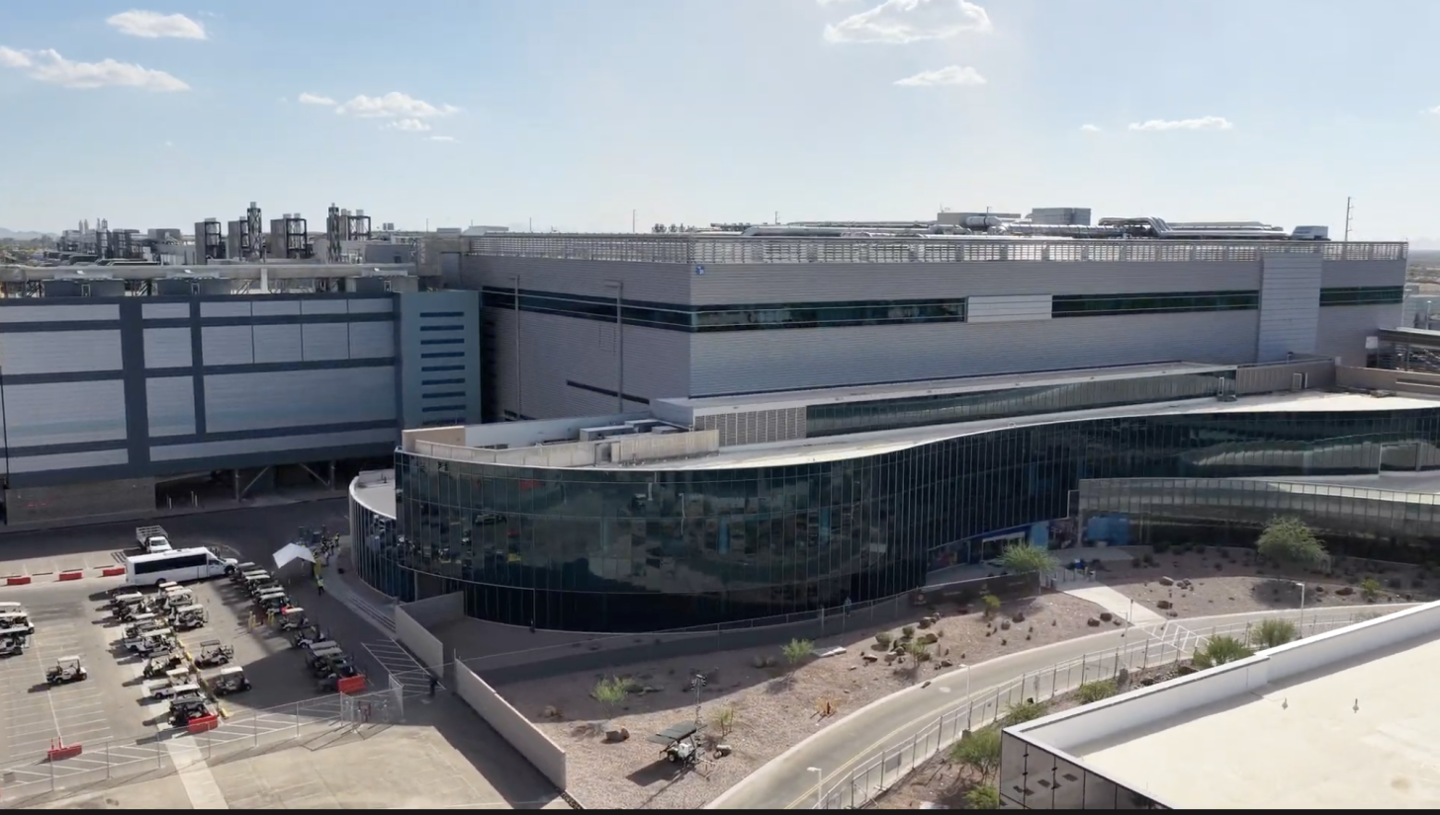
英特尔周一尾盘下跌0.8%
Xin Lang Cai Jing· 2025-12-22 20:24
Core Viewpoint - Intel's primary issue is its unclear positioning as both a partner and a competitor, which affects its market trust and strategy [1][2]. Group 1 - Intel's stock fell by 0.8% on Monday [1][2]. - A former board member highlighted the need for Intel to clearly separate its product and foundry divisions to build trust with foundry customers [1][2]. - There is growing market interest in Intel's 14A and 18A process technologies [1][2].
英特尔盘前续涨超1% 英伟达50亿美元投资英特尔获美FTC批准
Xin Lang Cai Jing· 2025-12-22 09:39
上周五(19日)收涨1.49%的英特尔(INTC.US)今日美股盘前续涨1.52%,报37.38美元。消息面上,美国联 邦贸易委员会(FTC)已批准英伟达对英特尔的投资,但未披露交易的具体细节。今年9月,英伟达宣布将 向陷入困境的英特尔投资50亿美元,此举被视为对本土半导体产业的重要支持。 来源:滚动播报 ...
美股异动丨英特尔盘前续涨超1% 英伟达50亿美元投资英特尔获美FTC批准
Ge Long Hui· 2025-12-22 09:36
上周五(19日)收涨1.49%的英特尔(INTC.US)今日美股盘前续涨1.52%,报37.38美元。消息面上,美国联 邦贸易委员会(FTC)已批准英伟达对英特尔的投资,但未披露交易的具体细节。今年9月,英伟达宣布将 向陷入困境的英特尔投资50亿美元,此举被视为对本土半导体产业的重要支持。(格隆汇) (原标题:美股异动丨英特尔盘前续涨超1% 英伟达50亿美元投资英特尔获美FTC批准) ...
股价一年飙涨86%背后:英特尔(INTC.US)仍未获关键代工客户 14A工艺能否赢回苹果、英伟达?
智通财经网· 2025-12-22 07:05
Core Viewpoint - Intel is experiencing significant changes in 2025, including a new CEO and substantial investments, yet its fundamental narrative remains unchanged, particularly regarding its manufacturing sector which lacks a major external client [1][2]. Group 1: Company Developments - Intel's stock price has increased by 86% this year, outperforming major tech stocks and competitors like AMD [1]. - The company has received a $9 billion investment from the U.S. government, alongside $2 billion from SoftBank and $5 billion from Nvidia, which has boosted investor confidence [2][3]. - The appointment of CEO Chen Lifang in March 2025 has revitalized market confidence in Intel's potential transformation, despite the strategic direction remaining largely unchanged [2]. Group 2: Manufacturing Challenges - Intel's manufacturing division has fallen behind TSMC due to past missteps and poor investment decisions, resulting in a loss of market share to competitors like AMD and Arm [2]. - The previous CEO's aggressive transformation efforts to open the manufacturing division to external clients led to investor concerns due to the high costs and uncertainty of success [2]. - Analysts emphasize that Intel must prove its latest manufacturing processes, particularly the 14A process, to attract external clients and ensure the viability of its manufacturing business [4][5]. Group 3: Market Position and Competition - Intel's manufacturing business lacks a significant external customer, which is crucial for sustainable cash flow [1][2]. - Major potential clients like Nvidia, Apple, and Qualcomm are also competitors in Intel's product sector and have established long-term relationships with TSMC, complicating Intel's efforts to secure these clients [3]. - Analysts suggest that Intel has a 12 to 18-month window to secure a large external customer for the 14A process, which is critical for the success of its foundry business [5].
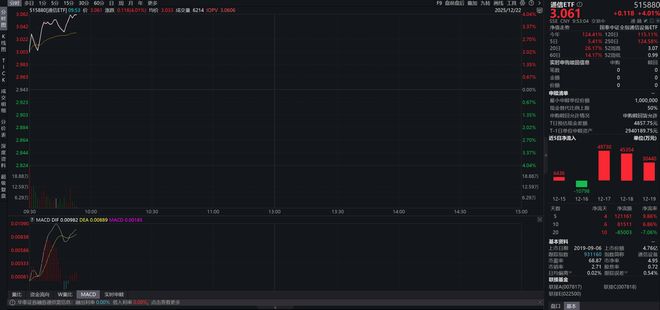
英伟达入股英特尔获批,通信ETF(515880)涨超4%,光模块占比超50%
Mei Ri Jing Ji Xin Wen· 2025-12-22 02:29
Group 1 - The U.S. Federal Trade Commission (FTC) has approved a $5 billion collaboration agreement between AI chip giants Nvidia and Intel [1][3] - Nvidia will purchase Intel shares at $23.28 per share to jointly develop AI and chip technologies for next-generation personal computing products and data centers [3] - This partnership aims to integrate Nvidia's GPU technology with Intel's CPU technology, enhancing their competitive position against rivals like TSMC and AMD [3] Group 2 - The communication ETF (515880) has seen significant inflows, with over 1.2 billion yuan net inflow in the past five days, and has risen over 120% year-to-date, making it the top-performing ETF in the market [1][10] - The ETF has a total scale exceeding 13 billion yuan, with nearly 50% of its holdings in optical modules, and over 20% in servers, indicating a strong focus on AI-related infrastructure [10][11] - The demand for AI applications is leading to cost savings of 9% to 11% across various industries, although it may also result in job reductions for certain workers [4]

英伟达被批准入股英特尔 联手重塑全球芯片产业格局
Zhong Guo Jing Ying Bao· 2025-12-21 13:58
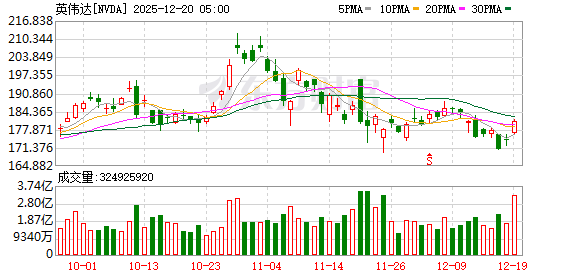
Group 1 - The core viewpoint of the news is that the FTC's approval of NVIDIA's $5 billion strategic investment in Intel is seen as a significant regulatory milestone that will accelerate the development of next-generation AI chips and reshape the global semiconductor industry amid increasing US-China tech competition [3][4]. - Following the announcement, Intel's stock rose to $36.82 per share, reflecting a 74.67% increase over the past six months, while NVIDIA's stock reached $180.99 per share, with a market capitalization of $4.4 trillion [1][6]. - The collaboration between NVIDIA and Intel involves the joint development of customized CPUs based on the x86 architecture, integrating NVIDIA's NVLink technology with GPUs to create a new heterogeneous computing platform for data centers and AI PCs [2][4]. Group 2 - The investment allows NVIDIA to reduce its reliance on TSMC for GPU manufacturing by potentially integrating Intel's capabilities, which could serve as a backup production route amid rising US-China tech decoupling risks [6]. - The partnership is expected to enhance Intel's manufacturing and transformation efforts under its "IDM 2.0" strategy, with the development of x86+RTX SoCs potentially marking its return to the high-performance computing market [6]. - AMD and ARM ecosystems are likely to face challenges as they may be excluded from the next generation of AI PCs and servers due to the deep integration of NVIDIA and Intel's technologies [5][7]. Group 3 - The approval of the investment by the FTC reflects a strategic endorsement of the collaboration, although there may be regulatory conditions to prevent the formation of new technological barriers [4]. - China's response to this partnership could involve regulatory scrutiny, as the Chinese market regulator has initiated an antitrust investigation into NVIDIA, which may limit the collaboration's scope in China [7][8]. - China is actively promoting its own semiconductor ecosystem, focusing on RISC-V architecture and domestic AI chip development, indicating a competitive landscape that extends beyond performance to standards and ecosystems [7][8].
英伟达入股英特尔 美国核准
Jing Ji Ri Bao· 2025-12-20 23:54
Group 1 - The U.S. Federal Trade Commission (FTC) has approved a $5 billion partnership agreement between NVIDIA and Intel, indicating that regulators do not see immediate antitrust concerns with this deal [1] - NVIDIA signed a strategic partnership agreement with Intel in September, where NVIDIA will purchase Intel shares worth $5 billion at a price of $23.28 per share to jointly develop AI and chip technologies for next-generation personal computing products and data centers [1] - This agreement aims to integrate NVIDIA's GPU technology with Intel's CPU technology to compete with rivals such as TSMC and AMD [1] Group 2 - NVIDIA currently holds approximately 85-95% of the data center GPU market, raising antitrust concerns, and completing the deal with Intel would further solidify its market position [1] - In 2022, the FTC blocked NVIDIA's $40 billion acquisition of ARM, but the approval of the NVIDIA-Intel deal suggests that regulators view this transaction as not immediately violating antitrust laws [1] - Analyst Stacy Rasgon from Bernstein noted that NVIDIA's current trading price is about 13% discounted compared to the Philadelphia Semiconductor Index, and historically, the price-to-revenue ratio is at 1, indicating a rare attractive level for NVIDIA's stock [1]
美国联邦贸易委员会(FTC):英伟达(NVDA.O)与英特尔(INTC.O)的交易已获美国反垄断机构批准。
Jin Rong Jie· 2025-12-19 17:08
本文源自:金融界AI电报 美国联邦贸易委员会(FTC):英伟达(NVDA.O)与英特尔(INTC.O)的交易已获美国反垄断机构批准。 ...
英特尔与火山引擎联手,开启「全局效率优化」时代
3 6 Ke· 2025-12-19 13:26
Core Insights - The global market is experiencing an unprecedented surge in computing power demand, particularly with the maturation of multimodal technologies and the deployment of complex enterprise-level AI agents [1] - The launch of the Doubao model 1.8 and the Seedance 1.5 pro video creation model at the 2025 Volcano Engine Winter FORCE Conference highlights the advancements in AI capabilities, with Doubao model ranking among the top globally in multimodal understanding and generation [1] - Doubao model's daily token usage has surpassed 50 trillion, representing a growth of over 10 times compared to the same period last year [1] Group 1: AI Transformation and Infrastructure - Volcano Engine's AI initiatives are positioned as a key driver for AI application across various industries, emphasizing the importance of data as a valuable resource in the new era [2] - The shift from web-based to agent-based cloud-native solutions marks a significant evolution in AI deployment, with 2025 anticipated as the year of the agent [2] - The introduction of the Seedance series models demonstrates a focus on performance and cost-effectiveness, catering to high-frequency creative needs while maintaining quality [2][3] Group 2: Technological Advancements - The Seedance 1.5 pro model features a native audio-video generation architecture that supports multiple elements, achieving millisecond-level audio-visual synchronization [3] - Collaborations with hardware partners, such as Intel, enhance the AI capabilities through optimized cloud-edge collaboration, maximizing AI potential [3][5] - The introduction of new computing instances has led to significant performance improvements across various applications, including a 20% increase in MySQL database performance and a 30% enhancement in Redis database performance [5] Group 3: Security and Reliability - The integration of Intel's TDX technology provides secure virtualized instances, ensuring data protection during AI application processes [5] - Hardware acceleration technologies, such as Intel® QAT, improve data compression efficiency and enhance data reliability through encryption [6] Group 4: Market Growth and Future Outlook - The Doubao model's daily usage has seen a staggering increase of 417 times since its launch, with over 100 members in the "trillion tokens club" [12] - The market for AI applications is expected to grow significantly, with projections indicating a potential 10-fold increase in the coming year [12] - The collaboration between Intel and Volcano Engine is redefining how enterprises access and utilize computing power, facilitating a transition towards a more efficient AI ecosystem [12]
