BeiGene(06160)

Search documents
百济神州1月22日获融资买入5186.56万元,融资余额8.64亿元
Xin Lang Cai Jing· 2026-01-23 01:40
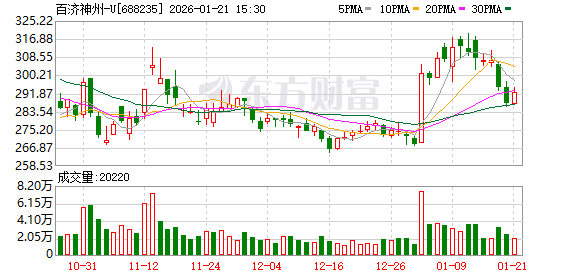
Group 1 - The core viewpoint of the news is that BeiGene's stock performance and financing activities indicate a mixed sentiment among investors, with a notable increase in shareholder numbers and significant revenue growth reported [1][2]. Group 2 - On January 22, BeiGene's stock fell by 1.77%, with a trading volume of 583 million yuan. The financing buy-in amount was 51.87 million yuan, while the financing repayment was 43.98 million yuan, resulting in a net financing buy of 7.89 million yuan. The total financing and securities balance reached 871 million yuan [1]. - As of January 22, BeiGene's financing balance was 864 million yuan, accounting for 2.61% of its market capitalization, which is below the 40th percentile level over the past year, indicating a low financing level [1]. - On the same day, BeiGene's securities lending saw a repayment of 2,694 shares and a sale of 32 shares, with a selling amount of 9,193.60 yuan. The securities lending balance was 727.21 million yuan, exceeding the 50th percentile level over the past year, indicating a high level of securities lending [1]. - As of September 30, BeiGene had 36,200 shareholders, an increase of 55.33% from the previous period, while the average number of circulating shares per person decreased by 35.79% to 3,195 shares [2]. - For the period from January to September 2025, BeiGene reported a revenue of 27.595 billion yuan, representing a year-on-year growth of 44.21%, and a net profit attributable to shareholders of 1.139 billion yuan, reflecting a significant increase of 130.88% [2]. - Among the top ten circulating shareholders as of September 30, 2025, notable changes included a decrease in holdings by several funds, while new shareholders entered the list, indicating a shift in institutional interest [2].
百济神州:2025年上半年,欧洲区域实现营业收入19.39亿元
Zheng Quan Ri Bao· 2026-01-21 13:40
Group 1 - The core viewpoint of the article highlights that BeiGene has received approval for certain indications of its products, Baiyueze® and Baizean®, from the European Commission, enabling sales through distributors or direct hospital distribution [2] - In 2024, the revenue from the European region is projected to be 2.64 billion yuan, accounting for 9.7% of the company's total revenue for that year [2] - For the first half of 2025, the European region is expected to generate revenue of 1.939 billion yuan, representing 11.1% of the company's revenue for that period [2]

百济神州:在多特异性抗体、ADC等关键领域不断深化布局,2026年起预计每年将有8到10个新分子实体进入临床
Jin Rong Jie· 2026-01-21 08:16
Core Viewpoint - The company is focusing on accelerating the development of innovative drugs through its strong oncology research team and strategic global clinical development capabilities, aiming to become a leading innovator in cancer treatment [1]. Group 1: Company Strategy and Development - The company has one of the largest oncology clinical research teams in the industry and is leveraging this to enhance its innovative drug offerings [1]. - In the past 18 months, the company has advanced 15 new molecular entities into clinical development, covering various treatment modalities [1]. - From 2026 onwards, the company expects to introduce 8 to 10 new molecular entities into clinical development each year, signaling a new wave of innovation [1]. Group 2: Pipeline and Future Prospects - Several products in the company's pipeline, including CDK4 inhibitors, B7-H4 ADC, PRMT5 inhibitors, GPC3x41BB bispecific antibodies, and CEA ADC, are expected to enter late-stage clinical development by 2026 [1]. - The company is committed to building a sustainable competitive advantage and will continue to invest in a rich and innovative R&D pipeline [1]. - The company aims to actively seek and execute business expansion opportunities that create long-term value [1].
2025年药品BD出海总结
Southwest Securities· 2026-01-20 11:37
Investment Rating - The report indicates a significant acceleration in BD (Business Development) overseas for Chinese innovative drugs, suggesting a positive investment outlook for the industry [3]. Core Insights - The number of BD projects, upfront payments, and total amounts for Chinese pharmaceutical companies significantly increased in 2025, with 165 projects, over $7.03 billion in upfront payments (up 226.8% year-on-year), and a total amount of $136.68 billion (up 192.2% year-on-year) [2][7]. - The report highlights a focus on dual antibodies (双抗), antibody-drug conjugates (ADC), GLP-1 receptor agonists (GLP1RA), and small nucleic acids as key areas for BD overseas [2][3]. Summary by Sections BD Project Growth - In 2025, the quarterly breakdown of BD projects shows 41, 43, 30, and 51 projects in Q1, Q2, Q3, and Q4 respectively, with significant year-on-year increases [2][7]. - Upfront payments for each quarter were $0.9 billion, $2.0 billion, $1.86 billion, and $2.27 billion, reflecting substantial growth rates [2][7]. Outbound BD Models - The predominant model for BD remains license in/out, while the NewCo/Co-CoJV model is gaining attention, with limited successful cases of independent commercialization [2][12][13]. - In 2025, MNCs (Multinational Corporations) accounted for $4.71 billion in upfront payments, representing 67% of total BD upfront payments [12]. Key Drug Categories - Dual antibodies saw a remarkable increase, with $3.5 billion in upfront payments (up 414.7%) and a total amount of $21.85 billion (up 361.5%) in 2025 [2][18]. - ADCs emerged as a significant focus, with $1.63 billion in upfront payments (up 676.2%) and a total amount of $21.13 billion (up 390.6%) [2][26]. - GLP-1RA projects achieved $470 million in upfront payments, marking a 109.8% increase, with a total amount of $9.6 billion [2]. NewCo Model - The NewCo model has facilitated overseas BD, with a total of $350 million in upfront payments and $13.74 billion in potential total amounts from 2023 to 2025 [17]. - In 2025, NewCo projects secured $110 million in upfront payments and $4.76 billion in potential total amounts [17]. Clinical Development Stages - Approximately 62% of molecules were in early clinical stages (pre-clinical to before Phase II) at the time of BD, indicating a trend towards early-stage licensing [8][9].


中美创新药,必有一战
3 6 Ke· 2026-01-19 12:39
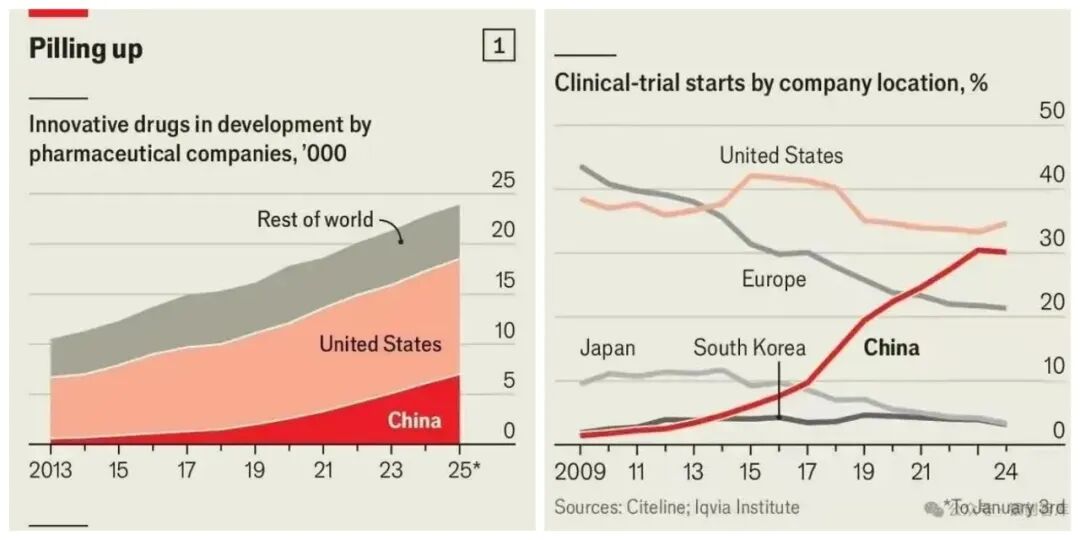
Core Viewpoint - The Chinese innovative drug sector is experiencing rapid growth, positioning itself as a global leader in drug development, with significant investments and collaborations from major pharmaceutical companies [2][8][30]. Group 1: Market Dynamics - The price of experimental monkeys has surged from 3,000 yuan to 100,000 yuan, indicating a high demand in the innovative drug sector [1]. - By 2025, China is projected to rank second globally in new drug clinical trials, with its pipeline accounting for 30% of the global total [2]. - In 2024, Chinese innovative drug companies completed 94 overseas licensing transactions, representing 44% of the national total, with over 100 transactions exceeding $100 billion in the first ten months of 2025 [6][30]. Group 2: Challenges in Traditional Pharmaceutical Sector - The generic drug sector is facing significant challenges, with a projected 5.5% decline in revenue for 2024 and over 30% of companies experiencing losses [5]. - Major pharmaceutical companies are increasingly collaborating with Chinese innovative drug firms to mitigate the risks associated with patent expirations, which could lead to a revenue gap exceeding $300 billion in the next five years [10][30]. Group 3: Advantages of Chinese Innovative Drugs - China offers a cost-effective and efficient environment for drug development, with clinical trial costs significantly lower than in the U.S. [20][21]. - The average time for clinical trial approvals in China has been reduced from 60 to 30 working days, and the average new drug application approval time has decreased to approximately 130 days [14]. - Chinese pharmaceutical companies are increasingly moving from "me-too" and "me-better" drugs to original innovations, with a notable increase in the number of innovative drug projects [27]. Group 4: Global Positioning and Future Outlook - Despite the rapid growth of Chinese innovative drugs, the overall market value of Chinese biotech companies remains significantly lower than their U.S. counterparts, capturing only 5% to 10% of global new drug revenues [30][31]. - Chinese companies are establishing commercial centers in global pharmaceutical hubs to enhance their commercialization capabilities, marking a shift towards becoming major players in the global market [37][38]. - The transition from biotech firms to large multinational pharmaceutical companies is seen as a critical step in the global battle for market share and innovation [38].



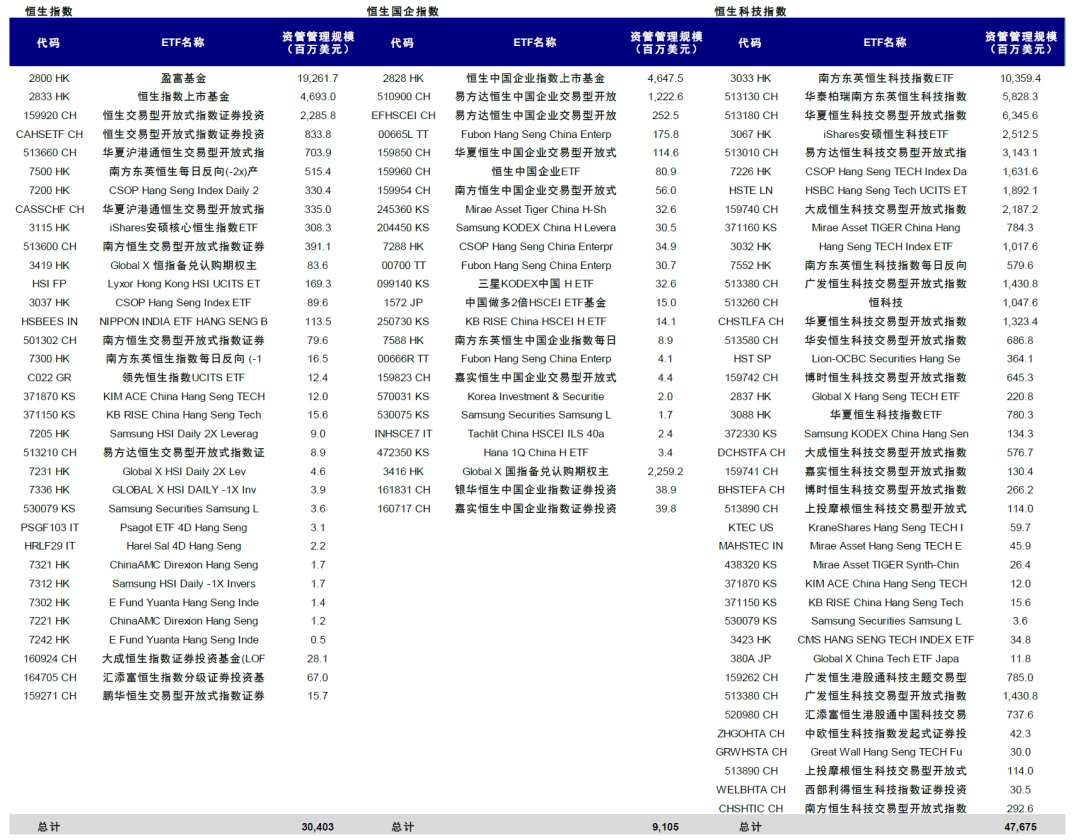
中金港股通与恒指调整预览:紫金黄金国际(02259)等有望纳入恒指 预计44只公司有望入港股通
智通财经网· 2026-01-19 06:20
Core Viewpoint - The Hang Seng Index Company will announce the results of the Hang Seng Index adjustments on February 13, 2026, with implementation on March 9, 2026. This adjustment will affect the investment scope of the Stock Connect program between Shanghai, Shenzhen, and Hong Kong [1][7]. Group 1: Hang Seng Index Adjustments - Companies such as Zijin Mining International, BeiGene, Yum China, Xpeng Motors, China Pacific Insurance, CanSino Biologics, and Laopuqin Gold are potential candidates for inclusion in the Hang Seng Index based on market capitalization and industry representation [2][3]. - Historical data indicates that actual results may differ from quantitative predictions, as seen with Yum China and BeiGene, which were previously forecasted to be included but were not due to subjective criteria in the index inclusion standards [2][3]. Group 2: Impact on Stock Connect - The adjustments to the Hang Seng Index will directly influence the investment scope of the Stock Connect program, with an estimated 44 stocks expected to be eligible for inclusion, including JD Industrial, East Asia Bank, and Dippu Technology [4][6]. - The methodology for calculating the average market capitalization for index adjustments has been optimized, which may affect the eligibility of stocks for inclusion in the Stock Connect [4][5]. Group 3: Exclusions from Stock Connect - Approximately 25 stocks may be removed from the Stock Connect due to low market capitalization or other factors, including Youbao Online and Automotive Street [6]. - Companies expected to delist from the Hong Kong Stock Exchange will also be removed from the Stock Connect trading [6].
CXO-多家公司年报预告超预期-JPM-大会亮点不断
2026-01-19 02:29
Summary of Conference Call Records Industry Overview - The conference call primarily discusses the biopharmaceutical industry, focusing on several key companies and their projected performance for 2025 and beyond. The overall sentiment reflects a robust growth trajectory within the sector. Key Companies and Their Projections 1. WuXi AppTec (药明康德) - Expected revenue for 2025 is 454.56 billion CNY, a year-on-year increase of 15.84% - Adjusted net profit is projected to be 149.57 billion CNY, up 41.33%, with total net profit reaching 191.51 billion CNY, a 102.65% increase [2] - The company has 24 GLP-1 drug candidates, with 15 in Phase II and III clinical trials, indicating strong pipeline growth [4] 2. Kanglong Chemical (康龙化成) - Anticipates revenue between 138.72 billion CNY and 142.4 billion CNY, reflecting a growth of 13%-16% - Adjusted net profit is expected to be between 17.68 billion CNY and 18.48 billion CNY, a growth of 10%-15% [2] 3. Sunway Pharma (阳光诺和) - Projected revenue between 1.192 billion CNY and 1.37 billion CNY, a growth of 10.57%-27.15% - Expected net profit between 190 million CNY and 229 million CNY, a growth of 7.69%-29.23% [2] 4. AstraZeneca (阿斯利康) - Focused on cardiovascular, ADC, next-generation IO, and cell therapy TCE areas - Key clinical data readouts expected in 2026, which may impact market dynamics [5] 5. Gilead Sciences (吉利德) - Key projects include Cloud Native Top two ADC, expected to show promising data in TNBC treatment and potential approval in the second half of the year [8] - Anticipates significant changes in the first-line triple-negative breast cancer market due to the SG molecule [8] 6. DZD Pharma (迪哲医药) - DZD6,008 shows significant efficacy in non-small cell lung cancer (NSCLC) with an ORR of 60% and PFS exceeding 10 months [3][16] Clinical Trials and Data Readouts - Multiple companies, including Gilead, AstraZeneca, and others, are set to release important clinical trial data in 2026, which could reshape competitive dynamics in the NSCLC market [16] - AstraZeneca's ADC project 18.2 is expected to have significant clinical data readouts in 2026, with a focus on large-scale Phase III trials [7] Strategic Collaborations and Market Expansion - WuXi Biologics (药明生物) has signed a strategic cooperation memorandum with Qatar Free Zone Authority to expand into the Middle East market [4] - The conference highlighted the increasing participation of Chinese companies in the global pharmaceutical market, particularly in the dual-antibody and ADC sectors [22] Emerging Trends and Innovations - The industry is witnessing a shift towards L2.0 and ADC combinations, which are expected to become the next wave of drug development [17][18] - The importance of speed and mechanism synergy in new drug development was emphasized, indicating that early-stage projects have a higher success rate [18] Conclusion - The biopharmaceutical industry is poised for significant growth, with several companies reporting strong projections and innovative clinical developments. The upcoming clinical data releases in 2026 are anticipated to have a substantial impact on market dynamics and competitive positioning within the sector.


中国创新药交出“黄金答卷” 全年76个创新药获批
Xin Lang Cai Jing· 2026-01-17 00:12
Core Insights - In 2025, China's innovative pharmaceutical industry reached a "golden moment" with 76 innovative drugs approved, over 80% of which were domestically developed, and total licensing transaction amounts exceeding $130 billion, marking a historical high [2][5] - The surge in innovative drugs reflects a significant shift from quantity to quality, with over one-third of the approved drugs targeting cancer treatment, and a notable presence of GLP-1 drugs for metabolic diseases [3][4] - The capital market responded positively, with the Hong Kong innovation drug index rising by 66.52%, outperforming the Hang Seng Index, indicating strong market confidence in the sector [9] Group 1: Innovative Drug Approvals - A total of 76 innovative drugs were approved in 2025, significantly higher than the 48 approved in 2024, including 47 chemical drugs, 23 biological products, and 6 traditional Chinese medicines [2] - Among the approved chemical drugs, 80.85% were domestically developed, while 91.30% of biological products were also from domestic sources, showcasing the dominance of local innovation [2] Group 2: Market Trends and Drug Development - The oncology sector led the innovation with over 20 drugs, accounting for approximately one-third of the total, while metabolic diseases represented about 20% of the approvals, highlighting the diverse therapeutic areas being addressed [3] - The approval of first-in-class drugs in China, with 4 out of 11 being domestically developed, signifies a shift towards more innovative and effective treatments available to patients [4] Group 3: Licensing and International Collaboration - The total value of licensing transactions for Chinese innovative drugs surpassed $130 billion in 2025, with over 150 deals, reflecting a significant increase compared to 2024 [5][6] - Notable collaborations included a $10.8 billion deal between Innovent Biologics and Roche, and a $12.5 billion upfront payment from Pfizer to 3SBio, indicating a trend towards deeper strategic partnerships [5][6] Group 4: Capital Market Performance - The performance of the innovative drug sector in the capital market was robust, with the Hong Kong innovation drug index increasing by 66.52%, and the CS innovation drug index in A-shares rising by 19.34% [9] - The successful commercialization of leading biotech companies like BeiGene and Innovent Biologics demonstrates the growing profitability and market presence of Chinese innovative drug firms [9] Group 5: Future Outlook - The ongoing reforms in drug approval processes and supportive policies are expected to further enhance the development of innovative drugs in China, positioning the country as a key player in global pharmaceutical innovation [8][10] - Predictions indicate that the next five years will see an increase in the proportion of original innovative drugs, with a focus on balancing scientific exploration and commercial value [11][12]
JPM 2026:AI破局,肥胖引爆,巨头血战新王座
Xin Lang Cai Jing· 2026-01-15 14:15
Core Insights - 2026 is identified as a pivotal year for transformation and output in the global biopharmaceutical industry, with major companies revealing strategic developments at the JMP conference [1] - The industry is experiencing extreme differentiation, with ADC and GLP-1 seen as key growth engines for the next five years, while mRNA, siRNA, and RLT are transitioning from concepts to clinical norms [1][9] - The BD strategies are becoming more precise, with 2025's small-scale acquisitions starting to yield results, and the logic behind mergers and acquisitions in 2026 expected to diversify [1] Hot Track Dynamics: Dual Drivers of Technology Iteration and Indication Expansion - ADC remains a leading player in the oncology sector, with Merck advancing multiple ADC assets through collaboration with Daiichi Sankyo [12] - BeiGene views ADC as a core technology and is actively promoting drug accessibility globally [12] - Eli Lilly has completed several ADC-related transactions to enhance its capabilities in cancer treatment [12] Weight Management Market Transition - The weight management market is shifting from simple weight loss to comprehensive management of metabolic syndrome, with Eli Lilly focusing on AI-driven drug discovery and direct patient engagement [14] - Roche's acquisition of Carmot Therapeutics enhances its pipeline with new metabolic therapies [14] - Sanofi is expanding the indications for its core asset Dupixent and advancing its autoimmune pipeline [14] Key Corporate Strategic Planning: Core Track Deepening and Platform Layout - Eli Lilly's strategy focuses on obesity and AI-driven drug development, with a projected investment of up to $1 billion in collaboration with NVIDIA [15] - Pfizer aims to maximize core transaction value and apply AI across its business chain, targeting a $150 billion market in obesity by 2030 [15] - Amgen is accelerating the integration of biotechnology and AI, with a focus on rare diseases and partnerships in China [16] BD Trends: Core Logic of Track Reinforcement and Ecological Synergy - The pharmaceutical industry is seeing a concentration of mergers and acquisitions in ADC and bispecific antibodies, with major companies acquiring key assets and technology platforms [17] - Big Pharma is shifting from scale expansion to pipeline restructuring to avoid revenue cliffs due to upcoming patent expirations [18] - The focus is on mid-stage assets with immediate Phase 3 potential, which are expected to have a premium advantage over early-stage assets [18] Industry Outlook - The biopharmaceutical industry is entering an "innovation harvest period" from 2026 to 2030, with GLP-1 drugs evolving into comprehensive metabolic management platforms [19] - The market for GLP-1 receptor agonists in China is projected to reach approximately 38.3 billion yuan by 2030 [19] - The commercialization of cutting-edge therapies is approaching a "singularity," with advancements in cell and gene therapies and RNA therapies expected to overcome production and reimbursement challenges [19][20]


出发前就约了四五十家公司洽谈!“全球医药行业春晚”的中国面孔:参会者背景更多元,肿瘤药不再是“独宠”
Mei Ri Jing Ji Xin Wen· 2026-01-15 13:56
Core Insights - The 44th J.P. Morgan Healthcare Conference (JPM) is a significant event in the global healthcare sector, attracting over 8,000 participants, with a strong representation from biotechnology and pharmaceutical companies [1][3] - Chinese pharmaceutical companies are increasingly participating in JPM, focusing on collaboration and showcasing their innovative pipelines, particularly in the context of a booming merger and acquisition landscape in the industry [1][4] Group 1: Conference Overview - The conference is recognized as a "barometer" for development and investment in the pharmaceutical sector, featuring industry leaders and innovators discussing trends and opportunities [3] - Key areas of focus at this year's conference include biotechnology and pharmaceuticals, which account for 35% and 33% of participating companies, respectively [3] Group 2: Chinese Pharmaceutical Companies - At least 30 Chinese pharmaceutical companies are participating, with several being regular attendees, indicating a growing presence in the global market [4][5] - Notable Chinese companies presenting include BeiGene, Zai Lab, and Legend Biotech, with significant advancements in their clinical pipelines being highlighted [4] Group 3: Investment Trends - Investors are increasingly interested in the integration of AI in pharmaceuticals and how multinational companies are addressing patent cliffs and BD strategies [4][5] - The perception of Chinese pharmaceutical companies is shifting from mere asset providers to co-creators of global pharmaceutical innovation, reflecting their growing capabilities [9] Group 4: Company Innovations - Companies like China Biologic Products are undergoing significant innovation transformations, aiming for over 50% of their revenue from innovative products by 2025 [7] - Yuyuan Pharmaceutical, previously seen as a generic drug company, is transitioning to focus on nucleic acid and peptide innovative drugs, indicating a strategic shift in their business model [8]