BeiGene(06160)

Search documents
海通国际:维持百济神州“优于大市”评级 26年收入利润有望稳步提升
智通财经网· 2026-02-27 05:59
Core Viewpoint - Haitong International maintains an "outperform" rating for BeiGene (06160), with revenue forecasts for FY26 and FY27 at $6.4 billion and $7.1 billion respectively, and slightly adjusts net profit forecasts to $610 million and $1.04 billion for the same periods [1] Group 1: Financial Performance - In 2025, BeiGene achieved revenue of $5.34 billion, a year-on-year increase of 40%, with product revenue of $5.28 billion, slightly exceeding previous management guidance [1] - The net profit attributable to shareholders for 2025 was $290 million, marking a turnaround in annual recurring business [1] - Management anticipates revenue of $6.2 billion to $6.4 billion for 2026, with GAAP operating profit projected at $700 million to $800 million [1] Group 2: Product Performance - Zepzelca generated revenue of $3.93 billion for the year, a 49% increase year-on-year, with U.S. sales at $2.8 billion (up 45%), European sales at $600 million (up 66%), and Chinese sales at $340 million (up 33%) [2] - The quarterly revenue for Zepzelca in Q4 2025 was $1.15 billion, reflecting a 10% increase quarter-on-quarter and a 38% increase year-on-year [2] - Tislelizumab achieved annual revenue of $740 million, a 19% increase year-on-year, with Q4 2025 revenue of $180 million, up 18% year-on-year [2] - Collaborative product sales in China totaled $620 million for the year, a 20% increase, driven by growth in Duzallo and Belantamab Mafodotin [2] Group 3: Upcoming Catalysts - Key catalysts for 1H26 include the approval of Sotigalimab for R/RMCL in the U.S., interim analysis of Zepzelca in 1L-MCL Phase III, initiation of CDK4 in 1L-HR+ HER2- BC Phase III, and data readout for BTKCDAC in moderate to severe chronic spontaneous urticaria Phase Ib [3] - In 2H26, key catalysts include submission of BTKCDAC for accelerated approval based on Phase II clinical data for R/R-CLL, initiation of Sotigalimab in a triplet regimen for 2L+ multiple myeloma Phase III, and expected initiation of BGB-B2033 (GPC3x41BB) for gastrointestinal cancer in a potential registrational Phase II study [3]

海通国际:维持百济神州(06160)“优于大市”评级 26年收入利润有望稳步提升
智通财经网· 2026-02-27 05:57
Group 1 - The core viewpoint of Haitong International maintains an "outperform" rating for BeiGene (06160), with revenue forecasts for FY26 and FY27 at $6.4 billion and $7.1 billion respectively, and a slight adjustment of net profit forecasts to $610 million and $1.04 billion [1] - The company achieved revenue of $5.34 billion in 2025, a year-on-year increase of 40%, with product revenue of $5.28 billion, slightly exceeding previous management guidance [1] - Management anticipates revenue of $6.2 billion to $6.4 billion in 2026, with GAAP operating profit projected at $700 million to $800 million [1] Group 2 - The revenue for Zebutini reached $3.93 billion in 2025, reflecting a 49% year-on-year growth, with U.S. sales at $2.8 billion (up 45%), European sales at $600 million (up 66%), and Chinese sales at $340 million (up 33%) [2] - The revenue for Tislelizumab was $740 million in 2025, showing a 19% year-on-year increase, with Q4 2025 revenue at $180 million (up 18%) [2] - Revenue from collaborative products in China was $620 million, a 20% increase, driven by growth in Duzallo and Belantamab Mafodotin [2] Group 3 - Key catalysts for 1H26 include the approval of Sotigalimab for R/RMCL in the U.S., interim analysis of Zebutini in the Phase III trial for 1L MCL, and the expected initiation of Phase III clinical trials for CDK4 in HR+ HER2- BC [3] - In 2H26, key catalysts include the submission of an accelerated approval application for BTKCDAC based on Phase II clinical data for R/R CLL, initiation of a Phase III trial for Sotigalimab in combination therapy for 2L+ multiple myeloma, and expected initiation of a potential registration Phase II study for BGB-B2033 in gastrointestinal cancer [3]
港股速报|港股小幅高开 腾讯反弹 百度公布财报业绩超预期
Mei Ri Jing Ji Xin Wen· 2026-02-27 02:54
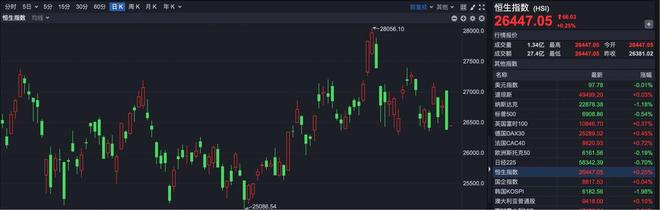
Core Viewpoint - The Hong Kong stock market shows a slight upward trend but remains weak overall, with the Hang Seng Index and Hang Seng Tech Index experiencing minor gains [1][2]. Company Performance - Baidu Group (HK09888) reported a total revenue of 129.1 billion yuan for 2025, with AI business revenue reaching 40 billion yuan; in Q4 2025, total revenue was 32.7 billion yuan, with AI business income accounting for 43% of general business revenue, exceeding market expectations [4]. - BeiGene (HK06160) achieved its first annual profit, with total revenue of 38.205 billion yuan, a year-on-year increase of 40.4%; product revenue reached 37.77 billion yuan, up 39.9%, driven by sales growth of drugs like Zebrutinib and Tislelizumab, with sales from licensed products from Amgen amounting to 3.471 billion yuan, a 33.6% increase [4]. - Tencent Holdings (HK00700) saw a slight rebound in early trading, with a gain of 1.07% [4]. Market Trends - Tencent's app, Tencent Yuanbao, re-entered the top 10 of the Apple App Store free app rankings, indicating a recovery in user demand post-Spring Festival [5]. - The technology sector stocks collectively rebounded, with Alibaba and JD.com showing slight increases, while the automotive sector weakened, with NIO dropping nearly 1% [5]. IPO Market Outlook - Multiple institutions express optimism regarding the Hong Kong IPO market for 2026, with UBS predicting a financing scale exceeding 300 billion HKD and around 150-200 listings [6]. - Huatai Securities estimates the main board IPO financing scale at approximately 310 billion HKD, with around 100 new companies [6]. - Deloitte forecasts about 160 new listings in the Hong Kong stock market, with a financing amount not less than 300 billion HKD [6]. - PwC anticipates around 150 new listings, with total fundraising between 320 billion to 350 billion HKD, potentially ranking among the top three globally [6]. - Analysts from China Merchants Securities note that the current valuation of the Hong Kong technology sector is at a historical low, suggesting it is undervalued in the context of the AI development and technology-driven growth era [6].



百济神州穿越“死亡谷”:首次实现全年盈利,下一波增长点在哪?
2 1 Shi Ji Jing Ji Bao Dao· 2026-02-27 02:30
Core Insights - BeiGene reported a total revenue of 38.205 billion RMB for the fiscal year 2025, marking a 40.4% year-on-year increase, driven by product revenue growth and improved operational efficiency [1] - The net profit attributable to the parent company reached 1.422 billion RMB, indicating a significant turnaround from previous losses [1] - The company's flagship product, Brukinsa (Zebutinib), achieved global sales of 28.067 billion RMB, a 48.8% increase, solidifying its position as a global leader in the BTK inhibitor market [1][2] Revenue Breakdown - Product revenue for BeiGene reached 37.770 billion RMB, up 39.9%, primarily due to the sales growth of Brukinsa, Amgen-licensed products, and Tislelizumab [1][2] - In the U.S. market, Brukinsa's annual sales were 20.206 billion RMB, a 45.5% increase; in Europe, sales reached 4.265 billion RMB, up 66.4%; and in China, sales were 2.472 billion RMB, a 33.1% increase [1] Product Approvals and Pipeline - Brukinsa is the most widely approved BTK inhibitor globally, with approvals in over 75 markets [2] - The company plans to conduct a mid-term analysis of the MANGROVE trial in the first half of 2026, comparing Brukinsa combined with Rituximab against Bendamustine plus Rituximab for adult patients with mantle cell lymphoma [2] - Tislelizumab's global sales reached 5.297 billion RMB, an 18.6% increase, with ongoing efforts to submit new indications for regulatory approval in the U.S. and China [2] Market Position and Future Outlook - Analysts noted that BeiGene's transition from a "cash-burning machine" to a "cash-generating machine" reflects a significant shift in the global strategy for Chinese innovative drugs [3] - The company is expected to generate revenue between 43.6 billion and 45 billion RMB in 2026, with a gross margin projected to remain high at around 80% [4] - Concerns remain regarding the pipeline for new products following Brukinsa and Tislelizumab, with several late-stage candidates nearing commercialization [4][5] Strategic Initiatives - BeiGene is exploring the introduction of BTK inhibitors and IRAK4 degraders into autoimmune diseases, which could expand its market reach beyond oncology [5] - The company has received priority review status from the FDA for its BCL2 inhibitor, which is aimed at treating adult patients with relapsed/refractory mantle cell lymphoma [4][5] - The market is keenly awaiting the potential of new innovative candidates to emerge from BeiGene's pipeline, which could further enhance its valuation in the long term [5]
百济神州穿越“死亡谷”:首次实现全年盈利 下一波增长点在哪?
2 1 Shi Ji Jing Ji Bao Dao· 2026-02-27 02:29
Core Viewpoint - BeiGene has reported a significant increase in revenue and net profit for the fiscal year 2025, indicating a successful transition from a loss-making entity to a profitable one, driven by strong product sales and effective cost management [1][3]. Financial Performance - Total revenue for 2025 reached RMB 38.205 billion, a year-on-year increase of 40.4% [1]. - Net profit attributable to the parent company was RMB 1.422 billion [1]. - Product revenue amounted to RMB 37.770 billion, reflecting a growth of 39.9% [1]. Product Performance - The sales of the leading product, Brukinsa® (Zebutinib), reached RMB 28.067 billion, marking a 48.8% increase [1]. - In the U.S., Brukinsa® sales were RMB 20.206 billion, up 45.5% [1]. - In Europe, sales were RMB 4.265 billion, a growth of 66.4% [1]. - In China, sales reached RMB 2.472 billion, increasing by 33.1% [1]. Market Expansion and Clinical Trials - Brukinsa® is now approved in over 75 markets globally, establishing itself as the most widely approved BTK inhibitor [2]. - Upcoming clinical trials include a mid-term analysis of the MANGROVE trial for Brukinsa® in combination with Rituximab for adult patients with mantle cell lymphoma [2]. - The sales of another key product, Tislelizumab (百泽安®), reached RMB 5.297 billion, an 18.6% increase [2]. Future Projections - Revenue for 2026 is projected to be between RMB 43.6 billion and RMB 45 billion, with a gross margin expected to remain high at around 80% [4]. - Research and development expenses are anticipated to be between RMB 33.3 billion and RMB 34.8 billion [4]. Pipeline and Innovation - The company is advancing several late-stage products in the hematologic oncology field, including the BCL2 inhibitor, which has received approval for its first global marketing application in China [4]. - The introduction of BTK inhibitors and IRAK4 degraders into autoimmune diseases represents a strategic expansion into non-oncology markets [5]. Market Position and Valuation - Despite achieving profitability, the company's market valuation remains high, with a significant price-to-earnings ratio, indicating that the market views it as a growth stock rather than a value stock [5].
未知机构:国泰海通医药百济神州重点推荐看好泽布替尼业绩兑现年内实体瘤进展-20260227
未知机构· 2026-02-27 02:25
Summary of Conference Call Records Company and Industry Involved - The conference call pertains to **百济神州 (BeiGene)**, a biopharmaceutical company focused on developing innovative medicines for cancer treatment, particularly in the field of hematology and oncology. Core Points and Arguments - **Performance of Zebutini**: The management team remains optimistic about the performance of Zebutini, despite the limited impact from the non-covalent BTK inhibitor Pirto. The efficacy comparison shows Zebutini with a median follow-up of 42.5 months and a PFS HR of 0.69, while Pirto has a median follow-up of 18.2 months with a PFS HR of 0.845 [1][2]. - **CLL Market Dynamics**: The company believes that current data indicates Pirto is unlikely to disrupt the CLL (Chronic Lymphocytic Leukemia) treatment landscape. The combination of Soron and Zanu presents a potential opportunity to expand into the CLL market, where ven-based FD and other therapies hold approximately 50% market share [2]. - **Upcoming Clinical Trials**: Three Phase III trials for BCL-2 inhibitors are set to commence, including one against AV in 2026. The company is also optimistic about the potential of its solid tumor POC assets to enter late-stage development, driven by external data catalysts [2]. - **CDK4 Inhibitors**: The CDK4 inhibitor shows better selectivity compared to Atirmociclib, with high ORR (Overall Response Rate) and reduced blood toxicity. The company plans to present CDK4i data at an academic conference [2]. - **B7-H4 ADC Development**: The B7-H4 ADC has demonstrated good efficacy and safety in gynecological tumors, leading to an accelerated internal development process [2]. - **PRMT5 Inhibitor**: This compound shows good brain permeability and selectivity, with promising clinical efficacy and safety [2]. - **FDA Fast Track Designation**: The GPC3 x 4-1BB bispecific antibody has received FDA fast track designation, indicating its potential significance in treatment [2]. - **Upcoming Approvals and Submissions**: The company anticipates several key milestones, including the approval of SoronRRMCL in the U.S. in the first half of 2026, and plans to submit an accelerated review application for BTK CDAC based on Phase II data in the same timeframe [2]. Other Important but Possibly Overlooked Content - The management emphasizes the strategic importance of entering new markets and expanding treatment options for CLL patients, which could significantly enhance the company's market position [2]. - The focus on clinical data and upcoming trials indicates a robust pipeline that could lead to future growth and revenue generation for the company [2].

打破美日垄断!中国PD-1抗癌药强势崛起,叫板BMS、默沙东等跨国龙头药企
Ge Long Hui· 2026-02-27 01:35
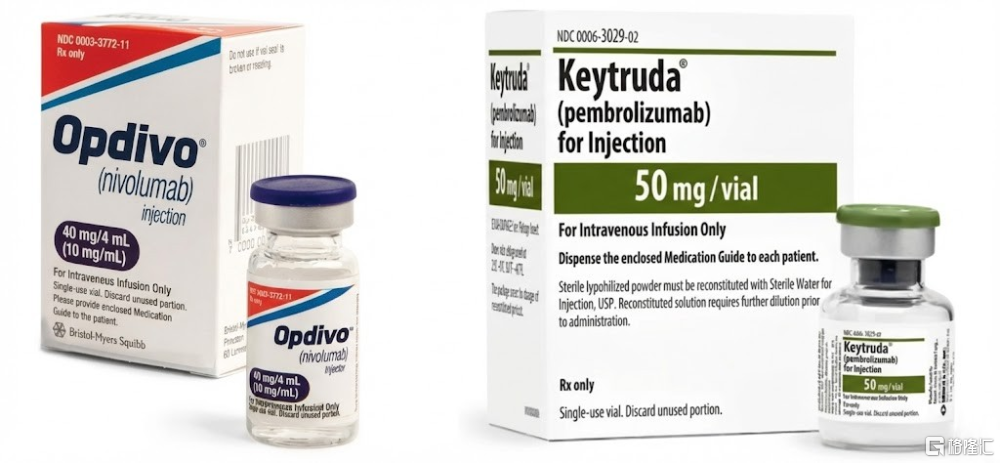
Core Insights - The introduction of PD-1 inhibitors in 2014 marked a significant turning point in the fight against cancer, with Bristol-Myers Squibb's Opdivo and Merck's Keytruda leading the charge in immunotherapy [1][3] - The competition between Opdivo and Keytruda has evolved over the years, with Keytruda ultimately becoming the top-selling drug globally by 2024 [21][22] Historical Context - The history of cancer immunotherapy began with William Coley's discovery in the late 19th century, which was followed by a long period of stagnation until the late 20th century when key immune cells were identified [4] - The discoveries of James Allison and Tasuku Honjo regarding CTLA-4 and PD-1, respectively, laid the groundwork for the development of PD-1 inhibitors [5][10] Drug Development - Opdivo was developed with strong backing from Bristol-Myers Squibb after acquiring Medarex in 2009, leading to its approval in Japan in 2014 [12] - Keytruda's development faced initial setbacks but was revitalized by Merck's strategic decision to conduct an unprecedented "super I phase" trial, leading to its approval shortly after Opdivo [14][15][16] Market Dynamics - In 2016, a critical competition occurred between Opdivo and Keytruda in the non-small cell lung cancer (NSCLC) market, which is the largest segment in oncology [17] - BMS's failure in the CheckMate-026 trial led to a significant drop in Opdivo's market position, while Merck's more selective approach in the KEYNOTE-024 trial resulted in Keytruda's success [18][19][20] Sales Performance - By 2024, Keytruda's sales reached $29.5 billion, marking an 18% increase and solidifying its position as the top-selling drug globally [21] - Opdivo, while still a major player, saw its sales decline but remained above the $10 billion mark, maintaining its status as a heavyweight in the market [22][23] Competitive Landscape - The global PD-1 inhibitor market is highly competitive, with 527 candidates in development as of early 2025, including 20 approved drugs [26][29] - In China, the market is characterized by intense competition among local manufacturers, with significant price reductions due to national healthcare negotiations [30][31] Future Outlook - Keytruda's core patent is expected to expire in 2028, potentially leading to a significant drop in sales as biosimilars enter the market [32] - A new challenger, Ivonescimab, has shown superior efficacy compared to Keytruda in clinical trials, indicating a shift towards dual-target therapies in cancer treatment [33][35]



智通港股早知道 | 中国AI调用量首超美国 百济神州(06160):2025年第四季度全球总收入同比增长33%
Zhi Tong Cai Jing· 2026-02-26 23:33
Group 1: AI Industry Insights - In February, China's AI model invocation volume surpassed that of the United States for the first time, reaching 41.2 trillion tokens compared to the U.S.'s 29.4 trillion tokens during the week of February 9-15 [1] - The following week, China's model invocation further increased to 51.6 trillion tokens, marking a 127% increase over three weeks, while U.S. model invocation dropped to 27 trillion tokens [1] - Four Chinese models ranked among the top five globally, indicating a collective rise of Chinese AI manufacturers rather than reliance on a single product [1] Group 2: Financial Performance and Developments - Baidu's core AI new business revenue exceeded RMB 11 billion in Q4 2025, accounting for 43% of its general business revenue [10] - The company reported a 6% quarter-over-quarter growth in general business revenue and a 28% increase in non-GAAP operating profit to RMB 2.8 billion [10] - BeiGene's global total revenue reached $1.5 billion in Q4 2025, a 33% year-over-year increase, with annual revenue of $5.3 billion, up 40% [11] Group 3: Corporate Actions and Market Movements - Several major Asian banks are preparing to bid for HSBC's retail business assets in Indonesia, with the estimated value of the assets exceeding $200 million [4] - Apple has agreed to double the price of Samsung's LPDDR5X chips for the iPhone 17 series, indicating a significant supply chain adjustment [5] - NIO's subsidiary GeniTech secured an investment of RMB 2.257 billion, maintaining a 62.7% controlling stake post-investment [9]
百济神州(06160):泽布放量符合预期,26年收入利润有望稳步提升
Haitong Securities International· 2026-02-26 23:30
Investment Rating - The report maintains an "Outperform" rating for BeiGene [2][14]. Core Insights - In FY25, BeiGene achieved revenue of USD 5.34 billion, representing a 40% year-over-year increase, with product revenue of USD 5.28 billion, slightly exceeding management's guidance [3][11]. - The net profit attributable to the parent company was USD 0.29 billion, a turnaround from a loss of USD 0.64 billion in FY24, indicating a successful operational recovery [3][11]. - Management projects FY26 revenue to be between USD 6.2 billion and USD 6.4 billion, with GAAP operating profit expected to be between USD 0.7 billion and USD 0.8 billion [3][11]. Financial Summary - Revenue growth is forecasted at 55% for FY25, 40% for FY26, and 20% for FY27 [9]. - Net profit is expected to grow significantly, with projections of USD 0.61 billion for FY26 and USD 1.04 billion for FY27, reflecting a 113% and 70% increase respectively [9][14]. - Gross profit margin is projected to remain strong at around 87.5% for FY26 and FY27 [9]. Sales Performance - Zanubrutinib generated full-year revenue of USD 3.93 billion, up 49% year-over-year, with significant contributions from the U.S. market [12]. - Tislelizumab achieved revenue of USD 0.74 billion, marking a 19% increase year-over-year [13]. - Collaboration product sales in China reached USD 0.62 billion, driven by growth in specific drugs [13]. Future Catalysts - Key catalysts for 1H26 include the approval of Sonrotoclax for R/R MCL and interim analysis of zanubrutinib in 1L MCL [16]. - In 2H26, significant events include the submission for accelerated approval of BTK CDAC and the initiation of a Phase 3 trial for Sonrotoclax in combination therapy for multiple myeloma [16].
华尔街见闻早餐FM-Radio | 2026年2月27日
Hua Er Jie Jian Wen· 2026-02-26 23:26
Market Overview - Nvidia's strong earnings report did not alleviate market concerns, leading to a nearly 5.5% drop in its stock, which negatively impacted the broader US stock market, AI concept stocks, and the semiconductor sector [2] - The Dow Jones Industrial Average saw a slight increase, while the Nasdaq Composite fell nearly 1.2%, almost erasing all gains from the previous day [2] - The yield on US Treasury bonds across various maturities fell by 3 to 4 basis points, with the 10-year yield reaching its lowest point since November 28 of last year [2] Company News - Baidu reported Q4 revenue of 32.74 billion yuan, with AI computing subscription revenue increasing by 143% year-on-year; the company anticipates AI cloud revenue to reach 30 billion yuan by 2025 [7] - CoreWeave's Q4 revenue doubled, with backlog revenue reaching 66.8 billion yuan, although losses unexpectedly widened, leading to a post-market drop in stock price [28] - Dell's earnings and guidance exceeded expectations, with AI server revenue expected to double this year, causing a stock price increase of over 12% in after-hours trading [29] - Netflix rejected a higher acquisition offer for Warner Bros. Discovery and announced a stock buyback plan, resulting in a 13% increase in after-hours trading [30] Industry Insights - The AI computing demand surge is driving significant growth in companies like Baidu and Chipone, with Chipone's revenue projected to grow by 35.77% year-on-year by 2025 [7][24] - The global AI model API aggregation platform OpenRouter reported that Chinese models surpassed US models in usage, indicating a strong growth momentum for Chinese AI firms [47] - SK Hynix and SanDisk are collaborating to standardize High Bandwidth Flash (HBF) technology, which aims to fill the storage gap between HBM and SSDs, expected to be integrated into major products by 2027-2028 [50]