BIDU(09888)

Search documents
提升企业合规经营水平 平台经济治理迈向标准化
Jing Ji Ri Bao· 2025-10-22 23:38
Core Insights - The establishment of the National Platform Economy Governance Standardization Technical Committee marks a significant step towards addressing long-standing regulatory challenges in the platform economy, aiming to create unified standards for high-quality development [1][3]. Group 1: Current State of Platform Economy - The platform economy in China has seen rapid growth, with major companies like Tencent, Alibaba, Douyin, and Baidu exceeding 1 billion users as of June this year [2]. - The average daily usage time of mobile internet in China has increased to 7.97 hours, with users engaging in 117.9 sessions per day [2]. - Despite growth, the platform economy faces significant consumer complaints, with operational internet service complaints reaching 62,720 in the first half of the year, a 17.98% increase year-on-year [2]. Group 2: Challenges in Platform Economy - Issues such as unfair rules, unreasonable fees, algorithm opacity, and frequent live-streaming irregularities are prevalent in the platform economy [3]. - The lack of unified standards and norms has led to deep-rooted challenges, including consumer dissatisfaction with product quality and service reliability [2][3]. Group 3: Importance of Standardization - Standardization is seen as a key to enhancing governance in the platform economy, filling gaps left by legal and administrative oversight [4]. - Standards can transform abstract legal principles into actionable technical specifications, facilitating more precise governance [4]. - The process of developing standards involves collaboration among various stakeholders, making it easier for platform companies to accept and adhere to the rules [4]. Group 4: Collaborative Standard Development - The standardization effort requires participation from regulatory bodies, enterprises, and industry organizations, particularly in the rapidly evolving live-streaming e-commerce sector [5]. - Local initiatives, such as Beijing's development of 43 local standards related to the platform economy, aim to support compliance and innovation while maintaining fair competition [6]. Group 5: Future Directions - The Platform Economy Governance Standardization Technical Committee plans to establish mechanisms for tracking the application and effectiveness of standards, alongside fostering pilot units to demonstrate best practices [6]. - Recommendations include tailoring standards to the specific characteristics of different platform services, such as online shopping and live-streaming, to provide clear operational guidelines [6].


Final Trades: Baidu, Coinbase, Delta, SLB


Youtube· 2025-10-22 22:36
Group 1 - The discussion includes a reference to a recent 20% retracement in a stock's movement, indicating a potential buying opportunity [1] - There is a mention of various companies and sectors, including Coinbase and SLB Corp, suggesting interest in these stocks [1] - The conversation reflects a casual tone, indicating a focus on market sentiment and trading strategies rather than detailed financial analysis [1]


百度高管谢广军被曝新增接管百度业务能效部门,聚焦智能云优化,此前因女儿“开盒事件”引关注
Sou Hu Cai Jing· 2025-10-22 20:04
Core Insights - Baidu's ACG Vice President Xie Guangjun has taken over the business efficiency department, which is part of the company's internal management adjustments [3] - Xie Guangjun has been with Baidu for many years and was promoted to Vice President in 2021, playing a key role in the development of Baidu's intelligent cloud business [3] - The intelligent cloud business is a major driver of Baidu's non-online marketing revenue growth, with a year-on-year increase of 12%, and AI-related revenue growing nearly threefold [3] Group 1 - The recent personnel change is viewed as part of Baidu's strategy to optimize operational efficiency within its intelligent cloud business [3] - Xie Guangjun's responsibilities may include enhancing operational efficiency and cost reduction for the intelligent cloud business [3] - The controversy surrounding Xie Guangjun's daughter, related to the "opening box incident," has led to speculation about his potential resignation, although he has now taken on new responsibilities [4][5] Group 2 - Baidu has not yet disclosed specific goals or directions for Xie Guangjun's new role in the business efficiency department [5]
Baidu to Bring Robotaxis Without Steering Wheels to Switzerland
Insurance Journal· 2025-10-22 10:32
Core Insights - Baidu Inc. and a Swiss Post subsidiary will begin autonomous vehicle testing in Switzerland by the end of this year, aiming to launch the world's first robotaxis without steering wheels to the public by 2027 [1][2] Group 1: Testing and Operations - Initial trials with safety personnel will commence, followed by driverless testing starting in late 2026, with regular operations expected to begin in the first quarter of 2027 at the latest [2] - The fleet will consist of the RT6, the latest generation of Apollo Go vehicles, featuring voice controls and massage functions for reclining seats, with the steering wheel removed once the service is fully operational [3] Group 2: Competitive Landscape - Competitors like Amazon's Zoox and Tesla are also developing vehicles without steering wheels, with Zoox's robotaxi designed as a shuttle and Tesla's Cybercab lacking both steering wheel and pedals [4] Group 3: Global Expansion - Baidu's entry into Switzerland is part of its broader global expansion strategy, including a partnership with Lyft to deploy vehicles in the UK and Germany by 2026, pending regulatory approval [5] - The company has received 50 licenses to test robotaxis in Dubai and is exploring markets in Australia and Southeast Asia [5]

“AI+真人医生”双轮驱动,打造全民健康服务新生态
Huan Qiu Wang· 2025-10-22 09:41
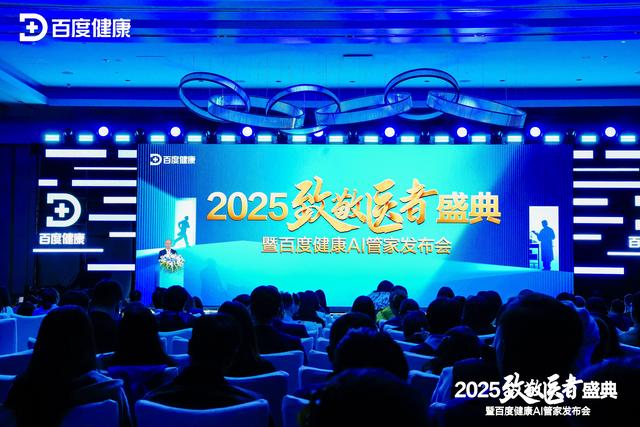
Core Insights - The article discusses the launch of Baidu Health's AI Health Steward, which combines AI technology with human oversight to enhance the reliability and effectiveness of AI medical products [1][3][4] Group 1: AI Health Steward Features - The AI Health Steward employs a dual assurance model of "AI + real person" to ensure both intelligence and safety in medical applications [1] - It addresses common issues in healthcare such as long wait times and inefficient communication between doctors and patients through three differentiated application scenarios [3] - The product includes a "4+3+2" data assurance system, which consists of four data sources, three layers of data processing, and a dual verification mechanism involving both AI and human doctors [4] Group 2: Operational Mechanisms - A tiered response mechanism is implemented, allowing regular doctors to provide feedback on common issues within minutes, while specialists can respond to complex cases within hours [5] - The platform supports over 300,000 ecosystem doctors with a "super workstation" to monitor AI interactions and ensure service accuracy [5] Group 3: Industry Impact and Perspectives - AI technology is recognized for its potential to break down barriers in healthcare resource distribution and enhance the overall patient experience [6] - Experts emphasize that AI can translate complex medical knowledge into understandable language for the general public, thus promoting healthcare accessibility [6] - Baidu Health is committed to maintaining high standards in medical content creation by ensuring that all contributors are licensed medical professionals and actively combating low-quality content [7]
Baidu’s Apollo Go Teams with PostBus to Launch Autonomous Driving in Switzerland
Pandaily· 2025-10-22 09:00
Core Insights - Baidu's Apollo Go has launched an autonomous mobility service named AmiGo in partnership with Swiss Post's PostBus, marking the entry of China's Level 4 autonomous driving technology into Europe [1][4] Company Overview - Baidu, founded in 2000, is a leading AI company with a strong internet foundation, trading on NASDAQ under "BIDU" and HKEX under "9888" [5] Service Details - AmiGo will complement Switzerland's public transit system, starting in St. Gallen and two other eastern cantons, with a phased rollout including test fleet trials in December 2025, limited user access in mid-2026, unmanned trials by late 2026, and regular operations by Q1 2027 [2] - Users will be able to book private or shared rides through an app, which aims to optimize fleet efficiency [2] Vehicle Specifications - Baidu is providing its latest-generation Level 4 RT6 autonomous electric vehicle, which can seat four passengers and features a detachable steering wheel for full autonomy [3] Operational Scale - Apollo Go operates over 1,000 unmanned vehicles across 16 cities, having driven over 200 million kilometers and provided 14 million public rides [4]

Baidu's Apollo Go plans to launch taxis with no steering wheels in Switzerland as the race for robotaxis in Europe heats up
CNBC· 2025-10-22 08:48
Core Viewpoint - Baidu's Apollo Go robotaxi unit is expanding its operations into Europe through a strategic partnership with PostBus in Switzerland, with plans to begin test drives in December 2023 and launch a fully driverless taxi service by 2027 [1][2]. Group 1: Partnership and Expansion - Baidu's Apollo Go has entered a strategic partnership with Swiss public transit operator PostBus to facilitate the introduction of robotaxis in Switzerland [1]. - The partnership aims to start test drives in December 2023, marking a significant step for Baidu in deploying its robotaxi services in Europe [2]. Group 2: Future Plans - By the first quarter of 2027, Baidu and PostBus plan to operate a public-facing fully driverless taxi service named "AmiGo," utilizing Apollo Go's RT6 electric vehicles [2]. - The companies intend to remove the steering wheels from the vehicles once the robotaxi service is operational [2]. Group 3: Competitive Landscape - Baidu is not alone in its European expansion; it has previously announced partnerships with Lyft and Uber to deploy robotaxis in the U.K. and Germany starting in 2026 [3]. - Other competitors, such as Pony.ai and Waymo, are also testing their robotaxi services in Europe, indicating a competitive race in the autonomous vehicle market [4].
Baidu expands robotaxi push to Switzerland in PostBus deal
Reuters· 2025-10-22 08:13
Core Insights - Baidu has announced a partnership with Switzerland's PostBus to launch its Apollo Go autonomous vehicle service in Switzerland, marking a significant step in the company's global expansion efforts in the autonomous driving sector [1] Company Developments - The partnership with PostBus is aimed at enhancing Baidu's presence in the European market, showcasing its commitment to expanding its autonomous vehicle services internationally [1] - This initiative is part of Baidu's broader strategy to leverage its Apollo platform for autonomous driving technology, which has been gaining traction in various markets [1] Industry Trends - The collaboration highlights the growing interest and investment in autonomous vehicle technology in Europe, as companies seek to innovate and improve transportation solutions [1] - Baidu's move reflects a competitive landscape where tech firms are increasingly partnering with local entities to navigate regulatory environments and consumer preferences in different regions [1]

Baidu: Financial Fortress, AI Momentum, And Expanding Global Ambitions Set Stage For Recovery
Seeking Alpha· 2025-10-22 06:13
Core Insights - The analyst has over 10 years of experience researching more than 1000 companies across various sectors including commodities and technology, indicating a broad expertise in investment analysis [1] Company and Industry Summary - The focus of the research includes sectors such as metals and mining, consumer discretionary and staples, REITs, and utilities, showcasing a diverse range of industry knowledge [1]
港股回调有望带来结构性机会,后续线索建议关注政策动向、三季报及AI产业落地进度
Mei Ri Jing Ji Xin Wen· 2025-10-22 06:05
Group 1 - The Hong Kong stock market indices collectively declined, with the Hang Seng Tech Index experiencing a drop of over 1.5% in the afternoon session [1] - The largest ETF tracking the same sector, the Hang Seng Tech Index ETF (513180), fell by more than 2%, with major holdings like NetEase, BYD Electronics, JD Health, Kingsoft, Baidu, and Lenovo leading the losses [1] - The internet sector in Hong Kong faced pressure due to several factors, including a contraction in manufacturing PMI and a slowdown in social financing growth, which negatively impacted earnings expectations for tech companies [1] Group 2 - As of October 21, the latest valuation (PETTM) of the Hang Seng Tech Index ETF (513180) was 23.05 times, indicating that the current valuation is below 70% of the time since the index was launched [2] - The tech sector in Hong Kong is expected to benefit from the current trends in AI, with potential foreign capital inflows exceeding expectations due to a backdrop of Federal Reserve interest rate cuts [2] - Investors without a Hong Kong Stock Connect account can consider the Hang Seng Tech Index ETF (513180) as a means to gain exposure to core Chinese AI assets [2]