AKESO(09926)

Search documents
石药、三生引领BD浪潮!全市场孤品·创新药ETF天弘(517380)连续3日“吸金”1.15亿元,标的指数盘中跌超1.5%后回升翻红
Sou Hu Cai Jing· 2026-01-09 05:32
Group 1 - The core viewpoint of the news highlights the performance and growth of the Tianhong Innovation Drug ETF (517380), which has seen significant trading activity and net inflows, indicating strong investor interest in the innovative pharmaceutical sector [1] - As of January 8, the Tianhong Innovation Drug ETF reached a new high with a total scale of 1.597 billion yuan and 1.980 billion shares outstanding, reflecting robust market demand [1] - The ETF tracks the Hang Seng Shanghai-Shenzhen Hong Kong Innovation Drug Select 50 Index (HSSSHID), which includes a diverse selection of 50 leading innovative pharmaceutical companies, with a composition of 40% Hong Kong stocks and 60% A-shares [1] Group 2 - Notable achievements in the innovative pharmaceutical sector include Shiyao Group's R&D expenses of 4.185 billion yuan for the first three quarters of 2025, focusing on ADC, GLP-1, and small nucleic acid pipelines, with total authorized amounts exceeding 9.7 billion USD [2] - BeiGene is projected to achieve a profit of 200 million USD in 2025, with expectations of reaching 600-800 million USD in 2026, as several solid tumor drugs enter critical clinical stages [2] - Three Life Sciences has partnered with Pfizer for a 6 billion USD dual antibody licensing deal, receiving an upfront payment of 1.4 billion USD, with 20 clinical studies planned for 2026 [2]


新版医保目录实施一周:创新药“首单”频现,患者用药门槛降低
Bei Jing Shang Bao· 2026-01-08 08:10
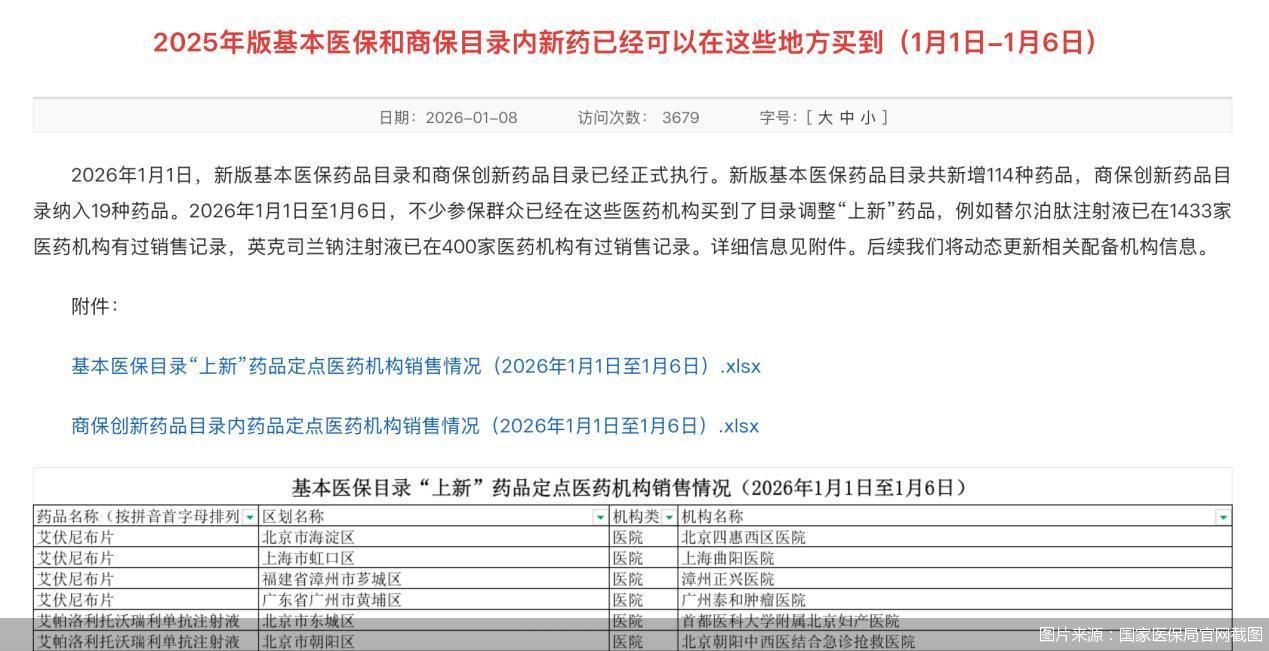
Core Insights - The new medical insurance directory has entered a substantial implementation phase, with several innovative drugs, including Tislelizumab and Fuzhengzhu, being prescribed under insurance in various hospitals, indicating a reduction in access barriers for patients [1] - The adjustment includes 114 new drugs and introduces a commercial health insurance directory for innovative drugs, marking a significant shift towards a multi-tiered insurance system [1][5] - The rapid inclusion of innovative drugs in the insurance directory reflects increased support for "true innovation" with high clinical value [5] Group 1: New Drug Inclusion - The new medical insurance directory has added 124 unique products, including Tislelizumab, the first targeted drug for thyroid eye disease, and Fuzhengzhu, a biological agent for psoriasis [5] - Heng Rui Medicine is a major beneficiary, with 20 products and indications adjusted, including 10 new drugs entering the directory for the first time [5][6] - Other biotech companies like BeiGene and Innovent Biologics have also benefited, with multiple products included in the new directory, enhancing their commercialization prospects [7] Group 2: Commercial Health Insurance Directory - The introduction of the commercial health insurance directory provides a secondary market for high-value innovative drugs, with price reductions ranging from 15% to 50%, which is less severe than the basic insurance cuts [9] - The directory aims to improve accessibility for high-priced drugs while ensuring adequate returns for pharmaceutical companies [9] - Notable CAR-T therapies have been included in the commercial directory, overcoming previous barriers to entry, with prices for these therapies exceeding 1 million yuan [8][10] Group 3: Market Dynamics and Drug Exits - The adjustment process has also seen the removal of 29 drugs from the insurance directory, including Benarutide, which faced competition from more effective alternatives [12][14] - The dynamic adjustment mechanism emphasizes the need for drugs to demonstrate clinical value, reinforcing a "can enter, can exit" policy [14] - Companies are encouraged to shift from "me-too" products to genuine innovations, focusing on high-value areas such as oncology and rare diseases [10][14]



趋势研判!2026年中国双特异性抗体药物行业政策、产业链、市场规模、应用分布、竞争格局及未来展望:中国市场规模有望增至15亿美元,约占全球5.60%[图]
Chan Ye Xin Xi Wang· 2026-01-08 01:34
Core Viewpoint - The bispecific antibody drug market is rapidly expanding, with significant applications in cancer treatment, autoimmune diseases, and infections, and is projected to reach a global market size of $19.1 billion by 2025 and $26.8 billion by 2026 [1][5]. Group 1: Market Overview - The global bispecific antibody drug market is expected to grow to $19.1 billion by 2025, with China's market size projected at approximately $800 million, accounting for about 4.19% of the global market [5]. - By 2026, the global bispecific antibody drug market is anticipated to reach $26.8 billion, with China's market size expected to be around $1.5 billion, representing about 5.60% of the global market [5]. - Nearly 80% of the drug pipeline for bispecific antibodies is concentrated in the cancer treatment sector, particularly in solid tumors [7]. Group 2: Industry Definition and Mechanism - Bispecific antibodies, also known as bispecific or dual-function antibodies, can bind to two different antigens or two different epitopes of the same antigen, enhancing therapeutic effects and reducing adverse reactions [3][4]. - The primary mechanisms of bispecific antibodies include mediating immune cell killing, blocking dual-target signals, and promoting the formation of functional protein complexes [5]. Group 3: Industry Chain - The upstream of the bispecific antibody industry chain involves raw materials such as cell culture media, chromatography media, and key equipment like bioreactors and detection devices [9]. - The midstream focuses on the research and production of bispecific antibody drugs, while the downstream is primarily composed of medical institutions, especially large hospitals specializing in oncology and autoimmune diseases [9]. Group 4: Competitive Landscape - Major global players in the bispecific antibody field include Roche, Amgen, Johnson & Johnson, and several others, while domestic companies include BeiGene, Innovent Biologics, and others [11]. - The development of bispecific antibodies is still in progress, with ongoing exploration of target combination strategies and production technologies [11]. Group 5: Future Outlook - The future of bispecific antibodies lies in their application in cancer treatment and tissue regeneration, with a focus on addressing multiple targets in pathological processes to enhance therapeutic efficacy [14]. - New strategies and clinical trials are emerging, indicating a potential for new bispecific antibody drugs to be approved for market entry soon [14].


BD交易之后,创新药下一个爆点
Xin Lang Cai Jing· 2026-01-08 01:19
Group 1 - The overall market sentiment for innovative drug overseas BD transactions has shifted from extreme optimism to a more rational understanding, leading to significant stock price declines for many small companies in the A-share and H-share markets [1] - The driving logic for the innovative drug industry in 2026 will rely on tangible overseas clinical advancements and increased certainty in overseas commercialization, moving away from transient BD transactions [1] - Major companies in the innovative drug sector, including industry leaders and quality second-tier companies, are beginning to stabilize and show upward trends in stock prices [1] Group 2 - Two significant oncology drugs, AK112 from Kangfang Biotech and SKB264 from Kelun-Biotech, are expected to have major impacts in their respective fields, with ongoing clinical trials and potential breakthroughs [3] - Kangfang Biotech's AK112 has seen a series of clinical advancements that have sparked global interest in second-generation IO development, leading to multiple impactful BD transactions [3] - SKB264 is positioned as a potential global first-in-class drug in the ADC category, with ongoing clinical trials and a significant focus on its efficacy in various cancers [5] Group 3 - Kangfang Biotech is expected to read out three major Phase III clinical results in 2026, including two first-line lung cancer trials, with potential approval timelines set for 2025 and 2027 [4] - Kelun-Biotech's SKB264 is anticipated to read out important clinical results for two major indications in 2026, which could validate its market potential outside of China [7] - The innovative drug industry is expected to see significant clinical progress from various companies that have engaged in substantial BD transactions in 2024-2025, enhancing the long-term value of their overseas projects [7][9]
港股复盘|港股回落 多家公司迎利好 生物医药股逆势大涨
Mei Ri Jing Ji Xin Wen· 2026-01-07 09:56
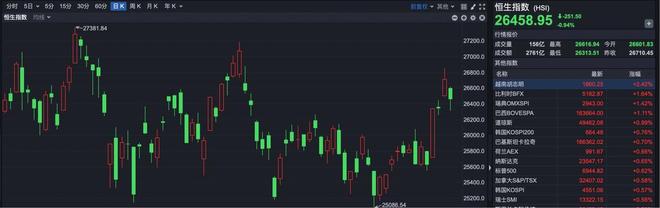
Market Overview - The Hong Kong stock market experienced its first decline of the year on January 7, with the Hang Seng Index closing at 26,458.95 points, down 251.50 points, a decrease of 0.94% [1][2]. - The Hang Seng Tech Index also fell, closing at 5,738.52 points, down 86.74 points, a decline of 1.49% [2]. Sector Performance - The pharmaceutical and biotechnology sector saw significant gains, with Rongchang Biologics (HK09995) rising over 12%, and other companies like Kailaiying (HK06821) and Tigermed (HK03347) increasing by over 8% [5]. - Rongchang Biologics announced positive clinical trial data for its PD-1/VEGF bispecific antibody RC148, which showed promising efficacy and safety for treating non-small cell lung cancer [5]. - Kangfang Biologics received approval for an important update on its PD-1/VEGF bispecific antibody, indicating significant clinical benefits in treating advanced non-small cell lung cancer [7]. Investment Trends - Southbound funds continued to significantly increase their holdings in Hong Kong stocks, with a net purchase exceeding 9.1 billion HKD by the end of the trading day [8]. - Research from CICC suggests that the Hong Kong stock market is entering a recovery phase, driven by a weaker US dollar and improved domestic liquidity, with a positive outlook for the first half of 2026 [12]. - Guotai Junan Securities anticipates a second round of valuation recovery and performance resurgence in the Hong Kong market in 2026, recommending focus on technology, healthcare, and consumer sectors [12]. Analyst Ratings - Credit Lyonnais maintained a "Outperform" rating for WuXi AppTec, raising the target price to 143.4 HKD, citing expected growth from outsourcing demand and reduced policy uncertainty [10].
午评:港股恒指跌1.01% 科指跌1.65% 科网股普跌 石油股走弱 生物医药股延续涨势 阿里巴巴跌超4%
Xin Lang Cai Jing· 2026-01-07 04:04
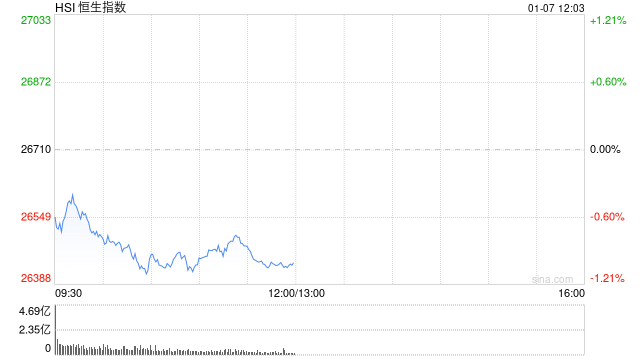
Market Overview - The Hong Kong stock market indices experienced a decline, with the Hang Seng Index falling by 1.01% to 26,439.68 points, the Hang Seng Tech Index down by 1.65%, and the National Enterprises Index decreasing by 1.11% [1][9]. Technology Sector - Technology stocks faced widespread losses, with Alibaba dropping over 4%, Bilibili down more than 3%, and Kuaishou, NetEase, and Meituan each declining by over 2% [1][9]. Biopharmaceutical Sector - The biopharmaceutical sector continued its upward trend, highlighted by Kangfang Biopharmaceutical's stock rising over 6%. The company announced an important update regarding its PD-1/VEGF bispecific antibody, which has shown statistically significant and clinically meaningful benefits in treating advanced non-squamous non-small cell lung cancer [2][11]. Metals Sector - The metals sector showed strength, with Luoyang Molybdenum rising over 5%. Citigroup raised its short-term copper price target to $14,000 per ton, although it warned that the price increase may be nearing its peak [5][14]. Oil Sector - Oil stocks weakened, with PetroChina falling over 3%. This decline follows an announcement regarding the transfer of 30 to 50 million barrels of oil from the Venezuelan interim government to the U.S., which will be sold at market prices [5][16]. Automotive Sector - The automotive sector saw significant declines, with NIO dropping over 3%. Reports indicate that the Chinese auto market may experience a 7% decline in sales in 2026, marking the first anticipated annual drop since 2020. A price war has begun, involving over 76 models from various manufacturers [6][16].



康方生物再涨超6% 依沃西说明书重磅更新 纳入AK112-301研究结果
Zhi Tong Cai Jing· 2026-01-07 03:34
Core Viewpoint - Kangfang Biopharma (09926) experienced a significant stock increase of 6.15%, reaching HKD 127.8, with a trading volume of HKD 789 million, following the approval of an important update to the product label of its innovative PD-1/VEGF bispecific antibody, Ivosidenib (brand name: Yidafang) by the National Medical Products Administration [1] Group 1 - The update includes final analysis data from the AK112-301/HARMONi-A study, demonstrating statistically significant and clinically meaningful dual benefits in progression-free survival (PFS) and overall survival (OS) for Ivosidenib in treating locally advanced or metastatic non-squamous non-small cell lung cancer (nsq-NSCLC) after progression on EGFR-TKI therapy [1] - The HARMONi-A study is noted as the first global Phase III clinical trial in the EGFR-TKI resistant nsq-NSCLC treatment field to achieve clinically meaningful and statistically significant benefits in both PFS and OS endpoints [1] - This trial is also recognized as the first randomized, double-blind Phase III clinical trial to achieve dual positive results in both PFS and OS, reaffirming the groundbreaking clinical value of Ivosidenib as the world's first tumor immune + anti-angiogenesis mechanism bispecific antibody [1]
港股异动 | 康方生物(09926)再涨超6% 依沃西说明书重磅更新 纳入AK112-301研究结果
智通财经网· 2026-01-07 03:33
Core Viewpoint - Kangfang Biopharma (09926) has seen a stock increase of over 6%, currently trading at 127.8 HKD with a transaction volume of 789 million HKD, following the approval of a significant update to the product label of its innovative PD-1/VEGF bispecific antibody, Ivosidenib (brand name: Yidafang) by the National Medical Products Administration [1] Group 1 - The update includes final analysis data from the AK112-301/HARMONi-A study, demonstrating statistically significant and clinically meaningful dual benefits in progression-free survival (PFS) and overall survival (OS) for Ivosidenib in treating locally advanced or metastatic non-squamous non-small cell lung cancer (nsq-NSCLC) after progression on EGFR-TKI therapy [1] - The HARMONi-A study is the first global Phase III clinical trial in the EGFR-TKI resistant nsq-NSCLC treatment field to achieve clinically meaningful and statistically significant benefits in both PFS and OS endpoints [1] - This trial is also the first randomized, double-blind Phase III clinical trial to achieve dual positive results in PFS and OS, reaffirming the groundbreaking clinical value of Ivosidenib as the world's first tumor immune + anti-angiogenesis mechanism bispecific antibody [1]
恒生生物科技ETF(159615.SZ)涨2.82%,康方生物涨6.56%
Jin Rong Jie· 2026-01-07 03:04
Core Viewpoint - The biotechnology sector in Hong Kong is experiencing growth potential due to policy support and strong demand, with innovative pharmaceutical companies leading the way in research and development [1] Group 1: Market Performance - On January 7, the Shanghai and Shenzhen markets showed mixed performance with slight fluctuations, while the communication, electronics, and comprehensive sectors led in gains [1] - The Hang Seng Biotechnology ETF (159615.SZ) rose by 2.82%, and Kangfang Biotech increased by 6.56% [1] Group 2: Industry Insights - Huatai Securities highlights that the biotechnology sector benefits from policy backing and has a robust pipeline of innovative drugs and high internationalization [1] - Global investment in biotechnology research and development continues to rise, indicating significant growth potential in sub-sectors like innovative drugs and medical devices [1] Group 3: Valuation and Economic Context - Current valuations of Hong Kong biotechnology companies are considered attractive, with expectations for industry prosperity to increase under supportive policies [1] - The technology sector in Hong Kong has faced valuation pressures due to factors like U.S. Federal Reserve interest rate hikes, but with stabilizing U.S. ten-year Treasury yields, there is an increasing expectation for liquidity improvement and valuation recovery [1] - The positive trend in China's economic recovery and ongoing policy support in the technology sector provide a solid fundamental basis for the Hong Kong technology sector [1] Group 4: Investment Value - The Hang Seng Biotechnology ETF (159615.SZ) serves as a key investment tool for the Hong Kong biotechnology sector, closely tracking the sector and covering areas such as innovative drugs and medical devices, thus presenting good investment value [1]
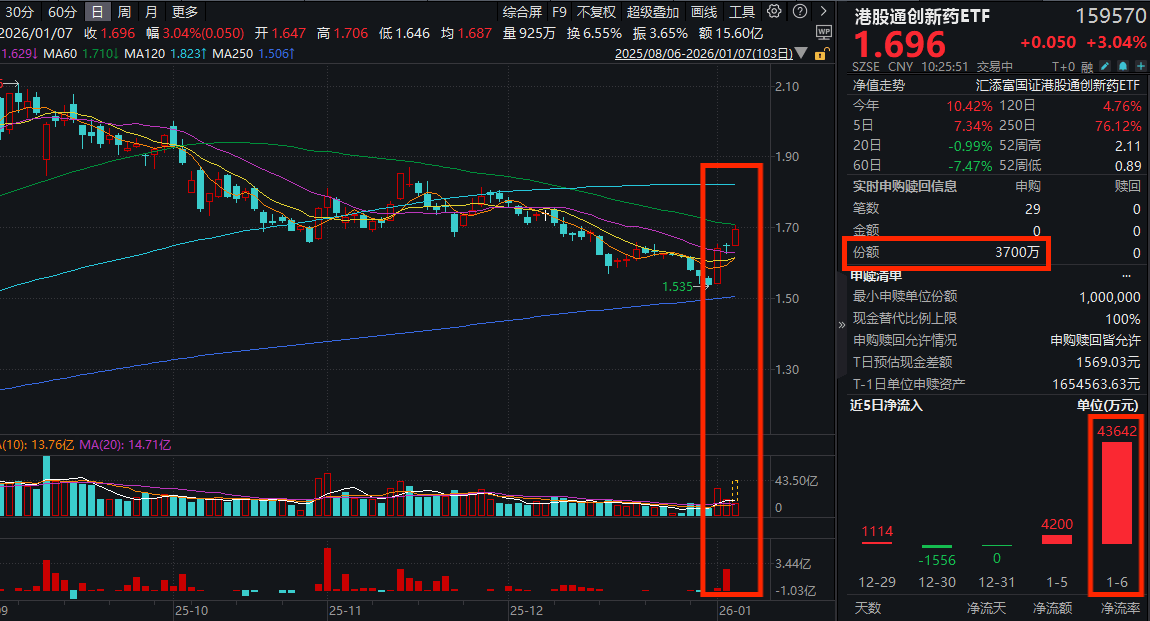
创新药行情卷土重来!港股通创新药ETF(159570)大涨3%,昨日净流入超4.3亿元!美联储降息大消息!
Xin Lang Cai Jing· 2026-01-07 02:45
Group 1: Market Performance - Hong Kong's innovative drug ETF (159570) surged by 3%, with a trading volume exceeding 1.5 billion yuan, following a net inflow of over 62 million yuan today after a previous inflow of 430 million yuan [1][3] - As of January 6, the latest scale of the Hong Kong innovative drug ETF reached over 23.3 billion yuan, leading its peers in the same category [1] Group 2: Economic Signals - Federal Reserve Governor Milan indicated that upcoming economic data may support further interest rate cuts, with expectations of a reduction exceeding 100 basis points this year [3] - Wall Street analysts suggest that if the U.S. unemployment rate rises to 4.7% by December 2025, the Fed may cut rates by 25 basis points this month [3] Group 3: Company Developments - Brain-computer interface "unicorn" Strong Brain Technology completed a financing round of 2 billion yuan, second only to Musk's Neuralink [3] - AI pharmaceutical company Insilico Medicine announced a long-term collaboration with Siveya for anti-tumor drug development, with a total deal value of 888 million USD [3] Group 4: New Drug Approvals - On January 6, BeiGene announced that its self-developed BCL2 inhibitor, Baiyueda® (sotucumab), received conditional approval from the National Medical Products Administration [3] - Shiyao's SYS6017 has initiated Phase II clinical trials for the prevention of shingles [3] Group 5: Investment Insights - Zhongtai Securities predicts that the pharmaceutical sector's opportunities in 2025 will focus on innovation and industry upgrades, with investment strategies continuing into 2026 [5] - The report emphasizes the importance of "innovative drugs and industry chains, demand recovery, and AI" as key investment dimensions [5] Group 6: J.P. Morgan Healthcare Conference - The 44th J.P. Morgan Healthcare Conference is set to take place from January 12 to 15, 2026, in San Francisco, attracting over 8,000 global participants [6] - The conference will feature over 500 listed companies and thousands of startups, focusing on "capital + strategy" discussions [6] Group 7: Industry Trends - Three major trends are highlighted for 2026: the continued rise of gene and cell therapies, deep integration of AI in pharmaceuticals, and the emergence of new market forces [7] - The report notes that over 20 gene editing companies will showcase breakthroughs in CAR-T and base editing at the conference [7] Group 8: MNC Engagement - Multinational corporations (MNCs) are willing to pay higher prices for innovative drugs from China, with the average total package for drugs purchased from China being 2.76 billion USD, compared to 1.29 billion USD for those from overseas [8] - The willingness of MNCs to pay a premium for Chinese innovations is driven by the need to fill significant pipeline gaps due to impending patent expirations [8] Group 9: Investment Focus - Investment strategies should focus on companies with strong clinical development capabilities and those in popular therapeutic areas such as ADCs, GLP-1, and dual antibodies [11] - Companies that can produce high-quality late-stage clinical assets are likely to attract MNC interest [11] Group 10: Key Therapeutic Areas - The report identifies key therapeutic areas for investment, including ADCs, GLP-1, dual antibodies, and neuroscience, emphasizing the need for innovative platforms and clinical data superiority [12]