AKESO(09926)

Search documents
在男性主导的生物医药圈,女性掌门人闯出了一片天地
第一财经· 2026-03-08 02:19
Core Viewpoint - The article highlights the transformation of China's biopharmaceutical industry into a mature sector and a pillar of innovation, with a notable increase in female leadership within the industry [3][5]. Group 1: Industry Overview - The Chinese biopharmaceutical sector is characterized as technology-intensive, capital-intensive, and high-barrier, with a long development cycle [3]. - The government has elevated biopharmaceuticals from an emerging industry to a pillar industry, indicating its growing importance in global pharmaceutical innovation [3]. - In 2025, China approved 76 innovative drugs, significantly surpassing the 48 approved in 2024, reflecting a robust growth in the sector [7]. Group 2: Female Leadership in Biopharmaceuticals - Among the 163 biopharmaceutical companies listed in Hong Kong, only about 16 are led by women, representing less than 10% [5]. - Notable female leaders include Zhong Huijuan of Hansoh Pharmaceutical, whose wealth increased to 160 billion RMB, making her one of the wealthiest female entrepreneurs in China [6]. - Female leaders are recognized for their resilience and meticulousness, which are seen as advantages in a challenging environment [15][16]. Group 3: Company Performance and Innovations - Hansoh Pharmaceutical achieved sales revenue of 6.145 billion RMB from innovative drugs and collaborations in the first half of 2025, accounting for approximately 82.7% of the company's total revenue [7]. - Innovative drugs developed by domestic companies are showing potential comparable to international blockbuster drugs, particularly in the PD-1/VEGF dual antibody space [7]. - In 2025, Innovent Biologics completed two external licensing transactions, with one exceeding 2 billion USD, showcasing the financial viability of innovative drug companies [8]. Group 4: Challenges and Future Directions - The article discusses the challenges faced by innovative drug companies, including high investment costs and significant failure risks, which require careful financial management [12]. - The need for a shift from product internationalization to comprehensive corporate globalization is emphasized, necessitating strong innovation capabilities and effective global integration [16]. - The leadership in biopharmaceutical companies must balance innovation with market needs, leveraging unique insights to enhance research and development efficiency [16].




医药生物行业创新药板块观点(2026年第1期):短期波动,不改远期成长
Orient Securities· 2026-03-06 08:24
Investment Rating - The report maintains a "Positive" outlook for the pharmaceutical and biotechnology industry [5] Core Viewpoints - Short-term fluctuations do not change the long-term growth trajectory of the innovative drug sector. Despite recent market volatility, the underlying logic for medium to long-term growth remains intact, driven by globalization, technological breakthroughs, and industry upgrades [8][12] - The focus has shifted from "can we go global" to "what progress has been made after going global," emphasizing the importance of overseas clinical deployment and milestone achievements for innovative drugs [13][14] - Breakthroughs in frontier technologies, particularly in small nucleic acids and CAR-T therapies, position Chinese companies to become core global assets [18][20] - The commercialization of innovative drugs is expected to lead to a profitability inflection point, with key companies entering a positive cycle of product volume growth and reinvestment in R&D [22] Summary by Sections 1. Short-term Fluctuations, Long-term Growth - The innovative drug sector has experienced significant volatility due to concentrated expectations and emotions, but the long-term growth trend remains unchanged [8][12] - The valuation of leading companies has reached reasonable levels, suggesting potential investment opportunities as market sentiment stabilizes [12] 1.1 Focus on Globalization Progress - The emphasis has shifted to the progress of products in overseas clinical trials, with a focus on key data readouts and milestone achievements [13][14] - Domestic bispecific antibodies are accelerating their global clinical trials, becoming core trading assets in the context of expiring patents for PD-(L)1 products [13] 1.2 Breakthroughs in Frontier Technologies - Chinese companies are leading in small nucleic acids and CAR-T therapies, with significant advancements in delivery technologies expanding treatment options beyond rare diseases [18] - In vivo CAR-T therapies have shown preliminary clinical effectiveness, with a growing number of transactions indicating a shift towards mainstream adoption [20] 1.3 Commercialization Driving Profitability - Leading innovative drug companies are entering a cycle of product volume growth that supports R&D reinvestment, with expectations for exceeding market performance in 2023 [22] - The upcoming earnings period in March-April 2026 is seen as a critical validation point for the sector [22] 2. Global New Drugs: Highlights in Autoimmunity and Oncology - The report highlights the approval of the world's first PD-L1/TGF-β bispecific antibody, showcasing the R&D capabilities of domestic companies [26][27] - The successful launch of innovative drugs in critical therapeutic areas reflects the growing strength of domestic pharmaceutical companies in addressing unmet medical needs [26][27]

异动盘点0305 | 光通信概念股集体回暖,脑机接口概念股盘中拉升;美股AI应用软件股拉升,比特币概念股普涨
贝塔投资智库· 2026-03-05 04:02
Group 1: Pharmaceutical and Biotechnology Sector - Four Seasons Pharmaceutical (00460) saw a stock increase of 3.7% after receiving approval from the NMPA for its innovative drug, Pyrocilin Tablets, for treating HR+/HER2- advanced breast cancer [1] - Hengrui Medicine (01276) rose over 5% following the approval of a clinical trial for HRS-1780 Tablets aimed at treating primary hyperaldosteronism [3] - Mirxes-B (02629) experienced a stock surge of 10.86% after announcing a strategic partnership with Apollo Health to develop advanced cancer early detection solutions in India [3] - Cornerstone Pharmaceuticals-B (02616) increased by 12.37% after receiving FDA approval for its IND application for CS2009, a tri-specific antibody for advanced solid tumors [4] - Deciphera Pharmaceuticals-B (06996) rose 16.77% after signing an agreement with U.S. Biotech for the global development and commercialization of ATG-201, a dual-specific T-cell engager [5] Group 2: Automotive Sector - Automotive stocks showed a collective rebound, with XPeng Motors-W (09868) up 3.14% and NIO-SW (09866) up 3.43%, driven by news of BYD's upcoming launch of its second-generation blade battery and fast-charging technology [2] Group 3: Technology and Communication Sector - Optical communication stocks rallied, with Cambridge Technology (06166) up 8.7% after NVIDIA announced a $40 billion investment in optical technology through partnerships with Lumentum and Coherent [1] - Brain-computer interface stocks surged, with Nanjing Panda Electronics (00553) increasing by 24.64% following government reports emphasizing the development of future industries, including brain-computer interfaces [2] Group 4: Cryptocurrency Sector - Cryptocurrency-related stocks rebounded, with Okex Cloud Chain (01499) rising 15.89% as Bitcoin surpassed $72,000, driven by short-covering amid geopolitical concerns [5][6]

康方生物(09926) - 截至二零二六年二月二十八日止月份股份发行人的证券变动月报表
2026-03-04 09:06
FF301 股份發行人及根據《上市規則》第十九B章上市的香港預託證券發行人的證券變動月報表 截至月份: 2026年2月28日 狀態: 新提交 致:香港交易及結算所有限公司 公司名稱: 康方生物科技(開曼)有限公司 呈交日期: 2026年3月4日 I. 法定/註冊股本變動 | 1. 股份分類 | 普通股 | 股份類別 | 不適用 | | | 於香港聯交所上市 (註1) | | 是 | | | --- | --- | --- | --- | --- | --- | --- | --- | --- | --- | | 證券代號 (如上市) | 09926 | 說明 | | | | | | | | | | | 法定/註冊股份數目 | | | 面值 | | | 法定/註冊股本 | | | 上月底結存 | | | 5,000,000,000 | USD | | 0.00001 | USD | | 50,000 | | 增加 / 減少 (-) | | | 0 | | | | USD | | | | 本月底結存 | | | 5,000,000,000 | USD | | 0.00001 | USD | | 50,000 | ...
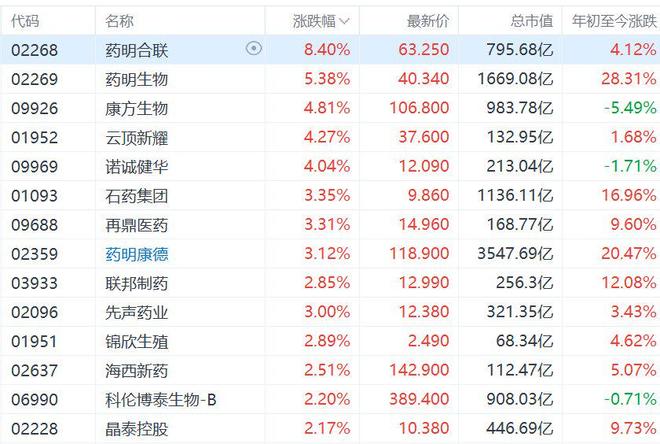
格隆汇十大核心——药明合联涨超8%,领涨港股创新药板块
Ge Long Hui· 2026-02-27 07:42
Group 1 - The core viewpoint of the article highlights the recent strong performance of several biopharmaceutical stocks, particularly in the Hong Kong market, with innovative drug concepts becoming increasingly active [1] - WuXi AppTec (药明合联) led the sector with a rise of over 8%, while WuXi Biologics (药明生物) increased by over 5%, and other companies like CanSino Biologics (康方生物), Genscript Biotech (云顶新耀), and Innovent Biologics (诺诚健华) saw gains exceeding 4% [1] - According to Guolian Minsheng Securities, the innovative drug business development (BD) transactions in China are expected to continue the high growth trend seen in 2025, indicating a robust upward momentum in the industry [1] Group 2 - The stock performance data shows that WuXi AppTec (02268) increased by 8.40% to a latest price of 63.250, with a total market capitalization of 795.68 billion [2] - WuXi Biologics (02269) rose by 5.38% to 40.340, with a market cap of 1,669.08 billion, reflecting a year-to-date increase of 28.31% [2] - Other notable performers include CanSino Biologics (09926) up by 4.81%, Genscript Biotech (01952) up by 4.27%, and Innovent Biologics (69660) up by 4.04%, indicating a positive trend across the sector [2]
康方生物早盘涨近5% 曼多奇单抗(IL-4Rα)新药上市申请获受理
Zhi Tong Cai Jing· 2026-02-27 05:43
Group 1 - The core point of the article is that Kangfang Biotech (09926) has submitted a New Drug Application (NDA) for its IL-4Rα monoclonal antibody (Mandokizumab, AK120) to the National Medical Products Administration (NMPA) for the treatment of moderate to severe atopic dermatitis (AD) [1] - Following the news, Kangfang Biotech's stock rose nearly 5% in early trading, with a current increase of 4.22%, reaching HKD 106.2, and a trading volume of HKD 456 million [1] - Mandokizumab is the fourth non-oncology drug from Kangfang Biotech to enter the listing application stage, following the approvals or submissions of PCSK9 monoclonal antibody Inusimab, IL-12/IL-23 monoclonal antibody Iroquois, and IL-17A monoclonal antibody Gumokizumab, creating a product matrix covering cardiovascular metabolism, skin, and joint fields [1]
港股异动 | 康方生物(09926)早盘涨近5% 曼多奇单抗(IL-4Rα)新药上市申请获受理
智通财经网· 2026-02-27 05:43
Core Viewpoint - Kangfang Biopharma (09926) has submitted a New Drug Application (NDA) for its IL-4Rα monoclonal antibody (Mandokizumab, AK120) to the National Medical Products Administration (NMPA) for the treatment of moderate to severe atopic dermatitis (AD) [1] Group 1 - Kangfang Biopharma's stock rose nearly 5% in early trading, reaching a price of 106.2 HKD with a trading volume of 456 million HKD [1] - The submission of the NDA for Mandokizumab marks the fourth non-oncology drug that the company has entered the application stage for [1] - The company has previously received approvals or submitted applications for other monoclonal antibodies, including PCSK9 monoclonal antibody Inusimab, IL-12/IL-23 monoclonal antibody Iroquois, and IL-17A monoclonal antibody Gumokizumab, creating a diverse product matrix covering cardiovascular metabolism, skin, and joint diseases [1]
打破美日垄断!中国PD-1抗癌药强势崛起,叫板BMS、默沙东等跨国龙头药企
Ge Long Hui· 2026-02-27 01:35
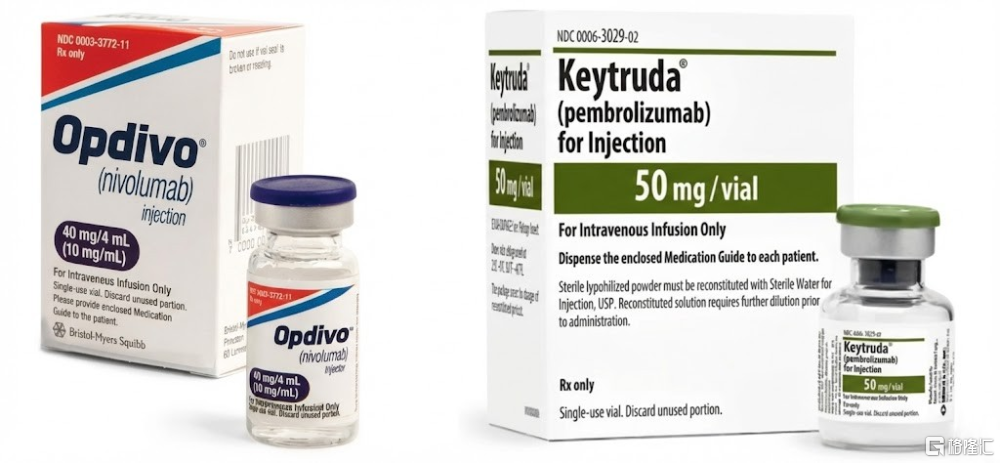
Core Insights - The introduction of PD-1 inhibitors in 2014 marked a significant turning point in the fight against cancer, with Bristol-Myers Squibb's Opdivo and Merck's Keytruda leading the charge in immunotherapy [1][3] - The competition between Opdivo and Keytruda has evolved over the years, with Keytruda ultimately becoming the top-selling drug globally by 2024 [21][22] Historical Context - The history of cancer immunotherapy began with William Coley's discovery in the late 19th century, which was followed by a long period of stagnation until the late 20th century when key immune cells were identified [4] - The discoveries of James Allison and Tasuku Honjo regarding CTLA-4 and PD-1, respectively, laid the groundwork for the development of PD-1 inhibitors [5][10] Drug Development - Opdivo was developed with strong backing from Bristol-Myers Squibb after acquiring Medarex in 2009, leading to its approval in Japan in 2014 [12] - Keytruda's development faced initial setbacks but was revitalized by Merck's strategic decision to conduct an unprecedented "super I phase" trial, leading to its approval shortly after Opdivo [14][15][16] Market Dynamics - In 2016, a critical competition occurred between Opdivo and Keytruda in the non-small cell lung cancer (NSCLC) market, which is the largest segment in oncology [17] - BMS's failure in the CheckMate-026 trial led to a significant drop in Opdivo's market position, while Merck's more selective approach in the KEYNOTE-024 trial resulted in Keytruda's success [18][19][20] Sales Performance - By 2024, Keytruda's sales reached $29.5 billion, marking an 18% increase and solidifying its position as the top-selling drug globally [21] - Opdivo, while still a major player, saw its sales decline but remained above the $10 billion mark, maintaining its status as a heavyweight in the market [22][23] Competitive Landscape - The global PD-1 inhibitor market is highly competitive, with 527 candidates in development as of early 2025, including 20 approved drugs [26][29] - In China, the market is characterized by intense competition among local manufacturers, with significant price reductions due to national healthcare negotiations [30][31] Future Outlook - Keytruda's core patent is expected to expire in 2028, potentially leading to a significant drop in sales as biosimilars enter the market [32] - A new challenger, Ivonescimab, has shown superior efficacy compared to Keytruda in clinical trials, indicating a shift towards dual-target therapies in cancer treatment [33][35]



靠BD首付带飞业绩?双抗赛道竞争激烈!三生国健:聚焦源头创新及差异化研发
Xin Lang Cai Jing· 2026-02-26 10:21
Core Insights - Sangamo's significant revenue growth in 2025 is attributed to a collaboration with Pfizer, resulting in a reported revenue of 4.199 billion yuan, a 251.81% increase year-on-year, and a net profit of 2.939 billion yuan, reflecting a 317.09% increase [1][9] - The company received a non-refundable upfront payment of 1.25 billion USD from Pfizer for the development rights of the PD-1/VEGF bispecific antibody SSGJ-707, which is a key driver of its financial performance [4][12] - The competitive landscape for PD-1/VEGF bispecific antibodies is intensifying, with multiple players entering the market, prompting Sangamo to focus on core pipeline innovations and differentiated development strategies [2][10] Financial Performance - In 2025, Sangamo reported total revenue of 4.199 billion yuan, a 251.81% increase from the previous year [1][9] - The net profit attributable to shareholders reached 2.939 billion yuan, marking a 317.09% increase year-on-year [1][9] - The company's non-GAAP net profit, excluding certain income and expenses, was 2.805 billion yuan, reflecting a staggering 1041.01% increase [1][9] Strategic Partnerships - Sangamo's collaboration with Pfizer includes a 1.25 billion USD upfront payment and potential milestone payments up to 4.8 billion USD based on development and sales achievements [4][12] - The agreement grants Pfizer exclusive rights to develop, manufacture, and commercialize SSGJ-707 globally, excluding mainland China [4][12] Market Competition - The PD-1/VEGF bispecific antibody market is becoming increasingly competitive, with several companies, including Kintor Pharma and BMS/BioNTech, advancing their own candidates [2][10] - As of now, there are 17 PD-(L)1/VEGF bispecific antibodies in clinical trials globally, indicating a crowded field [5][13] Research and Development Pipeline - Sangamo has a total of 22 projects in its research pipeline, with 7 in Phase III clinical trials, including candidates targeting autoimmune diseases [7][15] - The company has recently received approval for its anti-IL-17A monoclonal antibody, which is aimed at treating moderate to severe plaque psoriasis [16][15] Industry Trends - The IL-17 antibody market is also highly competitive, with multiple products already approved and many more in clinical development [8][17] - The success of PD-1/VEGF bispecific antibodies is closely watched, with recent clinical trial results impacting market confidence [6][14]


君实生物与德琪医药达成合作;联影医疗等披露业绩预告
2 1 Shi Ji Jing Ji Bao Dao· 2026-02-26 00:12
Policy Developments - Shandong Province held a meeting on February 25, 2026, to address corruption and misconduct in the healthcare sector, emphasizing the need for a coordinated effort to safeguard medical insurance funds and promote orderly development in healthcare [1] Drug and Device Approvals - Kanghong Pharmaceutical received approval from the National Medical Products Administration for clinical trials of KHN707 tablets for insomnia, a class 1 innovative drug [2] - Fosun Pharma's subsidiary received approval for clinical trials of Rumaine® (generic name: Luwomeitini tablets) for advanced non-small cell lung cancer, with global sales of MEK1/2 inhibitors projected to reach approximately $2.068 billion in 2024 [3] - China Pharmaceutical announced that its subsidiary received a drug registration certificate for injectable fosfomycin, aimed at treating acute bacterial skin and soft tissue infections [4] - Huyou Pharmaceutical received FDA approval for its new drug applications for Etoposide injection and Fluorouracil injection, enabling sales in the U.S. market [5] - Kangfang Biotech's application for the monoclonal antibody AK120 was accepted for review by the National Medical Products Administration [6] Industry Developments - Junshi Bioscience and Deqi Pharmaceuticals entered a strategic collaboration to explore the combined treatment potential of JS207 and ATG-037 for cancer patients in mainland China [8] - Illumina announced an 18-month innovation upgrade roadmap for the NovaSeq X sequencer, enhancing its capabilities and productivity [9] Capital Market Activities - Sainuo Medical announced a share repurchase plan with a total amount between 15 million and 30 million yuan, aimed at employee stock ownership plans or equity incentives [10] Financial Data - United Imaging reported a net profit of 1.888 billion yuan for 2025, a year-on-year increase of 49.60%, driven by new product launches and growth in overseas business [11] - Xiansheng Pharmaceutical projected a revenue of approximately 7.7 billion to 7.8 billion yuan for the 2025 fiscal year, with a net profit increase of 80.1% to 93.9% [12] - Sainuo Medical reported a net profit of 47.29 million yuan for 2025, a significant increase of 3,057.05% year-on-year, attributed to revenue growth and cost management [13]