AKESO(09926)

Search documents
康方生物(09926) - 持续关连交易有关委托生產安排的进一步资料
2026-01-26 10:11
(於 開 曼 群 島 註 冊 成 立 的 有 限 公 司) 香 港 交 易 及 結 算 所 有 限 公 司 及 香 港 聯 合 交 易 所 有 限 公 司 對 本 公 告 之 內 容 概 不 負 責,對其準確性或完整性亦不發表任何聲明,並明確表示,概不就因本公告全部 或任何部分內容而產生或因倚賴該等內容而引致的任何損失承擔任何責任。 Akeso, Inc. 康 方 生 物 科 技( 開 曼 )有 限 公 司 誠 如 該 公 告 所 披 露 , 正 大 天 晴 由 兩 名 股 東 持 有 6 % 權 益 。 本 公 司 謹 此 補 充 , 正 大 天 晴 的 兩 名股 東 分 別 為 連 雲 港 彼 達諮 詢 中 心( 一 家 於 中 國 成 立 之 合 夥企 業 , 其 普 通合夥人為孫鍵並擁有39名有限合夥人 ),持有正大天晴5 %股權;及江蘇朗泰科 技 實 業 有 限 公 司( 一 家 於 中 國 成 立 之 有 限 公 司 , 由 張 沁 控 制 ), 持 有 正 大 天 晴 1 % 股權。 上述補充資料並不影響該公告所載之其他資料,該等資料維持不變。 承董事會命 (股 份 代 號:9926) 持續關連 ...

JPM 2026收官,中国创新药加速全球化进程
2026-01-26 02:50
Summary of Conference Call Industry Overview - The conference focused on updates and developments in the Chinese biopharmaceutical industry, particularly highlighting companies such as BeiGene, 3SBio, and Kelun-Biotech [1][10]. Key Company Insights BeiGene - BeiGene's BCL-2 inhibitor has been approved for sale in China and is expected to receive accelerated approval in the U.S. within the year [1]. - BCL-2 is viewed as a second growth driver for BeiGene, complementing its existing BTK inhibitors, which have shown rapid sales growth in the U.S. market [2]. - The company has a robust pipeline for solid tumors, with several candidates entering late-stage development, including treatments for breast cancer and other indications [3]. - BeiGene is anticipated to report its first annual profit, with expectations that its annual report may exceed forecasts [3]. 3SBio - Pfizer has outlined a global development plan for its drug 707, with five global Phase III trials expected to start by 2026, targeting various cancers [4]. - The trials include first-line treatments for colorectal cancer and non-small cell lung cancer [4]. Kelun-Biotech - Kelun-Biotech is expected to have a significant year with five products anticipated to be commercialized, three of which have already been included in the national medical insurance [5]. - The company has successfully commercialized its top two ADC products and is expected to see explosive growth following their inclusion in insurance [5]. Innovent Biologics - Innovent's Ivosidenib is expected to receive final approval from the FDA in Q4 of this year, with ongoing clinical trials for various cancers [6][7]. - The company is also preparing for the commercialization of its CAR-T product, which has already been approved domestically [8]. Rongchang - Rongchang has announced plans for three Phase III trials, including one for non-small cell lung cancer, which has received FDA approval [7][8]. Other Notable Mentions - Merck has initiated 16 global Phase III trials for its drug targeting various major indications, with data expected in the second half of the year [5]. - The conference highlighted the importance of clinical trial data releases for several companies, which are crucial for their long-term valuations [3][10]. Market Dynamics - The overall market for innovative drugs is currently experiencing a downturn, primarily due to internal funding shifts within the pharmaceutical sector [10]. - The high percentage of holdings in innovative and traditional pharmaceuticals (around 75%) has led to a reallocation of funds towards other sectors like AI healthcare and CROs [11]. - Despite the market's performance, the fundamental aspects of many companies remain strong, with ongoing clinical advancements and positive earnings expectations [11]. - The total amount of business development (BD) transactions in recent weeks has already reached 25% of last year's total, indicating a robust pace of international expansion [11]. Conclusion - The conference provided a comprehensive overview of the current state of the biopharmaceutical industry in China, highlighting significant advancements and the potential for growth among key players. The market dynamics suggest a temporary disconnect between stock performance and fundamental company health, indicating potential investment opportunities.

2026年中国心脑血管药物行业市场政策汇总、产业链图谱、市场规模、竞争格局及发展趋势分析:需求群体庞大[图]
Chan Ye Xin Xi Wang· 2026-01-26 01:40
Core Insights - The aging population in China is leading to an increase in cardiovascular diseases, with rising prevalence of chronic conditions such as hypertension and hyperlipidemia, driving demand for cardiovascular drugs [1][8] - There is a significant increase in health awareness among residents, leading to earlier screening and treatment of cardiovascular diseases, which expands the applicable population for cardiovascular medications [1][8] - The implementation of centralized drug procurement policies is causing a downward trend in drug prices, putting pressure on the overall market size, which is projected to decline to 954.1 billion yuan for traditional Chinese medicine and 1,415.8 billion yuan for chemical drugs by 2025 [1][8] Market Overview - Cardiovascular diseases encompass both cardiovascular and cerebrovascular diseases, primarily caused by conditions like hyperlipidemia, blood viscosity, atherosclerosis, and hypertension [2] - Cardiovascular drugs are classified into two main categories: cardiovascular system drugs and cerebrovascular system drugs, targeting various heart and brain-related conditions [2] Policy Environment - The pharmaceutical manufacturing industry, including cardiovascular drugs, is a key focus of national policy support, with various regulations aimed at correcting malpractices and promoting industry development [3][4] Industry Chain - The upstream of the cardiovascular drug industry includes chemical raw materials, traditional Chinese medicinal materials, and pharmaceutical packaging materials, while the midstream involves research, production, and registration processes [4][5] Demand Dynamics - Cardiovascular diseases are the leading cause of death in China, with hypertension cases expected to reach 370 million and coronary heart disease cases at 30 million by 2025, indicating a growing demand for cardiovascular medications [6][8] Competitive Landscape - The market has developed a dual competitive structure, with foreign companies dominating the chemical drug sector and local companies leading in traditional Chinese medicine, creating a competitive environment [10] - Notable domestic players include Shijiazhuang Pharmaceutical Group and Shandong Buchang Pharmaceutical, which have established strong market positions through unique products and effective distribution networks [10][11] Development Trends - The industry is shifting from reliance on generic drugs to innovation, focusing on high-value drug development, including targeted and biological drugs [12] - There is a growing integration of chronic disease management with digital tools, enhancing patient adherence and treatment precision [13] - Policy reforms are reshaping market dynamics, emphasizing high clinical value drugs and expanding the market for basic medications in primary healthcare [14] - The industry is moving towards a collaborative ecosystem, with increased internationalization efforts and participation in global clinical trials [15]



创新药还能加仓?这场会定调2026
Jing Ji Guan Cha Wang· 2026-01-24 10:07
Core Insights - The 2026 JPM conference showcased a positive outlook for Chinese innovative pharmaceutical companies, with significant interest from multinational corporations in collaboration opportunities [2][3][4] - Chinese companies are shifting from merely licensing patents to deeper involvement in clinical development and commercialization in international markets [3][8] - The FDA's stance at JPM was relatively moderate, acknowledging the R&D efficiency of Chinese companies and suggesting improvements in approval processes using AI [3][6] Group 1: Conference Overview - The JPM conference, held in San Francisco, attracted numerous founders, executives, and investors from Chinese innovative pharmaceutical companies, indicating a vibrant atmosphere compared to previous years [2][5] - The event has evolved from a small gathering to a major industry benchmark, with participation from nearly all multinational pharmaceutical companies [5][10] - The number of attendees increased significantly in 2026, reflecting a more optimistic market sentiment compared to the previous year [5][10] Group 2: Market Trends - The Chinese innovative drug sector experienced a substantial stock price increase from March to August 2025, driven by business development (BD) transactions and foreign capital inflow, but faced a market correction afterward [4][11] - The interest in Chinese assets is growing, with many multinational companies expressing intentions for mergers and acquisitions (M&A) and BD transactions [11][12] - The trend of Chinese companies seeking deeper engagement in global markets is evident, moving beyond simple patent licensing to collaborative operational models [8][9] Group 3: Regulatory Environment - FDA officials at JPM highlighted the efficiency of Chinese clinical trials, with China completing Phase I trials in four weeks compared to much longer timelines in the U.S. [6][12] - The FDA's comments suggested a focus on optimizing clinical trial approval processes rather than emphasizing protectionist policies [5][6] Group 4: Future Outlook - The absence of major transactions at JPM 2026 was noted, but many multinational companies expressed a willingness to explore significant deals in the near future [11][12] - The upcoming expiration of patents for several blockbuster drugs is expected to drive increased M&A activity as companies seek to replenish their pipelines [12][13] - The trend of U.S. biotech firms considering establishing operations in China to leverage R&D efficiencies is emerging, indicating a shift in cross-border collaboration dynamics [10][11]

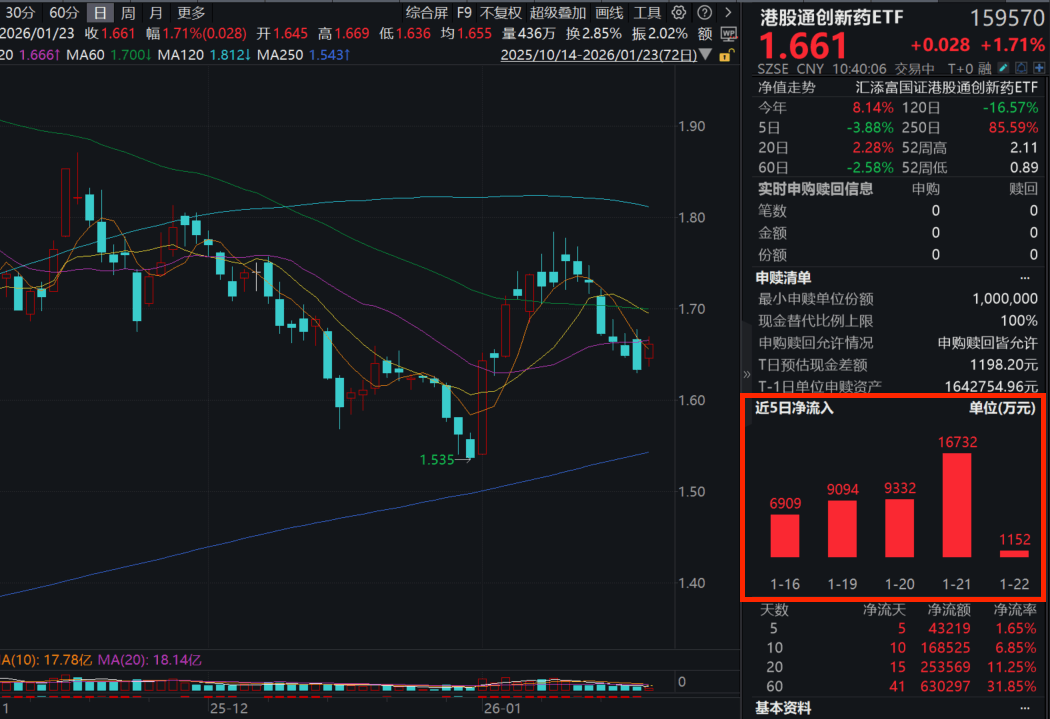
康方生物涨超4%,自研古莫奇单抗第二项适应症获NDA受理!港股通创新药ETF(159570)涨近2%,近5日净流入超4.3亿元!
Xin Lang Cai Jing· 2026-01-23 03:05
Group 1 - The Hong Kong pharmaceutical sector is experiencing a strong rebound, with the Hong Kong Stock Connect Innovation Drug ETF (159570) rising nearly 2% and achieving a transaction volume exceeding 700 million yuan in a short period [1] - The ETF has seen a cumulative net inflow of over 430 million yuan in the past five days, with its latest scale surpassing 25.1 billion yuan, leading in its category [1] - The majority of the weighted stocks in the ETF's index have shown positive performance, including Kangfang Biopharma and Kelun-Botai, which both rose over 4% [3][4] Group 2 - Kangfang Biopharma announced that its new humanized anti-IL-17A monoclonal antibody, AK111, has received acceptance for a new drug application for treating active ankylosing spondylitis (AS) by the National Medical Products Administration (NMPA) [3] - This new drug is expected to provide a new treatment option for nearly 4 million AS patients in China [3] - The JPMorgan Healthcare Conference highlighted the achievements of Chinese innovative drug companies, with expectations for significant revenue growth and multiple drug approvals in the coming years [5][6] Group 3 - The domestic pharmaceutical industry is witnessing rapid technological advancements and an acceleration in globalization, with significant transactions exceeding 10 billion USD occurring [6][7] - The industry is entering a critical period of validation for innovative drug performance, with many companies expected to launch global registration studies and new product applications [6][7] - A domestic innovative drug company projected a revenue increase of 15.84% for 2025, with a substantial net profit growth of 102.65% [7]
港股异动 | 康方生物(09926)涨超5% 自研古莫奇单抗第二项适应症获NDA受理
智通财经网· 2026-01-23 01:54
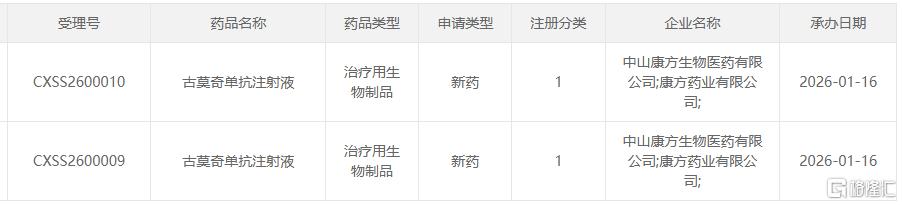
Core Viewpoint - Kangfang Biopharma's new drug application for AK111, a humanized anti-IL-17A monoclonal antibody for treating active ankylosing spondylitis (AS), has been accepted by the National Medical Products Administration (NMPA) in China, potentially providing new treatment options for nearly 4 million AS patients in the country [1] Group 1 - Kangfang Biopharma's stock rose by 5.16%, reaching HKD 118.1, with a trading volume of HKD 231 million [1] - AK111 is the third major non-oncology product from Kangfang Biopharma to enter the market stage, following the successful launches of Inusimab (PCSK9) and Eruquimab (IL-12/IL-23) [1] - The acceptance of AK111's new drug application signifies the company's strengthening product portfolio and increasing competitiveness in the non-oncology sector [1] Group 2 - The company has successfully launched Inusimab and Eruquimab, both of which have been included in the national medical insurance catalog [1] - Other products like AK111 and Manduquimab are progressing towards commercialization, alongside the development of innovative drugs targeting multiple indications [1] - The ongoing development of drugs targeting IL-4R/ST2 and neurodegenerative diseases further enhances the company's product pipeline [1]
康方生物古莫奇单抗新适应症申请获受理,IL-17靶点赛道竞争升级!
Ge Long Hui· 2026-01-19 17:04
Core Viewpoint - Kangfang Biopharma's innovative drug, Gumokimab injection, has submitted a new indication application for active ankylosing spondylitis, which has been accepted by the National Medical Products Administration (NMPA) [1][4]. Group 1: Drug Information - Gumokimab is a humanized IL-17 monoclonal antibody targeting key inflammatory factors, playing a crucial role in diseases like psoriasis and ankylosing spondylitis [4][7]. - The drug is currently in the application stage for both moderate to severe plaque psoriasis and active ankylosing spondylitis [5][12]. Group 2: Research and Development Progress - The first application for Gumokimab was accepted by the CDE on January 16, 2025, marking a significant milestone in its development [8][11]. - In August 2025, Gumokimab achieved positive results in a pivotal Phase III clinical trial for active ankylosing spondylitis, demonstrating significant clinical improvements for patients [11]. Group 3: Industry Position - Gumokimab is the eighth innovative drug submitted for market approval by Kangfang Biopharma, highlighting the company's commitment to drug development [13]. - It is the third innovative drug in the non-oncology field to reach the market application stage, showcasing Kangfang Biopharma's strong research capabilities and innovation in addressing autoimmune diseases [13].
中美创新药,必有一战
3 6 Ke· 2026-01-19 12:39
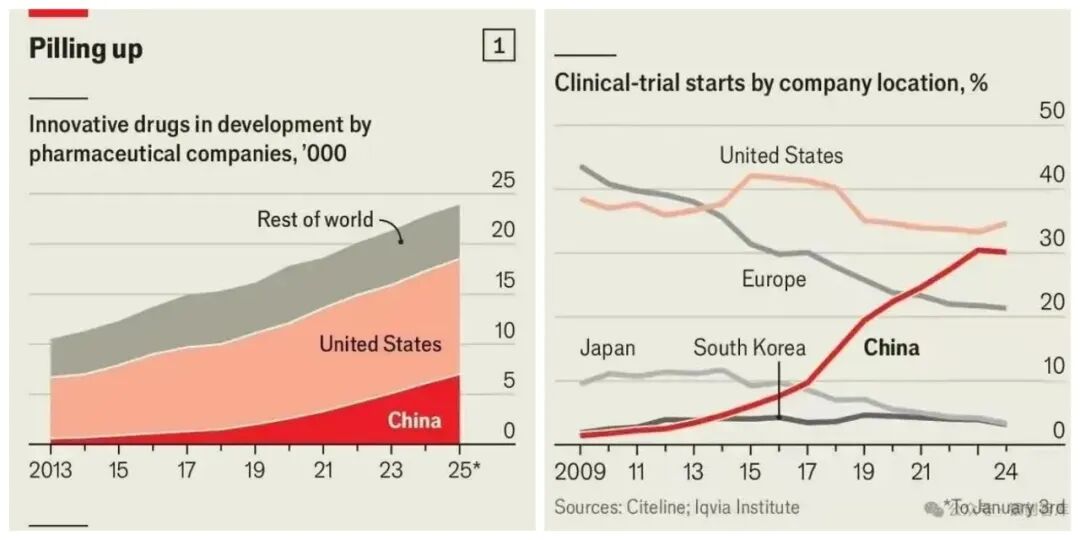
Core Viewpoint - The Chinese innovative drug sector is experiencing rapid growth, positioning itself as a global leader in drug development, with significant investments and collaborations from major pharmaceutical companies [2][8][30]. Group 1: Market Dynamics - The price of experimental monkeys has surged from 3,000 yuan to 100,000 yuan, indicating a high demand in the innovative drug sector [1]. - By 2025, China is projected to rank second globally in new drug clinical trials, with its pipeline accounting for 30% of the global total [2]. - In 2024, Chinese innovative drug companies completed 94 overseas licensing transactions, representing 44% of the national total, with over 100 transactions exceeding $100 billion in the first ten months of 2025 [6][30]. Group 2: Challenges in Traditional Pharmaceutical Sector - The generic drug sector is facing significant challenges, with a projected 5.5% decline in revenue for 2024 and over 30% of companies experiencing losses [5]. - Major pharmaceutical companies are increasingly collaborating with Chinese innovative drug firms to mitigate the risks associated with patent expirations, which could lead to a revenue gap exceeding $300 billion in the next five years [10][30]. Group 3: Advantages of Chinese Innovative Drugs - China offers a cost-effective and efficient environment for drug development, with clinical trial costs significantly lower than in the U.S. [20][21]. - The average time for clinical trial approvals in China has been reduced from 60 to 30 working days, and the average new drug application approval time has decreased to approximately 130 days [14]. - Chinese pharmaceutical companies are increasingly moving from "me-too" and "me-better" drugs to original innovations, with a notable increase in the number of innovative drug projects [27]. Group 4: Global Positioning and Future Outlook - Despite the rapid growth of Chinese innovative drugs, the overall market value of Chinese biotech companies remains significantly lower than their U.S. counterparts, capturing only 5% to 10% of global new drug revenues [30][31]. - Chinese companies are establishing commercial centers in global pharmaceutical hubs to enhance their commercialization capabilities, marking a shift towards becoming major players in the global market [37][38]. - The transition from biotech firms to large multinational pharmaceutical companies is seen as a critical step in the global battle for market share and innovation [38].


美银证券:首次覆盖康方生物(09926)予“买入”评级 目标价162.8港元
智通财经网· 2026-01-19 08:25
Core Viewpoint - Bank of America Securities initiates coverage of Kangfang Biopharma (09926) with a "Buy" rating and a target price of HKD 162.8, citing strong clinical trial data for the key drug ivonescimab in China as a solid reference for global trial results [1] Group 1 - The company is expected to reveal multiple global and China Phase III clinical trial data this year [1] - The inclusion in the national medical insurance directory, expansion of indications, and new drug approvals are accelerating the company's commercialization process in China, with a potential to achieve breakeven this year [1] - The company's rich R&D pipeline provides long-term growth momentum and new licensing opportunities [1]
中金港股通与恒指调整预览:紫金黄金国际(02259)等有望纳入恒指 预计44只公司有望入港股通
智通财经网· 2026-01-19 06:20
Core Viewpoint - The Hang Seng Index Company will announce the results of the Hang Seng Index adjustments on February 13, 2026, with implementation on March 9, 2026. This adjustment will affect the investment scope of the Stock Connect program between Shanghai, Shenzhen, and Hong Kong [1][7]. Group 1: Hang Seng Index Adjustments - Companies such as Zijin Mining International, BeiGene, Yum China, Xpeng Motors, China Pacific Insurance, CanSino Biologics, and Laopuqin Gold are potential candidates for inclusion in the Hang Seng Index based on market capitalization and industry representation [2][3]. - Historical data indicates that actual results may differ from quantitative predictions, as seen with Yum China and BeiGene, which were previously forecasted to be included but were not due to subjective criteria in the index inclusion standards [2][3]. Group 2: Impact on Stock Connect - The adjustments to the Hang Seng Index will directly influence the investment scope of the Stock Connect program, with an estimated 44 stocks expected to be eligible for inclusion, including JD Industrial, East Asia Bank, and Dippu Technology [4][6]. - The methodology for calculating the average market capitalization for index adjustments has been optimized, which may affect the eligibility of stocks for inclusion in the Stock Connect [4][5]. Group 3: Exclusions from Stock Connect - Approximately 25 stocks may be removed from the Stock Connect due to low market capitalization or other factors, including Youbao Online and Automotive Street [6]. - Companies expected to delist from the Hong Kong Stock Exchange will also be removed from the Stock Connect trading [6].