CYPC(600900)

Search documents
尾盘多只权重股现巨额压单,紫金矿业超40亿元


Cai Jing Wang· 2026-01-26 07:53
Group 1 - The core point of the article highlights significant sell orders in the closing auction for multiple heavyweight stocks, with Zijin Mining's sell order amount exceeding 4 billion yuan [1] - Other companies such as China Ping An, Jiangxi Copper, China Duty Free Group, Shandong Gold, Wanhua Chemical, and Kweichow Moutai also had sell orders exceeding 400 million yuan [1] - Previously, on January 14, 2026, several stocks including China Merchants Bank, Zijin Mining, and Yangtze Power had sell orders exceeding 1 billion yuan [1]


公用事业行业周报(20260125):25年市场化交易电量同比+7.4%,寒潮导致全国用电负荷持续创新高-20260126
EBSCN· 2026-01-26 06:07
Investment Rating - The report maintains a "Buy" rating for the public utility sector, indicating an expected investment return exceeding 15% over the next 6-12 months [5]. Core Insights - The public utility sector saw a 2.27% increase this week, ranking 15th among 31 sectors, while the Shanghai Composite Index rose by 0.84% [21]. - The total electricity market transaction volume for 2025 reached 66,394 billion kilowatt-hours, a year-on-year increase of 7.4%, accounting for 64.0% of total social electricity consumption [2][15]. - The peak electricity load in the country surpassed 1.4 billion kilowatts for the first time in winter, reaching 1.417 billion kilowatts due to a cold wave [2][15]. - The report highlights significant profit growth for companies like Qianyuan Power, which expects a net profit of 567-633 million yuan, a year-on-year increase of 160%-190% [10]. Summary by Sections Market Overview - The public utility sector's performance this week included a 2.71% increase in thermal power, a 7.21% increase in photovoltaic power, and a 4.56% increase in energy comprehensive services [21]. - Domestic and imported coal prices have decreased, with domestic coal prices dropping to below 700 yuan per ton [2][12]. Key Events - The report notes that the annual long-term contract bidding results are being disclosed, with expectations of reasonable outcomes due to the decline in coal prices [3]. - The average on-grid electricity price for 2025 is projected to be around 513.29 yuan per megawatt-hour, reflecting a slight increase compared to the previous year [11]. Company Performance - Companies like Longxin Technology and Guangdong Power A are expected to see significant profit growth, while Guangdong Power A anticipates a decline in profits by 21.45%-40.12% [10][11]. - The report suggests focusing on national thermal power operators such as Huaneng International and Guodian Power, which are expected to maintain stable dividends [3].





广发证券:发用电结构清洁化转型 重视板块红利价值
智通财经网· 2026-01-26 03:25
Group 1 - The core viewpoint of the report is that by 2025, the total electricity consumption in society is expected to increase by 5.0% year-on-year, while the regulated power generation is projected to grow by 2.2% year-on-year, with a significant shift towards renewable energy sources like wind and solar contributing 90.1% of the incremental power generation [1] - The increase in electricity consumption is shifting from the secondary industry to the tertiary industry and urban-rural residents, with the contribution of the tertiary industry and urban-rural residents expected to account for 50.2% of the total increment by 2025 [1] - The report highlights that the growth in power generation is primarily driven by wind and solar energy, with their contributions to total generation increasing significantly, indicating a transition to a cleaner and low-carbon energy structure [1] Group 2 - The annual long-term electricity price agreements are nearing completion, with expectations for stable electricity prices and reduced competition, particularly in regions like North China and Northwest China [2] - Monthly electricity prices in December showed a decline in several provinces, with Jiangsu experiencing an 8-point drop year-on-year, while the overall annual price changes varied across regions [2] - The report emphasizes investment opportunities in thermal and hydropower sectors, particularly in companies like JianTou Energy and JingNeng Power, which have shown significant stock price increases [2][3] Group 3 - The acceleration of public utility development is noted, with a focus on high-dividend and market-managed companies in the thermal power sector, such as Huaneng International Power and Huadian International Power [3] - In the hydropower sector, companies like Yangtze Power and Guiguan Power are highlighted for their strong performance and asset injection potential [3] - The report also mentions opportunities in gas and nuclear power sectors, particularly with companies like Jiufeng Energy and China General Nuclear Power [3]


申万公用环保周报:新能源贡献2025年发电量增量,寒潮季节性拉高气价-20260125
Shenwan Hongyuan Securities· 2026-01-25 13:42
Investment Rating - The report maintains a positive outlook on the power and gas sectors, indicating a favorable investment environment for renewable energy and gas companies [2][3]. Core Insights - The report highlights a slight increase in overall power generation in 2025, primarily driven by wind and solar energy contributions, while traditional coal power generation shows a decline [8][9]. - The extreme cold weather in the U.S. has led to a significant spike in natural gas prices due to increased demand and supply constraints [18][22]. - The report suggests various investment opportunities across different segments of the energy sector, including coal power, hydropower, nuclear power, renewable energy, and gas companies [18][43]. Summary by Sections 1. Power Generation - In December 2025, total power generation was 858.6 billion kWh, a year-on-year increase of 0.1%. Coal power generation decreased by 3.2%, while renewable sources like wind and solar saw significant growth [10][11]. - For the entire year of 2025, total power generation reached 9715.9 billion kWh, up 2.2% from the previous year, with coal power down by 1.0% and solar power up by 24.4% [15][19]. 2. Natural Gas - As of January 23, 2026, the Henry Hub spot price surged to $30.72/mmBtu, reflecting a week-on-week increase of 903.53%. European gas prices also rose significantly due to low inventory levels and increased demand [20][28]. - The report notes that the extreme cold weather has tightened supply and demand dynamics, leading to higher global gas prices, particularly in Europe and Northeast Asia [22][37]. 3. Investment Recommendations - For coal power, companies like Guodian Power and Inner Mongolia Huadian are recommended due to their integrated coal and power operations [18]. - Hydropower companies such as Yangtze Power and State Power Investment Corporation are favored due to favorable conditions for energy storage and reduced capital expenditures [19]. - Nuclear power companies like China National Nuclear Power and China General Nuclear Power are highlighted for their stable cost structures and growth potential [18]. - Renewable energy operators such as Xinte Energy and Longyuan Power are recommended as new market rules enhance the stability of returns [18]. - Gas companies like Kunlun Energy and New Hope Liuhe are suggested for their potential recovery in profitability due to cost reductions and improved pricing mechanisms [43].




公用事业行业月度跟踪:发用电结构清洁化转型,重视板块红利价值-20260125
GF SECURITIES· 2026-01-25 13:28
Investment Rating - The industry investment rating is "Buy" [2] Core Insights - The transition towards cleaner electricity generation is accelerating, highlighting the value of sector dividends [1] - The overall electricity consumption in 2025 is projected to grow by 5.0%, with significant contributions from the tertiary sector and urban-rural residents [3][15] - The generation capacity is shifting towards wind and solar, with these sources contributing 90.1% of the total generation increase in 2025 [3][15] - The annual long-term electricity prices are stabilizing, with expectations for improved pricing dynamics in 2026 [3][15] - Investment opportunities are emerging in thermal and hydropower sectors, emphasizing the defensive attributes of the sector [3][15] Summary by Sections Electricity Consumption - In 2025, total electricity consumption is expected to reach 10.37 trillion kWh, reflecting a year-on-year increase of 5.0% [15] - The contribution from the tertiary sector and urban-rural residents is projected to rise, accounting for 50.2% of the total increase in electricity consumption by 2025 [3][15] - The growth rates for different sectors in 2025 are as follows: primary industry +9.9%, secondary industry +3.7%, tertiary industry +8.2%, and urban-rural residents +6.3% [15][27] Generation Capacity - The total installed capacity of wind and solar is expected to increase by 360 GW, while the share of thermal power is projected to decrease to 40% [3][15] - In 2025, the generation increase from wind and solar is expected to dominate, with a significant contribution to the overall power generation structure [3][15] Electricity Pricing - The report indicates a downward trend in electricity prices in several provinces, with expectations for stabilization as the market matures [3][15] - The market share of electricity traded through market mechanisms is projected to reach 64.0% in 2025, with a notable increase in green electricity transactions [3][15] Investment Opportunities - The report highlights several companies with strong dividend yields and market management strategies, including Huaneng International Power and Huadian International Power [3][15] - There are also opportunities in hydropower, particularly for companies like Yangtze Power and Guigang Power, which are expected to see profit growth in the coming quarters [3][15]
公用事业行业周报(2026.01.19-2026.01.23):火电电量降幅收窄,基金持仓底部提升-20260125
Orient Securities· 2026-01-25 13:12
Investment Rating - The report maintains a "Positive" outlook for the utility sector [8] Core Views - The growth rate of electricity generation is marginally declining, with a narrowing decrease in thermal power generation. In December 2025, the electricity generation of large-scale power plants increased by 0.1% year-on-year, a 2.6 percentage point improvement from November 2025, primarily affected by temperature factors [8][12] - Fund holdings in the utility sector have increased, with a focus on thermal power companies. As of the end of Q4 2025, the utility sector accounted for 1.25% of total fund equity investment, up by 0.10 percentage points from the previous quarter [11] - The performance expectations for the utility sector have reached a low point, making low-priced utility assets worth considering. The report indicates that the utility sector is still a quality dividend asset worth long-term allocation [8][11] Summary by Sections Electricity Generation - In December 2025, the year-on-year growth rates for various power sources were as follows: wind power +8.9%, solar power +18.2%, hydropower +4.1%, and nuclear power +3.1%. The decrease in thermal power generation was -3.2% [8][12][18] Fund Holdings - Fund holdings in the utility sector have increased, with the most significant increases in companies like Huaneng International (+1.1%), Anhui Energy (+0.9%), and Jintou Energy (+0.9%) [11][39] Market Dynamics - The report highlights that the average market clearing price for electricity in Guangdong increased by 4.5% year-on-year, while in Shanxi, it rose by 18.2% year-on-year [25][27] - Coal prices have weakened, with the Qinhuangdao Q5500 coal price at 685 CNY/ton, down 1.4% week-on-week [29][30] Investment Recommendations - The report recommends focusing on thermal power companies such as Jintou Energy, Huaneng International, Huadian International, Guodian Power, and Anhui Energy for potential investment opportunities [8][11] - For hydropower, it suggests investing in quality large hydropower companies like Yangtze Power and Guangxi Power [8] - For nuclear power, it recommends China General Nuclear Power as a long-term growth opportunity [8] - In the wind and solar sectors, it suggests waiting for the industry profit bottom to turn, with a focus on companies with a high proportion of wind power [8]


电力行业周报:25Q4电力持仓已至低点,南网2026计划固投1800亿
GOLDEN SUN SECURITIES· 2026-01-25 12:24
Investment Rating - The investment rating for the electricity sector is "Maintain Buy" [5] Core Insights - The electricity sector's holdings by active funds have slightly decreased, while index funds have seen a slight increase. The overall holding ratio for both types of funds is at a low point, indicating potential for future increases [11][4] - Southern Power Grid plans to invest CNY 180 billion in fixed assets for 2026, marking a historical high for five consecutive years, with an average annual growth rate of 9.5% over the past five years [3][11] - The investment will focus on three areas: new power system construction, strategic emerging industry development, and enhancement of quality power supply services [3][11] Summary by Sections 1. Industry Overview - The Shanghai Composite Index closed at 4136.16 points, up 0.84%, while the CSI 300 Index closed at 4702.5 points, down 0.62%. The CITIC Power and Utilities Index closed at 3177.58 points, up 2.24%, outperforming the CSI 300 Index by 2.86 percentage points [65][66] - Active funds' holdings in the power and utilities sector decreased to 0.61% by the end of Q4 2025, down 1.31 percentage points year-on-year and 0.03 percentage points quarter-on-quarter [11][12] 2. Fund Allocation Changes - The top five stocks with increased allocation by active funds in Q4 2025 include: - Jiantou Energy (+1.00 percentage points) - Zhongmin Energy (+0.35 percentage points) - Jingneng Power (+0.29 percentage points) - Inner Mongolia Huadian (+0.25 percentage points) - Huaneng International (+0.20 percentage points) [12] - The top five stocks with decreased allocation include: - Xinnatural Gas (-0.46 percentage points) - Datang New Energy (-0.39 percentage points) - Huadian International Power (-0.35 percentage points) - Funiu Co. (-0.33 percentage points) - Huadian International (-0.28 percentage points) [12] 3. Investment Plans - Southern Power Grid's investment plan for 2026 includes CNY 180 billion, focusing on new power systems and supporting the integration of 40 million kilowatts of new energy installations [3][11] - The investment will also support the construction of cross-regional projects, such as the Yangjiang Sanshan Island offshore wind power project and the Cangyu DC project, which aims to optimize energy allocation [15][11] 4. Market Trends - The coal price for thermal power has decreased to CNY 691 per ton [16] - The carbon market saw a price increase of 3.18% week-on-week, with a trading volume of 2.4252 million tons and a total transaction value of CNY 176 million [60][61] 5. Key Stocks - Recommended stocks include: - Huaneng International (Buy) - Huadian International (Buy) - Guodian Power (Buy) - Datang Power (Buy) - Inner Mongolia Huadian (Buy) - Shaanxi Energy (Buy) [4][8]

2025 年我国规上工业发电量同比增长 2.2%,寒潮下美国气价周环比大涨
Xinda Securities· 2026-01-25 09:01
1. Report Industry Investment Rating - The investment rating for the utilities industry is "Bullish" [2] 2. Core Viewpoints of the Report - The power sector is expected to see improved profitability and value re - evaluation after multiple rounds of power supply - demand contradictions. Coal - fired power's peak - shaving value is prominent, electricity prices may rise slightly, and the cost of coal - fired power enterprises is controllable. The performance of power operators is likely to improve significantly. For the natural gas sector, with the decline in upstream gas prices and the recovery of domestic consumption, the urban gas business can achieve stable gross margins and high growth in sales volume. Traders with low - cost long - term contract gas sources and receiving terminal assets may increase profits [5][98] 3. Summary by Relevant Catalogs 3.1 This Week's Market Performance - As of January 23rd, the utilities sector rose 2.3%, outperforming the market (CSI 300 fell 0.6% to 4,702.50). The top three industries in terms of gains and losses were building materials (9.2%), petroleum and petrochemicals (7.7%), and steel (7.3%), while the bottom three were banks (-2.7%), communications (-2.1%), and non - bank finance (-1.5%) [12] - The power sector rose 1.72%, and the gas sector rose 7.21%. Among sub - industries, thermal power generation rose 2.71%, hydropower generation fell 0.89%, nuclear power generation rose 0.33%, thermal services rose 2.09%, comprehensive power services rose 4.56%, photovoltaic power generation rose 7.21%, and wind power generation rose 2.82% [14] - In the power sector, the top three gainers were Nanwang Energy (16.26%), Shanghai Electric Power (11.95%), and Zhongmin Energy (7.76%); the bottom three were Yangtze Power (-1.96%), Huaneng Power International (-1.47%), and Huaneng Hydropower (-0.87%). In the gas sector, the top three gainers were Zhongtai Co., Ltd. (23.02%), Jiufeng Energy (14.70%), and Furan Energy (13.15%); the bottom three were Shuifa Gas (0.00%), ENN Energy (1.45%), and Dazhong Public Utilities (2.26%) [17] 3.2 Power Industry Data Tracking 3.2.1 Thermal Coal Prices - In January, the annual long - term contract price of Qinhuangdao Port thermal coal (Q5500) was 684 yuan/ton, a month - on - month decrease of 10 yuan/ton. As of January 23rd, the market price of Shanxi - produced thermal coal (Q5500) at Qinhuangdao Port was 686 yuan/ton, a week - on - week decrease of 11 yuan/ton [23] - As of January 23rd, the pit - mouth price of Shaanxi Yulin thermal lump coal (Q6000) was 770 yuan/ton, a week - on - week decrease of 15 yuan/ton; the pit - mouth price (tax - included) of Datong南郊 coking coal (Q5500) was 626.08 yuan/ton, a week - on - week decrease of 1.82 yuan/ton; the wagon - loading price of Inner Mongolia Dongsheng large - sized clean coal (Q5500) was 564 yuan/ton, a week - on - week decrease of 5 yuan/ton [23] - As of January 22nd, the FOB spot price of Newcastle NEWC 5500 kcal thermal coal was 73.55 US dollars/ton, a week - on - week increase of 0.05 US dollars/ton; the ARA 6000 kcal thermal coal spot price was 101.5 US dollars/ton, a week - on - week increase of 4.80 US dollars/ton; the Richards Bay thermal coal FOB spot price was 80 US dollars/ton, a week - on - week increase of 3.95 US dollars/ton. As of January 23rd, the Newcastle NEWC index price was 108.4 US dollars/ton, a week - on - week increase of 1.2 US dollars/ton. The ex - warehouse price of Indonesian coal (Q5500) at Guangzhou Port was 731.9 yuan/ton, a week - on - week decrease of 3.81 yuan/ton; the ex - warehouse price of Australian coal (Q5500) at Guangzhou Port was 737.15 yuan/ton, a week - on - week decrease of 3.36 yuan/ton [26] 3.2.2 Thermal Coal Inventory and Power Plant Daily Consumption - As of January 23rd, the coal inventory at Qinhuangdao Port was 582 tons, a week - on - week increase of 32 tons [30] - As of January 22nd, the coal inventory of 17 inland provinces was 9,010.4 tons, a week - on - week decrease of 290.3 tons (3.12%); the daily consumption of power plants in 17 inland provinces was 445.9 tons, a week - on - week increase of 33.7 tons/day (8.18%); the available days were 20.2 days, a decrease of 2.4 days compared to last week [32] - As of January 22nd, the coal inventory of 8 coastal provinces was 3,299.4 tons, a week - on - week decrease of 49.5 tons (1.48%); the daily consumption of power plants in 8 coastal provinces was 241.7 tons, a week - on - week increase of 23.9 tons/day (10.97%); the available days were 13.7 days, a decrease of 1.7 days compared to last week [32] 3.2.3 Hydropower Inflow Situation - As of January 23rd, the Three Gorges outbound flow was 9,180 cubic meters per second, a year - on - year increase of 13.05%, and flat week - on - week [45] 3.2.4 Key Power Market Transaction Electricity Prices - In the Guangdong day - ahead spot market, as of January 16th, the weekly average price was 349.15 yuan/MWh, a week - on - week increase of 10.85% and a year - on - year decrease of 6.2%. In the real - time spot market, the weekly average price was 291.58 yuan/MWh, a week - on - week decrease of 0.83% and a year - on - year decrease of 22.2% [52] - In the Shanxi day - ahead spot market, as of January 22nd, the weekly average price was 377.70 yuan/MWh, a week - on - week increase of 253.77% and a year - on - year increase of 15.9%. In the real - time spot market, the weekly average price was 385.26 yuan/MWh, a week - on - week increase of 194.3% and a year - on - year increase of 7.5% [59] - In the Shandong day - ahead spot market, as of January 18th, the weekly average price was 221.85 yuan/MWh, a week - on - week increase of 9.59% and a year - on - year decrease of 15.4%. In the real - time spot market, the weekly average price was 275.45 yuan/MWh, a week - on - week increase of 50.11% and a year - on - year increase of 11.9% [60] 3.3 Natural Gas Industry Data Tracking 3.3.1 Domestic and International Natural Gas Prices - As of January 23rd, the national index of LNG ex - factory prices at the Shanghai Oil and Gas Trading Center was 3,992 yuan/ton (about 2.85 yuan/cubic meter), a year - on - year decrease of 7.44% and a month - on - month increase of 3.72%. In November 2025, the average import price of domestic LNG was 490.97 US dollars/ton (about 2.48 yuan/cubic meter), a year - on - year decrease of 17.25% and a month - on - month increase of 2.80%. As of January 23rd, the CIF price of imported LNG in China was 11.32 US dollars/million British thermal units (about 2.93 yuan/cubic meter), a year - on - year decrease of 19.80% and a month - on - month increase of 9.58% [58] - As of January 21st, the European TTF spot price was 13.79 US dollars/million British thermal units, a year - on - year decrease of 10.3% and a week - on - week increase of 21.0%; the US HH spot price was 4.98 US dollars/million British thermal units, a year - on - year increase of 12.9% and a week - on - week increase of 68.8%; the Chinese DES spot price was 10.6 US dollars/million British thermal units, a year - on - year decrease of 22.6% and a week - on - week increase of 6.5% [61] 3.3.2 EU Natural Gas Supply, Demand, and Inventory - In the third week of 2026, the EU's natural gas supply was 6.34 billion cubic meters, a year - on - year increase of 14.8% and a week - on - week increase of 4.6%. Among them, LNG supply was 3.21 billion cubic meters, a week - on - week increase of 12.6%, accounting for 50.6% of the natural gas supply; imported pipeline gas was 3.13 billion cubic meters, a year - on - year increase of 4.2% and a week - on - week decrease of 2.6%. From January to March 2026, the EU's cumulative natural gas supply was 18.28 billion cubic meters, a year - on - year increase of 11.2% [65] - In the fourth week of 2026, the EU's natural gas inventory was 54.489 billion cubic meters, a year - on - year decrease of 14.60% and a week - on - week decrease of 4.45%. As of January 21st, 2026, the EU's natural gas inventory level was 47.6% [73] - In the third week of 2026, the EU's estimated natural gas consumption was 11.82 billion cubic meters, a week - on - week increase of 0.8% and a year - on - year increase of 6.2%. From January to March 2026, the EU's estimated cumulative natural gas consumption was 33.49 billion cubic meters, a year - on - year increase of 13.4% [75] 3.3.3 Domestic Natural Gas Supply and Demand - In November 2025, the apparent domestic natural gas consumption was 36.28 billion cubic meters, a year - on - year increase of 4.1%. From January to November 2025, the cumulative apparent domestic natural gas consumption was 388 billion cubic meters, a cumulative year - on - year decrease of 0.1% [78] - In December 2025, the domestic natural gas production was 22.98 billion cubic meters, a year - on - year increase of 5.4%. The LNG import volume was 8.48 million tons, a year - on - year increase of 18.8% and a month - on - month increase of 22.2%. The PNG import volume was 4.97 million tons, a year - on - year increase of 12.7% and a month - on - month decrease of 0.8%. From January to December 2025, the cumulative domestic natural gas production was 261.89 billion cubic meters, a cumulative year - on - year increase of 6.3%. The cumulative LNG import volume was 68.43 million tons, a cumulative year - on - year decrease of 10.7%. The cumulative PNG import volume was 59.43 million tons, a cumulative year - on - year increase of 8.0% [79] 3.4 This Week's Industry News 3.4.1 Power Industry - Related News - In December 2025, the power generation of above - scale industrial enterprises was 858.6 billion kWh, a year - on - year increase of 0.1%. From January to December 2025, it was 9,715.9 billion kWh, a year - on - year increase of 2.2%. In December 2025, the decline of thermal power narrowed, and the growth rates of hydropower, nuclear power, wind power, and solar power generation slowed down [87] - Facing the severe test of winter power supply, the national energy system took multiple measures to ensure stable supply. After winter 2026, the national electricity load increased rapidly, exceeding 1.4 billion kilowatts for the first time on January 20th, reaching 1.417 billion kilowatts and setting three consecutive winter records. The daily electricity consumption also exceeded 30 billion kWh for the first time in winter, reaching 30.47 billion kWh on January 19th [87] 3.4.2 Natural Gas Industry - Related News - From January to December 2025, the natural gas production of above - scale industrial enterprises was 261.9 billion cubic meters, a year - on - year increase of 6.2%. In December, the production was 23 billion cubic meters, a year - on - year increase of 5.1% [88] 3.5 This Week's Important Announcements - Shenergy Co., Ltd.: In 2025, the power generation of its controlled power plants was 57.654 billion kWh, a year - on - year decrease of 1.7%. The on - grid electricity was 55.376 billion kWh, with an average on - grid electricity price of 0.494 yuan/kWh (tax - included). In the fourth quarter of 2025, it added 2.0672 million kilowatts of controlled installed capacity. As of the end of 2025, its controlled installed capacity was 20.6611 million kilowatts, a year - on - year increase of 15.1% [89] - Shanghai Electric Power Co., Ltd.: From January to December 2025, its combined power generation was 78.232 billion kWh, a year - on - year increase of 1.41%. The on - grid electricity was 74.979 billion kWh, a year - on - year increase of 1.49%. The average on - grid electricity price was 0.58 yuan/kWh. As of the end of December 2025, its controlled installed capacity was 26.3213 million kilowatts, and clean energy accounted for 62.59% of the installed capacity [90] - Hubei Energy Group Co., Ltd.: As of the end of 2025, its total assets were 100.081 billion yuan, a year - on - year increase of 1.83%. The attributable net profit was 1.896 billion yuan, a year - on - year increase of 4.51% [91] - SDIC Power Holdings Co., Ltd.: From October to December 2025, the power generation of its controlled enterprises was 33.142 billion kWh, and the on - grid electricity was 32.229 billion kWh, a year - on - year decrease of 14.22% and 14.43% respectively. From January to December 2025, the power generation was 158.093 billion kWh, and the on - grid electricity was 154.209 billion kWh, a year - on - year decrease of 8.12% and 8.06% respectively. In the fourth quarter, it added 2.1471 million kilowatts of controlled installed capacity. As of the end of the fourth quarter, its installed controlled capacity was 46.8956 million kilowatts [92] - Guanghui Energy Co., Ltd.: It is estimated that the attributable net profit in 2025 will be between 1.32 billion yuan and 1.47 billion yuan, a year - on - year decrease of 50.03% - 55.13% [93] - Furan Energy Group Co., Ltd.: In 2025, its natural gas supply was 4.931 billion cubic meters, and its operating revenue was 33.754 billion yuan, a year - on -


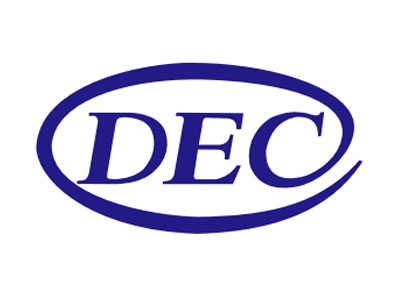

浦银安盛环保新能源A类:2025年第四季度利润247.83万元 净值增长率4.02%
Sou Hu Cai Jing· 2026-01-23 10:20
Core Viewpoint - The AI Fund Puyin Ansheng Environmental New Energy Class A (007163) reported a profit of 2.4783 million yuan for Q4 2025, with a net value growth rate of 4.02% during the reporting period [3]. Fund Performance - The fund's scale reached 62.5804 million yuan by the end of Q4 2025 [16]. - As of January 22, the unit net value was 2.397 yuan [3]. - The fund's performance over different time frames includes: - 3-month net value growth rate: 8.87%, ranking 73 out of 100 among comparable funds [3]. - 6-month net value growth rate: 46.35%, ranking 21 out of 100 [3]. - 1-year net value growth rate: 45.39%, ranking 49 out of 92 [3]. - 3-year net value growth rate: -11.96%, ranking 55 out of 68 [3]. Risk Metrics - The fund's Sharpe ratio over the past three years is 0.0855, ranking 55 out of 66 among comparable funds [9]. - The maximum drawdown over the past three years is 52.94%, with a ranking of 54 out of 66 [11]. - The highest quarterly maximum drawdown occurred in Q1 2020, at 29.78% [11]. Investment Strategy - The fund focuses on advanced manufacturing stocks, particularly in the tight supply chain segments of large storage, solid-state, and lithium batteries [3]. - The management is also monitoring opportunities in the photovoltaic industry and the expansion of new scenarios in wind power enterprises to enhance returns for investors [3]. Portfolio Concentration - The fund has a high concentration of holdings, with the top ten stocks including: - CATL (宁德时代) - Cambricon (寒武纪) - Industrial Fulian (工业富联) - Zhejiang Rongtai (浙江荣泰) - Shenzhen South Circuit (深南电路) - Yangtze Power (长江电力) - Shenghong Technology (胜宏科技) - Sungrow Power (阳光电源) - Topband (拓普集团) - Luoyang Molybdenum (洛阳钼业) [19]. Stock Positioning - The average stock position over the past three years is 81.04%, compared to a comparable average of 87.15% [14]. - The fund reached its highest stock position of 92.74% by the end of 2025, with a lowest position of 62.61% at the end of 2019 [14].





——电力环保2025年年报业绩前瞻:火电高增水电稳健有弹性风光核承压
Hua Yuan Zheng Quan· 2026-01-23 05:22
Investment Rating - The investment rating for the industry is "Positive" (maintained) [5] Core Views - The performance of thermal power is expected to improve due to a decrease in coal prices in 2025, with notable profit growth anticipated for companies like Jiantou Energy, which forecasts a 253% increase in net profit [5] - Hydropower operations are expected to remain stable, with certain regions experiencing favorable water conditions leading to significant profit growth for companies like Guizhou Power and Gui Guan Electric [5] - The impact of wind, solar, and nuclear energy markets is expected to be significant, with challenges anticipated for new energy operators in 2026 due to market adjustments and declining electricity prices [5] - Waste-to-energy companies are projected to maintain high growth rates, driven by improved capacity utilization and heating scale [6] Summary by Sections Thermal Power - The performance of thermal power is closely linked to coal price fluctuations, with national and regional improvements expected in 2025 [5] - Companies like Huaneng International and Datang Power are expected to benefit from lower coal prices and improved operational efficiency [5] Hydropower - Hydropower is anticipated to have stable operations, with specific regions like Sichuan and Yunnan expected to see varying water levels affecting output [5] - Companies such as Gui Guan Electric and Qian Yuan Power are projected to experience significant profit growth due to favorable water conditions [5] New Energy - The introduction of policies is expected to accelerate the transition in the new energy sector, but operators may face challenges due to market adjustments and declining prices [5] - The cancellation of VAT refunds for wind energy operators is expected to impact profits more significantly in 2026 [5] Environmental Protection - Waste-to-energy companies are expected to continue their growth trajectory, with key contributors being capacity utilization and efficiency improvements [6] - Major waste-to-energy companies are projected to maintain profit growth, with specific forecasts for companies like Yongxing Co. and Hanlan Environment [6] Investment Recommendations - Key recommendations include companies with both dividend yield and growth potential such as Gui Guan Electric, and those with low valuations like Jiazhen New Energy [6] - Attention is also drawn to companies with potential capacity increases and high dividend yields, such as Huaneng International and State Power Investment [6]