TRIANGLE TYRE(601163)

Search documents
三角轮胎(601163) - 三角轮胎对外投资公告
2026-01-15 08:00
证券代码:601163 证券简称:三角轮胎 公告编号:2026-001 重要内容提示: 交易实施尚需履行的审批及其他相关程序 本次投资已经公司董事会审议通过,未达到股东会审议标准。 本次投资尚需发改、商务、外管等国家相关主管部门的审批或备案,以及柬 埔寨当地相关部门的审批。 其它需要提醒投资者重点关注的风险事项 1、柬埔寨当地的法律法规、政策、商业环境与国内存在差异,未来国内外 市场、融资环境与政策、国际政治环境、经济形势等可能发生变化,本次投资存 在不能如期推进的风险。 三角轮胎股份有限公司对外投资公告 本公司董事会及全体董事保证本公告内容不存在任何虚假记载、误导性陈述 或者重大遗漏,并对其内容的真实性、准确性和完整性承担法律责任。 2、本次投资尚需发改、商务、外管等国家相关主管部门的审批或备案,以 及柬埔寨当地相关部门的审批,本次投资存在不确定性,不排除因无法获得批准 导致本次投资终止、延期或变更。 3、本次投资的预计收入、预计投资收益率等仅为预估数,未来受全球政治 经济环境、市场竞争、上游原材料价格波动、汇率波动及税收政策调整等风险因 素影响,能否达到预测的经济效益存在不确定性。 1 投资标的名称:在柬 ...

三角轮胎(601163) - 三角轮胎股份有限公司在柬埔寨新建年产700万条高性能子午线轮胎项目可行性研究报告
2026-01-15 08:00
三角轮胎股份有限公司 在柬埔寨新建年产 700 万条高性能 子午线轮胎项目 可行性研究报告 二〇二六年一月 | 1 | 总论 3 | | --- | --- | | 1.1 | 概述 3 | | 1.1.1 | 项目单位概况 3 | | 1.1.2 | 公司基本信息 3 | | 1.1.3 | 本报告的编制依据和编制原则 4 | | 1.2 | 研究结论 5 | | 1.2.1 | 管理层摘要与综合评价 5 | | 1.2.2 | 研究结论 7 | | 1.2.3 | 主要技术经济指标 7 | | 2 | 项目基本概述 8 | | 2.1 | 项目相关主要因素分析 8 | | 2.1.1 | 柬埔寨主要税种及优惠政策 8 | | 2.1.2 | 交通物流 10 | | 2.1.3 | 生产安全 10 | | 2.1.4 | 劳工 10 | | 2.1.5 | 其他运营和成本因素(水、电、气) 11 | | 2.1.6 | 土地 11 | | 2.2 | 投资环境情况 11 | | 2.2.1 | 政治经济 11 | | 2.2.2 | 宗教文化 13 | | 2.2.3 | 投资环境 13 | | 2.2.4 ...
三角轮胎:拟投资32.19亿元在柬埔寨建轮胎项目
2 1 Shi Ji Jing Ji Bao Dao· 2026-01-15 07:51
Core Viewpoint - The company plans to invest 3.219 billion RMB in a new high-performance tire production project in Cambodia, aiming for an annual output of 7 million tires [1] Investment Details - The project has been approved by the company's board and is pending approval from relevant national and local authorities [1] - The expected construction period is 17 months, with the project scheduled to commence in March 2026 [1] - The project will produce 6 million semi-steel radial tires and 1 million full-steel radial tires annually [1] Financial Projections - The anticipated return on investment for the project is 15.1% [1] - Once operational, the project is expected to generate an average annual revenue of 2.585 billion RMB [1] - The funding will come from the company's own funds and self-raised capital [1]
轮胎公司投数亿,收获新成就
Xin Lang Cai Jing· 2025-12-30 11:04
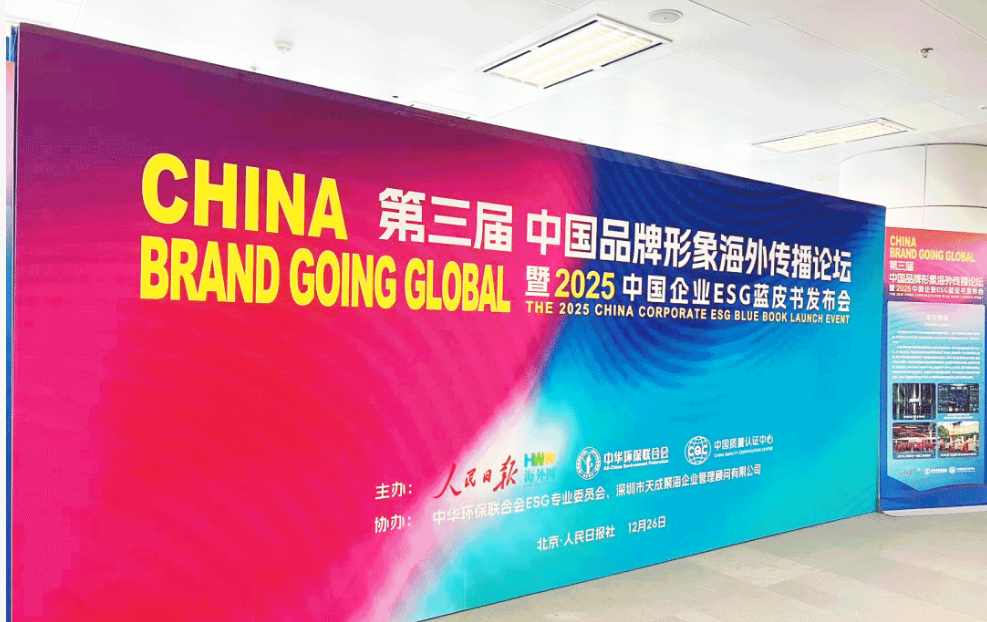
Core Viewpoint - The forum highlighted the importance of ESG (Environmental, Social, and Governance) practices among Chinese enterprises, with Triangle Tire being recognized for its sustainable development efforts [3][10]. Group 1: ESG Recognition - Triangle Tire was included in the "2025 China Enterprise ESG Blue Book" as a case study due to its outstanding practical experience [3][10]. - The company was also listed in the "China Enterprise ESG 100 Index" [11]. Group 2: Sustainable Development Strategy - As a leading enterprise in the industry, Triangle Tire has made sustainable development a core strategy [5][13]. - The company has invested hundreds of millions in upgrading environmental protection facilities to achieve energy conservation and emission reduction during production [6][13]. Group 3: Environmental Initiatives - Triangle Tire has developed green tires that can reduce vehicle fuel consumption by 3-5% [6][13]. - The company has established a waste tire recycling system, achieving an advanced level of resource utilization in the industry [8][15]. Group 4: Social Responsibility - Triangle Tire has implemented a comprehensive employee career development system and safety production guarantee mechanism [8][15]. - The company actively participates in public welfare initiatives such as poverty alleviation and community development, with total investments amounting to tens of millions [8][15].

威海环翠这家“巨头”领跑全国!
Qi Lu Wan Bao· 2025-12-30 02:13
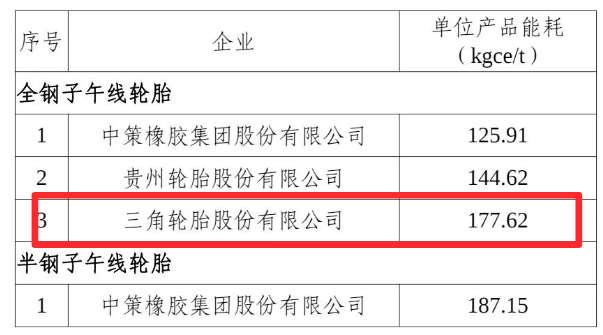
Core Viewpoint - The Ministry of Industry and Information Technology, the National Development and Reform Commission, and the State Administration for Market Regulation have released the list of energy efficiency "leaders" for key industries in 2025, with Triangle Tire Co., Ltd. being recognized for its all-steel radial tires [1]. Group 1: Energy Efficiency Leaders - The energy efficiency "leaders" are defined as products, companies, or units with the highest energy utilization efficiency within comparable categories [3]. - The selection process for energy efficiency "leaders" has been ongoing since 2016, aimed at promoting energy-saving and carbon reduction practices in key energy-consuming industries [3]. Group 2: Triangle Tire's Achievements - Triangle Tire has implemented measures across technology, processes, and management to effectively reduce energy consumption: - Technological updates include the use of nano-insulation materials to retrofit steam pipelines, resulting in a reduction of over 400 tons of standard coal consumption annually [6]. - Process optimization has led to a 5% decrease in energy consumption through the introduction of new tire composite component manufacturing processes [6]. - Management improvements involve the use of digital tools for precise control of energy consumption, addressing waste issues promptly [6]. Group 3: Regional Support and Future Focus - The Huancui District has established a systematic energy efficiency "leader" cultivation database to guide enterprises in energy-saving renovations and energy management system construction [6]. - The district aims to continue promoting green low-carbon circular development, enhancing the cultivation of energy efficiency "leaders" to support new industrialization and the development of new productive forces [6].
三角轮胎12月24日获融资买入323.47万元,融资余额2.32亿元
Xin Lang Zheng Quan· 2025-12-25 01:25
12月24日,三角轮胎涨0.56%,成交额3923.34万元。两融数据显示,当日三角轮胎获融资买入额323.47 万元,融资偿还542.75万元,融资净买入-219.28万元。截至12月24日,三角轮胎融资融券余额合计2.33 亿元。 融资方面,三角轮胎当日融资买入323.47万元。当前融资余额2.32亿元,占流通市值的2.01%,融资余 额低于近一年20%分位水平,处于低位。 融券方面,三角轮胎12月24日融券偿还300.00股,融券卖出400.00股,按当日收盘价计算,卖出金额 5792.00元;融券余量1.01万股,融券余额14.62万元,低于近一年30%分位水平,处于低位。 资料显示,三角轮胎股份有限公司位于山东省威海市青岛中路56号,成立日期2001年2月22日,上市日 期2016年9月9日,公司主营业务涉及各种轮胎的研发、制造和销售。主营业务收入构成为:轮胎 99.37%,其他0.33%,保理0.25%,运输0.05%。 截至9月30日,三角轮胎股东户数3.94万,较上期减少3.05%;人均流通股20294股,较上期增加3.14%。 2025年1月-9月,三角轮胎实现营业收入73.20亿元,同比减 ...
2025年1-10月中国橡胶轮胎外胎产量为99642.1万条 累计增长1%
Chan Ye Xin Xi Wang· 2025-12-24 03:19
Group 1 - The core viewpoint of the article highlights the projected decline in China's rubber tire production, with a forecasted output of 97.95 million units in October 2025, representing a year-on-year decrease of 2.5% [1] - From January to October 2025, the cumulative production of rubber tires in China is expected to reach 996.42 million units, showing a cumulative growth of 1% [1] - The data is sourced from the National Bureau of Statistics and compiled by Zhiyan Consulting, a leading industry consulting firm in China [1] Group 2 - The article mentions several listed companies in the tire industry, including Linglong Tire, Triangle Tire, Sailun Tire, Guizhou Tire, Windforce, Qingdao Double Star, General Motors, and S. Jiatong [1] - Zhiyan Consulting has released a report titled "Market Analysis and Industry Trend Research of China's Rubber Tire Outer Tire Industry from 2025 to 2031," indicating a focus on future market trends [1]


三角轮胎12月23日获融资买入643.83万元,融资余额2.35亿元
Xin Lang Zheng Quan· 2025-12-24 01:21
12月23日,三角轮胎跌0.55%,成交额4495.64万元。两融数据显示,当日三角轮胎获融资买入额643.83 万元,融资偿还417.58万元,融资净买入226.25万元。截至12月23日,三角轮胎融资融券余额合计2.35 亿元。 融资方面,三角轮胎当日融资买入643.83万元。当前融资余额2.35亿元,占流通市值的2.04%,融资余 额低于近一年20%分位水平,处于低位。 融券方面,三角轮胎12月23日融券偿还1100.00股,融券卖出800.00股,按当日收盘价计算,卖出金额 1.15万元;融券余量1.00万股,融券余额14.40万元,低于近一年20%分位水平,处于低位。 截至9月30日,三角轮胎股东户数3.94万,较上期减少3.05%;人均流通股20294股,较上期增加3.14%。 2025年1月-9月,三角轮胎实现营业收入73.20亿元,同比减少3.83%;归母净利润6.82亿元,同比减少 22.77%。 分红方面,三角轮胎A股上市后累计派现26.64亿元。近三年,累计派现11.84亿元。 机构持仓方面,截止2025年9月30日,三角轮胎十大流通股东中,香港中央结算有限公司位居第六大流 通股东,持股 ...
三角轮胎(601163.SH):公司没有在海南建厂
Ge Long Hui· 2025-12-22 09:36
格隆汇12月22日丨三角轮胎(601163.SH)在投资者互动平台表示,公司没有在海南建厂。 ...
本周Henry天然气、乙烷、辛醇价格涨幅居前:基础化工行业周报(20251201-20251207)-20251208
Huachuang Securities· 2025-12-08 07:14
Investment Rating - The report maintains a "Recommended" investment rating for the basic chemical industry [2] Core Views - The basic chemical industry is expected to see a layout period at the end of the year, with a high overall weighted operating rate and low price differentials indicating potential for a reversal [14] - The tire industry has shown signs of recovery, with leading companies expected to return to high growth by 2026 due to easing tariffs and recovering raw material costs [15] - The introduction of the "Stabilizing Growth Work Plan for the Petrochemical and Chemical Industry (2025-2026)" is anticipated to accelerate industry transformation and upgrading [16] Summary by Sections Industry Basic Data - The industry comprises 494 listed companies with a total market value of 54,965.58 billion and a circulating market value of 48,900.97 billion [2] Price and Performance - The report indicates a 2.0% absolute performance increase over one month, 28.6% over six months, and 25.6% over twelve months [3] - Key price increases this week include Henry natural gas (+18.5%), ethane (+10.4%), and octanol (+7.8%) [13] Sector Tracking - The tire sector is highlighted for its recovery, with nine out of eleven listed companies reporting profit growth in Q3 [15] - The agricultural chemical sector is noted for recent price increases in small pesticide varieties and the essential nature of fertilizers [7] - The phosphorous chemical sector is under observation for changes in industry dynamics due to favorable policies [7] Investment Strategies - Suggested investment routes include early-stage recovery stocks, scarce resource leaders, high-growth potential companies, and sectors with favorable supply-demand structures [14] - The report emphasizes the importance of focusing on the fluorine, silicon, and phosphorus sectors for their valuation elasticity and potential for new cycle star products [17][18] Policy and Regulatory Developments - The Ministry of Industry and Information Technology has initiated discussions on PTA industry development to prevent excessive competition and promote stable operations [16] - The report notes that the petrochemical sector is expected to undergo significant changes due to new policies aimed at optimizing supply and enhancing technological innovation [19]