
BOB(601169)

Search documents
银行如何支持科技创新企业发展?北京银行董事长霍学文揭秘如何“雪中送炭”摩尔线程
Jin Rong Jie· 2025-12-26 04:58
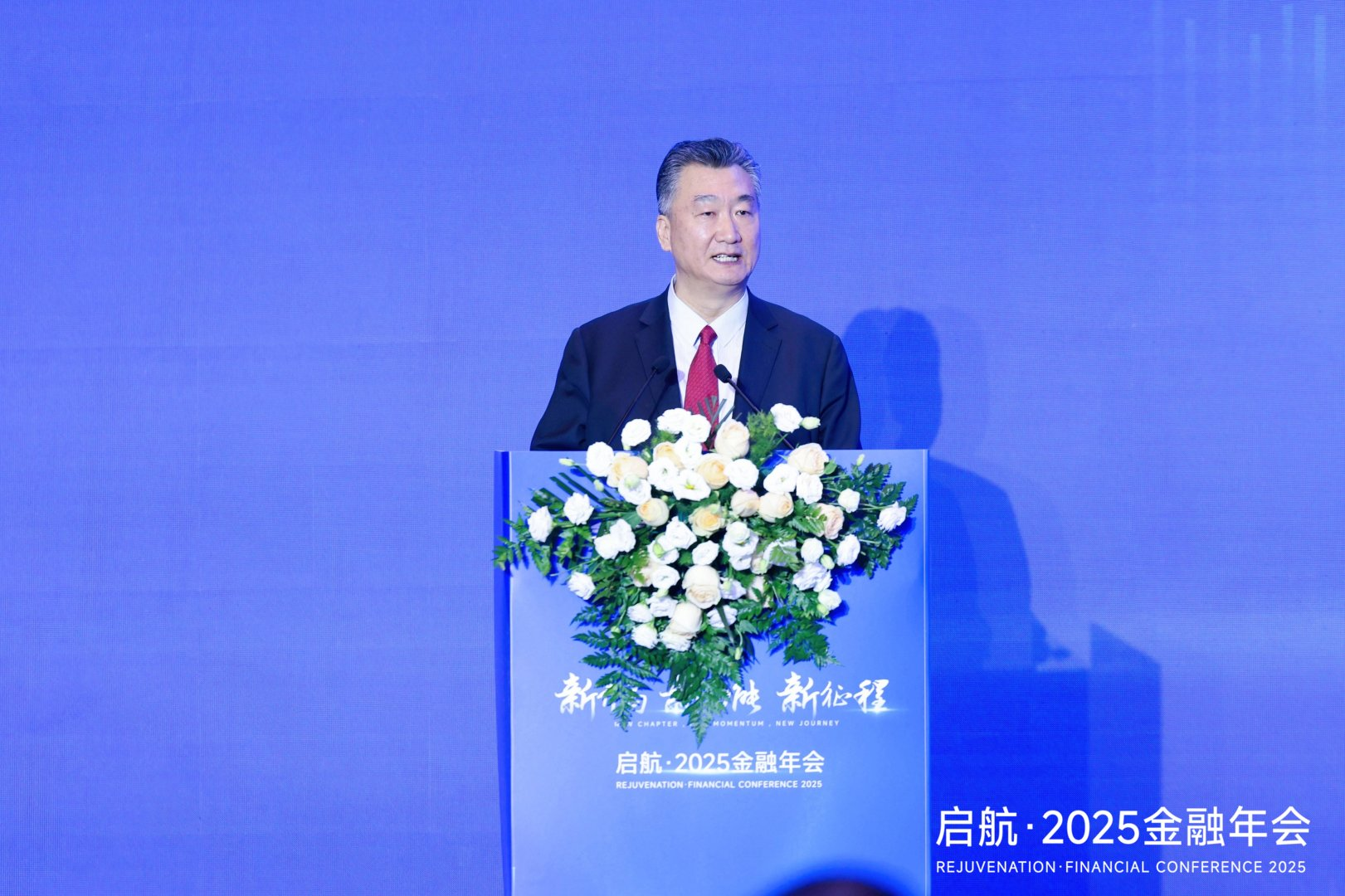
12月26日,由金融界主办的"启航·2025金融年会"在北京举行。本次年会以"新开局、新动能、新征程"为主题,来自政、商、学、研等领域的100多位嘉宾、 500余家金融机构和上市公司齐聚一堂,共赴这场思想盛宴。 针对银行"风控大于天"的行业属性与服务科创企业的适配性问题,霍学文分享了2022年底以来推行的CPCT方案。其中,C代表客户定位,重点覆盖国家 级、省市各级专精特新企业,在该行设有一级分行的12个省市,相关企业覆盖度已超50%;P指向产品创新,推出"领航e贷","现在我们专精特新企业有1/4 就是通过我们的模型算法,直接给予无担保、无抵押、纯信用、纯线上的服务,测额即可贷"。 第二个C指的是渠道层面,北京银行采用名单制营销、特色交流活动与支持专精特新节目三大方式。霍学文提到,摩尔线程就曾参与该行的早餐会,"不是 为了吃,也不是为了喝,而是为了交流",会上还会邀请投行等机构共谋发展;与北京广播电视台合作的《专精特新研究院》已播至第五季,助力企业获得 市场与资本认可。T就是Talent,涵盖技术与人才两方面,既要打造"人工智能驱动的商业银行",也要培养懂科技的专业人才,通过多期培训提升从业者对科 创企业的 ...


上市银行,密集出手!9家赎回,超1000亿!
券商中国· 2025-12-25 11:55
Core Viewpoint - The motivation for listed banks to redeem existing "high-interest" preferred shares is increasing in a low-interest-rate environment, aiming to save on interest costs [1][4]. Group 1: Redemption of Preferred Shares - Changsha Bank announced the redemption of 6 billion yuan of its preferred shares "Changyin You 1" on December 25, 2025, marking it as the fifth bank to redeem preferred shares in December [1][4]. - A total of 9 banks have redeemed preferred shares since 2025, with a cumulative redemption amount exceeding 1,000 billion yuan [4][5]. - The redemption actions include banks such as Nanjing Bank (4.9 billion yuan), Shanghai Bank (20 billion yuan), and Beijing Bank (4.9 billion yuan) [3][4]. Group 2: Market Trends and Supply - The total outstanding preferred shares of banks is 6,453.5 billion yuan, accounting for 99.58% of the preferred share market [5]. - Since 2020, the issuance of new preferred shares has nearly halted, leading to a gradual reduction in the outstanding volume [5][6]. - The introduction of perpetual bonds in 2019 has diversified the capital supplement tools available to banks, reducing the attractiveness of preferred shares [5][6]. Group 3: Investment Dynamics - Preferred shares are becoming increasingly scarce, making them a valuable asset for asset management institutions, including public funds and insurance funds [8][9]. - As of June 2025, approximately 3,079 billion yuan of bank preferred shares were held by wealth management products, representing 40.66% of the total outstanding preferred shares [8]. - The liquidity of bank preferred shares remains low compared to other capital supplement tools, with a low turnover rate in the market [9].





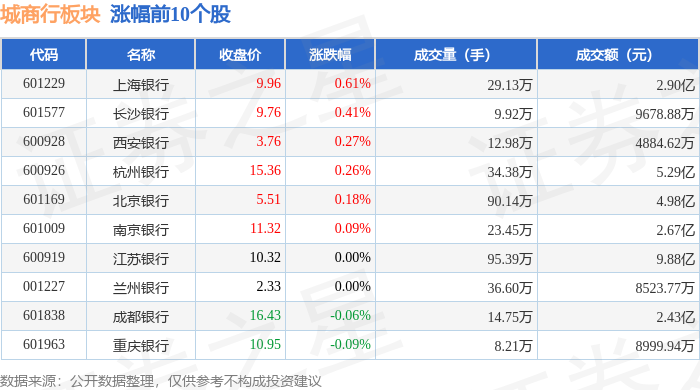
城商行板块12月25日涨0.07%,上海银行领涨,主力资金净流出1.11亿元
Zheng Xing Xing Ye Ri Bao· 2025-12-25 09:14
Market Performance - The city commercial bank sector increased by 0.07% compared to the previous trading day, with Shanghai Bank leading the gains [1] - The Shanghai Composite Index closed at 3959.62, up 0.47%, while the Shenzhen Component Index closed at 13531.41, up 0.33% [1] Individual Stock Performance - Shanghai Bank (601229) closed at 9.96, up 0.61% with a trading volume of 291,300 shares and a transaction value of 290 million [1] - Other notable performers include: - Changsha Bank (601577) at 9.76, up 0.41% [1] - Xi'an Bank (600928) at 3.76, up 0.27% [1] - Hangzhou Bank (600926) at 15.36, up 0.26% [1] - Beijing Bank (601169) at 5.51, up 0.18% [1] Capital Flow Analysis - The city commercial bank sector experienced a net outflow of 111 million from institutional investors, while retail investors saw a net inflow of 121 million [2] - The overall capital flow indicates a mixed sentiment, with institutional investors withdrawing funds while retail investors are increasing their positions [2] Detailed Capital Flow by Bank - Hangzhou Bank (600926) had a net inflow of 38.46 million from institutional investors, but a net outflow of 43.46 million from speculative funds [3] - Beijing Bank (601169) saw a net inflow of 23.41 million from institutional investors, with a net outflow of 18.77 million from speculative funds [3] - Guizhou Bank (601997) had a significant net inflow of 22.19 million from institutional investors, but a net outflow of 36.07 million from retail investors [3]
银行业积极响应信用修复政策 支持个人和家庭重塑信用
Jin Rong Shi Bao· 2025-12-25 02:58
Core Viewpoint - The People's Bank of China has announced a one-time credit repair policy aimed at supporting individuals with damaged credit who actively repay their debts, in response to the ongoing impacts of the COVID-19 pandemic [1][3]. Group 1: Policy Implementation - The policy applies to personal overdue information for amounts not exceeding 10,000 RMB from January 1, 2020, to December 31, 2025, where individuals can have their overdue debts removed from the credit system if repaid by March 31, 2026 [2]. - Financial institutions have quickly responded to the policy, emphasizing the importance of promoting and implementing the credit repair measures [1][3]. Group 2: Benefits for Individuals and Financial Institutions - The policy is expected to provide a corrective opportunity for individuals with past credit issues, improving their credit status and stimulating economic activity [3]. - It will help financial institutions better identify individual credit situations, enhancing the quality and effectiveness of inclusive financial services [3][4]. - The policy is anticipated to activate a significant number of potential credit customers, positively impacting consumer credit growth [4]. Group 3: Relationship Between Banks and Customers - The implementation of the policy is likely to foster a better relationship between banks and customers, encouraging individuals to value and maintain their credit [5]. - Banks are expected to provide improved financial services based on the enhanced credit environment created by the policy [5]. Group 4: Challenges for Financial Institutions - Banks face the challenge of optimizing risk control capabilities while implementing the credit repair policy [6]. - There is pressure on banks to quickly adjust risk control models to incorporate the new repair rules and prevent secondary risks from historical record changes [7]. - Financial institutions need to ensure accurate reporting of repayment information to the credit system and may need to develop new assessment models for the repaired customer group [7][8].




银行业在并购金融领域创新步伐提速 战略重心转向系统性的生态构建与市场布局
Xin Lang Cai Jing· 2025-12-24 23:36
Group 1 - The banking industry is accelerating innovation in the mergers and acquisitions (M&A) financing sector, with several landmark "first" projects being launched as the year-end approaches [1] - Notable examples include Beijing Bank issuing the first digital RMB M&A loan for technology enterprises in Hunan Province and SPD Bank's Suzhou branch completing the first nationwide ABS project for holding-type thermal power real estate [1] - A significant trend observed this year is that multiple banks have hosted a series of high-profile forums and closed-door seminars specifically focused on M&A financing, indicating a shift in the banking sector's strategic focus from individual case operations to systematic ecosystem building and market positioning [1] Group 2 - This strategic shift reflects a deeper and more comprehensive competitive landscape for banks, centered around industrial upgrades and their own transformation [1]

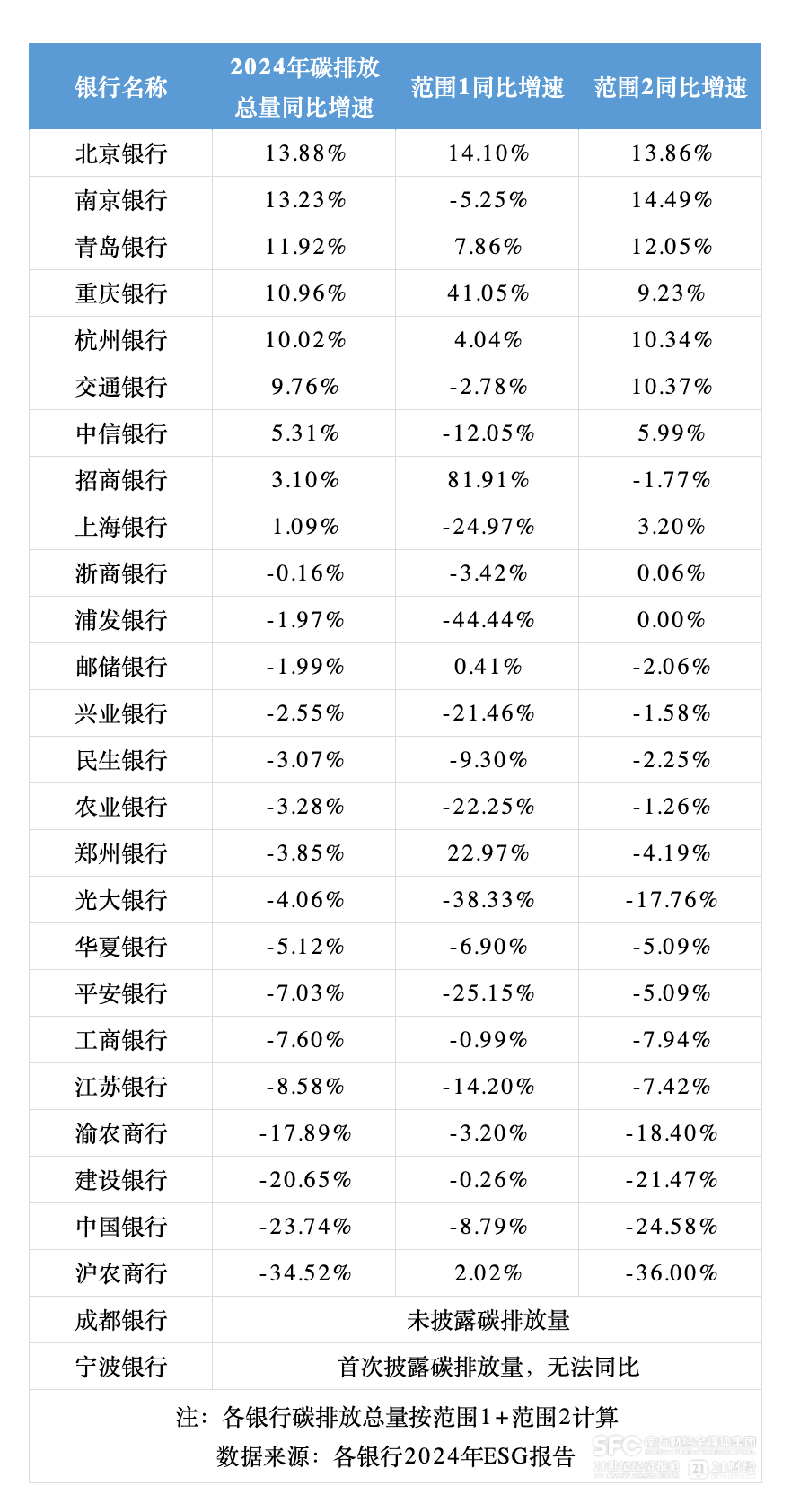
A股银行ESG强信披名单扩容,北京银行、南京银行成碳排大户
2 1 Shi Ji Jing Ji Bao Dao· 2025-12-24 12:15
2026年即将到来,在监管要求下ESG 强制信息披露元年大幕正在拉开,而A股银行ESG强信披名单也迎来了扩容。 依据证监会指导沪深北交易所《上市公司自律监管指引——可持续发展报告》,ESG强信披阵营锁定上证180、深证100、科创50、创业板指成分股及境内 外同步上市企业。伴随上证180等指数调整,成都银行、沪农商行两家上市银行新晋入列。 | 银行名称 | 2024年碳排放 总量同比增速 | 范围1同比增速 | 范围2同比增速 | | --- | --- | --- | --- | | 北京银行 | 13.88% | 14.10% | 13.86% | | 南京银行 | 13.23% | -5.25% | 14.49% | | 青岛银行 | 11.92% | 7.86% | 12.05% | | 重庆银行 | 10.96% | 41.05% | 9.23% | | 杭州银行 | 10.02% | 4.04% | 10.34% | | 交通银行 | 9.76% | -2.78% | 10.37% | | 中信银行 | 5.31% | -12.05% | 5.99% | | 招商银行 | 3.10% | 81.9 ...
三十载为民服务 北京银行金融赋能城市发展谱新篇
经济观察报· 2025-12-24 10:24
Core Viewpoint - Beijing Bank has integrated the principle of "people-centered" finance into its operations over the past 30 years, contributing to urban renewal and cultural heritage preservation while enhancing the quality of life for citizens [1][9]. Group 1: Urban Renewal and Cultural Heritage - The development of Beijing Bank over the past 30 years reflects a commitment to balancing cultural heritage preservation with modern urban needs, following the philosophy of "protecting while developing" [2]. - The renovation of the Longfu Temple area serves as a model for urban renewal, where Beijing Bank provided 1.1 billion yuan in syndicated loans to support the project, blending traditional architecture with modern commercial and cultural elements [5]. - The revitalization of Longfu Temple has transformed it into a popular destination for leisure and consumption, enhancing local employment and creating a harmonious coexistence of historical memory and modern life [5]. Group 2: Innovative Financial Solutions - Beijing Bank has introduced innovative financial products such as "cultural heritage credit loans," providing 10 million yuan in comprehensive credit to support the transformation of the Tai'anli cultural and arts center [8]. - The Tai'anli center, which opened in April 2023, exemplifies the concept of "heritage with credit," allowing visitors to engage with history in an immersive environment [8]. Group 3: Commitment to Public Welfare - Over the past three decades, Beijing Bank has actively participated in the systematic protection and innovative transformation of Beijing's cultural heritage, enhancing the sense of gain and happiness among the populace [9]. - The bank's efforts in supporting cultural consumption, small business development, and community infrastructure have solidified its role in promoting public welfare [9][10]. Group 4: Future Outlook - Looking ahead, Beijing Bank aims to continue its commitment to "people-centered" finance, contributing to national strategies and improving the well-being of citizens while pursuing high-quality development [10].

三十载为民服务 北京银行金融赋能城市发展谱新篇
Jing Ji Guan Cha Wang· 2025-12-24 08:55
Core Viewpoint - Beijing is balancing cultural heritage preservation with urban functional upgrades, exemplified by the development of Beijing Bank, which aims to empower cultural heritage and improve urban living through innovative financial solutions [1][4]. Group 1: Urban Renewal Projects - The Longfu Temple area, a cultural landmark in Beijing, is undergoing a significant upgrade to blend traditional and modern elements, supported by an 1.1 billion yuan loan from Beijing Bank [2]. - The project aims to preserve the historical essence while introducing modern commercial and cultural activities, creating a vibrant space for both residents and visitors [2]. - This model of "developing while protecting" serves as a reference for urban renewal in Beijing, aligning with the principle of "People's city built by the people, for the people" [2]. Group 2: Cultural Heritage Financing - The Tai'anli area, a historical site, faced challenges in preservation and activation, leading to the establishment of a cultural arts center with a 10 million yuan credit facility from Beijing Bank [3]. - This initiative reflects Beijing Bank's innovative approach to financing cultural heritage, promoting the concept of "cultural relics having credit" [3]. - The Tai'anli Cultural Arts Center has transformed into a multifaceted space for social interaction, creativity, and cultural experiences, allowing visitors to engage with history in an immersive way [3]. Group 3: Beijing Bank's Role in Cultural Development - Over the past 30 years, Beijing Bank has actively participated in the protection and sustainable development of Beijing's cultural heritage, providing financial services for various urban renewal projects [4]. - The bank's efforts include supporting cultural consumption, small business development, and community infrastructure, enhancing the quality of life for residents [4]. - The ongoing projects at Longfu Temple and Tai'anli illustrate Beijing Bank's commitment to integrating financial services with the city's cultural and economic growth [4].
深圳赛格股份有限公司 关于控股子公司履行担保责任的进展公告
Zhong Guo Zheng Quan Bao - Zhong Zheng Wang· 2025-12-24 06:23
登录新浪财经APP 搜索【信披】查看更多考评等级 公司及董事会全体成员保证信息披露的内容真实、准确、完整,没有虚假记载、误导性陈述或重大遗 漏。 深圳市赛格地产投资股份有限公司(以下简称"赛格地产")系深圳赛格股份有限公司(以下简称"公 司")持股比例79.02%的控股子公司。惠州市群星房地产开发有限公司(以下简称"惠州群星")系赛格 地产持股比例88%的控股子公司,惠州群星以自有资产抵押向北京银行股份有限公司深圳分行(以下简 称"北京银行")申请人民币1.5亿元综合授信额度的贷款,按照银行的相关要求,赛格地产与北京银行 签署《保证合同》,赛格地产作为保证人对惠州群星上述1.5亿元综合授信额度的贷款提供连带责任保 证担保,保证期限为债务合同下被担保债务的履行期届满之日起两年,惠州群星向赛格地产提供反担 保。详见公司于2018年12月6日在巨潮资讯网上披露的《关于控股子公司深圳市赛格地产投资股份有限 公司为其控股子公司向银行申请综合授信提供担保的公告》(公告编号:2018-087)。 惠州群星因外部经营环境压力、金融机构授信政策收紧等因素影响导致资金紧张,未能按期向北京银行 支付到期借款本金及利息,赛格地产已向 ...

重塑个人信用构建诚信社会
Jing Ji Ri Bao· 2025-12-23 01:19
对于广大群众关心的逾期信息何时调整的问题,中国人民银行征信中心主任张子红回应称,征信系 统将根据个人逾期债务的结清时间,分两种情形进行处理。第一种情形是,个人已经于2025年11月30日 (含)前足额偿还逾期债务的,征信系统自2026年1月1日起就不予展示相关逾期信息。第二种情形是, 个人于2025年12月1日至2026年3月31日之间足额偿还逾期债务的,征信系统于次月月底前不予展示相关 逾期信息。比如,个人在2026年1月还清欠款的,相关逾期信息在2月底前即可展示为正常还款状态。 为配合做好一次性信用修复政策的落地工作,多家银行已经开展了相关准备。中国工商银行副行长 赵桂德介绍,工行组织对全行网上银行、手机银行和网点智能设备的信用报告查询功能进行全面"体 检",确保查询功能正常,能够及时响应客户查询本人信用报告的需求。同时,加强征信数据报送管 理,将客户还款信息及时、准确、完整地提供给征信系统,确保符合条件的客户能享受政策利好。此 外,关注政策实施后客户风险表现,持续做好信用评分模型及相关指标有效性的监测,及时动态完善风 控模型,优化风控策略。 早在今年10月份,中国人民银行行长潘功胜在2025金融街论坛年 ...