
PICC(601319)

Search documents
一周保险速览(1.30—2.6)
Cai Jing Wang· 2026-02-06 11:01
Regulatory Insights - In 2025, the original insurance premium income is approximately 6.12 trillion yuan, representing a year-on-year growth of 7.43%. Property insurance premium income is about 1.47 trillion yuan, while life insurance premium income is around 4.65 trillion yuan [1] - By the end of 2025, the total assets of the insurance industry are approximately 41.32 trillion yuan, an increase of 15.06% compared to the end of 2024 [1] Corporate Dynamics - China Life reported a consolidated premium income of 887.4 billion yuan in 2025, reflecting a year-on-year increase of 7.4%. The group's consolidated operating revenue reached 1.28 trillion yuan, up 11.3%, with investment income of 401.1 billion yuan, a growth of 17.6% [2] - China Pacific Insurance achieved premium income exceeding 730 billion yuan in 2025, with claims paid amounting to 473 billion yuan and a total insurance liability of 36.48 trillion yuan [3] Financial Personnel - Wang Gang has been appointed as the chairman of Lujiazui Guotai Life Insurance, with approval from the Shanghai Financial Regulatory Bureau [4]

11家银行因虚增存贷款被罚、规模增7.5倍,违规考核问题突出
2 1 Shi Ji Jing Ji Bao Dao· 2026-02-06 10:36
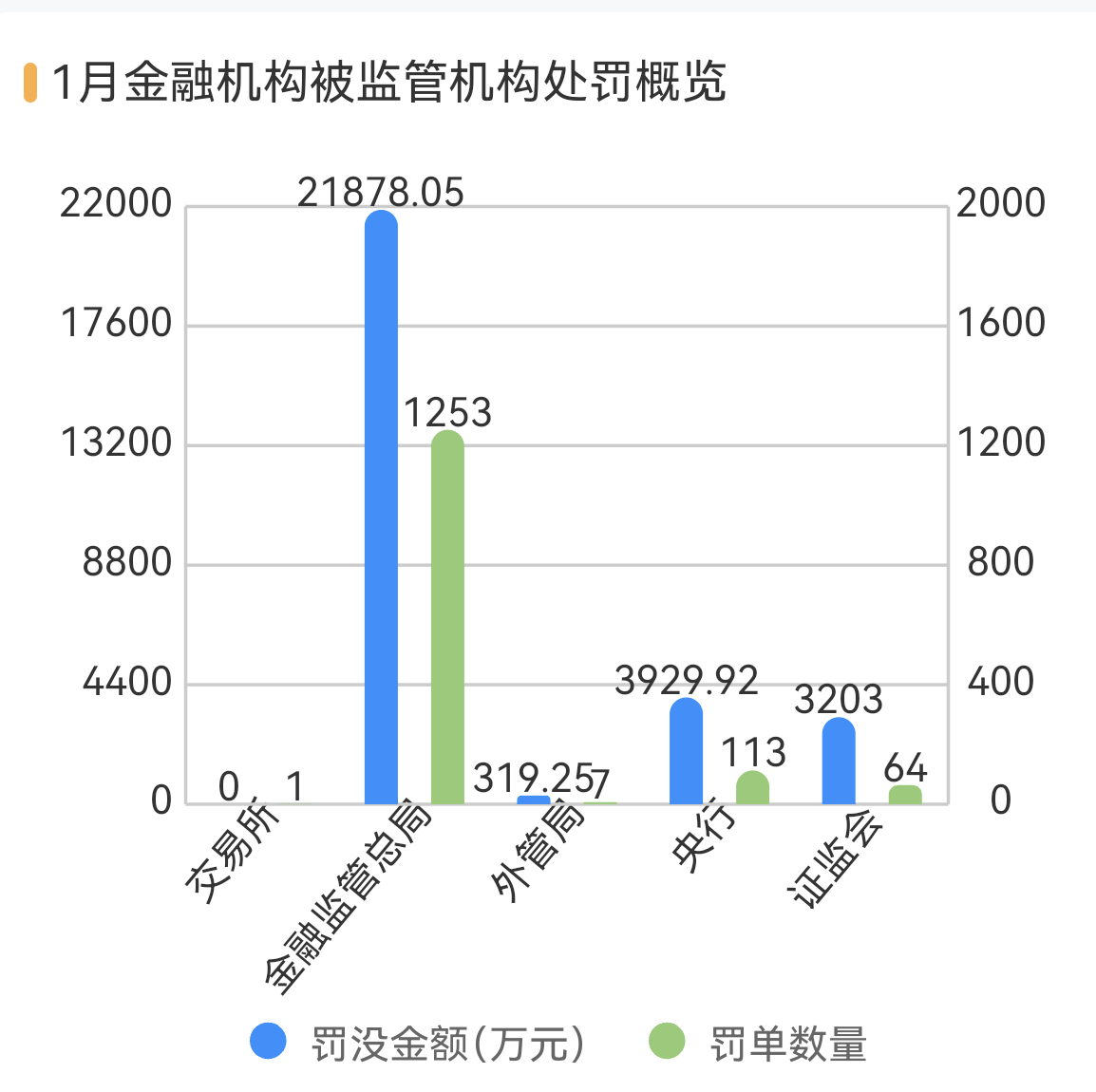
Core Insights - In January, the number of fines imposed on financial institutions increased significantly year-on-year, while the total amount of fines decreased [1][3] Group 1: Overview of Penalties - A total of 1,438 fines were issued to financial institutions in January, representing a year-on-year increase of 54.13%, with a total penalty amount of 29.3 million yuan, down 20.16% from the previous year [1] - The Financial Regulatory Bureau issued 1,253 fines, an increase of 83.19% year-on-year, with a total penalty amount of 21.9 million yuan, up 15.87% [3] - The People's Bank of China issued 113 fines, a decrease of 38.59% year-on-year, while the China Securities Regulatory Commission issued 64 fines, an increase of 18.52% [3] Group 2: Penalties by Financial Institution Type - Banks received 830 fines, an increase of 41.88% year-on-year, with a total penalty amount of 21.4 million yuan, down 25.95% [6] - The insurance sector faced 532 fines, a year-on-year increase of 84.08%, with a slight decrease in total penalty amounts [6] - Securities firms received 12 fines, and futures companies received 9 fines, while private equity firms faced 44 fines [6] Group 3: Major Penalties - Shanghai Riyi Equity Investment Fund Co., Ltd. was fined 14 million yuan for failing to operate investments as per contractual agreements [9] - The actual controller of Shanghai Riyi, Sun, received a fine of 11.9 million yuan for similar violations, including misleading investors about capital safety [9] - Zhejiang Min Tai Commercial Bank was fined 7.15 million yuan for serious violations of prudent management rules [9] Group 4: Compliance Trends - The number of fines related to inflated loan and deposit figures increased 7.5 times month-on-month, with 34 fines issued in January compared to only 4 in December [11] - Misleading sales and promotional practices resulted in 34 fines, doubling from the previous month, primarily affecting insurance companies and banks [12] Group 5: Penalty Rankings - In January, non-bank institutions, particularly insurance companies, dominated the list of penalties, with Shanghai Riyi Equity Investment Fund being the highest fined non-bank entity [17] - China Ping An Property Insurance and China People's Property Insurance ranked second and third in total penalty amounts [17]





中国人保(601319) - 中国人保第五届董事会第十五次会议决议公告
2026-02-06 09:30
证券代码:601319 证券简称: 中国人保 公告编号:临 2026-002 中国人民保险集团股份有限公司 第五届董事会第十五次会议决议公告 本公司董事会及全体董事保证本公告内容不存在任何虚假记 载、误导性陈述或者重大遗漏,并对其内容的真实性、准确性和完 整性承担法律责任。 本公司第五届董事会第十五次会议(以下简称"会议")的通知 和材料于 2026 年 1 月 19 日以书面方式通知全体董事,会议于 2026 年 2 月 6 日在北京市西城区西长安街 88 号中国人保大厦以现场会议 方式召开。会议由丁向群董事长主持。会议应出席董事 12 名,实际 出席董事 11 名,委托出席 1 名。高平阳董事委托徐丽娜董事出席会 议并表决。部分高级管理层成员列席了会议。会议的召开符合《中华 人民共和国公司法》等相关法律、行政法规、部门规章和《中国人民 保险集团股份有限公司章程》的规定,会议合法、有效。 经与会董事审议并表决,形成以下会议决议: 六、审议通过了《关于修订〈中国人民保险集团数据安全管理办 法〉的议案》 一、审议通过了《关于集团2026年度经营计划的议案》 表决结果:12 票同意,0 票反对,0 票弃权。 二、 ...
中国人民保险集团(01339) - 海外监管公告 - 中国人保第五届董事会第十五次会议决议公告
2026-02-06 09:30
香港交易及結算所有限公司及香港聯合交易所有限公司對本公告的內容概不負責,對其準確性 或完整性亦不發表任何聲明,並明確表示,概不對因本公告全部或任何部分內容而產生或因倚 賴該等內容而引致的任何損失承擔任何責任。 (於中華人民共和國註冊成立之股份有限公司) (股份代號:1339) 丁向群 董事長 中國北京,二零二六年二月六日 於本公告日,公司執行董事為丁向群女士、趙鵬先生及肖建友先生,非執行董事 為徐向先生、王少群先生、喻強先生及宋洪軍先生,獨立非執行董事為徐麗娜女 士、王鵬程先生、高平陽先生、賈若先生及楊長纓女士。 海外監管公告 本公告乃中國人民保險集團股份有限公司根據《香港聯合交易所有限公司證券上 市規則》第13.10B條的披露義務而作出。 茲載列該公告如下,僅供參閱。 承董事會命 中國人民保險集團股份有限公司 证券代码:601319 证券简称: 中国人保 公告编号:临 2026-002 中国人民保险集团股份有限公司 第五届董事会第十五次会议决议公告 本公司董事会及全体董事保证本公告内容不存在任何虚假记 载、误导性陈述或者重大遗漏,并对其内容的真实性、准确性和完 整性承担法律责任。 本公司第五届董事会第十五次 ...
寿险银保渠道保费增速榜 透视三大阵营分化
Nan Fang Du Shi Bao· 2026-02-05 23:13
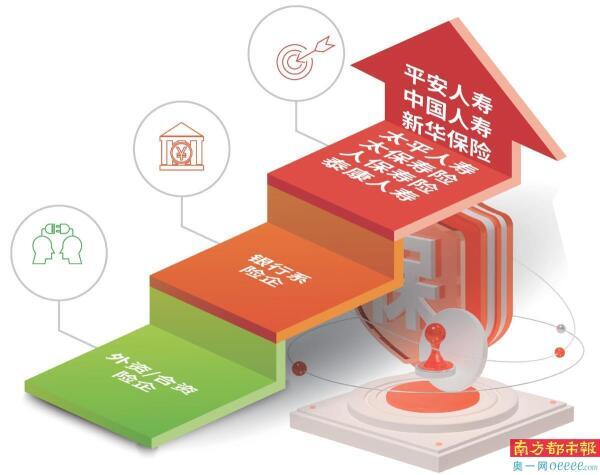
Core Insights - The article discusses the increasing trend of banks promoting insurance products, driven by the ongoing "deposit migration" and the urgent need for banks to boost their intermediary business revenue [2][6] - The insurance industry is witnessing a competitive landscape in the bancassurance channel, with significant growth in premium income, particularly among leading insurance companies [3][6] Group 1: Industry Trends - In 2025, the bancassurance channel for life insurance is expected to see an overall premium growth rate of approximately 10%, with leading insurers outperforming the industry average [3] - The "old seven" life insurance companies (including Ping An Life and China Life) achieved over 40% growth in bancassurance premiums, with Ping An Life leading at a remarkable 163% year-on-year increase [3][6] - The total premium income of the insurance industry surpassed 6 trillion yuan in 2025, marking a 7.4% year-on-year growth, with life insurance companies contributing significantly [6] Group 2: Competitive Landscape - There is a clear division among bank-affiliated insurance companies, with some experiencing significant growth while others face declines; for instance, Everbright Life Insurance saw a 111% increase, while others like China Merchants Life faced negative growth [4][5] - Foreign and joint venture insurers, although smaller in size, are achieving impressive growth rates by focusing on high-net-worth clients and long-term value services [5] Group 3: Strategic Developments - The removal of restrictions on the number of insurance companies a single bank branch can partner with has expanded product selection and improved matching with customer needs [7] - Insurers are actively enhancing their bancassurance channel strategies, with predictions indicating that new business value growth will be primarily driven by this channel in 2026 [8][11] - Major insurers are establishing extensive partnerships with banks, with China Life collaborating with over 100 banks and other companies also expanding their banking partnerships [9][11]

中国人民保险集团(01339.HK):2月5日南向资金减持308万股
Sou Hu Cai Jing· 2026-02-05 19:43
Core Viewpoint - Southbound funds have reduced their holdings in China People's Insurance Group (01339.HK) by 3.08 million shares on February 5, with a total net reduction of 15.3 million shares over the last five trading days and 30.44 million shares over the last 20 trading days [1] Group 1: Shareholding Changes - Southbound funds have reduced their holdings in China People's Insurance Group for 4 out of the last 5 trading days, totaling a net reduction of 15.3 million shares [1] - Over the last 20 trading days, there have been 15 days of reductions, with a cumulative net reduction of 30.44 million shares [1] - As of now, southbound funds hold 2.522 billion shares of China People's Insurance Group, representing 28.89% of the company's total issued ordinary shares [1] Group 2: Company Overview - China People's Insurance Group is a holding company primarily engaged in providing insurance products [1] - The company and its subsidiaries are involved in various insurance sectors, including property insurance, health insurance, life insurance, reinsurance, Hong Kong insurance, and pension insurance [1] - The property insurance segment includes products for both corporate and individual clients, such as motor vehicle insurance, agricultural insurance, property insurance, and liability insurance [1] - The health insurance segment focuses on health and medical insurance products [1] - The life insurance segment offers various life insurance products, including participating, whole life, annuity, and universal life insurance [1] - The Hong Kong insurance segment covers property insurance business in Hong Kong [1] - The pension insurance segment includes corporate annuities and occupational annuities [1]

云知声成功中标中国人保医保知识智能问答系统项目
Zheng Quan Ri Bao· 2026-02-05 12:42
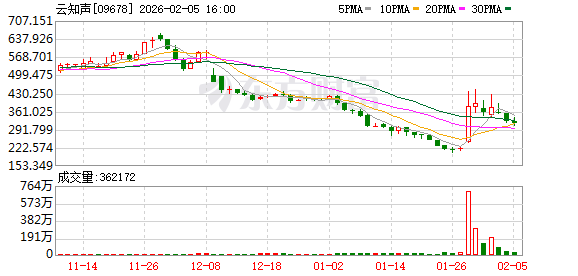
Group 1 - China People's Insurance Group (China P&C) is committed to enhancing service efficiency through technological innovation, focusing on the development of an intelligent Q&A system for medical insurance knowledge to meet the growing demand for medical insurance inquiries [1][2] - The project aims to build a high-efficiency and precise medical insurance knowledge intelligent Q&A system, with a tender announcement published on January 4, 2026, attracting several well-known technology companies to participate [1] - The procurement focuses on system development and knowledge base construction, utilizing intelligent Q&A technology to help China P&C quickly respond to medical insurance policy inquiries, reduce labor costs, and improve user experience [1] Group 2 - Cloud Wisdom Technology Co., Ltd. (Cloud Wisdom) successfully won the bid for the medical insurance knowledge intelligent Q&A system project from China P&C, with a bid amount of 2.714 million yuan [2] - This collaboration marks a significant breakthrough for Cloud Wisdom in the application of artificial intelligence within the insurance industry, providing core support for the intelligentization of medical insurance services at China P&C [2] - Cloud Wisdom's strong capabilities in natural language processing and knowledge graph technology were recognized by evaluation experts, leading to its top position in the list of winning candidates [1][2]
理赔服务见力度显温度
Jing Ji Ri Bao· 2026-02-04 22:17
Core Insights - The insurance industry is focusing on improving claims efficiency and addressing challenges related to slow processes, thereby enhancing its role as a social stabilizer and economic shock absorber [1] Group 1: Claims Efficiency - Multiple property insurance companies are shifting claims from a "back-end" function to a "front-end" service, making it a key indicator of their functional and service capabilities [2] - In 2025, China People's Insurance Company (CPIC) reported over 300 billion yuan in claims, with vehicle insurance making up a significant portion; the trend is towards increased online and automated processing of small claims [2] - The competition in vehicle insurance claims is evolving from merely the amount paid to the efficiency and method of payment, with a focus on remote assessments and online reporting [2] Group 2: New Energy Vehicle Claims - The rapid adoption of new energy vehicles is raising the bar for claims standards due to higher repair costs associated with components like batteries and sensors [3] - Insurance companies are enhancing their claims capabilities by collaborating with manufacturers and authorized repair networks, emphasizing the need for precise assessments and clear payouts [3] Group 3: Natural Disaster Claims - The recent earthquake in Tibet highlighted the insurance industry's ability to mobilize quickly for disaster claims, with CPIC initiating emergency mechanisms and processing claims efficiently [3][4] - The company reported handling 30,200 claims and disbursing 173 million yuan in payouts within a short timeframe, showcasing the challenges of disaster claims, such as communication disruptions [3][4] Group 4: Health Insurance Insights - Health insurance claims, particularly critical illness and medical insurance, are becoming focal points for insurers, with significant payouts reported [5][6] - In 2025, CPIC's health insurance claims included 424,300 cases totaling 20.1 billion yuan, with critical illness claims accounting for 10.53 billion yuan [5] - The most common critical illnesses vary by age group, indicating a need for insurers to adapt their products to emerging health trends [5] Group 5: Technological Integration - The insurance industry is increasingly adopting artificial intelligence to streamline claims processes, with many claims being processed within hours [8][9] - Companies like Ant Group and Tencent are implementing AI-driven solutions to enhance customer experience and expedite claims processing, including features like automatic document recognition and real-time claims updates [9][10] - The introduction of "one-day claims" for critical illnesses aims to address urgent financial needs for patients, demonstrating a commitment to customer-centric service [9]

中国人民保险集团股份有限公司关于独立董事任职的公告
Xin Lang Cai Jing· 2026-02-04 19:29
Core Viewpoint - The announcement details the appointment of Ms. Yang Changying as an independent director of China People's Insurance Group Co., Ltd., effective from February 2, 2026, following approval from the National Financial Regulatory Administration [2][5]. Group 1 - The company held its first extraordinary general meeting of shareholders on April 29, 2025, where Ms. Yang was elected as an independent director [1]. - Ms. Yang's term as an independent director will commence upon the approval of her qualifications by the National Financial Regulatory Administration [1]. - Ms. Yang will also serve on the Board's Strategy and Investment/Sustainability Committee, Nomination and Remuneration Committee, and Related Party Transaction Control Committee starting from the same date [2]. Group 2 - The company welcomes Ms. Yang to the Board [3]. - Ms. Yang has made a declaration affirming her independence and commitment to fulfilling her responsibilities as an independent director [5]. - She has pledged to dedicate sufficient time and effort to uphold the rights of the insurance company, policyholders, and minority shareholders [5].
中国人保(601319) - H股公告
2026-02-04 12:45
香港交易及結算所有限公司及香港聯合交易所有限公司對本公告的內容概不負責,對其準確性 或完整性亦不發表任何聲明,並明確表示,概不對因本公告全部或任何部分內容而產生或因倚 賴該等內容而引致的任何損失承擔任何責任。 (於中華人民共和國註冊成立之股份有限公司) (股份代號:1339) 董事名單與其角色和職能 三、獨立非執行董事 一、執行董事 丁向群 (董事長) 趙 鵬 (副董事長) 肖建友 二、非執行董事 徐 向 王少群 喻 強 宋洪軍 M: 有關專業委員會的委員 中國北京,2026年2月4日 2 董事會下設五個董事會專業委員會,各董事會專業委員會的組成如下: 委員會 董事 戰略與投資╱ 可持續發展 委員會 風險管理與 消費者權益 保護委員會 審計 委員會 提名薪酬 委員會 關聯交易 控制委員會 丁向群 C 趙 鵬 C 肖建友 M 徐 向 M M 王少群 M M 喻 強 M M 宋洪軍 M M 徐麗娜 M M M 王鵬程 C M M 高平陽 M M C 賈 若 M M C 楊長纓 M M M 徐麗娜 王鵬程 高平陽 賈 若 楊長纓 1 四、董事會專業委員會 C: 有關專業委員會的主任委員 ...