CHINA TELECOM(601728)

Search documents
中国电信(601728) - 中国电信股份有限公司H股公告-股份发行人的证券变动月报表
2026-01-04 09:15
股份發行人及根據《上市規則》第十九B章上市的香港預託證券發行人的證券變動月報表 截至月份: 2025年12月31日 狀態: 新提交 致:香港交易及結算所有限公司 公司名稱: 中國電信股份有限公司 呈交日期: 2026年1月2日 I. 法定/註冊股本變動 | 1. 股份分類 | 普通股 | 股份類別 | H | | 於香港聯交所上市 (註1) | | 是 | | | --- | --- | --- | --- | --- | --- | --- | --- | --- | | 證券代號 (如上市) | 00728 | 說明 | H股 | | | | | | | | | 法定/註冊股份數目 | | | 面值 | | 法定/註冊股本 | | | 上月底結存 | | | 13,877,410,000 | RMB | 1 | RMB | | 13,877,410,000 | | 增加 / 減少 (-) | | | 0 | | | RMB | | 0 | | 本月底結存 | | | 13,877,410,000 | RMB | | 1 RMB | | 13,877,410,000 | | 2. 股份分類 | 普通股 | ...
中国电信“星辰大模型体系”入选2025年度央企十大国之重器
Xin Hua Cai Jing· 2026-01-04 07:13
Core Insights - The "Starry Model System" developed by China Telecom AI Technology Co., Ltd. and China Telecom AI Research Institute (TeleAI) has been recognized as one of the "Top Ten National Treasures of Central Enterprises" for 2025, showcasing the leading role of state-owned enterprises in the AI sector and their technological advancements [1] Group 1: Model Capabilities - The Starry Model System is the first AI model system in China to achieve "full-modal, full-size, and fully domestic" capabilities, leveraging China Telecom's extensive cloud network resources and high-quality data [1] - The semantic model within the Starry Model System is the first fully domestic model trained from scratch and open-sourced, achieving over 93% efficiency in computational performance with effective training time exceeding 98% [1] - The voice model can recognize 60 dialects and has complete intelligent voice capabilities, significantly improving operational efficiency in various sectors and addressing communication barriers in underprivileged areas [2] Group 2: Application and Impact - The visual model enables precise retrieval of over a billion images and videos, with daily usage exceeding 3 billion calls, aiding in public safety and emergency response scenarios [2] - The TeleStudio platform, part of the Starry Model System, allows for creative services such as text-to-image and text-to-video generation, lowering the barriers for AIGC applications and gaining recognition at the AI Film Awards [3] - The AI technologies have been implemented across nearly ten key industries, empowering over 30 central enterprises and various government agencies, with a focus on enhancing productivity and contributing to the construction of a digital China [3]
电信29元无限流量套餐是真香还是智商税?看完这篇再决定办不办!
Sou Hu Cai Jing· 2026-01-02 22:35
Core Viewpoint - The article discusses the complexities and considerations surrounding the "29 yuan unlimited data plan" offered by China Telecom, emphasizing that the value of such a plan is subjective and depends on individual usage patterns and needs [1][12]. Group 1: Understanding the Offer - The "29 yuan unlimited data plan" is designed as a standardized product strategy to attract specific user groups, utilizing predefined resource allocation and speed management rules [4]. - The concept of "unlimited" in this context does not equate to "always at full speed," but rather indicates that after a certain high-speed data limit is reached, users will experience reduced speeds [8]. - The attractive price of "29 yuan" is often tied to a promotional period, with the likelihood of increased costs after the initial term [11]. Group 2: Personal Data Consumption Audit - Users are encouraged to conduct a personal data consumption audit to understand their actual data needs, which is crucial for evaluating the plan's value [5]. - The audit should include assessing monthly data usage, identifying primary applications consuming data, and understanding the user's network access patterns [7]. Group 3: Evaluating the Plan's Value - The plan may be deemed valuable if the user has moderate data needs that align with the plan's offerings and is comfortable with the transition to lower speeds after the high-speed data limit is reached [12]. - Conversely, the plan may be seen as a "tax on intelligence" for users who frequently exceed the high-speed data limit or have high data consumption needs that are not met by the plan [10][12]. - The ultimate value of the plan is determined by the user's compatibility with the product's operational rules and their specific usage model [12].

中国电信(00728) - 截至2025年12月31日止股份发行人的证券变动月报表
2026-01-02 02:42
致:香港交易及結算所有限公司 公司名稱: 中國電信股份有限公司 股份發行人及根據《上市規則》第十九B章上市的香港預託證券發行人的證券變動月報表 截至月份: 2025年12月31日 狀態: 新提交 FF301 | 2. 股份分類 | 普通股 | 股份類別 | A | | 於香港聯交所上市 (註1) | | 否 | | | --- | --- | --- | --- | --- | --- | --- | --- | --- | | 證券代號 (如上市) | 601728 | 說明 | A股 | | | | | | | | | 法定/註冊股份數目 | | | 面值 | | 法定/註冊股本 | | | 上月底結存 | | | 77,629,728,699 | RMB | | 1 RMB | | 77,629,728,699 | | 增加 / 減少 (-) | | | 0 | | | RMB | | 0 | | 本月底結存 | | | 77,629,728,699 | RMB | | 1 RMB | | 77,629,728,699 | 本月底法定/註冊股本總額: RMB 91,507,138,699 FF301 第 ...
独家:中国电信人才发展中心王玮职位调整 曾是南方大省公司一把手
Xin Lang Cai Jing· 2026-01-01 15:41
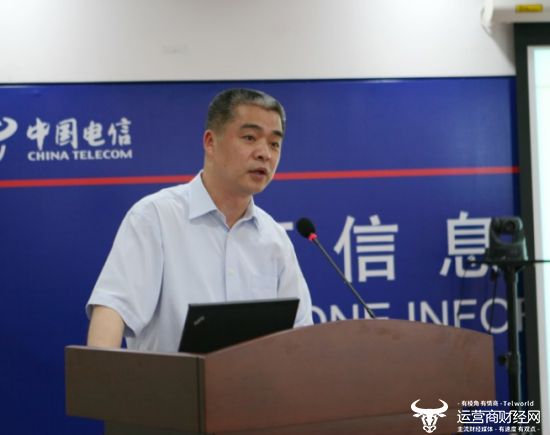
Core Viewpoint - The appointment of Wang Wei as an advisor to the China Telecom Talent Development Center and the removal from his senior consultant position indicates his retirement due to reaching the age of 60 [1][3]. Group 1: Career Background - Wang Wei was born in October 1965 and has reached the retirement age of 60, leading to the recent position adjustment [3]. - He began his career in a southern province, holding various significant roles including Deputy Chief Engineer at the Shanghai Pudong Telecom Bureau and Deputy Director at the Shanghai Postal and Telecommunications Administration [3]. - After the separation of postal and telecommunications services, Wang Wei worked at Shanghai Telecom, eventually becoming the General Manager of Shanghai Telecom Company [3]. - He was promoted early in his career, becoming a second-level official around the age of 40 [3]. Group 2: Key Contributions - In 2007, at the age of 42, Wang Wei took on a crucial role as the General Manager of the newly established China Telecom's 100 Information Service Company, laying a solid foundation for its development [3]. - In 2018, he transitioned from frontline operations to management, serving as the Vice President of the China Telecom Party School and later as the Dean of the China Telecom Academy, which was renamed the China Telecom Talent Development Center [3]. - His career is noted for significant contributions to operational management, new business development, and talent cultivation within the company [3].
独家:中国电信前10月量子收入仅7家省公司为负 辽宁电信倒数第一
Xin Lang Cai Jing· 2026-01-01 14:37
Group 1 - The core viewpoint of the article highlights that China's telecom quantum business has shown significant growth, achieving a three-digit increase in revenue over the first ten months of the year, indicating a rapid development trend [1][3] - As of the end of October, 24 provincial companies under China Telecom reported positive growth in quantum business revenue, while 7 provincial companies experienced negative growth, with Liaoning Telecom facing the largest decline, exceeding 50% year-on-year [3] - Despite being a smaller provincial company, Liaoning Telecom's performance in the quantum business was unexpectedly poor, leading to warnings from the group [3] Group 2 - Liu Qing, the director of the communication business department at the operator's finance network, stated that the quantum business of China Telecom is still in its early stages and experiencing rapid growth, suggesting that Liaoning Telecom missed the opportunity for development and may find it challenging to catch up in the future [3] - The current leadership of Liaoning Telecom's government and enterprise information service group is under Vice General Manager Sun Wei, indicating a need for increased effort in this "new battle business" [3]
通信服务板块12月31日涨0.98%,挖金客领涨,主力资金净流入3.87亿元
Zheng Xing Xing Ye Ri Bao· 2025-12-31 09:07
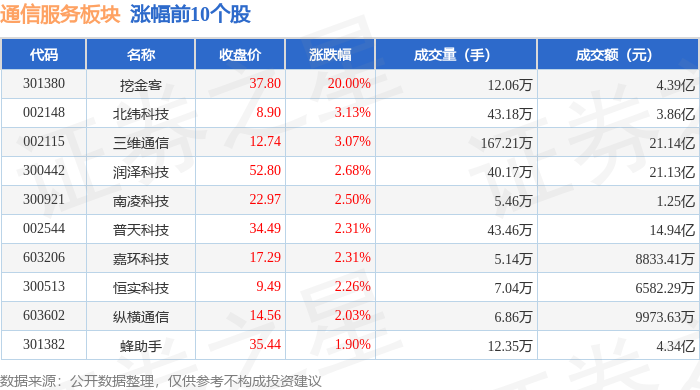
Group 1 - The communication services sector increased by 0.98% on December 31, with "挖金客" leading the gains [1] - The Shanghai Composite Index closed at 3968.84, up 0.09%, while the Shenzhen Component Index closed at 13525.02, down 0.58% [1] - "挖金客" saw a significant rise of 20.00%, closing at 37.80, with a trading volume of 120,600 shares [1] Group 2 - The communication services sector experienced a net inflow of 387 million yuan from institutional investors, while retail investors saw a net outflow of 25.29 million yuan [2] - "三维通信" had a net inflow of 18.8 million yuan from institutional investors, but a net outflow of 749,900 yuan from retail investors [3] - "挖金客" recorded a net inflow of 136 million yuan from institutional investors, with retail investors showing a net outflow of 62.87 million yuan [3]



思特奇:公司是中国电信的产业合作伙伴
Zheng Quan Ri Bao Wang· 2025-12-31 04:45
Core Viewpoint - The company, Sitergy (300608), is a key partner of China Telecom (601728) and is actively involved in the national "East Data West Computing" project, focusing on the development of computing network scheduling technologies and products [1] Group 1: Company Collaboration - Sitergy is recognized as a leading enterprise in computing network scheduling and is deeply engaged in the construction of the national "East Data West Computing" initiative [1] - The company plans to continue its close collaboration with China Telecom to advance related technological and product innovations [1] Group 2: Industry Development - The partnership aims to contribute to the high-quality development of the "East Data West Computing" project and the intelligent computing scheduling sector [1]

研判2025!中国混合云存储行业发展历程、行业规模、重点企业及未来趋势分析:市场展现出蓬勃的活力与深远的发展潜力,规模大幅增长[图]
Chan Ye Xin Xi Wang· 2025-12-31 02:05
Core Insights - The Chinese hybrid cloud storage industry is entering a critical development phase, with a projected market size of approximately 7.369 billion yuan in 2024, representing a year-on-year growth of 20.35% [1][10]. Industry Overview - Cloud storage refers to the online storage model that allows data to be transmitted to remote third-party servers for storage, management, and access via the internet, eliminating reliance on local physical storage devices [2]. - The most common classifications of cloud storage are public cloud storage, private cloud storage, and hybrid cloud storage, corresponding to three deployment models of cloud computing [2]. Industry Development History - The Chinese hybrid cloud storage industry has evolved through three stages: 1. The nascent stage before 2010, focusing on exploring cloud computing concepts and technology accumulation. 2. The growth stage from 2011 to 2015, where cloud computing technology matured, leading to enterprise trials of hybrid cloud backup and archiving. 3. The maturity stage from 2016 to the present, marked by large-scale applications and the emergence of innovative products [6]. Industry Value Chain - The upstream of the hybrid cloud storage industry includes raw materials and components such as chips, storage media, and software like operating systems and databases. - The midstream consists of hybrid cloud storage solution and service providers. - The downstream applications span various sectors, including finance, government, manufacturing, healthcare, education, and the internet [8]. Market Size - The hybrid cloud storage market is characterized by its ability to balance the flexibility of public clouds with the control of private clouds, making it a "golden choice" for enterprises seeking efficient data management and compliance [10]. - Solutions like Huawei Cloud Stack and Alibaba Cloud hybrid storage arrays have achieved intelligent tiering of hot and cold data, significantly enhancing storage efficiency [10]. Key Companies' Performance - The competitive landscape of the hybrid cloud storage industry is marked by a concentration of leading players and multi-polar competition. Huawei Cloud dominates in the government and finance sectors, while Alibaba Cloud leverages its ecosystem to cover various industries [12]. - China Telecom's Tianyi Cloud HBlock distributed storage system supports unified management of local and cloud data, enhancing efficiency and reducing costs [12]. - Alibaba Cloud's hybrid storage services have supported over one million global customers, becoming a key enabler for digital transformation [13]. Industry Development Trends 1. The integration of technologies such as AI, big data, and edge computing will drive the intelligent evolution of storage architectures, enhancing performance and efficiency [14]. 2. Strengthening security compliance capabilities will become a core competitive advantage, with enterprises adopting unified security management platforms [15]. 3. The industry will move towards green and low-carbon development, with leading companies adopting energy-efficient technologies and optimizing resource allocation [16].



思特奇:思特奇是中国电信的产业合作伙伴
Mei Ri Jing Ji Xin Wen· 2025-12-31 01:32
Core Viewpoint - The company, Sitergy (300608.SZ), confirmed its status as an industrial partner of China Telecom and emphasized its involvement in the national East Data West Computing project, indicating a commitment to ongoing collaboration in technology and product innovation related to computing network scheduling [2]. Group 1 - Sitergy is recognized as a leading enterprise in computing network scheduling [2]. - The company is deeply involved in the construction of the national East Data West Computing project [2]. - Sitergy aims to contribute to the high-quality development of computing network scheduling and related technologies in collaboration with China Telecom [2].