Suzhou Rural Commercial Bank(603323)

Search documents
苏农银行:提名曹健为第七届董事会独立董事候选人
Xin Lang Cai Jing· 2026-02-06 10:08
2月6日金融一线消息,苏农银行发布公告,该行董事会会议审议通过《关于提名曹健先生为第七届董事 会独立董事候选人的议案》,提名曹健为第七届董事会独立董事候选人,任期与第七届董事会任期一 致。 简历显示,曹健,男,1963 年 7 月出生,中国国籍,博士研究生学历,研究员。1985年 8 月参加工 作,历任苏州大学数学科学学院辅导员;苏州大学科研处研究生科科员、实习研究员;苏州大学研究生 部(处)副科级秘书、正科级副主任、副处长、副研究员、研究员、研究生党工委书记、校对外联络办 公室副主任;苏州大学继续教育处处长、校对外联络办公室副主任、研究员;苏州大学研究生院副院 长、党委研究生工作部部长、研究员、校对外联络接待办公室副主任;苏州大学校长办公室主任、校对 外联络办公室主任、阳澄湖校区管委会副主任、校党委委员、机关工委委员、研究员;苏州大学研究生 院院长、导师学院副院长、党委委员、机关党工委委员、校学位评定委员会委员、校学位评定委员会人 文学部委员、校学位评定委员会副秘书长,江苏省教育学类研究生教育指导委员会委员,中国学位与研 究生教育学会常务理事、研究员。现任江苏省教育学类研究生教育指导委员会委员,中国学位与研 ...

苏农银行:聘任王亮为首席合规官
Xin Lang Cai Jing· 2026-02-06 10:01
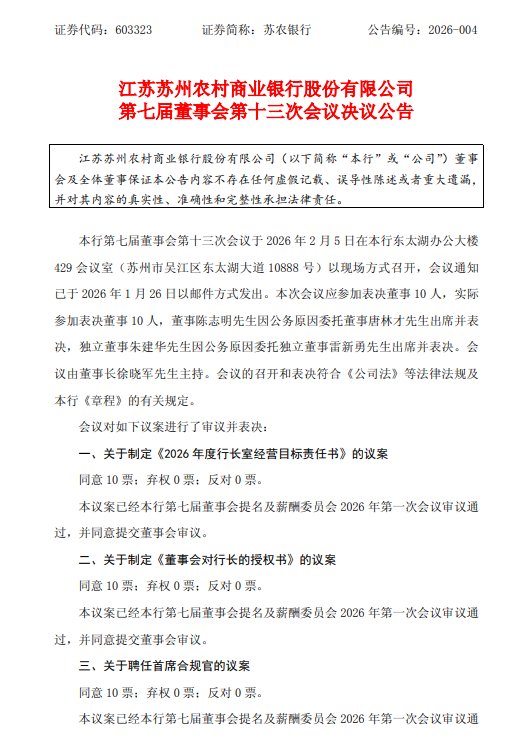
2月6日金融一线消息,苏农银行发布公告,该行董事会会议审议通过《关于聘任首席合规官的议案》, 聘任王亮担任苏农银行首席合规官,任期与第七届董事会任期一致。 简历显示,王亮,男,1982年2月出生,中国国籍,中共党员,研究生学历。2008年7月参加工作,历任 中信银行苏州分行风险管理部员工,信贷管理部员工,人力资源部员工、招聘培训副主管,国际业务部 贸易融资副主管,投资银行部直接融资业务副主管、资产管理业务副主管、资产管理业务主管,常熟支 行见习行长助理,常熟支行见习行长助理兼常熟东南经济开发区支行行长(主管级);吴江农村商业银 行投资银行部总经理,投资银行部总经理兼苏州与异地业务总部对公银行部总经理;苏州农村商业银行 投资银行部总经理兼苏州与异地业务总部对公银行部总经理,金融市场总部副总监(主持工作)兼投资 银行部、风控综合部总经理,金融市场总部总监兼投资银行部、风控综合部总经理,金融市场总部总监 兼投资银行部、风控投研部总经理,金融市场总部总监兼投资银行部总经理;江南农村商业银行党委委 员、副行长;扬州农村商业银行党委委员、副行长。现任苏州农村商业银行党委副书记、行长(代为履 职)。 责任编辑:秦艺 2月6 ...
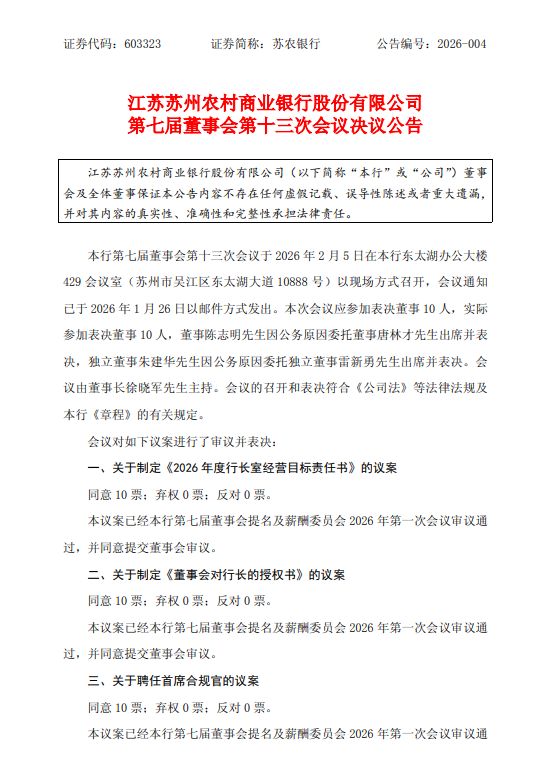
银行股,资金出手了!
格隆汇APP· 2026-02-05 10:15
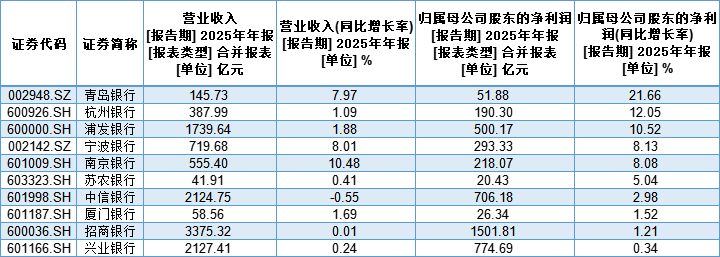
Core Viewpoint - A significant market shift is occurring, characterized by a mass exodus of funds from technology and precious metals sectors, with a notable influx into bank stocks as a safe haven amid rising panic and volatility [2][5][21]. Group 1: Market Dynamics - The U.S. tech stocks experienced a sharp decline, with the Nasdaq dropping over 2%, and major companies like Nvidia, Meta, and Tesla falling more than 3%. AMD saw a staggering drop of 17.3%, marking its largest single-day decline in nearly nine years [2][5]. - Panic spread to A-shares and Hong Kong stocks, with sectors like solar energy and oil equipment witnessing significant sell-offs. Precious metals, which had recently rebounded, also faced a sharp decline, with silver futures plummeting nearly 20% in a single day [3][5]. - The market turmoil was triggered by negative news affecting U.S. tech stocks, leading to a valuation bubble burst. Despite AMD's strong performance, its results fell short of the most optimistic analyst expectations, resulting in a drastic stock price drop [5][6]. Group 2: Bank Sector Resilience - In contrast to the broader market, the banking sector saw a rise, with A-share bank stocks collectively increasing by 2.1%. All 42 bank stocks closed in the green, with Xiamen Bank hitting a rare limit-up and several city commercial banks rising over 3% [3][15]. - Southbound funds significantly targeted bank stocks, with a net purchase exceeding 22 billion HKD, focusing on major banks like ICBC, CMB, and CCB as core investment targets [4][20]. - The banking sector is viewed as a "safe haven" due to its strong earnings growth and historically low valuations, making it an attractive option for risk-averse investors [21][22]. Group 3: Earnings and Valuation - Recent earnings reports from several banks indicate robust growth, with Qingdao Bank, Hangzhou Bank, and Shanghai Pudong Development Bank showing significant increases in net profits. For instance, Qingdao Bank reported a net profit of 51.88 billion CNY, a 21.66% year-on-year increase [23][25]. - The banking sector has undergone a six-month correction, leading to a new valuation bottom. The sector's price-to-earnings ratio stands at a low 6.7 times, and the average dividend yield is between 4.87% and 5.2%, making it appealing in a low-interest-rate environment [27][28]. - Institutional interest in bank stocks is rising, with over 370 institutions conducting research on 11 listed banks, indicating a strategic shift towards these stocks amid market volatility [28][29].







多家中小银行上调存款利率 农商行上新300亿大额存单
Xin Lang Cai Jing· 2026-02-05 10:08
Core Viewpoint - The deposit market is experiencing differentiation as state-owned banks reduce high-interest long-term deposits while small and medium-sized banks, primarily rural commercial banks, actively adjust strategies to capture market share by launching large-denomination certificates of deposit and raising fixed deposit rates [1][12]. Group 1: Large-Denomination Certificates of Deposit - Rural commercial banks have become the main force in issuing large-denomination certificates of deposit, with a total issuance exceeding 30 billion yuan, and a noticeable trend towards shorter product durations [3][14]. - The average interest rate for 3-year large-denomination certificates of deposit from rural commercial banks is 1.8%, significantly higher than similar products from state-owned banks [3][14]. - As of early 2026, nearly 400 large-denomination certificate issuance announcements have been made, with rural commercial banks accounting for over 90% of the total issuance [16]. Group 2: Interest Rate Adjustments - From January to February 2026, many rural commercial banks have raised fixed deposit rates to meet the "opening red" deposit demand, with adjustments typically between 10 to 20 basis points [7][20]. - Specific banks, such as Zhejiang Jiaxing Rural Commercial Bank, have increased their 1-year and 2-year fixed deposit rates to 1.50% and 1.75%, respectively, while offering tiered rates for 3-year deposits based on the amount deposited [8][20]. - Some banks have set high minimum deposit thresholds and limited promotional periods for these interest rate increases, indicating a short-term marketing strategy [10][22]. Group 3: Market Dynamics and Competition - The banking industry is facing a narrowing net interest margin, prompting rural commercial banks to seek a balance between controlling liability costs and capturing market share through differentiated and regionally tailored deposit products [15][23]. - The competitive landscape is characterized by large banks withdrawing from long-term large-denomination certificates of deposit, while small and medium-sized banks are strategically raising rates to attract local depositors, particularly for large sums [19][23]. - The need for strong deposit acquisition is driven by pressures to support asset expansion, especially for smaller banks lacking brand and network advantages [23].
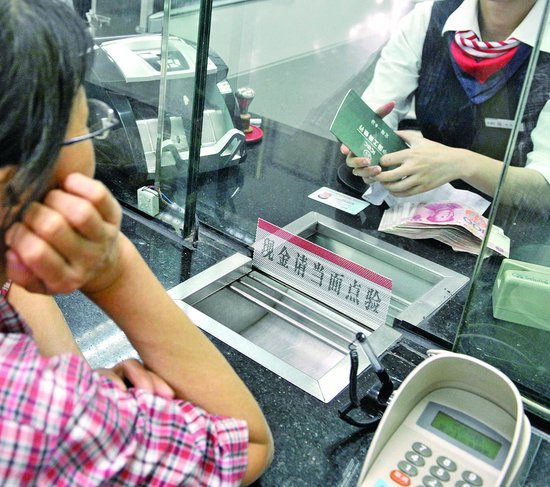
苏州农商银行持续深耕“养老金融”服务
Jiang Nan Shi Bao· 2026-02-04 23:09
Core Viewpoint - Suzhou Rural Commercial Bank is focusing on "elderly finance" services to help the elderly overcome the "digital divide" and ensure accessible, warm financial services [1][2] Group 1: Financial Education Initiatives - The bank is organizing financial knowledge promotion activities targeting the elderly, especially in light of the increased risk of telecom fraud during the Spring Festival [1] - Staff members are tailoring educational content to the understanding levels of the elderly, using simple language and relatable examples to explain how to prevent telecom fraud, identify illegal fundraising, and protect personal information [1] - Hands-on teaching is provided to help the elderly distinguish between real and fake messages, set secure passwords, and choose legitimate financial channels, effectively enhancing their risk prevention capabilities [1] Group 2: Humanistic Care - The activities emphasize humanistic care, with practical daily necessities prepared for participants, conveying societal respect and care for the elderly [1] - The interactions during these events, including caring greetings and attentive listening, transform financial services into warm interactions, making the elderly feel valued and connected [1] - Many elderly participants expressed that such activities make them feel "not forgotten by the times," enhancing their sense of belonging and security [1]
【财经分析】首批A股上市银行2025年业绩快报出炉 净利全线飘红、息差企稳托底基本面
Xin Hua Cai Jing· 2026-02-04 12:16
Core Viewpoint - The performance reports of 10 A-share listed banks indicate overall steady growth in profitability and asset quality, with expectations for continued improvement in 2026 as net interest margin decline is expected to narrow and credit costs continue to decrease [1][2]. Profitability - All 10 A-share listed banks reported year-on-year growth in net profit for 2025, with notable performance from city commercial banks [2]. - Qingdao Bank achieved a net profit of 5.188 billion yuan, marking a 21.66% year-on-year increase, leading the group of disclosed banks [2]. - Other banks such as Ningbo Bank, Nanjing Bank, and Hangzhou Bank also surpassed 10 billion yuan in net profit, with year-on-year growth rates of 8.13%, 8.08%, and 12.05% respectively [2][3]. Revenue Growth - Except for CITIC Bank, all other banks reported positive revenue growth for 2025 [4]. - Nanjing Bank recorded the highest revenue growth at 10.48%, reaching 55.54 billion yuan, while Qingdao Bank and Ningbo Bank reported revenue of 14.573 billion yuan and 71.968 billion yuan, with growth rates of 7.97% and 8.01% respectively [4][5]. - The revenue growth of city commercial banks and rural commercial banks showed some differences, with Nanjing Bank benefiting from strong net interest income growth [4]. Asset Quality - The asset quality of the 10 listed banks remained stable, with most reporting a steady or declining non-performing loan (NPL) ratio [6][9]. - Qingdao Bank's NPL ratio decreased to 0.97%, down 17 basis points from the previous year, indicating improved asset quality [9][10]. - The provision coverage ratio for Qingdao Bank increased to 292.3%, reflecting a continuous improvement in core asset quality indicators [10]. Market Outlook - Analysts expect that the net interest margin for listed banks will stabilize, with a slight narrowing of the decline anticipated in 2026 [8][9]. - The first quarter of 2026 is projected to see a significant increase in credit issuance, with January alone expected to account for over 30% of the annual total [8]. - The overall credit growth is expected to remain robust, supported by favorable monetary policy adjustments [8].





苏农银行:将更加关注股东利益,提高现金分红比例
Zheng Quan Ri Bao Wang· 2026-02-04 11:47
证券日报网讯2月4日,苏农银行(603323)在互动平台回答投资者提问时表示,为进一步提升投资者获 得感,本行2024年度权益分派除现金分红外,同步实施资本公积金转增股,此外在2025年首次实施中期 分红。未来,本行在资本充足率满足业务发展需求和监管约束前提下,将更加关注股东利益,提高现金 分红比例,与投资者共享本行高质量发展成果。 ...
银行业月报:行业盈利温和修复,关注优质区域行-20260204
Ping An Securities· 2026-02-04 10:08
Investment Rating - The industry investment rating is "Outperform the Market" (maintained) [1][38] Core Viewpoints - The industry is experiencing profound changes in funding structure, leading to a shift towards reallocation rather than trading. The continuous expansion of passive indices has brought stable capital inflows, and the high dividend yield of the banking sector, currently averaging 4.50%, is attracting long-term funds such as insurance capital. Regulatory measures aimed at guiding long-term capital into the market are expected to sustain the attractiveness of dividend allocation value [2][10] - The 2025 annual performance reports indicate a recovery in revenue and profit, with asset quality showing steady improvement. As of the end of January, ten banks reported their 2025 performance, with most showing a year-on-year increase in revenue and profit. Notably, Qingdao Bank, Nanjing Bank, and Shanghai Pudong Development Bank maintained high growth rates in net profit and revenue, with growth rates of 21.7%, 8.1%, and 10.5% respectively [3][6][7] Summary by Sections Performance Overview - Revenue and profit are recovering, with asset quality improving. The average year-on-year growth rate of net profit for the ten banks is 7.2%, with a quarter-on-quarter increase of 0.6 percentage points. The average non-performing loan (NPL) ratio decreased by 2 basis points to 0.94% [6][7][8] - The average loan growth rate for the ten banks increased from 10.1% in the first three quarters of 2025 to 15.5% for the full year, indicating a positive loan issuance trend [6][7] Market Trends - In January 2026, the banking sector declined by 6.18%, underperforming the CSI 300 index by 7.83 percentage points, ranking last among 30 sectors [14] - Individual bank performances varied, with Qingdao Bank, Ningbo Bank, and Hangzhou Bank showing increases of 16.5%, 10.2%, and 5.8% respectively [15] Macro and Liquidity Tracking - The manufacturing PMI for January was 49.30%, a decrease of 0.80 percentage points from the previous month. The CPI for December was 0.80% year-on-year, while the PPI was -1.90% [25][22] - In January, the one-year and five-year LPR remained stable at 3.0% and 3.50% respectively. The interbank lending rates for 7D, 14D, and 3M changed to 1.61%, 1.68%, and 1.78% respectively [28][26] Credit and Social Financing Data - In December 2025, new RMB loans increased by 910 billion, a year-on-year decrease of 80 billion, with a balance growth rate of 6.40%. Corporate loans increased by 1.07 trillion, while household loans decreased by 91.6 billion [29][32] - The social financing scale increased by 2.21 trillion in December, with a year-on-year growth rate of 8.30% [32]

农商行板块2月3日跌1.13%,沪农商行领跌,主力资金净流入7782.14万元
Zheng Xing Xing Ye Ri Bao· 2026-02-03 09:03
Core Viewpoint - The agricultural commercial bank sector experienced a decline of 1.13% on February 3, with the Shanghai Agricultural Commercial Bank leading the drop, while the overall Shanghai Composite Index rose by 1.29% [1] Group 1: Market Performance - The Shanghai Composite Index closed at 4067.74, up 1.29%, and the Shenzhen Component Index closed at 14127.1, up 2.19% [1] - The agricultural commercial bank sector saw various individual stock performances, with notable declines in several banks, including Jiangyin Bank and Zhangjiagang Bank, both down by 0.88% [1] Group 2: Trading Volume and Capital Flow - The total trading volume for the agricultural commercial bank sector was significant, with the highest trading volume recorded for Qingnong Bank at 895,900 shares and a total transaction value of 274 million yuan [1] - The sector experienced a net inflow of 77.82 million yuan from institutional investors, while retail investors saw a net outflow of 106 million yuan [1] Group 3: Individual Stock Analysis - Yunnan Agricultural Commercial Bank had a net inflow of 32.1 million yuan from institutional investors, but a net outflow of 18.46 million yuan from retail investors [2] - Changshu Bank also saw a net inflow of 23.19 million yuan from institutional investors, with retail investors withdrawing 10.73 million yuan [2] - Su Nong Bank had a net inflow of 15.3 million yuan from institutional investors, but a significant net outflow of 20.84 million yuan from retail investors [2]
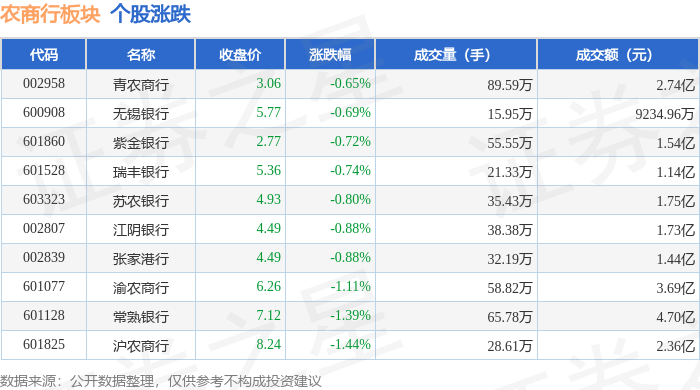
农商行板块2月2日跌1.94%,沪农商行领跌,主力资金净流入1.15亿元
Zheng Xing Xing Ye Ri Bao· 2026-02-02 09:15
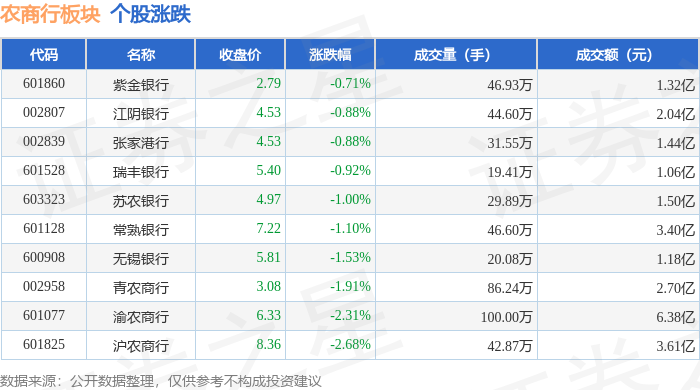
Market Overview - The agricultural commercial bank sector experienced a decline of 1.94% on February 2, with the Shanghai Agricultural Commercial Bank leading the drop [1] - The Shanghai Composite Index closed at 4015.75, down 2.48%, while the Shenzhen Component Index closed at 13824.35, down 2.69% [1] Individual Stock Performance - Key stocks in the agricultural commercial bank sector showed the following closing prices and changes: - Zijin Bank: 2.79, down 0.71% - Jiangyin Bank: 4.53, down 0.88% - Zhangjiagang Bank: 4.53, down 0.88% - Ruifeng Bank: 5.40, down 0.92% - Sunong Bank: 4.97, down 1.00% - Changshu Bank: 7.22, down 1.10% - Yuanxi Bank: 5.81, down 1.53% - Qingnong Bank: 3.08, down 1.91% - Yunnan Agricultural Bank: 6.33, down 2.31% - Shanghai Agricultural Bank: 8.36, down 2.68% [1] Capital Flow Analysis - The agricultural commercial bank sector saw a net inflow of 115 million yuan from main funds, while retail funds experienced a net outflow of 52.86 million yuan [1] - The following table summarizes the capital flow for individual stocks: - Yunnan Agricultural Bank: 92.03 million yuan net inflow from main funds, -11.7 million yuan from retail funds - Shanghai Agricultural Bank: 32.16 million yuan net inflow from main funds, -22.14 million yuan from retail funds - Changshu Bank: 19.96 million yuan net inflow from main funds, -31.03 million yuan from retail funds - Sunong Bank: 5.13 million yuan net inflow from main funds, -14.29 million yuan from retail funds - Qingnong Bank: 3.28 million yuan net inflow from main funds, -18.58 million yuan from retail funds - Jiangyin Bank: -4.47 million yuan net outflow from main funds, -3.44 million yuan from retail funds - Wuxi Bank: -5.97 million yuan net outflow from main funds, 0.13 million yuan from retail funds - Ruifeng Bank: -7.41 million yuan net outflow from main funds, 1.42 million yuan from retail funds - Zhangjiagang Bank: -7.44 million yuan net outflow from main funds, 6.66 million yuan from retail funds - Zijin Bank: -12.72 million yuan net outflow from main funds, 3.51 million yuan from retail funds [2]