Bestore(603719)

Search documents
良品铺子终止向武汉国资转让控制权
Zheng Quan Shi Bao Wang· 2025-10-16 14:35
Core Viewpoint - The transfer of control of Liangpin Shop to Changjiang Guomao has been terminated, maintaining the current control structure with Ningbo Hanyi as the controlling shareholder and Yang Hongchun, Yang Yinfeng, Zhang Guoqiang, and Pan Jihong as actual controllers [1][2] Group 1: Control Transfer Termination - The announcement on October 16 states that the control transfer to Changjiang Guomao has been terminated, ensuring that the controlling shareholder remains Ningbo Hanyi [1] - Previously, on July 17, it was announced that Ningbo Hanyi intended to transfer 18.01% of its shares and Liangpin Investment intended to transfer 2.99% of its shares to Changjiang Guomao [1] - The termination of the transfer will not adversely affect the company's governance structure or ongoing operations [2] Group 2: Legal Dispute Background - The dispute between Guangzhou Light Industry and Ningbo Hanyi arose as Ningbo Hanyi sought to resolve its debts by transferring part of its shares in Liangpin Shop [2] - In May 2025, an agreement was signed for Guangzhou Light Industry to conduct due diligence and potentially acquire shares, but no formal agreement was reached [2] - The case has been under judicial review, with the amount in dispute being 996 million yuan, and Guangzhou Light Industry has requested immediate transfer of shares [2] Group 3: Financial Performance - Liangpin Shop, known as the "first high-end snack stock," has faced challenges in the high-end snack market [3] - The company reported a decline in net profit for the first half of 2025 due to multiple factors, including price reductions, store closures, and decreased government subsidies [3] - Despite the decline in sales and profits, the company has improved its cash flow by reducing tax payments and controlling expenses [3]

良品铺子控制权转让协议终止
2 1 Shi Ji Jing Ji Bao Dao· 2025-10-16 14:02
Core Viewpoint - The company, Liangpinpuzi, announced the termination of its control transfer agreement due to the failure to meet all conditions by the final deadline set in the share transfer agreement [1] Group 1 - The controlling shareholder, Ningbo Hanyi, and its concerted party, Liangpin Investment, notified the company about the termination [1] - The share transfer agreement was officially terminated on October 15 [1] - The control transfer matter of the company has been concluded [1]

良品铺子:终止控制权转让
Xin Lang Cai Jing· 2025-10-16 13:39
Core Viewpoint - The transfer of control rights for the company has been terminated, ensuring that the current controlling shareholder remains unchanged, which is expected to have no adverse effects on the company's governance structure or ongoing operations [1] Summary by Relevant Sections - **Control Rights Transfer** The company announced that the control rights transfer agreement with its controlling shareholder, Ningbo Hanyi, and its concerted party, Liangpin Investment, has been terminated as the conditions for effectiveness were not fully met by the final deadline set in the agreement [1] - **Current Shareholding Structure** Following the termination, the controlling shareholder remains Ningbo Hanyi, with the actual controllers being Yang Hongchun, Yang Yinfeng, Zhang Guoqiang, and Pan Jihong [1] - **Impact on Governance and Operations** The termination of the control rights transfer will not lead to any changes in the company's control, governance structure, or adversely affect its ongoing operations [1]
良品铺子(603719.SH):控股股东及其一致行动人终止控制权转让
智通财经网· 2025-10-16 13:22
智通财经APP讯,良品铺子(603719.SH)发布公告,近日,公司收到控股股东宁波汉意及其一致行动人 良品投资函告:截至《股份转让协议》约定的最终截止日(协议签署日后90个自然日即2025年10月15 日),《股份转让协议》约定的生效条件未能全部成就,依据《股份转让协议》有关约定,本次《股份 转让协议》于2025年10月15日终止。 ...
良品铺子(603719) - 良品铺子关于控股股东及其一致行动人终止控制权转让的公告
2025-10-16 13:18
证券代码:603719 证券简称:良品铺子 公告编号:2025-041 良品铺子股份有限公司 关于控股股东及其一致行动人终止控制权转让的公告 本公司董事会、全体董事及相关股东保证本公告内容不存在任何虚假记载、 误导性陈述或者重大遗漏,并对其内容的真实性、准确性和完整性承担法律责任。 一、本次协议转让基本情况 本次终止控制权转让事项不会导致公司控制权发生变更,公司控股股东仍为 宁波汉意,实际控制人仍为杨红春、杨银芬、张国强和潘继红。 2025 年 7 月 17 日,武汉长江国际贸易集团有限公司(以下简称"长江国贸") 与良品铺子股份有限公司(以下简称"公司"或"上市公司")控股股东宁波汉 意创业投资合伙企业(有限合伙)(以下简称"宁波汉意")及其合伙人杨红春、 杨银芬、张国强、潘继红,以及宁波汉意一致行动人宁波良品投资管理有限公司 (以下简称"良品投资")及其股东杨红春、杨银芬、张国强签订了《关于良品 铺子股份有限公司之附生效条件的股份转让协议》(以下简称"《股份转让协议》"): 宁波汉意拟向长江国贸协议转让其持有的上市公司 72,239,880 股股份,占上市 公司股份总数的 18.01%;良品投资拟向长江国 ...
良品铺子:控股股东及其一致行动人终止控制权转让
Xin Lang Cai Jing· 2025-10-16 13:06
Core Viewpoint - The transfer of control rights for the company has been terminated, ensuring that the current controlling shareholder remains unchanged [1] Group 1 - The company announced on October 16 that the transfer of control rights from its controlling shareholder, Ningbo Hanyi, and its concerted party, Liangpin Investment, has been terminated due to the failure to meet all conditions stipulated in the share transfer agreement [1] - The share transfer agreement will terminate on October 15, 2025, as per the agreement's terms [1] - The termination of this control transfer will not result in any change in the company's control, with Ningbo Hanyi remaining the controlling shareholder and the actual controllers being Yang Hongchun, Yang Yinfeng, Zhang Guoqiang, and Pan Jihong [1]
良品铺子:控股股东终止控制权转让
Ge Long Hui· 2025-10-16 13:02
格隆汇10月16日|良品铺子公告,2025年7月17日,长江国贸与公司控股股东宁波汉意及其合伙人杨红 春、杨银芬、张国强、潘继红,以及良品投资及其股东签订了《股份转让协议》。宁波汉意拟向长江国 贸协议转让其持有的上市公司7223.99万股股份,占上市公司股份总数的18.01%;良品投资拟向长江国 贸协议转让其持有的上市公司1197.01万股股份,占上市公司股份总数的2.99%。近日,收到控股股东宁 波汉意及其一致行动人良品投资函告,截至《股份转让协议》约定的最终截止日2025年10月15日,《股 份转让协议》约定的生效条件未能全部成就,依据《股份转让协议》有关约定,本次《股份转让协议》 终止。本次终止控制权转让事项不会导致公司控制权发生变更,公司控股股东仍为宁波汉意,实际控制 人仍为杨红春、杨银芬、张国强和潘继红。 ...
休闲食品板块10月14日跌0.25%,万辰集团领跌,主力资金净流出2718.42万元
Zheng Xing Xing Ye Ri Bao· 2025-10-14 08:39
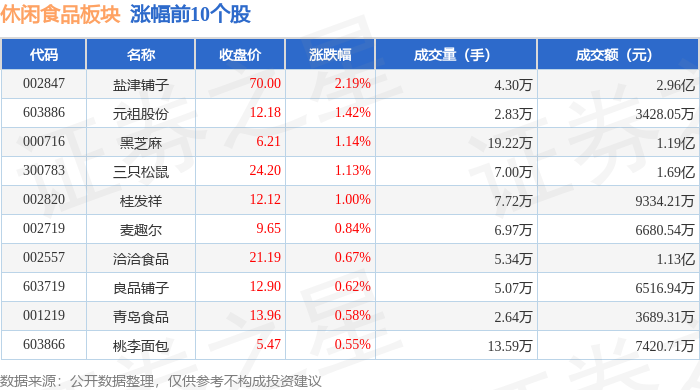
Market Overview - The leisure food sector experienced a decline of 0.25% on October 14, with Wancheng Group leading the drop [1] - The Shanghai Composite Index closed at 3865.23, down 0.62%, while the Shenzhen Component Index closed at 12895.11, down 2.54% [1] Individual Stock Performance - Salted Fish Shop (002847) rose by 2.19% to close at 70.00, with a trading volume of 43,000 hands and a transaction value of 296 million [1] - Yuanzi Co. (603886) increased by 1.42% to 12.18, with a trading volume of 28,300 hands and a transaction value of 34.28 million [1] - Wancheng Group (300972) fell by 3.04% to 173.54, with a trading volume of 23,800 hands and a transaction value of 419 million [2] Capital Flow Analysis - The leisure food sector saw a net outflow of 27.18 million from main funds, while retail investors had a net inflow of 29.55 million [2] - Major stocks like Salted Fish Shop and Good Products Shop saw significant net inflows from main funds, while others like Yuanzi Co. experienced net outflows [3] Summary of Key Stocks - Salted Fish Shop had a main fund net inflow of 12.23 million, while retail investors had a net outflow of 27.79 million [3] - Good Products Shop recorded a main fund net inflow of 11.57 million, with both retail and speculative funds showing outflows [3] - Three Squirrels (300783) had a main fund net inflow of 10.96 million, but retail investors withdrew 7.50 million [3]

数读 | 良品铺子“花生上树”事件:AI时代下的常识乌龙与信任拷问
Huan Qiu Wang Zi Xun· 2025-10-14 02:41
Core Insights - The incident involving the misrepresentation of peanuts as growing on trees by a brand has sparked significant public discourse, highlighting the pitfalls of AI technology in marketing and the erosion of brand trust [1][2][6] Group 1: Incident Overview - On August 27, 2025, a social media user discovered an error in a promotional image from a brand, which incorrectly stated that peanuts grow on trees, leading to widespread disbelief and ridicule [1] - The hashtag related to the incident gained over 203.9 million views on Weibo and 38.48 million views on Douyin, indicating the extensive reach of the controversy [3] - The brand issued an apology and initiated a comprehensive review within 28 hours of the issue being identified, but the response did not fully quell public concern [4] Group 2: Media Response - Major media outlets focused on two main issues: the misuse of AI technology and the lack of basic agricultural knowledge within the brand [2] - Reports highlighted that 10 mainstream media outlets directly referenced the brand's apology, while others criticized the incident as an industry joke stemming from human error rather than AI flaws [2] - The media coverage elevated the discussion from mere online jokes to a serious examination of marketing practices and brand accountability [2] Group 3: Public Sentiment - Public reactions revealed three primary concerns: the inadequacy of the brand's review processes, the potential for misleading product information, and the inappropriate use of AI as a scapegoat for human error [4] - Keywords such as "verification," "apology," and "consumer" emerged as focal points in the discourse, reflecting public demand for accountability and transparency [3] Group 4: Industry Implications - The incident serves as a cautionary tale for brands about the importance of maintaining professional standards and rigorous content review processes in the age of AI [6] - The overarching message emphasizes that while technology can enhance efficiency, it cannot replace fundamental knowledge and responsibility in marketing practices [6]
这届零食,越贵越高端?
投中网· 2025-10-11 09:08
Core Viewpoint - The article discusses the paradox of rising snack prices in China, where snacks that were once affordable are now perceived as luxury items, leading to a loss of "snack freedom" for consumers [5][10]. Group 1: Historical Context of Snack Consumption - In the past, consumers chose snacks based on taste and price, with little brand loyalty, often mixing various brands in their purchases [6]. - The rise of major snack brands like Liangpinpuzi and Three Squirrels around 2010 shifted consumer behavior towards brand recognition and loyalty, leading to a more concentrated market [6][7]. - Early competition among snack brands involved aggressive pricing strategies, including significant discounts and promotions to attract consumers [7]. Group 2: Shift to Premium Pricing - By 2019, Liangpinpuzi adopted a "high-end snack" positioning, linking product quality directly to pricing, which has led to significant price increases for similar products over the years [8]. - The change in pricing units from larger to smaller measurements has obscured consumers' perception of price increases, contributing to the feeling that snacks have become unaffordable [8][9]. - The emergence of high-priced snacks has resulted in a loss of the previously enjoyed "snack freedom," as consumers now feel priced out of the market [8][10]. Group 3: Market Response and New Trends - The rise of "white-label" snack stores offering high value for money has disrupted traditional snack brands, with the market for these stores growing from 211 billion yuan in 2019 to 809 billion yuan in 2023, reflecting a 40% compound annual growth rate [10]. - Traditional snack brands like Three Squirrels and Liangpinpuzi have faced declining revenues, with Three Squirrels' revenue dropping from over 10 billion yuan in 2019 to 7.1 billion yuan in 2023 [10][11]. - In response to market pressures, brands have attempted to lower prices, but these efforts have had limited success due to established negative perceptions of high pricing [11]. Group 4: Consumer Sentiment and Future Outlook - The article highlights a growing consumer sentiment against high prices that lack corresponding value, indicating a shift towards seeking better price-to-value ratios [14][15]. - Brands that fail to justify their high prices with tangible quality improvements risk losing consumer trust and market share [15][16]. - The future of the snack industry may depend on balancing premium offerings with consumer expectations for affordability and value, as the market moves away from a singular focus on high pricing [16].