Workflow
Shanghai Lily&Beauty (605136)
icon
Search documents
厌倦“白人饭”的欧洲中产,盯上杨国福
虎嗅APP· 2025-09-11 13:41
Core Viewpoint - The article discusses the international expansion of Yang Guo Fu, a Chinese restaurant brand specializing in spicy hot pot, highlighting its strategic focus on the European market and the cultural adaptation required for success [5][11][39]. Group 1: Company Expansion Strategy - Yang Guo Fu has opened nearly 200 stores globally since early 2022, with a doubling of new franchise agreements in 2023, driven by young entrepreneurs seeking side businesses post-pandemic [5][23]. - The brand's CEO, Yang Xingyu, emphasizes the importance of brand localization, supply chain management, and digital systems in its overseas operations [7][30]. - The average customer spending in Europe is set at €20-25 (approximately 180-200 RMB), positioning Yang Guo Fu as a mid-range dining option compared to fast food [14][26]. Group 2: Market Positioning and Competition - The European restaurant market is valued at $840 billion, with Asian cuisine comprising only 2%-3% of that, indicating significant growth potential for Yang Guo Fu [10]. - Yang Guo Fu aims to compete with high-end Japanese ramen brands, specifically targeting the cultural and pricing aspects of the market [12][13]. - The brand's entry into the European market has intensified competition, with around 600 hot pot restaurants currently operating and an industry growth rate of 20%-30% [18][21]. Group 3: Target Audience and Consumer Behavior - The target demographic has shifted from primarily Chinese students to over 60% local customers, including young professionals and middle-class individuals [25][26]. - Yang Guo Fu seeks to redefine "malatang" (spicy hot pot) as a "light formal dining" experience, appealing to social dining trends among Europeans [26][28]. Group 4: Operational Challenges and Strategies - The company faces challenges in supply chain management, cultural integration, and regulatory compliance across different European countries [30][34]. - Yang Guo Fu has established its own factory for scalable production and is developing local warehouses to reduce logistics costs [30]. - The brand is focused on long-term strategies, with lease agreements typically spanning 5-10 years, indicating a commitment to sustainable growth in the European market [41].
司法拍卖公告
Zheng Quan Shi Bao· 2025-09-10 18:13
Core Points - The Shanghai Xuhui District People's Court will conduct a public auction on the JD.com judicial auction platform from October 17, 2025, to October 18, 2025 [1] - The auction will feature 10,000,000 shares of "Liren Lizhuang" stock (stock code: 605136), which are held by the defendant Huang [1] - The auction is organized with the assistance of Shanghai Jinchui Commodity Auction Co., Ltd., and further details can be found on the JD.com website [1]
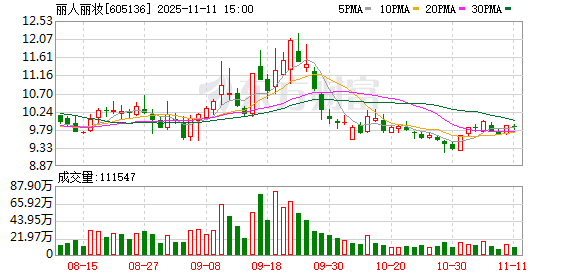
丽人丽妆涨2.03%,成交额1.87亿元,主力资金净流入672.98万元
Xin Lang Zheng Quan· 2025-09-09 05:21
Core Viewpoint - The stock of Liren Lizhuang has shown a mixed performance in recent months, with a year-to-date increase of 22.13% but a decline of 6.31% over the past 60 days, indicating volatility in investor sentiment and market conditions [1][2]. Group 1: Stock Performance - As of September 9, Liren Lizhuang's stock price rose by 2.03% to 10.54 CNY per share, with a trading volume of 1.87 billion CNY and a turnover rate of 4.49%, resulting in a total market capitalization of 42.21 billion CNY [1]. - The stock has experienced a net inflow of 6.73 million CNY from major funds, with significant buying and selling activities recorded [1]. - The company has appeared on the "Dragon and Tiger List" eight times this year, with the most recent instance on July 10, where it recorded a net buy of -115 million CNY [1]. Group 2: Financial Performance - For the first half of 2025, Liren Lizhuang reported a revenue of 831 million CNY, reflecting a year-on-year decrease of 13.98%, and a net profit attributable to shareholders of -32.76 million CNY, a significant decline of 1315.98% [2]. - The company has distributed a total of 179 million CNY in dividends since its A-share listing, with 22.43 million CNY distributed over the past three years [3]. Group 3: Shareholder Information - As of June 30, the number of shareholders for Liren Lizhuang reached 42,000, an increase of 47.49% compared to the previous period, while the average number of tradable shares per shareholder decreased by 32.20% to 9,540 shares [2].
电商代运营业绩分化 转型成集体课题
Jing Ji Guan Cha Wang· 2025-09-06 02:08
Group 1 - The performance of e-commerce operation companies is diverging, with a common trend of seeking new growth avenues through transformation [2][3] - RuYuchen (若羽臣) has emerged as a growth representative in the industry, achieving a revenue of 1.319 billion yuan in the first half of the year, a year-on-year increase of 67.55%, with net profit growing by 85.60% [2] - LiRenLiZhuang (丽人丽妆) is facing significant losses, reporting a revenue of 831 million yuan, a decrease of 13.98%, and a net loss of 32.76 million yuan, marking its worst mid-term performance since listing [2][3] Group 2 - The industry is collectively encountering growth challenges due to increasing costs and fragmented traffic, with companies needing to enhance cross-platform operational capabilities [3][4] - LiRenLiZhuang's revenue from Tmall platforms accounts for over 60% of total revenue, indicating a heavy reliance on a single platform [3] - RuYuchen's report shows that Douyin has become its largest sales channel, accounting for 37.24% of revenue [3] Group 3 - The rise of content e-commerce platforms like Douyin and Kuaishou has disrupted the traditional e-commerce landscape, posing challenges for companies lacking multi-channel operational capabilities [4] - Baozun (宝尊电商) has announced the acquisition of a leading service provider in the Douyin apparel category to strengthen its live e-commerce capabilities [4][6] - Major beauty brands are increasingly opting to build their own e-commerce teams, leading to a risk of customer attrition for operation companies [4][5] Group 4 - Baozun is implementing a three-pronged strategy focusing on e-commerce, brand management, and international expansion, with brand management showing a revenue increase of 29.11% [6] - Despite the growth in brand management, Baozun's overall profitability is still under pressure, with a net loss of 97 million yuan [6][7] - RuYuchen is focusing on cultivating its own brands, with self-owned brands generating 603 million yuan in revenue, a year-on-year increase of 242.42% [7][8] Group 5 - RuYuchen's sales expenses have surged to 599 million yuan, a year-on-year increase of 124.22%, driven by brand management and expansion efforts [8] - LiRenLiZhuang is also venturing into self-owned brands, launching new products, although its operation still heavily relies on its agency business [8][9] - The core advantage of operation companies lies in channel management, but they face challenges in product research and supply chain management [9]
6大电商代运营商,超半数净利下滑
Core Insights - The e-commerce agency industry is experiencing a "polarized" development trend in the first half of 2025, with significant performance disparities among listed companies [1][2] - Companies like Ruoyuchen have shown remarkable growth, while others like Liren Lizhuang and Baozun E-commerce are facing severe losses [1][8] Company Performance - Ruoyuchen reported a revenue growth of 67.55% year-on-year, reaching 1.319 billion yuan, with a net profit increase of 85.60% to 72 million yuan [10] - Liren Lizhuang's revenue fell by 13.98% to 830 million yuan, with a net loss of approximately 33 million yuan, marking a staggering decline of 1315.98% [7][8] - Baozun E-commerce achieved a revenue of about 4.6 billion yuan, a 5.63% increase, but reported a net loss of 97 million yuan, widening from a loss of 87 million yuan in the previous year [8] - Yiwang Yichuang's revenue decreased by 14.3% to 530 million yuan, while its net profit increased by 5.83% to 71 million yuan [11] - Qingmu Technology's revenue grew by 22.75% to 668 million yuan, but its net profit fell by 22.96% to 51.7 million yuan due to increased marketing expenses [11] - Kaichun's revenue dropped by 21.67% to 162 million yuan, with a net profit decline of 16.17% to 300,890 yuan [11] Industry Trends - The e-commerce user growth rate is slowing, leading to intensified competition for traffic and rising customer acquisition costs [2][12] - The fragmentation of traffic sources, with the rise of platforms like Douyin and Xiaohongshu, is impacting traditional e-commerce models [2][12] - Companies that fail to adapt to the shift towards comprehensive operations may struggle to survive in the evolving market landscape [2][12] Strategic Shifts - The transition from traditional e-commerce to a focus on self-owned brands is becoming crucial for survival and growth [13][16] - Ruoyuchen's self-owned brand business saw a significant revenue increase of 242.42%, contributing to 45.75% of its total revenue [10][13] - Liren Lizhuang's reliance on traditional e-commerce platforms has hindered its ability to innovate and grow, with over 91% of its revenue still tied to platform sales [13][14] Market Outlook - The overall online retail sales in China reached 74.295 billion yuan in the first half of 2025, growing by 8.5%, indicating that e-commerce still plays a vital role in the consumer market [14] - The future competitive edge will rely on enhancing operational efficiency through digital means and building strong brand management capabilities [16]
6大电商代运营商,超半数净利下滑
21世纪经济报道· 2025-09-05 04:44
Core Viewpoint - The e-commerce agency industry is experiencing a "dual climate" in the first half of 2025, with significant performance divergence among listed companies, highlighting the need for transformation and adaptation to new market dynamics [1][2][12]. Group 1: Company Performance - Ruoyuchen achieved a remarkable revenue growth of 67.55% year-on-year, reaching 1.319 billion yuan, driven by a strong performance in its self-owned brand business [9][13]. - Liren Lizhuang reported a revenue decline of 13.98% to 830 million yuan, with a net loss of approximately 33.76 million yuan, marking a staggering year-on-year decrease of 1315.98% [6][12]. - Baozun E-commerce maintained a revenue increase of 5.63% to around 4.6 billion yuan but faced a net loss of 97.04 million yuan, which widened by 6.23% compared to the previous year [7][12]. - Yiwang Yichuang experienced a revenue drop of 14.3% to about 530 million yuan, while its net profit increased by 5.83% to approximately 71 million yuan [9][10]. - Qingmu Technology's revenue rose by 22.75% to 668 million yuan, but its net profit decreased by 22.96% to about 51.66 million yuan due to increased marketing expenses [10][12]. - Kaichun Co. reported a revenue decline of 21.67% to 162 million yuan, with a net profit decrease of 16.17% to approximately 300,890 yuan [10][12]. Group 2: Industry Trends - The e-commerce user growth rate is slowing, and competition for platform traffic is intensifying, leading to rising customer acquisition costs (CAC) and squeezing profit margins for agencies [2][11]. - The fragmentation of traffic sources, with the rise of platforms like Douyin and Xiaohongshu, has made it essential for agencies to adapt their service models beyond traditional "shelf e-commerce" [2][11]. - The shift towards a "stock era" in e-commerce emphasizes the importance of transformation and innovation for survival and growth, as evidenced by the performance disparities among companies [12][13]. - The overall online retail sales in China reached 74.295 billion yuan in the first half of 2025, growing by 8.5%, indicating that e-commerce still plays a crucial role in the consumer market [14][16]. Group 3: Strategic Insights - Companies that successfully transition to self-owned brand operations and diversify their business models are likely to thrive, as seen with Ruoyuchen's significant growth in self-owned brands [9][13]. - The ability to leverage accumulated data and identify new market segments will be critical for agencies to navigate the evolving landscape and capitalize on emerging opportunities [16]. - The government's push for healthy e-commerce development aligns with the industry's need for innovation, suggesting a favorable environment for companies that can adapt quickly [14][16].
代运营商半年报扫描:过半净利下滑,红海存量厮杀
Core Viewpoint - The e-commerce operation industry is experiencing a stark contrast in performance in the first half of 2025, with significant disparities among listed companies, highlighting the need for transformation and adaptation in a competitive landscape [1][15]. Group 1: Company Performance - Ruoyuchen achieved a remarkable revenue growth of 67.55%, with total revenue reaching 1.319 billion yuan and a net profit increase of 85.60% to 72 million yuan, driven by strong performance in its self-owned brand business [10][15]. - Liren Lizhuang reported a revenue decline of 13.98% to 830 million yuan and a net loss of approximately 33 million yuan, marking a staggering 1315.98% drop in profit, attributed to weak consumer demand and the termination of partnerships with key brands [5][6]. - Baozun, despite a revenue increase of 5.63% to around 4.6 billion yuan, faced a net loss of 97 million yuan, which is a 6.23% increase in losses compared to the previous year [6][10]. - Yiwang Yichuang experienced a revenue decline of 14.3% to approximately 530 million yuan, but managed to increase its net profit by 5.83% to around 71 million yuan [10][11]. - Qingmu Technology reported a revenue increase of 22.75% to 668 million yuan, but its net profit decreased by 22.96% to approximately 51.7 million yuan due to increased marketing expenses [11]. - Kaichun's revenue fell by 21.67% to 162 million yuan, with a net profit of 300,890 yuan, down 16.17% [11]. Group 2: Industry Trends - The e-commerce user growth rate is slowing, and competition for traffic within platforms is intensifying, leading to rising customer acquisition costs and squeezing profit margins for operation companies [2][12]. - The fragmentation of traffic sources, with the rise of platforms like Douyin and Xiaohongshu, has contributed to the challenges faced by traditional e-commerce operators [2][12]. - Companies that fail to adapt to full-domain operations and continue relying on traditional "shelf e-commerce" models are likely to struggle in the evolving market [3][12]. - The shift towards a "stock era" in e-commerce necessitates a focus on transformation and innovation to survive and thrive in a competitive environment [15][17]. - The overall online retail sales in China reached 74.295 billion yuan in the first half of 2025, growing by 8.5%, indicating that e-commerce still plays a crucial role in the consumer market [16].
代运营商半年报扫描:过半净利下滑,红海存量厮杀丨电商财报观察
Core Insights - The e-commerce operation industry is experiencing a "ice and fire" development trend in the first half of 2025, with significant performance differentiation among listed companies [1] - Companies like Ruoyuchen show remarkable growth, while others like Liren Lizhuang face severe revenue decline and substantial losses [1][6] - The overall e-commerce user growth is slowing, leading to increased customer acquisition costs and fragmented traffic patterns [2] Company Performance - Ruoyuchen achieved a revenue growth of 67.55% year-on-year, with a net profit increase of 85.60% [8] - Liren Lizhuang reported a revenue of 830 million yuan, down 13.98% year-on-year, and a net loss of approximately 33.76 million yuan, a staggering decline of 1315.98% [5][6] - Baozun maintained revenue growth of 5.63% year-on-year, but reported a net loss of 97.04 million yuan, widening from a loss of 87.28 million yuan in the previous year [6] - Yiwang Yichuang's revenue decreased by 14.3% to approximately 530 million yuan, while net profit increased by 5.83% to about 71 million yuan [8] - Qingmu Technology's revenue grew by 22.75% to 668 million yuan, but net profit fell by 22.96% to 51.66 million yuan [9] - Kaichun's revenue dropped by 21.67% to 162 million yuan, with a net profit decline of 16.17% to 3.01 million yuan [9] Industry Trends - The e-commerce operation industry is transitioning from a focus on traditional "shelf e-commerce" to a more comprehensive operational model [2][10] - The rise of content and interest-based e-commerce platforms like Douyin and Xiaohongshu is fragmenting traffic, impacting traditional e-commerce operators [2] - The overall online retail sales in China reached 74.295 billion yuan, growing by 8.5% year-on-year, indicating the continued importance of e-commerce in the consumer market [11] Strategic Insights - Companies that successfully innovate and extend their business models beyond traditional operations are more likely to survive and thrive [10][12] - Ruoyuchen's self-owned brand business saw a significant revenue increase of 242.42%, indicating a successful pivot towards brand management [10] - Liren Lizhuang's heavy reliance on platform sales (91.12% of revenue) highlights the risks of not diversifying revenue streams [11]
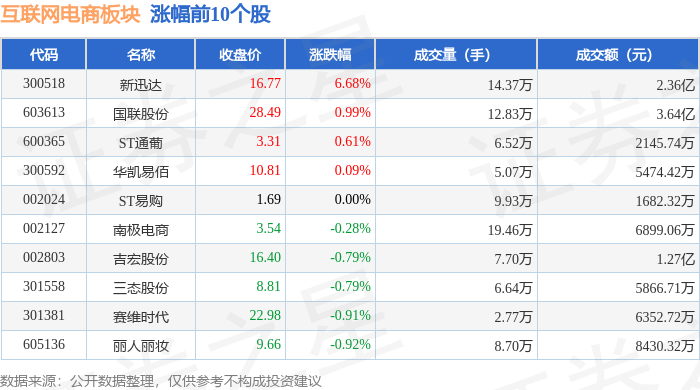
互联网电商板块9月4日跌0.17%,若羽臣领跌,主力资金净流出1.03亿元
Market Overview - On September 4, the internet e-commerce sector declined by 0.17% compared to the previous trading day, with Ruoyuchen leading the decline [1] - The Shanghai Composite Index closed at 3765.88, down 1.25%, while the Shenzhen Component Index closed at 12118.7, down 2.83% [1] Stock Performance - Notable gainers included: - Xinxunda (300518) with a closing price of 16.40, up 12.71% and a trading volume of 292,300 shares, totaling 454 million yuan [1] - Lirenlizhuang (605136) closed at 10.07, up 5.22% with a trading volume of 317,600 shares, totaling 316 million yuan [1] - Major decliners included: - Ruoyuchen (003010) closed at 58.70, down 4.49% with a trading volume of 75,800 shares, totaling 446 million yuan [2] - Shitou Co. (600539) closed at 10.44, down 3.51% with a trading volume of 114,800 shares, totaling 122 million yuan [2] Capital Flow - The internet e-commerce sector experienced a net outflow of 103 million yuan from institutional investors, while retail investors saw a net inflow of 201 million yuan [2][3] - Specific stock capital flows showed: - Xinxunda had a net outflow of 46.21 million yuan from institutional investors [3] - Kuaijingtong (002640) had a net inflow of 32.87 million yuan from institutional investors [3]
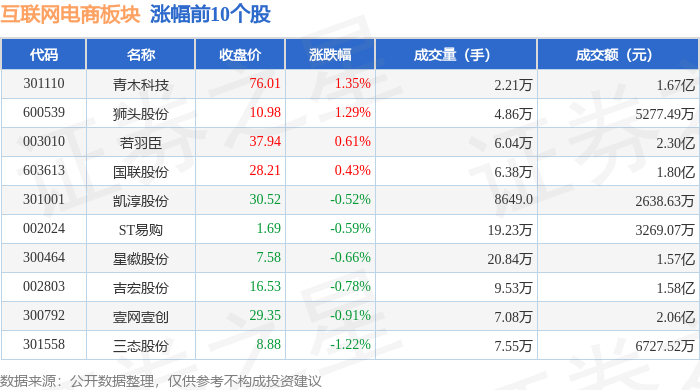
互联网电商板块9月3日跌2.72%,丽人丽妆领跌,主力资金净流出2.6亿元
Market Overview - On September 3, the internet e-commerce sector declined by 2.72% compared to the previous trading day, with Liren Lizhuang leading the decline [1] - The Shanghai Composite Index closed at 3813.56, down 1.16%, while the Shenzhen Component Index closed at 12472.0, down 0.65% [1] Individual Stock Performance - Liren Lizhuang (code: 605136) closed at 9.57, down 4.40% with a trading volume of 169,700 shares and a transaction value of 1.66 billion [1] - Qiangmu Technology (code: 301110) closed at 62.30, down 4.37% with a trading volume of 30,500 shares and a transaction value of 195 million [1] - JiaoDian Technology (code: 002315) closed at 47.86, down 4.15% with a trading volume of 70,600 shares and a transaction value of 344 million [1] - Other notable declines include Lianghui Co. (down 3.90%), Kaichun Co. (down 3.16%), and Kuaijingtong (down 3.09%) [1] Capital Flow Analysis - The internet e-commerce sector experienced a net outflow of 260 million from main funds, while retail investors saw a net inflow of 284 million [1] - The table of capital flow indicates that major funds had a negative net inflow in several companies, including ST Tongpu and ST Yigou, while retail investors showed positive net inflows in companies like Kaichun Co. and others [2]