
SINOMED(688108)

Search documents
赛诺医疗今日大宗交易平价成交16.8万股,成交额467.88万元
Xin Lang Cai Jing· 2025-10-13 09:48
Group 1 - On October 13, Sino Medical executed a block trade of 168,000 shares, with a transaction amount of 4.6788 million yuan, accounting for 0.85% of the total trading volume for the day [1] - The transaction price was 27.85 yuan, which was flat compared to the market closing price of 27.85 yuan [1]



赛诺医疗涨2.01%,成交额3.41亿元,主力资金净流出2433.18万元
Xin Lang Cai Jing· 2025-09-30 03:41
Core Viewpoint - Sino Medical's stock has shown significant volatility and growth, with a year-to-date increase of 190.88% as of September 30, 2023, despite recent fluctuations in trading volume and net capital flow [1][2]. Financial Performance - For the first half of 2025, Sino Medical reported revenue of 240 million yuan, representing a year-on-year growth of 12.53% [2]. - The net profit attributable to shareholders for the same period was 13.84 million yuan, showing a substantial increase of 296.54% year-on-year [2]. Stock Market Activity - As of September 30, 2023, Sino Medical's stock price was 28.39 yuan per share, with a market capitalization of 11.81 billion yuan [1]. - The stock experienced a trading volume of 341 million yuan, with a turnover rate of 2.95% [1]. - The company has appeared on the stock market's "龙虎榜" (Dragon and Tiger List) six times this year, with the most recent appearance on August 22 [1]. Shareholder Information - As of June 30, 2023, Sino Medical had 11,100 shareholders, an increase of 0.42% from the previous period [2]. - The average number of tradable shares per shareholder was 37,515, reflecting a slight increase of 0.21% [2]. Business Overview - Sino Medical, established on September 21, 2007, specializes in the research, production, and sales of high-end interventional medical devices, focusing on cardiovascular, cerebrovascular, and structural heart disease treatments [1]. - The revenue composition of the company includes stents (59.76%), balloons (32.68%), and other products (7.56%) [1]. - The company operates within the pharmaceutical and biological industry, specifically in the medical device and consumables sector [1].
医疗器械行业报告:集采降幅温和,国产替代明显
Western Securities· 2025-09-29 13:45
Investment Rating - The industry rating is "Overweight" [4] Core Insights - The Chinese neurointerventional medical device market is expected to grow from CNY 4.9 billion in 2019 to CNY 37.1 billion by 2030, with a compound annual growth rate (CAGR) of 20.2% from 2019 to 2030 [16][22] - The number of ischemic stroke treatment surgeries in China is projected to increase from 45,800 in 2019 to 881,300 by 2030, representing a CAGR of 30.8% [22] - The market for neurointerventional devices in China is growing at a faster rate compared to the U.S., with a surgical penetration rate of only 9.1% in 2020, compared to 62.3% in the U.S. [22][24] Summary by Sections 1. Market Outlook for Vascular Diseases - Neurovascular diseases are a leading cause of death in China, accounting for over 20% of total deaths in 2019, and the prevalence of peripheral vascular diseases is increasing due to aging [14] - The interventional treatment market is in an emerging stage in China, driven by increased health awareness, rising cardiovascular disease rates, and supportive government policies [14] 1.1 Neurovascular Disease Market Outlook - The neurointerventional medical device market in China is projected to grow significantly, with a market size increase from CNY 2.6 billion in 2015 to CNY 4.9 billion in 2019, and expected to reach CNY 37.1 billion by 2030 [16] - The number of neurointerventional surgeries is expected to rise from 46,200 in 2015 to 740,500 by 2026, with a CAGR of 28.9% [17] 1.1.1 Neurointerventional Market Outlook - The market for neurointerventional devices is expected to grow significantly, with a projected CAGR of 20.2% from 2019 to 2030 [16] 1.1.2 Ischemic Neurovascular Disease Market Outlook - The number of ischemic stroke cases in China is expected to rise from 2.8 million in 2015 to 5.8 million by 2030, with a CAGR of 5.0% [22] 1.1.3 Hemorrhagic Neurovascular Disease Market Outlook - The penetration rate for hemorrhagic stroke neurointerventional surgeries in China is expected to increase from 9.1% in 2020 to 31.7% by 2026 [24] 1.2 Peripheral Vascular Disease Surgery Market Outlook - The number of peripheral artery disease patients in China is projected to grow from 53.05 million in 2022 to 62.92 million by 2030 [30] - The number of peripheral vascular interventions is expected to increase from 178,000 in 2022 to 623,000 by 2030, with a CAGR of 13.7% from 2026 to 2030 [31] 1.2.1 Peripheral Artery Disease Market Outlook - The prevalence of peripheral artery disease is increasing, with a projected growth in patient numbers due to aging [29] 1.2.2 Peripheral Venous Market Outlook - The market for peripheral venous intervention devices in China is expected to grow from CNY 1.01 billion in 2021 to CNY 4.99 billion by 2030, with a CAGR of 19.5% [35] 2. Companies Related to Neurovascular Diseases - MicroPort NeuroScience (02172.HK) is a leading company in neurointerventional consumables in China [2] - Guichuang Tongqiao (02190.HK) focuses on peripheral and neurovascular intervention devices [2] - Sino Medical (688108.SH) covers key areas in cardiovascular and neurovascular interventions [2] - Xinwei Medical (06609.HK) provides comprehensive solutions for stroke treatment and prevention [2]


医药生物行业资金流出榜:恒瑞医药、广生堂等净流出资金居前
Zheng Quan Shi Bao Wang· 2025-09-29 08:51
Market Overview - The Shanghai Composite Index rose by 0.90% on September 29, with 26 out of 28 sectors experiencing gains, led by non-bank financials and non-ferrous metals, which increased by 3.84% and 3.78% respectively [1] - The pharmaceutical and biological sector saw a modest increase of 0.17% [1] - The coal and banking sectors were the biggest losers, declining by 0.84% and 0.46% respectively [1] Capital Flow Analysis - The net inflow of capital in the two markets was 9.527 billion yuan, with 13 sectors receiving net inflows [1] - The non-bank financial sector had the highest net inflow of 12.348 billion yuan, corresponding to its 3.84% increase [1] - The non-ferrous metals sector followed with a net inflow of 2.986 billion yuan and a daily increase of 3.78% [1] - Conversely, 18 sectors experienced net outflows, with the electronics sector leading at a net outflow of 2.811 billion yuan, followed by the defense and military sector with 1.882 billion yuan [1] Pharmaceutical and Biological Sector - The pharmaceutical and biological sector had a net outflow of 1.640 billion yuan, with 285 out of 475 stocks in the sector rising, while 169 fell, including 2 hitting the daily limit down [2] - Notable stocks with significant net inflows included Jilin Aodong (10.565 million yuan), Sino Medical (10.067 million yuan), and Mindray Medical (9.186 million yuan) [2] - Major stocks with significant net outflows included Hengrui Medicine (-333.586 million yuan), Guangsheng Tang (-160.353 million yuan), and Hanyu Pharmaceutical (-138.282 million yuan) [4] Top Gainers in Pharmaceutical Sector - Jilin Aodong saw a price increase of 6.69% with a turnover rate of 4.00% and a net inflow of 10.565 million yuan [2] - Sino Medical increased by 4.82% with a turnover rate of 7.00% and a net inflow of 10.067 million yuan [2] - Mindray Medical had a slight increase of 0.19% with a turnover rate of 0.68% and a net inflow of 9.186 million yuan [2] Top Losers in Pharmaceutical Sector - Hengrui Medicine decreased by 1.26% with a turnover rate of 1.02% and a net outflow of 333.586 million yuan [4] - Guangsheng Tang experienced a decline of 6.18% with a turnover rate of 11.07% and a net outflow of 160.353 million yuan [4] - Hanyu Pharmaceutical had a minor increase of 0.24% but still faced a net outflow of 138.282 million yuan [4]




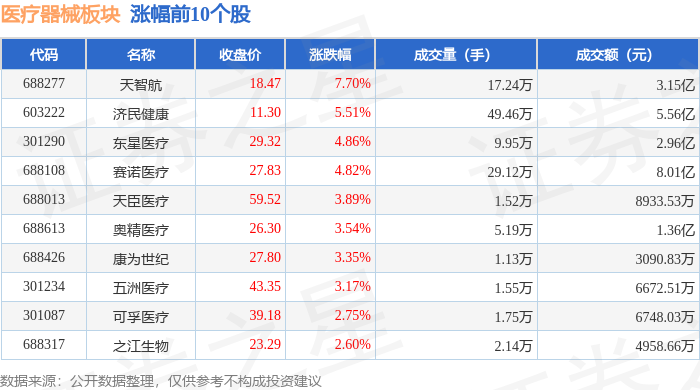
医疗器械板块9月29日涨0.39%,天智航领涨,主力资金净流入8563.1万元
Zheng Xing Xing Ye Ri Bao· 2025-09-29 08:46
Core Insights - The medical device sector experienced a slight increase of 0.39% on September 29, with Tianzhihang leading the gains [1] - The Shanghai Composite Index closed at 3862.53, up 0.9%, while the Shenzhen Component Index closed at 13479.43, up 2.05% [1] Medical Device Sector Performance - Tianzhihang (688277) saw a closing price of 18.47, with a rise of 7.70% and a trading volume of 172,400 shares, amounting to a transaction value of 315 million yuan [1] - Jimin Health (603222) closed at 11.30, up 5.51%, with a trading volume of 494,600 shares and a transaction value of 556 million yuan [1] - Dongxing Medical (301290) closed at 29.32, increasing by 4.86%, with a trading volume of 99,500 shares and a transaction value of 29.67 million yuan [1] - Other notable performers included Sainuo Medical (688108) with a 4.82% increase and a closing price of 27.83, and Tianchen Medical (688013) with a 3.89% increase, closing at 59.52 [1] Capital Flow Analysis - The medical device sector saw a net inflow of 85.63 million yuan from institutional investors, while retail investors contributed a net inflow of 46.52 million yuan [2] - However, speculative funds experienced a net outflow of 132 million yuan [2] Individual Stock Capital Flow - Sainuo Medical (688108) had a net inflow of 111 million yuan from institutional investors, but a net outflow of 68.66 million yuan from speculative funds [3] - Mairui Medical (300760) also saw a significant net inflow of 107 million yuan from institutional investors, with a net outflow of 76.49 million yuan from speculative funds [3] - Jimin Health (603222) had a net inflow of 53.49 million yuan from institutional investors, while speculative funds saw a net outflow of 43.40 million yuan [3]


赛诺医疗涨2.03%,成交额1.44亿元,主力资金净流入169.28万元
Xin Lang Cai Jing· 2025-09-29 02:08
Group 1 - The core viewpoint of the news is that Sino Medical has shown significant stock performance with a year-to-date increase of 177.56%, despite recent declines in the short term [1] - As of September 29, Sino Medical's stock price was 27.09 CNY per share, with a total market capitalization of 11.271 billion CNY [1] - The company has experienced a net inflow of main funds amounting to 1.6928 million CNY, with large orders contributing significantly to the buying activity [1] Group 2 - For the first half of 2025, Sino Medical reported a revenue of 240 million CNY, reflecting a year-on-year growth of 12.53%, and a net profit attributable to shareholders of 13.8416 million CNY, which is a substantial increase of 296.54% [2] - The number of shareholders increased to 11,100, with an average of 37,515 circulating shares per person, indicating a slight rise in shareholder engagement [2] Group 3 - Since its A-share listing, Sino Medical has distributed a total of 41 million CNY in dividends, although there have been no dividends paid in the last three years [3]
股权激励板块牛股成群,优质潜力股曝光
Zheng Quan Shi Bao· 2025-09-29 00:01
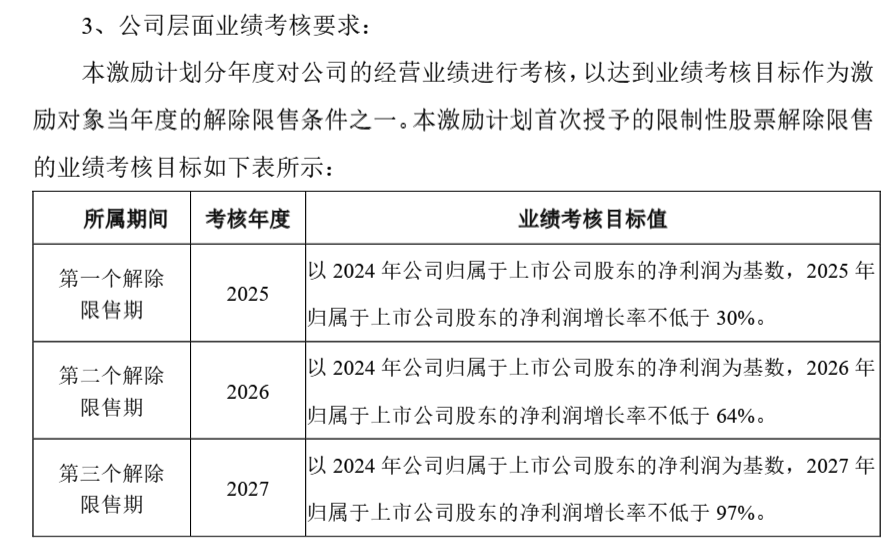
Core Viewpoint - The implementation of equity incentives has significantly boosted the performance of many companies in the A-share market, with an average increase of over 64% in the equity incentive sector, outperforming major indices like the Shanghai Composite Index and the ChiNext Index [1][2]. Group 1: Performance of Companies - The equity incentive sector has seen 27 stocks more than double in value this year, with New Yisheng leading at a 354.85% increase [1]. - Companies like Nanya New Materials and Zhongji Xuchuang have also shown impressive growth, with revenue increases of over 43% and net profit increases of nearly 58% [1]. - The majority of companies that implemented equity incentives have experienced significant performance improvements, with 88% reporting revenue growth and 76.88% reporting net profit growth [2]. Group 2: Impact of Equity Incentives - Equity incentives align the interests of employees with those of the company, enhancing motivation and innovation, which in turn drives company performance in various areas [2]. - The market perceives companies that implement equity incentives as more confident in their future growth, leading to higher stock valuations [2]. Group 3: Future Growth Potential - Recent data indicates that 63 stocks have implemented equity incentives since September, with many expected to achieve high growth rates in net profit, exceeding 15% in the coming years [3]. - Shaoneng Co., with a low price-to-book ratio of 1.32, is highlighted as a company with significant growth potential in the clean energy sector [3]. - The company has set ambitious performance targets for its equity incentive plan, aiming for a net profit growth rate of at least 30% in 2025 and 97% by 2027 [4][5]. Group 4: Market Trends - The slow bull market in A-shares is creating favorable conditions for investment in the equity incentive sector, with expectations of more quality companies emerging [6]. - The increasing recognition of the importance of equity incentives among companies is likely to lead to more opportunities for investors [6].



赛诺医疗:Accufit介入二尖瓣膜置换系统目前处于研发阶段
Zheng Quan Shi Bao Wang· 2025-09-19 07:53
人民财讯9月19日电,赛诺医疗(688108)9月19日在互动平台回复称,公司Accufit介入二尖瓣膜置换系统 目前处于研发阶段。 ...
赛诺医疗跌2.01%,成交额1.90亿元,主力资金净流出4113.72万元
Xin Lang Cai Jing· 2025-09-19 02:04
Group 1 - The core viewpoint of the news is that Sino Medical has experienced a significant stock price increase of 194.16% year-to-date, but has recently faced a decline of 8.60% over the past five trading days and 12.20% over the past twenty days [1] - As of September 19, Sino Medical's stock price was reported at 28.71 CNY per share, with a total market capitalization of 11.945 billion CNY [1] - The company has seen a net outflow of main funds amounting to 41.1372 million CNY, with large orders showing a buy of 45.0039 million CNY and a sell of 63.0312 million CNY [1] Group 2 - For the first half of 2025, Sino Medical achieved operating revenue of 240 million CNY, representing a year-on-year growth of 12.53%, and a net profit attributable to shareholders of 13.8416 million CNY, which is a significant increase of 296.54% [2] - The company has a total of 11,100 shareholders as of June 30, with an average of 37,515 circulating shares per shareholder, indicating a slight increase in shareholder engagement [2] Group 3 - Since its A-share listing, Sino Medical has distributed a total of 41 million CNY in dividends, but has not paid any dividends in the last three years [3]
“创新、出海、并购”出实效 科创板医疗器械企业迎发展良机
Zheng Quan Ri Bao Wang· 2025-09-18 12:12
Core Viewpoint - The medical device export sector in China is experiencing growth, with a notable increase in revenue and profit among companies listed on the STAR Market, driven by innovation, international expansion, and strategic mergers and acquisitions [1][2][4]. Group 1: Market Performance - In the first half of 2025, China's medical device exports reached $24.1 billion, marking a 5.0% year-on-year increase and accounting for over 40% of total pharmaceutical product exports [1]. - STAR Market medical device companies reported a revenue growth of 9% and a net profit growth of 3% year-on-year, with second-quarter revenue and net profit showing quarter-on-quarter growth of 22% and 30%, respectively [1]. - Nearly 30% of STAR Market medical device companies have over 30% of their business coming from overseas [1]. Group 2: Innovation and Global Strategy - STAR Market medical device companies focus on high-value consumables and medical equipment, leveraging capital market support to build extensive global marketing networks [2]. - The industry has seen the emergence of several benchmark companies, with a total of approximately 18,000 invention patents held by STAR Market medical device firms [2]. - Notable innovations include the world's first branched aortic stent graft approved for market by Shanghai MicroPort Medical, and the FDA breakthrough designation for the self-expanding intracranial drug-coated stent system by Sinno Medical [2]. Group 3: International Expansion - Shanghai United Imaging Healthcare Co., Ltd. has increased its overseas revenue share from less than 10% at the time of listing to nearly 20% in the first half of 2025 [3]. - Haier Biomedical and Chongqing Mountain Outside Mountain Blood Purification Technology Co., Ltd. reported overseas revenue growth of 30% and 41%, respectively, in the first half of 2025 [3]. - The global expansion of domestic medical device companies is evident, with Haier Biomedical's products applied in over 150 countries and regions [3]. Group 4: Mergers and Acquisitions - The medical device industry is increasingly utilizing mergers and acquisitions to expand product lines and enhance technological capabilities, supported by policies such as "Merger and Acquisition Six Articles" and "STAR Market Eight Articles" [4]. - Shanghai Sanyou Medical Devices Co., Ltd. has successfully acquired the French orthopedic company Implanet, significantly boosting its overseas revenue [5]. - Shenzhen Huatai Medical Devices Co., Ltd. has improved its market penetration and product coverage following the introduction of Mindray Medical as a controlling shareholder [5]. Group 5: Policy Support and Future Outlook - The Chinese government has introduced numerous supportive policies aimed at fostering high-end innovation and quality development in the medical device sector [6]. - The industry is expected to transition from "product export" to "technology output" and from "landing" to "local integration," positioning itself for higher value within the global value chain [6].


