TINAVI(688277)

Search documents
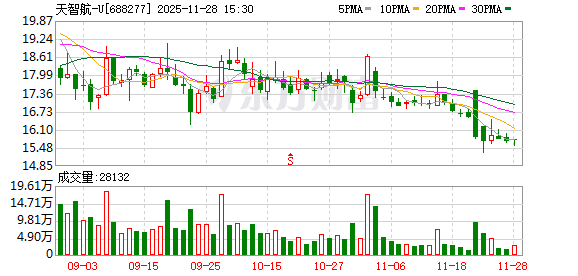
天智航-U大宗交易成交14.00万股 成交额201.60万元
Zheng Quan Shi Bao Wang· 2025-11-28 15:33
Group 1 - The core point of the news is the significant block trade of Tianzhihang-U on November 28, with a transaction volume of 140,000 shares and a transaction amount of 2.016 million yuan, at a price of 14.40 yuan, which represents an 8.40% discount compared to the closing price of the day [2][3] - The buyer of the block trade was an institutional proprietary trading department, while the seller was Guotou Securities Co., Ltd. Jiangsu Branch [2][3] - Over the past three months, Tianzhihang-U has recorded a total of 9 block trades, with a cumulative transaction amount of 33.984 million yuan [2] Group 2 - The latest margin financing balance for Tianzhihang-U is 222 million yuan, which has decreased by 18.3987 million yuan over the past five days, reflecting a decline of 7.67% [3] - On the same day, Tianzhihang-U's closing price was 15.72 yuan, with a slight increase of 0.13%, and a turnover rate of 0.62% [2] - The total trading volume for the day was 44.0612 million yuan, with a net outflow of main funds amounting to 2.2601 million yuan, and a cumulative decline of 0.69% over the past five days, with a total net outflow of 18.4254 million yuan [2]


科创板晚报|超卓航科实控人拟变更为湖北省国资委 中芯国际终止出售中芯宁波股权
Xin Lang Cai Jing· 2025-11-28 13:00
Group 1: Industry Developments - The Ministry of Industry and Information Technology (MIIT) is accelerating the introduction of targeted policies to regulate irrational competition in the power and energy storage battery industry, emphasizing the need for high-quality development [1] - Research institutions predict that storage chip prices are expected to rise by approximately 50% due to increasing demand driven by artificial intelligence infrastructure [4] - A report indicates that the global computing power is projected to increase by over 70 times in the next decade, with space data centers expected to form a new industrial chain [5][6] Group 2: Company Announcements - Anxi China has requested Anxi Netherlands to engage in sincere negotiations regarding control issues and to halt overseas capacity expansion while restoring normal supply [2] - Lingkong Tianxing announced that its hypersonic missile "Yukongji-1000" has entered mass production, with an intelligent version currently under development [3] - Jinko Energy expects a doubling of its energy storage system shipment target for next year, with global energy storage demand projected to exceed 400 GWh [11]




天智航(688277) - 关于持股5%以上股东权益变动触及1%刻度的提示性公告
2025-11-28 12:05
证券代码:688277 证券简称:天智航 公告编号:2025-047 北京天智航医疗科技股份有限公司 本公司董事会及全体董事保证公告内容与信息披露义务人提供的信息 一致。 先进制造产业投资基金(有限合伙)及其一致行动人京津冀产业协同发 展投资基金(有限合伙)保证向本公司提供的信息真实、准确、完整,没有 虚假记载、误导性陈述或重大遗漏。 关于持股 5%以上股东权益变动触及 1%刻度的提示性公告 重要内容提示: | 权益变动方向 | 比例增加□ | 比例减少☑ | | --- | --- | --- | | 权益变动前合计比例 | 9.00% | | | 权益变动后合计比例 | 7.98% | | | 本次变动是否违反已作出的承诺、意向、计划 | 是□ | 否☑ | | 是否触发强制要约收购义务 | 是□ | 否☑ | 一、 信息披露义务人及其一致行动人的基本信息 1.身份类别 | 投资者及 | □控股股东/实际控制人及其一致行动人 | | --- | --- | | 其一致行 | ☑其他 5%以上大股东及其一致行动人 | | | □合并口径第一大股东及其一致行动人(仅适用于无控股股东、 | | 动人的身 | 实 ...
天智航(688277) - 中信建投证券股份有限公司关于北京天智航医疗科技股份有限公司与关联人共同投资的核查意见
2025-11-28 12:04
中信建投证券股份有限公司 关于北京天智航医疗科技股份有限公司 与关联人共同投资的核查意见 中信建投证券股份有限公司(以下简称"中信建投证券"或"保荐机构") 作为北京天智航医疗科技股份有限公司(以下简称"天智航"或"公司")2021 年度向特定对象发行 A 股股票的保荐机构,根据《证券发行上市保荐业务管理 办法》《上海证券交易所科创板股票上市规则》《上海证券交易所科创板上市公司 自律监管指引第 1 号——规范运作》和《科创板上市公司持续监管办法(试行)》 等有关规定,对天智航与关联人共同投资事项进行了审慎核查,核查情况及核查 意见如下: 一、关联对外投资概述 (一)对外投资的基本概况 1、本次交易概况 为进一步加强产、学、研、医深度融合,创新合作机制,打通跨学科壁垒, 打造集前沿技术突破、学科人才培养、生产制造赋能、临床应用示范全流程一体 化的现代化医疗机器人产业学院典范,促进医疗机器人行业升级与效能提升,构 建新型创新应用生态环境。公司拟与安徽东南医学科技发展有限责任公司(以下 简称"东南医学")、安徽启江智能科技有限公司(以下简称"启江智能")、安徽 邦泰天玑智能医疗创新中心有限公司(以下简称"邦泰天玑" ...
天智航(688277) - 与关联人共同投资公告
2025-11-28 12:01
证券代码:688277 证券简称:天智航 公告编号:2025-046 北京天智航医疗科技股份有限公司 与关联人共同投资公告 本公司董事会及全体董事保证本公告内容不存在任何虚假记载、误导性陈述 或者重大遗漏,并对其内容的真实性、准确性和完整性承担法律责任。 本次关联交易事项已经公司第六届董事会独立董事专门会议第七次会议、第 五届监事会第十二次会议、第六届董事会第二十五次会议审议通过,关联董 事已回避表决。未达到股东大会审议标准,无需提交股东大会审议。 其它需要提醒投资者重点关注的风险事项 本次交易的达成尚存在不确定性,敬请广大投资者谨慎投资,注意投资风险。 一、关联对外投资概述 (一)对外投资的基本概况 1、本次交易概况 为进一步加强产、学、研、医深度融合,创新合作机制,打通跨学科壁垒, 打造集前沿技术突破、学科人才培养、生产制造赋能、临床应用示范全流程一体 重要内容提示: 投资标的名称:东南医疗装备产业发展有限公司(暂定名,最终以工商 登记核准名称为准) 截至本次关联交易为止(含本次),北京天智航医疗科技股份有限公司 (以下简称"公司"或"天智航")过去 12 个月内与同一关联人进行的非 日常关联交易累计次数 ...
天智航(688277) - 第五届监事会第十二次会议决议公告
2025-11-28 12:00
一、监事会会议召开情况 北京天智航医疗科技股份有限公司(以下简称"公司")第五届监事会第十 二次会议通知于 2025 年 11 月 21 日以电子邮件方式送达公司全体监事,于 2025 年 11 月 28 日以现场结合通讯方式召开,应出席监事 3 人,实际出席监事 3 人。 本次会议由监事会主席张维军先生主持。本次监事会会议的召开符合《公司法》 《公司章程》等有关规定,会议决议合法有效。 二、监事会会议审议情况 全体监事以投票方式通过如下决议: 1、审议通过《关于公司与关联人共同投资的议案》 证券代码:688277 证券简称:天智航 公告编号:2025-045 北京天智航医疗科技股份有限公司 第五届监事会第十二次会议决议公告 本公司监事会及全体监事保证本公告内容不存在任何虚假记载、误导性陈述 或者重大遗漏,并对其内容的真实性、准确性和完整性依法承担法律责任。 本次与关联人共同投资遵循了公平、合理的原则,不存在损害公司及其股东、 特别是中小股东利益的行为,本次关联交易的审议程序符合法律、法规及《公司 章程》等有关规定。 具体内容详见公司同日刊登在上海证券交易所网站(www.sse.com.cn)的《与 关联人共 ...
天智航:拟与关联人共同投资设立公司
Xin Lang Cai Jing· 2025-11-28 11:44
Core Viewpoint - The company plans to invest in a joint venture to establish a new medical equipment development company with a total investment of 10 million yuan, where the company will contribute 2 million yuan, representing a 20% stake [1] Group 1: Investment Details - The total investment for the new company, Southeast Medical Equipment Industry Development Co., Ltd., is set at 10 million yuan [1] - The company will contribute 2 million yuan in cash, accounting for 20% of the total investment [1] Group 2: Corporate Governance - The transaction has been approved by the company's sixth board of directors' independent directors' special meeting, the fifth supervisory board's twelfth meeting, and the sixth board of directors' twenty-fifth meeting [1] - Related directors have abstained from voting, and there is no need for shareholder meeting approval [1]
天智航今日大宗交易折价成交14万股,成交额201.6万元
Xin Lang Cai Jing· 2025-11-28 09:40
Group 1 - On November 28, Tianzhihang executed a block trade of 140,000 shares, with a total transaction value of 2.016 million yuan, accounting for 4.38% of the total trading volume for the day [1] - The transaction price was 14.4 yuan, which represents an 8.4% discount compared to the market closing price of 15.72 yuan [1][2] - The buying department for the transaction was identified as "Thought Teacher Teaching Performer," and the selling department was marked as "KO" [2]

天智航-U现6笔大宗交易 合计成交194.00万股
Zheng Quan Shi Bao Wang· 2025-11-27 15:09
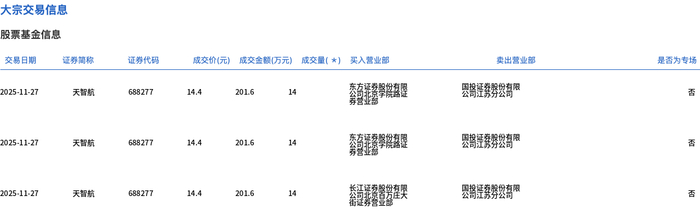
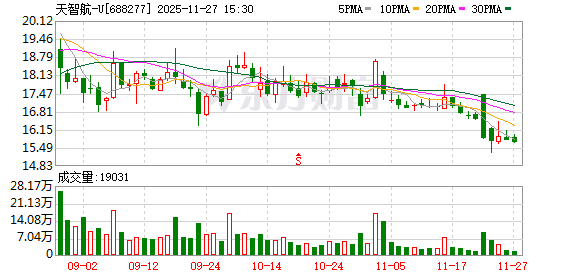
Core Insights - Tianzhihang-U executed a total of 6 block trades on November 27, with a cumulative trading volume of 1.94 million shares and a total transaction value of 27.936 million yuan, at a price of 14.40 yuan, representing an 8.28% discount compared to the closing price of the day [2] Trading Activity - The block trades included 2 transactions involving institutional proprietary seats, with a total transaction value of 19.872 million yuan and a net purchase of 19.872 million yuan [2] - Over the past three months, the stock has recorded 8 block trades with a total transaction value of 31.968 million yuan [2] Stock Performance - On the same day, Tianzhihang-U closed at 15.70 yuan, down 0.44%, with a turnover rate of 0.42% and a total trading volume of 30.128 million yuan, indicating a net outflow of 1.1399 million yuan in main funds [2] - In the last five days, the stock has declined by 5.02%, with a total net outflow of 17.4857 million yuan [2] Margin Financing - The latest margin financing balance for the stock is 221 million yuan, which has decreased by 17.3013 million yuan over the past five days, reflecting a decline of 7.26% [2]
天智航今日大宗交易折价成交194万股,成交额2793.6万元
Xin Lang Cai Jing· 2025-11-27 09:39
Summary of Key Points Core Viewpoint - On November 27, Tianzhihang executed a block trade of 1.94 million shares, amounting to 27.936 million yuan, which accounted for 48.11% of the total trading volume for the day. The transaction price was 14.4 yuan, representing an 8.28% discount compared to the market closing price of 15.7 yuan [1]. Group 1: Trading Details - The block trade involved a total of 1.94 million shares at a price of 14.4 yuan per share [1]. - The total transaction value was 27.936 million yuan, indicating significant trading activity [1]. - The discount of 8.28% from the market closing price suggests a strategic pricing decision in the context of market conditions [1]. Group 2: Institutional Participation - Multiple institutional buyers participated in the trades, indicating strong interest from professional investors [2]. - The trades were executed through specialized institutional channels, reflecting a targeted approach to acquiring shares [2]. - The involvement of institutional investors may signal confidence in the company's future performance despite the discount [2].