
Daqo Energy(688303)

Search documents
光伏行业点评:光伏产品出口退税取消,有望促使行业高质量发展
Shenwan Hongyuan Securities· 2026-01-12 07:14
Investment Rating - The report rates the photovoltaic industry as "Overweight," indicating that the industry is expected to outperform the overall market [2]. Core Insights - The cancellation of the export VAT rebate for photovoltaic products, effective April 1, 2026, marks the end of over a decade of direct fiscal support for photovoltaic exports, potentially leading the industry into a phase of high-quality development [1]. - A "window period" is anticipated, leading to increased overseas orders and production ramp-up in Q1 2026, similar to previous phases of accelerated installations, which is expected to improve the performance of export-oriented photovoltaic companies [2]. - After the policy window closes, overseas component prices are likely to be renegotiated, as China, being the largest exporter of photovoltaic components, will have stronger pricing power due to the cancellation of the rebate, which is expected to lead to price increases [2]. - The cancellation of the export rebate is seen as a response to the call for reducing low-price competition in the photovoltaic industry, which will accelerate the exit of inefficient production capacities and reshape the market landscape [2]. - Companies with overseas production capacity and strong brand/channel advantages are expected to benefit from the narrowing cost disadvantage of local manufacturing, particularly in regions like the Middle East and North Africa [2]. Summary by Relevant Sections Industry Outlook - The cancellation of the export VAT rebate is expected to enhance the industry's quality of development and reduce fiscal funds being transferred to overseas terminals [2]. - The report suggests that leading companies with technological advantages (TOPCon/BC), strong brands, and distribution channels will continue to gain market share [2]. Investment Recommendations - The report recommends focusing on leading companies with overseas production capabilities, such as Longi Green Energy, JinkoSolar, Trina Solar, and others, which are expected to benefit from the "price adjustment and capacity exit" [2]. - Companies that are advancing new technologies and material upgrades, such as Aiko Solar and Dongfang Risheng, are also highlighted for their potential to enhance product efficiency and pricing power [2]. - Cost-advantaged silicon material companies like Tongwei Co. and Daqo New Energy are recommended for investment consideration [2]. Valuation Table - A valuation table is provided, detailing the estimated net profits and price-to-earnings (PE) ratios for key companies in the industry, indicating varying performance expectations for 2025 to 2027 [3].





出口退税取消叠加自律机制调整 市场化下光伏产业链面临价值重估
Di Yi Cai Jing· 2026-01-11 21:11
Core Viewpoint - The photovoltaic industry is facing a significant policy shift as the export tax rebate for photovoltaic products is fully canceled, marking the end of a supportive policy environment and leading to a historical turning point for the industry [1][2]. Policy Changes - The Ministry of Finance and the State Taxation Administration announced the cancellation of the export tax rebate for photovoltaic products starting April 1, 2026, transitioning the industry into a "no rebate subsidy" phase [2]. - The export tax rebate policy, which began in October 2013, has seen a gradual decline in rebate rates, dropping from 13% to 9% for photovoltaic silicon wafers, batteries, and modules as of December 1, 2024 [2]. Market Reaction - The market reacted sharply to these policy changes, with the sentiment in the polysilicon market plummeting, leading to significant declines in polysilicon futures and related stocks such as Daqo New Energy and Tongwei Co., Ltd. [1][3]. - On January 8, polysilicon futures dropped by 9%, followed by an 8% decline on January 9, reaching a low of 50,080 yuan/ton [3]. Industry Self-Regulation - The industry self-regulation phase has entered a new stage, with the State Administration for Market Regulation holding discussions with major companies regarding monopoly risks and requiring them to avoid agreements on production capacity, sales prices, and market division [3][4]. - The self-regulation efforts that began in 2025 had initially helped stabilize prices, but the recent regulatory changes indicate a shift away from relying on such practices [4]. Price Dynamics - Despite rising prices for upstream polysilicon and silicon wafers, downstream module prices have not followed suit, leading to squeezed profit margins for developers [5][6]. - The average transaction price for N-type polysilicon was reported at 59,200 yuan/ton, reflecting a week-on-week increase of 9.83%, while N-type G10L monocrystalline silicon wafers saw a price increase of 9.17% [5]. Demand Outlook - The first quarter is traditionally a weak demand season for the photovoltaic industry, with both domestic and overseas markets showing signs of slowing order execution and limited visibility for new orders [7]. - The overall market demand has been declining, and the anticipated price increases for components face significant resistance due to low demand [6][7]. Market Valuation - The shift in policy is prompting a "value reassessment" in the capital market for the photovoltaic sector, with significant sell-offs observed in the stock market [8]. - From January 8 to 9, the photovoltaic sector experienced a notable decline, with polysilicon futures dropping by 10.2% and major companies like Tongwei Co., Ltd. and GCL-Poly Energy Corp. seeing substantial stock price decreases [8]. Investment Opportunities - Despite the challenges, the photovoltaic industry's overall valuation is at historical lows, which may present attractive investment opportunities compared to other sectors [8]. - Companies with advantages in technology iteration, cost control, and global channel layout are expected to be identified as potential investment opportunities amidst the changing landscape [8].



市场化下光伏产业链面临价值重估
Di Yi Cai Jing Zi Xun· 2026-01-11 11:37
Group 1 - The core viewpoint of the article highlights a significant policy shift in the photovoltaic (PV) industry, marked by the cancellation of export VAT rebates and the cessation of industry self-regulation, indicating a historical turning point for the sector [2][3]. - The Ministry of Finance and the State Taxation Administration announced the cancellation of export VAT rebates for PV products starting April 1, 2026, transitioning the industry into a "no rebate subsidy" phase [3]. - The cancellation of the export VAT rebate follows a period of declining export prices and increased competition in overseas markets, leading to substantial losses across the industry [3][4]. Group 2 - The market reacted sharply to these changes, with significant declines in the prices of polysilicon futures and related stocks, indicating a loss of investor confidence [4][8]. - The recent discussions between the State Administration for Market Regulation and leading companies in the PV sector, including Tongwei Co. and Daqo New Energy, focused on addressing monopoly risks and enforcing compliance with new regulations [4][5]. - Despite rising prices for upstream materials like polysilicon and silicon wafers, downstream component prices have not followed suit, leading to squeezed margins for developers [5][6]. Group 3 - The first quarter is traditionally a slow season for the PV industry, and the anticipated price increases for components face resistance due to weak demand [6][7]. - The shift in policy is prompting a reevaluation of the PV sector's value in the capital markets, with significant sell-offs observed in the stock prices of major companies [7][8]. - Analysts suggest that while the overall valuation of the PV industry is at historical lows, the uncertainty surrounding future profitability and market dynamics poses challenges for attracting investment [8].

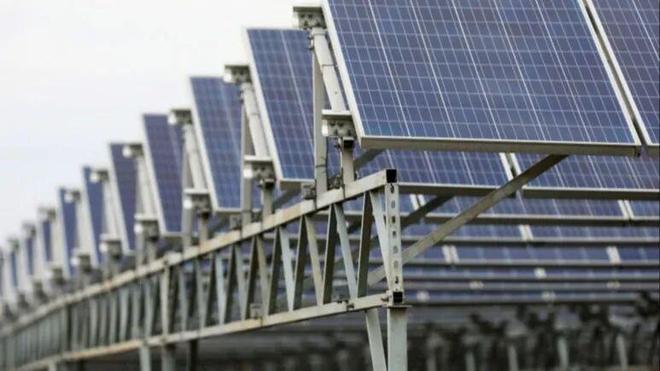
市场化下光伏产业链面临价值重估
第一财经· 2026-01-11 11:28
Core Viewpoint - The photovoltaic industry in China is facing a significant policy shift with the complete cancellation of export VAT rebates and the halting of industry self-regulation, marking a historical turning point for the sector [3][4]. Policy Changes - Starting April 1, 2026, the export VAT rebate for photovoltaic products will be fully canceled, transitioning the industry into a "no rebate subsidy" phase [4]. - The export VAT rebate policy, initiated in October 2013, has seen a gradual decline in rebate rates, dropping from 13% to 9% as of December 1, 2024, indicating a move towards the cancellation of rebates [4]. Market Reactions - The market reacted sharply to these policy changes, with the price of multicrystalline silicon contracts dropping significantly, and major companies like Daqo New Energy and Tongwei Co. experiencing substantial stock declines [3][5]. - On January 8 and 9, 2026, the main contract for multicrystalline silicon futures fell by 9% and 8% respectively, reaching a low of 50,080 yuan/ton [5][11]. Industry Self-Regulation - The recent discussions between the State Administration for Market Regulation and leading companies in the silicon material sector indicate a shift away from previous self-regulatory practices, which had aimed to stabilize prices through coordinated production and sales strategies [5][6]. - The new regulatory environment prohibits companies from coordinating on production capacity, sales volumes, and pricing, which could lead to increased market volatility [5][6]. Price Dynamics - Despite rising prices for upstream materials like silicon and silicon wafers, the prices for downstream components have not followed suit, squeezing profit margins for developers [9]. - The average transaction price for N-type multicrystalline silicon was reported at 59,200 yuan/ton, reflecting a week-on-week increase of 9.83%, while N-type G10L monocrystalline silicon wafers saw a price increase of 9.17% [9]. Demand and Market Outlook - The first quarter is traditionally a low-demand season for the photovoltaic industry, complicating the acceptance of price increases by end-users [10]. - The overall market demand has been weakening, with a decline in order visibility for both domestic and overseas markets as the year-end approaches [10]. Capital Market Impact - The shift in policy is prompting a "value reassessment" in the capital markets for the photovoltaic sector, leading to significant sell-offs and pressure on valuations [11]. - From January 8 to 9, 2026, the photovoltaic sector experienced a notable sell-off, with major companies like Tongwei Co. and GCL-Poly Energy facing significant stock price declines [11].
出口退税取消叠加自律机制调整,市场化下光伏产业链面临价值重估
Di Yi Cai Jing· 2026-01-11 11:11
Core Viewpoint - The photovoltaic industry is undergoing significant changes in 2026 due to the cancellation of export VAT rebates and the halting of industry self-regulation, leading to a historical turning point for the sector [1][2]. Policy Changes - The Ministry of Finance and the State Taxation Administration announced the cancellation of export VAT rebates for photovoltaic products starting April 1, 2026, marking the transition to a "no rebate subsidy" phase [2]. - The export VAT rebate policy for the photovoltaic industry began in October 2013, with rates gradually decreasing over the past two years, culminating in a drop from 13% to 9% in December 2024 [2]. Market Reactions - The market reacted sharply to these policy changes, with the price of polysilicon futures dropping significantly, indicating a loss of confidence among investors [3][8]. - On January 8 and 9, polysilicon futures contracts fell by 9% and 8%, respectively, with related stocks also experiencing substantial declines [3][8]. Industry Self-Regulation - The recent discussions between the State Administration for Market Regulation and major companies in the photovoltaic sector signal a shift away from previous self-regulatory practices, which had aimed to stabilize prices [3][4]. - Companies are now prohibited from coordinating on production capacity, sales prices, and other market behaviors, which could lead to increased volatility in pricing [3][4]. Price Dynamics - Despite rising prices for upstream materials like polysilicon and silicon wafers, downstream component prices have not followed suit, leading to squeezed margins for developers [5][6]. - The average transaction price for n-type polysilicon rose to 59,200 yuan/ton, a 9.83% increase week-on-week, while the average price for N-type G10L monocrystalline silicon wafers increased by 9.17% [5]. Demand Outlook - The first quarter is traditionally a slow season for the photovoltaic industry, with both domestic and international demand showing signs of weakness [7]. - The overall market demand has been declining, with new orders becoming less visible, further complicating the pricing landscape [7]. Market Valuation - The shift in policy is prompting a reevaluation of the photovoltaic sector's value in the capital markets, with significant sell-offs observed in early January [8]. - From January 8 to 9, the photovoltaic sector saw a drop of 10.2% in polysilicon futures, with major companies like Tongwei Co. and Daqo New Energy experiencing notable declines in stock prices [8].
多晶硅巨头遭约谈,光伏反内卷转向市场化
Zhong Guo Jing Ying Bao· 2026-01-10 02:21
Core Viewpoint - The recent meeting with the State Administration for Market Regulation highlighted concerns about potential monopolistic practices in the polysilicon industry, prompting calls for regulatory compliance and market-driven solutions to address excessive competition and price manipulation [1][2][4]. Industry Overview - On January 6, 2026, the State Administration for Market Regulation held discussions with major polysilicon companies, including Tongwei Co., GCL-Poly Energy, Daqo New Energy, and Xinte Energy, regarding reported monopolistic risks and corrective measures [1][2]. - Following the meeting, stock prices for these companies fell significantly, with declines of 3.83%, 7.89%, 6.1%, and 7.81% respectively by January 9 [1]. Regulatory Actions - The meeting's minutes indicated that since July 2025, there have been reports of companies using self-regulation as a pretext to raise polysilicon prices, leading to the establishment of a platform company aimed at capacity integration [2]. - The regulatory body emphasized that companies should not agree on production capacity, sales prices, or engage in market division, and must avoid any form of communication regarding pricing and production volumes [2]. Market Dynamics - The establishment of the platform company, Beijing Guanghe Qiancheng Technology Co., was intended to address the issue of excessive competition in the polysilicon sector through a dual-track model of "debt acquisition + flexible capacity utilization" [2]. - Analysts noted that the recent discussions have shifted market expectations towards anti-monopoly measures, leading to a withdrawal of funds from the polysilicon market and a potential breakdown of previously established price alliances [1][5]. Future Outlook - The polysilicon industry is currently facing significant challenges due to supply-demand imbalances and widespread losses among companies, necessitating a swift resolution to foster healthy development [4]. - Future pricing trends for polysilicon may be influenced by the recent regulatory actions, with expectations of price adjustments as market dynamics evolve [5].

多晶硅巨头“约谈”风波:未来光伏如何“反内卷”?
Zhong Guo Jing Ying Bao· 2026-01-09 16:40
Core Viewpoint - The recent meeting minutes reveal that the Chinese regulatory authority has raised concerns about potential monopolistic practices in the polysilicon industry, leading to a significant market reaction and stock price declines for major companies in the sector [1][2]. Group 1: Regulatory Actions - On January 6, 2026, the State Administration for Market Regulation held discussions with key players in the polysilicon industry, including Tongwei Co., GCL-Poly Energy, Daqo New Energy, and others, to address reported monopolistic risks and suggested corrective measures [1][2]. - The meeting minutes indicated that since July 2025, there have been allegations of companies colluding to raise polysilicon prices under the guise of self-regulation, which included signing commitment letters and forming a platform company for capacity integration [2]. Group 2: Market Impact - Following the regulatory discussions, stock prices for major polysilicon companies fell significantly, with declines of 3.83% for Tongwei, 7.89% for GCL-Poly, 6.1% for Daqo, and 7.81% for Xinte Energy as of January 9 [1]. - Analysts suggest that the recent price increases in polysilicon, which had risen to over 60,000 yuan per ton, may not be sustainable due to the regulatory scrutiny and potential dismantling of price-fixing agreements among companies [5]. Group 3: Industry Perspectives - Industry experts emphasize the need for a legal and market-driven approach to combat "involution" and monopolistic practices, highlighting that the recent regulatory actions are a response to industry reports and not a rejection of the efforts made towards self-regulation [2][4]. - The establishment of the Beijing Guanghe Qiancheng Technology Co., viewed as a platform for capacity integration, has been criticized, with some industry insiders suggesting that its objectives may no longer be necessary [3][4]. Group 4: Future Outlook - The polysilicon market is expected to experience further price adjustments, with predictions that prices may eventually trend towards 40,000 yuan per ton as market competition intensifies and supply-demand dynamics remain loose [5]. - The ongoing discussions about "anti-involution" and regulatory compliance will likely shape the future strategies of companies within the polysilicon sector, as they navigate the balance between competitive pricing and regulatory frameworks [4][5].
多晶硅期货主力合约及硅料个股大跌,行业“反内卷”到底怎样了
Di Yi Cai Jing· 2026-01-09 11:10
Core Viewpoint - The multi-crystalline silicon futures market is experiencing a downward trend, with significant price drops and declines in the stock prices of leading domestic companies in the sector [1][2]. Group 1: Market Performance - As of January 9, the main 2605 contract for multi-crystalline silicon closed at 51,300 yuan/ton, down 8.11% [1]. - Major domestic companies such as Tongwei Co., Ltd. (600438.SH), Daqo New Energy (688303.SH), and GCL-Poly Energy (03800.HK) saw their stock prices drop by 3.83%, 6.10%, and 7.02% respectively [1]. Group 2: Production and Pricing Trends - The production of multi-crystalline silicon is projected to decrease by 28.4% in 2025, with current spot prices having rebounded over 70% from historical lows recorded in June 2025 [2]. - Factors contributing to the recent price increases include a continuous reduction in the operating rate of silicon material, rising prices in downstream silicon wafers and battery segments, and a supportive procurement willingness from the component end due to existing orders [2]. Group 3: Supply and Demand Dynamics - The fundamental issue in the photovoltaic industry is not supply but rather a lack of demand, with domestic installations declining due to regulatory impacts [3]. - Data from the National Energy Administration indicates that the utilization rate of photovoltaic power generation in China was 94.9% from January to October 2025, a decrease of 2.2 percentage points year-on-year, indicating increasing consumption pressure [3]. - The market is facing challenges in balancing the supply-demand equation, with concerns about how to achieve industry-wide collaboration to address these issues [3][4]. Group 4: Industry Collaboration - The chairman of Trina Solar (688599.SH) emphasized the need for horizontal collaboration across various segments of the supply chain, including silicon materials, wafers, batteries, and components, to achieve profitability across the entire industry [4]. - There is a call for both horizontal and vertical collaboration within the industry to effectively manage internal competition and ensure all segments can achieve profitability [4].
多晶硅期货主力合约及硅料个股大跌,行业“反内卷”到底怎样了| 陆说能源
Di Yi Cai Jing· 2026-01-09 10:57
Group 1 - The core viewpoint of the articles indicates that the polysilicon production in 2025 decreased by 28.4% year-on-year, but the industry has not yet emerged from an oversupply situation due to demand contraction [1][2] - As of January 9, 2026, multiple polysilicon futures contracts continued to decline, with the main contract closing at 51,300 yuan/ton, down 8.11% [1] - Leading domestic polysilicon companies saw significant stock price declines, with Tongwei Co., Ltd. down 3.83%, Daqo New Energy down 6.10%, and GCL-Poly Energy down 7.02% [1] Group 2 - The polysilicon market had previously shown positive developments in production and pricing due to the "anti-involution" trend in the photovoltaic sector [2] - The current spot price of silicon materials has rebounded over 70% from its historical low in June 2025 [2] - Three factors are driving the price increase at the beginning of 2026: reduced operating rates in silicon material production, rising prices in downstream silicon wafers and battery segments, and a certain tolerance for price increases in the component sector supported by existing orders [2][3] Group 3 - The fundamental issue in the photovoltaic industry remains a supply-demand imbalance, with supply contraction lagging behind demand decline [3] - Domestic installations have been in a downward trend due to the impact of policy document "No. 136," with a reported photovoltaic power generation utilization rate of 94.9% from January to October 2025, down 2.2 percentage points year-on-year [3] - The market is questioning the so-called "industry self-discipline" as merely a price increase strategy, highlighting the need for coordination across the entire industry chain to address the challenges of weak downstream demand [3][4] Group 4 - The chairman of Trina Solar emphasized the need for horizontal collaboration among various segments of the industry, including silicon materials, wafers, batteries, and components, to achieve profitability across the entire supply chain [4] - There is a call for both horizontal and vertical collaboration within the industry to effectively manage internal competition and achieve the goals of industry governance [4]
大全能源跌6.1% 某券商近一年高位维持增持评级
Zhong Guo Jing Ji Wang· 2026-01-09 08:49
中国经济网北京1月9日讯大全能源(688303.SH)今日收报26.61元,跌幅6.10%。 大全能源股价2025年9月5日盘中创下近一年内最高点35.74元。 中原证券(601375)股份有限公司研究员唐俊男2025年9月9日发布研报《大全能源(688303):上半年业 绩亏损稳健经营和雄厚资金巩固领先地位》称,维持公司"增持"投资评级。 ...