Daqo Energy(688303)

Search documents
又见小作文影响市场,多晶硅期货跌停!有认沽期权价格单日暴涨110100%,多晶硅或回到边际成本定价模式,实现市场化出清
Sou Hu Cai Jing· 2026-01-08 10:17
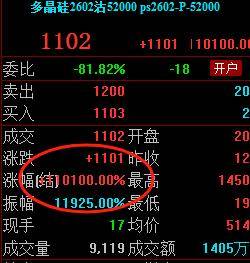
Core Viewpoint - The domestic commodity futures market experienced significant volatility on January 8, with polysilicon futures hitting the limit down, and precious and non-ferrous metals markets plummeting. The sharp decline in polysilicon prices is attributed to regulatory concerns regarding monopolistic risks in the photovoltaic industry [1][4]. Market Performance - Polysilicon main futures dropped by 9%, closing at the limit down, while other related commodities such as aluminum, nickel, and silver also saw declines of over 5% to 8% [1]. - The price of polysilicon put options surged dramatically, with the polysilicon 2602 put option increasing by 110,100% to close at 1,102, with a transaction volume of 14.05 million yuan [1][2]. Regulatory Impact - A leaked meeting summary indicated that the State Administration for Market Regulation had discussions with major players in the photovoltaic sector regarding monopolistic risks and required corrective actions [3][4]. - Industry insiders confirmed the authenticity of the leaked document and indicated that the recent price drop in polysilicon futures was likely influenced by these regulatory discussions [4]. Industry Developments - A polysilicon capacity acquisition platform has been officially established, aimed at addressing the "involution" issue within the photovoltaic industry. This platform is expected to operate under a dual model of "debt acquisition and flexible capacity storage" [5][6]. - The platform is anticipated to help alleviate potential debts amounting to hundreds of billions, restore reasonable pricing, and enhance the overall competitiveness of the industry [6]. Future Outlook - The basic supply-demand dynamics for polysilicon remain weak, with a current production of 24,000 tons and an estimated demand of 85,000 tons for January, indicating an oversupply situation [7]. - If the underlying support logic for the industry is disrupted, inventory pressures may become more pronounced, leading to further downward pressure on polysilicon prices in the short term [7].

中国光伏协会推动的所有行业自律,被全面叫停!



Xin Lang Cai Jing· 2026-01-08 09:58
Core Viewpoint - The meeting minutes from the State Administration for Market Regulation indicate a halt to self-regulatory practices in the photovoltaic industry due to antitrust concerns, which could significantly impact market dynamics and pricing strategies in the sector [1][2][3]. Group 1: Antitrust Concerns - The meeting highlighted multiple reports of price manipulation in the polysilicon market under the guise of industry self-regulation since July 2025 [1][14]. - Companies have been accused of signing commitment letters and forming a platform company to control production and sales, effectively dividing the market and squeezing downstream players [1][15]. - The association has been warned multiple times to comply with regulations but failed to report progress to the authorities [1][16]. Group 2: Rectification Measures - The authorities have mandated a comprehensive review of existing practices, requiring detailed documentation of agreements and protocols related to funding and corporate governance [2][17]. - Companies are instructed to create rectification plans that prohibit agreements on production capacity, utilization rates, sales volumes, and pricing [2][18]. - The association and companies must establish internal antitrust regulations and conduct self-assessments to prevent future violations, with a deadline for submitting written rectification measures set for January 20 [2][18]. Group 3: Market Reactions - Following the announcement, polysilicon futures contracts experienced a significant drop, indicating market apprehension regarding the implications of the regulatory actions [6][21]. - There were rumors about the potential cancellation of polysilicon futures trading, which were confirmed to be untrue [6][21]. Group 4: Comparative Insights - The article suggests that the Japanese model for industry self-regulation, which includes legal exemptions and administrative approvals for collaborative actions, could serve as a reference for the Chinese photovoltaic industry [8][23]. - Examples of legal exemptions in Japan highlight the importance of government oversight and transparency in managing industry practices to avoid price manipulation [8][24][25].

大全能源:累计回购约23万股
Mei Ri Jing Ji Xin Wen· 2026-01-04 13:59
Group 1 - The company, Daqo Energy, announced a share buyback program, repurchasing approximately 230,000 shares, which represents 0.0105% of its total share capital [1] - The highest price for the repurchased shares was 27.18 CNY per share, while the lowest price was 18.79 CNY per share [1] - The total amount spent on the share buyback was approximately 5.97 million CNY [1]
大全能源(688303.SH):累计回购22.63万股公司股份
Ge Long Hui A P P· 2026-01-04 08:43
Group 1 - The core point of the article is that Daqo Energy (688303.SH) has announced a share buyback program, repurchasing a total of 226,300 shares, which represents 0.0105% of the company's total share capital of 2,145,205,724 shares [1] - The share buyback was conducted through the Shanghai Stock Exchange trading system via centralized bidding [1] - The highest price for the repurchased shares was 27.18 RMB per share, while the lowest price was 18.79 RMB per share, with a total expenditure of 5,970,521.34 RMB (excluding stamp duty and transaction commissions) [1]
大全能源(688303) - 大全能源关于以集中竞价交易方式回购公司股份的进展公告
2026-01-04 07:48
证券代码:688303 证券简称:大全能源 公告编号:2026-001 新疆大全新能源股份有限公司 2025 年 4 月 21 日,新疆大全新能源股份有限公司(以下简称"公司")召开 第三届董事会第十七次会议,审议通过了《关于以集中竞价交易方式回购公司股 份方案的议案》。同意公司使用自有资金以集中竞价交易方式回购公司股份。本次 回购资金总额不低于人民币 5,000 万元(含)且不超过人民币 10,000 万元(含), 回购的股份将在未来适宜时机全部用于员工持股计划或股权激励,回购价格不超 过人民币 44.00 元/股(含),回购期限为自董事会审议通过本次回购股份方案之 日起不超过 12 个月。 具 体 内 容 详 见 公 司 于 2025 年 4 月 23 日 在 上 海 证 券 交 易 所 网 站 (www.sse.com.cn)披露的《新疆大全新能源股份有限公司关于以集中竞价交易 方式回购公司股份的回购报告书》(公告编号:2025-014)。 二、 回购股份的进展情况 根据《上市公司股份回购规则》《上海证券交易所上市公司自律监管指引第 7 号——回购股份》的相关规定,公司在回购期间,应当在每个月的前 3 ...
中国光伏_跟踪支架盈利拐点_12 月 25 日:新一轮涨价提议下观望情绪升温-China Solar_ Tracking profitability inflection_ Dec-25_ Increasingly wait-and-see stance with a new round of price hike proposed
2025-12-30 14:41
Summary of China Solar Profitability Tracker - December 2025 Industry Overview - The report focuses on the solar industry, particularly the profitability dynamics of companies involved in the solar value chain in China. Key Highlights 1. **Price Hikes and Market Dynamics** - A new round of price hikes was proposed in December, with average pricing across the solar value chain increasing by 7% month-to-date (MTD) as Tier 1 players responded to rising silver costs, which surged by 45% quarter-to-date (QTD) [3][4] - Poly players raised spot prices by 22% during the week of December 15, reaching Rmb65/kg for Rod Poly and Rmb62/kg for Granular Poly [3] 2. **Inventory and Production Trends** - The supply/demand ratio deteriorated to 129% in December from 110% in November, indicating an oversupply situation [9] - Producer-side inventory days increased to 55 days in December from 38 days in November, suggesting a buildup of unsold inventory [11] 3. **Profitability Concerns** - Despite a 12% increase in value chain pricing compared to Goldman Sachs estimates, concerns remain about potential cash burn due to extended inventory days and slow production cuts [4] - The average cash gross profit margin (GPM) for Poly-Tier 1 was reported at 35%, with a slight decrease of 2 percentage points (ppt) [7] 4. **Segment Performance** - Cash profitability improved in Cell and Module segments but deteriorated in Glass, with Glass-Tier 1 GPM dropping to 1% [7] - The report indicates a preference for Film and High-efficiency Module segments, while expressing skepticism towards Glass and Wafer segments [4] 5. **Future Outlook** - The ongoing anti-involution campaign and new restrictions on below-cost pricing are expected to have a mild positive impact on pricing outlook for Poly, but downstream players may still need to reduce selling prices to maintain market share amid weak demand [4] - The report anticipates that normalized profitability will remain low unless Tier 1 capacity reductions occur [4] Additional Insights - The establishment of a joint venture platform for Poly capacity consolidation was reported, but progress is lagging behind initial targets [3] - The report emphasizes the importance of adopting cost reduction technologies to ensure positive cash generation for sustainable operations [4] Conclusion - The solar industry in China is facing significant challenges with inventory buildup and profitability concerns, despite recent price increases. The dynamics of supply and demand, along with the need for cost management, will be critical for companies navigating this environment.




11月太阳能发电新增装机环增75%,综合整治“内卷式”竞争
Shanxi Securities· 2025-12-30 05:04
Investment Rating - The report maintains an investment rating of "Synchronize with the market - A" for the power equipment and new energy industry [1] Core Viewpoints - In November, the newly installed solar power capacity increased by 75% month-on-month, indicating a significant recovery in the solar energy sector [4] - The report highlights the need for comprehensive regulation to address "involutionary" competition in key industries such as new energy vehicles, lithium batteries, and photovoltaics, aiming to enhance industry concentration and maintain fair competition [5] Summary by Relevant Sections Investment Recommendations - Recommended stocks include: - Aishuo Co., Ltd. (600732.SH) - Buy - B - Longi Green Energy (601012.SH) - Buy - B - Daqian Energy (688303.SH) - Buy - B - Flat Glass Group (601865.SH) - Buy - A - Haibo Innovation (688411.SH) - Buy - A - Sungrow Power Supply (300274.SZ) - Buy - A - Deye Technology (605117.SH) - Buy - A - Langxin Group (300682.SZ) - Buy - B - Quartz Co., Ltd. (603688.SH) - Buy - A - Hengdian East Magnetic (002056.SZ) - Buy - A - Bowei Alloy (601137.SH) - Buy - A [2] Market Performance - The solar power industry has shown a strong performance over the past year, with a notable increase in installed capacity and a focus on improving product consistency and reducing costs in the sensor market [3][4] Price Tracking - The report provides insights into the pricing trends of key components in the solar energy supply chain, including polysilicon, silicon wafers, battery cells, and modules, indicating a mixed outlook with some price increases and stability expected in the near term [6][8][9]


“反内卷”推动价格回稳,光伏企业自救提速
Di Yi Cai Jing· 2025-12-28 03:50
Core Insights - The photovoltaic (PV) manufacturing industry is experiencing a cyclical low, with "anti-involution" becoming a core consensus and transformation path for the entire industry. Prices in the main PV supply chain are gradually stabilizing and even improving in the second half of 2025, driven by self-regulation and production cuts by companies [1][2]. Price Stabilization and Market Dynamics - Since July, multiple policy measures have been implemented to guide the PV industry towards a high-quality development phase focused on technological innovation. Core material prices, such as silicon, have shown signs of recovery, with the price of polysilicon contracts doubling since the end of June. The price of monocrystalline silicon wafers has increased by approximately 40% compared to early Q3 [2][3]. - The average price of N-type polysilicon has risen by about 54% compared to the end of Q2, indicating a significant upward trend in prices due to supply contraction, demand recovery, and rising costs [2][3]. Industry Self-Rescue and Transformation - The industry is undergoing a bifurcation, where technologically advanced companies are recovering profitability, while less efficient firms are exiting the market. Companies are focusing on cost control and improving production efficiency as part of their self-rescue strategies [4][5]. - Leading firms like LONGi Green Energy and Tongwei Co. are enhancing their operational capabilities through technological innovation and product upgrades, shifting the focus from price competition to value competition [4][5]. Financial Performance and Recovery Indicators - The financial performance of PV manufacturers is showing signs of improvement, with 14 out of 21 listed companies in the main PV supply chain reporting positive net profit growth in Q3. For instance, Daqo New Energy reported a 24.75% year-on-year increase in revenue for Q3, with a net profit turnaround [5][6]. - The stabilization of prices in the supply chain has been a key factor in reducing losses for manufacturers, particularly in the upstream silicon and wafer segments, where price increases have significantly improved gross margins [6]. Future Outlook and Challenges - The current recovery in the PV industry is still fragile, with terminal demand not fully restored and overcapacity issues remaining unresolved. The market is expected to face challenges as the "anti-involution" governance enters a critical phase, with 2026 being a pivotal year for the industry [1][6].

新能源发电行业2026年投资策略:反内卷大势不改,新技术推动升级
Bank of China Securities· 2025-12-26 06:19
Overview - The report maintains a "stronger than market" rating for the renewable energy sector, highlighting that the demand for offshore wind power in China and Europe is increasing, leading to a rise in foundation demand and profit recovery for wind turbines. The "anti-involution" policy is expected to continue driving the photovoltaic sector, particularly with the expansion of perovskite technology. Overall, while short-term installation demand for renewable energy globally may be weak, there are structural opportunities in the market [1]. Key Points Supporting the Rating - The "anti-involution" trend is stabilizing wind turbine prices, enhancing profitability for manufacturers. China's offshore wind projects are becoming economically viable, contributing significantly to installed capacity. The demand for offshore wind in Europe and emerging markets is also on the rise [3]. - In the photovoltaic sector, the "anti-involution" policy remains the main theme, with a focus on the potential for capacity exits in battery and module production, as well as the industrialization potential of perovskite technology. Investment should prioritize growth-oriented new technology directions and the main industry chain benefiting from the "anti-involution" trend [3]. Investment Recommendations - For wind power, the report suggests prioritizing investments in the turbine segment, which is expected to recover profitability, and in the foundation segment that is progressing quickly in Europe. The offshore wind market is projected to grow significantly, with a focus on deep-sea projects [3]. - In the photovoltaic sector, the report emphasizes the importance of monitoring the "anti-involution" policy's impact on the industry, particularly regarding the exit of inefficient capacity and the enhancement of efficiency in battery and module production [3]. Long-term Outlook for Renewable Energy Demand - The report indicates that China's renewable energy demand is expected to remain robust in the long term, with an average annual installation capacity of over 400GW projected from 2025 to 2035. This is driven by the country's energy security needs and the ongoing transition to a low-carbon economy [13][16]. - The "136 Document" is noted for guiding the development of renewable energy projects towards market-oriented pricing, which is expected to stabilize project returns and promote high-quality development in the sector [31]. Photovoltaic Sector Insights - The report anticipates a moderate decline in photovoltaic installations in 2026 due to a phase of pre-installation in 2025, with projected installations of 290GW in 2025 and 180GW in 2026, reflecting a year-on-year decrease of 38% [33]. - The report highlights that the European photovoltaic market is facing growth challenges, with a forecasted installation of 64.2GW in 2025, indicating a slight decline. The U.S. market is also expected to experience pressure on growth due to policy adjustments [34][37]. Perovskite Technology Potential - Perovskite technology is identified as a key area for enhancing competitiveness in the photovoltaic manufacturing sector, with expectations for significant breakthroughs in industrialization by leading manufacturers in 2026 [33][44].




硅片股普涨,头部企业联合大幅上调报价
Ge Long Hui· 2025-12-26 03:01
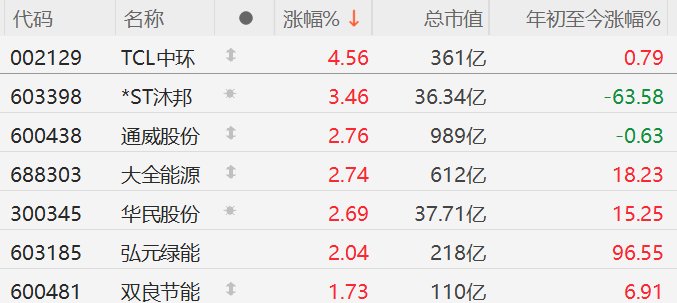
Group 1 - The A-share market saw a significant increase in silicon wafer stocks, with TCL Zhonghuan rising over 4%, and Tongwei Co., Daqo New Energy, Huamin Co., and Hongyuan Green Energy all increasing by over 2% [1] - Four leading silicon wafer companies have jointly raised their prices, with 183N silicon wafer priced at 1.4 yuan per piece, 210RN at 1.5 yuan per piece, and 210N at 1.7 yuan per piece, resulting in an average price increase of 12% [1] - The average transaction price for N-type G10L monocrystalline silicon wafers increased by 2.56% week-on-week to 1.2 yuan per piece, while N-type G12R and N-type G12 monocrystalline silicon wafers saw increases of 9.17% and 1.33%, respectively [1] Group 2 - Downstream battery prices have significantly increased, with mainstream battery prices ranging from 0.31 to 0.33 yuan per watt, reflecting a week-on-week increase of 10.3%, while module prices remained stable [1] - Silicon wafer companies have shown a strong willingness to maintain prices, leading to a substantial increase in silicon wafer prices [1]