
Beijing HyperStrong Technology(688411)

Search documents
其他电源设备板块2月2日跌2.04%,奥特迅领跌,主力资金净流出7.48亿元
Zheng Xing Xing Ye Ri Bao· 2026-02-02 09:15
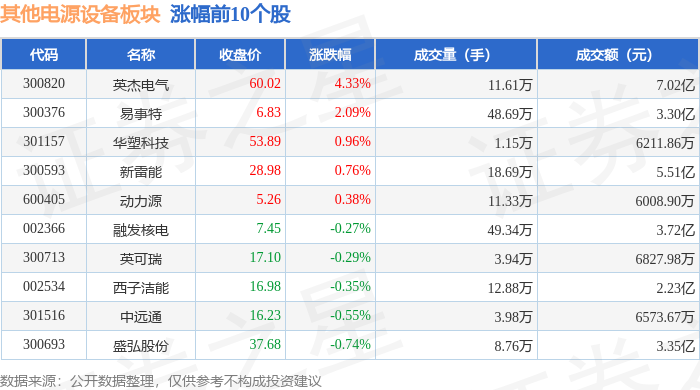
| 代码 | 名称 | 收盘价 | 涨跌幅 | 成交量(手) | 成交额(元) | | --- | --- | --- | --- | --- | --- | | 002227 | 奥特迅 | 9.68 | -10.04% | 1.39万 | 1347.65万 | | 688411 | 海道屋與 | 224.66 | -5.81% | 6.72万 | 15.66 Z | | 301590 | 优优绿能 | 198.98 | -5.58% | 8540.97 | 1.72亿 | | 002364 | 中恒电气 | 29.76 | -5.22% | 1 26.73万 | 8.19亿 | | 002630 | ST华西 | 2.23 | -5.11% | 7.67万 | 1710.08万 | | 002851 | 麦格米特 | 120.99 | -4.87% | 17.82万 | 22.10亿 | | 300153 | 科泰电源 | 32.32 | -3.46% | 12.68万 | 4.19亿 | | 300491 | 通合科技 | 26.57 | -3.14% | 7.09万 | 1.92亿 | | 30087 ...


储能系列报告(18):全国容量电价政策重磅发布,大储迈向高质量发展
CMS· 2026-02-01 12:12
Investment Rating - The investment rating for the industry is "Strongly Recommended" for key companies such as Ningde Times, Yiwei Lithium Energy, and Sungrow Power Supply [1]. Core Insights - The recent release of the national capacity price policy for energy storage marks a significant step towards high-quality development in the energy storage sector. This policy establishes a capacity price mechanism for independent energy storage stations that support the safe operation of the power system [6][7]. - The capacity price will be based on local coal power capacity price standards and adjusted according to peak capacity, which is essential for ensuring stable power supply and promoting investment in energy storage [10][11]. - The demand for long-duration energy storage is expected to increase significantly, with independent energy storage becoming a major contributor to new installations [9][16]. Industry Overview - The industry comprises 308 listed companies with a total market capitalization of 7,610.8 billion [2]. - The energy storage sector is experiencing rapid growth, with cumulative installed capacity expected to reach 136 GW/351 GWh by 2025, reflecting an 80% year-on-year increase in new installations [9][10]. Key Companies and Financial Metrics - **Ningde Times (300750.SZ)**: Market Cap: 1611.1 billion, 2024 EPS: 11.5, 2025 EPS: 14.9, 2025 PE: 23, PB: 5, Investment Rating: Strongly Recommended [1]. - **Yiwei Lithium Energy (300014.SZ)**: Market Cap: 132.3 billion, 2024 EPS: 2.0, 2025 EPS: 2.2, 2025 PE: 28, PB: 3, Investment Rating: Strongly Recommended [1]. - **Sungrow Power Supply (300274.SZ)**: Market Cap: 313.1 billion, 2024 EPS: 5.3, 2025 EPS: 5.9, 2025 PE: 26, PB: 7, Investment Rating: Strongly Recommended [1]. - **Huaibei Technology (688411.SH)**: Market Cap: 43.0 billion, 2024 EPS: 4.9, 2025 EPS: 5.5, 2025 PE: 43, PB: 10, Investment Rating: Not Rated [1]. - **Shenghong Co., Ltd. (300693.SZ)**: Market Cap: 11.9 billion, 2024 EPS: 1.4, 2025 EPS: 1.5, 2025 PE: 25, PB: 6, Investment Rating: Strongly Recommended [1]. - **Kehua Data (002335.SZ)**: Market Cap: 32.2 billion, 2024 EPS: 0.7, 2025 EPS: 1.2, 2025 PE: 53, PB: 5, Investment Rating: Strongly Recommended [1]. Market Performance - The absolute performance of the energy equipment and new energy sector has shown significant growth, with a 12-month increase of 59.4% [4].



“十五五”碳达峰路径展望:绿电应用构建减碳基石,看好新一代能源技术突破
Orient Securities· 2026-02-01 05:35
Investment Rating - The report maintains a "Positive" outlook on the power equipment and new energy industry [6] Core Viewpoints - The "14th Five-Year Plan" period saw slower-than-expected carbon reduction, prompting high-energy-consuming industries to accelerate carbon reduction commercialization during the "15th Five-Year Plan" period, leading to a growth inflection point for green fuels [3][8] - The demand for energy storage is expected to grow significantly, with a forecasted 50% increase in energy storage installations by 2025, driven by the rapid growth of new energy [3][19] - The offshore wind power, perovskite, and space photovoltaic sectors are anticipated to exhibit high growth potential during the "15th Five-Year Plan" period [3][8] Summary by Sections 1. Wind and Solar Power Entering Maturity with High Growth in Sub-markets - The demand for new energy installations in China is expected to remain robust, with a target of 360 million kilowatts of wind and solar power capacity by 2035 [12] - The average annual installation space for wind and solar power is projected to exceed 400 GW from 2026 to 2035 [12][13] 2. Energy Storage and Nuclear Power with Stable Supply Attributes - By the end of 2025, China's energy storage installations are expected to reach 66.43 GW, with a year-on-year growth of 52% [19] - The construction speed of nuclear power is expected to accelerate, with a target of 70 million kilowatts of operational capacity by 2025 [21] 3. Carbon Reduction Goals and the Emergence of Green Fuels - The actual carbon reduction progress during the "14th Five-Year Plan" is expected to fall short of the target, necessitating increased efforts in the "15th Five-Year Plan" [26] - Policies are encouraging the integration of green electricity with hydrogen, ammonia, and zero-carbon parks [29] 4. New Photovoltaic Technologies and Nuclear Fusion - Perovskite technology is expected to achieve mass production during the "15th Five-Year Plan" period, with efficiency improvements anticipated [32] - The BEST project aims for completion by 2027, with significant investment expected in nuclear fusion technology [34]



海博思创股价涨5.11%,太平基金旗下1只基金重仓,持有8000股浮盈赚取8.94万元
Xin Lang Cai Jing· 2026-01-30 02:55
Group 1 - The core viewpoint of the news is that Haibo Sichuang's stock has seen a significant increase of 5.11%, reaching a price of 229.80 yuan per share, with a total market capitalization of 41.385 billion yuan [1] - Haibo Sichuang, established on November 4, 2011, focuses on the research, production, and sales of electrochemical energy storage systems, providing comprehensive solutions for the entire "source-network-load" chain in traditional and renewable energy sectors [1] - The company's main business revenue composition is as follows: 99.77% from energy storage systems, 0.10% from new energy vehicle leasing, 0.07% from other services, and 0.06% from technical services [1] Group 2 - From the perspective of fund holdings, Taiping Fund has a significant position in Haibo Sichuang, with Taiping Rui'an Mixed A Fund holding 8,000 shares, representing 0.96% of the fund's net value, making it the sixth-largest holding [2] - The Taiping Rui'an Mixed A Fund, established on November 10, 2020, has a current scale of 206 million yuan and has achieved a year-to-date return of 1.64% [2] - The fund's performance over the past year shows a return of 4.58%, ranking 7430 out of 8126 in its category [2]
其他电源设备板块1月29日跌3.81%,海博思创领跌,主力资金净流出21.63亿元
Zheng Xing Xing Ye Ri Bao· 2026-01-29 09:03
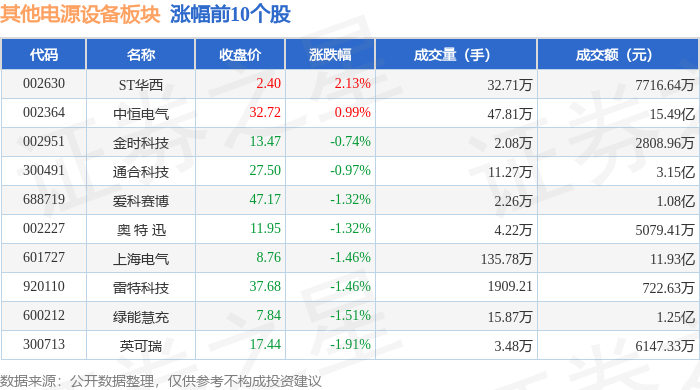
Market Overview - The other power equipment sector experienced a decline of 3.81% on January 29, with Haidao Sichuang leading the drop [1] - The Shanghai Composite Index closed at 4157.98, up 0.16%, while the Shenzhen Component Index closed at 14300.08, down 0.3% [1] Stock Performance - Notable stock performances in the other power equipment sector included: - ST Huaxi: Closed at 2.40, up 2.13% with a trading volume of 327,100 shares and a transaction value of 77.17 million [1] - Zhongheng Electric: Closed at 32.72, up 0.99% with a trading volume of 478,100 shares and a transaction value of 154.9 million [1] - Haidao Sichuang: Closed at 218.63, down 9.06% with a trading volume of 65,200 shares and a transaction value of 1.467 billion [2] - Maigemi Te: Closed at 128.83, down 7.44% with a trading volume of 342,700 shares and a transaction value of 4.578 billion [2] Capital Flow - The other power equipment sector saw a net outflow of 2.163 billion from institutional investors, while retail investors had a net inflow of 1.638 billion [2] - The capital flow for specific stocks included: - Zhongheng Electric: Net inflow from institutional investors was 97.04 million, while retail investors had a net outflow of 29.09 million [3] - Tonghe Technology: Institutional net inflow was 2.40 million, with retail net inflow of 0.37 million [3] - Haidao Sichuang: Experienced a significant net outflow of 3.015 million from institutional investors [3]
中美,新消息!商业航天,利好来袭!芯片巨头,直线大跳水!周末影响一周市场的十大消息
Zheng Quan Shi Bao Wang· 2026-01-25 09:38
Group 1: US-China Relations - US President Trump is expected to visit China in April, with Chinese leaders planning to visit the US by the end of the year, highlighting the importance of high-level diplomacy in stabilizing US-China relations [2][3] Group 2: Commercial Space Industry - SpaceX aims to achieve fully reusable rocket technology with its Starship, potentially reducing space access costs by 99% to below $100 per pound [2] - Beijing's measures to promote the development and utilization of commercial satellite remote sensing data from 2026 to 2030 include optimizing financial support and encouraging investment in quality projects [3] - The commercial space economy is projected to reach $1.8 trillion by 2035, driven by new infrastructure and applications in the space sector [4] Group 3: Stock Market and IPOs - Recent rumors about tightening regulations for companies seeking to list in Hong Kong have been denied, confirming that current overseas listing policies remain unchanged [3] - The China Securities Regulatory Commission (CSRC) has approved IPO registrations for three companies, indicating ongoing market activity [11] - A total of 28 companies are set to unlock 796 million shares this week, with a total market value of approximately 40.97 billion yuan [12][13]



下周影响市场重要资讯前瞻:将有3只新股发行 1月PMI数据将公布 这些投资机会靠谱
Xin Lang Cai Jing· 2026-01-25 07:05
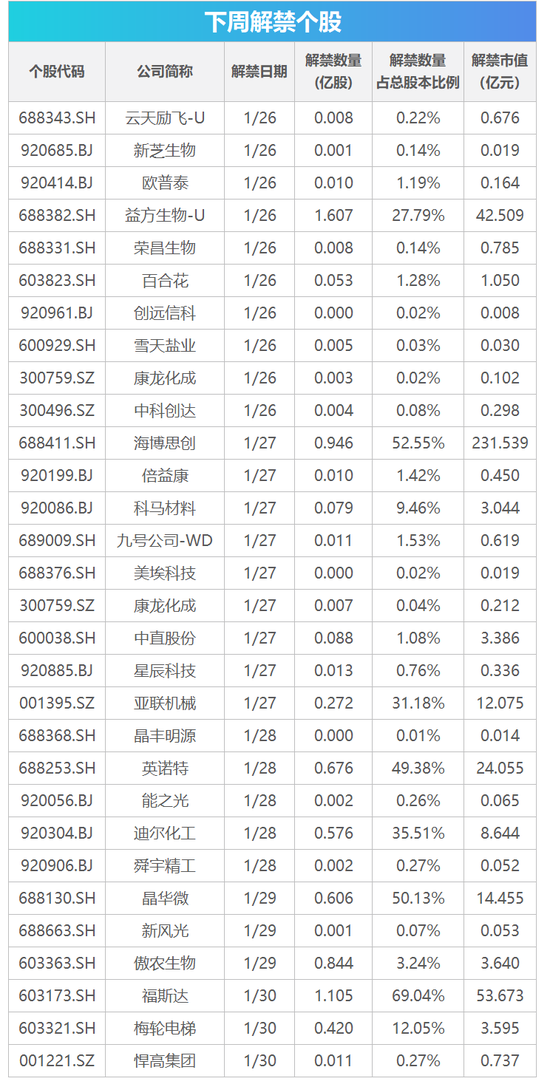
Economic Indicators - The January PMI data will be released on January 31, with December's PMI at 50.1%, an increase of 0.9 percentage points, marking a return to the expansion zone after eight months below 50% [1][10]. Monetary Policy - The Federal Reserve is expected to announce its interest rate decision next week, with a 95% probability that rates will remain unchanged during the January meeting [2][10]. - Citic Securities believes that the criminal investigation into Powell will not pressure the Fed into aggressive rate cuts, predicting a pause in rate cuts for January [2][10]. Central Bank Operations - The central bank conducted a reverse repo operation of 11,810 billion yuan this week, with a net injection of 2,295 billion yuan after 9,515 billion yuan matured [3][11]. - Next week, 11,810 billion yuan in reverse repos will mature, with specific maturities scheduled throughout the week [3][11]. Stock Market Developments - Over 40 billion yuan in market value of restricted shares will be unlocked next week, with January 27 being the peak day for unlocks [4][12]. - The top three companies by unlock market value are Haibo Sichuang (231.54 billion yuan), Fostar (53.67 billion yuan), and Yifang Bio-U (42.51 billion yuan) [4][12]. New Stock Opportunities - Three new stocks will be issued next week: Beixin Life on January 26, and Linping Development and Electric Science Blue Sky on January 30 [7][14]. - The subscription details for the new stocks include a price of 17.52 yuan for Beixin Life and subscription limits for the other two stocks [8][15].


海博思创大宗交易成交2147.13万元
Zheng Quan Shi Bao Wang· 2026-01-22 14:23
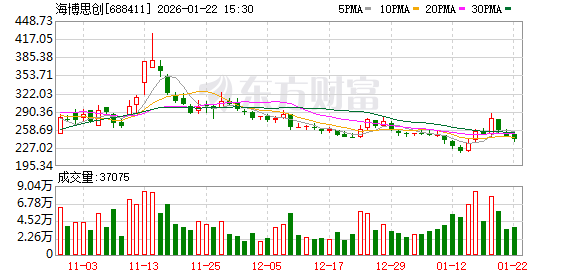
Group 1 - The core transaction of Haibo Shichuang on January 22 involved a block trade of 89,000 shares, amounting to 21.47 million yuan, with a transaction price of 241.25 yuan per share [2] - In the last three months, Haibo Shichuang has recorded a total of five block trades, with a cumulative transaction amount of 67.56 million yuan [3] - The closing price of Haibo Shichuang on the day of the transaction was 241.25 yuan, reflecting a decline of 2.62%, with a daily turnover rate of 9.77% and a total trading volume of 898 million yuan [3] Group 2 - The latest margin financing balance for Haibo Shichuang is 1.013 billion yuan, which has increased by 105 million yuan over the past five days, representing a growth rate of 11.60% [4] - Haibo Shichuang was established on November 4, 2011, with a registered capital of 1.8009 billion yuan [4]
海博思创:海外业务已拓展至欧洲市场
Zheng Quan Ri Bao· 2026-01-21 13:41
Group 1 - The core viewpoint of the article is that Haibosi Chuang has expanded its overseas business into the European market, primarily utilizing a direct sales model [2]
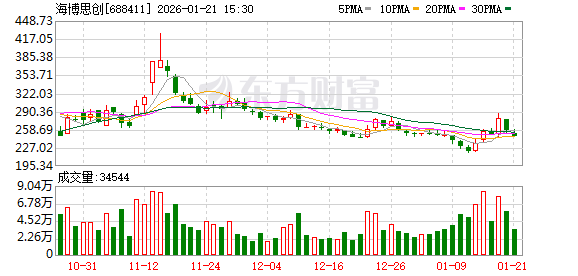
海博思创:公司在AI与数字化方面通过“储能+AI”模式实现产品全生命周期管理
Mei Ri Jing Ji Xin Wen· 2026-01-21 11:38
Group 1 - The company, Haibosi Chuang (688411.SH), is leveraging an "energy storage + AI" model to achieve full lifecycle management of its products in the AI and digitalization sectors [2] - In the solid-state battery field, the company is conducting in-depth research and collaborative development of semi-solid battery technologies through its equity stake in a subsidiary, applying these technologies to actual energy storage projects [2] - For overseas revenue data, the company advises to refer to its official announcements [2]