
CSI Solar(688472)

Search documents
阿特斯(688472) - 阿特斯阳光电力集团股份有限公司关于变更公司注册资本、修订《公司章程》并办理工商变更登记的公告
2026-02-10 10:15
证券代码:688472 证券简称:阿特斯 公告编号:2026-005 阿特斯阳光电力集团股份有限公司 关于变更公司注册资本、修订《公司章程》 并办理工商变更登记的公告 本公司董事会及全体董事保证本公告内容不存在任何虚假记载、误导性陈述或 者重大遗漏,并对其内容的真实性、准确性和完整性依法承担法律责任。 2026年2月8日,阿特斯阳光电力集团股份有限公司(以下简称"公司")第 二届董事会第十四次会议审议通过了《关于变更公司注册资本、修订<公司章程> 并办理工商变更登记的议案》,具体情况如下: 此次修订《公司章程》在公司 2024 年第二次临时股东大会授权范围内,已 经公司董事会审议通过,无需提交公司股东会审议。董事会授权公司管理层或其 授权代表向工商登记机关办理《公司章程》的备案登记,上述变更最终以工商登 记机关核准的内容为准。 截至 2025 年 12 月 18 日,本次回购的 12 个月期限已满。公司以集中竞价交 易方式累计回购公司股份 45,077,212 股,占公司注销前总股本的比例为 1.22%, 回购成交的最高价为 16.52 元/股,最低价为 8.34 元/股,回购使用的资金总额 为人民币 500 ...

阿特斯(688472) - 阿特斯阳光电力集团股份有限公司关于下属子公司与关联方签署《租赁合同》暨关联交易的进展公告
2026-02-10 10:15
证券代码:688472 证券简称:阿特斯 公告编号:2026-004 阿特斯阳光电力集团股份有限公司 关于下属子公司与关联方签署《租赁合同》 暨关联交易的进展公告 本公司董事会及全体董事保证本公告内容不存在任何虚假记载、误导性陈述 或者重大遗漏,并对其内容的真实性、准确性和完整性承担法律责任。 阿特斯阳光电力集团股份有限公司(以下简称"公司")于 2025 年 11 月 28 日召开第二届董事会第十二次会议及第二届监事会第十次会议、并于 2025 年 12 月 16 日召开 2025 年第一次临时股东大会,审议通过了《关于美国市场业务 调整暨关联交易的议案》以及《关于豁免控股股东及实控人曾出具的关于避免同 业竞争的承诺的议案》,控股股东及关联董事均回避表决。 会议,审议通过了《关于下属子公司与关联方签署的<租赁合同>主要条款确认的 议案》。关联董事 Xiaohua Qu(瞿晓铧)、Yan Zhuang(庄岩)、Leslie Li Hsien Chang(张立宪)回避表决,表决程序符合《公司法》《证券法》等法律法规以 及《公司章程》的有关规定,该议案尚需提交公司股东会审议通过,关联股东将 在股东会上回避表决。 ...
阿特斯(688472) - 阿特斯阳光电力集团股份有限公司关于召开2026年第一次临时股东会的通知
2026-02-10 10:15
关于召开2026年第一次临时股东会的通知 本公司董事会及全体董事保证公告内容不存在任何虚假记载、误导性陈述或 者重大遗漏,并对其内容的真实性、准确性和完整性依法承担法律责任。 重要内容提示: 一、 召开会议的基本情况 证券代码:688472 证券简称:阿特斯 公告编号:2026-006 阿特斯阳光电力集团股份有限公司 网络投票起止时间:自2026 年 2 月 26 日 至2026 年 2 月 26 日 (一) 股东会类型和届次 2026年第一次临时股东会 (四) 现场会议召开的日期、时间和地点 召开日期时间:2026 年 2 月 26 日 14 点 00 分 召开地点:江苏省苏州市高新区枫桥街道鹿山路 348 号阿特斯储能科技有限 公司一楼储能会议室 (五) 网络投票的系统、起止日期和投票时间。 网络投票系统:上海证券交易所股东会网络投票系统 采用上海证券交易所网络投票系统,通过交易系统投票平台的投票时间为股 东会召开当日的交易时间段,即 9:15-9:25,9:30-11:30,13:00-15:00;通过 互联网投票平台的投票时间为股东会召开当日的 9:15-15:00。 股东会召开日期:2026年2月2 ...
阿特斯:完成股份回购注销,变更注册资本修订章程
Xin Lang Cai Jing· 2026-02-10 09:49
Core Viewpoint - The company announced a share buyback plan, indicating a strategic move to enhance shareholder value through the repurchase of shares [1] Group 1: Share Buyback Details - From November 2024 to December 2025, the company repurchased a total of 45,077,212 shares, which represents 1.22% of the total share capital before cancellation [1] - The total funds used for the buyback amounted to 5.01 billion yuan [1] - The share buyback was completed on December 19, 2025, resulting in a reduction of total share capital from 3,688,217,324 shares to 3,643,140,112 shares [1] Group 2: Capital Structure Changes - Following the share buyback, the registered capital decreased from 3.688 billion yuan to 3.643 billion yuan [1] - The company plans to amend relevant provisions in its Articles of Association and will handle the necessary business registration [1] - The amendments to the Articles of Association have been disclosed and were approved by the board of directors within the scope authorized by the shareholders' meeting [1]
全球航天强国加码太空光伏!卫星组网驱动产业化提速,海内外共振拉升产业估值中枢
Xin Lang Cai Jing· 2026-02-09 10:09
Core Viewpoint - The articles highlight the growing interest and investment in space photovoltaic technology among various companies in China, indicating a significant potential for growth in this sector by 2026 as commercialization accelerates. Group 1: Company Overview - Xizi Clean Energy (002534) is a leading clean energy equipment manufacturer in China, focusing on high-performance perovskite photovoltaic technology and aiming to become a core supplier of materials for space photovoltaics by 2026 [1][24]. - Shanghai Port Construction (605598) is a major infrastructure company that is expanding into space photovoltaic systems, leveraging its engineering capabilities to support commercial space projects [2][25]. - TuoRi New Energy (002218) has a long-standing presence in the photovoltaic industry and is optimizing its space photovoltaic products, expecting to increase market share by 2026 [3][26]. - Mingyang Smart Energy (601615) is acquiring technology to enhance its capabilities in space solar cell development, aiming to integrate its wind and solar energy expertise [4][28]. - Woge Optoelectronics (603773) specializes in flexible solar wing materials for satellites, with a focus on high-temperature resistant films, anticipating significant growth in the space photovoltaic sector [5][29]. Group 2: Growth Outlook - Companies are expected to benefit from the rapid commercialization of space photovoltaics, with projections indicating substantial growth opportunities by 2026 [1][2][3][4][5]. - The synergy between commercial aerospace and space photovoltaic industries is anticipated to drive rapid business growth for companies like Shanghai Port Construction and Mingyang Smart Energy [2][4]. - The demand for flexible solar wings and high-efficiency photovoltaic materials is expected to surge, positioning companies like Woge Optoelectronics and TuoRi New Energy as key players in the market [3][5]. Group 3: Technological Advancements - Companies are focusing on developing materials that can withstand extreme space conditions, such as high-performance perovskite and flexible solar films, which are crucial for the success of space photovoltaic applications [1][5][6]. - The integration of advanced technologies, such as N-type solar cells and high-efficiency components, is being prioritized by firms like Junda Co. (002865) and Sanan Optoelectronics (600703) to enhance their competitive edge in the space photovoltaic market [6][10][35]. - The ongoing research and development efforts in high-efficiency solar technologies are expected to yield breakthroughs that will facilitate the commercialization of space photovoltaic solutions by 2026 [3][4][5][6].



科创新能源ETF(588830)早盘涨4%,固态电池催化产业链爆发
Xin Lang Cai Jing· 2026-02-09 02:15
Group 1 - The Ministry of Industry and Information Technology has approved solid-state battery testing, with industrialization expected to occur soon, targeting an energy density of over 400Wh/kg by 2026-2027, focusing on electrolyte and negative electrode collector materials [1] - Solid-state batteries are anticipated to see a bidding catalyst in 2025, with high certainty in equipment and significant flexibility in materials, offering a unit value five times that of liquid batteries [1] - JinkoSolar may collaborate with SpaceX to resolve TOPCon patent issues within the equipment chain, with auxiliary materials and flexibility being maximized, and the semiconductor and copper paste business valued at 80 billion [1] Group 2 - As of February 9, 09:43, the Kexin New Energy ETF (588830.SH) rose by 3.97%, with its related index Kexin New Energy (000692.SH) increasing by 3.89%; major constituent stocks included JinkoSolar up 10.44%, Juhua Materials up 20.00%, Rongbai Technology up 9.61%, Trina Solar up 4.15%, and Aotewi up 3.06% [1] - Guosen Securities highlights the promising prospects of space photovoltaics in the new energy power equipment sector, with global tech giants continuously expanding AI capital expenditures, leading to "outperform" ratings for certain storage equipment sector stocks [1] - Great Wall Securities believes that solid-state battery technology is entering a golden development period, with a combination of cold isostatic pressing and warm isostatic pressing processes offering efficiency and cost advantages in large-scale production, driving technological innovation in the equipment sector [1]


周观点0208:太空光伏催化不断,CSP大厂资本开支超预期-20260208
Changjiang Securities· 2026-02-08 14:21
Investment Rating - The report maintains a "Positive" investment rating for the industry [3] Core Insights - The space photovoltaic industry is progressing, with significant capital expenditures from major CSP manufacturers exceeding expectations [1] - The demand for energy storage is driven by ongoing electricity shortages in the U.S., highlighting the cost-effectiveness of leading companies [14] - The report emphasizes the importance of new directions such as space photovoltaics, AIDC, and robotics, which are catalyzing investment opportunities [14] Summary by Sections Photovoltaics - The space photovoltaic sector is gaining traction, with SpaceX's application for 1 million satellites accepted by the FCC, indicating a robust future for space-based data centers [20] - The China Photovoltaic Industry Association released cost analysis, indicating that the average full cost of mainstream photovoltaic products is expected to stabilize, providing support for price recovery [21] - The report highlights the potential for significant growth in global photovoltaic installations, with annual additions projected between 725-870 GW during the 14th Five-Year Plan [22] Energy Storage - Sunshine Power announced plans to establish a production base in Poland, aiming for 20 GW of inverter capacity and 12.5 GWh of energy storage systems [39] - The report notes a 45% year-on-year increase in EU battery storage capacity, with large-scale storage systems becoming the main growth driver [39] - January saw a significant increase in independent storage projects, with a total of 12.3 GW/36 GWh of bids, despite a year-on-year decline due to procurement timing [40] Lithium Batteries - The demand for lithium batteries continues to strengthen, with all segments showing a willingness to maintain prices, indicating ongoing profitability improvements [14] - The report recommends focusing on battery segments, particularly companies like CATL and EVE Energy, which are expected to perform well in the medium term [14] Wind Power - The report emphasizes the start of a new wind power cycle during the 14th Five-Year Plan, with significant opportunities in commercial aerospace and offshore wind projects [14] - Companies involved in wind turbine manufacturing and components are highlighted as key investment opportunities [14] Power Equipment - The domestic power grid's investment plan is projected at 5 trillion yuan, with significant improvements in pricing and demand driven by electricity shortages in the U.S. [14] - The report suggests focusing on opportunities in AI for power management and virtual power plants [14] New Directions - The report highlights the importance of developments in humanoid robotics and AIDC technology, with specific companies recommended for investment based on their potential in these sectors [14]





阿特斯:截至2025年9月30日公司普通股股东总数为48806户
Zheng Quan Ri Bao Wang· 2026-02-06 14:11
Group 1 - The company, Arctech, stated that it will disclose the number of shareholders in its periodic reports [1] - As of the end of the third quarter of 2025, the total number of common stock shareholders was 48,806 [1]
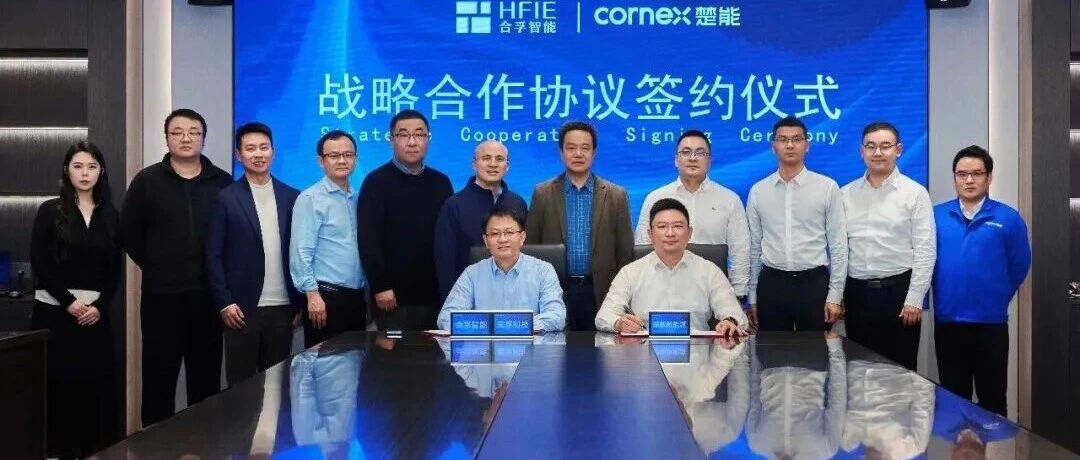
共7GWh!楚能等3企又获储能订单
行家说储能· 2026-02-06 04:06
Core Viewpoint - The article highlights the recent surge in energy storage orders from various companies, indicating a growing trend in the energy storage market, with a total of 7GWh of new orders announced on February 5, 2026 [2]. Group 1: Company Orders and Collaborations - Chuangneng New Energy signed a strategic cooperation agreement with Hefei Intelligent, committing to supply over 5GWh of energy storage products over the next two years, covering various application scenarios [3]. - Nandu Power announced a new order for a 1.5GWh independent energy storage project in Gansu, which will enhance regional grid peak-shaving capabilities and support high proportions of renewable energy integration [6]. - Aters secured a 503MWh energy storage order in Texas, USA, providing long-term operation and maintenance services for two independent storage projects [10]. Group 2: Market Expansion and Future Projections - Since the beginning of 2026, Chuangneng New Energy has signed three contracts totaling 16.5GWh, indicating a strong market presence and demand for energy storage solutions [6]. - Aters has delivered over 16GWh of battery storage solutions globally and expects a shipment volume of 14-17GWh in 2026, with non-US markets contributing about two-thirds of this volume [12]. - The company anticipates a significant increase in household storage business scale and profitability in key markets like Europe and Japan [12].


科创新能源ETF(588830)开盘跌3.04%,重仓股晶科能源跌7.14%,阿特斯跌2.76%
Xin Lang Cai Jing· 2026-02-05 01:37
Group 1 - The core viewpoint of the article highlights the performance of the Kexin New Energy ETF (588830), which opened down by 3.04% at 1.689 yuan on February 5 [1] - Major holdings in the Kexin New Energy ETF experienced significant declines, with JinkoSolar down 7.14%, Canadian Solar down 2.76%, and Trina Solar down 4.03% [1] - The ETF's performance benchmark is the Shanghai Stock Exchange Sci-Tech Innovation Board New Energy Index, managed by Penghua Fund Management Co., with a return of 73.85% since its establishment on July 31, 2024, and an 18.90% return over the past month [1] Group 2 - Other notable stock performances within the ETF include Rongbai Technology up 0.10%, Daqo New Energy down 1.90%, Xiamen Tungsten down 1.02%, and Gotion High-Tech down 0.90% [1] - The article emphasizes the volatility in the new energy sector, as indicated by the mixed performance of the ETF's holdings [1]

