
BOE(000725)

Search documents
京东方(烟台)高端显示材料项目公示
WitsView睿智显示· 2025-07-22 06:09
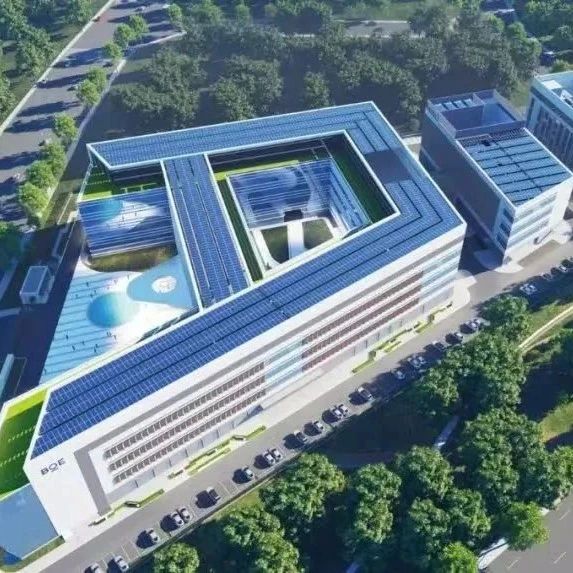
Core Viewpoint - The Yantai Economic and Technological Development Zone has announced the planning land public notice for the BOE High-end Display Materials Research Institute project, indicating a significant investment in electronic materials research and development in the region [1]. Group 1: Project Overview - The project is located in the Yantai Development Zone B-9 area, covering an area of 33,344 square meters (50 acres) with a building area of 54,544.21 square meters, constructed by Yantai BOE Materials Technology Co., Ltd [1]. Group 2: Company Background - Yantai BOE Materials focuses on the research and sales of electronic specialty materials, with existing products undergoing promotion and validation [3]. - The company is a joint investment by four enterprises, with a total investment of 800 million yuan. BOE Materials contributed 464 million yuan (58%), Wanrun Co., Ltd. contributed 160 million yuan (20%), Debang Technology contributed 144 million yuan (18%), and Yeda Economic Development contributed 32 million yuan (4%) [3]. - BOE Materials was established in August 2024 with a registered capital of 500 million yuan, focusing on new material technology research and sales [3]. Group 3: Partner Companies - Wanrun Co., Ltd. specializes in environmental materials, electronic information materials, new energy materials, and life sciences and pharmaceuticals, with products including liquid crystal materials, OLED materials, and polyimide materials [3]. - Debang Technology is dedicated to the research and industrialization of high-end electronic packaging materials, producing electronic-grade adhesives and functional film materials for various packaging processes [4].



京东方:三季度继续坚持按需生产
WitsView睿智显示· 2025-07-21 08:19
Group 1 - The core viewpoint of the article highlights the current business status of BOE in the LCD, AMOLED, perovskite, and glass-based semiconductor sectors, emphasizing the company's proactive adjustments in production to meet market demands [1][3] Group 2 - In the LCD industry, BOE indicated that the average operating rate is expected to recover to over 80% by Q1 2025, following a decline in Q2 due to cooling terminal demand [1] - The company plans to continue flexible adjustments in production lines in Q3, adhering to a "demand-driven production" strategy to navigate fluctuations in international trade and policy effects [1] Group 3 - In the flexible AMOLED sector, BOE has achieved full coverage of top mobile brands, with a rapid increase in the proportion of high-end products such as LTPO and foldable displays [1] - The Chengdu 8.6-generation AMOLED production line commenced operations four months ahead of schedule on May 20 [1] Group 4 - In addition to its main display business, BOE's perovskite pilot line produced the industry's first 2.4m×1.2m photovoltaic cell sample with leading conversion efficiency in 2024 [3] - The company has also delivered high aspect ratio board-level samples using glass-based packaging technology [3] Group 5 - Financially, BOE expects a depreciation expense of approximately 38 billion yuan in 2024, continuing to increase due to the completion of three 6th generation AMOLED production lines [3] - The company anticipates that depreciation will peak in 2025, leading to improved operational efficiency and profitability as new projects stabilize and mature production lines finish depreciation [3] Group 6 - Looking ahead, BOE's capital expenditure will focus on the "screen IoT" strategy, concentrating on the semiconductor display business while extending into four high-potential areas: IoT innovation, sensing, MLED, and smart medical engineering [3]
京东方申请一种显示基板专利,解决现有显示装置的像素密度较低等问题
Jin Rong Jie· 2025-07-19 05:15
Group 1 - BOE Technology Group Co., Ltd. and its subsidiaries have applied for a patent titled "A Display Substrate," indicating ongoing innovation in display technology [1] - The patent application was filed on January 2024, showcasing the company's commitment to advancing its product offerings [1] - The display substrate includes a base and two light-emitting chips, with specific configurations of electrodes and pads, highlighting technical advancements in display design [1] Group 2 - BOE Technology Group Co., Ltd. was established in 1993 and is primarily engaged in the manufacturing of computers, communications, and other electronic devices, with a registered capital of approximately 37.65 billion RMB [2] - The company has made investments in 71 enterprises and participated in 259 bidding projects, demonstrating its active role in the industry [2] - BOE Technology Group holds 5000 patent records and 776 trademark information entries, indicating a strong intellectual property portfolio [2] Group 3 - BOE Chip Technology Co., Ltd., founded in 2020, focuses on similar manufacturing sectors with a registered capital of approximately 250.5 million RMB [2] - The company has invested in 2 enterprises and participated in 227 bidding projects, reflecting its operational engagement [2] - BOE Chip Technology holds 369 patent records, showcasing its innovation efforts [2] Group 4 - Beijing BOE Technology Development Co., Ltd., established in 2016, also operates in the same manufacturing sectors with a registered capital of approximately 3.8 million RMB [2] - The company has invested in 1 enterprise and participated in 91 bidding projects, indicating its market activity [2] - It holds 3171 patent records, further emphasizing its focus on research and development [2]
京东方A(000725) - 018-2025年7月18日投资者关系活动记录表
2025-07-18 15:08
Group 1: LCD Market Insights - The industry is adopting a "demand-driven production" strategy, adjusting production rates based on market demand changes [2] - In Q1 2025, the LCD TV panel prices increased due to strong export demand and "trade-in" policies, while in Q2, demand cooled, leading to adjustments in production rates [2][3] - As of July 2025, LCD TV prices for certain sizes have slightly decreased, while prices for MNT and NB panels remain stable [3] Group 2: AMOLED Business Development - The company has established a strong presence in the flexible AMOLED market, covering major smartphone brands and increasing the proportion of high-end products like LTPO and foldable displays [4] - The 8.6 generation AMOLED production line in Chengdu began equipment installation four months ahead of schedule, transitioning to operational phase [6] Group 3: Industry Production Rates - The average production rate in the LCD industry has been above 80% since Q1 2025, but saw a decline in Q2 due to reduced demand [5] Group 4: Revenue Structure and Future Trends - In 2024, the revenue structure for display devices is projected as follows: TV (26%), IT (34%), LCD mobile and others (13%), OLED (27%) [7] - The trend towards larger TV sizes and high-end IT products is expected to continue, while flexible AMOLED products are gaining market penetration in smartphones and other applications [8] Group 5: New Business Initiatives - The company is actively pursuing perovskite solar cell technology, achieving a conversion efficiency that ranks among the industry leaders [9] - The "AI+" strategy has been launched to enhance production efficiency and innovation across various business areas [9] Group 6: Financial Outlook and Shareholder Returns - The company plans to allocate at least 35% of its net profit to cash dividends annually from 2025 to 2027, with a minimum of RMB 1.5 billion for share buybacks [14] - The company has completed a stock buyback valued at nearly RMB 1 billion and is progressing with its 2024 profit distribution plan [14]
手机显示技术分水岭已至 柔性 AMOLED 成主流
Zhong Guo Jing Ying Bao· 2025-07-18 13:45
Core Insights - The report by Omdia indicates that the shipment of smartphones using flexible AMOLED displays reached 151 million units in Q1 2025, marking a 15% year-on-year increase, with a stable annual growth rate of around 20% over the past three years [1] - Flexible AMOLED displays have captured 51% of the smartphone display market, signaling a significant shift in display technology as they gradually replace traditional LCDs [1][3] Market Trends - The demand for lighter and more flexible screens among consumers has significantly boosted the shipment of flexible AMOLED displays, with more mid-to-high-end models adopting this technology due to technological maturity and cost reduction [1][3] - The market share of smartphones with AMOLED displays has risen to 63% in Q1 2025, up from 57% in the same period last year, while LCD-equipped smartphones have seen their market share decline to 37% [3][4] Technological Advantages - Flexible AMOLED displays offer superior display quality, including near-infinite contrast ratios and high peak brightness levels exceeding 1800 nits, making them ideal for high-definition content and mobile office use [2] - The foldable feature of flexible AMOLED displays is a key highlight, enabling larger screen sizes for multitasking and entertainment while maintaining portability [3] Competitive Landscape - The competition in the flexible AMOLED market is intensifying, with Chinese manufacturers like BOE, Tianma, and Visionox rapidly advancing in technology and production capacity, challenging the dominance of South Korean firms [5][6] - Omdia forecasts that by 2024, Chinese manufacturers will ship 36.4 million AMOLED panels, a significant increase of over 12 million units from 2023, indicating a growing presence in the global market [6] Future Outlook - Industry experts predict that the penetration of flexible AMOLED technology in smartphones will continue to rise, with expectations of over 750 million units shipped by the end of 2025 [4] - The competition will increasingly focus on technological innovation, production efficiency, and supply chain integration, benefiting consumers through enhanced product offerings [6][7]


2025上半年面板价格变化趋势回顾
WitsView睿智显示· 2025-07-18 06:42
Core Viewpoint - The global panel industry experienced a shift from optimistic expectations at the beginning of 2025 to price adjustments by mid-year, reflecting a dual market scenario influenced by policy stimuli and macroeconomic uncertainties [1][20]. Television Panels - The price trend of television panels in the first half of 2025 transitioned from demand-driven growth to rational adjustments due to supply-demand dynamics [2]. - In Q1, television panel prices rose significantly due to strong demand driven by policies like "trade-in" in China, particularly in lower-tier markets, and a continued trend towards larger screen sizes [3][4]. - By Q2, the market cooled as demand weakened, particularly in North America, and the effects of the "trade-in" policy diminished, leading to increased inventory levels among brand manufacturers [5][6]. - As demand declined, price pressures emerged, with mainstream sizes like 43-inch, 55-inch, and 65-inch panels seeing a price drop of $1 in June, marking a market turning point [6]. Monitor Panels - Monitor panel prices remained relatively stable in the first half of 2025, showing resilience despite traditional seasonal demand dips [7]. - The introduction of "trade-in" subsidies for monitors in China helped stimulate demand, allowing manufacturers to cautiously raise prices [8]. - However, as the peak of inventory buildup passed and television panel prices fell, monitor demand growth slowed, leading to a stabilization in prices [9]. - The gaming monitor segment, particularly OLED technology, emerged as a new growth area, with projected shipments reaching 3.3 million units in 2025, a 65% year-on-year increase [9]. Notebook Panels - Notebook panel prices remained stable throughout the first half of 2025, reflecting a balance of various market forces amid uncertainties [11]. - Despite cautious behavior due to fluctuating international trade relations, brands are optimistic about demand in the latter half of the year, leading to increased orders for notebook panels [12]. Company Performance - TCL Technology's semiconductor display business is expected to achieve a net profit exceeding 4.6 billion yuan, a year-on-year increase of over 70%, while other companies like Rainbow and Huayi reported declines [14][15]. - Companies are adjusting strategies in response to market volatility, with a trend towards consolidation and resource optimization [17][18]. - Some manufacturers are diversifying into non-consumer display markets, with companies like Deepin Technology increasing revenue from sectors like automotive and professional displays [19]. Market Outlook - The first half of 2025 saw a complex interplay of factors affecting the global panel market, with television panel price fluctuations and relative stability in monitor and notebook panels shaping the overall landscape [20]. - Companies are enhancing operational capabilities through market expansion, scale reduction, and diversification to navigate uncertainties [21]. - The macroeconomic environment remains a significant variable for the panel market, influencing demand through global economic recovery, consumer purchasing power, and geopolitical risks [22].



中外企业齐聚链博会链出更大朋友圈
Zhong Guo Zheng Quan Bao· 2025-07-17 21:03
Group 1 - The third China International Supply Chain Promotion Expo is ongoing, with over 230 new exhibitors participating alongside returning companies, highlighting its role as an important international platform for maintaining global supply chain stability [1][2] - Companies like Rio Tinto and GE Healthcare are showcasing their collaborative efforts and innovations in supply chain solutions, emphasizing the importance of partnerships in achieving sustainable development and technological advancements [1][2] - The expo aims to foster long-term mutually beneficial cooperation rather than short-term transactions, promoting a collaborative environment among exhibitors [3] Group 2 - New participants such as PwC and Schneider Electric are leveraging the expo to share experiences and seek partnerships, focusing on green supply chain practices and advanced manufacturing solutions [2] - The expo is evolving into a 3.0 version of its "finding friends" model, utilizing big data and AI to enhance business matchmaking and collaboration opportunities [3] - The event emphasizes the importance of resource optimization and collaboration among quality enterprises, regardless of their position in the supply chain [3]




京东方A分析师会议-20250717
Dong Jian Yan Bao· 2025-07-17 14:46
Group 1: Research Basic Information - The research object is BOE Technology Group Co., Ltd. [17] - The industry is optoelectronics [17] - The reception time is July 17, 2025 [17] - The listed company's reception staff includes Vice President and Board Secretary Guo Hong, and staff Zhang Yan and Wu Yilin from the Board Secretary's Office [17] Group 2: Detailed Research Institutions - The research institutions include GF Securities, a securities company, with representatives Wang Yuqiao and Xu Yiling, and Guotai Fund, a fund management company, with representatives Liu Bo, Zheng Youwei, Zhi Jian, Li Linjia, and Zhang Yang [18] Group 3: Core Views of the Report - The company's LCD business adjusts production line utilization rate according to market demand, with prices of some LCD TV sizes dropping slightly in July, while MNT and NB panel prices remain stable [24] - The company has built advantages in the flexible AMOLED field, with a significant increase in the proportion of high - end products such as LTPO and folding screens, and is also actively exploring mid - size innovative applications [25] - The company's Chengdu 8.6th - generation AMOLED production line project started equipment installation 4 months ahead of schedule in May, laying a foundation for subsequent production [26] - The average utilization rate of the LCD industry has fluctuated since November 2024, and panel manufacturers will continue to adjust it flexibly in the third quarter [26] - The company's depreciation in 2024 was about 38 billion yuan, and it is expected to peak this year [26] - The company announced a three - year (2025 - 2027) shareholder return plan, aiming to distribute at least 35% of net profit to shareholders in cash annually, with a repurchase amount of no less than 1.5 billion yuan, and has taken actions to implement it [27] - The company's future capital expenditure will focus on semiconductor display business and related high - potential fields based on the "Screen + IoT" strategy [28]
京东方A(000725) - 017-2025年7月17日投资者关系活动记录表
2025-07-17 10:30
Group 1: LCD Market Insights - The LCD industry is adopting a "demand-driven production" strategy, adjusting production rates based on market demand fluctuations [1] - In Q1 2025, the average utilization rate of the LCD industry exceeded 80%, but it decreased in Q2 due to a drop in demand [5] - As of July, prices for certain LCD TV sizes have slightly decreased, while prices for MNT and NB panels remain stable [2] Group 2: AMOLED Business Development - The company has established a strong presence in the flexible AMOLED market, covering major top smartphone brands and increasing the proportion of high-end products like LTPO and foldable displays [3] - The 8.6 generation AMOLED production line in Chengdu began equipment installation four months ahead of schedule, transitioning from construction to operational phase [4] Group 3: Financial and Depreciation Outlook - The company anticipates a depreciation expense of approximately RMB 38 billion in 2024, with an increase expected compared to 2023 due to the completion of several production lines [6][7] - The company plans to distribute at least 35% of the net profit attributable to shareholders as cash dividends annually from 2025 to 2027, with a minimum of RMB 1.5 billion allocated for share buybacks [8] Group 4: Future Capital Expenditure - Future capital expenditures will focus on the semiconductor display business and will include new projects, completion payments for existing projects, and maintenance of current production lines [9]
中证移动互联网指数上涨1.83%,前十大权重包含中科曙光等
Jin Rong Jie· 2025-07-17 10:18
Group 1 - The core viewpoint of the news is that the China Securities Mobile Internet Index has shown significant growth, with a 7.70% increase over the past month and an 11.61% increase over the past three months, indicating a positive trend in the mobile internet sector [2] - The index is composed of companies that benefit from mobile internet, including mobile terminal providers, platform operators, and content service providers, reflecting the overall performance of the mobile internet theme [2] - The top ten weighted companies in the index include Zhongji Xuchuang (4.43%), Luxshare Precision (3.4%), and Industrial Fulian (3.08%), among others, highlighting the key players in the mobile internet industry [2] Group 2 - The index is primarily composed of companies listed on the Shenzhen Stock Exchange (68.51%) and the Shanghai Stock Exchange (31.49%), indicating a regional concentration in the Chinese market [2] - The industry composition of the index shows a significant focus on information technology (71.67%) and communication services (23.86%), with financials and consumer discretionary making up a smaller portion [2] - The index undergoes quarterly adjustments to its sample and weight factors, with specific implementation dates, ensuring that it remains reflective of the current market landscape [3]





