
BJCT(000802)

Search documents
北京文化论坛专业沙龙举行,探寻数智时代文化新生态
Bei Jing Ri Bao Ke Hu Duan· 2025-09-23 02:59
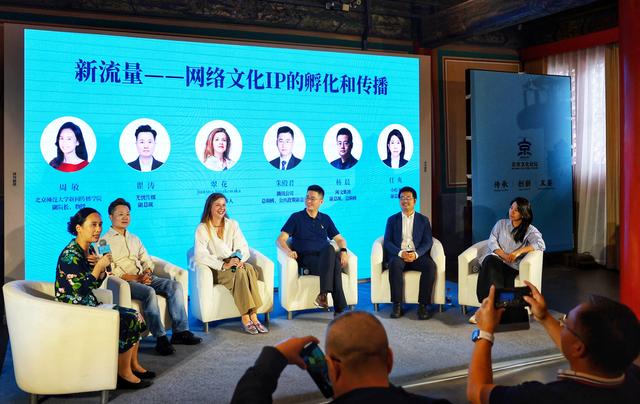
转自:北京日报客户端 9月22日,以"数智时代的文化新生态"为主题的北京文化论坛专业沙龙在先农坛庆成宫举办。来自国内 外的专家学者、业内嘉宾围绕"新流量——网络文化IP的孵化和传播"和"新业态——数字技术驱动文化 传播"展开深入对话和交流,通过多元视角的碰撞,共同探寻数智时代文化发展的新路径。 京日报客户端 来源:北 发小儿天台创始人、"双奥""双亚"视觉设计师张世骞则分享了自己将视觉设计从"大场面"转向"小空 间"、专注于面向青少年群体进行传统文化教育的感受。"希望未来能让科技和AI助力想讲故事的人,通 过他们触手可及的工具和内容,能够把北京故事讲好,这就是我对未来的期待。"张世骞说。 据悉,2025北京文化论坛以"传承·创新·互鉴"为永久主题,以"文化和科技融合发展"为年度主题,包含 主论坛、6场平行论坛、20余场专业沙龙及北京文化论坛会客厅常态化活动。 当前,网络文化IP作为文化资源的核心载体,在国际文化交流中扮演着日益关键的角色。沙龙上半场聚 焦"新流量——网络文化IP的孵化和传播"展开。 在中国生活近20年的波兰籍跨文化媒体人翠花自身就是网红IP之一,不过她更将自己看作中国网络文化 IP的"超级用户 ...


2025北京文化论坛开幕 中外嘉宾共商“文化与科技融合”大计
Xin Jing Bao· 2025-09-23 02:30
Core Points - The 2025 Beijing Cultural Forum was held on September 23-24, co-hosted by the Publicity Department of the CPC Central Committee, Beijing Municipal Committee, and the municipal government [1] - The theme of this year's forum is "Integration of Culture and Technology Development," featuring a main forum, six parallel forums, over 20 professional salons, and various accompanying activities [1] - The main forum on the morning of September 23 included speeches and addresses from prominent domestic and international guests, aimed at gathering wisdom to promote cultural prosperity and the exchange of civilizations [1]
2025北京文化论坛开幕
Huan Qiu Wang· 2025-09-23 01:31
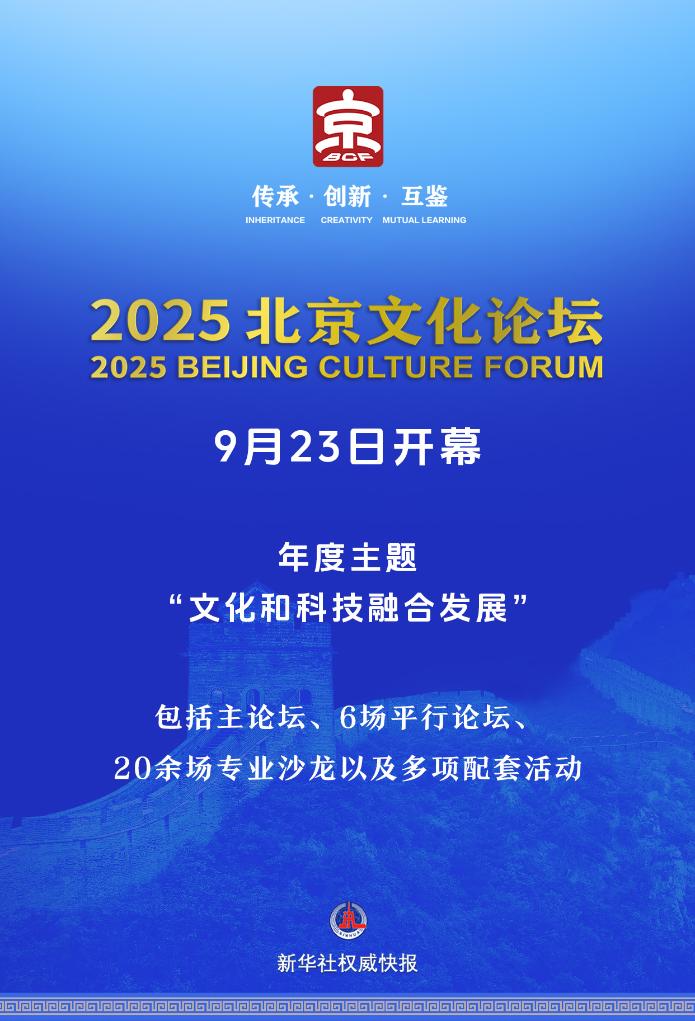
本文转自【新华网】; 20余场专业沙龙以及多项配套活动 论坛由中共中央宣传部和北京市委、市政府共同主办 记者:王子铭、杨淑君 2025北京文化论坛9月23日至24日在北京举办 以"传承·创新·互鉴"为永久主题 以"文化和科技融合发展"为年度主题 包括主论坛、6场平行论坛、 海报制作:贾稀荃 新华社国内部、新华社北京分社联合出品 ...
“苏超成果”将亮相北京文化论坛
Xin Hua Ri Bao· 2025-09-22 23:20
Core Points - The 2025 Beijing Cultural Forum will be held from September 23 to 24, co-hosted by the Central Propaganda Department and the Beijing Municipal Government [1] - The forum will feature a significant results release session, including the "2024 China and Foreign Cultural Exchange Report" and "Top Ten Cultural Center Construction Events of 2024" [1] - Key achievements such as "Enhancing Economic and Social Development Cultural Power" and "Digital Atlas Integration Project of Ancient Chinese Cities" will be highlighted [1] Group 1 - The forum's permanent theme is "Inheritance, Innovation, and Mutual Learning," with the annual theme focusing on "Cultural and Technological Integration Development" [1] - The event will include a main forum, six parallel forums, over 20 professional salons, and various accompanying activities [1] - Approximately 800 domestic and international guests, including cultural leaders, experts, and representatives from major cultural enterprises, will participate [1] Group 2 - Discussions will center on topics such as digital empowerment of cultural heritage, technology-driven cultural originality, audiovisual industry integration, and enhancing public cultural quality through new technologies [1] - The forum aims to foster in-depth exchanges on the innovation and development of online culture and respect for cultural diversity [1]
2025北京文化论坛今日开幕
Bei Jing Ri Bao Ke Hu Duan· 2025-09-22 23:06
9月23日至24日,由中共中央宣传部,北京市委、市政府共同主办的2025北京文化论坛在京举行。 2025北京文化论坛以"传承·创新·互鉴"为永久主题,以"文化和科技融合发展"为年度主题,将深入学习 贯彻习近平文化思想和习近平总书记致论坛贺信精神,深入践行全球文明倡议,搭建文化之桥、深化交 流对话、推动人文合作,以文化文明的力量推动构建人类命运共同体。 转自:北京日报客户端 本届论坛包括主论坛、6场平行论坛、20余场专业沙龙以及多项精彩配套活动。今天上午,主论坛举 行,中外重磅嘉宾将致辞演讲,为推动文化繁荣发展、文明交流互鉴汇聚智慧力量。下午,"保护传 承:数字化赋能文化遗产""破界共生:科技激发文化原创力""虚实无界:视听产业融合破圈""城市文 化:新科技提升公共文化品质""双向赋能:网络文化创新发展""交流互鉴:尊重文明多样性" 6场平行论 坛,将通过演讲、圆桌对谈、成果展示等多种方式,围绕文化和科技融合发展的诸多热门议题进行深度 探讨。据悉,论坛期间,中央和各地宣传文化单位负责人,国内外知名专家学者、世界知名文化机构代 表、头部文化企业代表、文化名人、行业领军人物等约800名中外嘉宾将齐聚北京。 "城市文 ...
北京文化要素如何聚合发展?
Bei Jing Qing Nian Bao· 2025-09-22 18:18
Core Insights - The 2025 Beijing Cultural Forum aims to enhance cultural exchange and cooperation, supporting the construction of Beijing as a national cultural center [1][2] - The forum highlights the importance of integrating various cultural resources to strengthen the national cultural center's development [2] - The initiative reflects the implementation of Xi Jinping's cultural thoughts and showcases the cultural atmosphere of the capital [1][2] Group 1: Cultural Resource Integration - Beijing's cultural resources are deep and diverse, with a history of over 3,000 years, making the integration of these resources a key task for the city [2] - The city is committed to scientifically planning and promoting the development goals and paths for the national cultural center [2] - The 2020 "Beijing National Cultural Center Construction Medium and Long-term Plan (2019-2035)" outlines the basic framework of "four cultures" and "one core, one city, three belts, and two zones" [5] Group 2: Cultural Innovation - The process of cultural resource integration involves simultaneous transmission and innovation, where innovation enhances transmission and vice versa [7] - The new adaptation of traditional Peking opera and the immersive musical "Golden Wind and Jade Dew" exemplify the successful fusion of tradition and modernity [7][8] - The concept of "guarding the right and innovating" emphasizes the importance of maintaining cultural identity while embracing new ideas and forms [8] Group 3: Cultural Exchange - Beijing's cultural strategy includes both "bringing in" and "going out," facilitating the exchange of local and foreign cultures [9][10] - The 31st Beijing International Book Fair attracted over 1,700 exhibitors from 80 countries, showcasing 220,000 types of books and hosting over 1,000 cultural events [9][10] - The promotion of Chinese literature abroad, such as the release of the Malaysian version of the award-winning novel "Northbound," highlights Beijing's efforts to share its culture globally [10]
关注2025北京文化论坛
Bei Jing Qing Nian Bao· 2025-09-22 18:18
Group 1 - The forum gathered approximately 800 domestic and international guests to discuss the integration of culture and technology [1] - The event highlighted the empowerment of technology in cultural sectors, featuring innovations like "AI Lu Xun" at the Beijing City Library [1] - The exploration of future reading methods in the metaverse was a key topic of discussion [1] Group 2 - A special initiative titled "Beijing Colorful Culture 'Four Questions'" was launched to focus on the development of cultural aggregation and technological assistance [1]
北京文化如何插上科技翅膀?
Bei Jing Qing Nian Bao· 2025-09-22 17:56
Group 1 - The core idea emphasizes the integration of culture and technology in Beijing, showcasing the city's commitment to cultural innovation and the preservation of traditional values [1][2][8] - Beijing's cultural new economy generated a revenue of 880.88 billion yuan in the first half of the year, accounting for 72.1% of the city's cultural enterprises' total revenue, indicating strong growth momentum [1] - The city aims to enhance its cultural and technological integration by 2027, with a focus on developing key technologies and creating benchmark applications in the cultural sector [2][8] Group 2 - The introduction of advanced technologies such as AI, VR, and AR in cultural experiences is transforming traditional reading and learning environments, exemplified by the Metaverse Experience Hall in the Beijing City Library [3][6] - Traditional brands, such as "Beijing Milk Company," are innovating by merging their historical cultural elements with modern market trends, creating interactive and immersive experiences for consumers [5][6] - The transformation of industrial sites like Shougang Park into cultural hubs demonstrates the potential for cultural heritage to be revitalized through digital technology, enhancing visitor engagement [7][8] Group 3 - Beijing is fostering a cultural innovation ecosystem by planning a series of cultural and technological integration activities, aiming to establish a competitive cultural technology industry cluster [8] - The city is focusing on policy development and ecological cultivation to unleash innovation capabilities and sustain cultural creativity [8]
2025北京文化论坛:中外学者讨论如何让考古遗产“活”起来
Xin Jing Bao· 2025-09-22 14:53
Group 1 - The forum "Protecting and Inheriting: Digital Empowerment of Cultural Heritage" was held in Beijing, focusing on the future of archaeological heritage protection, utilization, and inheritance with around 200 participants including scholars and representatives from heritage sites [1] - Experts discussed various topics such as the value excavation of archaeological heritage, interpretation methods, public participation, and sustainable utilization, providing diverse perspectives and forward-looking ideas for future development [1] - The establishment of the "Liuli River Archaeological Research Alliance" was announced, aiming to integrate top academic resources in China to advance systematic archaeological research and value interpretation of the Liuli River site [2] Group 2 - Rima Hooja, President of the International Council on Monuments and Sites India National Committee, highlighted the intrinsic connection between the interpretation of archaeological heritage and the United Nations Sustainable Development Goals, emphasizing heritage protection as a vital force for regional development and environmental sustainability [2] - Notable archaeological findings from recent years, such as those from Zhouyuan and Liuli River sites, were discussed to provide a clearer understanding of the early urban system in China's Western Zhou period [1]