
GUOXIN MICRO(002049)

Search documents
紫光国微拟收购瑞能半导体:系出恩智浦,与安世半导体“不同命”
Jing Ji Guan Cha Wang· 2026-01-04 10:03
Core Viewpoint - Unisoc is planning to acquire the controlling or entire equity of Ruineng Semiconductor Technology Co., Ltd. through a combination of share issuance and cash payment, involving partners such as Nanchang Jianen, Beijing Guangmeng, and Tianjin Ruixin [1][4]. Group 1: Company Overview - Unisoc is a major integrated circuit listed company in China, focusing on special integrated circuits and smart security chips [4]. - Ruineng Semiconductor, established in 2015, has its roots in NXP's semiconductor power device division, which dates back to 1969 [5]. - Ruineng Semiconductor has transitioned to a 100% Chinese-owned enterprise since 2019, expanding its product lines to include silicon carbide devices and IGBTs [5][10]. Group 2: Market Position and Product Development - Ruineng Semiconductor is a leader in the power semiconductor sector, with significant market presence in consumer electronics and industrial applications, serving over 8,000 global customers [6][8]. - The company has developed advanced products, including sixth-generation silicon carbide diodes, which improve system efficiency and reduce conduction losses [7]. - Ruineng Semiconductor ranks first among Chinese brands in thyristors and fifth globally in silicon carbide rectifiers [8]. Group 3: Strategic Importance of the Acquisition - The acquisition of Ruineng Semiconductor is seen as a strategic move for Unisoc to enhance its position in the automotive electronics sector and strengthen the domestic semiconductor supply chain [10][12]. - Ruineng's capabilities in silicon carbide devices are crucial for applications in electric vehicles and renewable energy, aligning with industry trends [9][10]. - The integration of Ruineng Semiconductor into Unisoc is expected to create a strong synergy, enhancing both companies' competitive edge in the semiconductor market [11][12].


平台化布局关键一步!紫光国微收购瑞能半导
Zhong Guo Zheng Quan Bao· 2026-01-01 09:40
Core Viewpoint - The announcement by Unisoc's core listed company, Unisoc Microelectronics, regarding the planned acquisition of a controlling stake in domestic power semiconductor company Ruineng Semiconductor Technology Co., Ltd. marks a significant step in the company's strategic transformation towards a comprehensive semiconductor platform [2] Group 1: Acquisition Details - The acquisition of Ruineng Semiconductor is seen as a crucial move to accelerate Unisoc Microelectronics' transition into a comprehensive semiconductor platform [2] - Ruineng Semiconductor specializes in the R&D, production, and sales of power semiconductor discrete devices, providing industry-leading products such as thyristors, power diodes, and silicon carbide diodes [4] - In the first half of 2025, Ruineng Semiconductor achieved revenue of 441 million yuan, a year-on-year increase of 17.87%, and a net profit of 27.93 million yuan, up 43.19% year-on-year [4] Group 2: Strategic Value - Ruineng Semiconductor offers three unique strategic values to Unisoc Microelectronics: deep technical heritage, strong market positioning, and robust risk resistance [4] - The company has inherited advanced product development processes and quality management systems from its previous affiliation with NXP, along with a mature customer base [4] - Ruineng's domestic design and manufacturing capabilities enhance supply chain security, providing a safeguard against risks [4] Group 3: Future Growth Potential - The current profitability of Ruineng Semiconductor is impacted by depreciation costs from new factories in Beijing and Shanghai, but production is expected to ramp up next year, potentially improving overall performance [5] - The successful integration and synergy between Unisoc Microelectronics and Ruineng Semiconductor are crucial for value creation, with Unisoc's strengths in chip design complementing Ruineng's manufacturing capabilities [6][7] - The acquisition is anticipated to enhance Unisoc's revenue and diversify its business structure and product offerings [8] Group 4: Broader Industry Context - The global energy transition and the wave of automotive electrification are driving long-term demand for power semiconductors, aligning with Unisoc Microelectronics' strategic focus [4] - Unisoc Microelectronics is also establishing a Central Research Institute to focus on cutting-edge technologies such as edge AI chips and new memory devices, further supporting its future development [8][10] - The company reported a revenue of 4.904 billion yuan in the first three quarters of this year, a year-on-year increase of 15.05%, with a net profit of 1.263 billion yuan, up 25.04% [10]
半导体产业链布局跑出加速度 紫光国微拟收购“专精特新”小巨人瑞能半导
Quan Jing Wang· 2026-01-01 02:52
Core Viewpoint - Unisoc plans to acquire a controlling or full stake in Ruineng Semiconductor Technology Co., Ltd. through a combination of share issuance and cash payment, marking a significant move in its semiconductor industry strategy [1] Group 1: Acquisition Details - Unisoc's stock and convertible bonds will be suspended from trading starting December 30, with a detailed transaction plan expected within 10 trading days [1] - The acquisition is characterized as a related party transaction and does not constitute a major asset restructuring or change of control [1] - Ruineng Semiconductor, established in August 2015, is a leading player in the domestic power semiconductor sector, with a registered capital of 362 million yuan [2] Group 2: Business Model and Operations - Ruineng Semiconductor focuses on the R&D, production, and sales of power semiconductor discrete devices, including thyristors, power diodes, and silicon carbide diodes, serving high-growth sectors like consumer electronics and renewable energy [2][3] - The company has built an integrated operating system covering chip design, wafer manufacturing, and packaging, with a strong emphasis on chip design and wafer manufacturing [3] - Ruineng's sales strategy combines a primary focus on distribution with supplementary direct sales, establishing a global sales network to mitigate market coverage costs and payment risks [3] Group 3: Strategic Importance - The acquisition is a strategic move to fill Unisoc's business gap in the power semiconductor field, which is crucial for energy conversion and control in emerging industries like electric vehicles and renewable energy [5] - This move allows Unisoc to expand its semiconductor product line and enhance its full industry chain layout from design to production and sales [5] - The global sales channels and R&D capabilities of Ruineng will aid Unisoc in further market expansion and technological innovation [5] Group 4: Financial Performance - For the first three quarters of 2025, Unisoc reported revenues of 4.904 billion yuan, a year-on-year increase of 15.05%, and a net profit of 1.263 billion yuan, up 25.04% [4] - The third quarter alone saw revenues of 1.857 billion yuan, reflecting a 33.60% year-on-year growth, with net profit soaring by 109.55% to 571 million yuan [4] Group 5: Strategic Alignment - The acquisition aligns with Unisoc's recent strategic initiatives, including the establishment of a central research institute focused on AI chips and high-performance sensors [6] - This dual approach of integrating advanced technology research with mature industry consolidation positions Unisoc to capitalize on the semiconductor industry's technological upgrades and domestic substitution opportunities [6] - Analysts suggest that Unisoc's diverse product offerings and market expansion efforts are likely to drive rapid revenue and profit growth in the future [6]
紫光国微欲“收编”瑞能半导,半导体并购潮下谁在狂奔
Xin Lang Cai Jing· 2025-12-31 16:00
Core Viewpoint - The acquisition of Ruineng Semiconductor by Unisoc is a strategic move aimed at enhancing business synergy and addressing Unisoc's power semiconductor shortfall, while providing Ruineng with a viable exit after unsuccessful attempts to go public [2][6][15]. Company Summary - Unisoc has initiated a suspension of trading as it plans to acquire controlling stakes in Ruineng Semiconductor from its three major shareholders, which are private equity funds holding 24.18%, 24.18%, and 22.75% respectively [3][12]. - The acquisition is structured as an associated transaction rather than a major asset restructuring, due to the existing connections between the companies' leadership [3][12]. - Unisoc reported a revenue of 5.511 billion yuan and a net profit of 1.179 billion yuan for 2024, with a market capitalization of 66.959 billion yuan prior to the suspension [4][13]. Industry Context - The semiconductor industry is experiencing a wave of mergers and acquisitions, with nearly 50 restructuring plans reported in the A-share market last year, reflecting a significant trend towards consolidation [8][16]. - Major players in the semiconductor sector, including SMIC and Northern Huachuang, are actively pursuing acquisitions to enhance their market positions [8][16]. - The ongoing acquisition trend is seen as a necessary step for Chinese semiconductor companies to integrate resources and overcome technological challenges, indicating a maturation phase in the industry [9][17].

4515起,总金额超1.91万亿元 央国企成2025年并购重组主力
Jing Ji Guan Cha Wang· 2025-12-31 11:59
Group 1 - The core theme of the article is the significant increase in mergers and acquisitions (M&A) activities in the A-share market in 2025, with a total of 4,515 projects reported, marking a 1.64% year-on-year growth and a total transaction value exceeding 19.1 trillion yuan, up 5.83% year-on-year [2][3] - Major asset restructuring events have surged, with 148 significant M&A transactions recorded, reflecting a 49.49% increase year-on-year [2] - The central state-owned enterprises (SOEs) are the main drivers of large-scale M&A projects, with 23 projects exceeding 10 billion yuan, highlighting their pivotal role in the market [4] Group 2 - The transformation of the capital market from a financing-centric model to a resource allocation-focused model is emphasized, driven by policy support and industrial dynamics [3] - The restructuring activities are not merely about transaction recovery but signify a structural change aimed at enhancing productivity and innovation within industries [3][7] - The focus of M&A transactions has shifted towards technology innovation and industrial upgrades, with companies seeking to acquire key technologies and enter emerging sectors [7] Group 3 - Notable M&A cases include China Shenhua's acquisition of 12 core enterprises from its controlling shareholder, with a total transaction value of 133.6 billion yuan, and CICC's proposed merger with Dongxing Securities and Xinda Securities, valued at 114.3 billion yuan [5][6] - The market has seen various "firsts" in M&A transactions, such as cross-industry mergers and acquisitions following the implementation of new regulatory frameworks [6] - Despite the termination of the merger between Haiguang Information and Zhongke Shuguang, the semiconductor and high-tech industries continue to see active M&A activities, indicating sustained interest in these sectors [8]






「寻芯记」紫光国微欲“收编”瑞能半导,半导体并购潮下谁在狂奔
Hua Xia Shi Bao· 2025-12-30 16:37
Core Viewpoint - The acquisition of Ruineng Semiconductor Technology Co., Ltd. by Unisoc is a strategic move aimed at enhancing business synergy and addressing the power semiconductor shortfall, while Ruineng seeks a viable exit after unsuccessful attempts to go public [2][6][7]. Group 1: Acquisition Details - Unisoc has initiated a suspension of trading to acquire control of Ruineng Semiconductor, having signed a letter of intent with Ruineng's three major shareholders [2][3]. - The acquisition will involve issuing shares and cash payments to acquire stakes from South Jiangxi Jianen Semiconductor Industry Investment Center, Beijing Guangmeng Semiconductor Industry Investment Center, and Tianjin Ruixin Semiconductor Industry Investment Center, which hold 24.18%, 24.18%, and 22.75% of Ruineng, respectively [3]. - The transaction is classified as a related party transaction and is not expected to constitute a major asset restructuring under relevant regulations [3][4]. Group 2: Financial Performance - Unisoc reported a revenue of 5.511 billion yuan and a net profit of 1.179 billion yuan for 2024, with a market capitalization of 66.959 billion yuan prior to the trading suspension [5]. - Ruineng Semiconductor, established in 2015, generated a revenue of 786 million yuan in 2024, reflecting a decline of 5.64%, and a net profit of 20.36 million yuan, down 79.93% [7]. Group 3: Industry Context - The acquisition reflects a broader trend in the semiconductor industry, which has seen nearly 50 merger and acquisition plans since the introduction of new policies by the China Securities Regulatory Commission [8]. - Major players in the semiconductor sector, including SMIC and Northern Huachuang, have also announced acquisition plans, indicating a robust M&A environment [8]. - The semiconductor industry is characterized by high technical barriers and complexity, making mergers a common strategy for companies to achieve synergies and expand into new areas [9][10].

三大投资机构出让!紫光国微收购功率厂商
Xin Lang Cai Jing· 2025-12-30 14:03
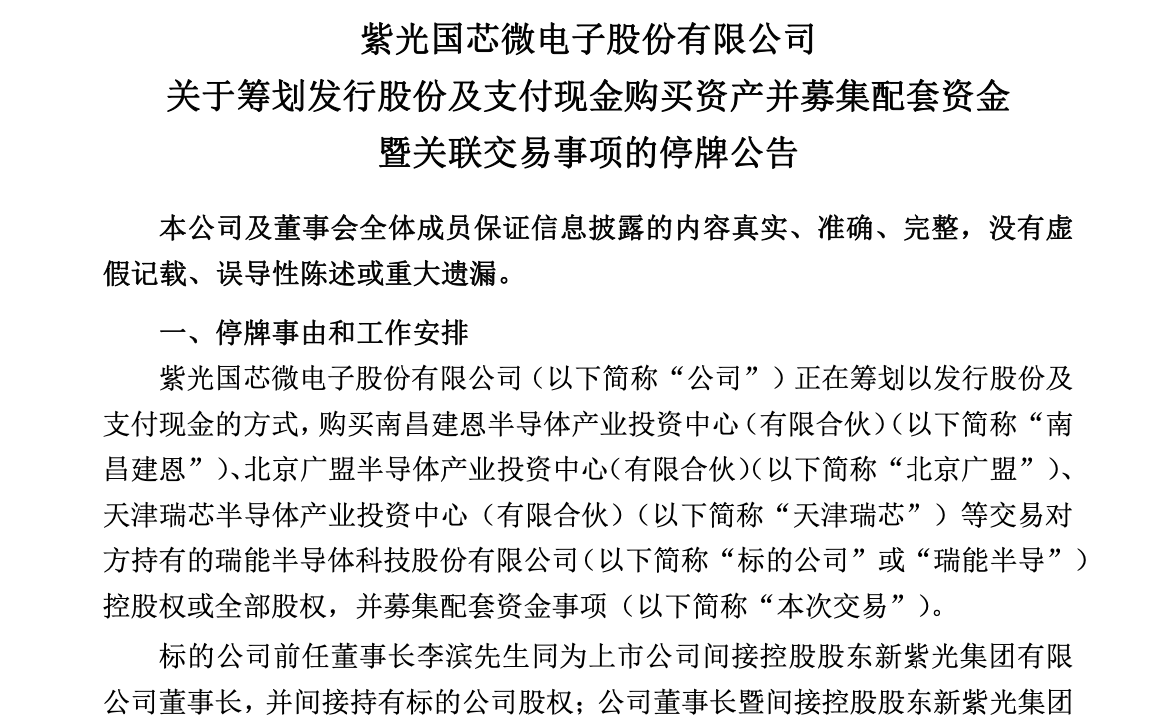
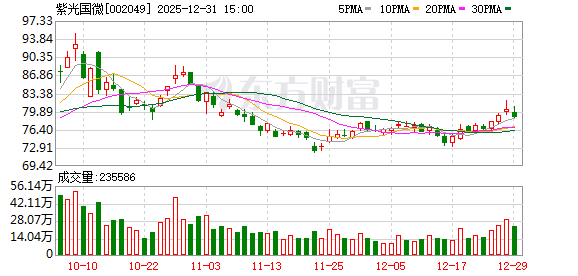
为维护投资者利益、避免股价异常波动,经公司申请,紫光国微股票及"国微转债"自2025年12月30日开市起停牌,"国微转债"同步暂停转股。公司预计在 不超过10个交易日内,即2026年1月15日前披露本次交易方案;若未能按时召开董事会审议并披露,公司证券将最晚于1月15日开市起复牌并终止筹划相关 事项,且承诺自披露公告之日起至少1个月内不再筹划重大资产重组。 12月29日,紫光国微发布停牌公告,宣布正在筹划发行股份及支付现金购买资产并募集配套资金事项,拟收购瑞能半导体科技股份有限公司(以下简 称"瑞能半导")控股权或全部股权,该交易构成关联交易,公司股票及可转换公司债券自12月30日开市起停牌。 12月29日,紫光国微发布停牌公告,宣布正在筹划发行股份及支付现金购买资产并募集配套资金事项,拟收购瑞能半导体科技股份有限公司(以下简 称"瑞能半导")控股权或全部股权,该交易构成关联交易,公司股票及可转换公司债券自12月30日开市起停牌。 公告显示,本次交易的主要交易对方包括南昌建恩半导体产业投资中心(有限合伙)、北京广盟半导体产业投资中心(有限合伙)、天津瑞芯半导体产业 投资中心(有限合伙)等,紫光国微已与上述三方 ...
紫光国微(002049):引入战投绑定宁德时代,打造车规级芯片领军平台:紫光国微(002049):
Shenwan Hongyuan Securities· 2025-12-30 13:05
Investment Rating - The report maintains a "Buy" rating for the company, indicating expected outperformance relative to the market [7]. Core Insights - The establishment of a joint venture, 紫光同芯科技, with partners including 宁德时代, aims to enhance the company's competitiveness in the automotive domain control chip market [3][7]. - The collaboration with 宁德时代 is seen as a strategic move to integrate key industry resources and accelerate market expansion [7]. - The company is positioned to enter a new growth phase, driven by its specialized operations in automotive chips and the implementation of employee equity incentives [7]. Financial Data and Profit Forecast - Total revenue projections for 2025 are estimated at 7,194 million yuan, with a year-on-year growth rate of 30.5% [5]. - The net profit attributable to the parent company is forecasted to reach 1,723 million yuan in 2025, reflecting a significant increase of 46.1% year-on-year [5]. - Earnings per share are expected to grow to 2.03 yuan in 2025, with a projected gross margin of 56.8% [5][8]. - The return on equity (ROE) is anticipated to improve to 12.7% in 2025, further indicating the company's strong financial health [5].

今日停牌!紫光国微发布两条公告
Xin Lang Cai Jing· 2025-12-30 11:09
同日,紫光国微披露另一则公告显示,公司近日收到玉田县行政审批局出具的《登记通知书》,确认公 司全资子公司捷准芯测已完成注销登记。本次注销完成后,捷准芯测将不再纳入紫光国微合并报表范 围。 紫光国微明确表示,本次子公司清算注销事项,不会对公司正常生产经营、整体业务发展及盈利能力产 生重大不利影响,亦不存在损害公司及全体股东,尤其是中小股东合法权益的情形。 12 月 29 日,紫光国微发布重大资产重组公告称,公司正筹划以发行股份及支付现金相结合的方式,收 购南昌建恩半导体产业投资中心(有限合伙)、北京广盟半导体产业投资中心(有限合伙)、天津瑞芯 半导体产业投资中心(有限合伙)等交易对方所持有的瑞能半导体科技股份有限公司控股权或全部股 权,同时拟募集配套资金。 12 月 29 日,紫光国微发布重大资产重组公告称,公司正筹划以发行股份及支付现金相结合的方式,收 购南昌建恩半导体产业投资中心(有限合伙)、北京广盟半导体产业投资中心(有限合伙)、天津瑞芯 半导体产业投资中心(有限合伙)等交易对方所持有的瑞能半导体科技股份有限公司控股权或全部股 权,同时拟募集配套资金。 根据深圳证券交易所相关规定,经公司申请,紫光国微股票 ...
紫光同芯微电子科技(北京)有限公司成立
Zheng Quan Ri Bao Wang· 2025-12-30 10:45
Group 1 - The establishment of Ziguang Tongxin Microelectronics Technology (Beijing) Co., Ltd. has been reported, with a registered capital of 300 million yuan [1] - The company's business scope includes integrated circuit design, software development, and electronic product sales [1] - The company is jointly held by Ziguang Guowei's subsidiary Ziguang Tongxin Microelectronics Co., Ltd. and Ningde Times' subsidiary Ningbo Meishan Free Trade Port Area Wending Investment Co., Ltd. [1]