JA SOLAR(002459)

Search documents
1月13日重要公告一览
Xi Niu Cai Jing· 2026-01-13 02:34
Group 1 - Weiteou signed a strategic cooperation agreement with Qiteng Robotics to focus on safety upgrades in high-risk industries, leveraging new materials and robotics [1] - Dongfang Caifu's subsidiary received approval from the CSRC to issue subordinate bonds totaling up to 20 billion yuan [2] - Haibo Zhongke's controlling shareholder plans to reduce holdings by up to 2.98% of the company's shares [3] Group 2 - Shengyang Technology's subsidiary FTA is expanding into the foreign satellite internet terminal business, which is still in the early commercialization stage [4] - Cangge Mining expects a net profit increase of 43.41%-53.1% for 2025, projecting a profit of 3.7-3.95 billion yuan [5] - Jinlongyu plans to invest approximately 1.2 billion yuan to build a production line for solid-state batteries with an annual capacity of 2 GWh [6] Group 3 - Shengda Resources intends to acquire a 55% stake in Guangxi Laibin Jinshi Mining for 269.5 million yuan [7] - Zhifei Biological's CA111 injection has entered Phase I clinical trials, targeting diabetes and weight loss treatment [8] - Qusleep Technology's specific shareholders plan to reduce their holdings by up to 2.58% of the company's shares [9] Group 4 - Innovation Medical's subsidiary has a product expected to generate revenue of 114,000 yuan in 2025 [11] - Blue Ocean Cursor noted that AI-driven revenue currently constitutes a small portion of overall revenue [12] - *ST Yanshi anticipates a loss for the 2025 fiscal year, with revenue expected to be below 300 million yuan [13] Group 5 - ST Yishite will lift risk warnings and change its stock name, resuming trading on January 14 [14] - Shaoyang Hydraulic clarified that its products do not directly serve commercial aerospace clients [15] - Boss Electric plans to invest 100 million yuan in Youte Smart Kitchen to deepen strategic cooperation [16] Group 6 - Guo An Da's controlling shareholder plans to reduce holdings by up to 3% of the company's shares [17] - *ST Mingjia has lifted the delisting risk warning following the completion of its restructuring plan [18] - Haixiang Pharmaceutical signed an innovative drug cooperation agreement with Wanbangde Pharmaceutical [19] Group 7 - Palm Holdings plans to transfer stakes in two project companies for debt compensation, amounting to 258 million yuan [20] - Bohai Leasing's subsidiary Avolon is projected to have a fleet of 1,132 aircraft by the end of 2025 [21] - Zhenyou Technology reported that satellite internet revenue accounted for approximately 7.15% of total revenue in the first three quarters of 2025 [22] Group 8 - Blue Arrow Electronics intends to acquire at least 51% of Chengdu Xinyi Technology [23] - Shunhao Co. stated that its investment in Tianshu Chuangxin will have a minimal impact on its 2025 performance [24][25] - Baichuan Co.'s deputy general manager plans to reduce holdings by up to 0.65% of the company's shares [26] Group 9 - Zhewen Interconnect reported that its GEO business has not yet formed a mature profit model [27] - XW Communication's controlling shareholder plans to reduce holdings by up to 1% of the company's shares [28] - Electric Science Digital indicated that its satellite communication products are not its main business [29] Group 10 - Bojun Technology expects a net profit increase of 35%-65% for 2025, projecting a profit of 828-1,012 million yuan [30] - Rongchang Bio signed a licensing agreement for the RC148 drug with AbbVie, with an initial payment of 650 million USD [31] - Guoxin Technology's state investment fund plans to reduce holdings by up to 2.37% of the company's shares [32] Group 11 - Hengxuan Technology's controlling shareholder plans to reduce holdings by up to 3% of the company's shares [33][34] - *ST Chengchang announced a stock suspension for investigation due to abnormal trading [35] - Zhongji Xuchuang's subsidiary plans to issue warrants to incentivize its core team [36] Group 12 - Zhuoshengwei expects a net loss of 255-295 million yuan for 2025 [37] - Pingtan Development anticipates a loss for the 2025 fiscal year [38] - Nanjing Bank's major shareholder increased its stake by 123.472 million shares [39] Group 13 - Jingao Technology expects a net loss of 4.5-4.8 billion yuan for 2025 [40] - Mingyang Smart plans to acquire control of Dehua Company, with stock suspension [41] - Vanadium Titanium Co. anticipates a loss for the 2025 fiscal year [42][43] Group 14 - Tianzhihang announced a delay in its "Smart Medical Center Construction Project" [44]



晶澳科技:预计2025年净利润亏损45亿元至48亿元
Jing Ji Guan Cha Wang· 2026-01-13 02:00
经济观察网2026年1月12日,晶澳科技(002459)发布2025年度业绩预告,预计2025年净利润亏损45亿 元至48亿元。扣除非经常性损益后的净利润亏损48亿元至51亿元。 ...

晶澳科技2025年净利预亏45亿—48亿元
Bei Jing Shang Bao· 2026-01-13 01:53
Core Viewpoint - Jingao Technology (002459) expects a net profit loss of 4.5 billion to 4.8 billion yuan for the entire year of 2025, with a non-recurring net profit loss projected between 4.8 billion and 5.1 billion yuan [1] Group 1: Company Performance - The company attributes the anticipated losses to a supply-demand imbalance caused by the concentrated release of production capacity across the photovoltaic industry chain in recent years [1] - The intensified competition within the industry has led to a downward pressure on the prices of major products compared to the same period last year [1] - The average sales price of the company's components and profitability have declined year-on-year due to increased international trade protection policies [1]
1.13犀牛财经早报:境内首家万亿级ETF基金公司诞生
Xi Niu Cai Jing· 2026-01-13 01:37
Group 1: ETF Market Development - China’s ETF market has reached a milestone with the first fund management company, Huaxia Fund, surpassing 1 trillion yuan in ETF assets under management, totaling 10096.84 billion yuan [1] - Non-monetary ETFs account for 10095.9 billion yuan, representing 16% of the total ETF market size of approximately 6.25 trillion yuan [1] - Huaxia Fund has maintained the leading position in ETF management for 21 consecutive years since the launch of the first domestic ETF in 2005, with a cumulative growth of 3356.84 billion yuan since 2025 [1] Group 2: Emerging Market ETF Inflows - Investors have continued to pour money into emerging market ETFs for the 12th consecutive week, with inflows reaching 39.7 billion USD, the highest in over a year [2] - The inflow includes 39.6 billion USD into stock ETFs and 770 million USD into bond ETFs, increasing total assets from 442.7 billion USD to 452.6 billion USD [2] - The MSCI Emerging Markets Index rose by 1.6% to 1452.35 points during the same week [2] Group 3: Fund Management and IPO Trends - Debon Fund has implemented emergency purchase limits after reportedly attracting 12 billion yuan in a single day, adjusting purchase limits for its funds [3] - The proportion of IPO cases using a "tiered fee" model has significantly decreased from about 38% in 2023 to 6% in 2025, with a hybrid fee model becoming mainstream [3] Group 4: Commodity Market Developments - The price of lithium carbonate has surged to over 150,000 yuan per ton, with a daily increase of 9%, driven by high demand in the lithium battery sector [5] - Copper and aluminum prices have reached historical highs, with domestic copper contracts hitting 105,500 yuan per ton and aluminum contracts at 24,915 yuan per ton [5] - Major mining companies are consolidating to gain strategic pricing power in the copper market, with a potential merger between Rio Tinto and Glencore being discussed [5] Group 5: Transformer Industry Growth - The transformer industry is experiencing high demand due to accelerated global grid construction and AIDC needs, with several companies reporting a surge in orders [6] - The industry is expected to continue benefiting from a favorable market environment for the next 2 to 3 years [6] Group 6: Semiconductor Industry Trends - The semiconductor sector is witnessing a rise in merger and acquisition activities, with a 15% increase in cases year-on-year, although the failure rate of these mergers has also increased [7] - Industry experts suggest differentiated mergers and phased incubation of acquisition funds to mitigate risks associated with semiconductor mergers [7] Group 7: Corporate Developments - JA Solar has announced an expected net loss of 4.5 to 4.8 billion yuan for 2025, compared to a loss of 4.656 billion yuan in the previous year [11] - Mingyang Smart Energy plans to acquire control of Dehua Company, with the transaction currently in the planning stage [12]




晶澳科技(002459.SZ)发预亏,预计2025年度归母净亏损45亿元至48亿元
智通财经网· 2026-01-12 22:53
智通财经APP讯,晶澳科技(002459.SZ)披露2025年度业绩预告,公司预计归属于上市公司股东的净亏损 45亿元至48亿元;扣除非经常性损益后的净亏损48亿元至51亿元。 受近年来光伏主产业链各环节产能集中释放导致阶段性供需失衡的影响,行业竞争持续加剧,各环节主 要产品价格对比同期整体承压下行。 ...
晶澳科技发预亏,预计2025年度归母净亏损45亿元至48亿元
Zhi Tong Cai Jing· 2026-01-12 22:53
晶澳科技(002459)(002459.SZ)披露2025年度业绩预告,公司预计归属于上市公司股东的净亏损45亿 元至48亿元;扣除非经常性损益后的净亏损48亿元至51亿元。 受近年来光伏主产业链各环节产能集中释放导致阶段性供需失衡的影响,行业竞争持续加剧,各环节主 要产品价格对比同期整体承压下行。 ...
上市公司动态 | 药明康德预计2025年经调整归母净利润增41.33%;上港集团2025年净利降10.4%;藏格矿业预计2025年净利增43.41%-53.10%
Sou Hu Cai Jing· 2026-01-12 16:10
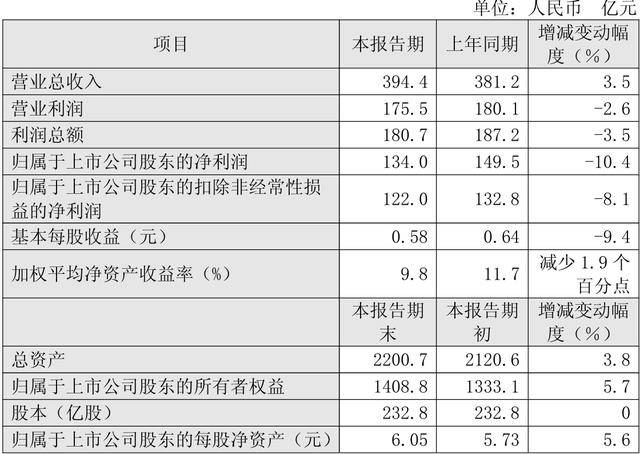
Group 1: WuXi AppTec - WuXi AppTec expects a revenue of approximately RMB 45.456 billion for 2025, representing a year-on-year growth of about 15.84%, with a 21.40% increase in revenue from continuing operations [1] - The adjusted net profit attributable to shareholders is projected to be around RMB 14.957 billion, reflecting a year-on-year growth of approximately 41.33% [1] - The net profit attributable to shareholders, excluding non-recurring gains and losses, is expected to be about RMB 13.241 billion, with a year-on-year increase of approximately 32.56% [1] Group 2: Shanghai Port Group - Shanghai Port Group reported a total revenue of RMB 39.44 billion for 2025, which is a year-on-year increase of 3.5% [2][3] - The net profit attributable to shareholders decreased by 10.4% to RMB 13.4 billion [2][3] - The net profit attributable to shareholders, excluding non-recurring gains and losses, fell by 8.1% to RMB 12.2 billion [2][3] Group 3: Zangge Mining - Zangge Mining forecasts a net profit attributable to shareholders between RMB 3.7 billion and RMB 3.95 billion for 2025, indicating a growth of 43.41% to 53.10% year-on-year [4] - The net profit, excluding non-recurring gains and losses, is expected to be between RMB 3.87 billion and RMB 4.12 billion, reflecting a growth of 51.95% to 61.76% [4] Group 4: Sanan Optoelectronics - Sanan Optoelectronics anticipates a net loss attributable to shareholders between RMB -200 million and RMB -400 million for 2025, compared to a profit of RMB 253 million in the previous year [5] - The net profit, excluding non-recurring gains and losses, is expected to be between RMB -750 million and RMB -850 million [5] Group 5: JA Solar Technology - JA Solar Technology projects a net loss attributable to shareholders between RMB -4.5 billion and RMB -4.8 billion for 2025 [12] - The company maintains a leading position in battery module shipments, but faces significant pressure on sales prices and profitability due to industry competition and supply-demand imbalances [12] Group 6: Rongbai Technology - Rongbai Technology expects a net loss attributable to the parent company between RMB -150 million and RMB -190 million for 2025 [18] - The company anticipates a turnaround in the fourth quarter with a projected net profit of approximately RMB 30 million [18] Group 7: Sanxiang New Materials - Sanxiang New Materials forecasts a net profit attributable to shareholders between RMB 100 million and RMB 130 million for 2025, representing a year-on-year growth of 31.99% to 71.58% [21] - The company is focusing on expanding its zirconium product chain and optimizing its customer structure to enhance profitability [21]


晶澳科技:预计2025年亏损45亿元-48亿元
Ge Long Hui A P P· 2026-01-12 14:52
格隆汇1月12日|晶澳科技公告,预计2025年度归属于上市公司股东的净利润亏损45亿元—48亿元,上 年同期亏损46.56亿元。扣除非经常性损益后的净利润亏损48亿元—51亿元,上年同期亏损42.69亿元。 基本每股收益亏损1.37元/股—1.46元/股,上年同期亏损1.42元/股。受近年来光伏主产业链各环节产能 集中释放导致阶段性供需失衡的影响,行业竞争持续加剧,各环节主要产品价格对比同期整体承压下 行,同时国际贸易保护政策加剧,导致公司组件销售均价和盈利能力同比下降。 ...
晶澳科技(002459.SZ):2025年度预亏45.00亿元—48.00亿元
Xin Lang Cai Jing· 2026-01-12 14:51
Core Viewpoint - Jingao Technology (002459.SZ) is expected to report a net loss of 4.5 billion to 4.8 billion yuan for the fiscal year 2025 due to various industry challenges [1] Group 1: Company Performance - The company maintains a leading position in battery module shipments within the industry [1] - The average selling price and profitability of the components have declined year-on-year due to supply-demand imbalance and price drop [1] - The operating performance has shown a phase of loss during the reporting period [1] Group 2: Industry Context - The photovoltaic industry is experiencing capacity release, leading to supply-demand imbalances [1] - International trade protection policies are impacting the company's sales and profitability [1]
晶澳科技:预计2025年亏损45亿元~48亿元
Mei Ri Jing Ji Xin Wen· 2026-01-12 14:33
(文章来源:每日经济新闻) 每经AI快讯,1月12日,晶澳科技公告,预计2025年度归属于上市公司股东的净利润亏损45亿元~48亿 元,上年同期亏损46.56亿元。扣除非经常性损益后的净利润亏损48亿元~51亿元,上年同期亏损42.69 亿元。基本每股收益亏损1.37元/股~1.46元/股,上年同期亏损1.42元/股。 ...